

2025 Nissan Kicks SR AWD Fast Facts
|
Powertrain |
2.0-liter four-cylinder (141 horsepower @ 6,000 RPM, 140lb-ft @ 4,000 RPM) |
|
Transmission/Drive Wheels |
Continously-variable automatic, all-wheel drive |
|
Fuel Economy, MPG |
27 city / 34 highway / 30 combined (EPA Rating) |
|
Fuel Economy, L/100km |
8.4 city / 6.9 highway / 7.7 combined (NRCan Rating) |
|
Base Price |
$27,680 (U.S.) / $37,691 (Canada) |
|
As-Tested Price |
$32,485 (U.S.) / $38,566 (Canada) |
|
Disclaimer: Prices include $1,390 destination charge in the United States and $2,130 for freight, PDI, and A/C tax in Canada and, because of cross-border equipment differences, can’t be directly compared. |
|
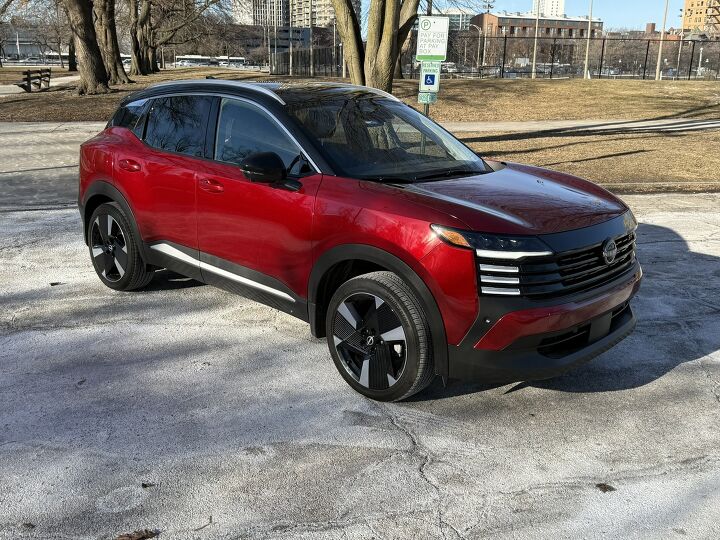
Nissan’s first Kicks was, unique styling aside, was a bit of a letdown. The 2025 Nissan Kicks addresses what needed to be addressed — it’s a much better effort in the inexpensive compact-crossover class.
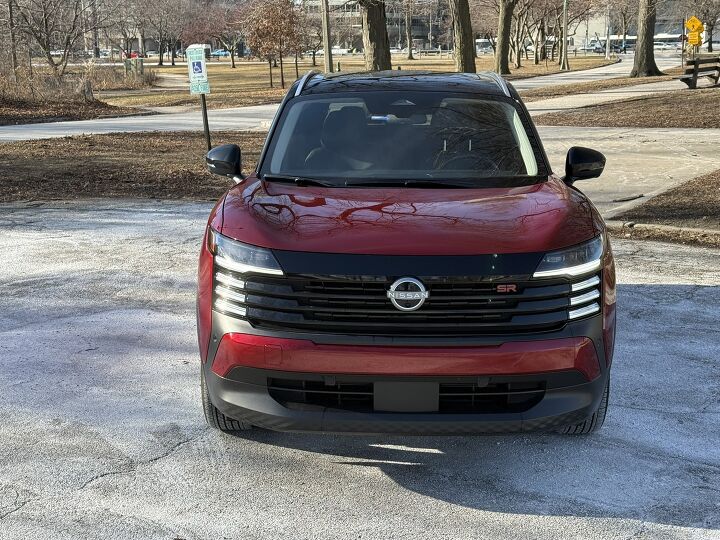
Regular TTAC readers will know that the Kicks underwent a thorough redesign for 2025, growing longer, wider, and taller. Passenger and cargo volume increase, as well.
It added ground clearance, got a new skin, a reworked cabin, and all-wheel drive finally became available.
Nissan also changed out the engine, swapping a 2.0-liter naturally-aspirated four-cylinder in place of a 1.6-liter four. The 2.0-liter pumps out 141 horsepower and 140 lb-ft of torque. Unfortunately, the sole available transmission remains a continuously-variable automatic.
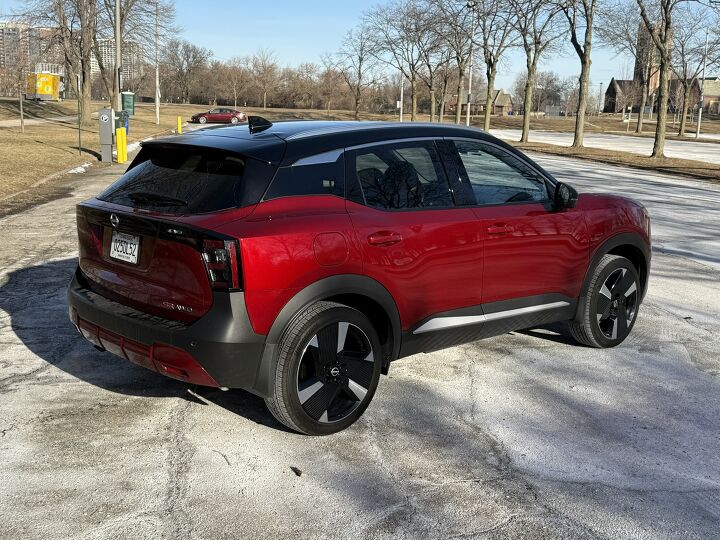
During our first drive in Southern California, I complained about the Kicks needing more grunt for hilly two-lanes. That’s not an issue in urban Chicago — and the Kicks is primarily setup as a city car. That lack of torque is still annoying when it comes to freeway merging or passing, but for the stoplight-to-stoplight dash, it’s fine.
It’s a similar story with handling. Nissan’s tuning for this model is much, much better than what was seen in the first-gen Kicks, and while this is no sports hatch, you’ll be just fine in regular urban and suburban driving.
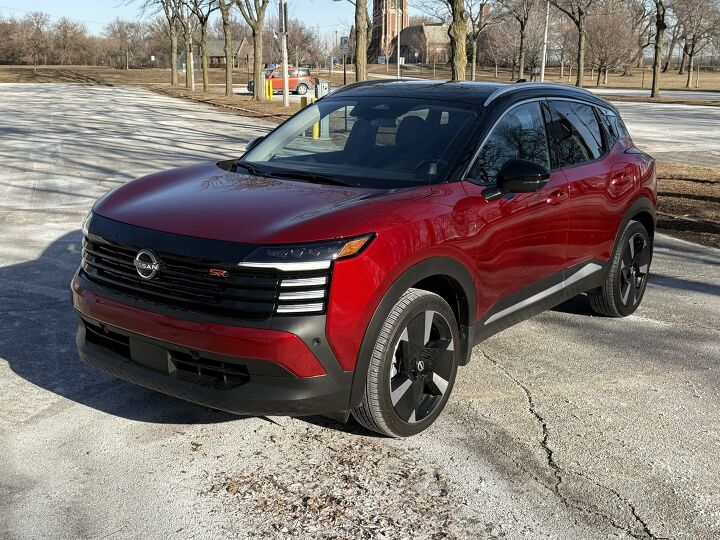
The ride is slightly stiff but acceptable even on Chicago’s crappy streets, and the all-wheel drive system doesn’t make the car feel especially heavy. As an urban runabout, this Kicks is better than the previous — it’s more engaging and even flirts with fun, without sacrificing utility or commuter comfort.
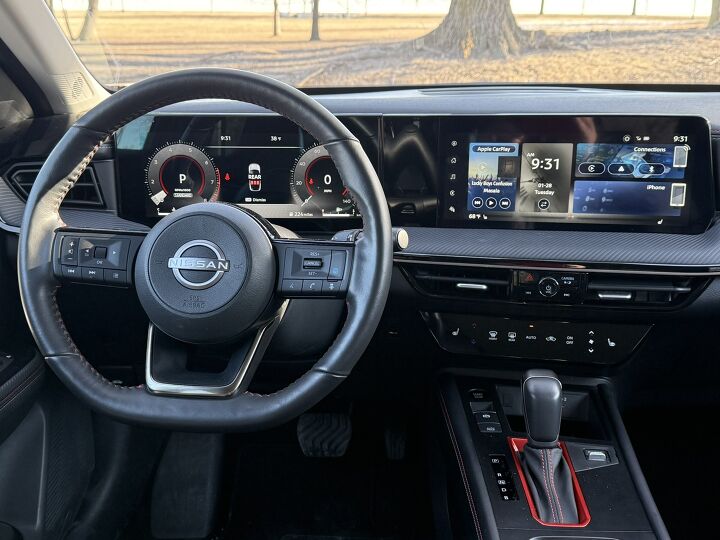
The new cabin is screen-heavy and uses haptic touch for the climate controls — but as apprehensive as we can be about the latter, it works well enough in daily use. I don’t recall having any difficulty getting the proper setting just right.
There’s legroom and headroom aplenty up front, even for taller humans, but the roofline cuts into rear-seat headroom. At least legroom in back is acceptable, and the “Zero Gravity” seats in the front are very comfortable for long stints. I also dug the available Bose in-seat speakers.
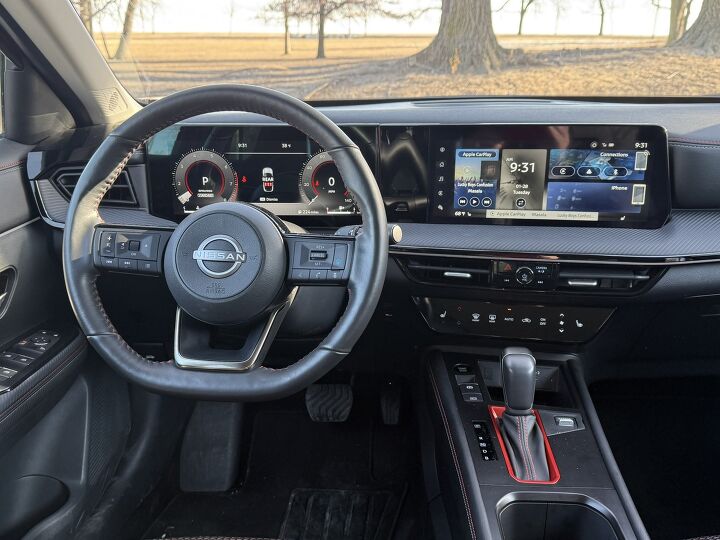
There are downsides — the lack of factory nav on top trims is an understandable cost-saver in a day and age when we all use smart-phone mirroring, but it will still annoy those few who don’t use Apple CarPlay and Android Auto. As mentioned, acceleration is a bit lacking when the right foot goes to the floor. And at times, certain materials or noises remind you that you’re not playing in high finance.
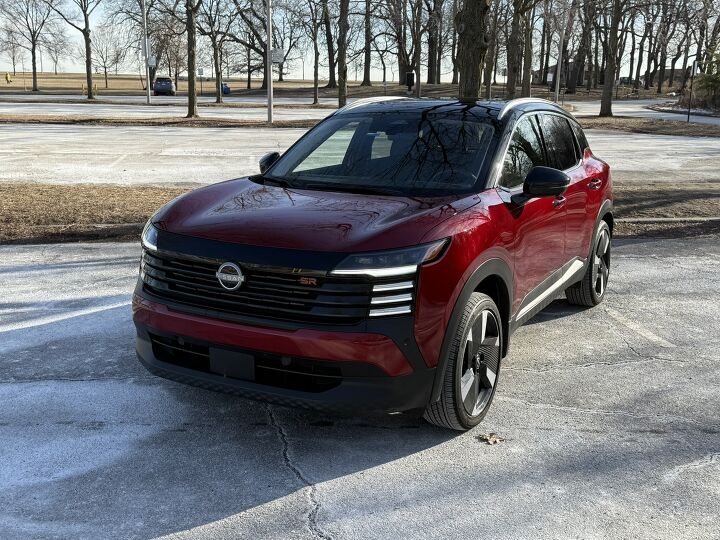
Speaking of pricing, the Kicks isn’t cheap in SR trim with AWD, but it is reasonable. The base price for this top trim car is $27,680 and that number includes standard features like the all-wheel-drive system, automatic emergency braking with pedestrian detection, rear cross-traffic alert, lane-departure warning, intelligent lane intervention, blind-spot warning, blind-spot intervention, high-beam assist, hill-start assist, ProPilot Assist, 360-degree camera, traffic-sign recognition, intersection assist, front parking sensors, keyless entry and starting, leatherette seats, USB-C ports, wireless Apple CarPlay, wireless Android Auto, and LED exterior lighting.
Options included the $1,950 AWD Premium Package, which included the Bose audio, panoramic moonroof, heated mirrors, heated steering wheel, heated front seats, remote start, and rain-sensing wipers. Other options included splash guards ($250), crossbars ($355), 19-inch alloy wheels, spare tire ($180), and two-tone paint. Total price, including the $1,390 destination fee, was $32,485.
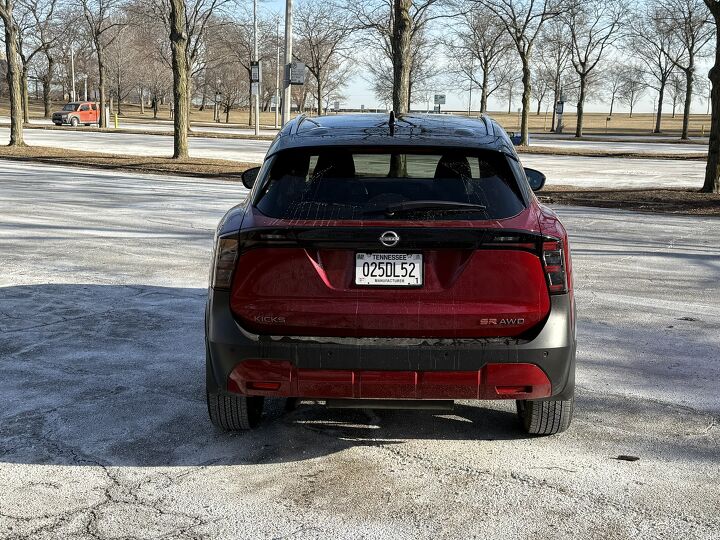
The second-gen Kicks is most of what the first-gen should’ve been. A pinch more sport and/or power wouldn’t hurt, and you can tell where Nissan sought to cut costs if you look closely. But this generation is better-looking, more engaging to drive, and more comfortable inside. As a bonus for Snow Belters, you can get all-wheel drive.
Nissan set out to replace the Juke and Cube with the first-gen Kicks. It wasn’t a total flop, but it didn’t fully hit the mark.
That’s not the case with the new one — it’s pretty on-target for what it’s mission is.
Sometimes, the second chance is necessary.
[Images © 2025 Tim Healey/TTAC.com]
Become a TTAC insider. Get the latest news, features, TTAC takes, and everything else that gets to the truth about cars first by subscribing to our newsletter.
