

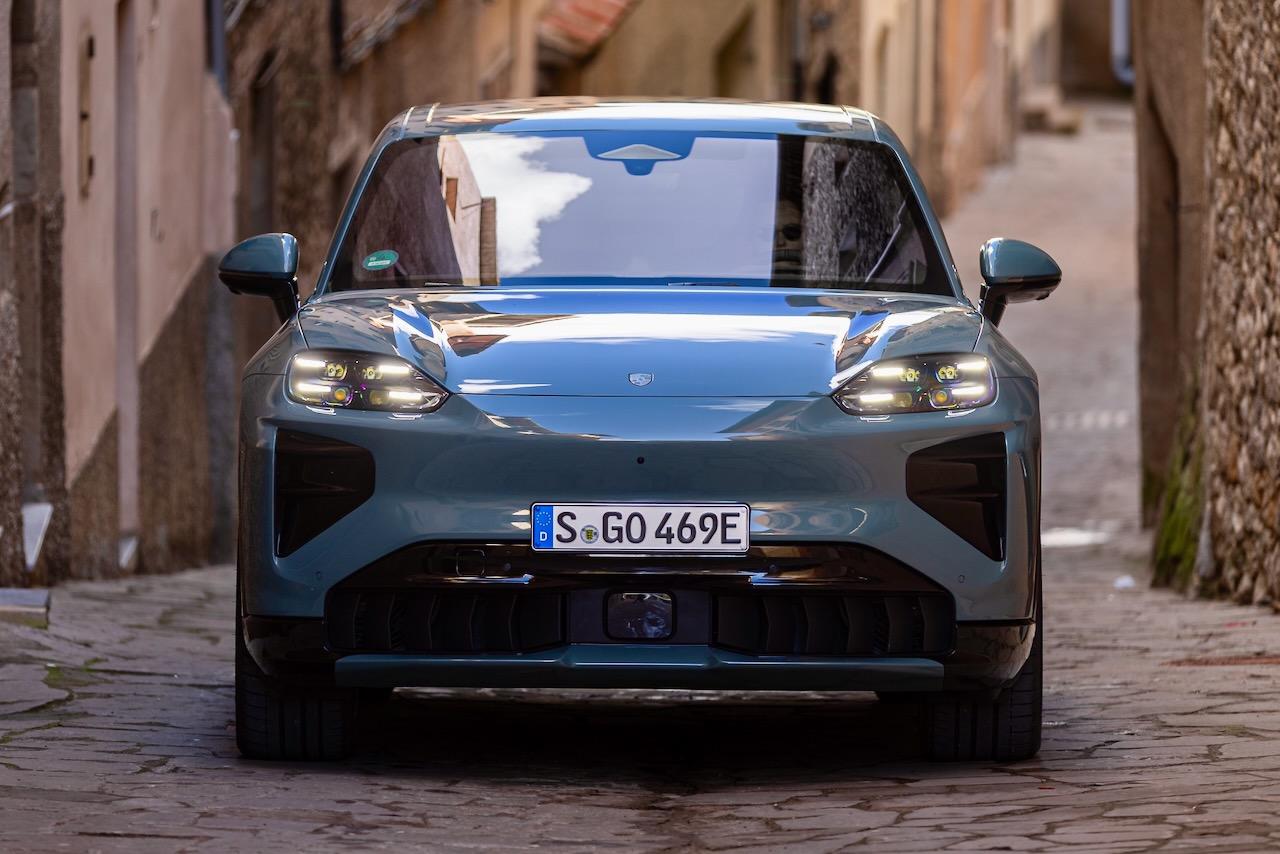
After 24 years and three generations, Porsche’s original SUV, the Cayenne, has followed the smaller Macan’s lead and gone to electric power for its fourth outing.
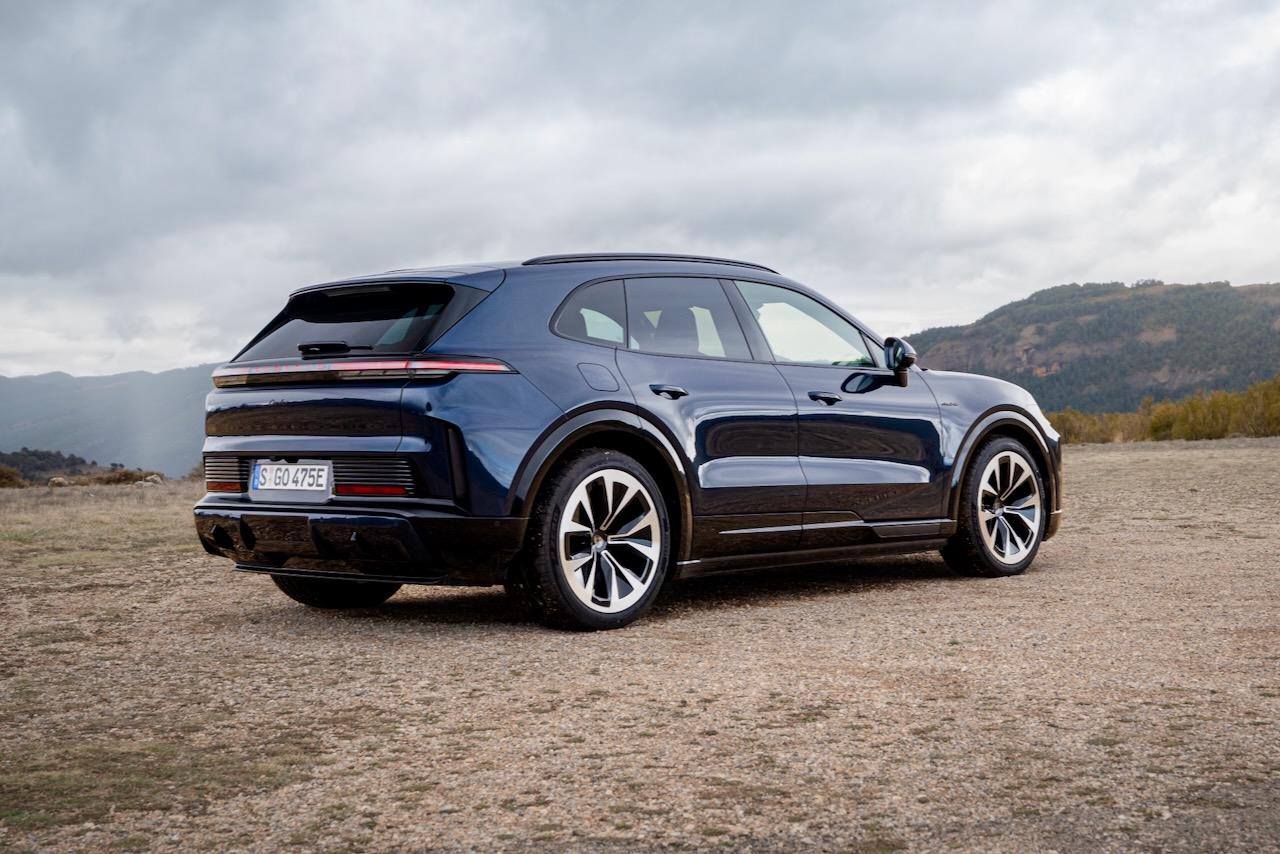
Fret not, though; the petrol and hybrid powered versions of the current Mk3 Cayenne will continue on sale until “well into the next decade” to provide Porsche’s SUV customers with plenty of choice.
But back to the new EV. Three variants will be be available from launch, and no Cayenne Electric is what you’d call slow – but the eye-catching 850kW peak power output of the range-topping Turbo means this large SUV will deliver a full 327kW more punch than the current Porsche 911 Turbo S T-Hybrid sports car.
The key thing, though, is that fitting the Cayenne with a big enough battery to provide a circa-650km driving range, plus also equipping it with the necessary chassis hardware to cope with the outrageous power outputs the Turbo is capable of generating, makes this a heavy beast – so will it handle like a ‘proper’ Porsche?
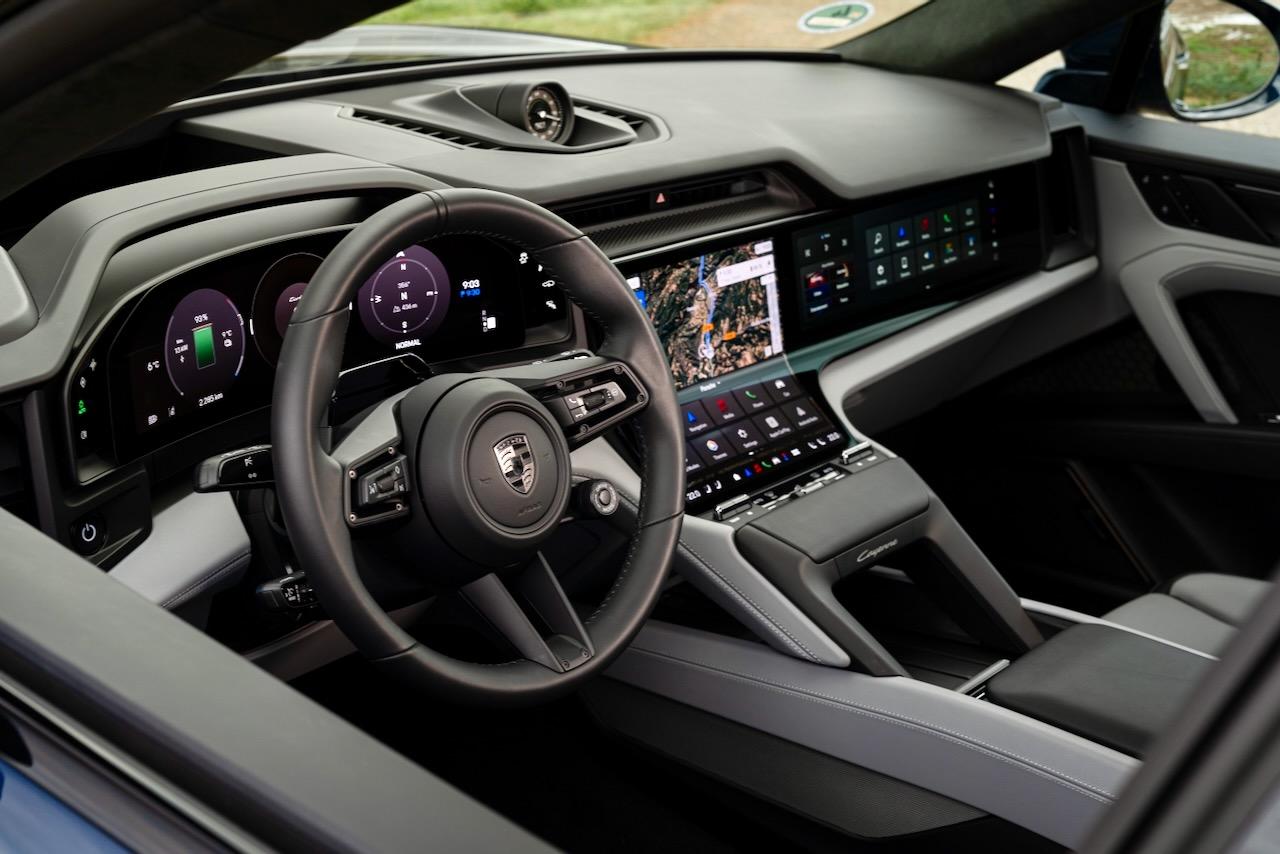
To answer that question, we headed to the car’s international launch, centred out of Barcelona and heading into some astonishing driving roads in the foothills of the Pyrenean mountains, to see if the Porsche Cayenne Electric is a hit or a miss.
How much does the Porsche Cayenne Electric cost?
We know that the base Cayenne Electric and then the Turbo will arrive in Australia first, in the middle of 2026, with the mid-range Cayenne S Electric following a little later this year.
| Model | Price before on-road costs |
|---|---|
| 2026 Porsche Cayenne Electric | $167,800 |
| 2026 Porsche Cayenne S Electric | $193,100 |
| 2026 Porsche Cayenne Turbo Electric | $259,900 |
The entry-level Cayenne Electric will start from $167,800 before on-road costs, while the S will command $193,100 plus on-roads, and the mighty Turbo will push all the way up to $259,900 plus ORCs.
With the existing Cayenne wagon priced from $144,900 (the new Cayenne Coupe Electric is yet to be revealed or priced), none of these new electric variants are what you’d call cheap.
But there’s a notable overlap between the base-grade Cayenne Electric and the smaller Macan Electric lineup, which is priced between $129,800 and $187,600 plus ORCs, which perhaps better justifies the pricing of the new Cayenne EV.
To see how the Porsche Cayenne lines up against the competition, check out our comparison tool
What is the Porsche Cayenne Electric like on the inside?
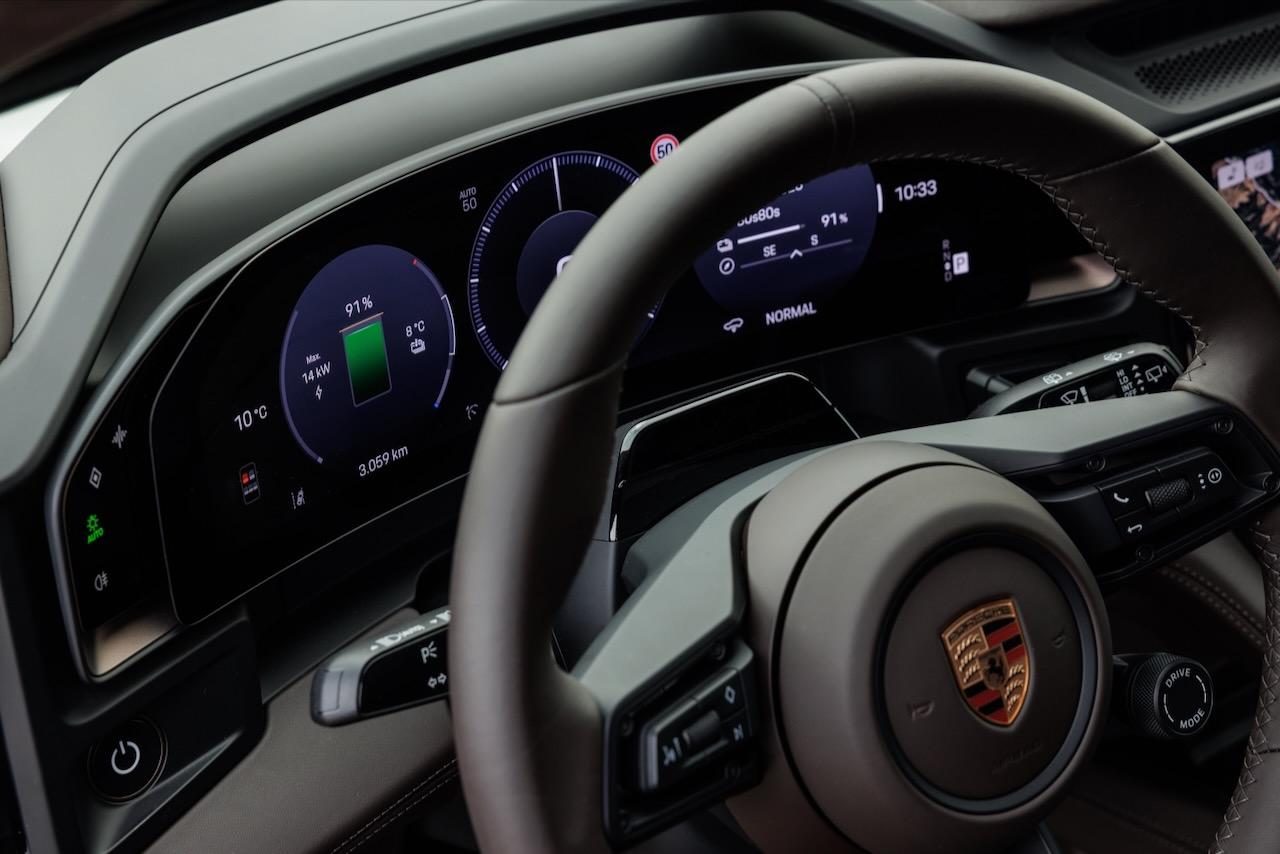
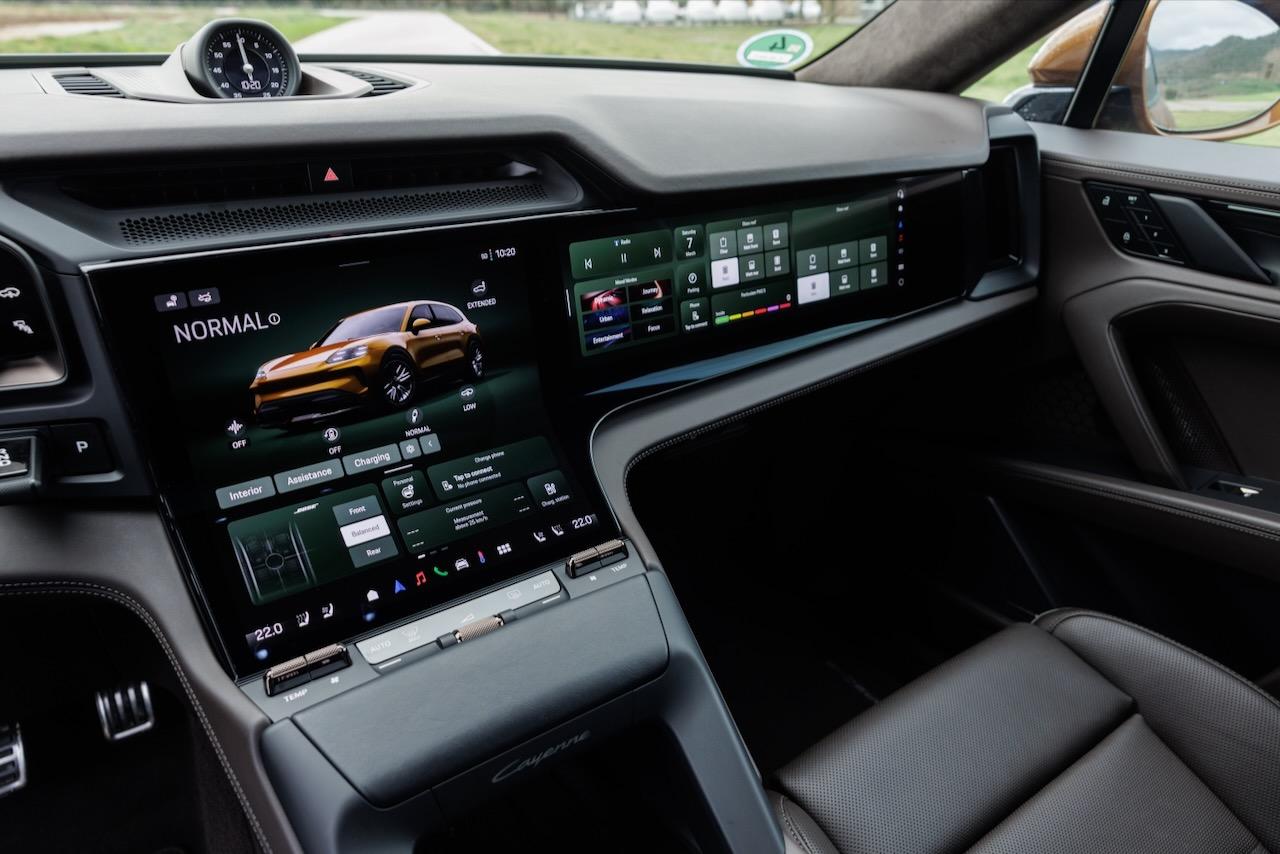
An all-new interface system in the Porsche Cayenne Electric couples with the German company’s typically superb grasp of ergonomics, to deliver a passenger compartment that’s another major success for the firm.
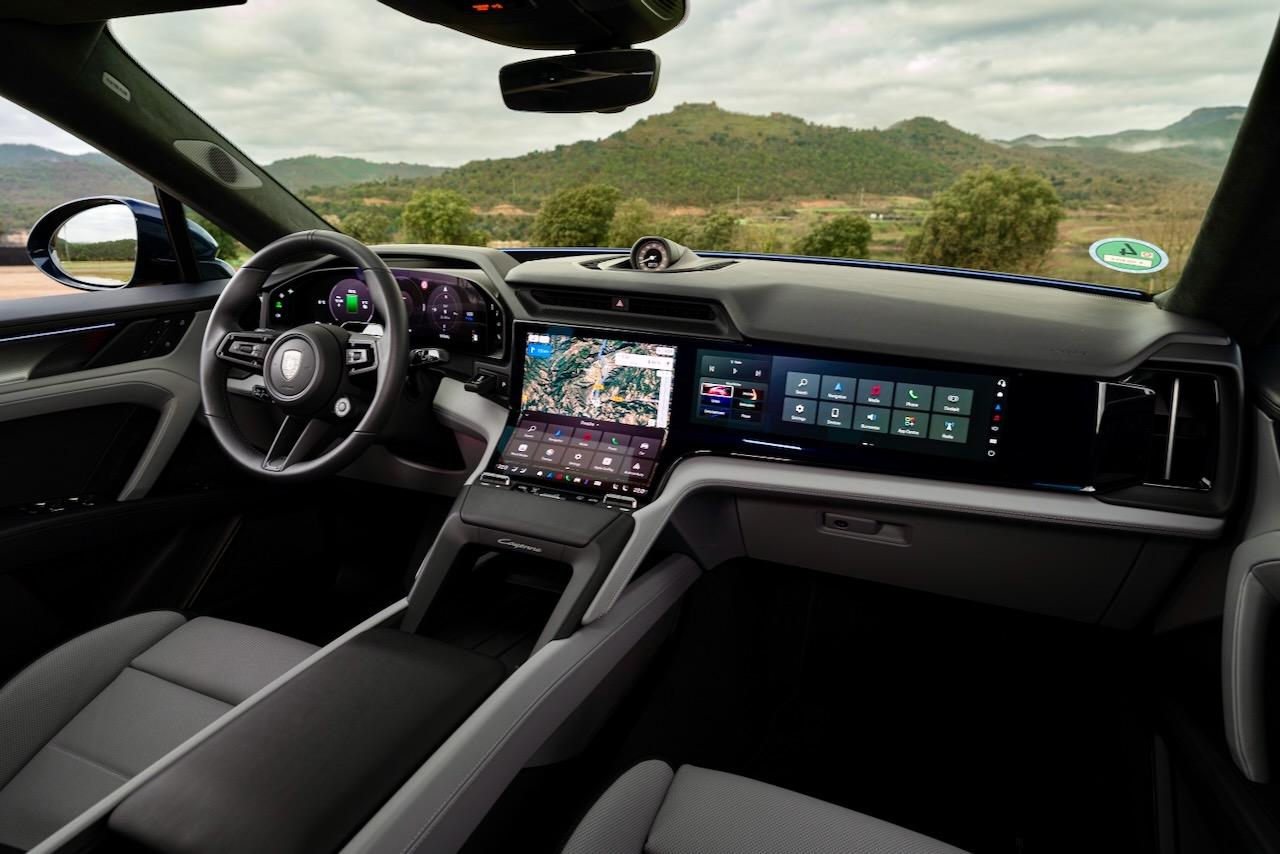
As befits a technologically advanced EV, the interior of the Cayenne Electric is predicated on a three-screen digital setup which Porsche says is 50 per cent larger by area than anything found in the Mk3 variant of the SUV.
The star of the show here is the so-called ‘Flow Display’, a large OLED screen in the centre of the dash. This is a curved panel, although more accurately it has a lateral kink in it about a third of the way up, with graphics smoothly flowing from the lower, angled portion of the display to the upright larger section above.
It’s a delight to use and it looks sharp from a graphical perspective too.
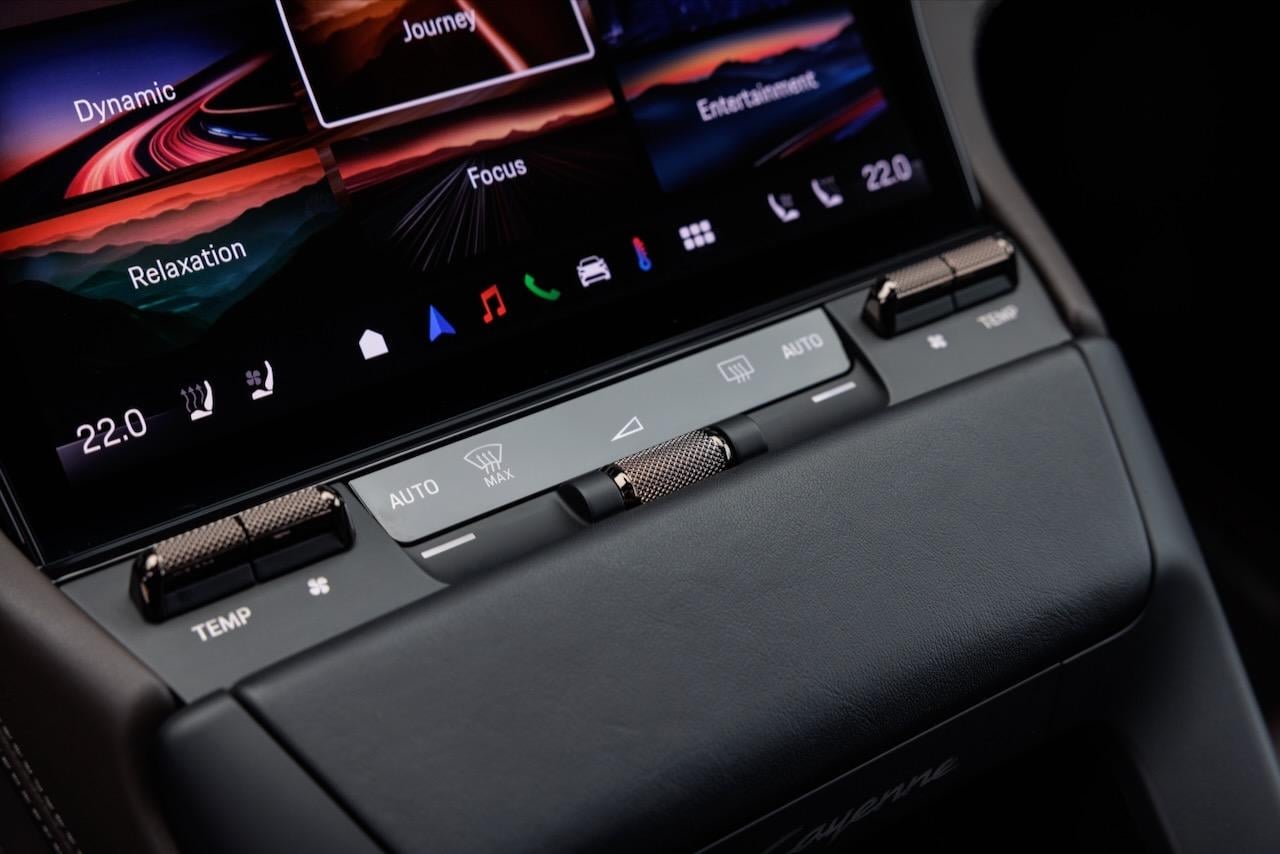
Crucially, though, Porsche remembers the end-user’s operating needs, retaining physical controls for the Cayenne’s climate system, while also providing a hand rest pad beneath the Flow Display so that you can still successfully tap at its display even if you’re driving on a bumpier road.
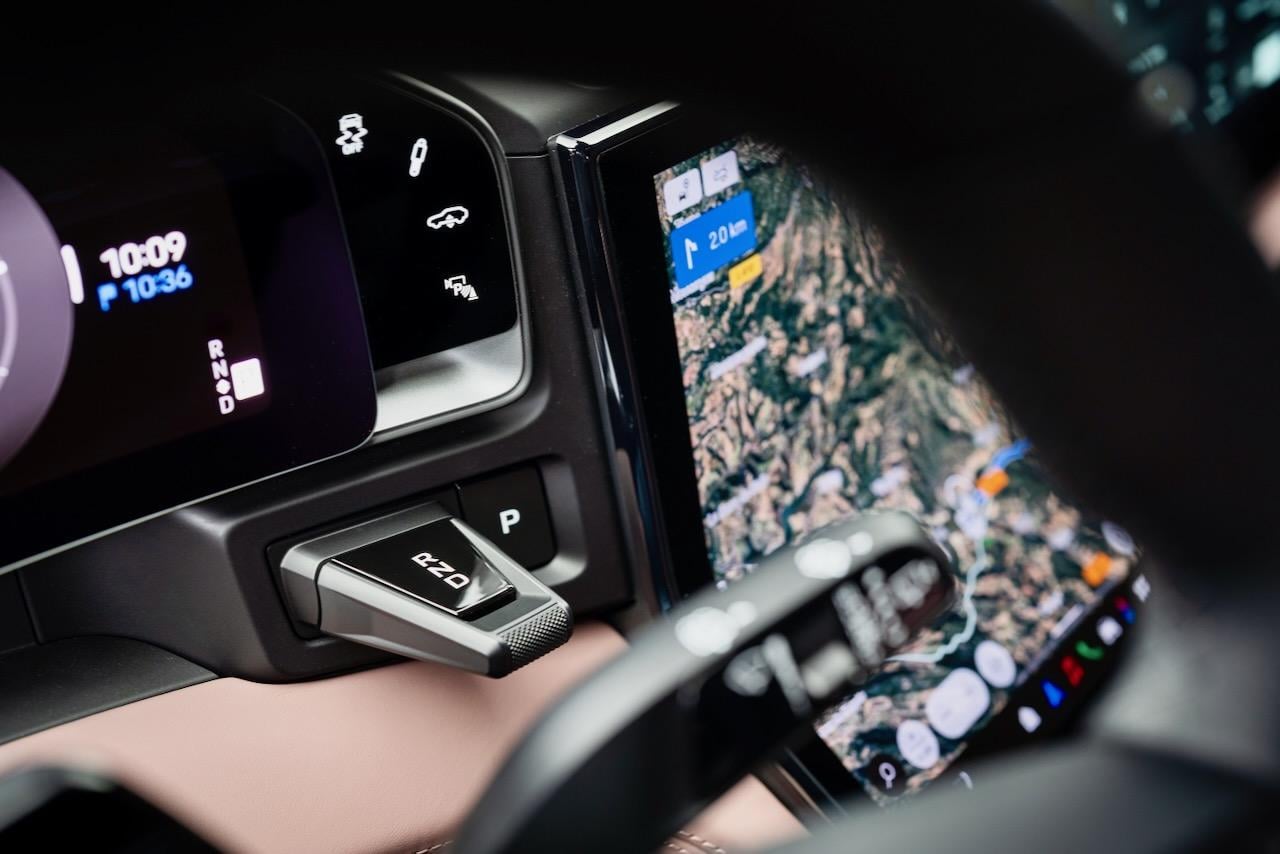
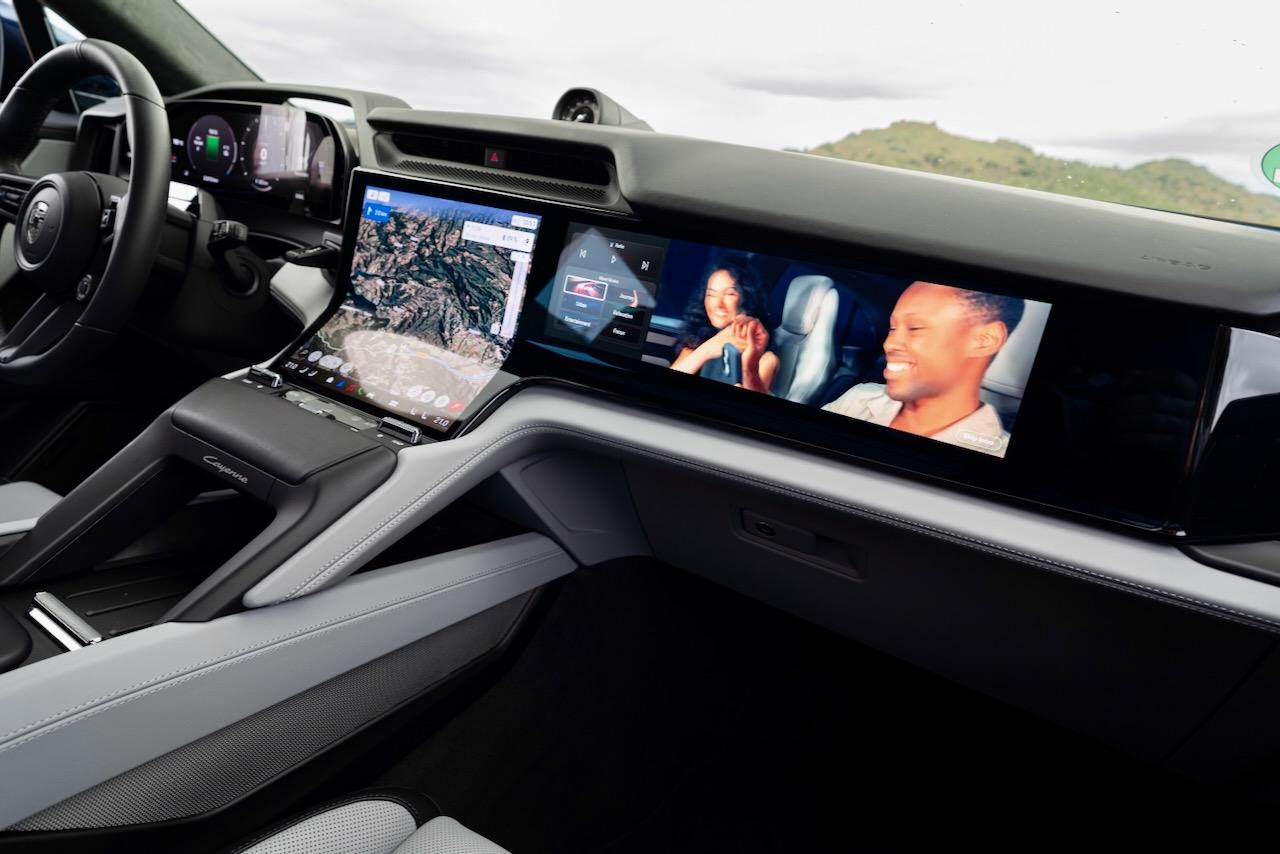
Flanking the Flow Display are two more familiar Porsche items, the Curved Display digital instrument cluster and the Passenger Display touchscreen for the other side of the dash.
Both of these are bigger than in other Porsche cars, though, measuring 14.25 and 14.9 inches across the diagonals, respectively.
There’s also a snazzy augmented reality head-up display in the SUV, although that’s an option for base-spec Cayenne Electric vehicles.
Generally, the material quality up top, particularly of the items and switches you will typically touch and use during driving, feels bang-on the money.
But there are some odd areas of less premium-looking finishing in more hidden-away bits of the interior, and there was a suspicion on a few of the test cars that the leather on the driver’s seat was already beginning to sag.
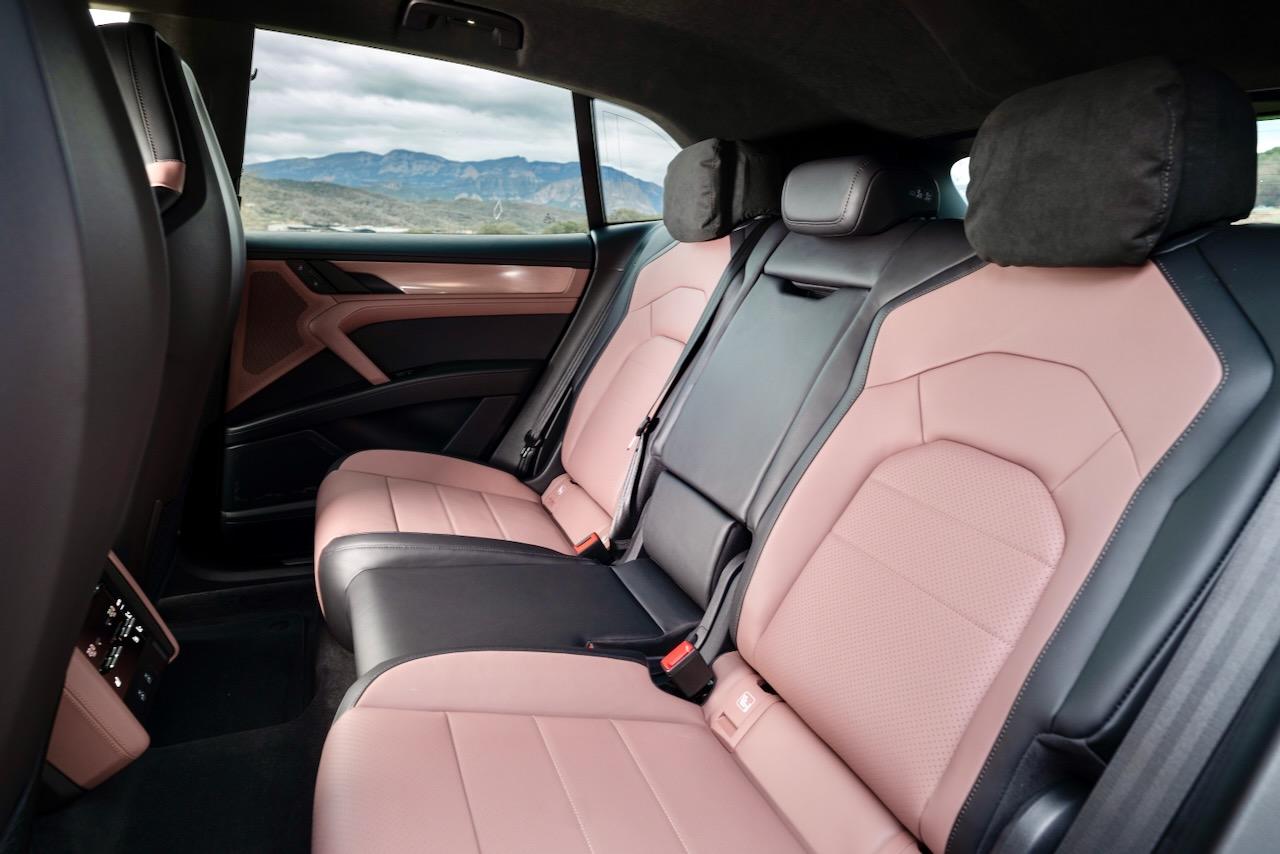
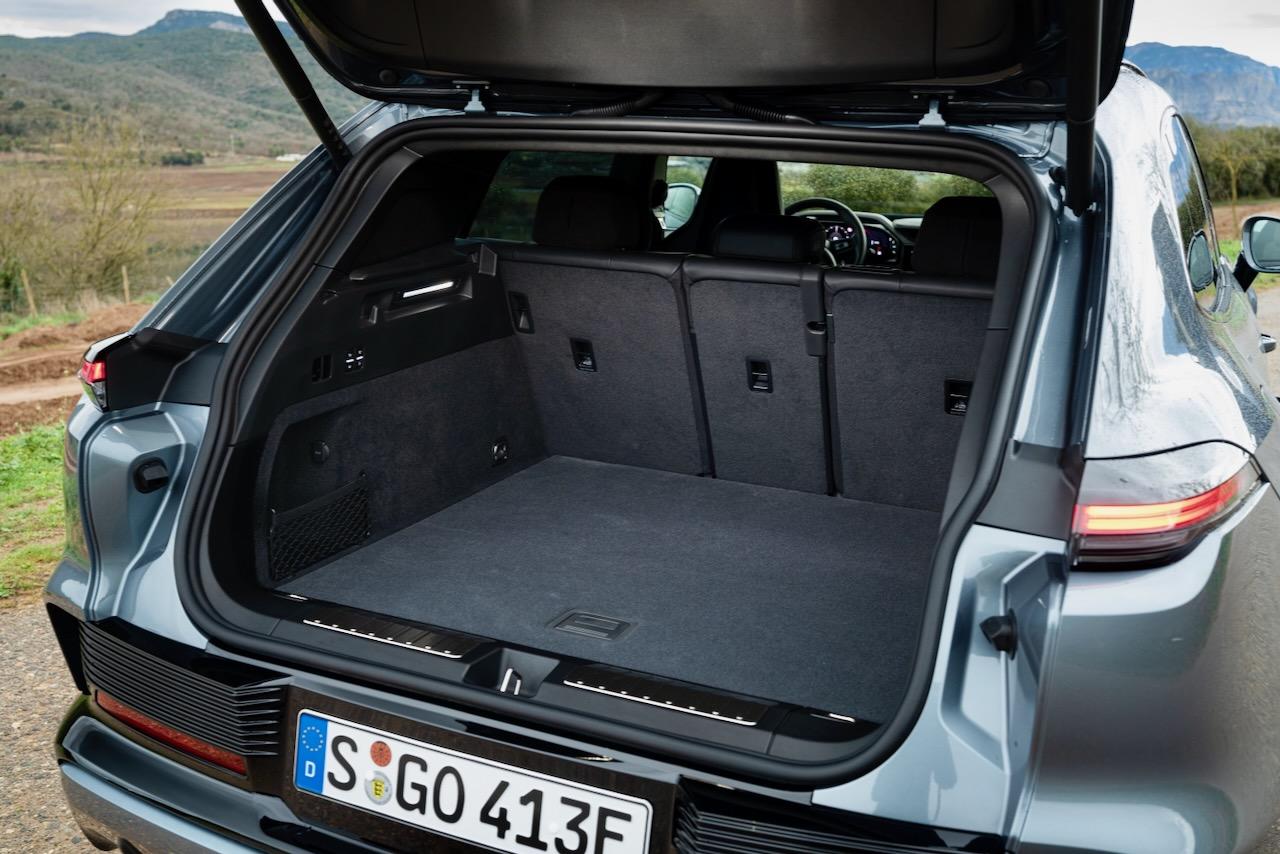
However, in terms of space, there’s acres of the stuff. The wheelbase of the Cayenne Electric is more than three metres long, so passengers sitting in the second row have plenty of loafing room, while the boot is ginormous with a stated capacity of 781 litres with all seats in use.
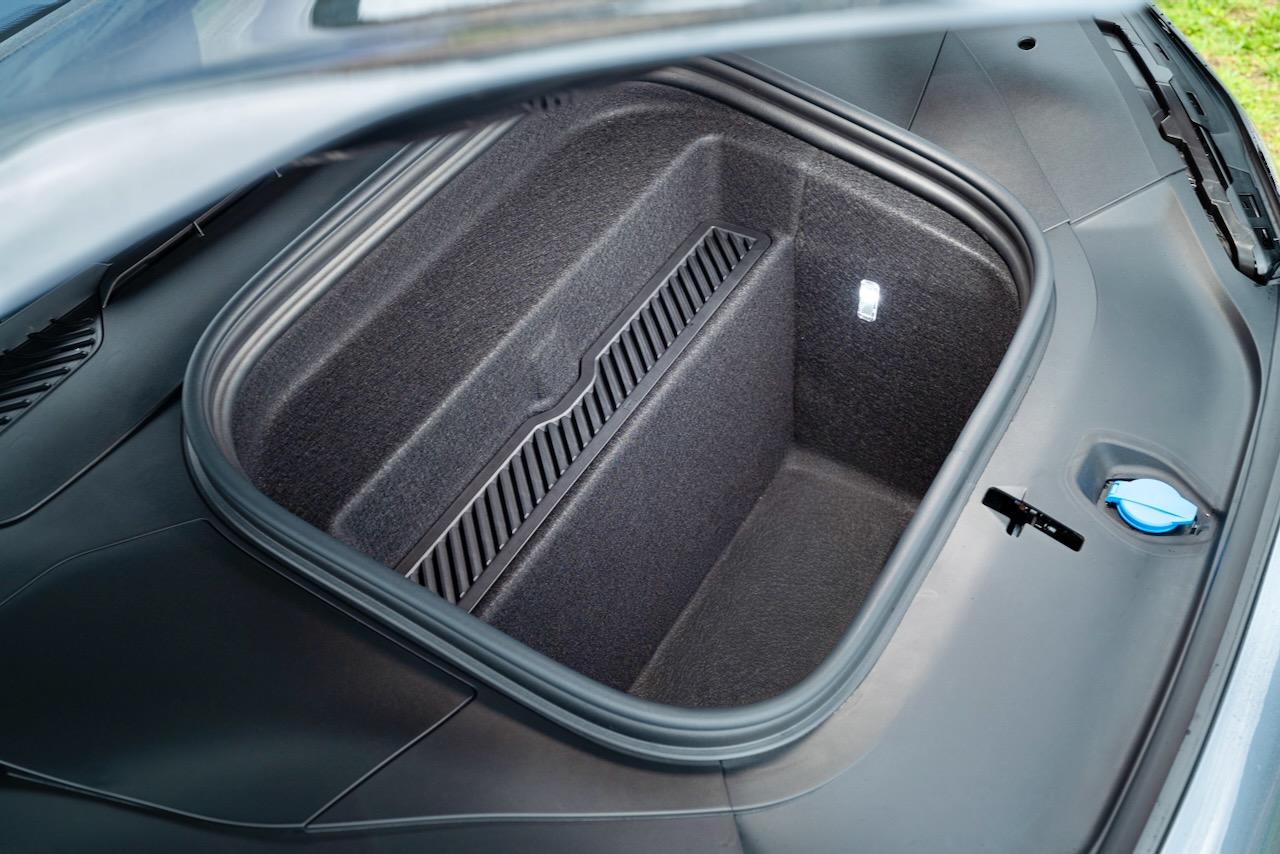
It rises to a slightly-less-gobsmacking 1588L with the second row folded down, but Porsche’s biggest EV manages to offer a front luggage compartment of 90L as well as the main cargo bay, so storage solutions are pretty decent in this SUV.
| Dimensions | Porsche Cayenne Electric |
|---|---|
| Length | 4985mm |
| Width | 1980mm |
| Height | 1674mm |
| Wheelbase | 3023mm |
| Cargo capacity | 90L (front compartment) 781L (rear seats up) 1588L (rear seats folded) |
To see how the Porsche Cayenne lines up against the competition, check out our comparison tool
What’s under the bonnet?
Lots and lots of electrical power. All versions of the Cayenne Electric have a ‘nominal’ output, which is what they make in their most benign drive modes, as well as a peak figure which they can summon up for a time-limited phase when using Launch Control.
| Specifications | Porsche Cayenne Electric | Porsche Cayenne S Electric | Porsche Cayenne Turbo Electric |
|---|---|---|---|
| Drivetrain | Dual-motor electric | Dual-motor electric | Dual-motor electric |
| Battery | 108kWh NMC lithium-ion | 108kWh NMC lithium-ion | 108kWh NMC lithium-ion |
| Power | 325kW (launch control) | 490kW (launch control) | 850kW (launch control) |
| Torque | 835Nm (launch control) | 1080Nm (launch control) | 1500Nm (launch control) |
| Drive type | All-wheel drive | All-wheel drive | All-wheel drive |
| Weight | 2525kg | 2555kg | 2645kg |
| 0-100km/h (claimed) | 4.8 seconds | 3.8 seconds | 2.5 seconds |
| Energy consumption (claimed) | 19.7-21.8kWh/100km | 19.5-21.6kWh/100km | 20.4-22.4kWh/100km |
| Energy consumption (as tested) | NA | NA | 35.0kWh/100km |
| Claimed range | 643km | 653km | 624km |
| Max AC charge rate | 22kW | 22kW | 22kW |
| Max DC charge rate | 400kW | 400kW | 400kW |
Further, both the S and the Turbo have ‘Push To Pass’ buttons on their steering wheels, which lift their power and torque outputs from the base level in each instance, although in the Turbo it won’t deliver its system maximum in this 10-second setting either.
Starting with the Cayenne Electric, it offers 300kW from the off and can climb to 325kW in Launch Control. This means its claimed 0-100km/h time is 4.8 seconds and the top speed is 230km/h, while Porsche also cites an 18.4-second time for the 0-200km/h run; remember this stat when we come back to the Cayenne Turbo Electric in a second.
Sitting in the middle of the pack as the only Cayenne EV we’ve not yet driven is the Cayenne S Electric. This churns out 400kW as a minimum, with both Push To Pass and Launch Control ramping its motors up to produce 490kW.
As a result, the claimed 0-100km/h time comes down to 3.8 seconds, while the V-max goes up to 250km/h.
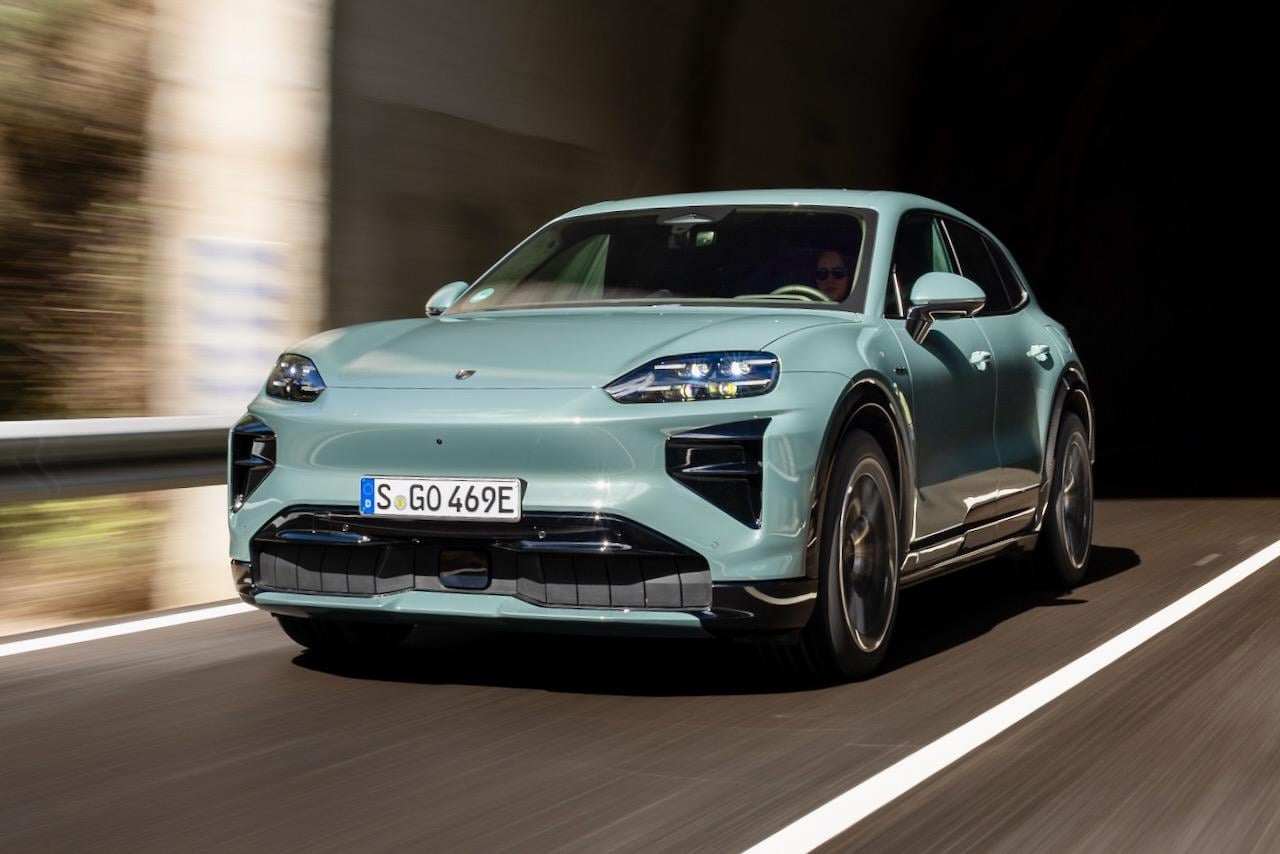
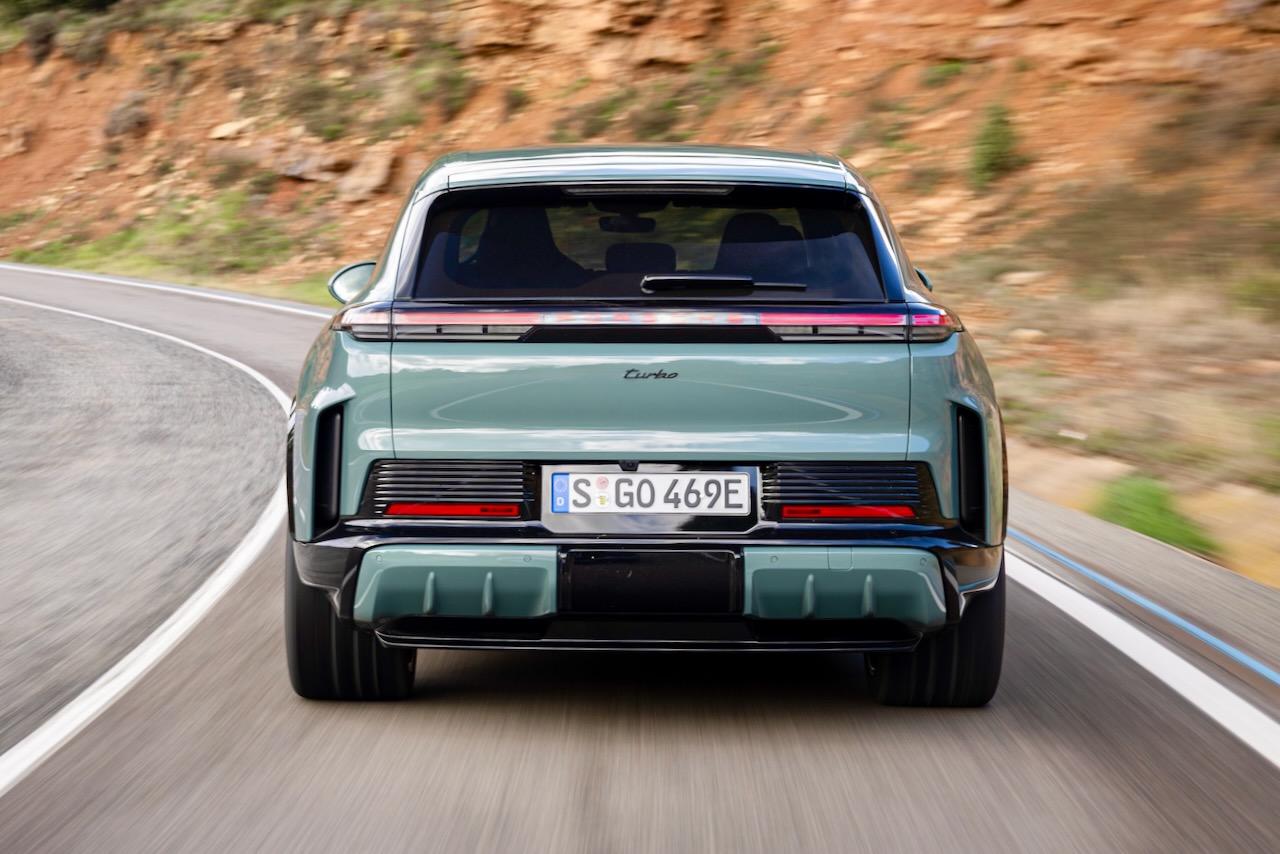
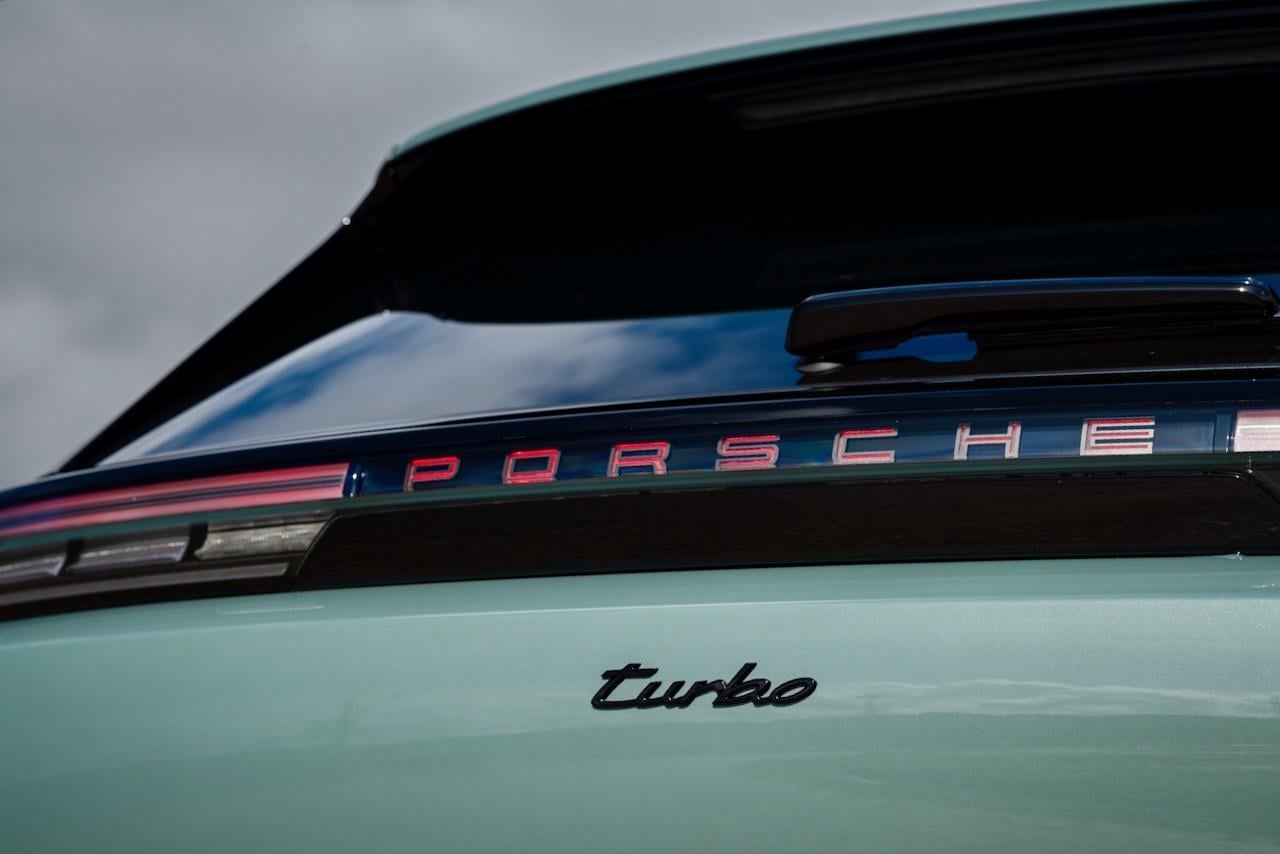
It’s hard not to be distracted by the numbers of the Cayenne Turbo Electric, however. Even in ‘standard’ format, the flagship model is delivering a monstrous 630kW. Press Push To Pass, and for 10 seconds 790kW is available to you. But in Launch Control, an astounding 850kW is on tap.
The performance stats for this car are just as ludicrous. Despite weighing more than 2.7 tonnes with a driver onboard, the Cayenne Turbo Electric’s top speed of 260km/h isn’t that far beyond that of the Cayenne S – but a claimed 2.5-second 0-100km/h time is phenomenal.
And 0-200km/h acceleration? It apparently takes just 7.4 seconds; 11 seconds swifter than the SUV at the other end of its own range, and a second quicker than the 911 Turbo S can manage it.
Incidentally, the peak torque figures of all three Cayennes in Launch Control are 835Nm for the base car, 1080Nm for the S, and a stupendous 1500Nm for the Turbo.
All three versions of the Porsche Cayenne Electric use an NMC li-ion battery pack of 113kWh gross capacity, with 108kWh of that usable.
The WLTP ranges are between 624km for the Turbo and 653km for the S (weirdly, it is said to go a bit further than the lower-output Cayenne, with its 643km value), while advanced 800-volt architecture allows a fastest DC-charging rate of 400kW.
That means a Cayenne Electric can get its battery from 10-80 per cent in less than 16 minutes in the right conditions. Even just 10 minutes of hook-up at such speeds will see 315-325km added to the onboard trip computer’s range readout.
Don’t forget that the Cayenne Electric is also the first car to come to market with inductive (wireless) domestic charging capability, although it’s not yet known whether this feature will become available in Australia.
To see how the Porsche Cayenne lines up against the competition, check out our comparison tool
How does the Porsche Cayenne Electric drive?
We got to drive either end of the Porsche Cayenne Electric range in Spain, starting with a base-level SUV but fitted with a number of desirable options – including 22-inch wheels, adaptive sports front seats, an augmented-reality head-up display, Rear Axle Steering and Porsche Electric Sport Sound (PESS), among others.
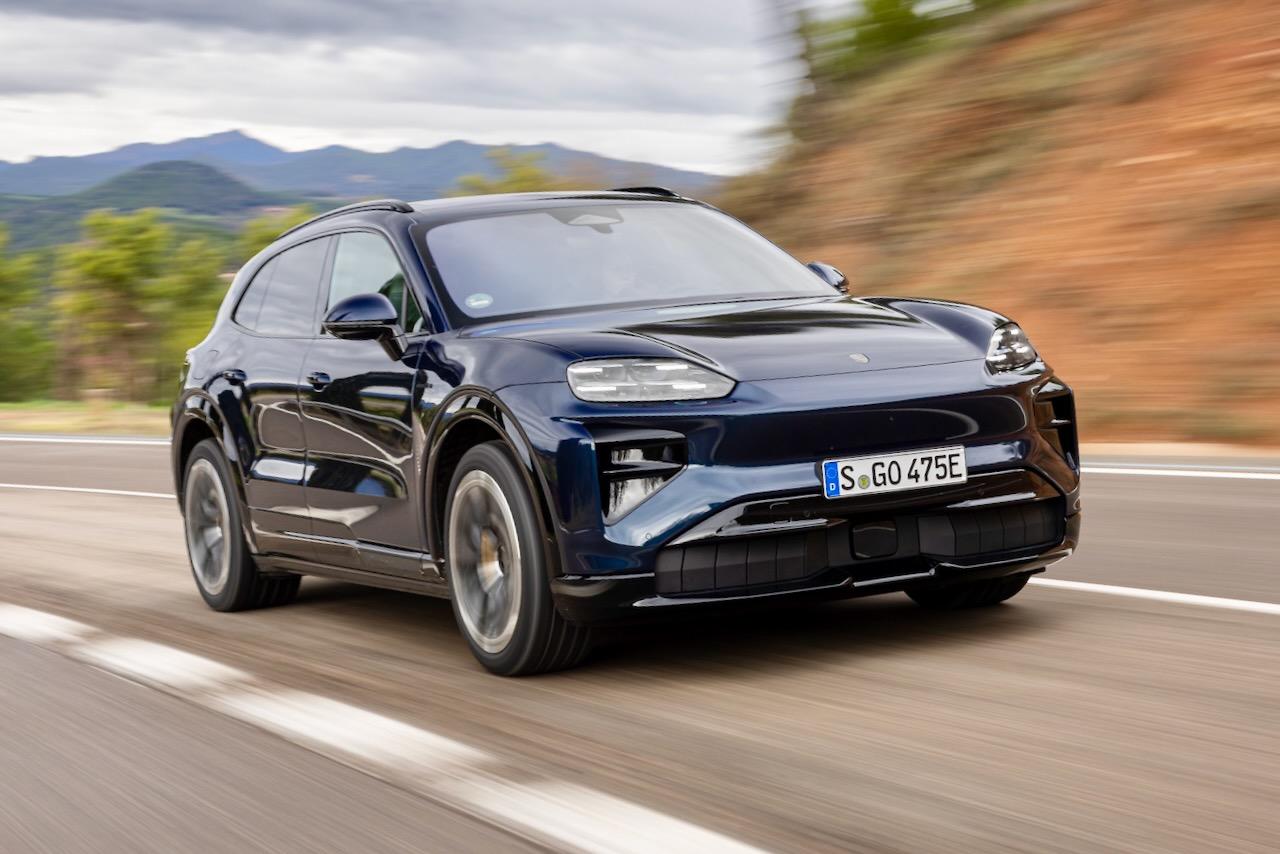
The very brief summation of this car is that, in isolation, you’d be delighted with it. Slick, communicative and positive steering, an impressive level of body and wheel control, robust performance from its dual electric motors and a general sense of it being light on its feet – totally belying its near-five-metre-long, 2.6-tonne mass – all add up to
deliver an edifying driving experience.
Sure, it’s not as thrilling and visceral as something like the old Cayenne GTS with its 4.0-litre biturbo V8, but as top-end SUVs with an emphasis on sportiness go, the regular Cayenne Electric with a few choice extra-cost additions remains one of the best vehicles of its type in the world, regardless of whether the competition is powered by petrol or electricity.
But when you try the Cayenne Turbo Electric out for size, with its higher level of equipment including Porsche Ceramic Composite Brakes (PCCB), Porsche Active Ride (PAR) anti-roll tech and the Porsche Torque Vectoring Plus (PTV Plus) electronically controlled limited-slip diff, you realise pretty much nothing else will do.
The immense speed, obviously, dominates proceedings. Even when you’re only modestly digging into its performance in Comfort and Normal modes, you need to keep a keen eye on the speedo to reaffirm just how quickly it generates tens of kilometres-per-hour at a time.
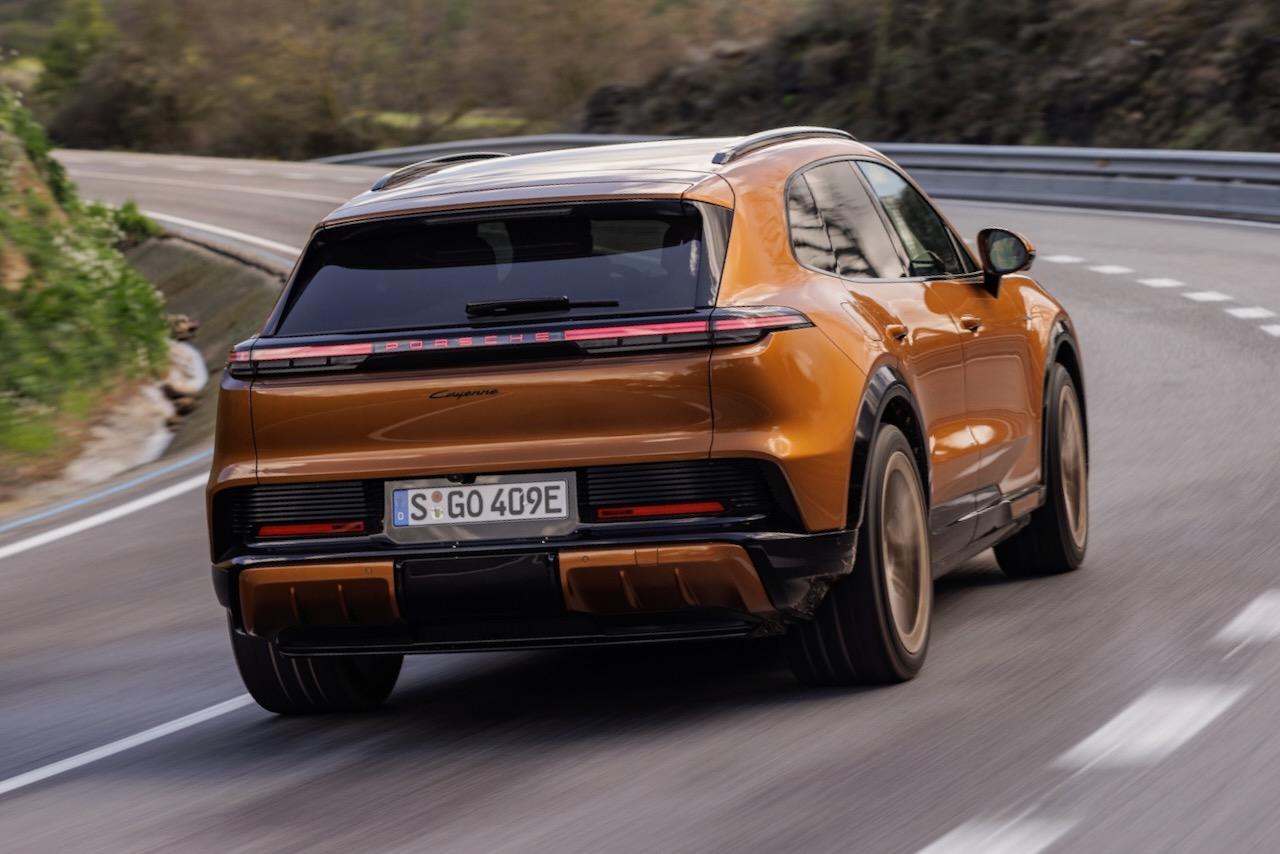
Kudos to the well-judged PESS here, which does its best to accompany the Cayenne Turbo’s ferocious acceleration with noises which are vaguely V8-like in character, and are somehow not in the least bit reprehensible as a result.
But with a single-speed reduction transmission and no simulation of gearchanges coded into the system, it’s still a one-note performance, with the rise in tone of the soundtrack not ever getting near to matching
the terrifying way the SUV can blast through incremental chunks of speed in short order.
And as if the Turbo’s utterly devastating roll-on acceleration wasn’t enough, we then tried Launch Control. Stupidly, we did this on a slight downhill slope as well, which only exacerbated the impression of fully unleashing 850kW and 1500Nm in one go.
As far as we’re concerned, the resulting experience must be what it feels like to be shot out of a cannon. Nothing this big and this heavy has any right to reel in the horizon with anything like the venom the Cayenne Turbo displays.
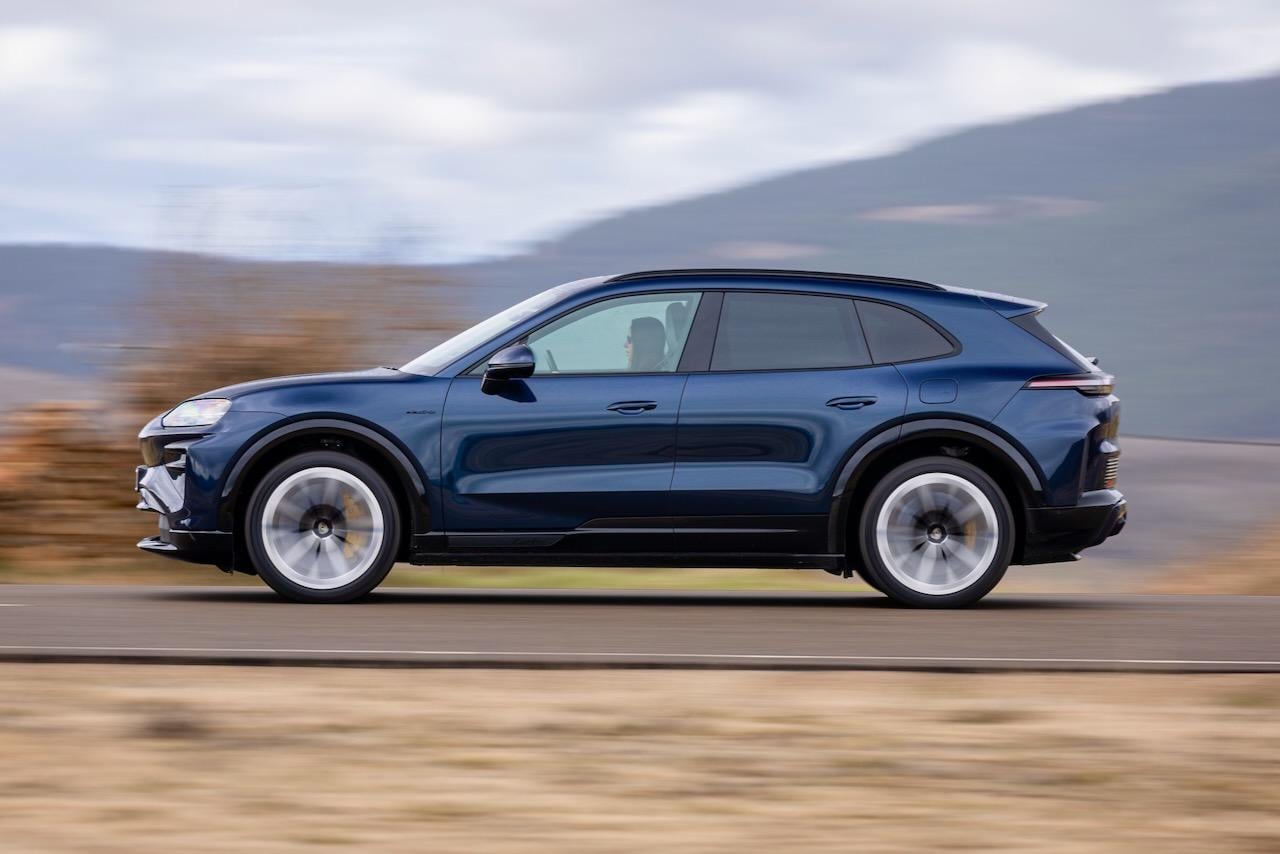
In a very literal sense, it’s breathtaking: while concentrating with all our fibre on the middle-distance as the Porsche ripped off down the road, we realised we’d involuntarily stopped breathing until we let go of the accelerator.
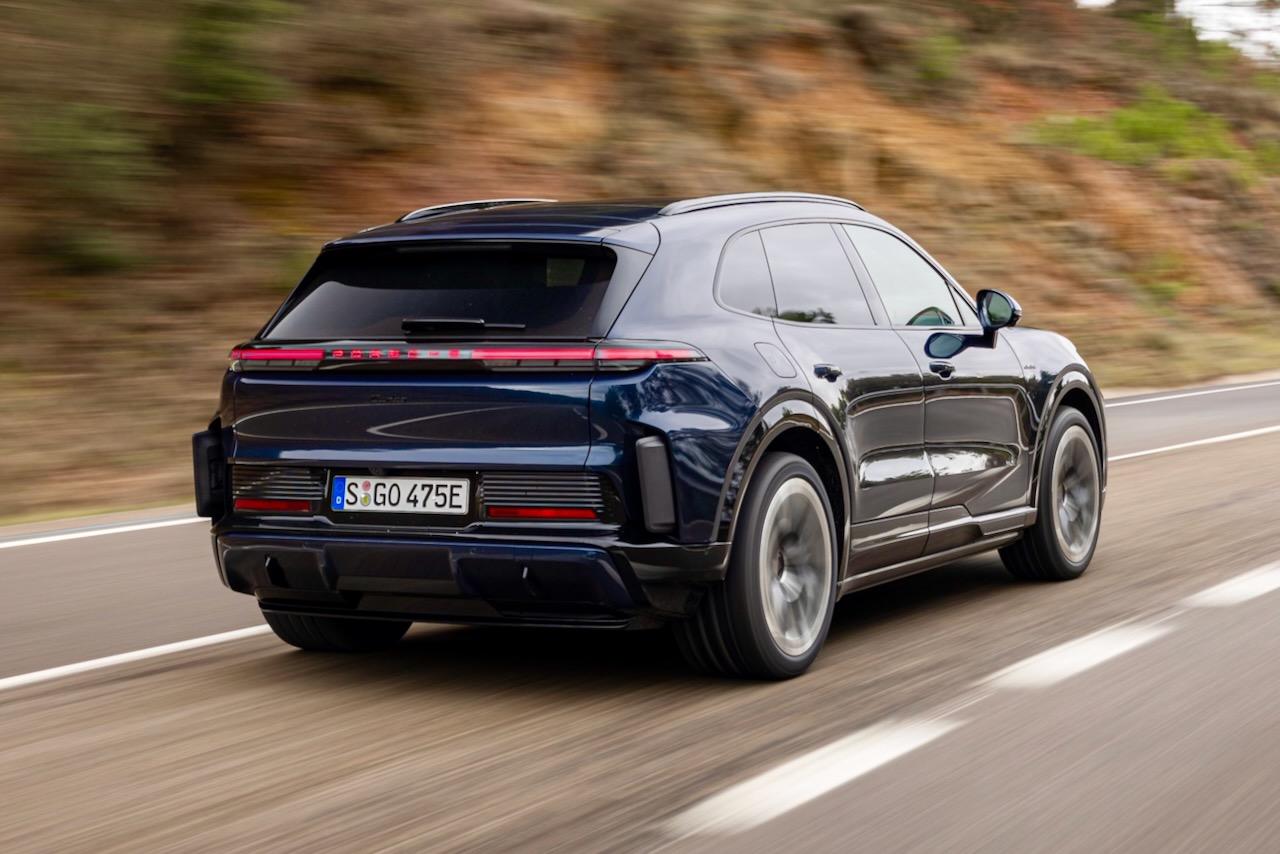
Thankfully, the immensely clever chassis tech in the Cayenne Turbo ensures it feels properly limber, playful and exploitable in the bends. This is no point-and-shoot performance SUV; instead, it’s a properly cohesive, enjoyable and thoroughly rewarding machine to drive quickly on a challenging road.
You never forget its physical size, sitting up as high as you do and looking out over its long, broad prow, but the massive weight of the thing is admirably masked by the superb PAR chassis setup, as well as PCCB brakes which are, quite simply, mega in terms of pedal feel, progression and resistance to any fade.
Driven in a more sensible fashion, the even better news is that the Cayenne Turbo is a paragon of ride comfort and rolling refinement. The PAR again works its magic here by smoothing out even the worst of road imperfections from disturbing the peace in the passenger compartment.
And while there’s an underlying (and totally understandable) firmness and tautness to everything it does, you’re never uncomfortable behind the wheel of the big Porsche EV.
It’s remarkably stable and dignified at motorway speeds, for instance, yet on the other hand the Turbo is completely docile for town work, while the Rear Axle Steering gives it a nimbleness that makes it highly manoeuvrable and easy to live with at lower speeds.
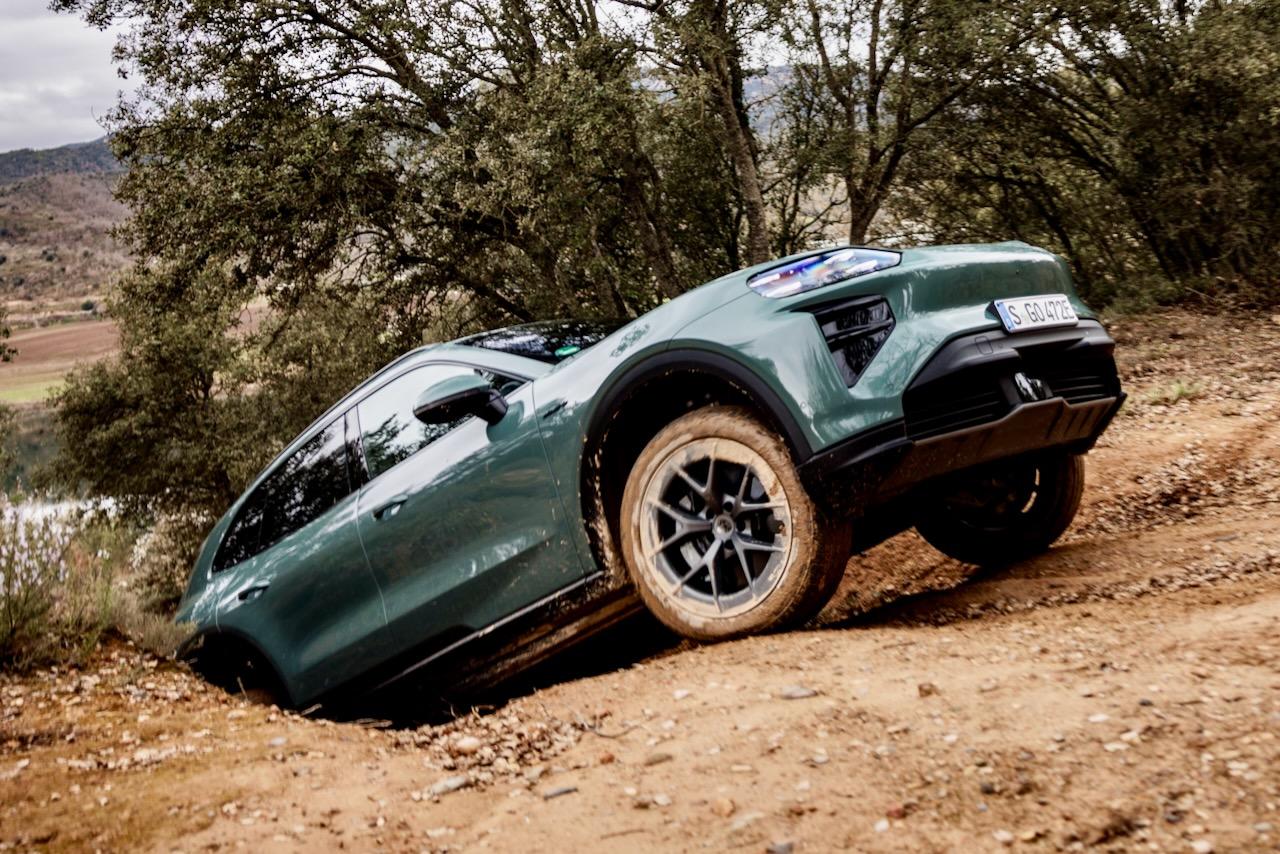
Porsche was keen to show that the Cayenne doesn’t only excel on roads, too. We also did some fairly testing off-roading in a PAR-equipped Turbo Electric absolutely slathered in a thick layer of clag, and the SUV
aced the course.
The manufacturer even offers an Off-Road Package, which – among other details – improves the approach angle of the front bumper to 25 degrees, but while we cannot fault the way the Turbo picked its way around the dusty Spanish scenery, we can’t help feeling it’s far more capable away from the tarmac than it would ever need to be.
After all, you’d have be mad to take your $260k SUV deep into the outback or up Cape York’s Old Telegraph Track, wouldn’t you?
No, it’s on the metalled surfaces where the Cayenne Turbo Electric shines brightest – and in this regard it shines very, very brightly indeed.
It’s a sensational piece of engineering from Stuttgart.
To see how the Porsche Cayenne lines up against the competition, check out our comparison tool
What do you get?
Gone are the days when a basic Porsche came with nothing, as even the entry-level Cayenne has a decent amount of desirable standard kit.
Assuming cars for our market follow the international Cayenne lineup, the equipment levels should run as follows.
2026 Porsche Cayenne Electric equipment highlights:
- 20-inch alloy wheels
- 8-way electric comfort seats with memory and heating front
- Electric rear seats (2+1 configuration)
- Power Steering Plus
- Adaptive air suspension with PASM
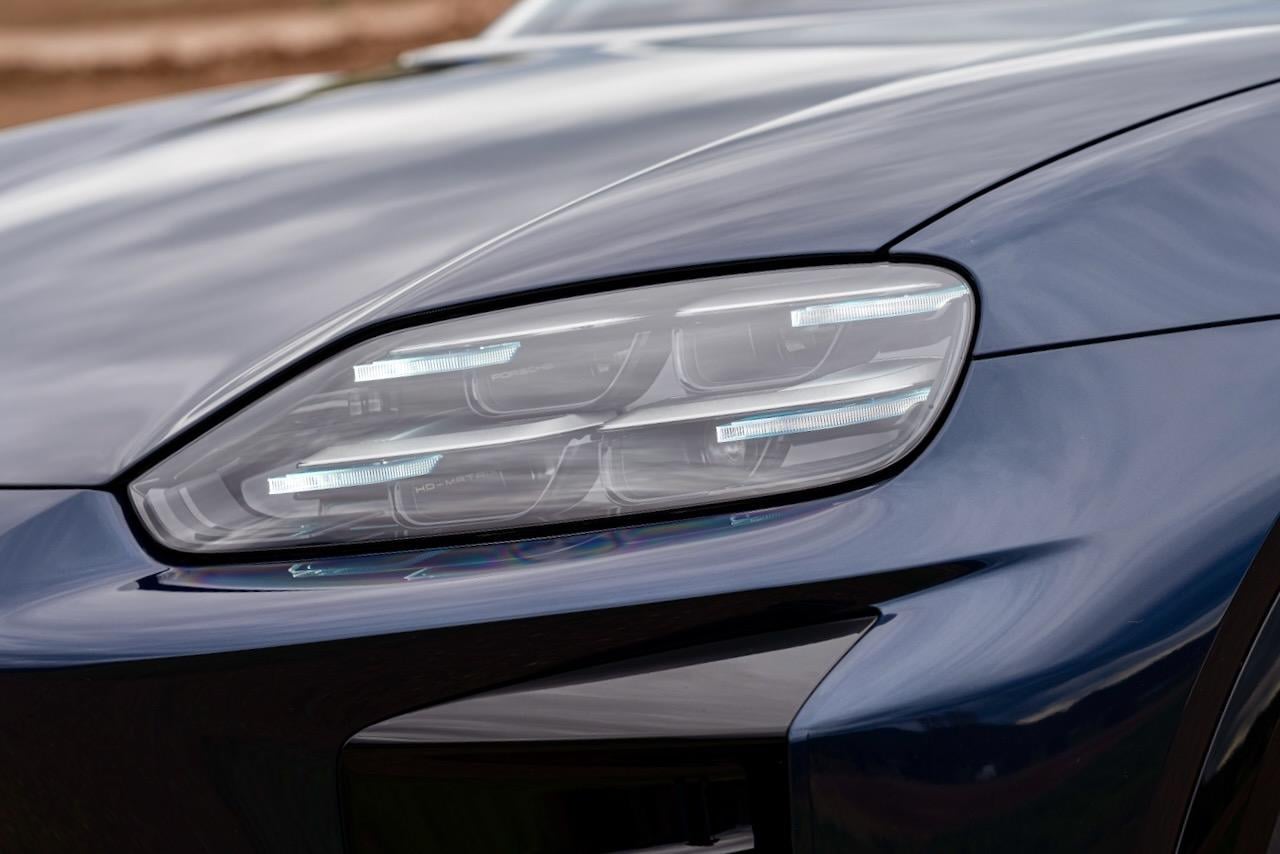
- Matrix-LED headlights
- Heated steering wheel
- Adaptive cruise control
- Dual-zone climate control
- Auto tailgate
- Soft-close doors
- ParkAssist with 2D Surround View
Stepping up to the Cayenne S Electric should bring:
- Cayenne S 20-inch aero wheels
- Privacy glass
- 14-way electric comfort seats with memory and ventilation
- Bose Surround Sound System
- Panoramic roof system
- Four-zone climate control
The Cayenne Turbo Electric should add:
- Cayenne Turbo 21-inch aero wheels
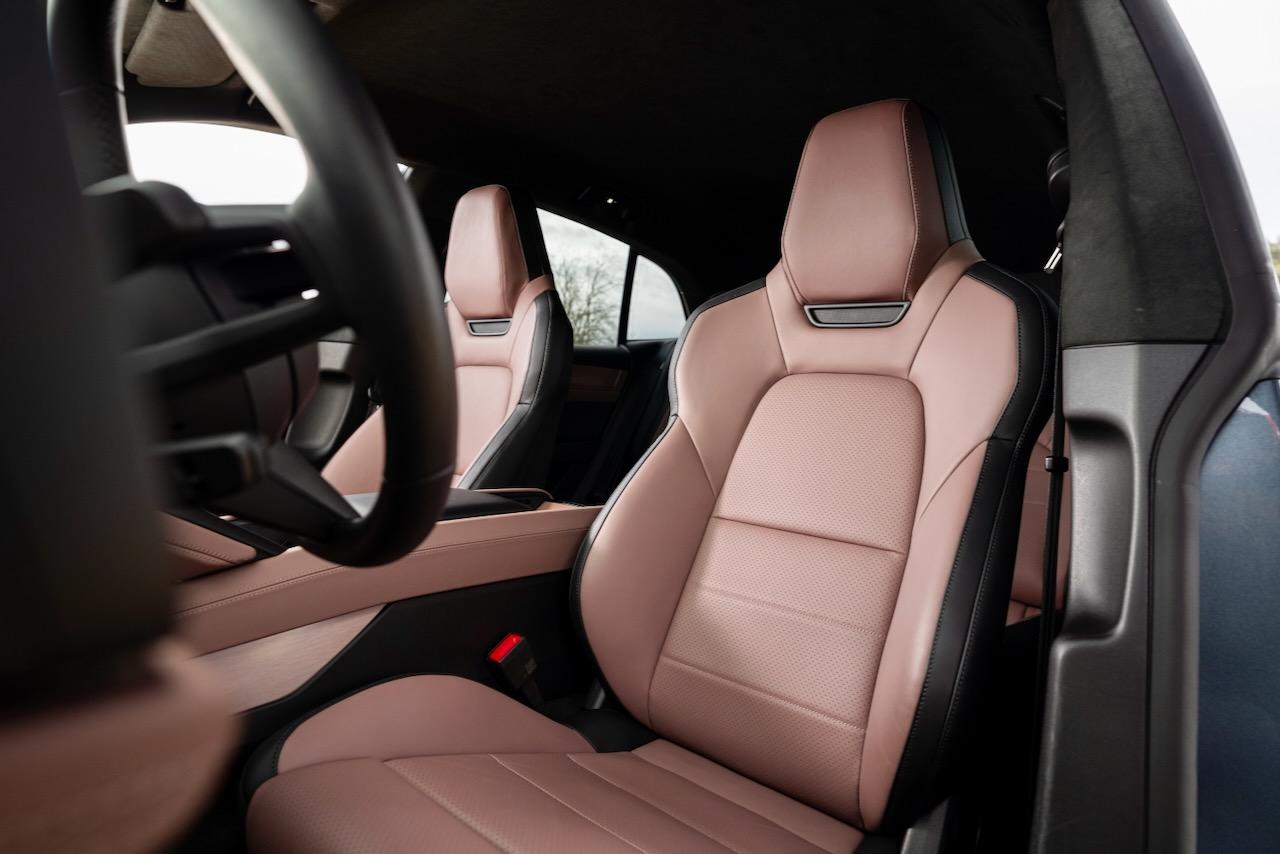
- 18-way adaptive sports seats, front
- Heated rear seats
- Porsche Torque Vectoring Plus
- Sport Chrono Package
- Porsche Electric Sport Sound
- HD-Matrix LED headlights
- GT Sports steering wheel
- Electric steering column adjustment
- Race-Tex roof lining
- Turbonite exterior and interior detailing
To see how the Porsche Cayenne lines up against the competition, check out our comparison tool
Is the Porsche Cayenne Electric safe?
The Cayenne Electric has already been put through its paces by Euro NCAP.
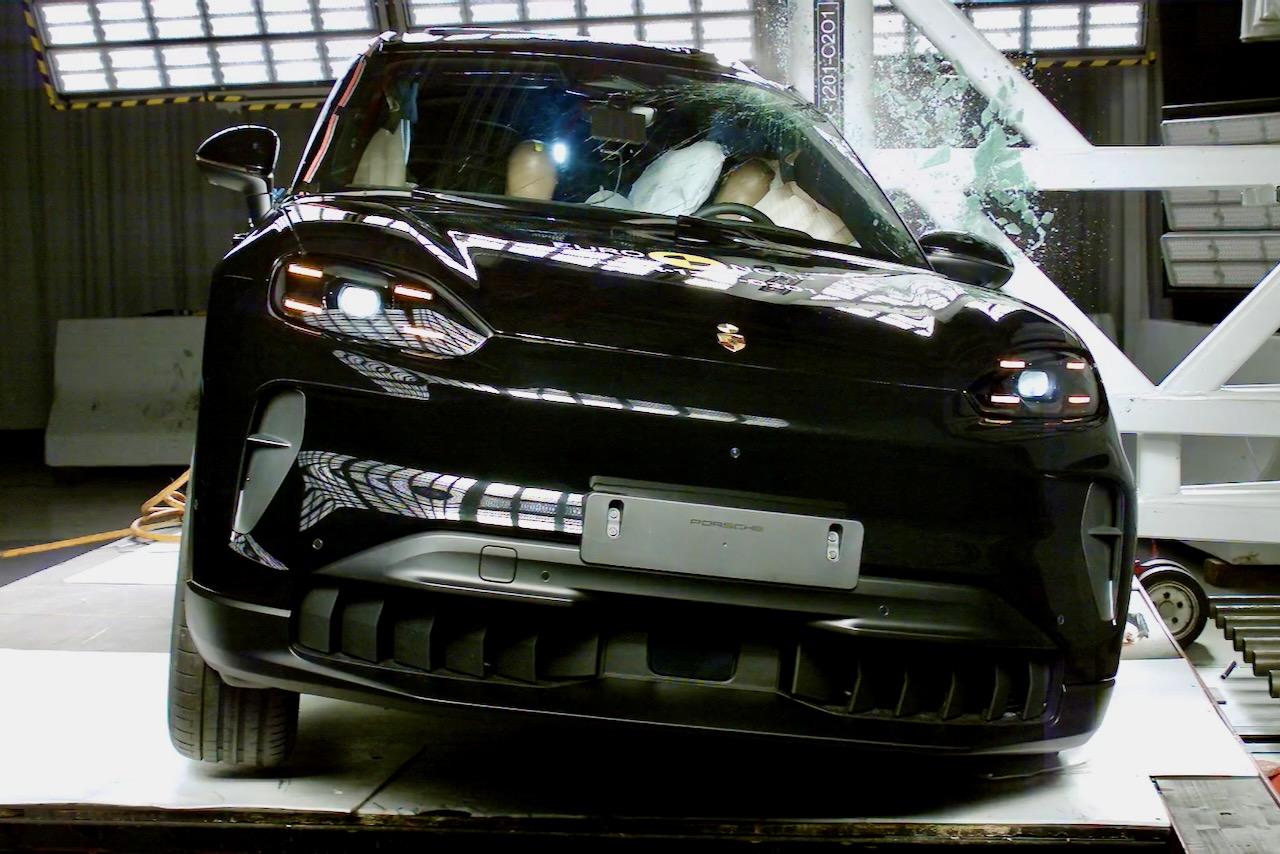
At the end of 2025 it picked up a full five-star safety rating and recorded robust subdiscipline scores of 91, 89, 81 and 79 per cent for the adult occupant, child occupant, vulnerable road users and safety assist sections of the test accordingly.
To see how the Porsche Cayenne lines up against the competition, check out our comparison tool
How much does the Porsche Cayenne Electric cost to run?
Porsche Cars Australia offers a standard warranty of three years and unlimited kilometres on all its new cars, with up to eight years and 160,000km of cover for the high-voltage batteries fitted to its EVs.
| Servicing and Warranty | Porsche Cayenne Electric |
|---|---|
| Warranty | 3 years, unlimited kilometres |
| Roadside assistance | 3 years, then service-activated |
There’s also an option to extend the warranty for 12, 24 or 48 months at a time at each renewable phase, up to the point the car reaches 15 years old. However, there’s a distance cap of 200,000km on the extended warranty.
Porsche electric vehicles normally have longer, two-year service intervals because they need less maintenance than the brand’s combustion-powered cars, so we’d expect the Cayenne SUV to conform to the 24-month program as outlined above.
To see how the Porsche Cayenne lines up against the competition, check out our comparison tool
CarExpert’s Take on the Porsche Cayenne Electric
The Cayenne Electric is, as you would expect of a Porsche, a magnificent thing to drive, from base-grade to flagship.
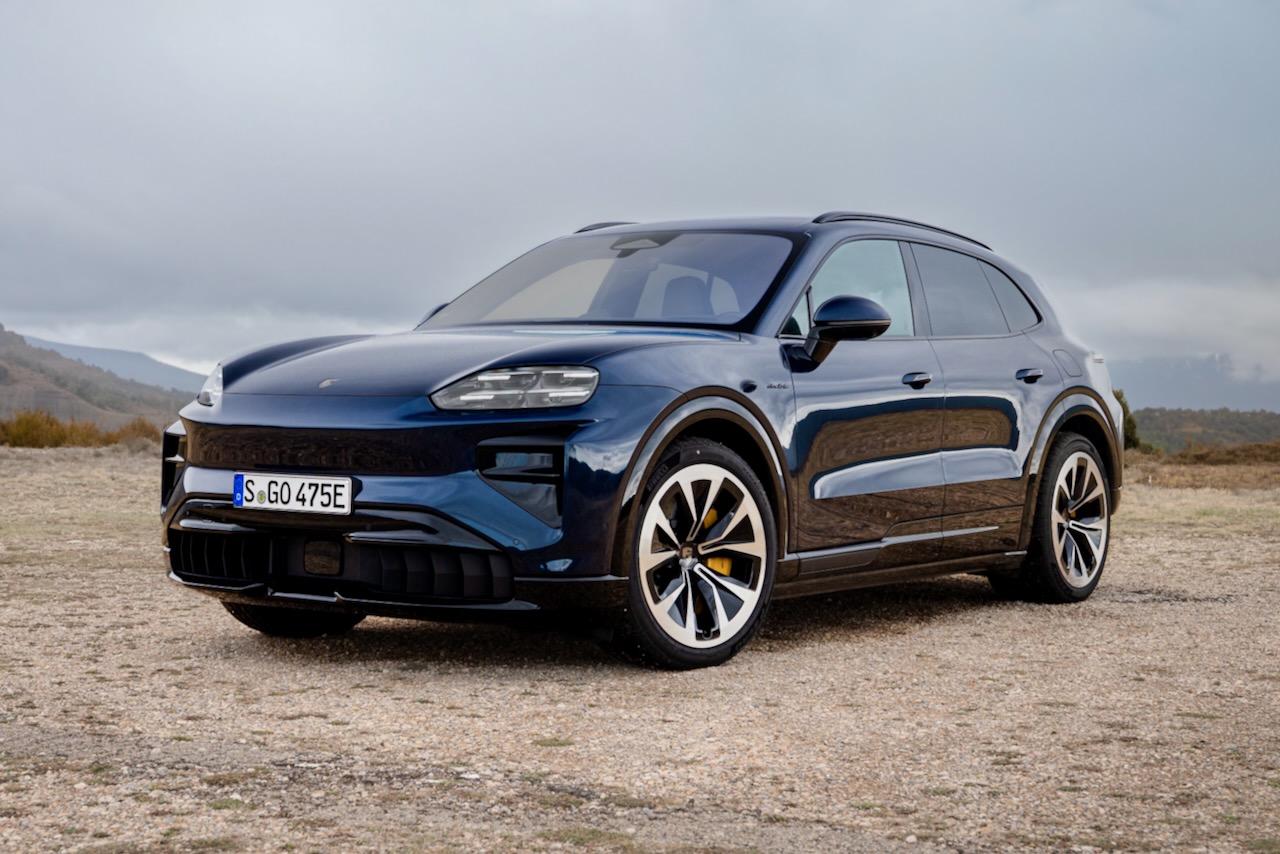
Agile and rewarding in the corners, supremely comfortable and quiet on a cruise, and obviously blessed with enormous reserves of torque in all its specifications, the Cayenne hasn’t suffered in the slightest from its transition to electric power.
In fact, it might have actually improved by dropping the V6s and V8s and becoming an EV. That’s how seriously good an all-rounder this premium electric SUV truly is.
CarExpert can save you thousands on a new Porsche Cayenne. Click here to get a great deal.
Click the images for the full gallery