

The Porsche Panamera is one of those vehicles that seems to slip under the radar.
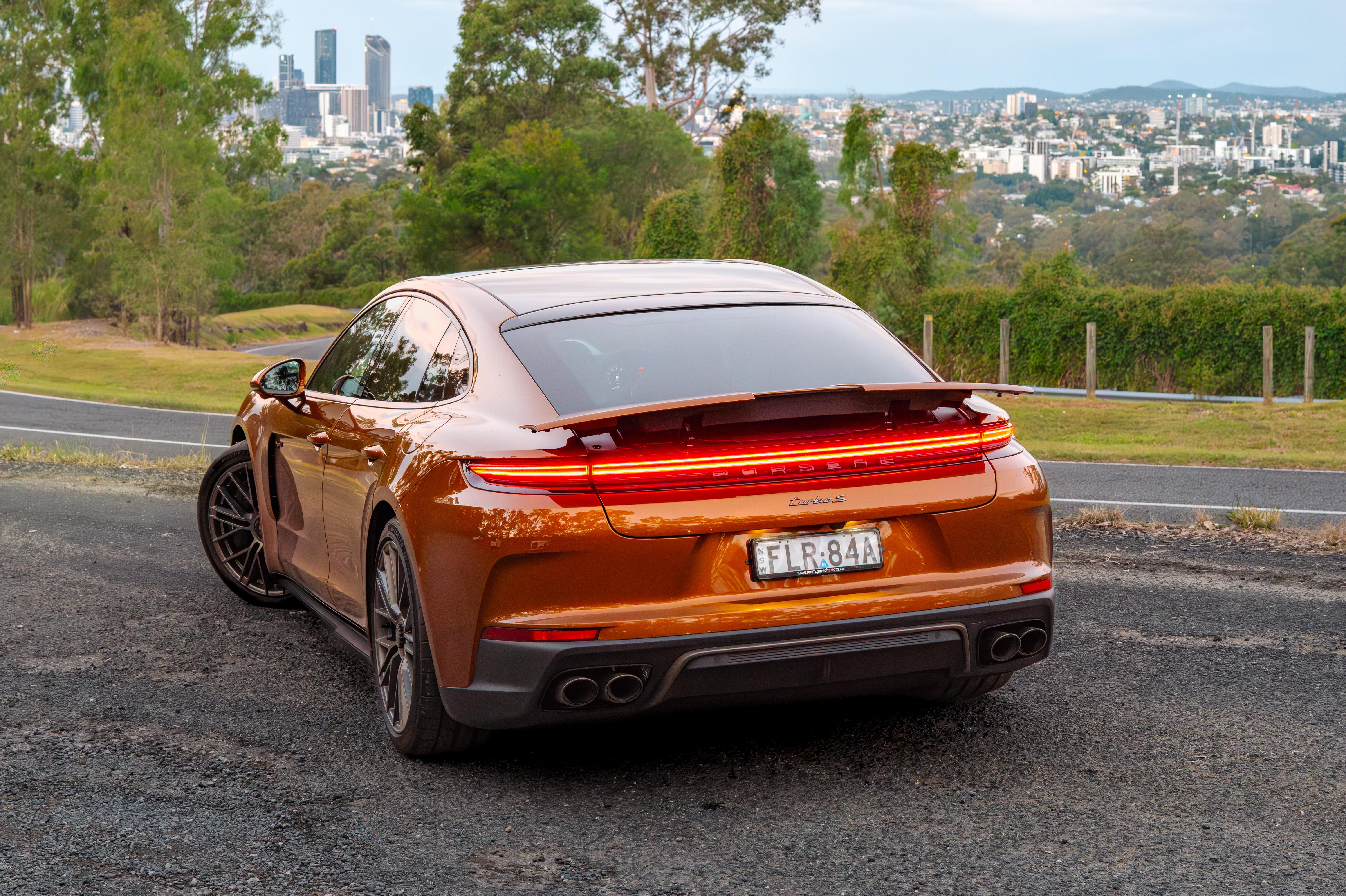
The combination of a large, practical liftback body with Porsche’s reputation for dynamic excellence and a wide range of powertrains – ranging from turbo V6s through to our Turbo S E-Hybrid’s twin-turbo plug-in hybrid V8 powertrain – seems to suggest this is exactly the kind of car to make enthusiasts weak in the knees.
And yet the Panamera is largely overlooked by Porsche enthusiasts who gravitate towards the 911, and by the broader luxury car-buying population who flock to SUVs including the Cayenne.
Not to mention, the electric Taycan launched a few years ago and stole some of the Panamera’s thunder. Is the Panamera unfairly overlooked?
How much does the Porsche Panamera Turbo S E-Hybrid cost?
Despite its low sales volumes, Porsche imports a wide range of Panamera variants to Australia, though even more can be found in Europe.
| Model | Price before on-road costs |
|---|---|
| 2026 Porsche Panamera | $246,700 |
| 2026 Porsche Panamera 4 E-Hybrid | $283,000 |
| 2026 Porsche Panamera 4S E-Hybrid | $311,200 |
| 2026 Porsche Panamera GTS | $351,800 |
| 2026 Porsche Panamera Turbo E-Hybrid | $425,500 |
| 2026 Porsche Panamera Turbo S E-Hybrid | $499,900 |
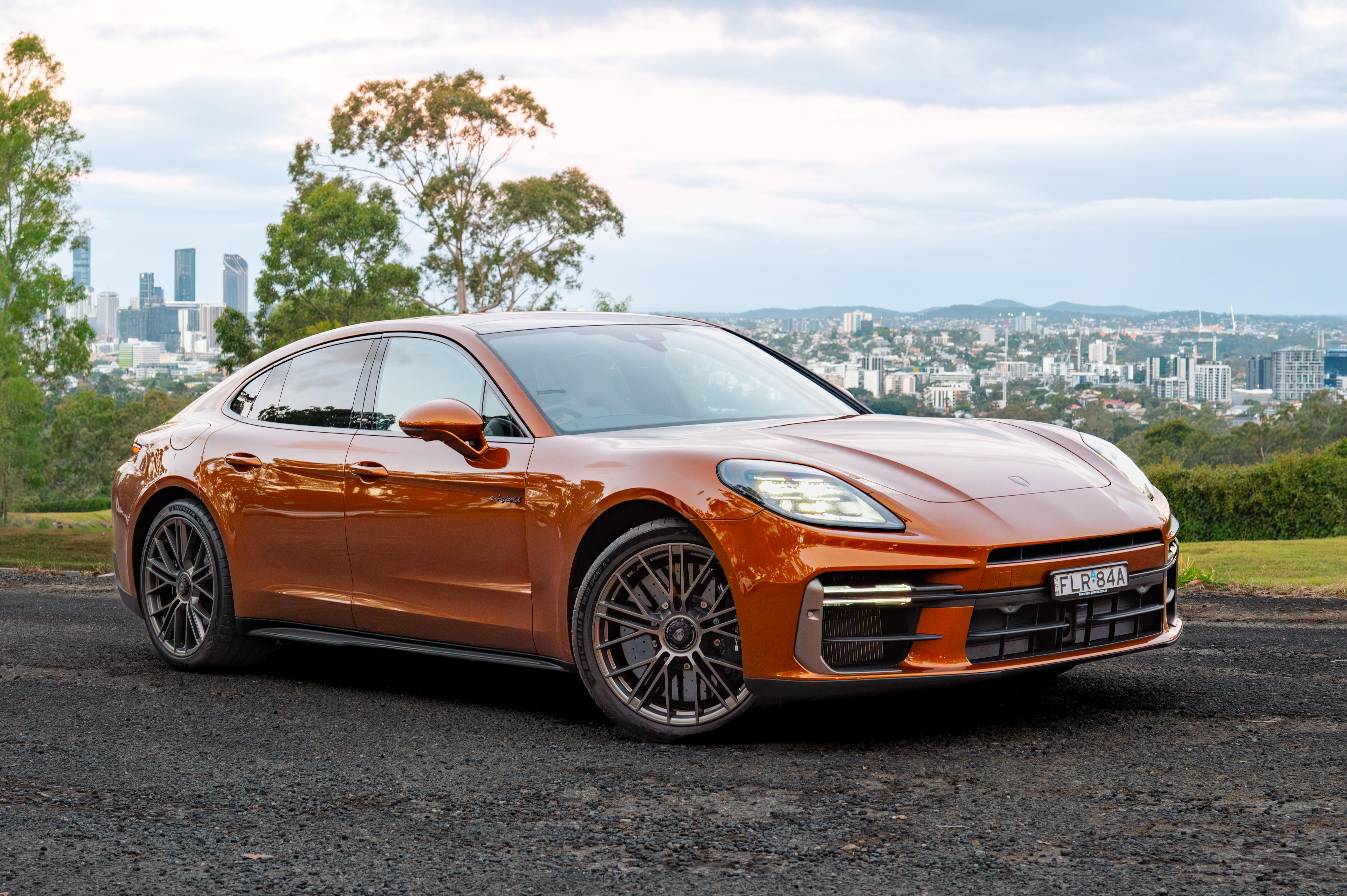
The Turbo S E-Hybrid sits atop the Panamera lineup, and wears a price tag of $499,900 before on-road costs. Based on a New South Wales postcode, you’re looking at a drive-away price of $535,761… and that’s before any options.
The Audi RS7 Performance, in contrast, costs $258,900 drive-away in NSW, while the BMW M5 costs $278,000. For similar coin, you could buy a Bentley Flying Spur or Bentayga Speed, or an Aston Martin DB12 Volante.
Our tester carried $26,690 worth of options. Porsche allows you to extensively customise your vehicle, even offering Paint to Sample exterior finishes priced at just over $20,000.
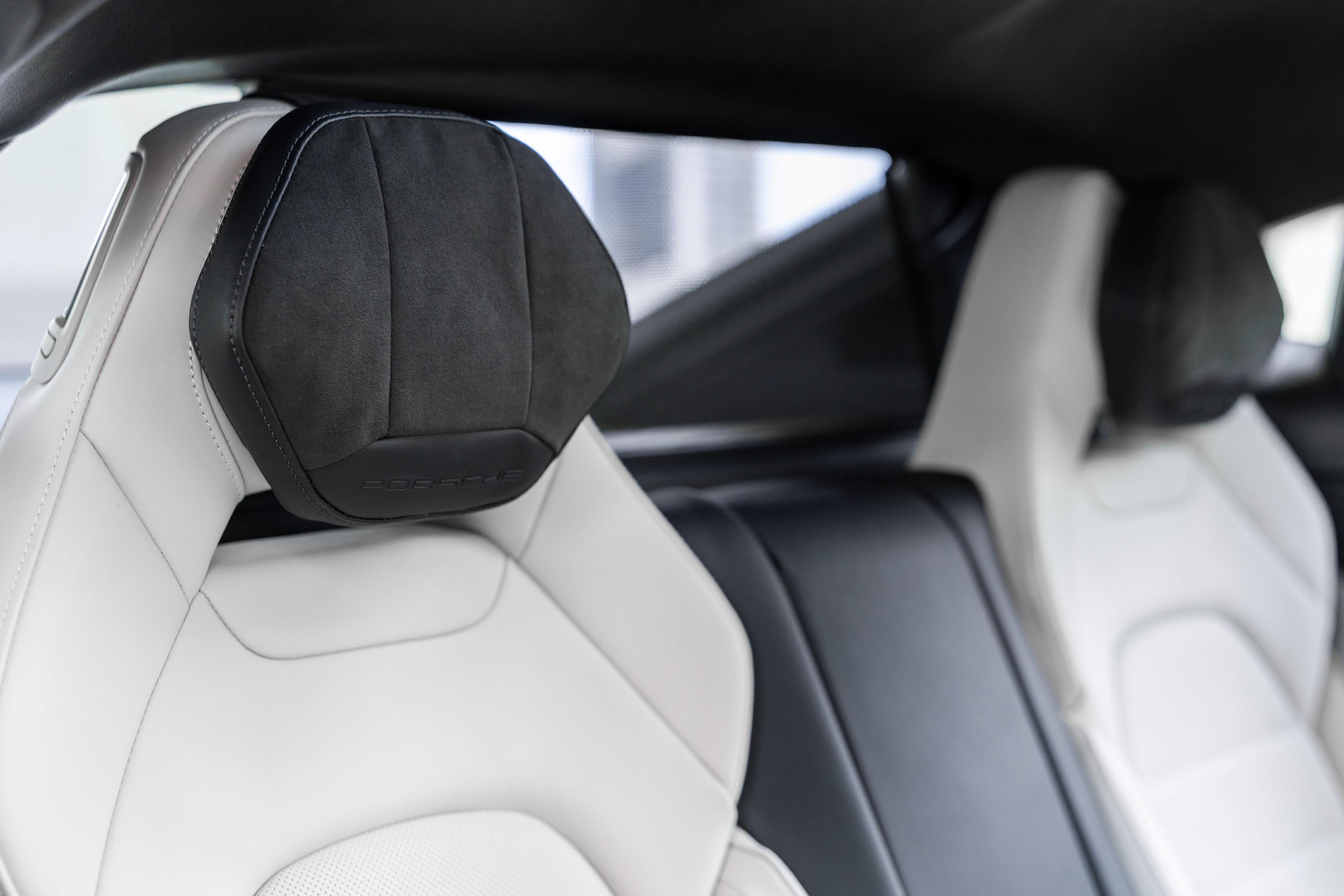
Some of the options on our tester were nice but should be standard (massaging and ventilated front seats for $2200, for example), while some were just gilding the lily (Porsche crests on the head restraints for $1450).
To see how the Porsche Panamera lines up against the competition, check out our comparison tool
What is the Porsche Panamera Turbo S E-Hybrid like on the inside?
The Panamera may be large and surprisingly practical, but it sacrifices comfort for sporty looks inside. And quite frankly, the Panamera’s interior could be nicer for something costing more than half a million.
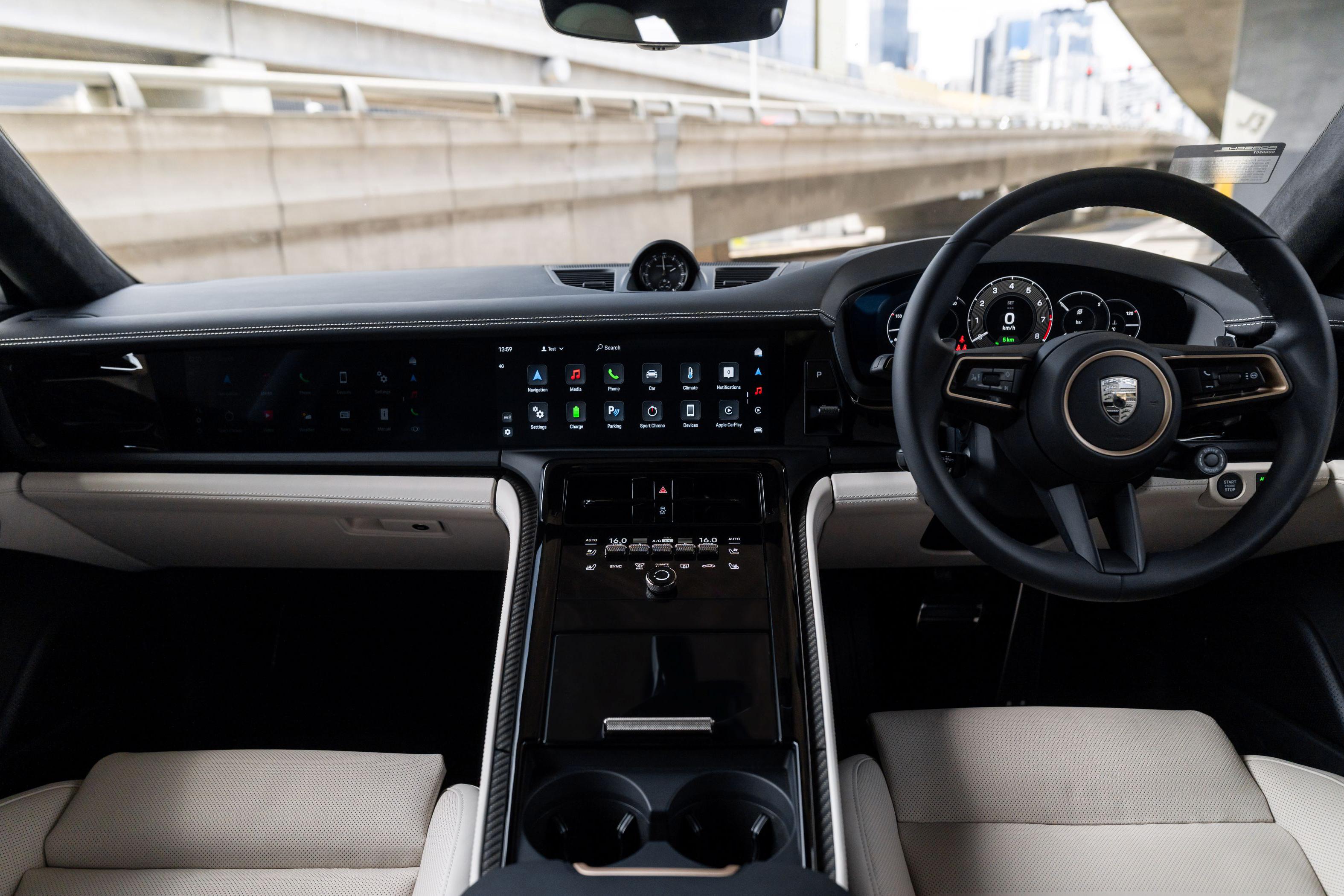
Indeed, the Porsche smells like an Audi inside, and it’s not appreciably nicer than, for example, the RS7.
Hard plastic trim can be found at the bottom of the doors, as well as on the lower side of the centre console between the carpet and leather trim.
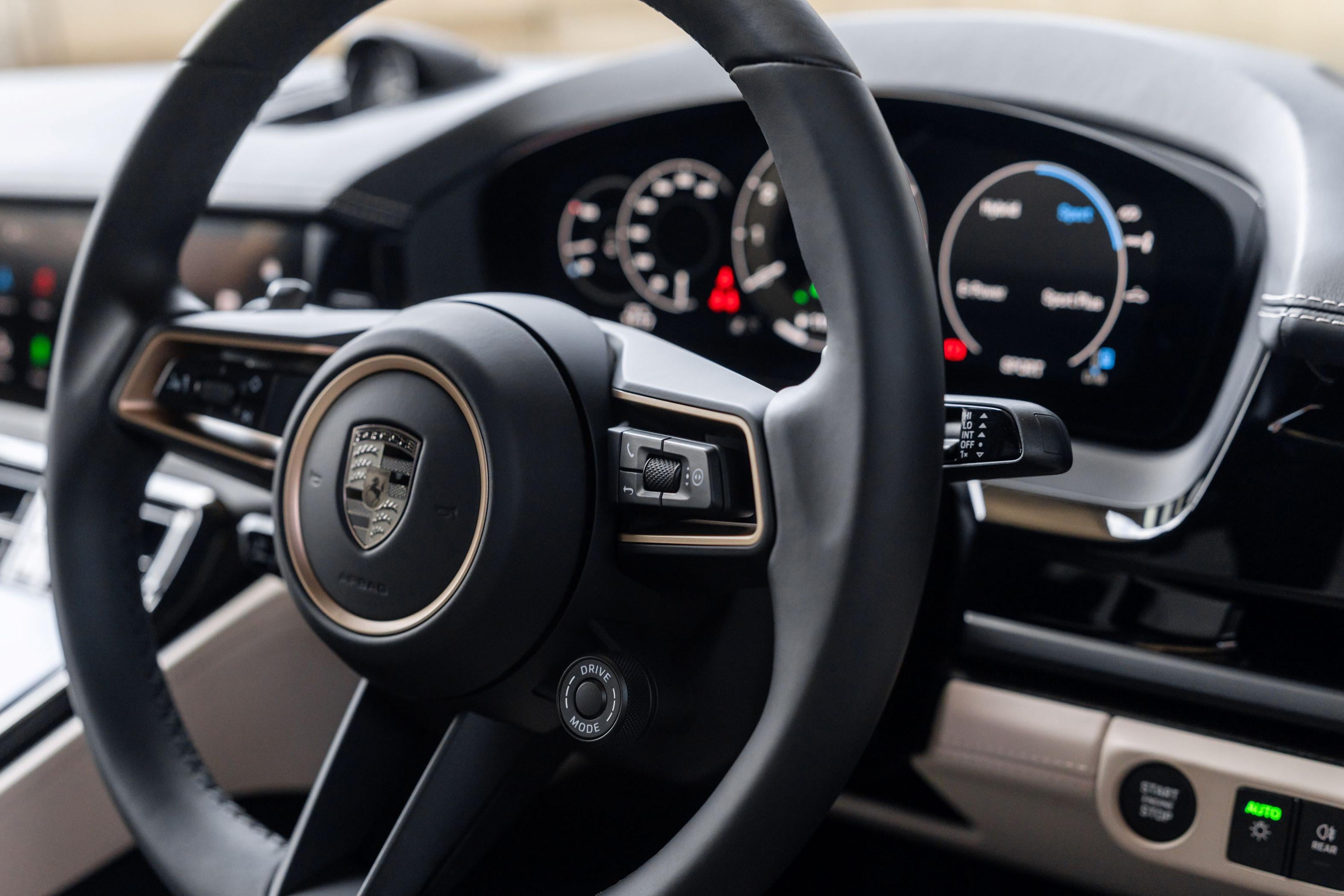
The drive mode selector is also plasticky and there’s far too much gloss black trim, including on some strange inserts at either end of the dash.
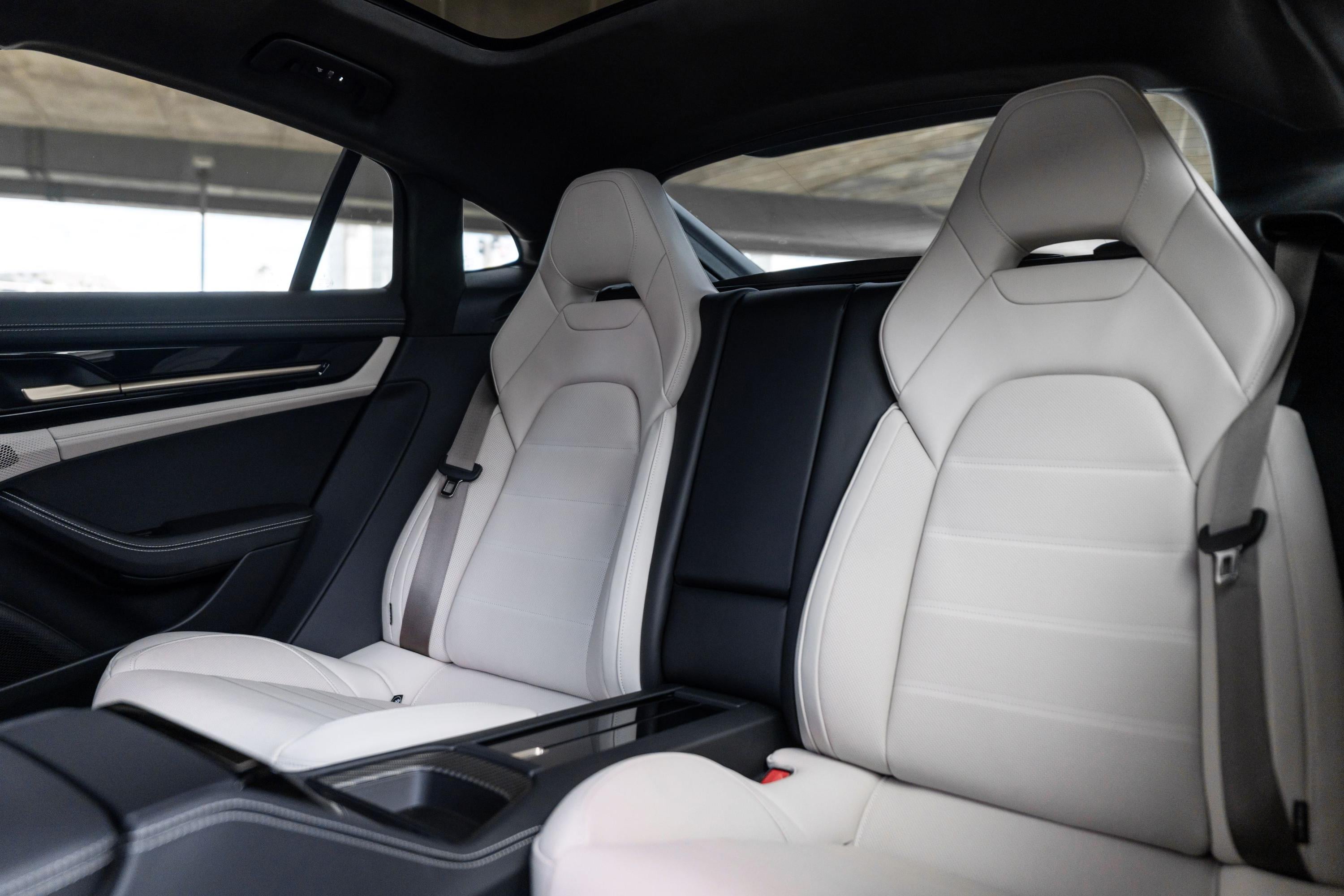
The bucket seats front and rear sure look sporty and grip you well, but they feel far too stiff – behind the wheel, I felt like I was sitting in a high-back dining chair, and my shoulders and upper back were uncomfortable. At least my lower back was in the lap of luxury, thanks to a range of five massage modes and five intensity levels.
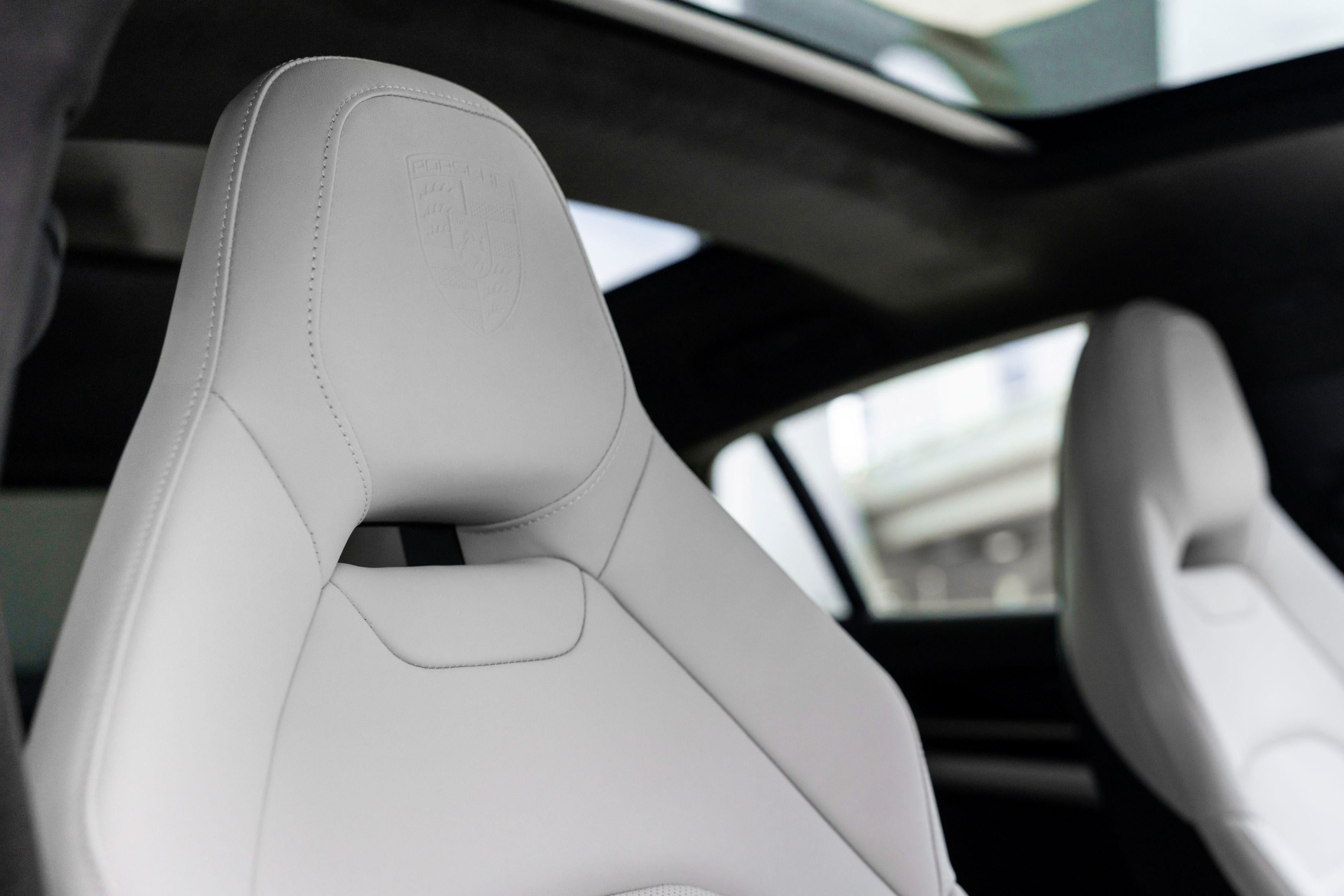
The rear seats, too, received complaints from some passengers, though cabin dimensions here are perfectly fine, if not palatial.
The rear seats feature electric four-way lumbar support, backrest and squab length adjustment, but there was only heating and not ventilation and massage in our tester.
You can get those features as options, but it’s a bit surprising they’re not standard given the vehicle’s price.
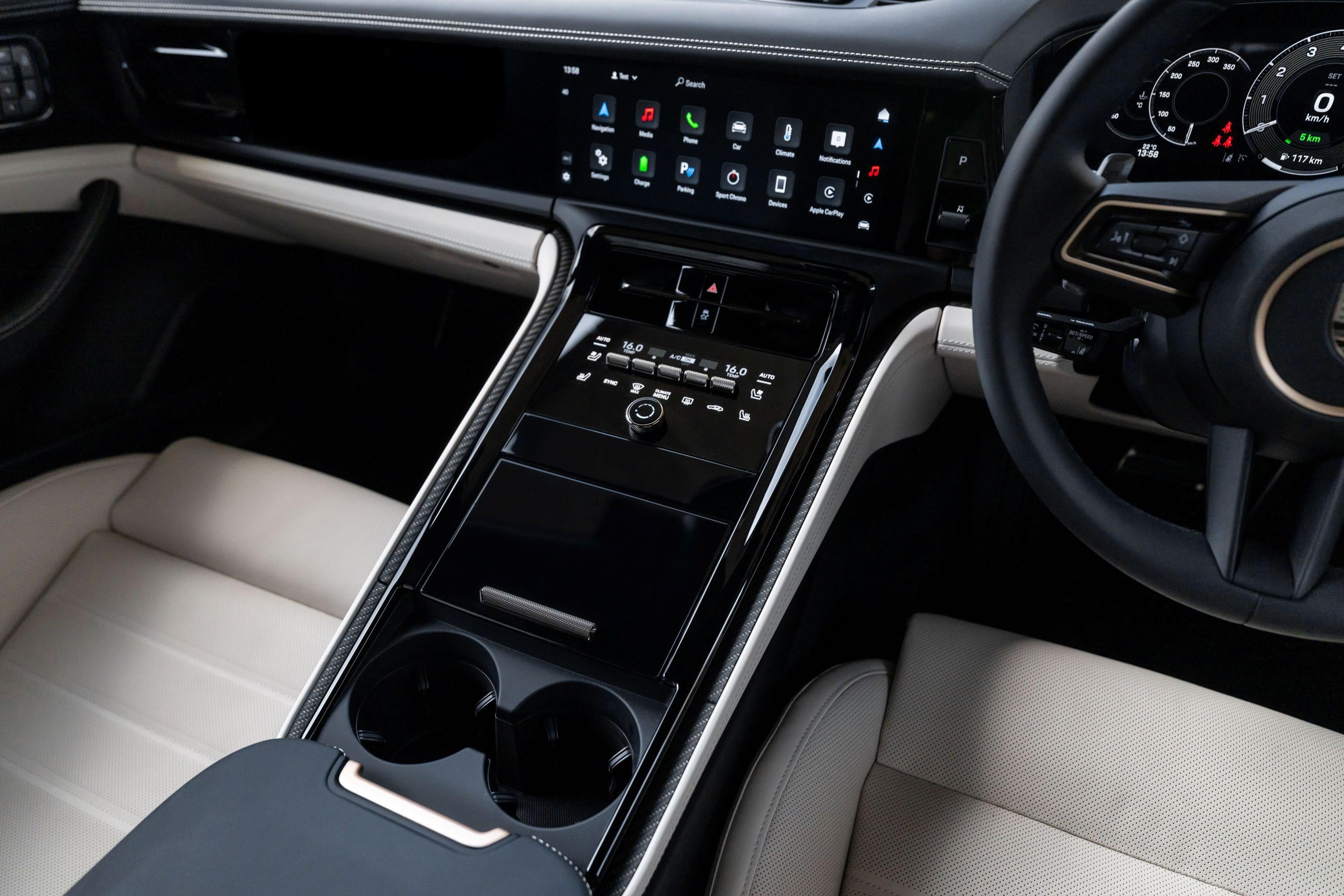
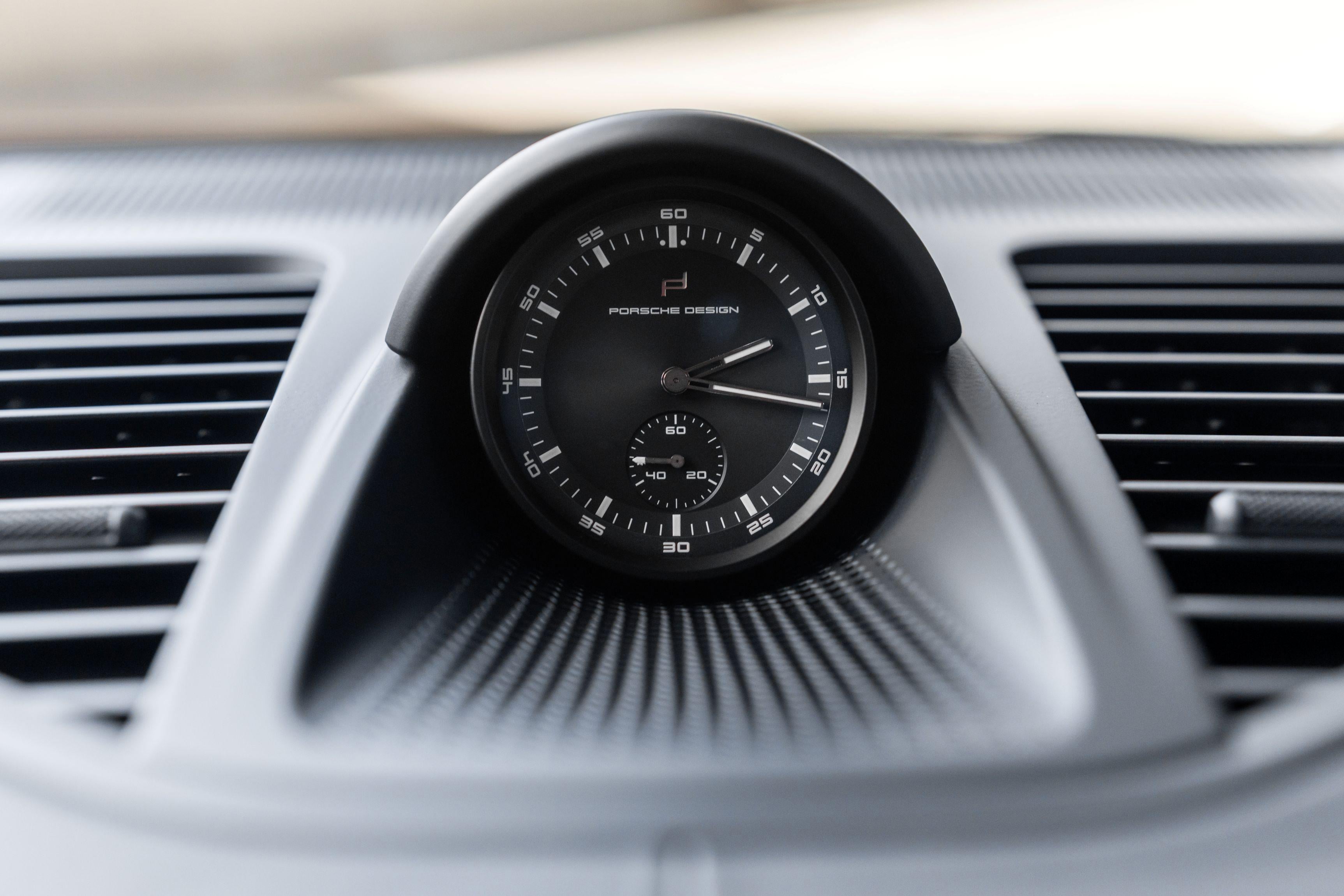
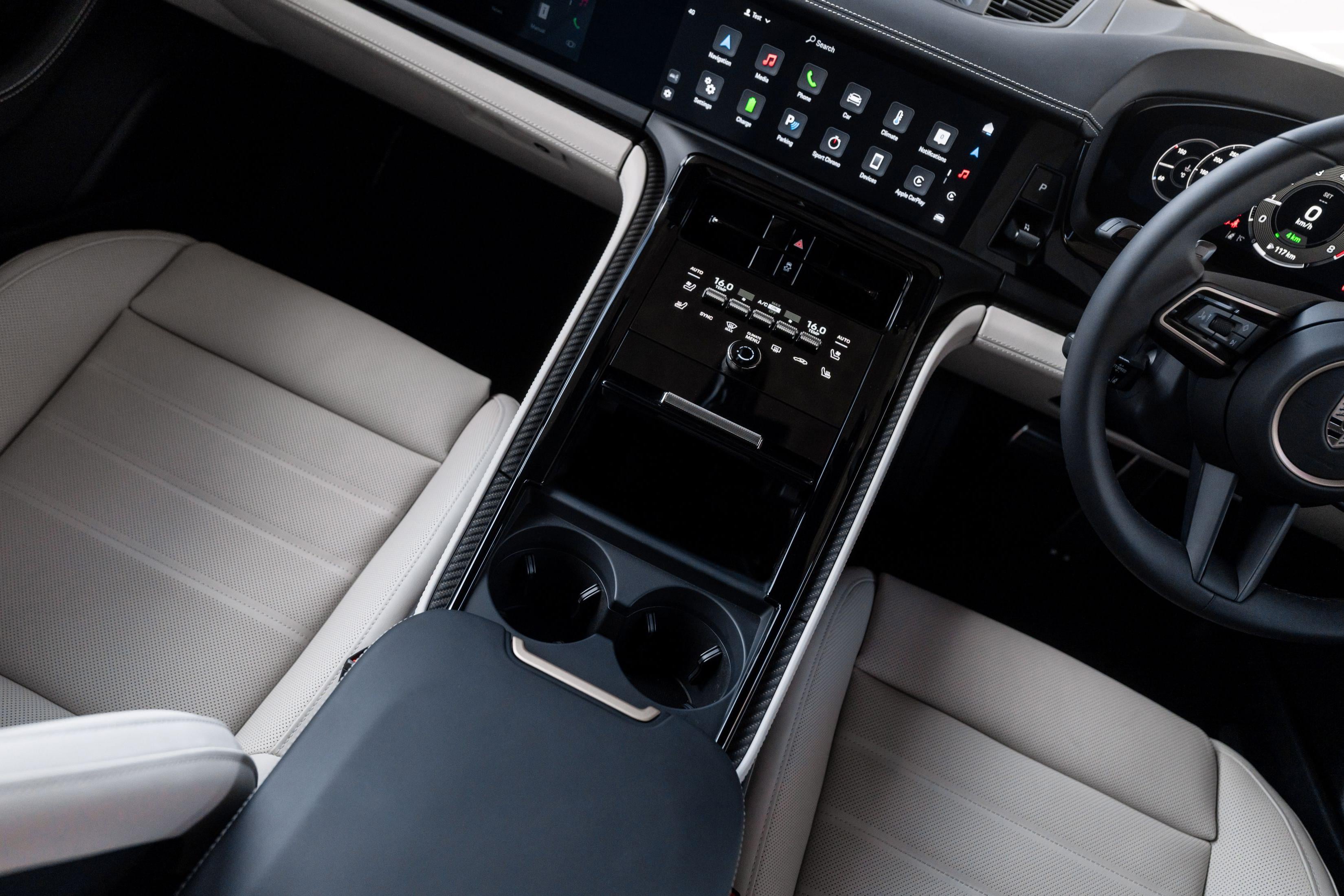
The Panamera has an attractive dashboard with some truly classy touches, from an analogue clock atop the dash to the lovely knurled metal rocker switches for temperature and fan speed adjustment.
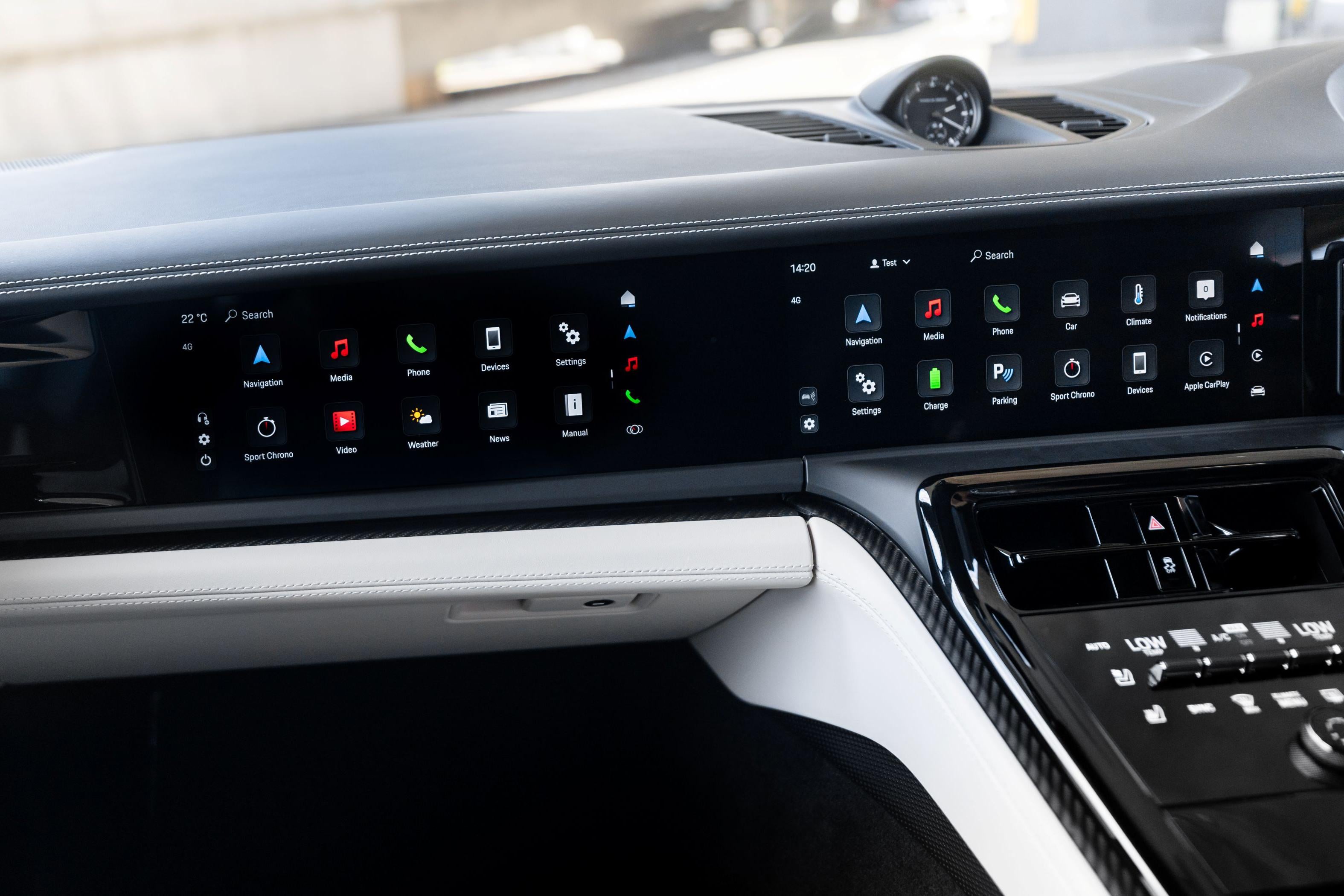
Mind you, almost all of the centre stack is slathered in gloss black trim, though our tester had some matte carbon-fibre to break up this monotony.
The black and Kalahari Grey colourway of our press car gives the cabin an airy feel, while the ambient lighting – which can even be customised to the album art of the music you’re listening to – gives the cabin a glitzier feel at night.
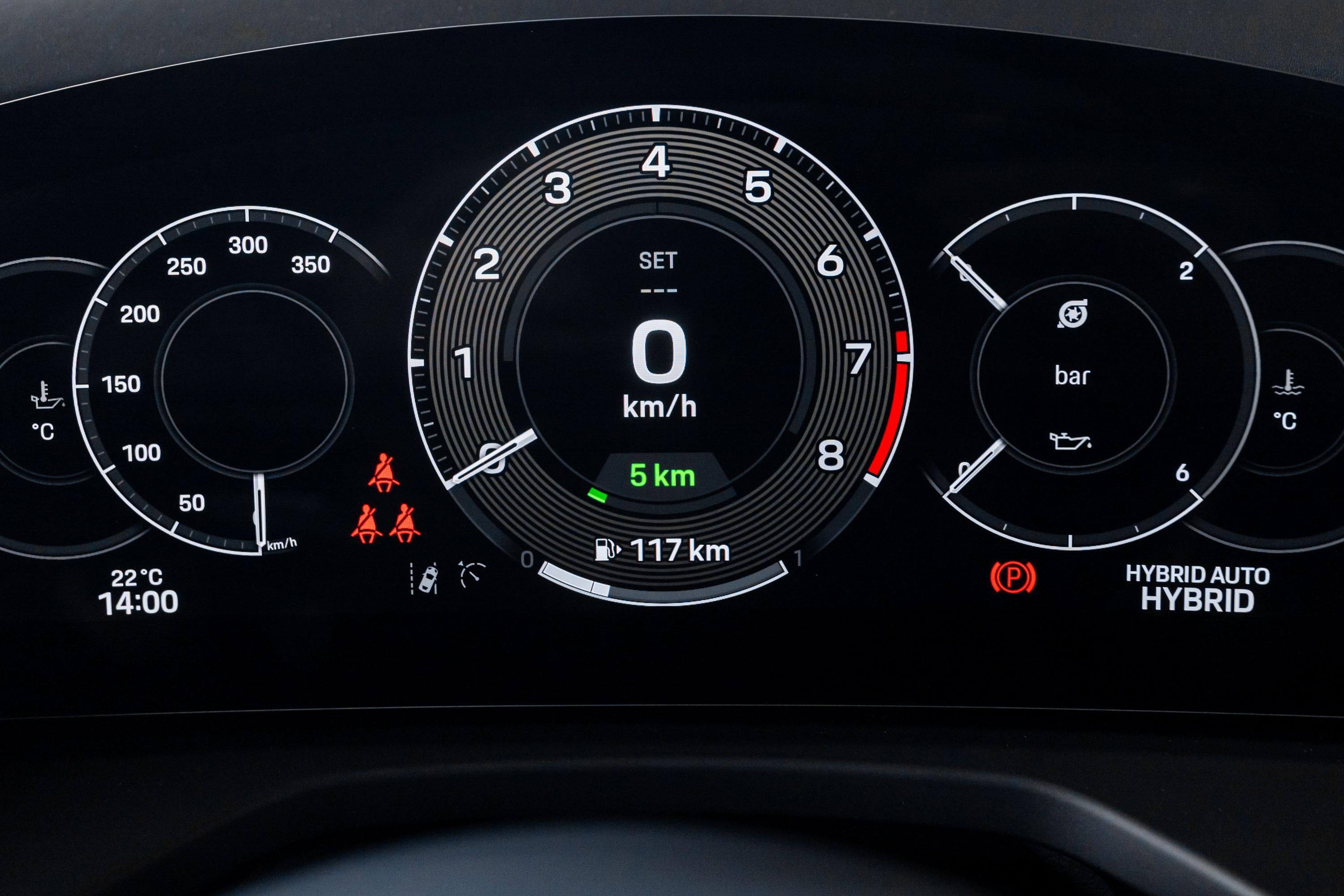
There’s an attractive digital instrument cluster with multiple views, including one that simulates analogue dials. The cluster has no binnacle, but we never once had any issues with glare. Your turn-by-turn navigation directions will appear on the screen, even if you’re using maps via smartphone mirroring.
But while Porsche has managed to implement functional modern technology with an elegant touch, it hasn’t always done this consistently. Take the air vents, for example – they’re simple and elegant to look at, but if you want to adjust them you’ll need to use the touchscreen. Who asked for this?
You can choose between soft or strong air flow, but an Xpeng around a 10th of the price offers considerably more customisation here.
Porsche has also deployed touch-capacitive switchgear on the centre console, and this too is finished in smudge-prone gloss black trim.
At least there’s still traditional switchgear like an actual volume knob, and not everything has been relegated to the touchscreen.
That’s good, because the touchscreen sometimes requires a firm stab, while the embedded satellite navigation is a bit awkward, and there’s no shortcut to smartphone mirroring on the anchored side bar.
All this aside, the infotainment system features crisp, modern graphics and a logical menu structure. Wireless Android Auto worked without fault during our time with the Panamera.
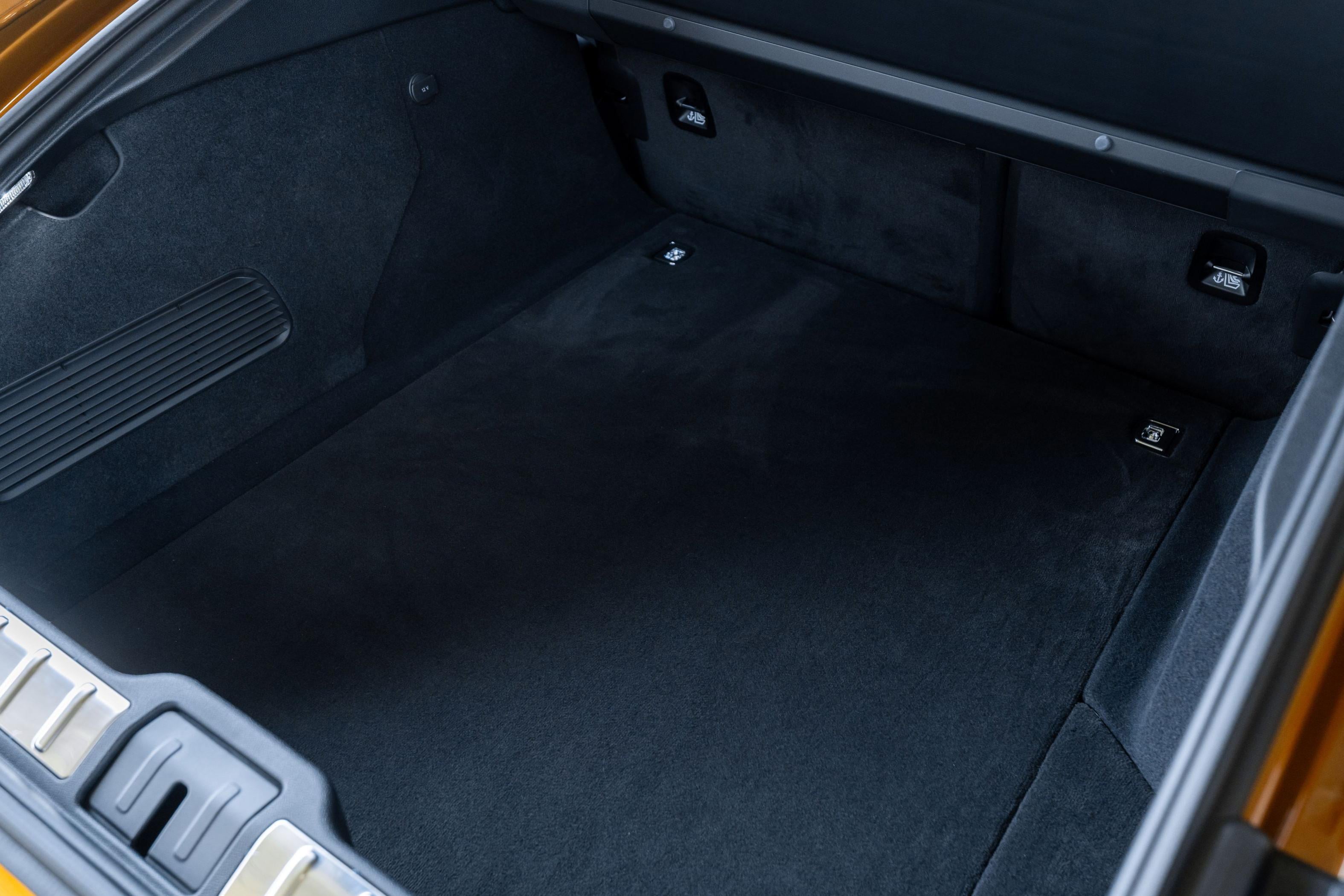
Open the rear hatch and you’ll find an expansive cargo bay, though it’s not overly deep. Still, this makes the Panamera much more practical than an M5… Well, an M5 Sedan at least.
| Dimensions | Porsche Panamera Turbo S E-Hybrid |
|---|---|
| Length | 5054mm |
| Width | 1937mm (2165mm incl. mirrors) |
| Height | 1423mm |
| Wheelbase | 2950mm |
| Cargo capacity | 421L (rear seats up) 1255L (rear seats folded) |
To see how the Porsche Panamera lines up against the competition, check out our comparison tool
What’s under the bonnet?
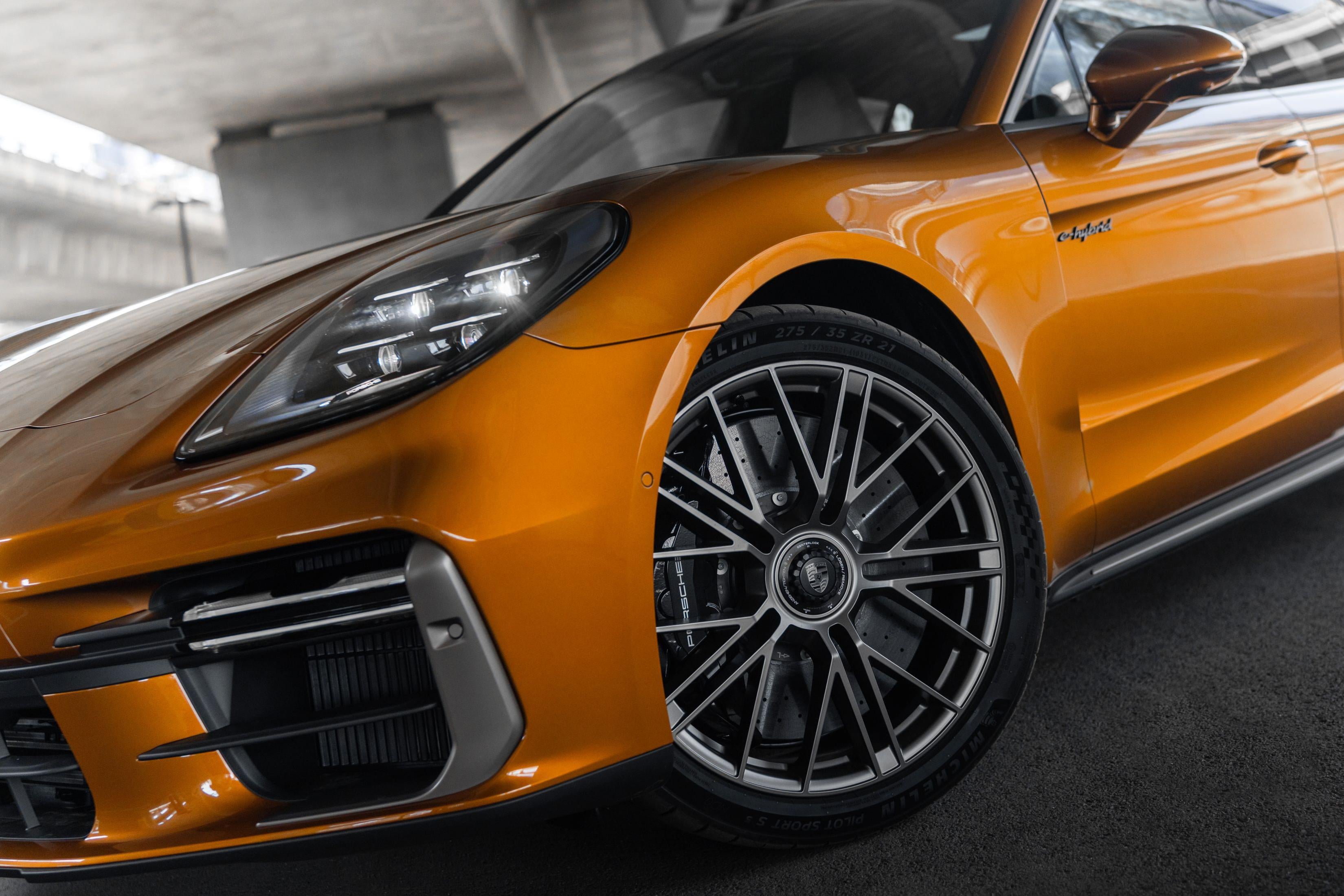
The Panamera is offered with a wide range of powertrains, from a bi-turbo V6 offered with or without a plug-in hybrid system to a bi-turbo V8 with or without a PHEV system.
| Specifications | Porsche Panamera Turbo S E-Hybrid |
|---|---|
| Engine | 4.0L twin-turbo V8 plug-in hybrid |
| Engine outputs | 441kW + 800Nm |
| Electric motor outputs | 140kW + 450Nm |
| System outputs | 575kW + 1000Nm |
| Battery | 25.9kWh li-ion |
| Transmission | 8-speed dual-clutch auto |
| Drive type | All-wheel drive |
| Weight | 2365kg |
| 0-100km/h (claimed) | 2.9 seconds (with Sport Chrono package) |
| Fuel economy (claimed) | 2.1L/100km |
| Fuel economy (as tested) | 4.6L/100km (inner-city, suburban and highway loop in hybrid mode) |
| Electric driving range (WLTP) | 88km |
| Electric consumption | 27kWh/100km |
| AC charge rate | 11kW |
| Fuel tank capacity | 80L |
| Fuel requirement | 98-octane premium unleaded |
| CO2 emissions | 47g/km |
| Emissions standard | Euro 6 |
The Turbo S E-Hybrid’s powertrain offers the combination of a sonorous V8 engine with a PHEV system to deliver maximum performance and decent efficiency, at least for something with outputs as enormous as these.
Over a loop consisting of inner-city, suburban and highway driving, undertaken in hybrid mode and with battery charge the whole time, we recorded fuel consumption of 4.6L/100km.
Over the course of our time with the vehicle, fuel consumption crept up to 13.8L/100km.
The Turbo S E-Hybrid doesn’t support DC fast-charging, but it can be charged at up to 11kW on AC power.
It cleverly shows you on the embedded satellite navigation – courtesy of a blue outline – how far you can go on your remaining EV range, and tells you with each drive how much of your total driving time was with zero emissions, as well as your average energy consumption.
To see how the Porsche Panamera lines up against the competition, check out our comparison tool
How does the Porsche Panamera Turbo S E-Hybrid drive?
The Porsche Panamera Turbo S E-Hybrid gives you options.
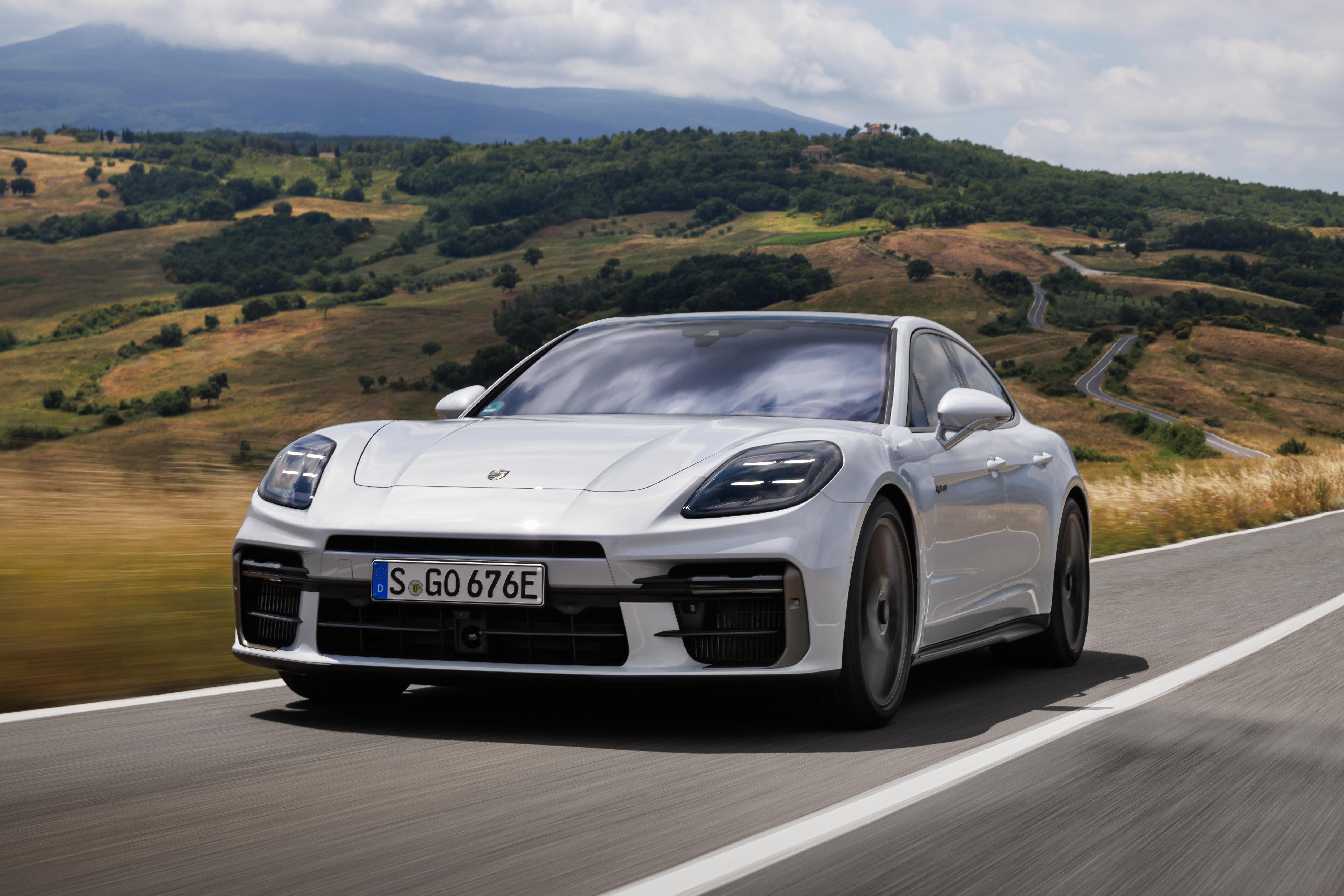
Want to do the daily commute using purely electric power, and then go for a spirited backroad blast on the weekend and let that V8 roar? You can!
It starts quietly in E-Power mode, and the shifts between electric and petrol power are seamless apart from an occasional clunkiness when slowing down, though this was even noticeable in E-Power mode.
You can choose to leave it in E-Power mode, with the petrol engine only firing if you really lay into the accelerator pedal. The Panamera can be driven in E-Power mode at speeds of up to 138km/h, but off the line it feels a bit dull.
Pop it in one of the other modes, though, and wow – the Panamera is so quick off the line that you feel it in your chest as you’re shoved back in your seat.
It’s frankly too much performance for Australian roads, because you get up to the national highway speed limit – or over it – so quickly you just know you’re going to rack up some demerit points. But imagine this on an Autobahn in its homeland…
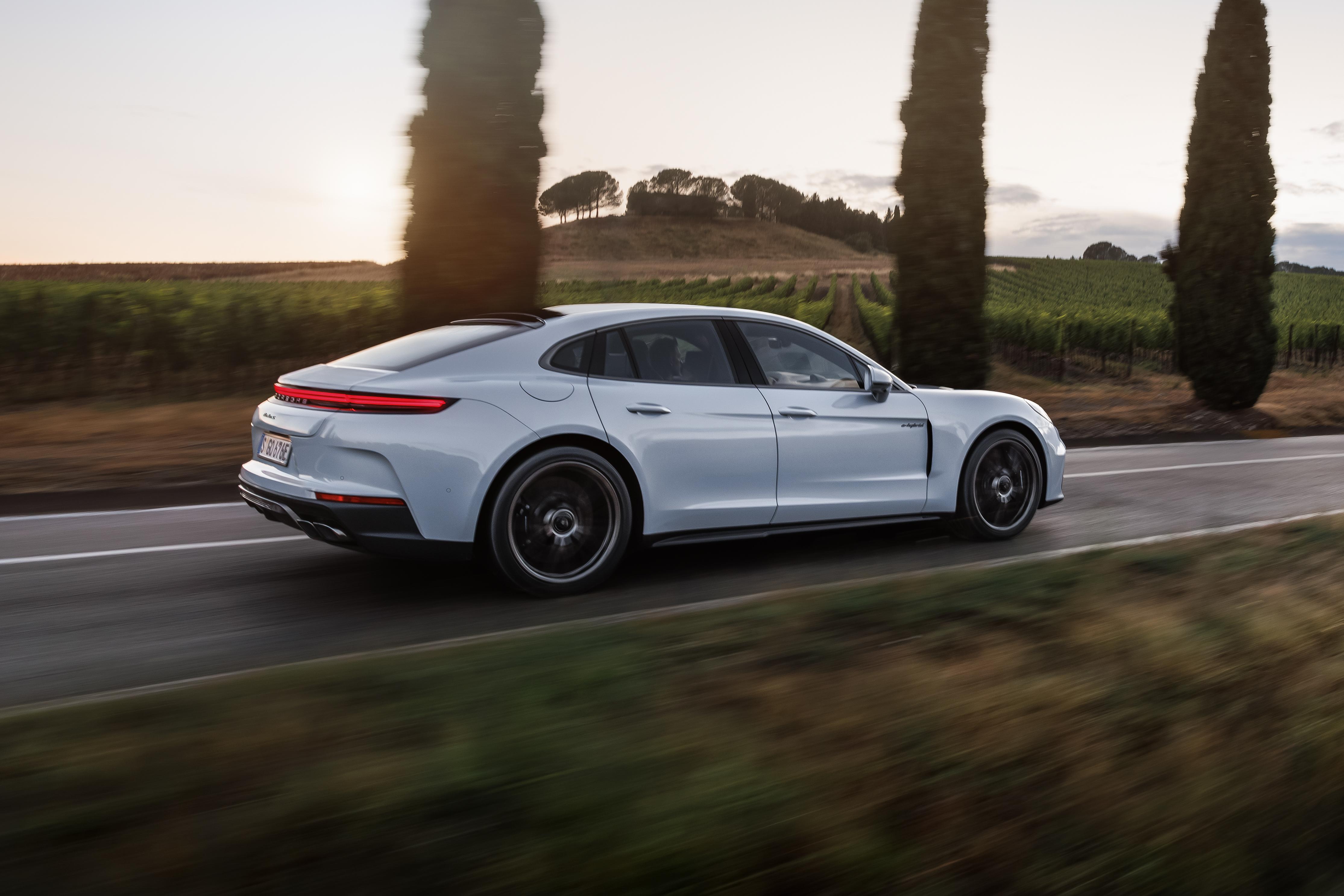
The Taycan may be rapid, too, but the Panamera – by virtue of having a V8 engine – sounds a lot better.
There’s a raft of drive modes. Besides E-Power, there are Sport and Sport+ which also recharge the battery, and quickly too.
Hybrid mode is broken down into E-Charge and E-Hold modes, with the former using the petrol engine to charge the battery and the latter maintaining the level of charge.
Within each mode you can adjust the ride height, suspension tune and exhaust sound.
The Panamera Turbo S E-Hybrid features Porsche’s Active Ride Suspension, powered by a 400V high-voltage system. Each of its two-valve active shock absorbers has an electrically operated hydraulic pump that Porsche says actively generates forces in the rebound or compression direction, thereby reducing pitch and roll and keeping the car flat.
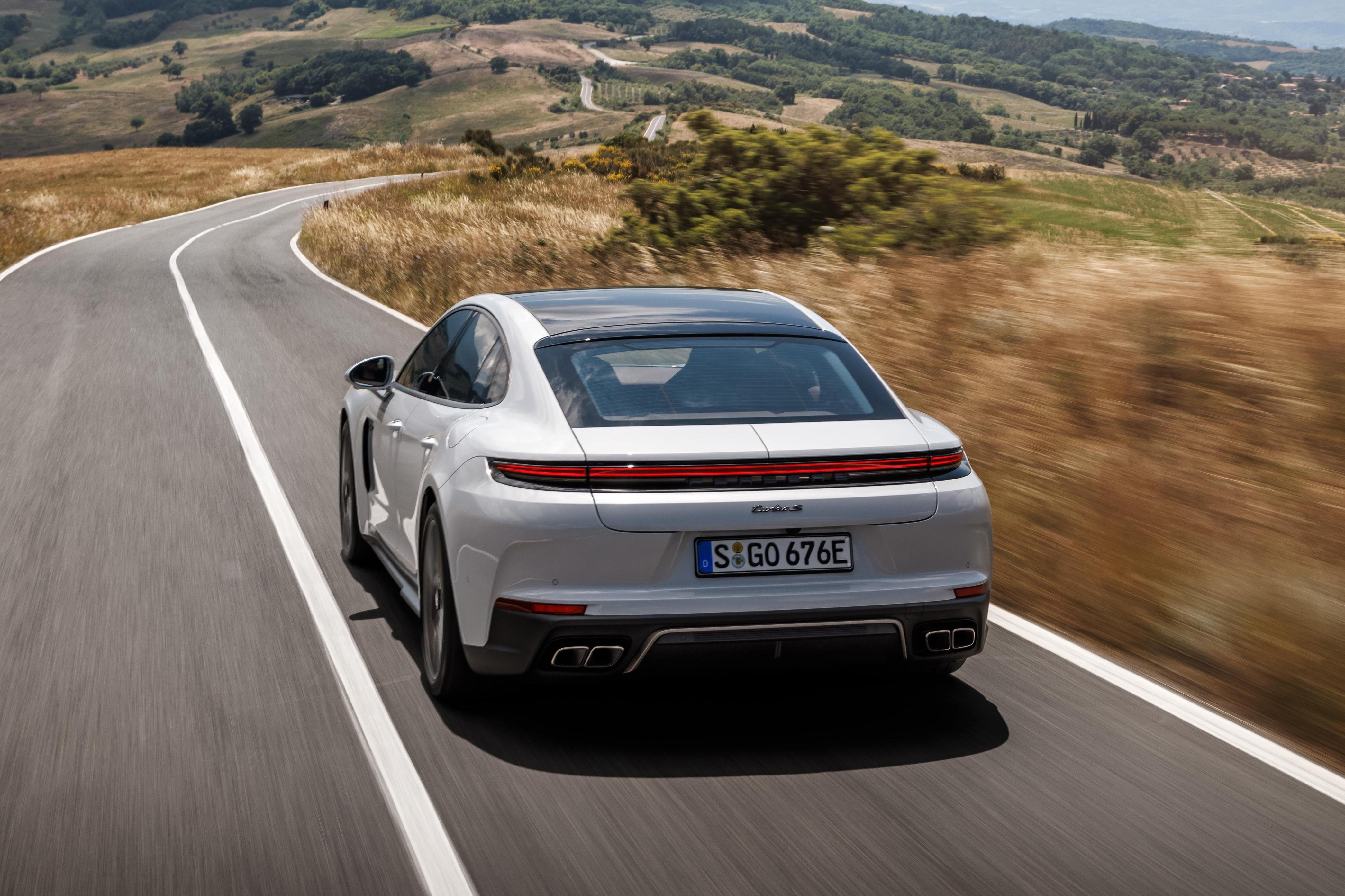
In conjunction with single-chamber air-suspension, the system affords the Panamera Turbo S E-Hybrid a superbly plush ride, soaking up everything. Even speed bumps melt away, regardless of what mode you have the Panamera in – yes, even Sport+. This makes the Panamera a superbly comfortable commuter… well, except for those seats.
The only surface where the Panamera felt a bit firm was on concrete highways. Still, the Panamera proves to be one comfortable cruiser.
It isn’t floaty though, as body control is exemplary. You won’t even notice road surface changes in this, as the Panamera stays perfectly flat.
The Active Ride Suspension can also raise the vehicle to make it easier to get into. It’s disconcerting how quickly the suspension raises, however, and after a few times in a row demonstrating this to people, I swear I started to feel dizzy. It’s a fun party trick, though.
You can easily program specific locations where you want the Panamera to raise its ride height, for example if you have a steep driveway. When you first program a location, the car will ask you if you always want to raise the vehicle there, and then it’ll remember it.
While the Panamera doesn’t need such a system as much as, say, a 911, it’s still a very handy inclusion.
One aspect of the Panamera that sees it lean more towards the sport and not the luxury side of the spectrum is the tyre roar that creeps into the cabin when you drive along certain coarser-chip surfaces and highways.
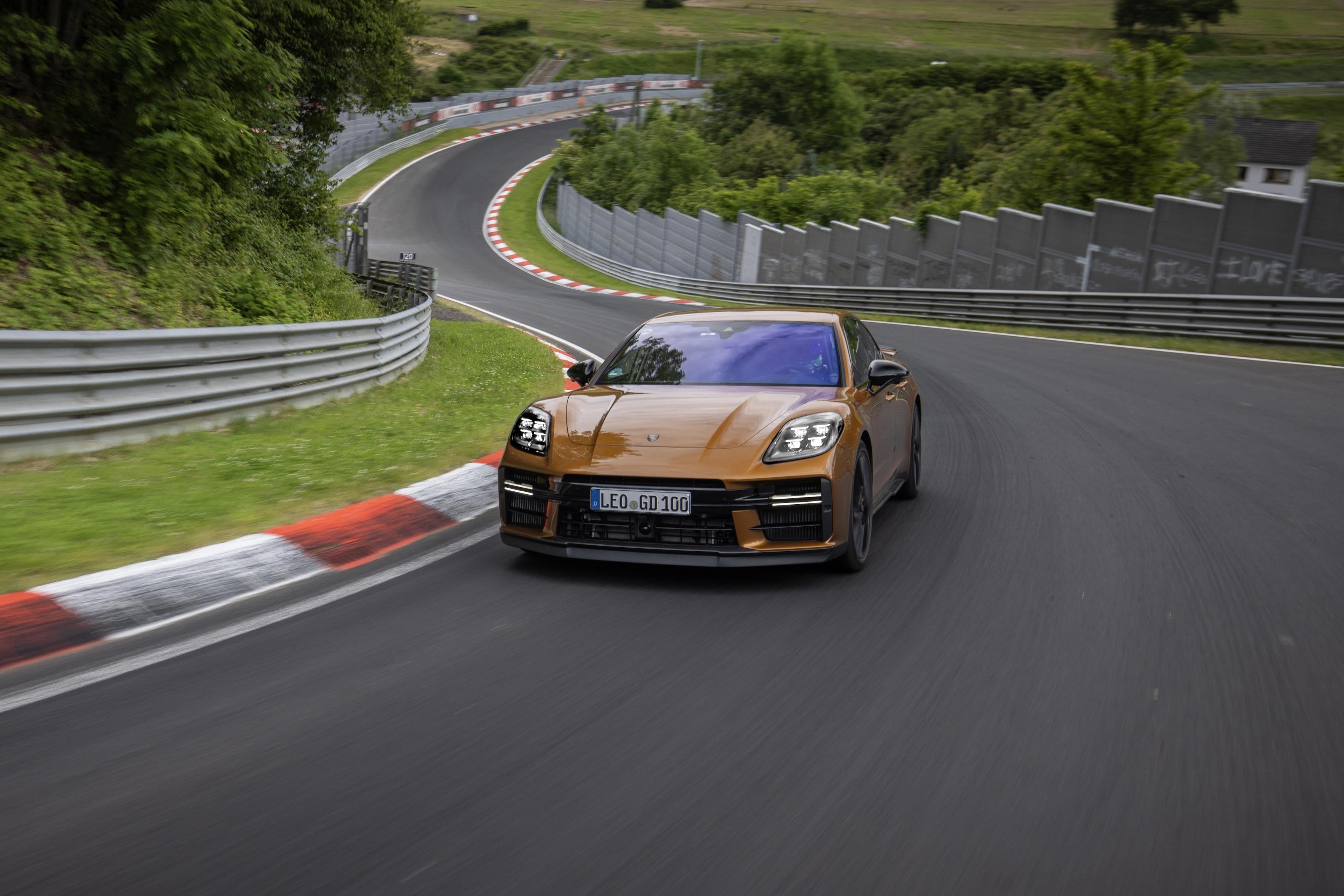
The steering in the Panamera feels really connected, communicating what’s going on below. Depending on the drive mode selected, you can also add more weight to it, not that it needs it.
This luxury limo has sensational grip, and the rear-axle steering aids high-speed stability and low-speed manoeuvrability. It also helps reduce the turning circle, which is handy given how long the wheelbase is.
All together, these dynamic elements make the Panamera a blast along a winding mountain road, though you’re always conscious of just how wide it is.
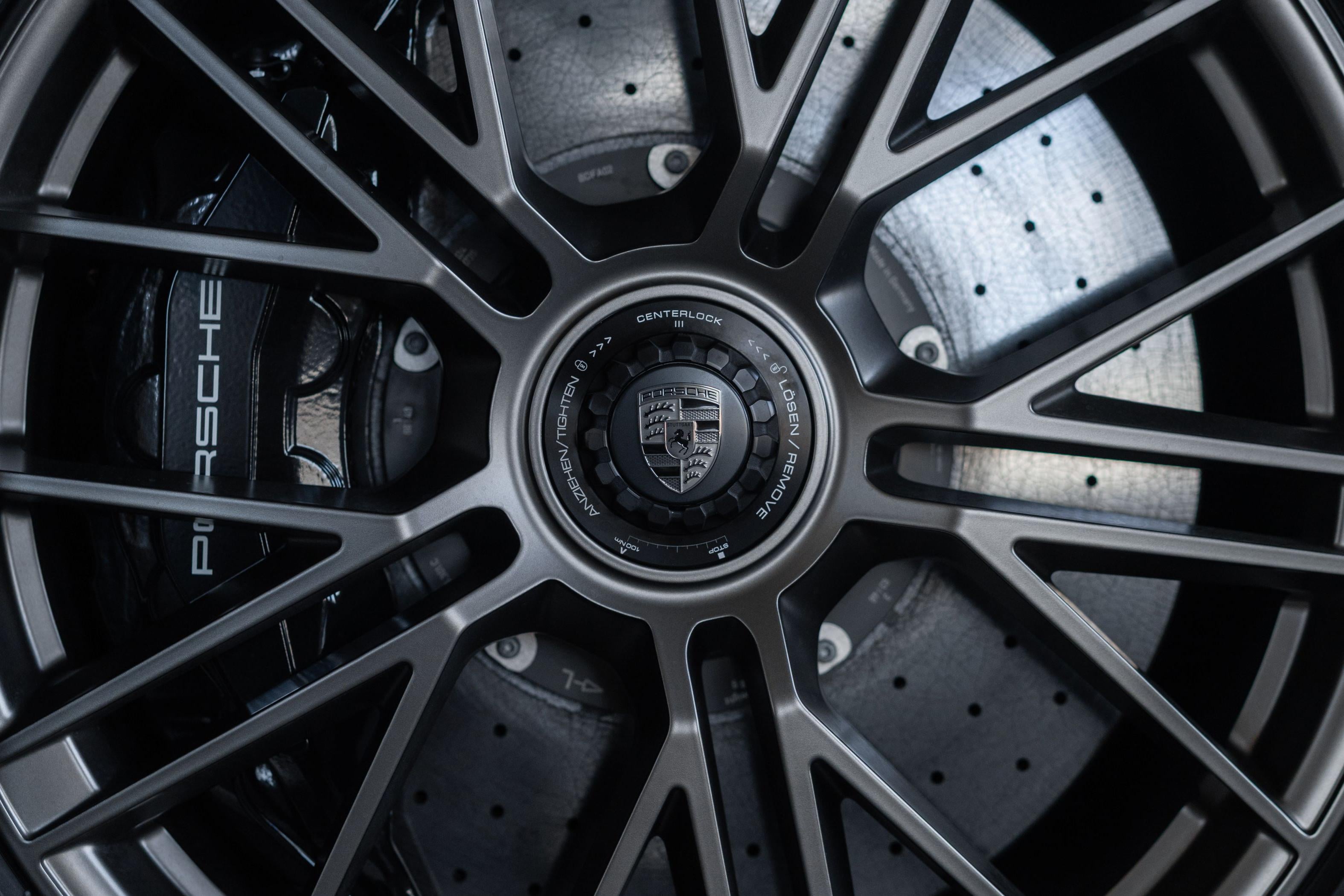
Stopping performance is great, thanks to the Porsche Ceramic Composite Brake setup that incorporates 440mm front and 410mm rear rotors. The brake pedal feels very wooden, however.
In terms of the active safety and driver assist technology, it’s a bit of a mixed bag. The lane-keep assist is a bit twitchy, and the centring aid sometimes sees the car ping-pong within its lane.
While the lane assist technology is inferior to vastly cheaper vehicles, the cameras are top-notch and the Panamera also has a clever feature called the Lane Light which works when the automatic high-beam is on.
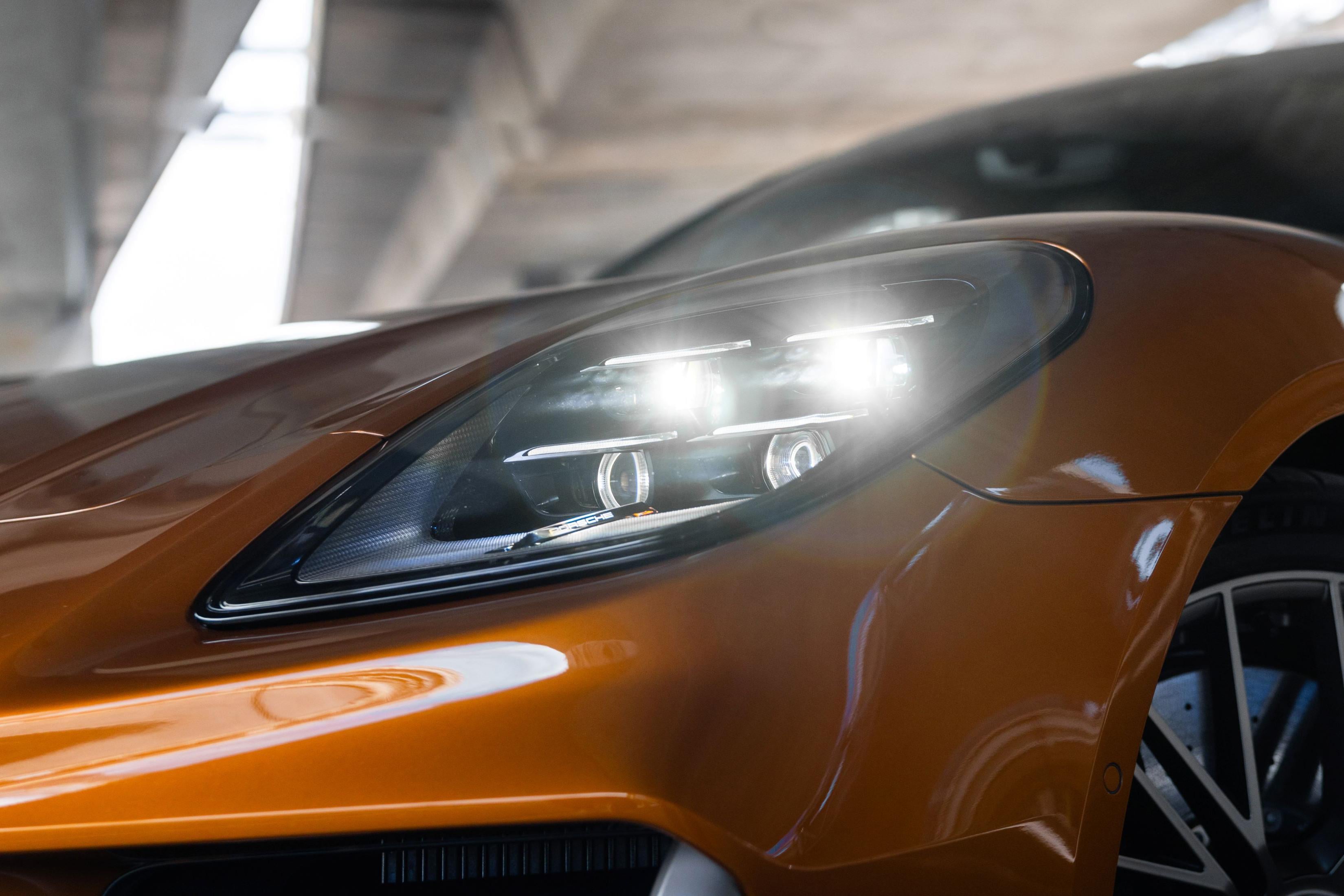
This feature uses the matrix LED headlights to illuminate the lane you’re travelling in, creating a clear visual corridor. It’s very impressive in operation.
To see how the Porsche Panamera lines up against the competition, check out our comparison tool
What do you get?
The local Panamera lineup is comprised of six variants, four of which – our Turbo S E-Hybrid tester included – are plug-in hybrids.
2026 Porsche Panamera equipment highlights:
- Adaptive air suspension incl. Porsche Active Suspension Management
- Integrated Porsche 4D Chassis Control
- 20-inch alloy wheels
- Tyre repair kit
- 6-piston front and 4-piston rear fixed monobloc brake calipers
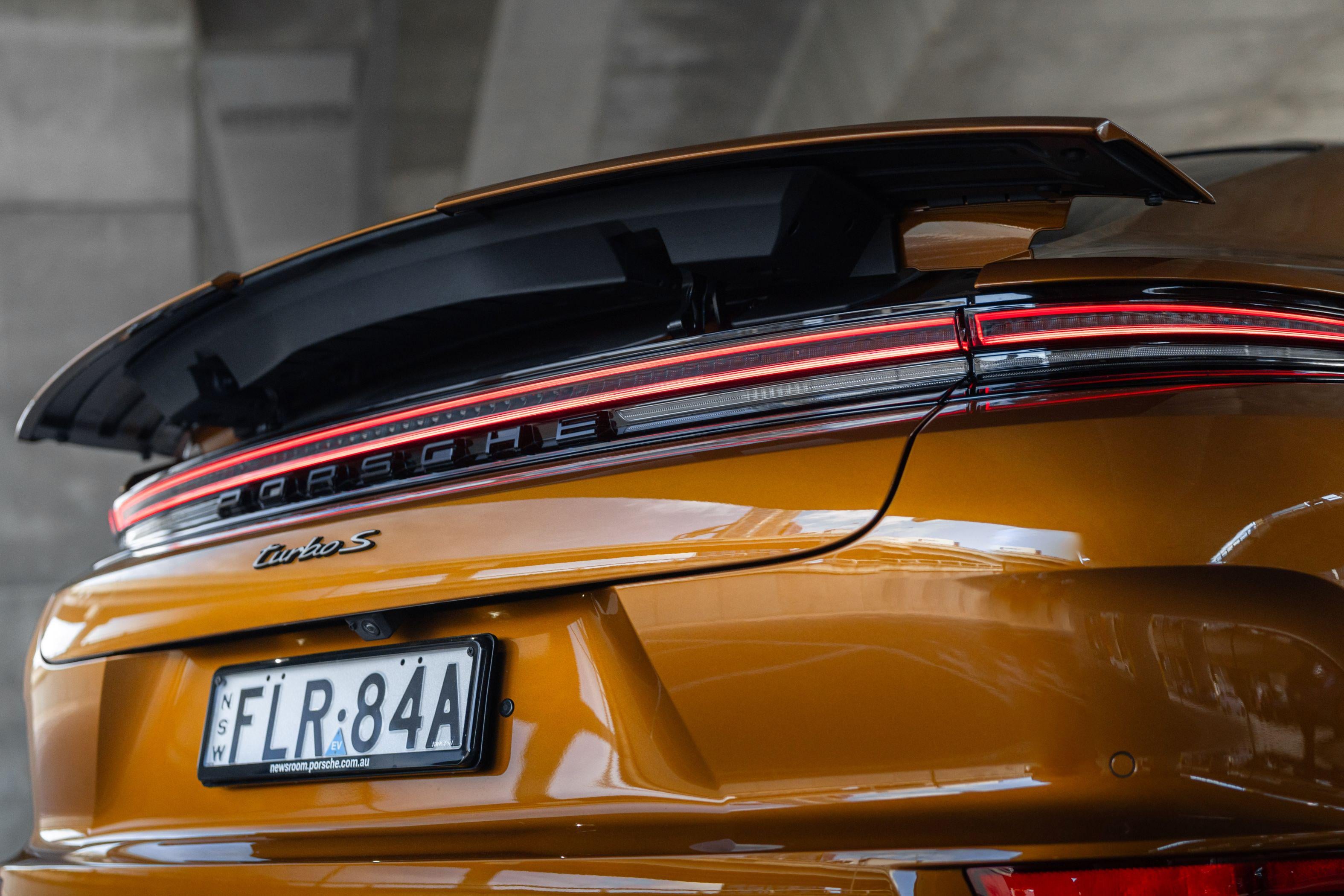
- 2-way adaptive rear spoiler
- Twin single-tube exhaust outlets
- HD matrix LED headlights with four-point LED daytime running lights
- Power-folding exterior mirrors
- Rain-sensing wipers
- Panoramic glass roof
- Power tailgate
- Privacy glass
- Proximity entry and push-button start
- Soft-close doors
- Head-up display
- 12.65-inch digital instrument cluster
- 12.3-inch touchscreen infotainment system
- Satellite navigation
- Wireless Apple CarPlay and Android Auto
- Porsche Connect
- Bose sound system
- DAB+ digital radio
- 2 x USB-C outlets (front) and 2 x USB-C outlets (rear)
- 3 x 12V outlets
- 4-zone climate control
- 14-way power-adjustable front ‘Comfort’ seats with memory
- Heated and ventilated front seats
- Partial leather interior
- Individual rear seats with folding armrest, 60:40-split/folding
- Ambient lighting
The 4 E-Hybrid and 4S E-Hybrid, besides having different powertrains, differ largely in minor cosmetic details. The V8-powered GTS is the only Panamera with a lowered ‘Sport chassis’.
The GTS also adds:
- Porsche Torque Vectoring Plus
- 21-inch alloy wheels with central lock
- 4-way adaptive rear spoiler
- Twin dual-tube exhaust outlets
- 18-way power-adjustable front ‘Adaptive sports’ seats with memory
- Race-Tex interior with “extensive leather items”
- Heated steering wheel
The Turbo E-Hybrid adds:
- Rear-axle steering
- 10-piston front brake calipers
- 21-inch alloy wheels
- Turbo-specific front and rear apron with air blades in Turbonite
- Heated rear seats
- Turbonite interior accents
- Leather upholstery
- Roll-up rear sun blinds
The Turbo S E-Hybrid adds:
- Porsche Active Ride suspension
- Porsche Ceramic Composite Brake
- 21-inch alloy wheels with central lock
Options
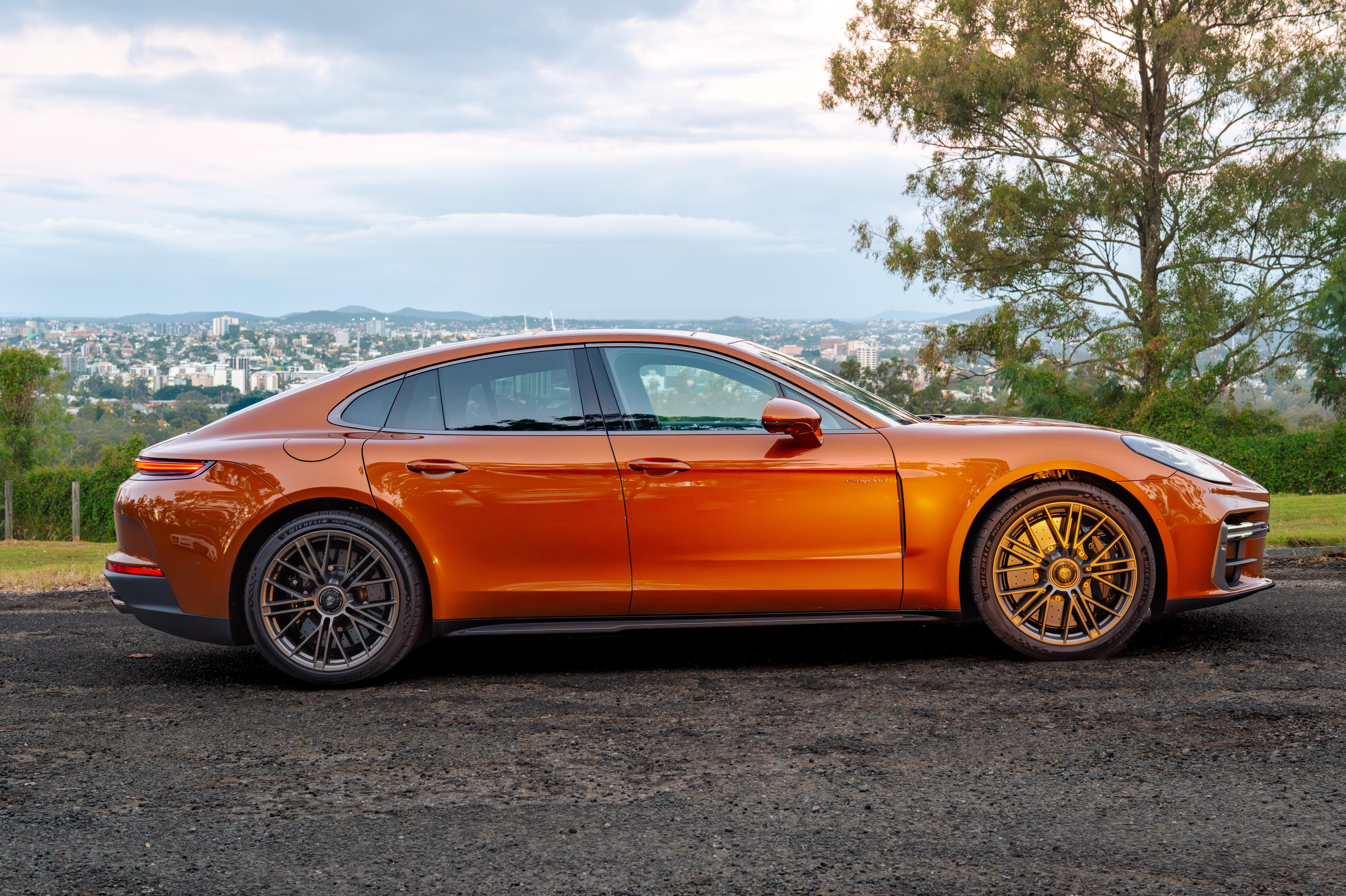
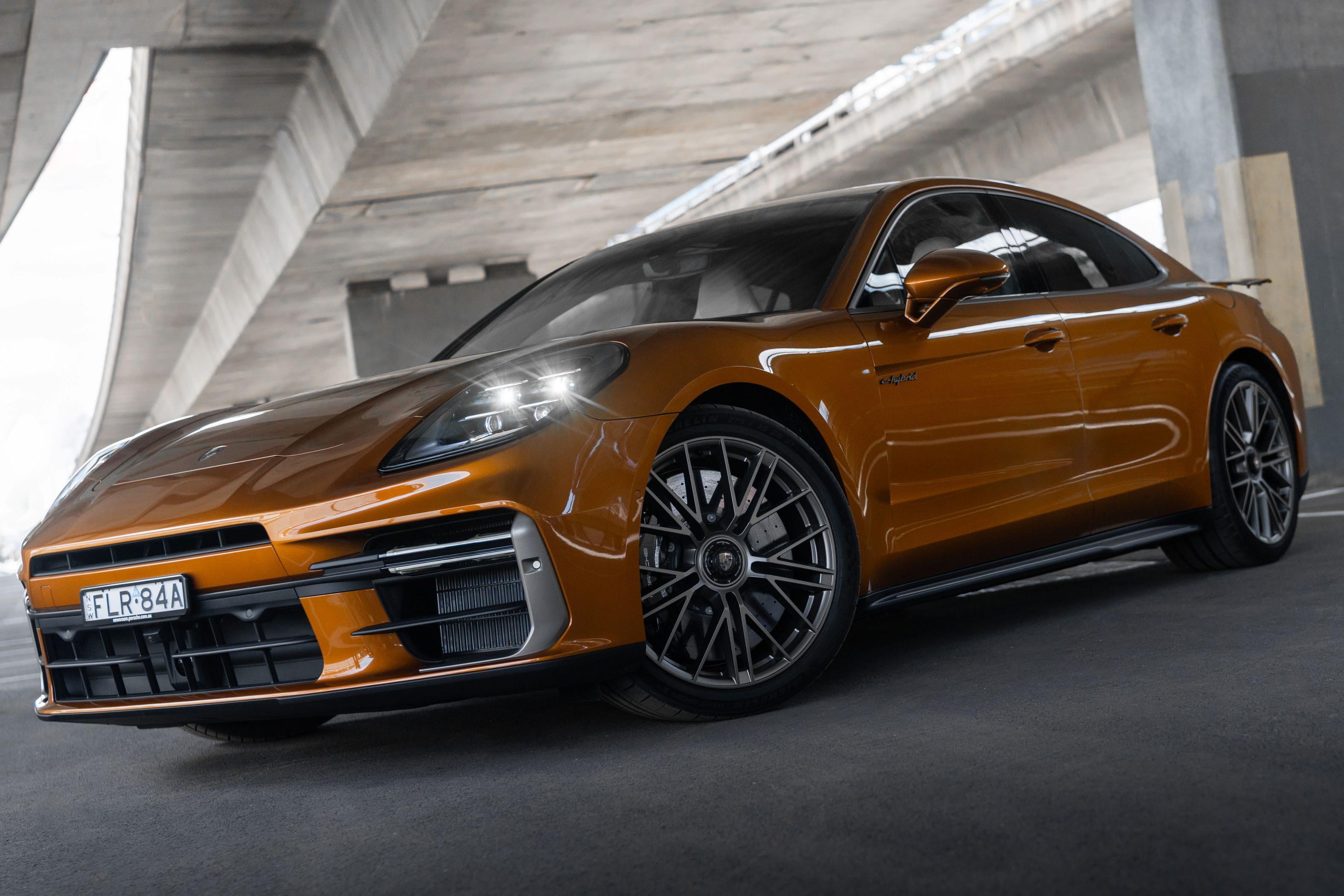
In addition to various no-cost options like the striking Madeira Gold Metallic exterior, the Turbo S E-Hybrid on test was fitted with a number of options.
These included:
- Sport Chrono Package with Porsche Design Subsecond clock: $2160
- Sports exhaust system with tail pipes in Dark Bronze: $6470
- Porsche Ceramic Composite Brake with high-gloss black calipers: $1720
- Two-tone leather interior in Black and Kalahari Grey: $1510
- Massaging front seats: $2200
- Passenger display: $3140
- SportDesign side skirts in Turbonite: $2220
- Body-colour exterior mirrors: $940
- Body-colour door handle inlays: $250
- Tinted HD matrix LED headlights: $1040
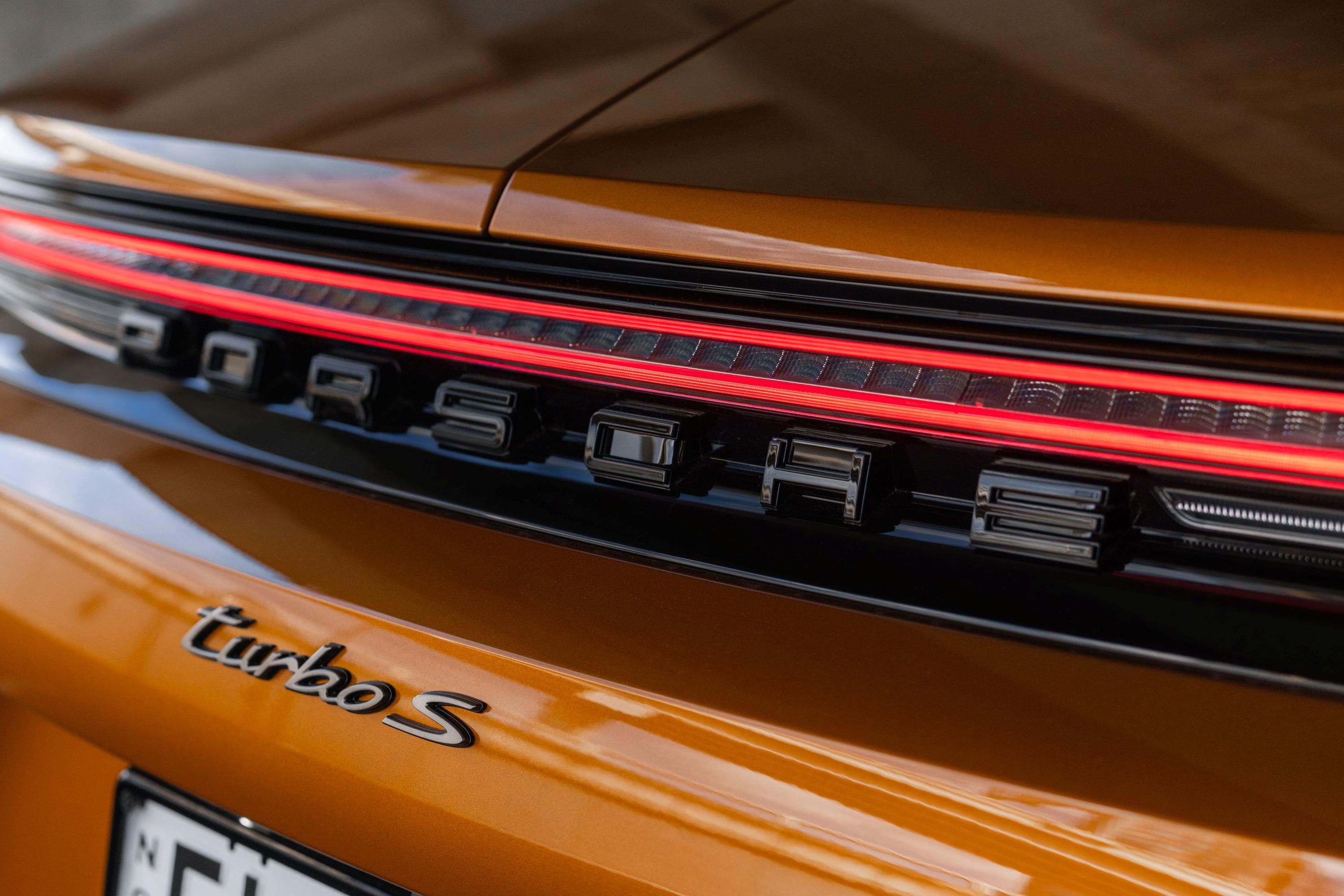
- Exclusive Design tail-lights: $1750
- Matte carbon-fibre interior trim: $980
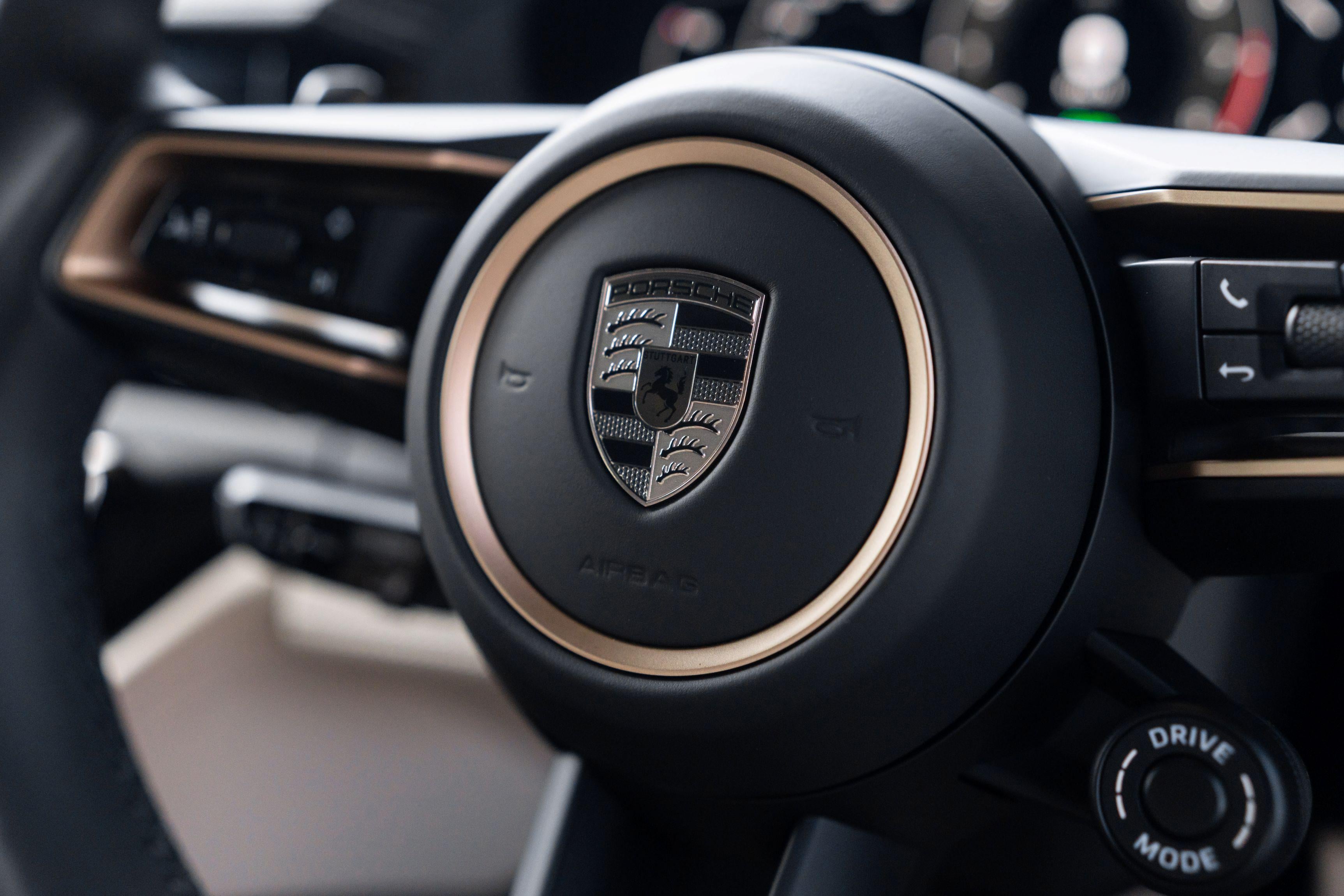
- Porsche crest on head restraints, with comfort pillows in the rear: $1450
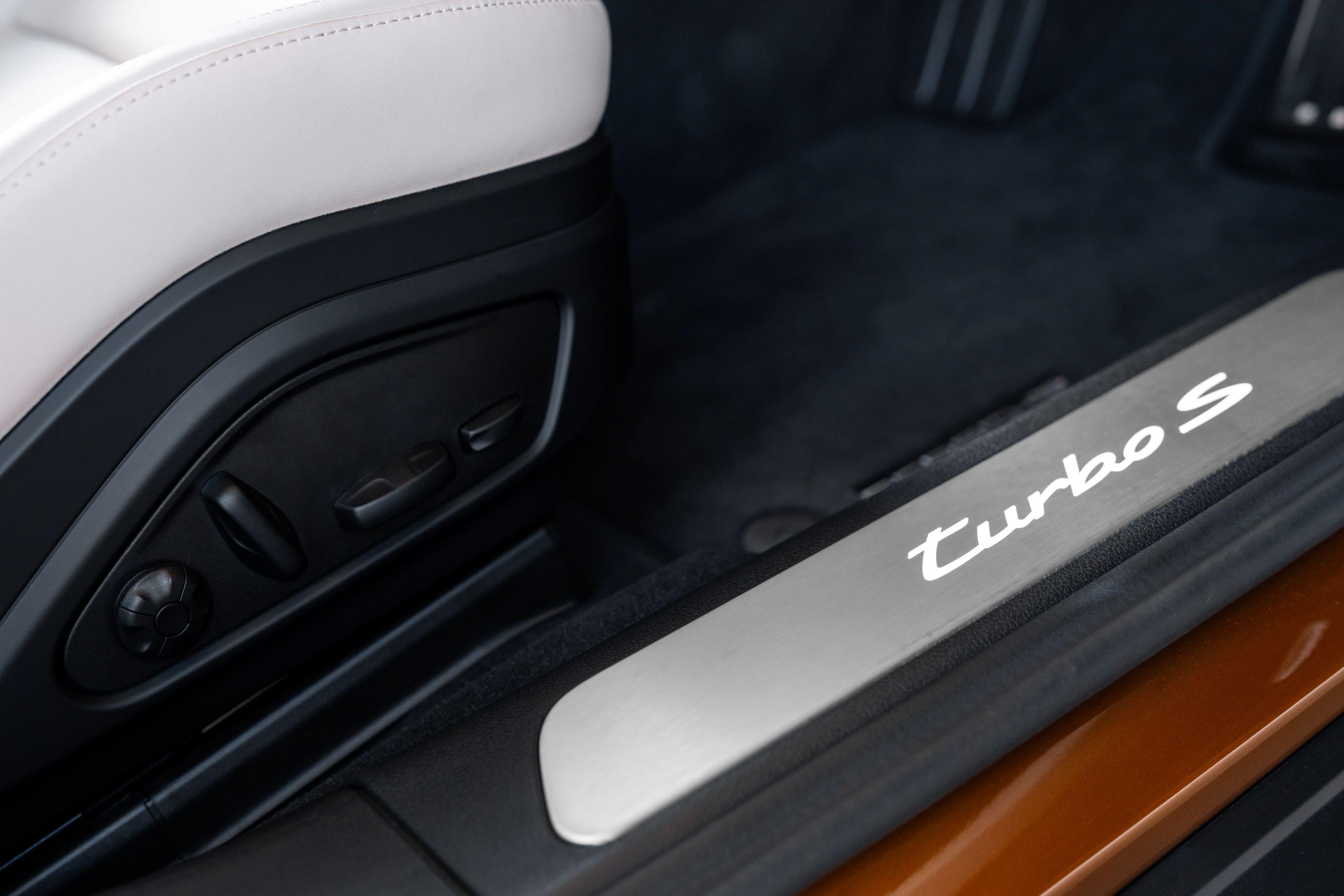
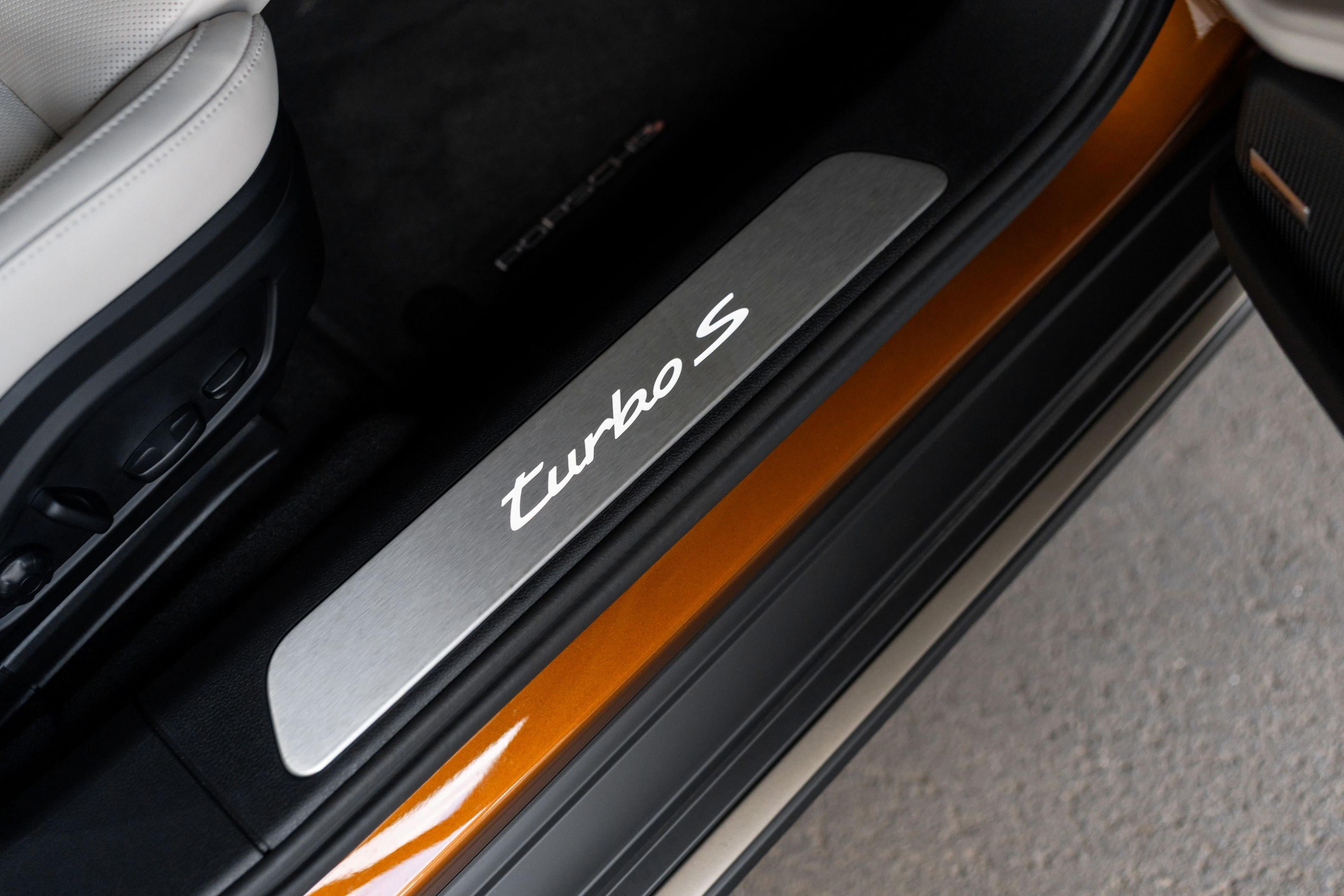
- Illuminated, brushed aluminium door sills: $880
To see how the Porsche Panamera lines up against the competition, check out our comparison tool
Is the Porsche Panamera Turbo S E-Hybrid safe?
The Porsche Panamera has never been tested by ANCAP or its sister authority Euro NCAP.
Standard safety equipment includes:
- Adaptive cruise control
- Autonomous emergency braking
- Blind-spot monitoring
- Lane-keep assist
- Traffic Jam Assist
- Dual front airbags
- Dual front knee airbags
- Front and rear side airbags
- Curtain airbags (front and rear)
- Surround-view camera
- Front and rear parking sensors
- Tyre pressure monitoring
To see how the Porsche Panamera lines up against the competition, check out our comparison tool
How much does the Porsche Panamera Turbo S E-Hybrid cost to run?
While Porsche’s three-year, unlimited-kilometre warranty is one of the shortest in the business, you can opt to extend your aftersales coverage to a maximum of 15 years.
| Servicing and Warranty | Porsche Panamera Turbo S E-Hybrid |
|---|---|
| Warranty | 3 years, unlimited kilometres (vehicle) 8 years, 160,000km (battery) |
| Roadside assistance | 1 year |
| Service intervals | 12 months or 15,000km |
| Capped-price servicing | No |
The battery is covered for eight years or 160,000km, and Porsche guarantees 80 per cent of battery capacity for up to three years or 60,000km, and then up to 70 per cent until the warranty period ends.
To see how the Porsche Panamera lines up against the competition, check out our comparison tool
CarExpert’s Take on the Porsche Panamera Turbo S E-Hybrid
The Panamera Turbo S E-Hybrid is a terrifically engineered sports sedan (or liftback, to be more accurate), but while it’s quicker than a BMW M5 or Audi RS7, we’d argue those extra thrills aren’t worth an extra $200,000-plus.
There’s some clever technology in the Porsche, including the Porsche Active Ride suspension, and the fact you can hear the snarl of a twin-turbo V8 and also separately enjoy zero-emissions driving means you can have your cake and eat it too.
But wow, talk about an expensive cake. And one with rather disappointing insides.
There’s nothing out there like a Turbo S E-Hybrid though, and it’s the quickest and most high-tech Panamera available. For the relative handful of customers in this segment, that may be enough.
CarExpert can save you thousands on a new Porsche Panamera. Click here to get a great deal.
Click the images for the full gallery
