

The Renault Scenic is back in Australia after 15 years, but it’s far removed from what local Francophiles may remember.
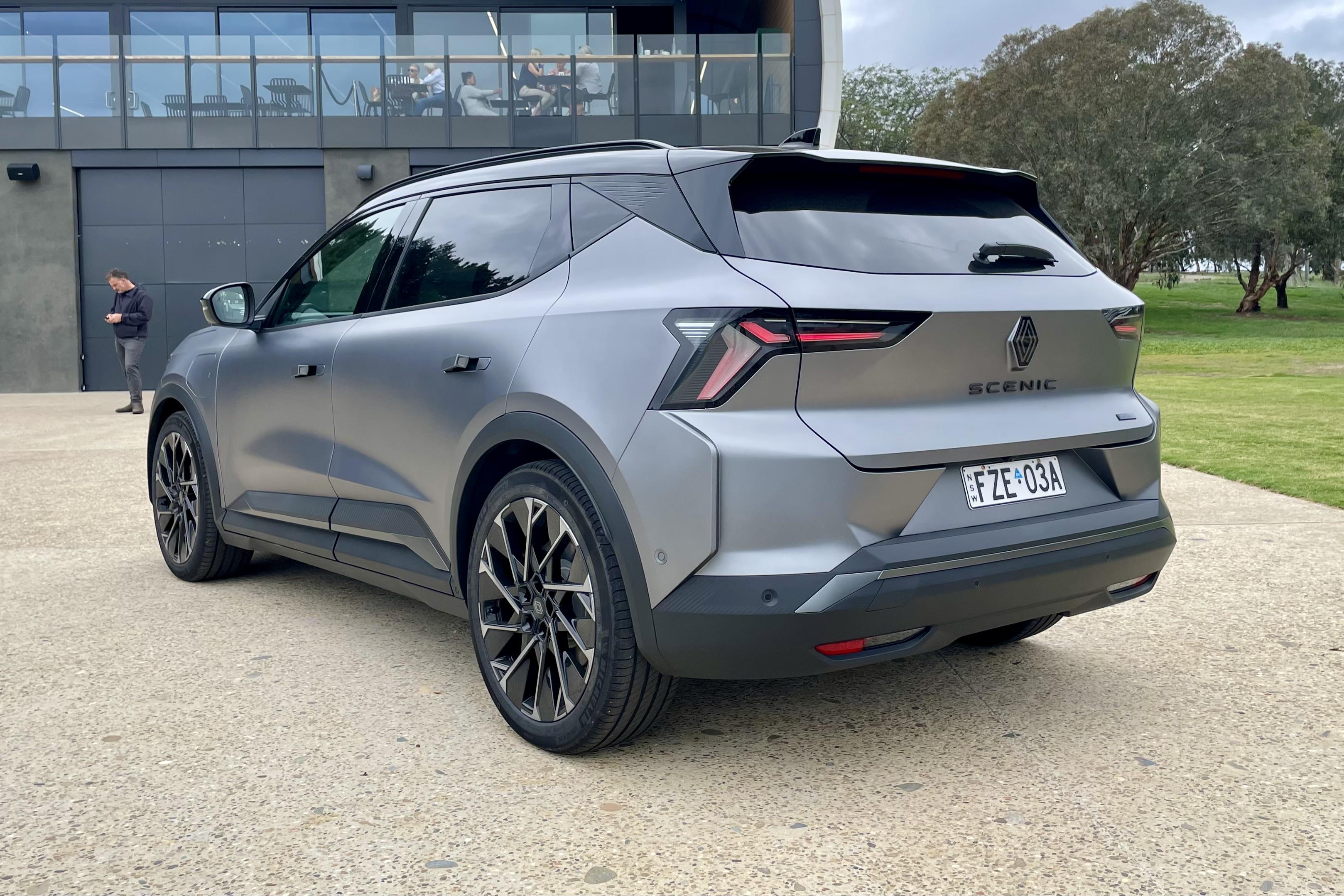
No longer an oddball compact people mover, the new-generation Scenic has now donned Renault’s E-Tech branding and adopted the form of a mid-size electric SUV, placing it squarely in the mix with some of Australia’s most popular electric vehicles (EVs).
That also makes it the fourth EV to be sold by Renault in Australia, following the Zoe city hatch, Megane E-Tech small SUV, and Kangoo E-Tech delivery van. There are plenty of other electric Renault models on sale overseas, but they’re unlikely to come to Australia in the foreseeable future.
Regardless, the Scenic E-Tech is among six new or refreshed models Renault has promised to bring to Australia in the next six months. While details of that rollout are scarce, it’s highly likely it’ll revolve around electrified models, including hybrids.
That’ll be important for the low-volume French brand, which has experienced a decline in sales locally as Chinese brands – often with cheaper cars – have skyrocketed in popularity.
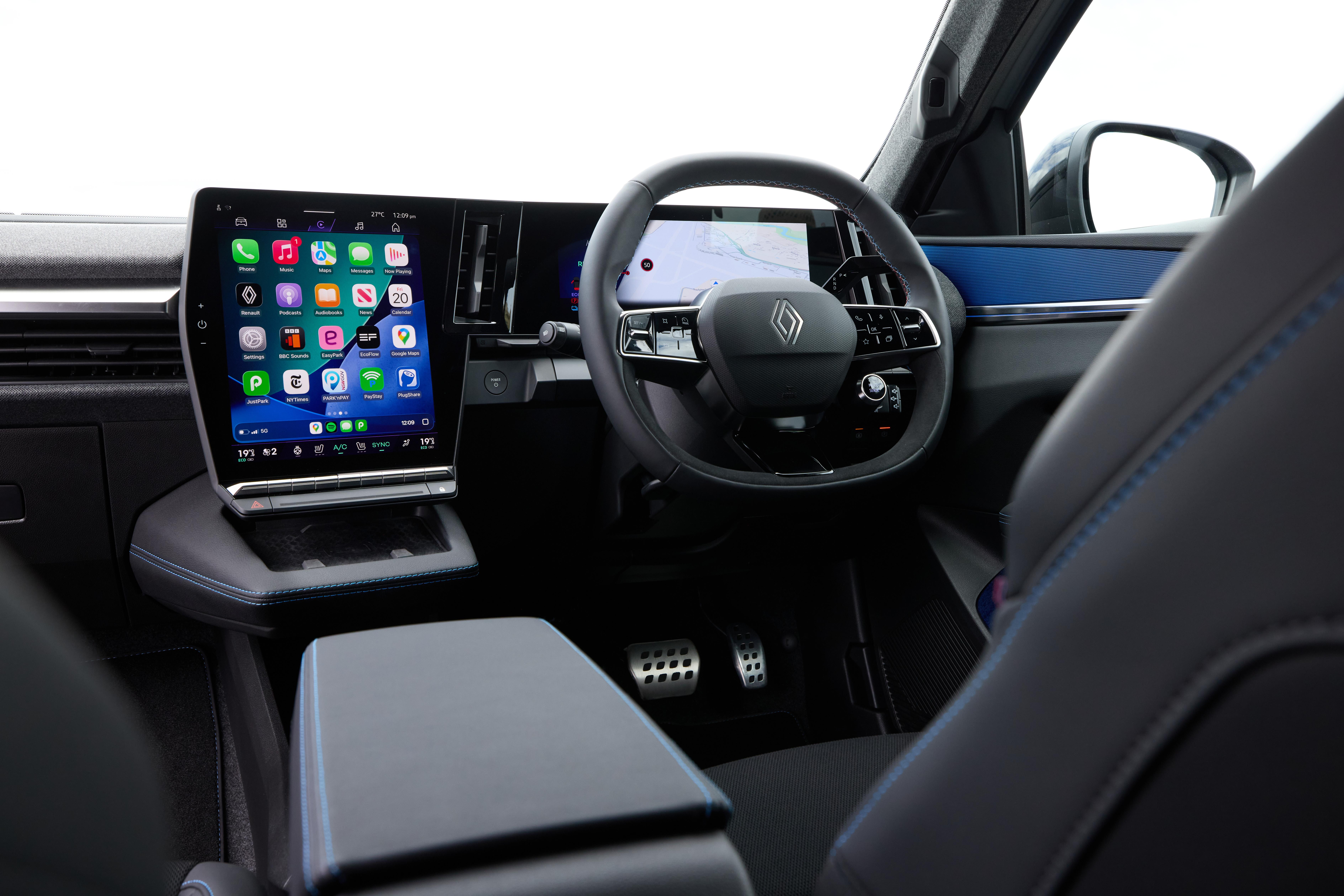
In fact, 2025 was Renault Australia’s worst sales result in 14 years, with 4569 registrations down 17.8 per cent on 2024. And the new year has gotten off to an inauspicious start – its sales in the first two months of 2026 were also down 17.8 per cent on the same period in 2025.
In the meantime, six Chinese brands surged past Renault on the 2025 sales chart, all of which sell cars cheaper than the entirety of Renault’s current catalogue. Still, the French brand is looking to turn its fortunes around, and the Scenic is its first statement of intent.
It’s priced sharply, offers a competitive claimed driving range, and comes with a healthy list of standard features. Only the flagship Esprit Alpine (pronounced ‘es-pree al-peen’) is available from this month’s launch, with the standard Techno trim due to arrive in late May or early June 2026.
CarExpert was among media invited to Canberra to sample the Scenic E-Tech Esprit Alpine – how does it stack up based on our first impressions, and will it be enough to steady Renault’s ship?
How much does the Renault Scenic E-Tech cost?
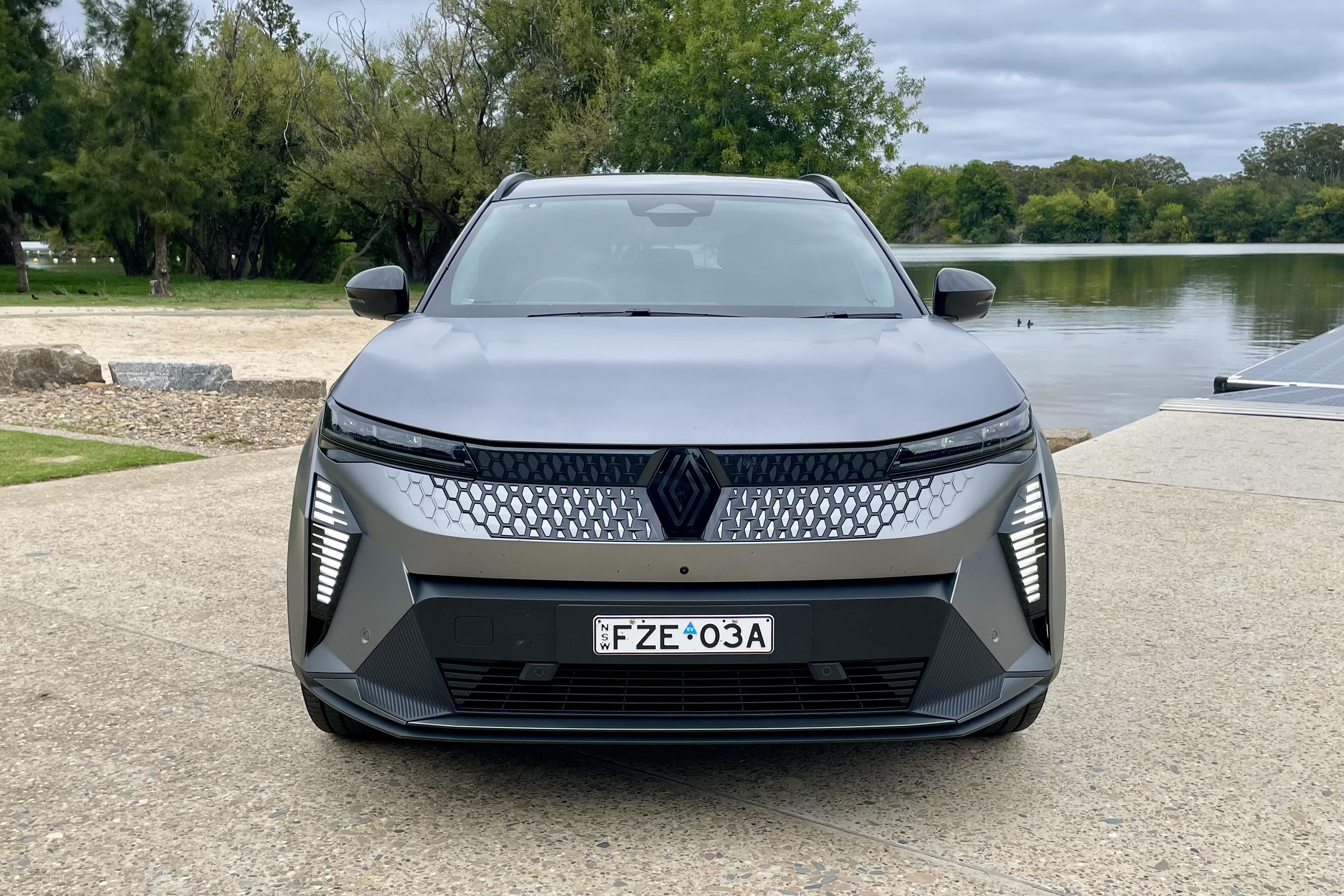
The Renault Scenic E-Tech starts at $55,990 before on-road costs for the base Techno, and extends to $65,990 before on-roads for the flagship Esprit Alpine.
| Model | Price before on-road costs |
|---|---|
| 2026 Renault Scenic E-Tech Techno | $55,990 |
| 2026 Renault Scenic E-Tech Techno Long Range | $59,990 |
| 2026 Renault Scenic E-Tech Esprit Alpine | $65,990 |
Notably, as Renault pointed out to us, the Scenic E-Tech is much cheaper in Australia than in Europe. In the UK, the range starts at £35,495 for the base Techno, which is roughly A$67,950 in a direct conversion – enticing for sure.
As for rivals, Renault Australia general manager Glen Sealey explicitly named the Kia EV5 as a “golden competitor” due to its “similar size” and “similar price points”.
Sourced from China, the EV5 ranges in price from $56,770 to $61,170 before on-roads in its most comparable front-wheel drive form. A key difference is that Kia also offers two all-wheel drive versions with considerably more power than the Scenic, priced at either $64,770 or $71,770 before on-roads.
Otherwise, the base Scenic is only slightly more expensive than the smaller Megane E-Tech ($54,990 before on-roads), cheaper than the base Tesla Model Y ($58,900 before on-roads), and slightly above the BYD Sealion 7 ($54,990 before on-roads).
To see how the Renault Scenic E-Tech stacks up against the competition, use our comparison tool
What is the Renault Scenic E-Tech like on the inside?

There’s a premium edge to the Scenic’s cabin, which feels like an upscale evolution of Renault’s characteristic interior design language established over the past decade.
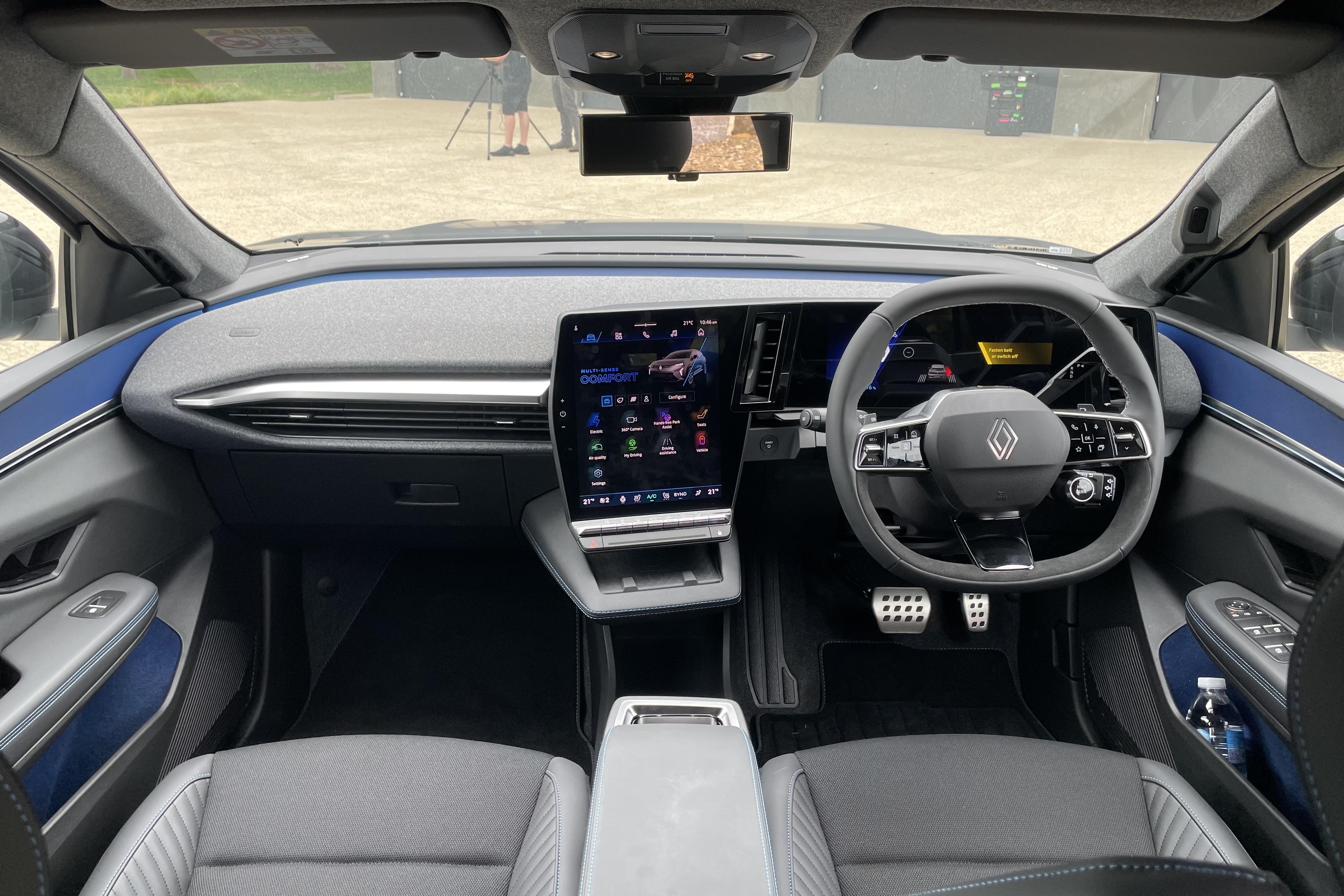
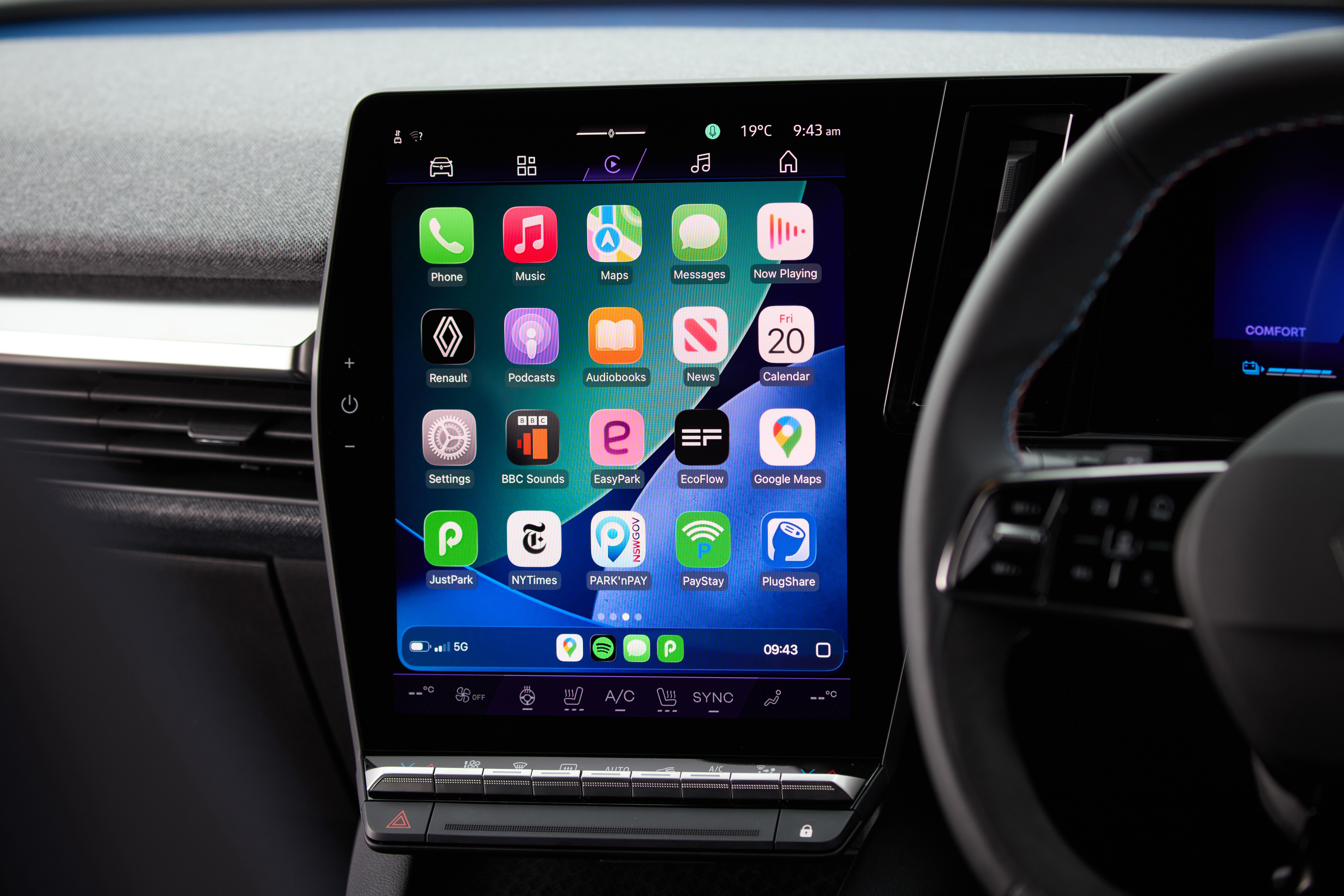
The central portrait-style infotainment touchscreen blends almost seamlessly into the digital instrument display’s housing, broken up by a set of vertical air vents. This creates a cockpit feel, as this large, connected panel angles towards the driver and sits quite high on the dashboard.
This is a similar approach to that of the EV5, except Renault has opted not to follow the Korean brand in utilising a third touchscreen for climate controls between the infotainment and instrument displays. The Scenic is all the better for it, too, as Kia’s arrangement is an ergonomic nightmare.
Instead, Renault has maintained its tried-and-tested array of physical climate controls at the bottom of the infotainment screen. While still not perfect, given the physical buttons are merely shortcuts for the most basic climate functions, it’s preferable to the screen-only approach of many competitors.
More nuanced controls are found in the always-on ribbon at the bottom of the touchscreen above.
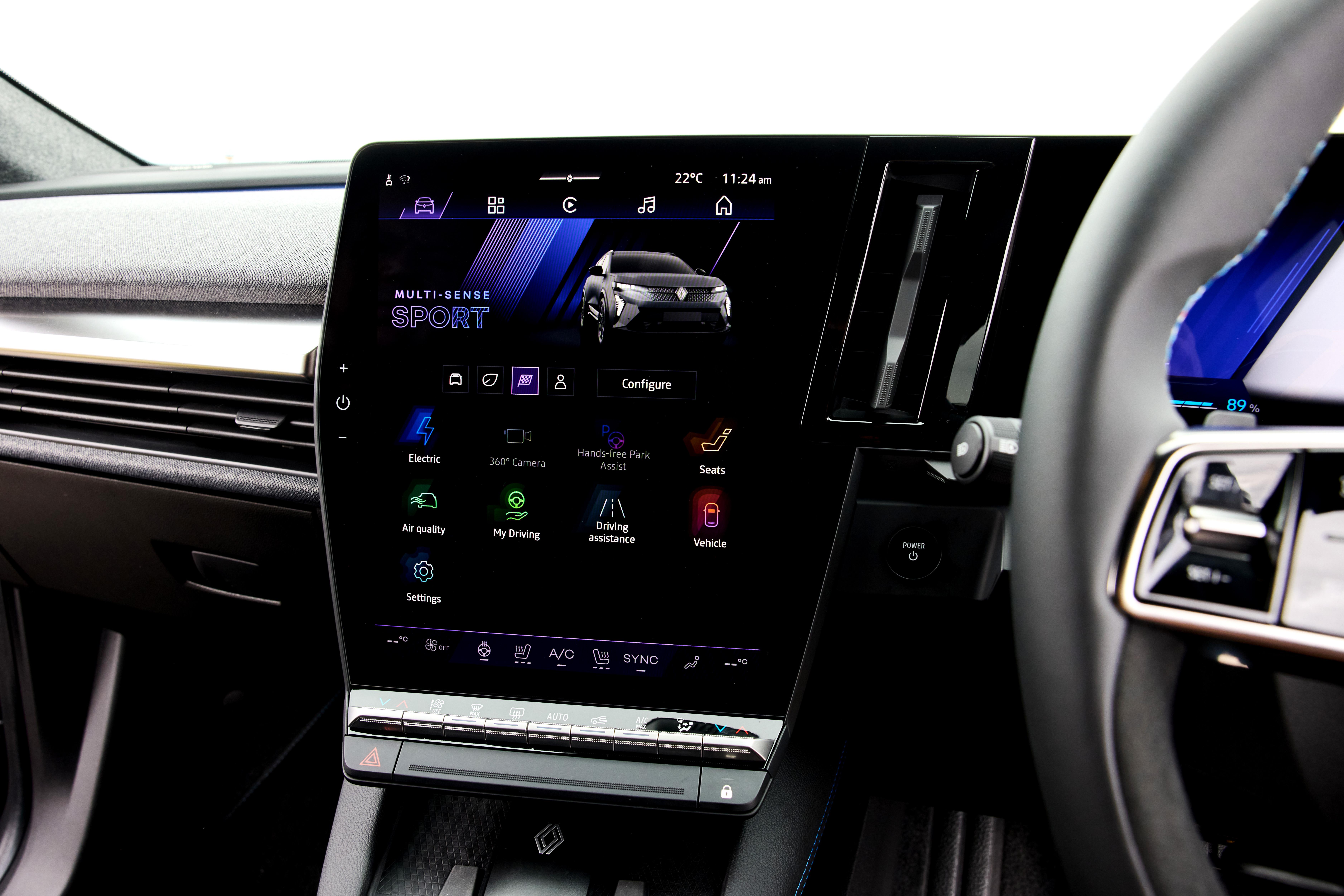
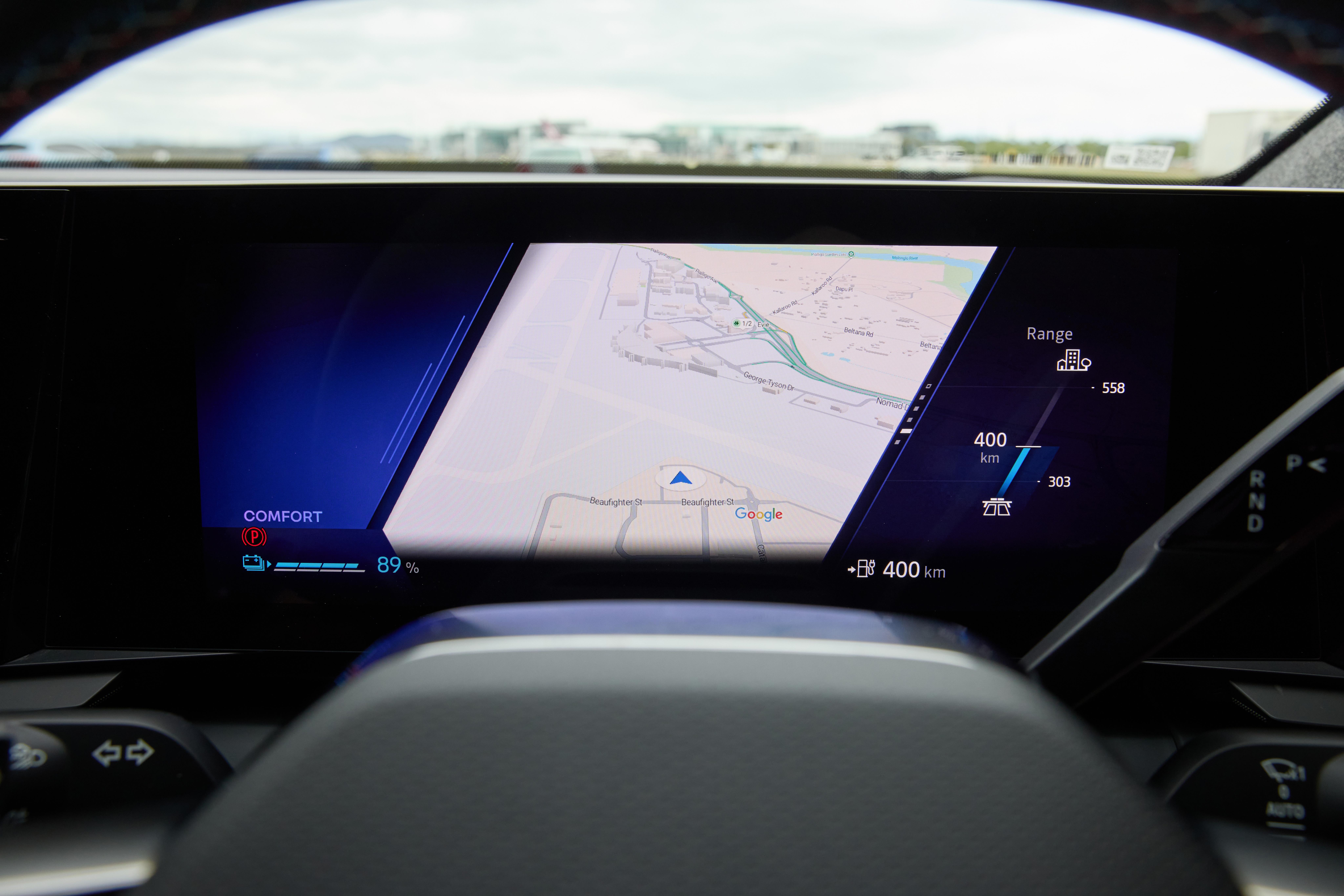
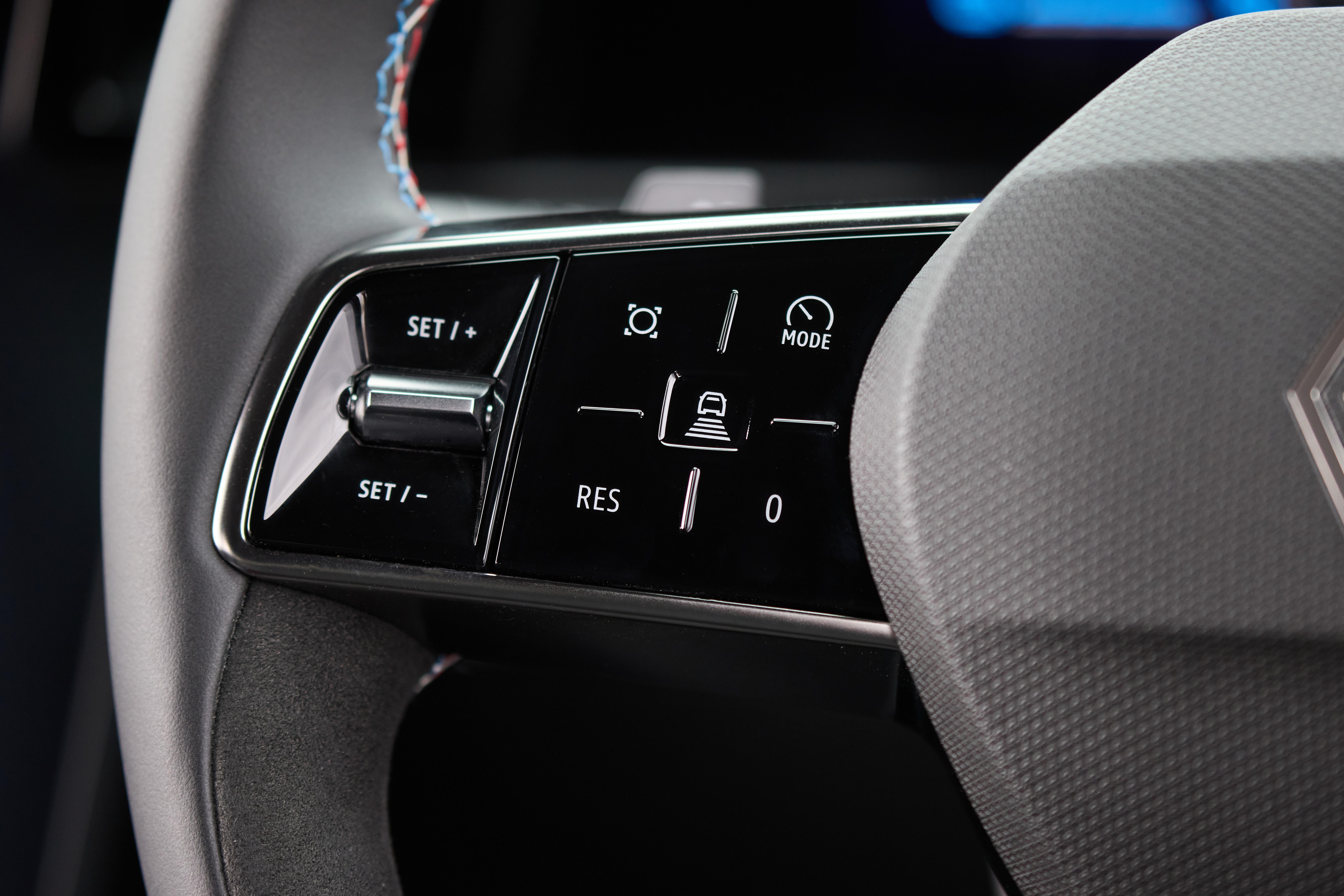
Aside from those clicky physical switches, the Scenic’s interior controls are still a bit unusual, especially if you’re used to Western and Japanese cars. For one, Renault’s quirky stalk for infotainment controls reappears, replacing more traditional steering wheel-mounted buttons.
In practice, this setup works quite well, but it’ll take newcomers a second to adjust given it’s hidden behind the steering wheel. As a result, you’ll only find basic controls on the wheel itself; it would be better if they were finished in anything other than piano-black plastic and labelled just a touch more explicitly.
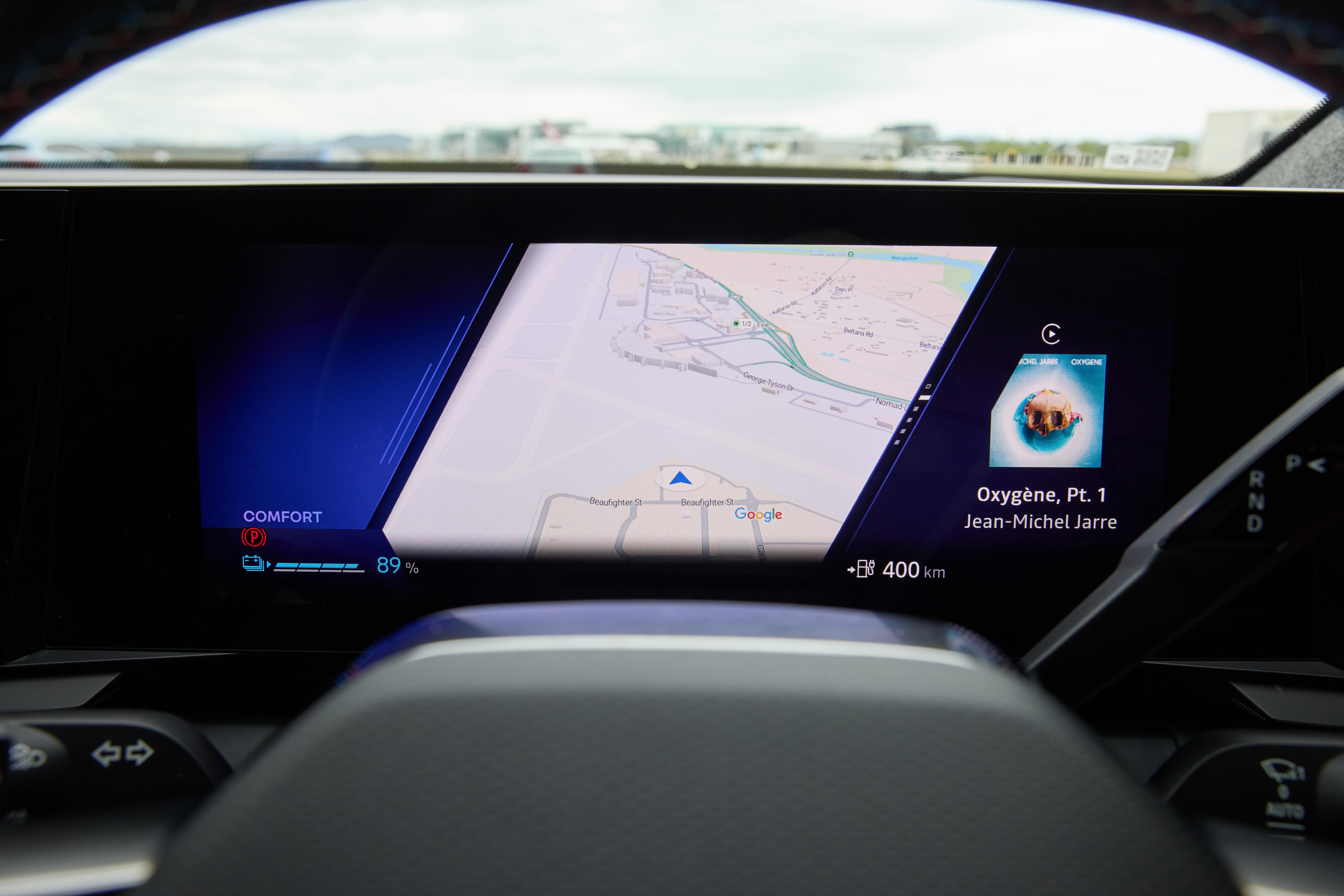
Pressing these buttons will eventually reveal the instrument display’s configurability. We quite like its style, and there are multiple looks with different info displays to scroll through, including navigation via the car’s built-in Google functionality.
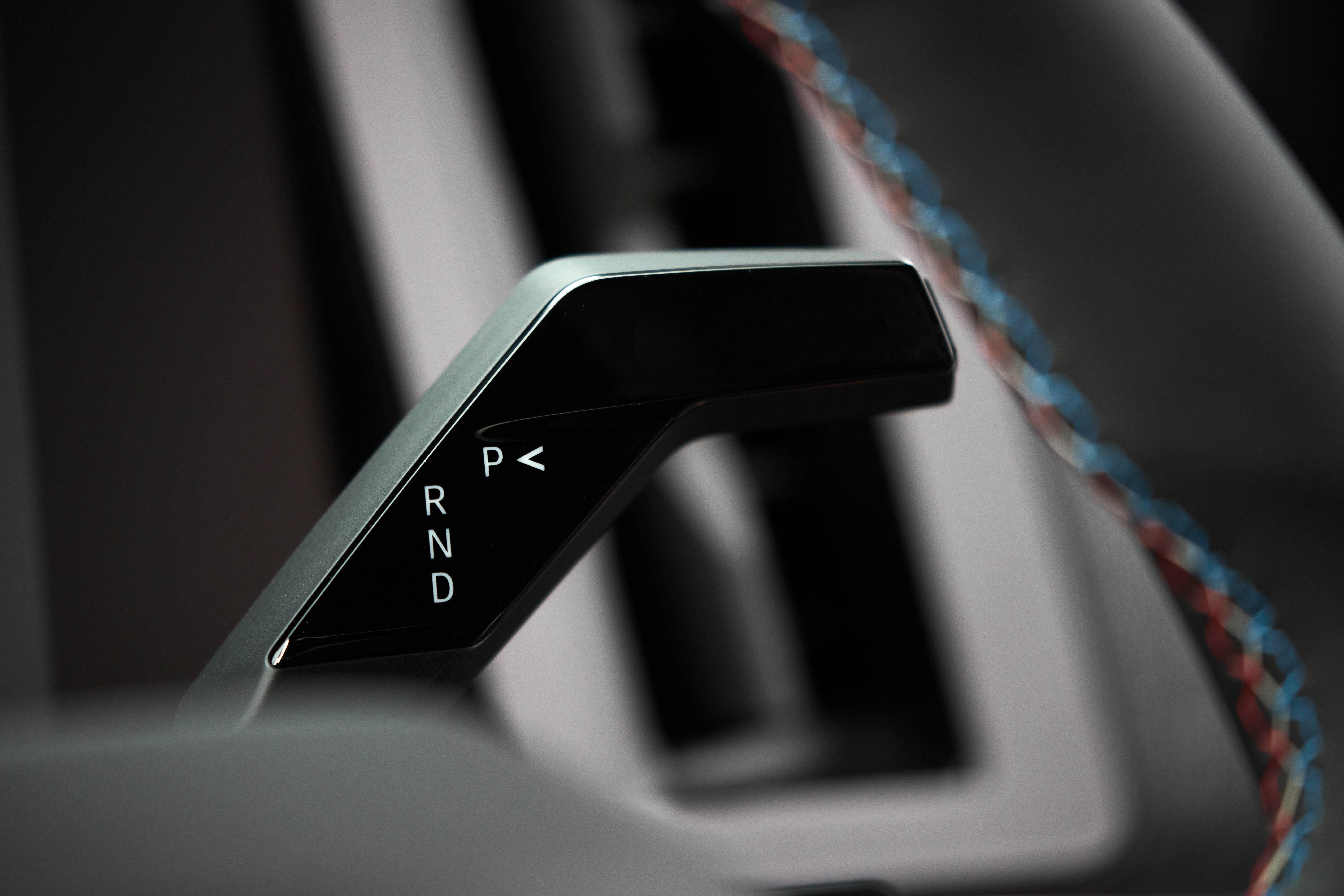
The only other item of note is the gear selector. It’s a column-mounted stick, but it looks odd given its shape and size – perfectly functional, but quirky nonetheless.
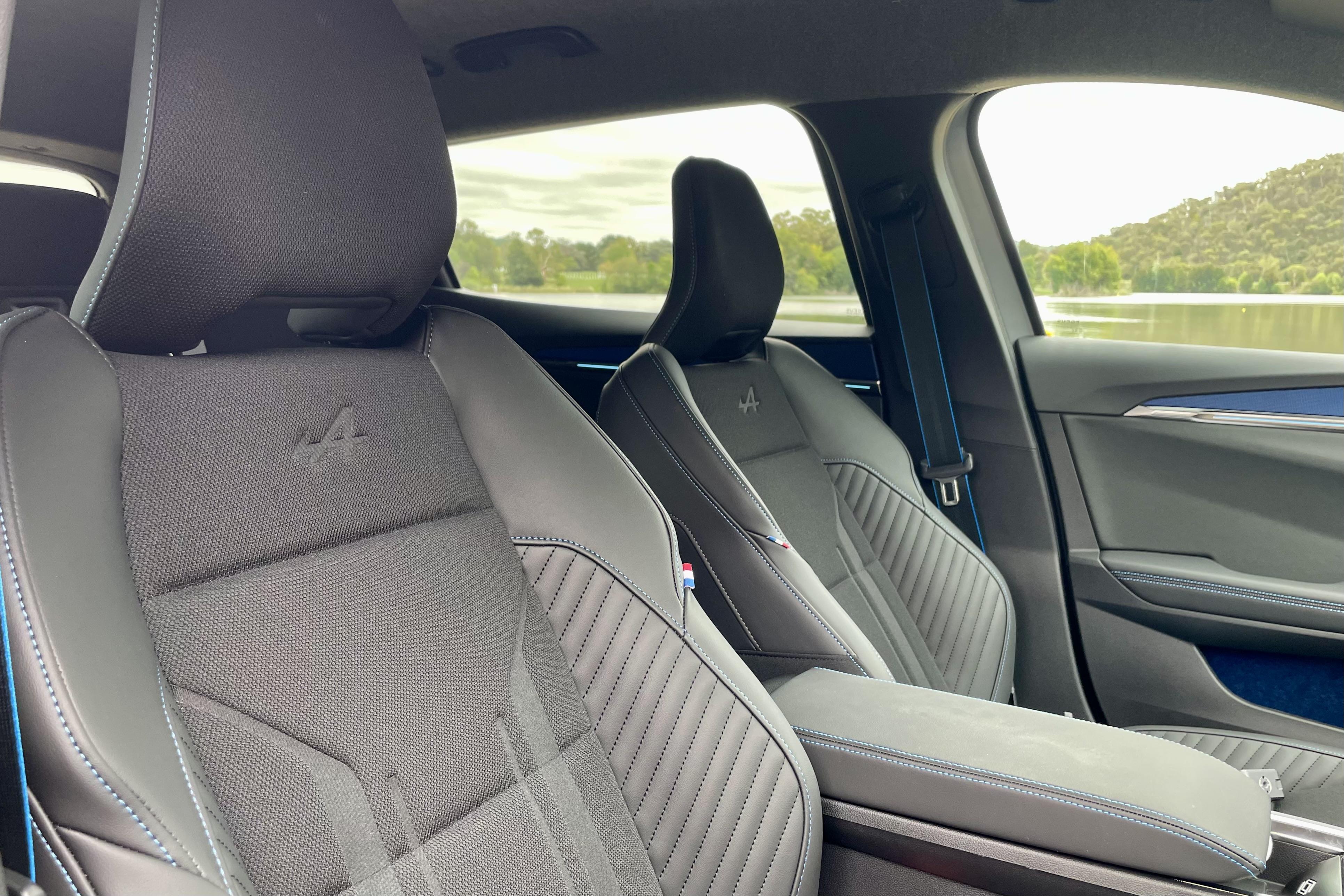
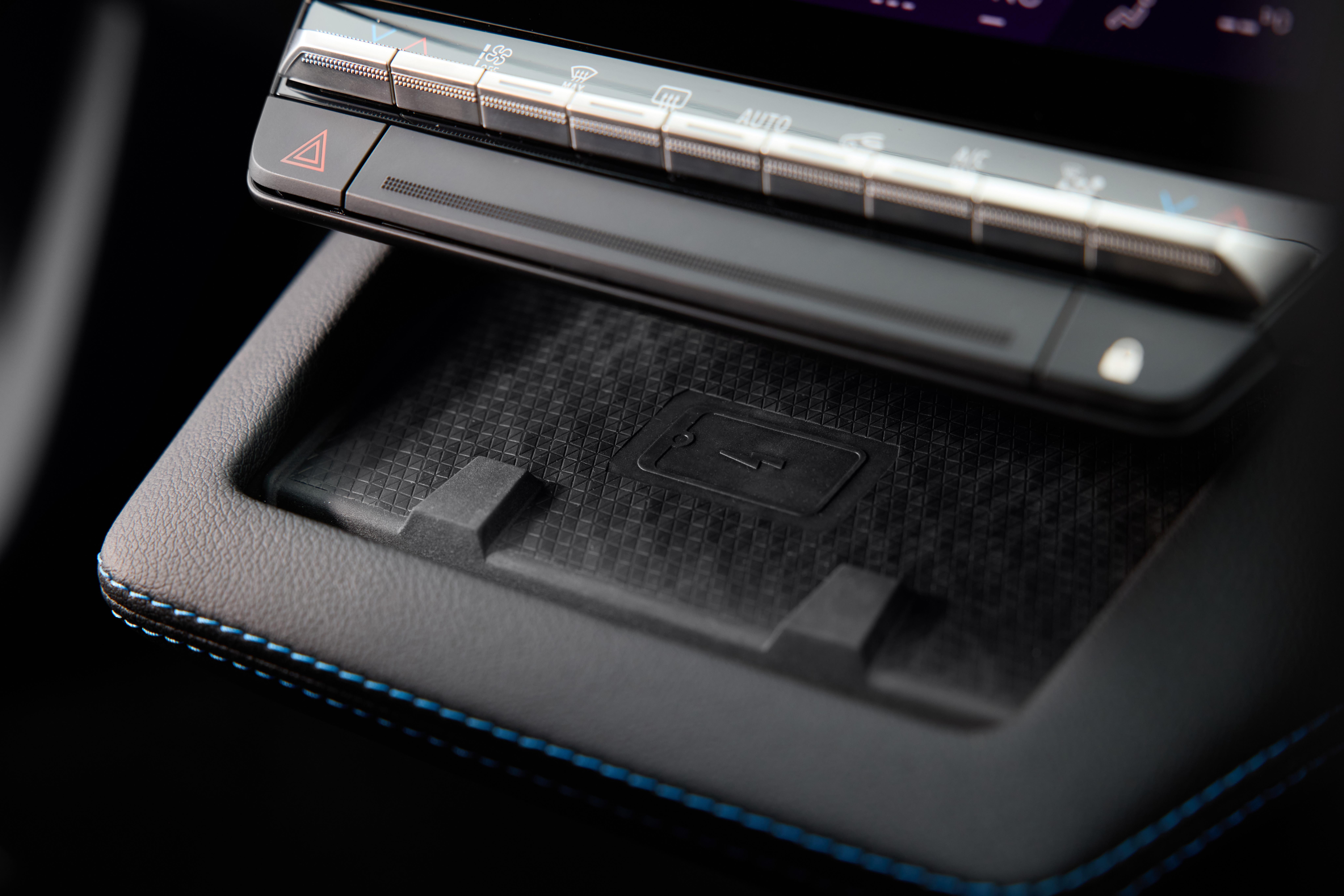
A theme throughout the cabin is how well-made everything feels. The screens are snappy and graphically sharp, all fittings are rock-solid, and material choice is undeniably premium – it looks and feels far less plasticky than many other modern Renaults.
Part of that may have to do with the extra gear fitted to the flagship Esprit Alpine. Highlights include bespoke supportive seats, a premium, leather-wrapped tiller with a suede insert, and the high-end sound system, which builds on the Scenic’s standard soft-touch surfaces and strong ergonomics.
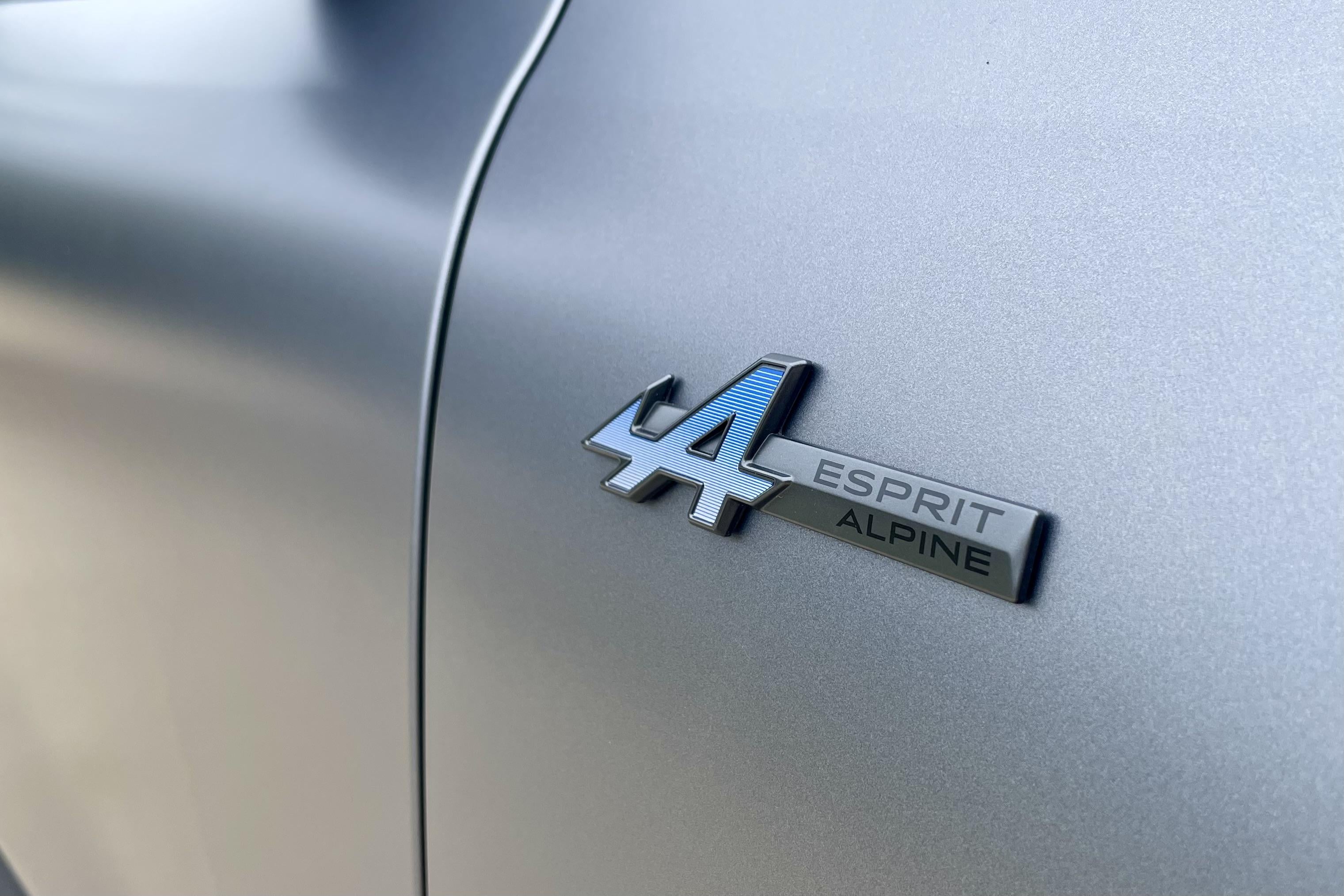
You’ll also notice unique design elements like the blue inserts on the door cards and dashboard, along with the French blue, white and red stitching. While this Scenic is ‘Alpine’ in appearance only, its sporty enhancements are well-considered and meaningful.
Storage-wise, the Scenic is well-appointed. Below the infotainment display is a ‘floating’ tray with a wireless phone charger, while further back is a ‘floating’ armrest featuring a coin tray, two USB-C ports and a deep storage box.
Additionally, you get a large tray that fits a handbag nicely, along with a central cupholder. The cubbies in the doors are best suited to small bottles, but there are plenty of places to stow your bits and bobs everywhere you look.
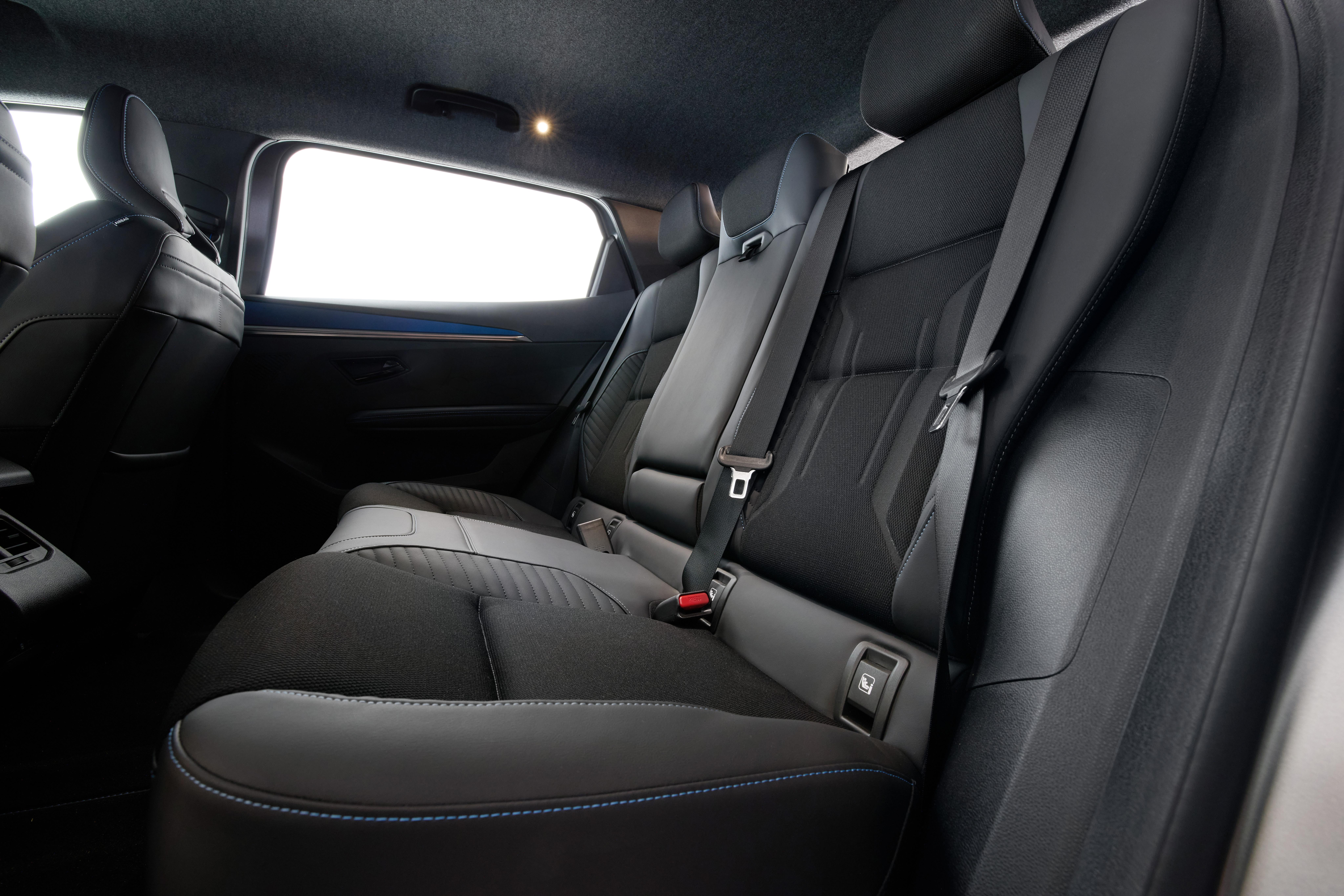
The Scenic’s second row is spacious, and at 173cm I had no issues with legroom or headroom. There’s no driveline hump to compromise foot room in any seating position, with the completely flat floor making it easy to scoot across the bench if need be.
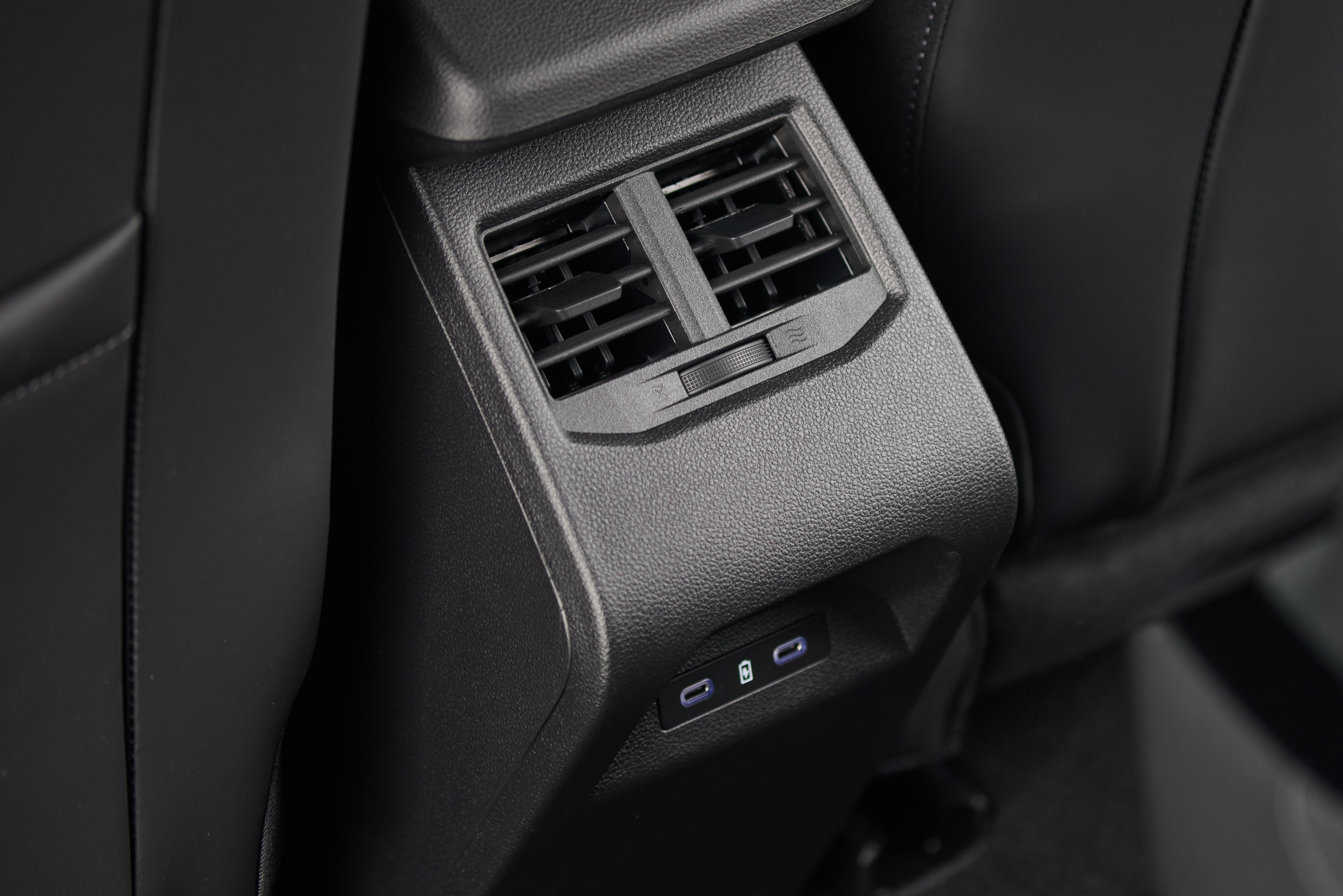
The seats themselves are surprisingly supportive and have backrests with deep cut-outs, which do a better job of holding you in place than in most other SUVs. Amenities aren’t bad either, with dual air vents (but no third climate-control zone) and USB-C ports on the back of the centre console.
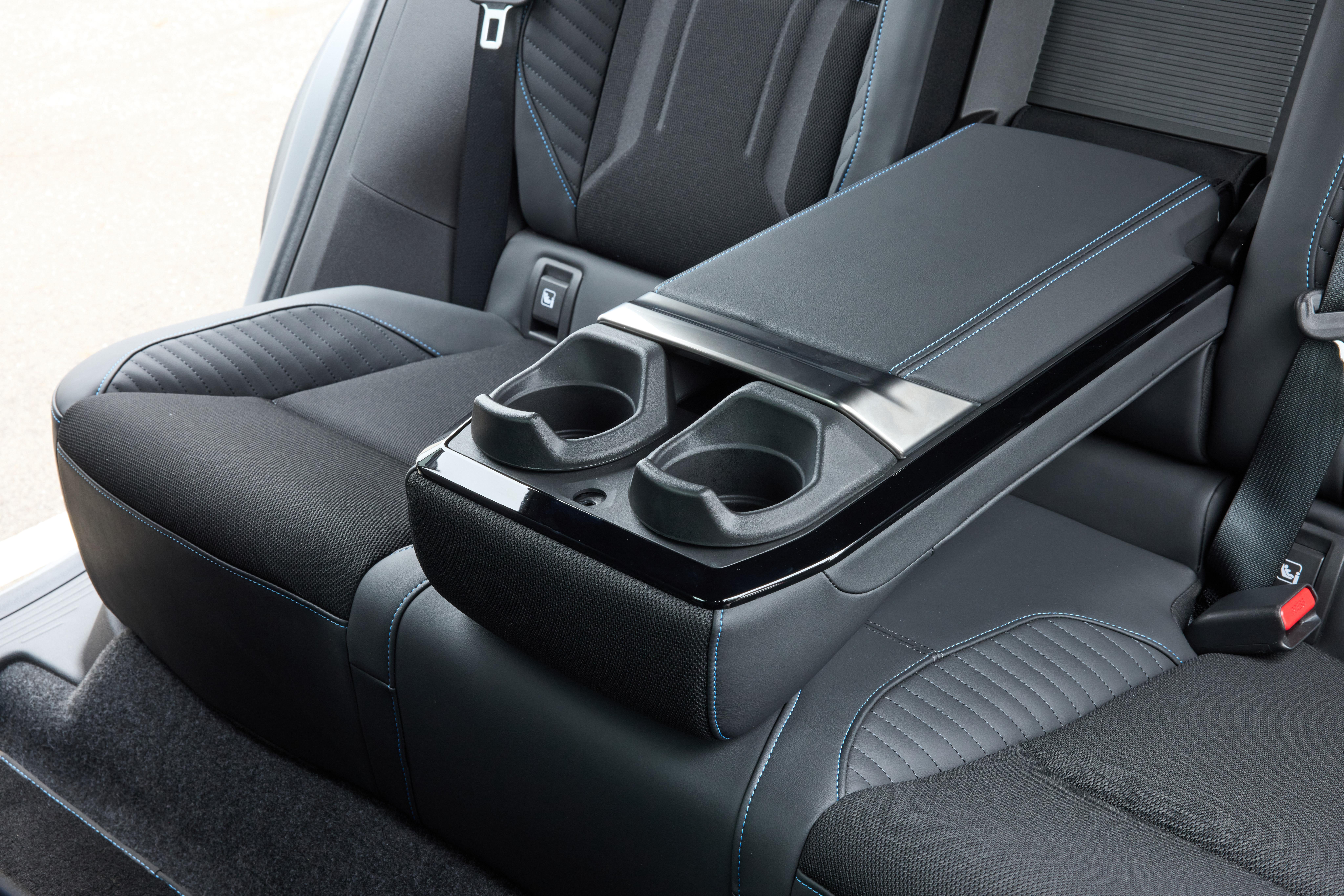
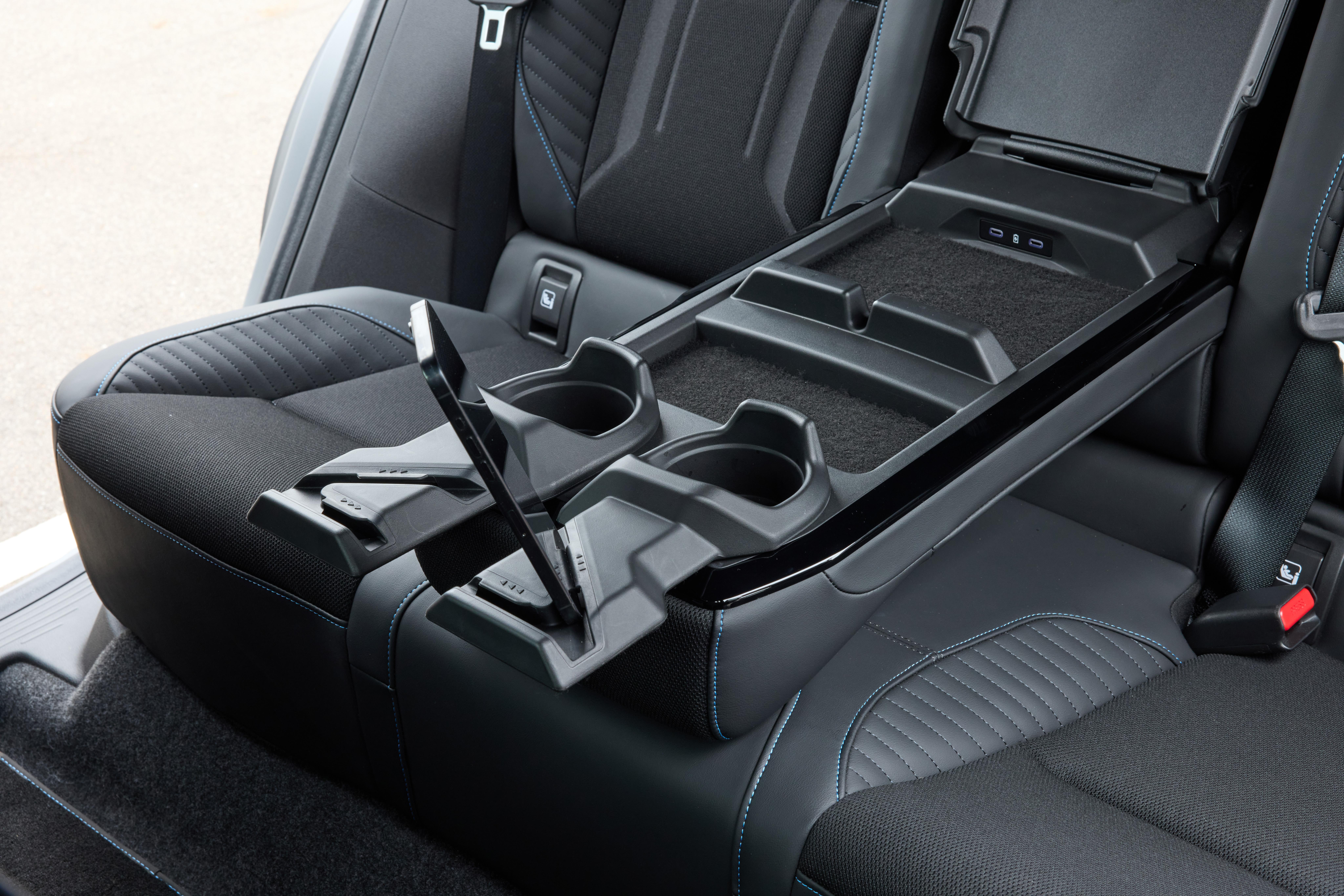
The real party piece, however, is Renault’s ‘Ingenious’ centre armrest. This is a configurable armrest with a lid that opens to reveal small storage trays, another pair of USB-C ports, and cupholders with swivelling device holders for anything from phones to full-size tablets – great for keeping young ones entertained.
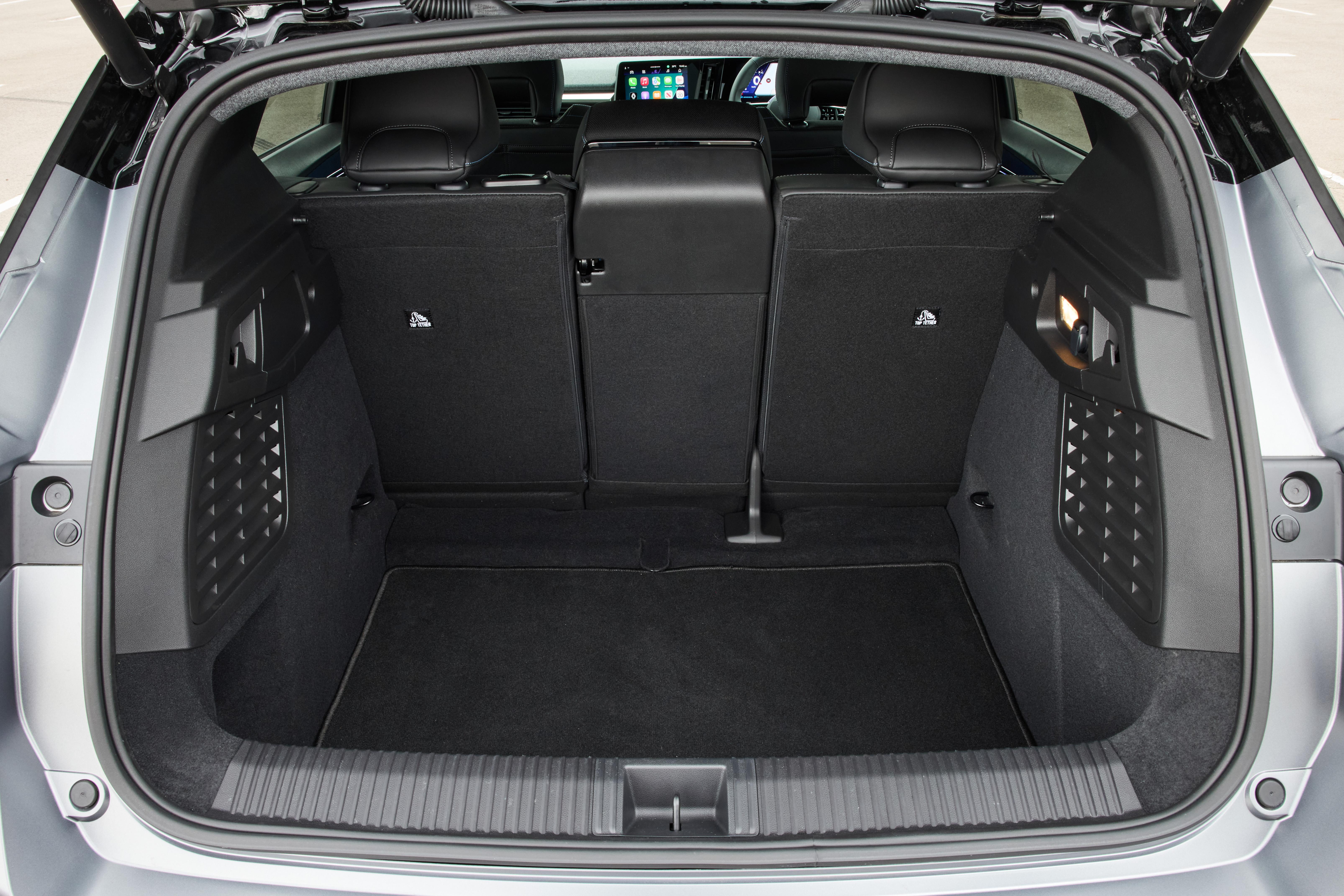
You also get storage pouches on the front seatbacks, and the rear bench folds down in a 40:20:40 configuration if you’re carrying longer items but need to keep specific seats available.
The Scenic’s boot is spacious, with a deep floor to maximise capacity. Its quoted 545 litres of capacity is larger than the EV5’s 513L and even the Sealion 7’s 500L, though it feels smaller than a Model Y boot in the metal. A power tailgate is standard across the range.
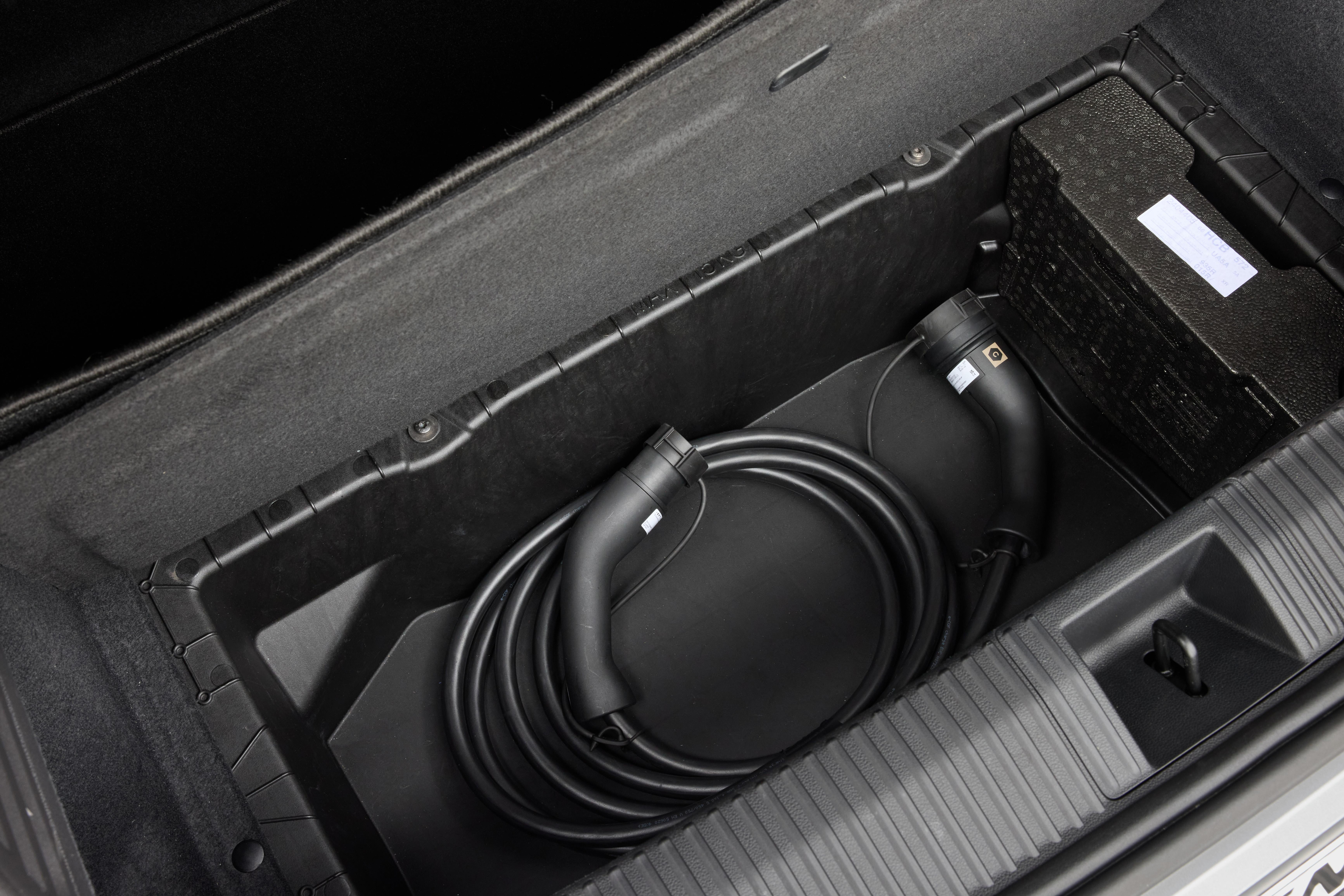
More space is unlocked by a deep cubby under the floor, but it’s otherwise a case of what you see is what you get. There’s also no spare wheel, as Renault has followed most other EVs in including only a tyre repair kit with the Scenic.
There’s also no under-bonnet storage, with that space taken up by a nest of electrical gubbins.
| Dimensions | Renault Scenic E-Tech |
|---|---|
| Length | 4470mm |
| Width | 1864mm |
| Height | 1565mm |
| Wheelbase | 2785mm |
| Cargo capacity | 545L (rear seats up) 1670L (rear seats folded) |
To see how the Renault Scenic E-Tech stacks up against the competition, use our comparison tool
What’s under the bonnet?
Two powertrains are available for the Scenic E-Tech. Both variants are front-wheel drive, though the base option has a 60kWh battery with up to 430km of range, while the Long Range gets an 87kWh battery and a claimed range of 625km.
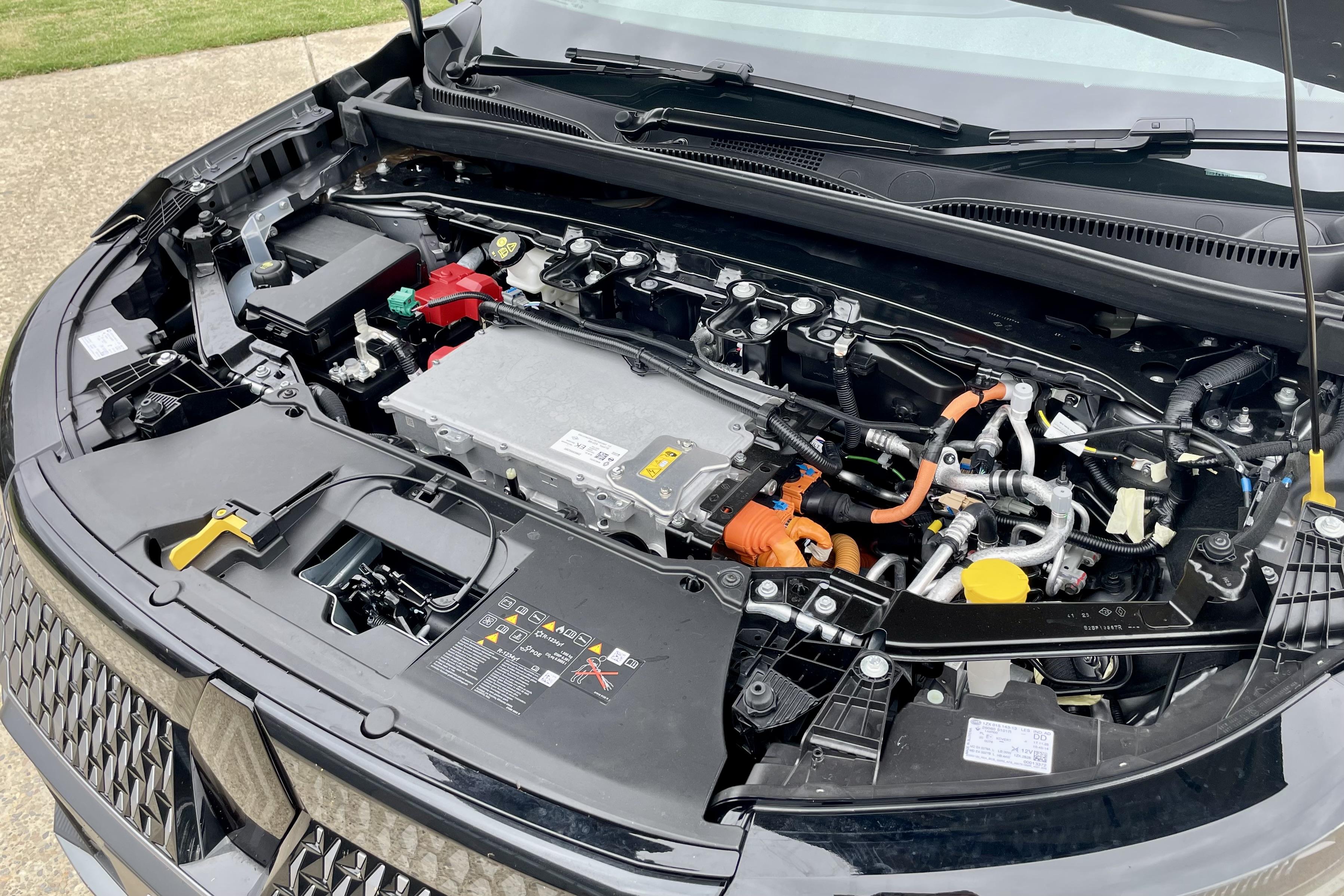
| Specifications | Scenic E-Tech | Scenic E-Tech Long Range |
|---|---|---|
| Drivetrain | Single-motor electric | Single-motor electric |
| Battery | 60kWh nickel manganese cobalt | 87kWh nickel manganese cobalt |
| Power | 125kW | 160kW |
| Torque | 280Nm | 300Nm |
| Drive type | Front-wheel drive | Front-wheel drive |
| Tare mass | 1746kg | 1840kg |
| 0-100km/h (claimed) | 8.6 seconds | 7.9 seconds |
| Energy consumption (claimed) | 16.3kWh/100km | 16.8kWh/100km |
| Energy consumption (as tested) | – | – |
| Claimed range (WLTP) | 430km | 625km |
| Max AC charge rate | 11kW | 11kW |
| Max DC charge rate | 130kW | 150kW |
Power outputs also differ slightly between the two drivetrains, with the Long Range gaining an extra 35kW and 20Nm (see above). The Long Range powertrain is available with both the Techno and the Esprit Alpine trims, while the other is exclusive to the Techno.
We didn’t get enough time in any one Scenic to record a representative real-world energy consumption figure, but we did observe a figure of around 17kWh/100km after about an hour of driving.
To see how the Renault Scenic E-Tech stacks up against the competition, use our comparison tool
How does the Renault Scenic E-Tech drive?
The Scenic immediately impresses with its interior, so we expected some of that flair to carry through once we hit the road.
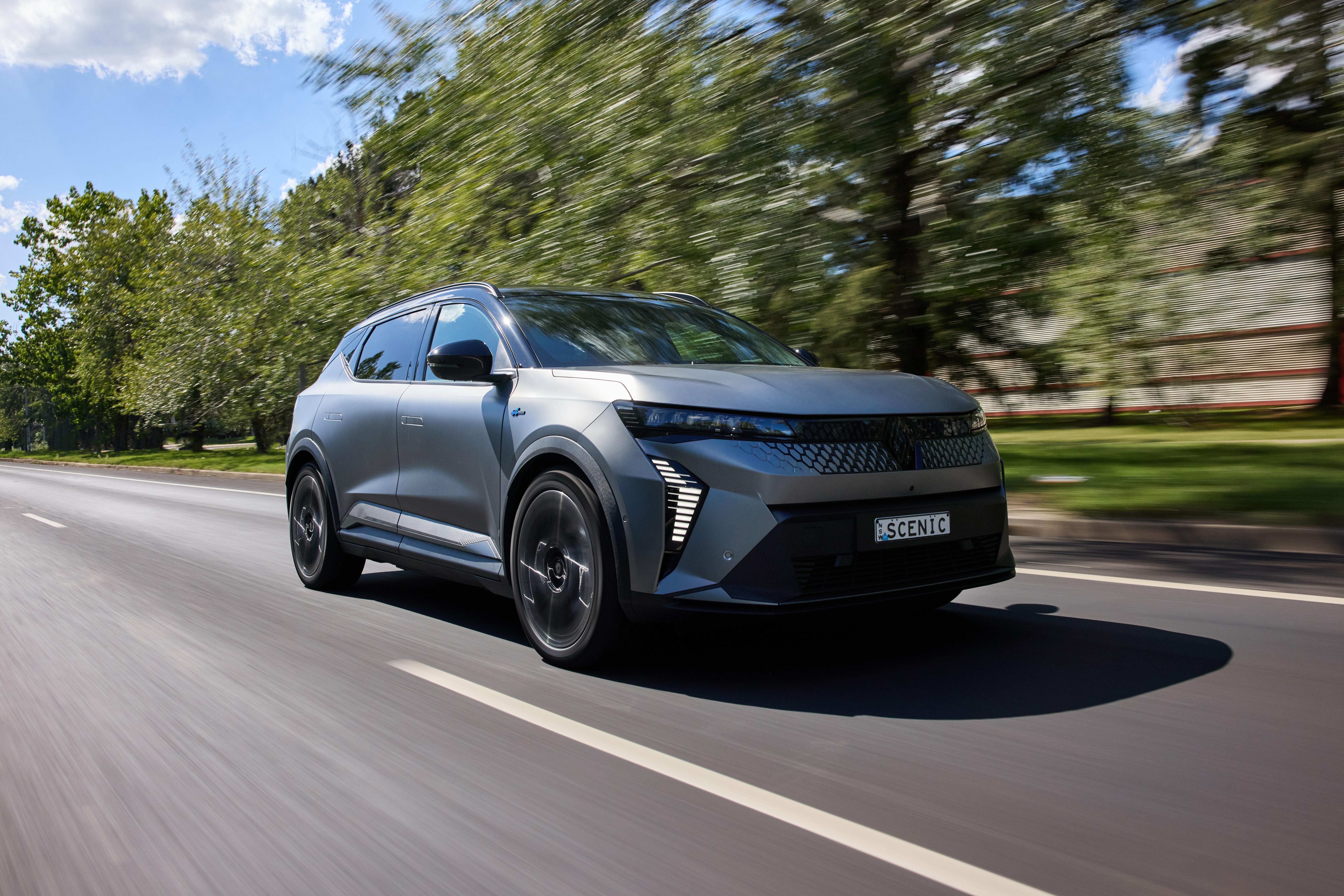
Pulling down on the column shifter selects Drive, and a couple of things will immediately become obvious once you start moving. The first is the steering, which we expected to feel different to most other cars given Renault’s briefing the day before.
The drawcard is that it has quite a low ratio, which means it requires less input at the wheel to achieve the same steering angle as other SUVs with a more ‘normal’ ratio. I just so happened to be driving a Hyundai Ioniq 5 during the week of the Renault’s launch, and the difference between the two is stark.
In fact on first impressions, the Scenic feels somewhat twitchy. Not necessarily unstable, but the fact that small inputs at the tiller translate to large changes of direction may feel odd until you’re used to it.
Fortunately, the adjustment period is just as short as the steering ratio. You’ll quickly find the steering feel is actually fairly intuitive, making the Scenic feel quite agile in urban environments.
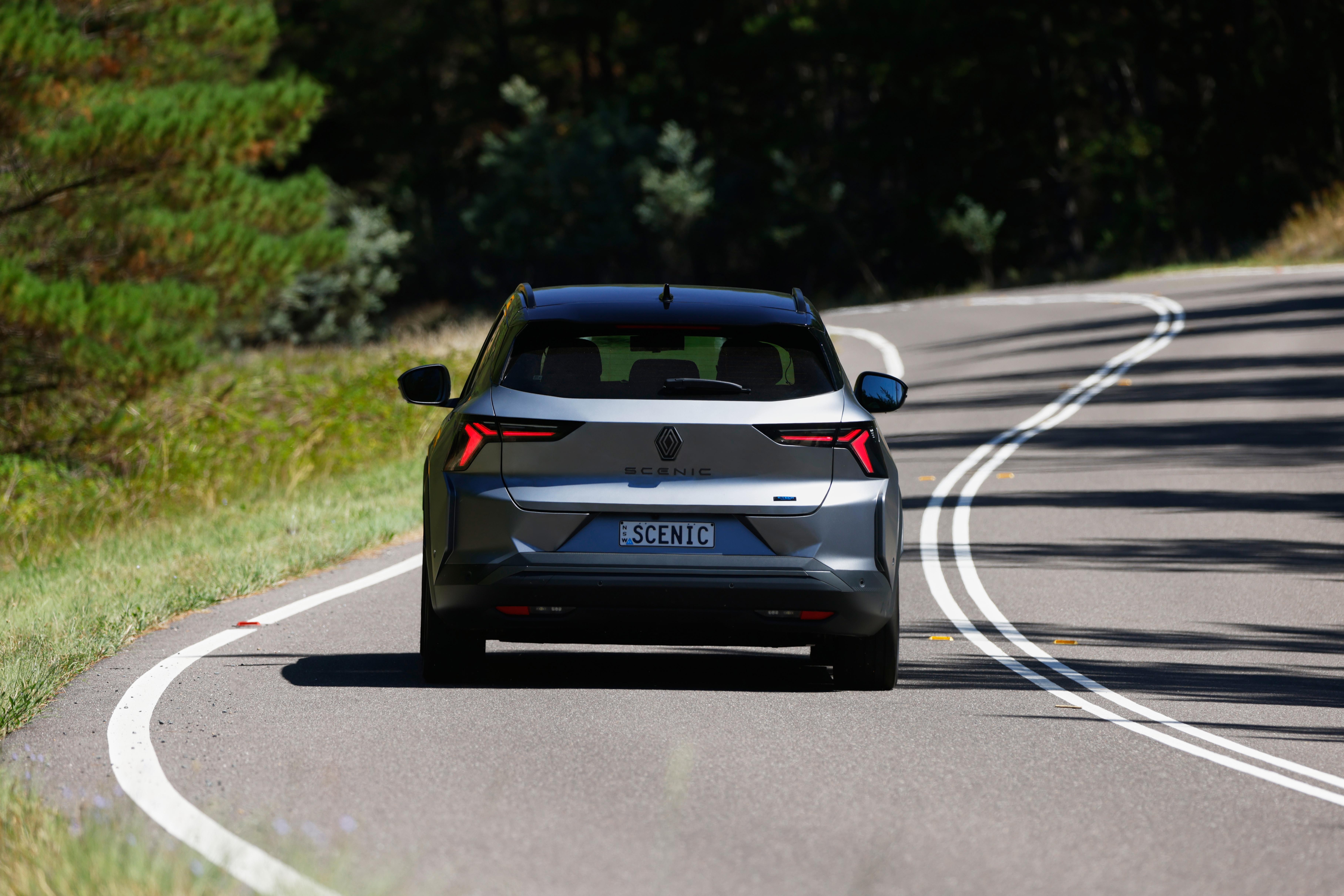
The other notable characteristic is the Scenic’s brake feel. Unfortunately, the pedal’s travel is spongey and the bite point is vague, which makes it difficult to judge when trying to be progressive on the brakes – be it pulling up to a red light or diving into a turn.
Unlike the steering, our impression of the braking did not improve over the course of the drive. We have no doubt that odd feel is the result of combining regenerative and friction braking, as we’ve observed similar behaviour in many other EVs and plug-in hybrids (PHEVs).
It is a shame, especially if you’re not a fan of super-strong regen braking, like this author. If you’re on the other side of the fence, there are four levels of regen strength to play with using the steering wheel paddles, plus a true ‘one-pedal’ drive setting.
This masks the sub-par brake pedal feel to a degree, and it’s likely how most owners will drive as well. For me, it’s the only element of the Scenic’s drive experience that needs a touch more fine-tuning.
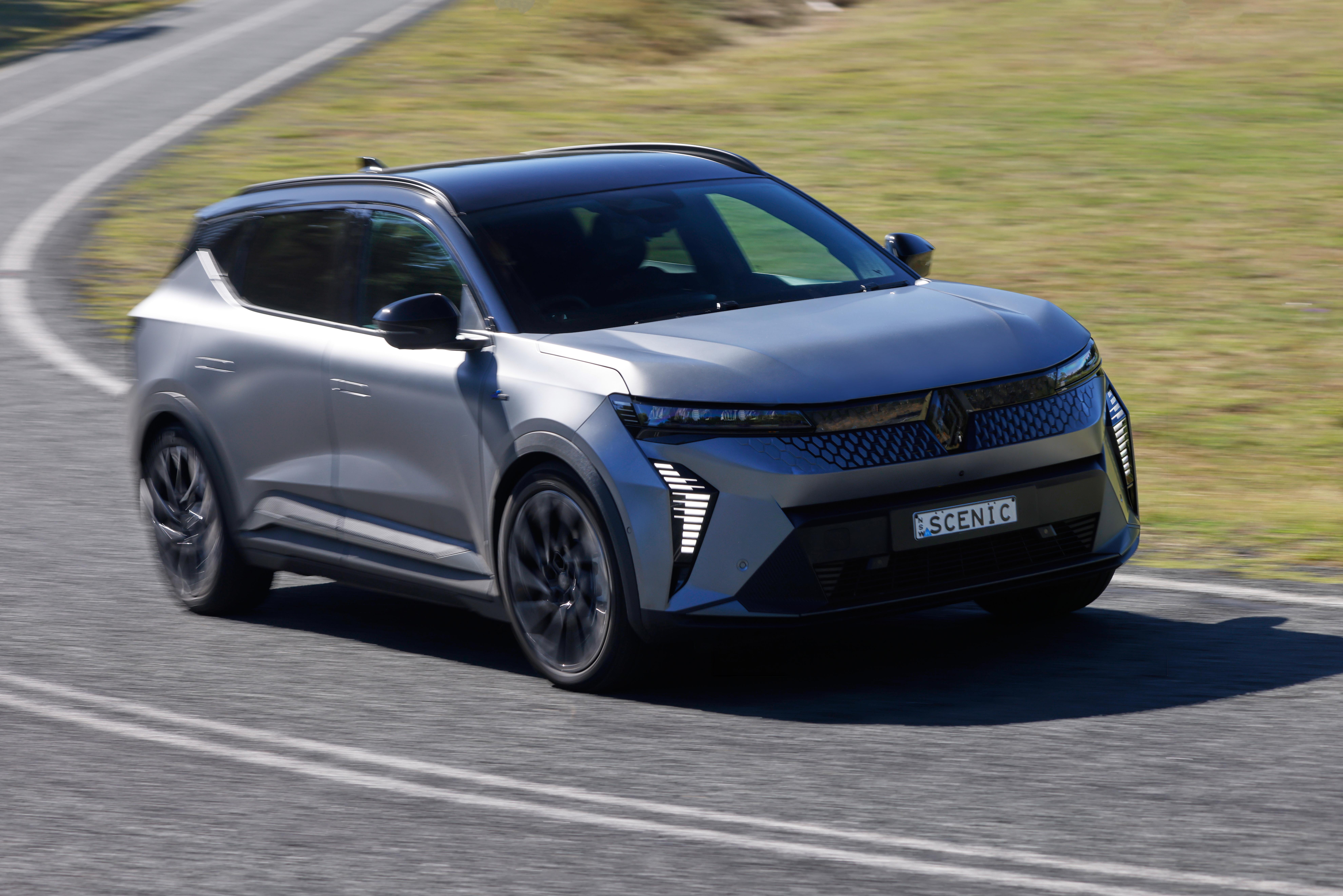
The Scenic otherwise presents a solid package that’s enjoyable to drive. The powertrain in Long Range versions (including the Esprit Alpine we drove) isn’t potent, but it’s powerful enough to get you up to speed in a comfortably quick time.
It feels particularly strong when planting the throttle from about 80km/h, when it’ll quickly shoot past 100km/h with no hesitation. This is perfect for overtaking on rural roads, even if it won’t win many drag races.
In fact, the lack of outright power means you’re unlikely to run into serious torque steer in this front-drive SUV. That all makes it very approachable while still delivering performance that will impress anyone used to combustion alternatives.
When it comes to handling, the Scenic is well-sorted, but it isn’t a sports car. While it’ll allow you to take turns at higher speeds than most traditional SUVs with composure, the Scenic isn’t about to set any hill climb records. It’s just sharp enough to let you have some fun.
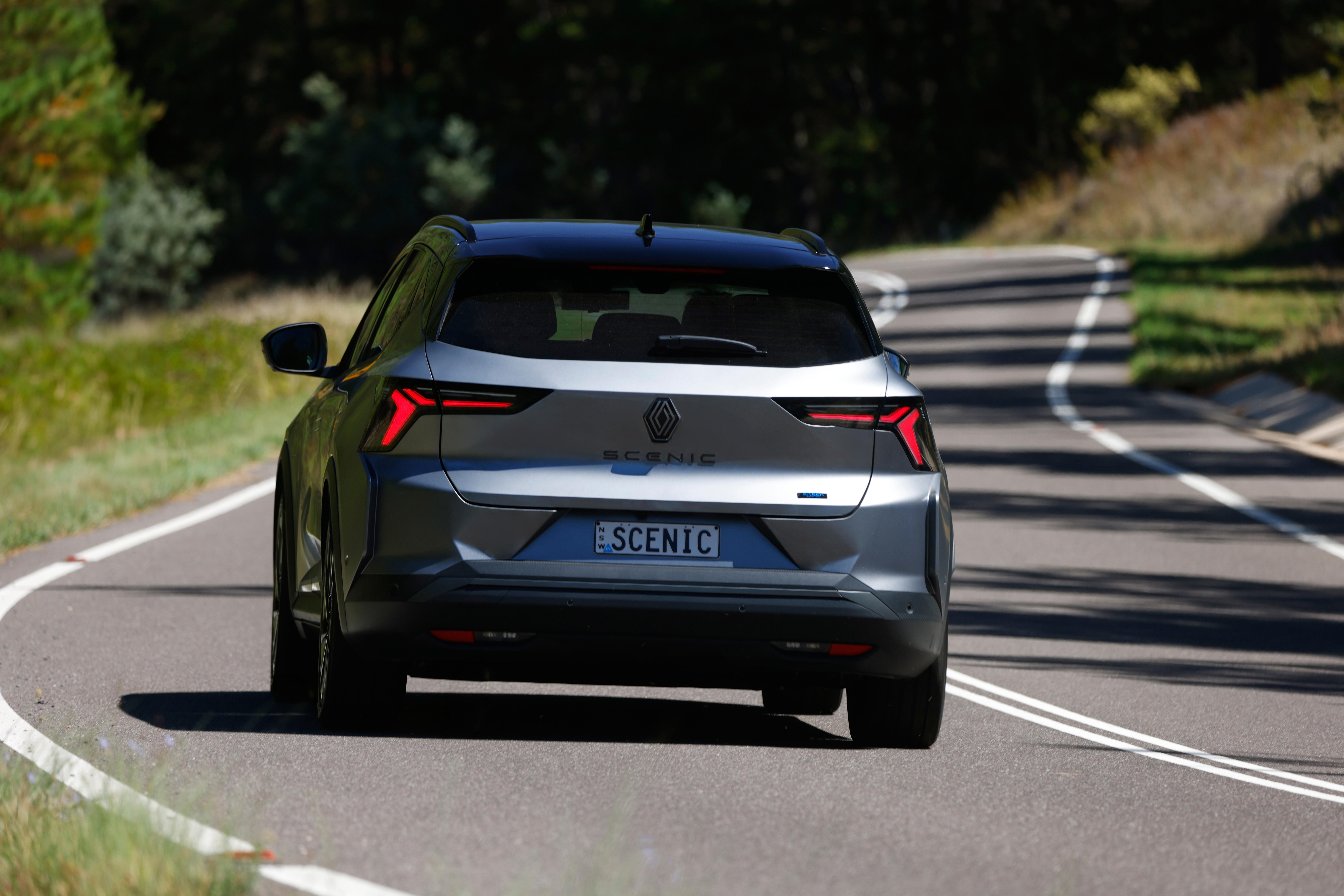

The trade-off of its sporty setup is a firm ride, exacerbated by the Esprit Alpine’s 20-inch alloys. Renault has still done a decent job of masking the Scenic’s weight, at least better than Hyundai has done with non-performance Ioniq 5 variants, but it’s a touch more bobbly than we expected.
Around town, though, it’s perfectly livable. You’ll only really notice the firm ride when travelling at high speed on bumpy rural roads, and even then it doesn’t feel like it’s about to bounce off the road. Road noise isn’t even that bad.
If you want to liven things up, there are four different drive modes to choose from. They’re all fairly self-explanatory, but don’t expect a difference in ride quality when you flick to ‘Sport’ mode – this just sharpens throttle response and makes the steering heavier.
The latter grants more control over micro-inputs, which is especially handy given the short steering ratio. You can also utilise ‘Perso’ mode to customise the car’s safety systems to suit your tastes, but we don’t think you’ll need to.
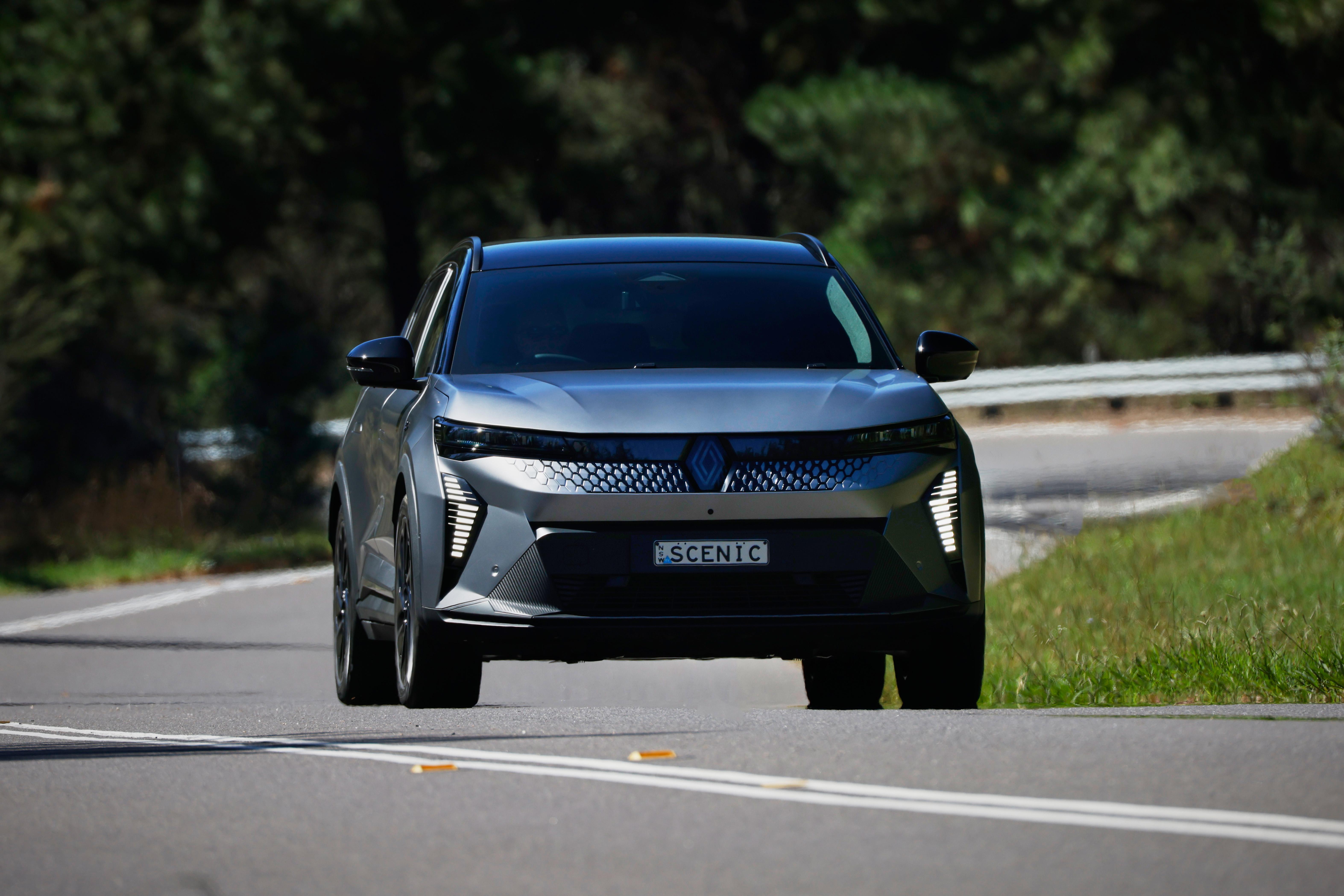
Renault is particularly proud of the calibration of the Scenic’s safety tech, and we can see why. Nothing bugged us during the launch – no issues with lane-keeping, no issues with speed limit warnings, and no issues with driver monitoring. And yes, we made sure they were all enabled.
This was refreshing in a brand-new car, and fairly damning for other models like the Ioniq 5, which I keep bringing up because of its obnoxious speed-limit warnings and so on. The crazy thing is the Hyundai is far more expensive than the Renault, yet the Scenic has much more palatable tech.
All of that combines to create a strong EV package with just enough performance and just enough dynamic sharpness to keep you entertained. It may be firm, and the brake pedal may not feel fantastic, but overall it’s quite enjoyable.
It also feels meaningfully different compared to most other EVs on the market right now, which is just how a Renault should be.
What do you get?
Australian-delivered Scenics will be available in two grades.
2026 Renault Scenic Techno equipment highlights:
- 19-inch alloy wheels
- Tyre repair kit
- Auto LED headlights
- Power-folding side mirrors
- Auto-dimming digital rear-view mirror
- Heated steering wheel and front seats
- Light grey cloth upholstery
- Wireless and wired Apple CarPlay and Android Auto
- Wireless smartphone charger
- 12.3-inch digital instrument cluster
- 12-inch vertical infotainment screen
- Virtual Assistant
- Google Built-in
- Over-the-air software updates
- Remote services via MyRenault App
- Embedded Google Maps
- 6-speaker Arkamys Classic Sound System
- Power tailgate
- 40:20:40-split/folding rear seats
- ‘Ingenious’ back seat armrest
- 2 USB-C charge ports
- 2 cupholders
- 2 phone holders
- Internal storage
- 2 x USB-C charge ports – front
- 4 x USB-C charge ports – rear
- 1 x 12V power socket – front
- 1 x 12V power socket – boot
- 4 drive modes
- Comfort
- Eco
- Sport
- Perso
- One-pedal drive mode
- 48 ambient lighting modes (interior)

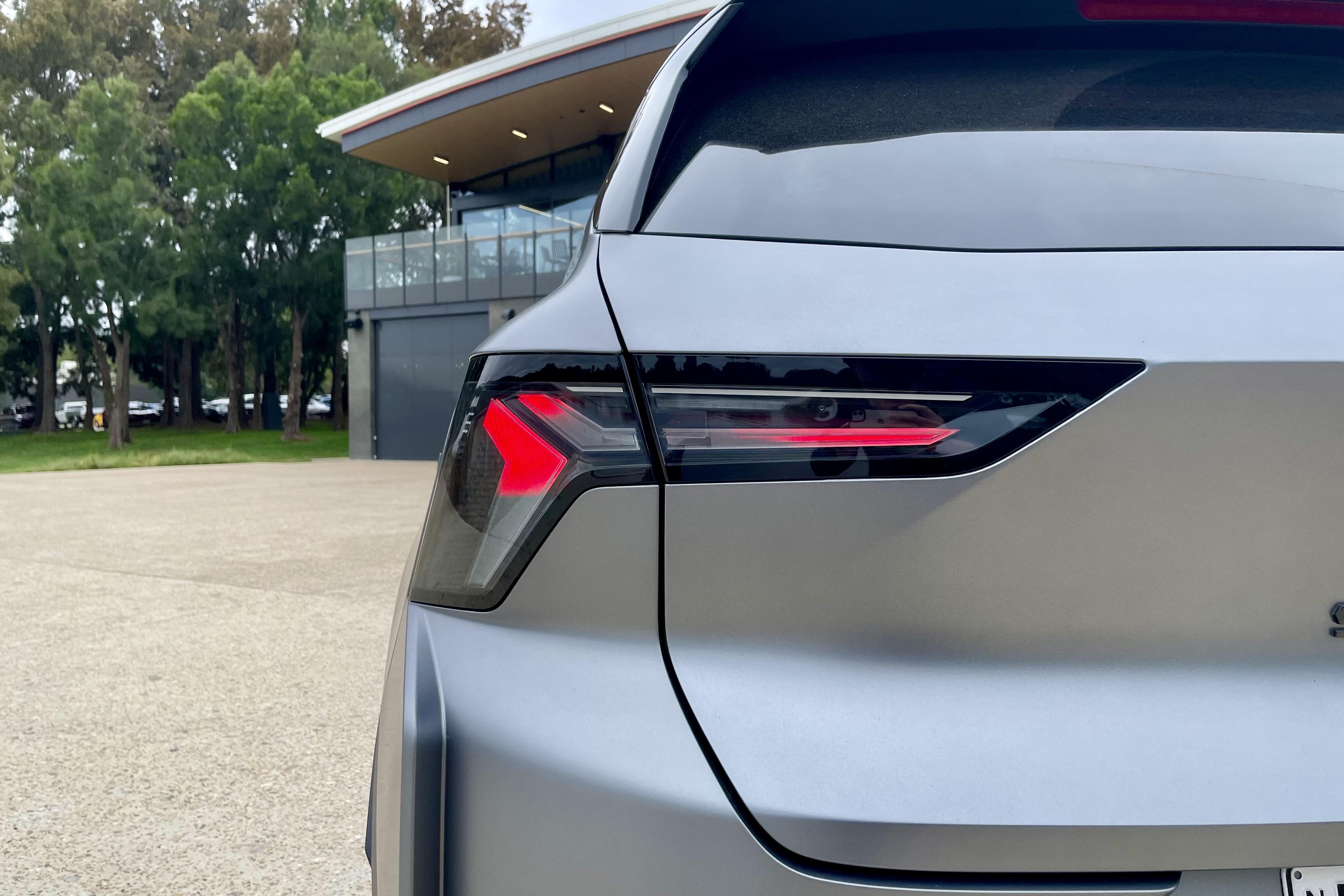
2026 Renault Scenic Esprit Alpine adds or replaces:
- 20-inch alloy wheels
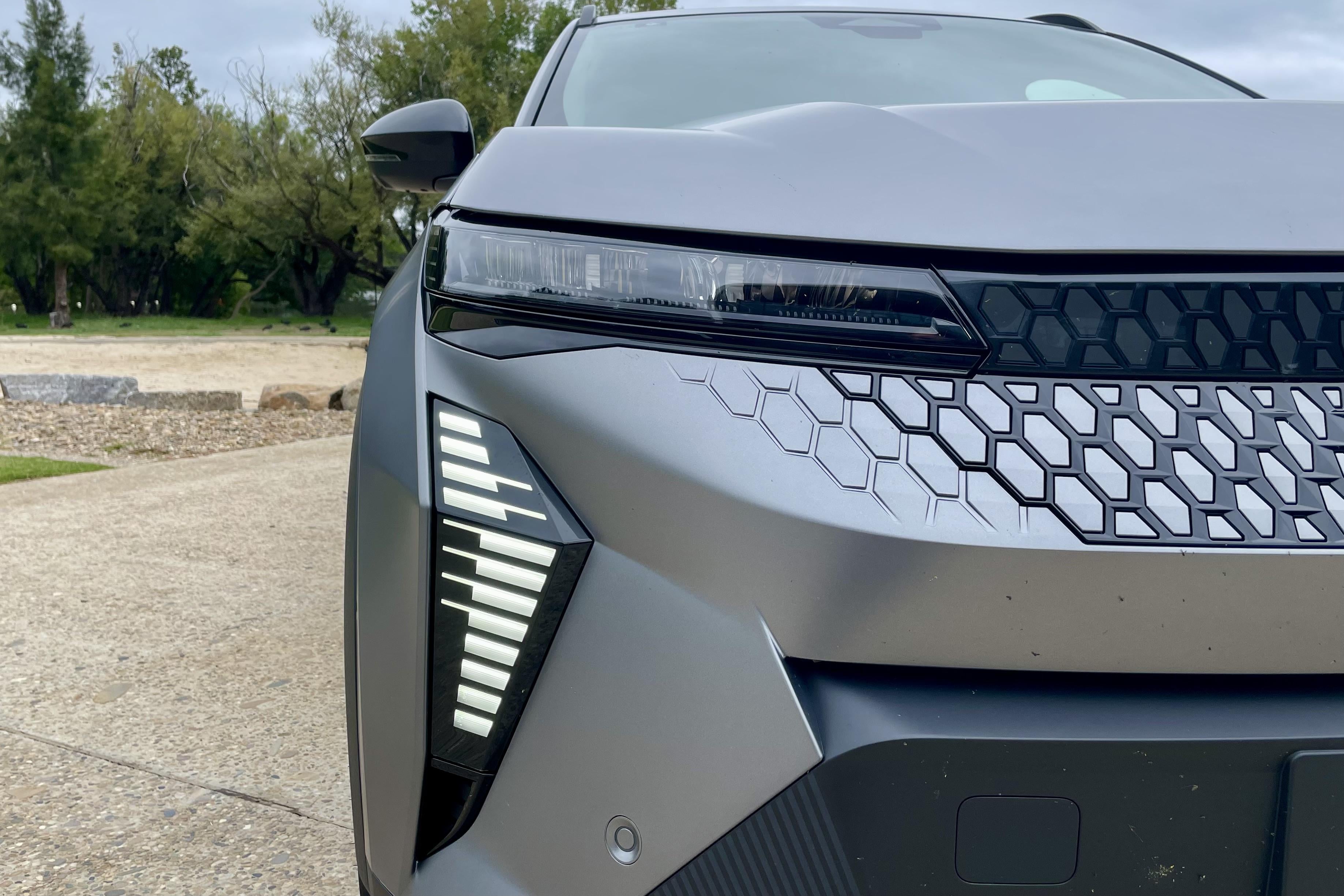
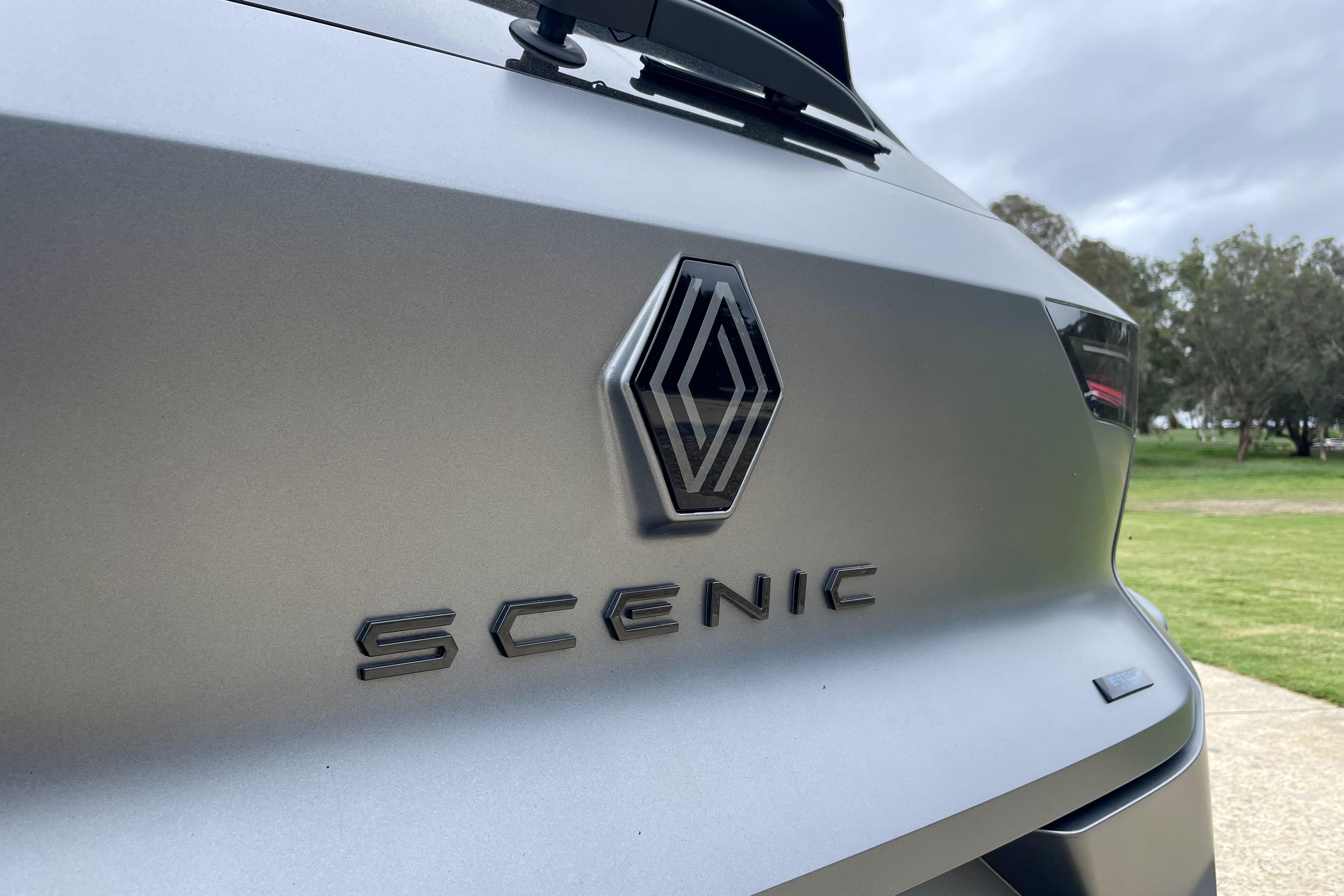
- Alpine grille, external door trims, badging
- Optional matte grey body colour
- Face ID (driver recognition for seat and mirror settings)
- Infrared windscreen
- Metal pedal covers
- 6-way power-adjustable front seats with memory
- Massage function for driver’s seat
- Synthetic ‘leather’ and cloth seat trim with Alpine stitching
- Aluminium accents for front door trims
- 9-speaker Harman Kardon premium sound system
Is the Renault Scenic E-Tech safe?
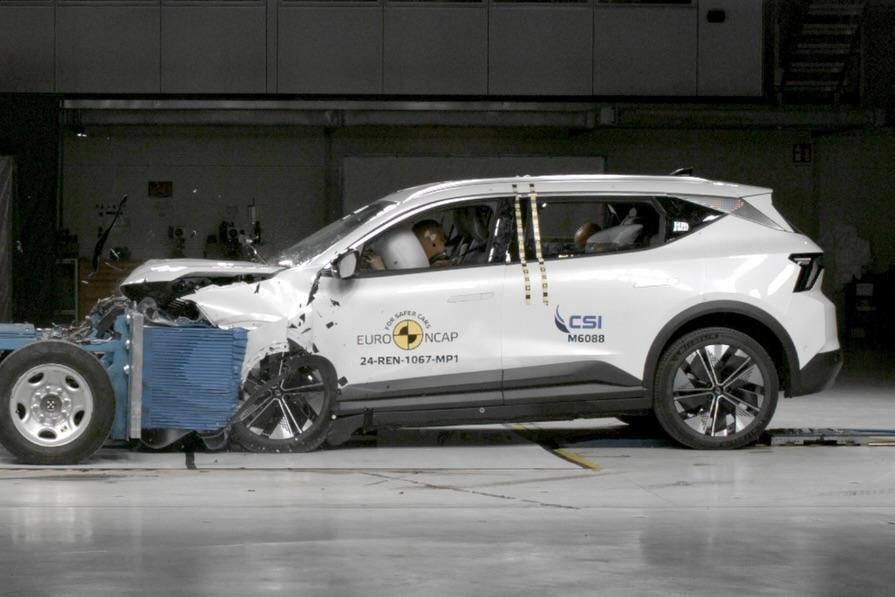
The Renault Scenic E-Tech has a five-star ANCAP safety rating, based on testing conducted by Euro NCAP in 2022.
| Category | Renault Scenic E-Tech |
|---|---|
| Adult occupant protection | 88 per cent |
| Child occupant protection | 92 per cent |
| Vulnerable road user protection | 77 per cent |
| Safety assist | 85 per cent |
Standard safety features include:
- 7 airbags
- Adaptive cruise control with stop/go
- Blind-spot assist
- Driver attention monitoring
- Front and rear parking sensors
- Hands-free parking assistance
- Lane centring assist
- Rear cross-traffic alert
- Safe exit warning
- Speed sign recognition
- Surround-view camera
- Tyre pressure monitor
To see how the Renault Scenic E-Tech stacks up against the competition, use our comparison tool
How much does the Renault Scenic E-Tech cost to run?
The Scenic E-Tech is backed by Renault Australia’s five-year, unlimited-kilometre warranty. Servicing is required every 12 months or 30,000km, whichever comes first.
| Servicing and Warranty | Renault Scenic E-Tech |
|---|---|
| Vehicle warranty | 5 years, unlimited kilometres |
| High-voltage battery warranty | 8 years, 160,000km |
| Roadside assistance | 5 years |
| Service intervals | 12 months or 30,000km |
| Capped-price servicing | 5 years |
| Average annual service cost | $325 |
| Total capped-price service cost | $1625 |
Renault’s individual service costs for the Scenic are detailed below:
| Service | Price |
|---|---|
| 12 months, 30,000km | $229 |
| 24 months, 60,000km | $309 |
| 36 months, 90,000km | $319 |
| 48 months, 120,000km | $549 |
| 60 months, 150,000km | $219 |
Service costs for the Scenic are slightly cheaper than that of its rivals. Kia offers prepaid plans for its EVs, and a five-year plan for the base EV5 Air costs $1839, while the same for the higher-spec Earth and GT-Line versions costs $2389.
The base BYD Sealion 7 Premium, meanwhile, costs $1757 to service over five years, while Tesla doesn’t do traditional service plans.
To see how the Renault Scenic E-Tech stacks up against the competition, use our comparison tool
CarExpert’s Take on the Renault Scenic E-Tech Esprit Alpine
The Scenic E-Tech isn’t perfect, but it does a lot right in a world of increasingly same-same electric SUVs.
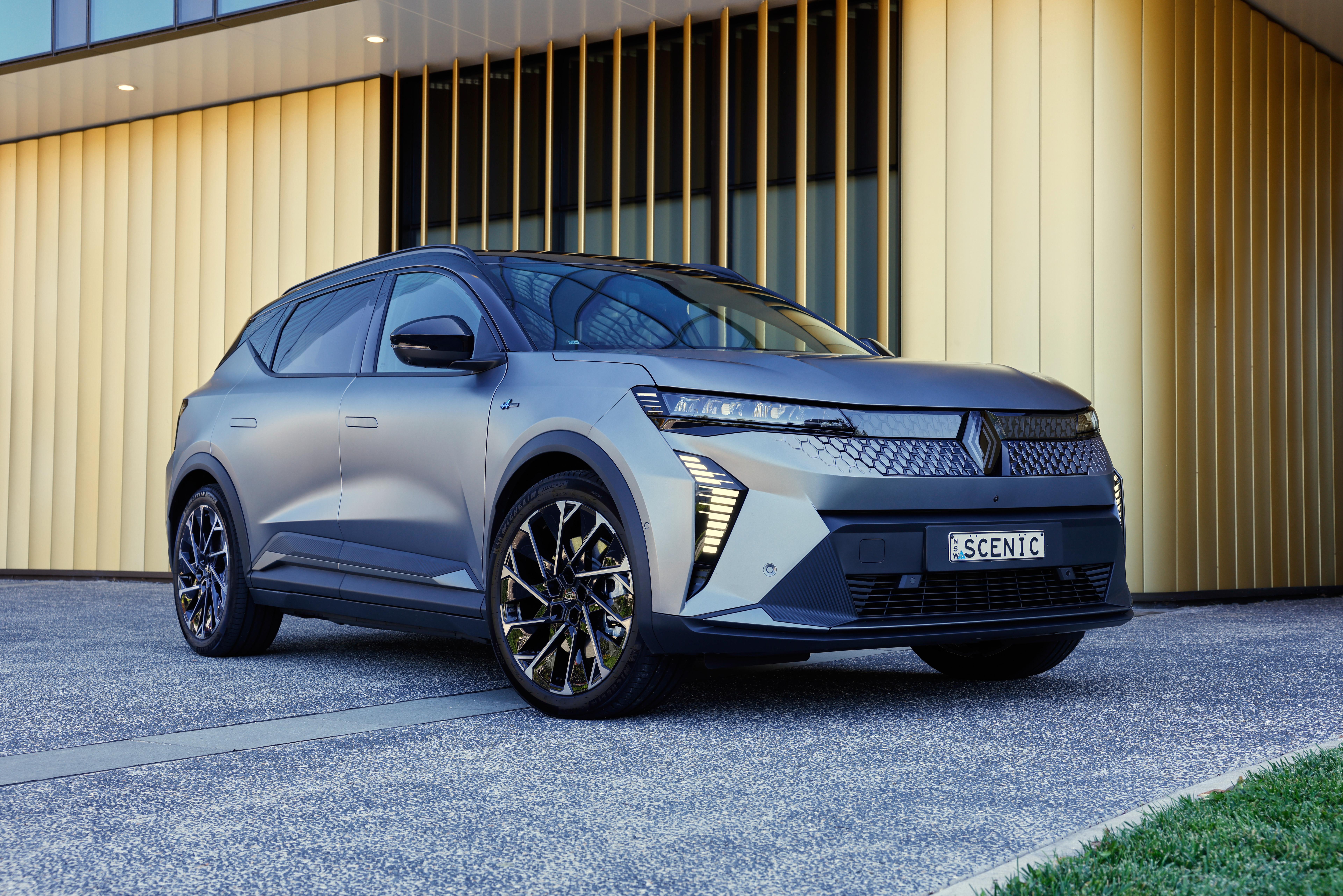
The thing is, none of its flaws are major or terminal. Some recalibration could go a long way to improve its brake pedal feel – the most significant issue – but everything else including the quick steering and quirky interior controls will feel normal once you’ve driven the car for a while.
Aside from that, the car looks good, offers sensible performance, and drives as expected for a sporty European SUV, even if it is a little stiff. Plus, its interior is a nice place to spend time in and feels neither underdone nor overdone, given the Scenic’s price point.
That price point is sharp too, especially considering it’s not only competitive alongside its local rivals but also much cheaper than it is in Europe.
But perhaps the most important thing is the fact the Scenic is different to everything else on sale in Australia right now. It has a unique design both inside and out, and it drives with a distinctly European character.
While we’ve only driven the flagship Esprit Alpine, we can confidently say the Scenic’s Long Range variants are the sensible pick given their 600km-plus driving range. The base version will still get you by, but it’ll be better suited to urbanites than regional motorists.
With that in mind, we’re inclined to recommend the Techno Long Range over the Esprit Alpine. Without having driven it, we expect the smaller wheels will translate to a slightly more compliant ride, and there’s no ignoring the fact that it’s $6000 cheaper.
The missing equipment shouldn’t ruin the character of the Scenic either, as nice as the flagship’s extra Alpine-flavoured fittings are.
All said, the Scenic is a compelling new offering in the electric SUV world, and gives us hope for the rollout of new and refreshed Renaults promised over the course of 2026.
CarExpert can save you thousands on a new Renault Scenic E-Tech. Click here to get a great deal.
Click the images for the full gallery
