

The new Subaru Forester range has received some significant changes, and there’s arguably been a lot more noise around the new ‘Strong Hybrid’ petrol-electric variants in the lineup.
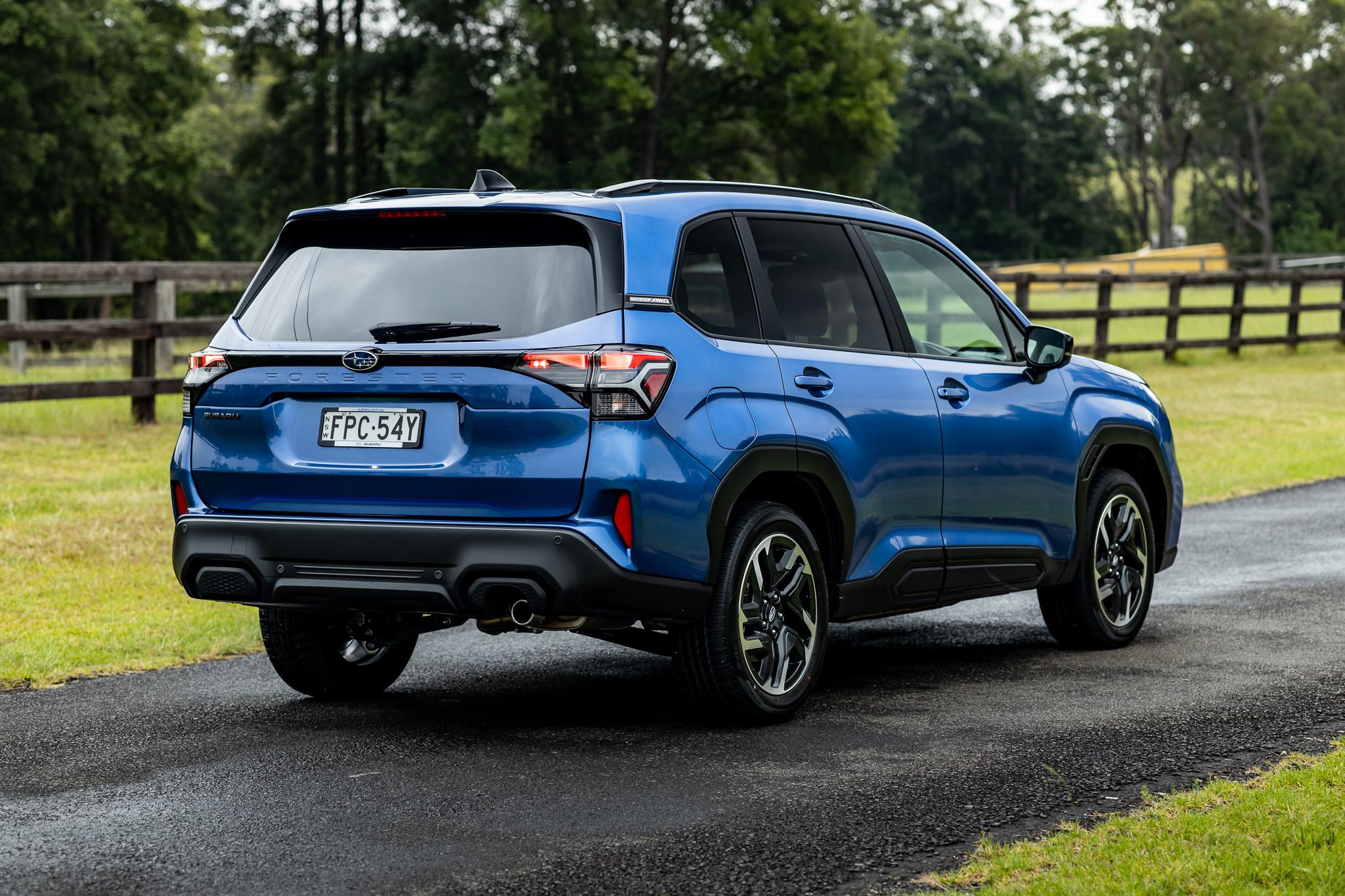
But in this review, we wanted to find out whether the petrol Forester might actually represent a better buy for those who aren’t sure about starting their electrification journey just yet.
And, frankly, I’ve found the hybrid Forester’s fuel use to still be a bit thirsty, so I also wanted to scratch the itch and see if the petrol model is notably worse on fuel… and you might be surprised at my results.
How much does the Subaru Forester cost?
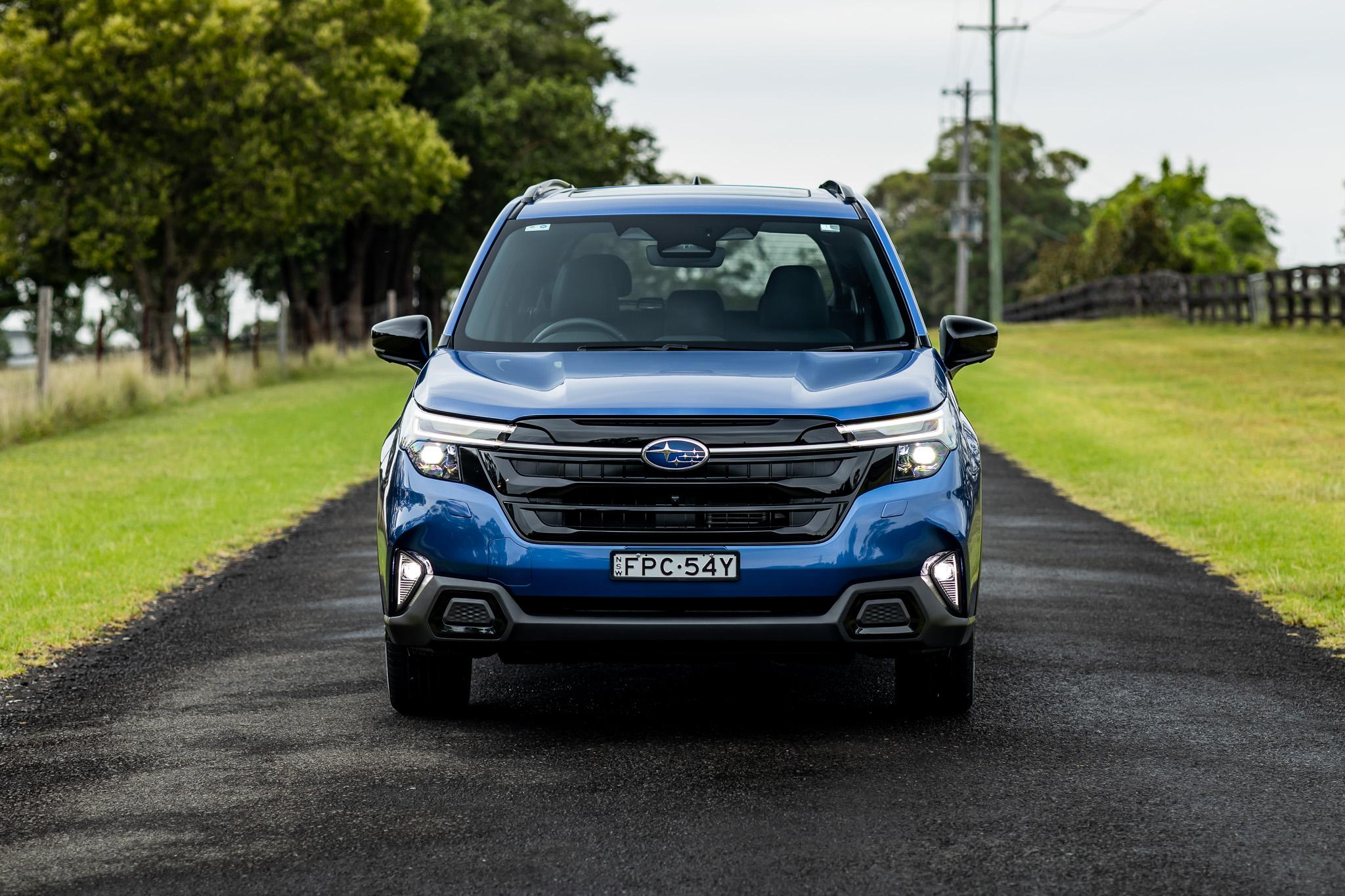
There are four versions of the purely petrol-powered new Forester on sale in Australia, and all of them represent a price advantage over their petrol-electric Strong Hybrid counterparts.
| Model | Price before on-road costs |
|---|---|
| 2026 Subaru Forester AWD | $43,490 |
| 2026 Subaru Forester AWD Premium | $46,490 |
| 2026 Subaru Forester AWD Hybrid | $46,490 |
| 2026 Subaru Forester AWD Sport | $48,490 |
| 2026 Subaru Forester AWD Touring | $50,990 |
| 2026 Subaru Forester AWD Hybrid Sport | $54,990 |
| 2026 Subaru Forester AWD Hybrid Touring | $55,990 |
There are arguably a lot of different ways to spend this kind of money (around $56,000 in your driveway) that might be more appealing, but in a segment of the market where the average prices of SUVs from the ‘legacy’ brands are creeping up constantly, it comes across as reasonably good value.
Check out the standard equipment list below to see what you’re getting for your money.
To see how the Subaru Forester lines up against the competition, check out our comparison tool
What is the Subaru Forester like on the inside?
There are more outlandish offerings in the segment if you’re looking for something with more bling, but the top-spec Touring version of the new Forester has a pretty nice cabin design that offers a few different trim elements compared to cheaper grades.
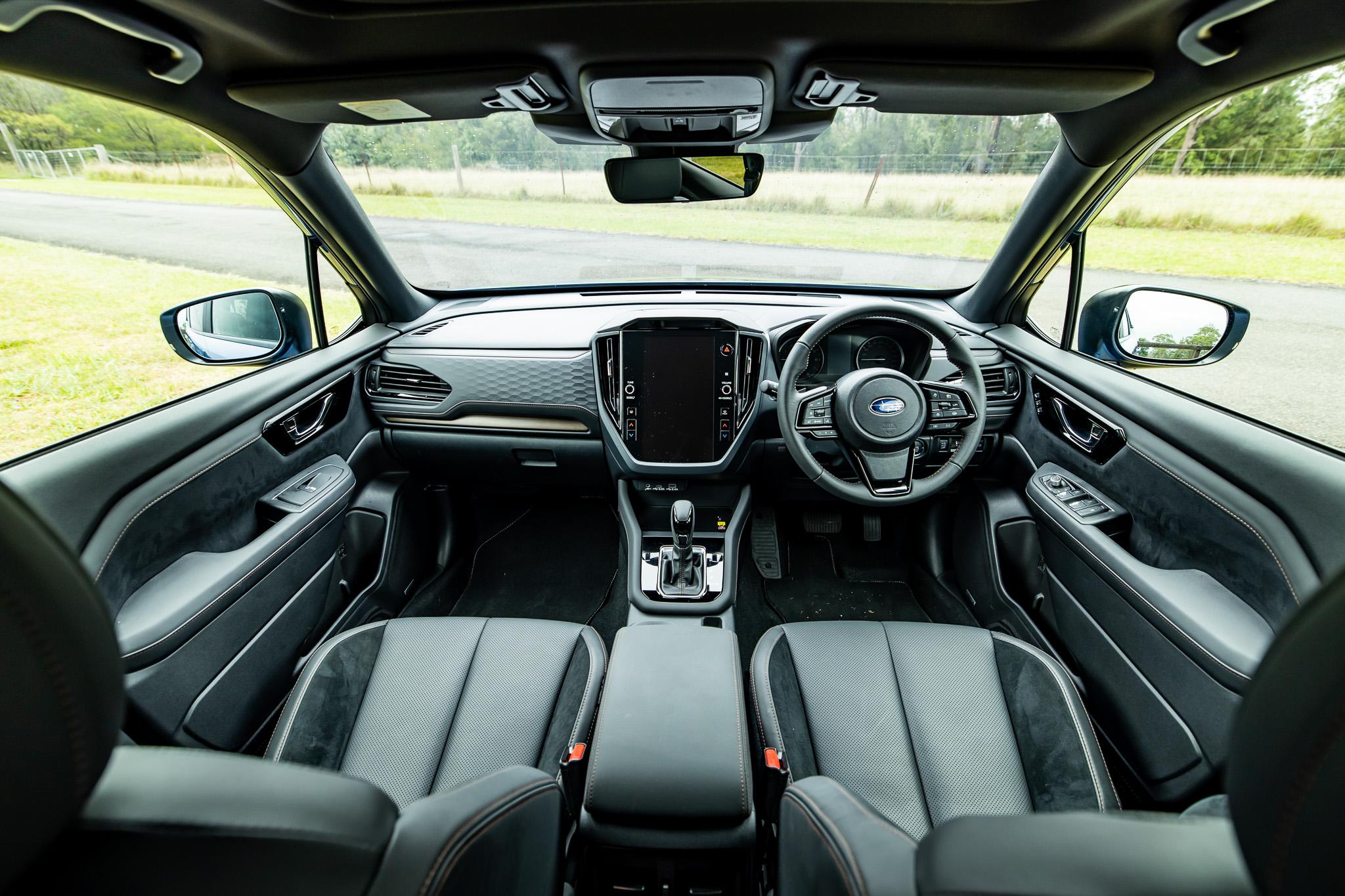
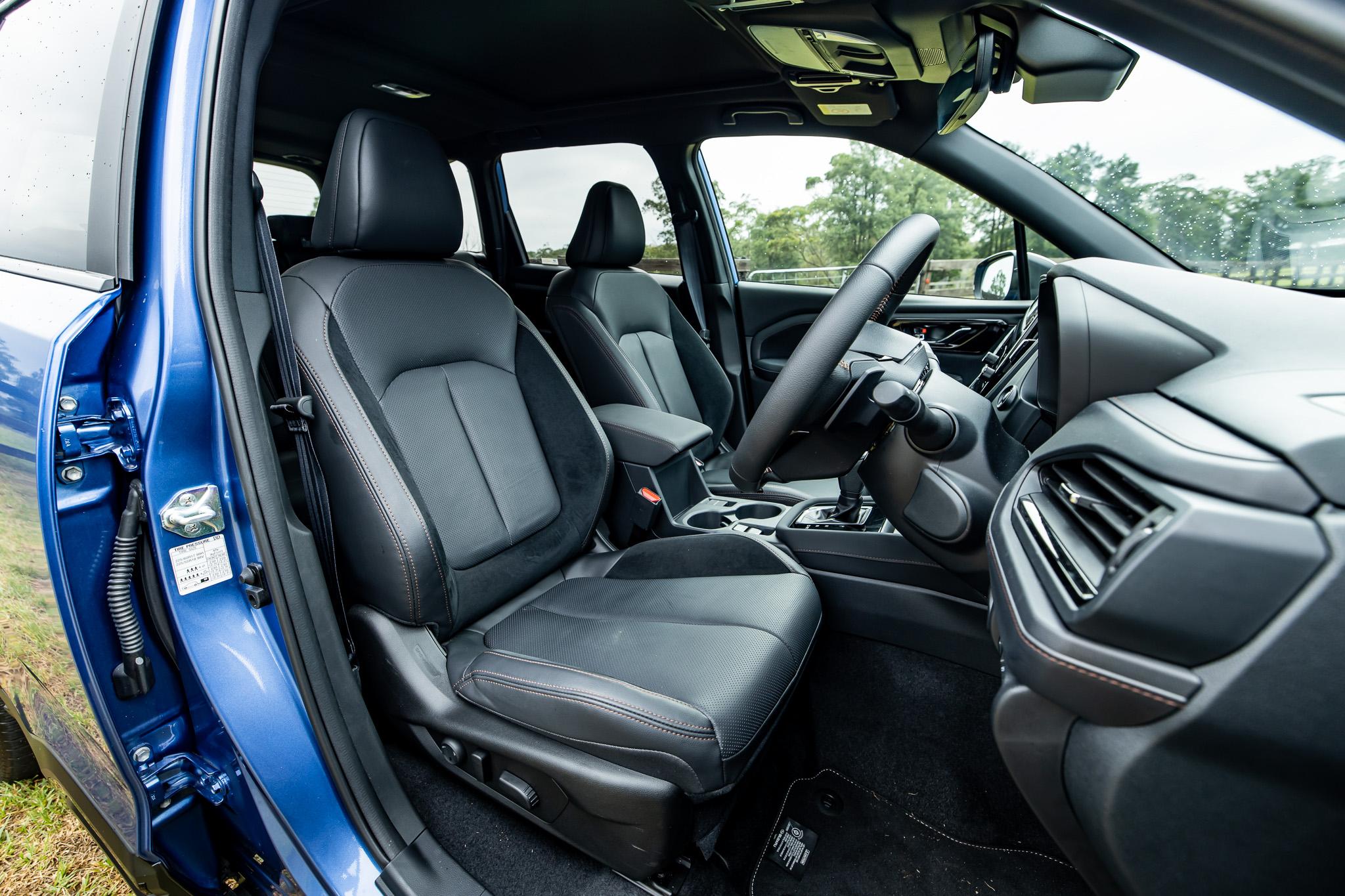
The seat finishing is microsuede and leather, and it has brown stitching, too. And if you want the full brown-out experience, there is an optional interior package in that colour.
There’s none of the glitzy ambient lighting tech that you (and your kids or grandkids) might love, and it is a bit of a dark grey plastic-fest. But it’s functional, and that’s what Foresters are about, right?
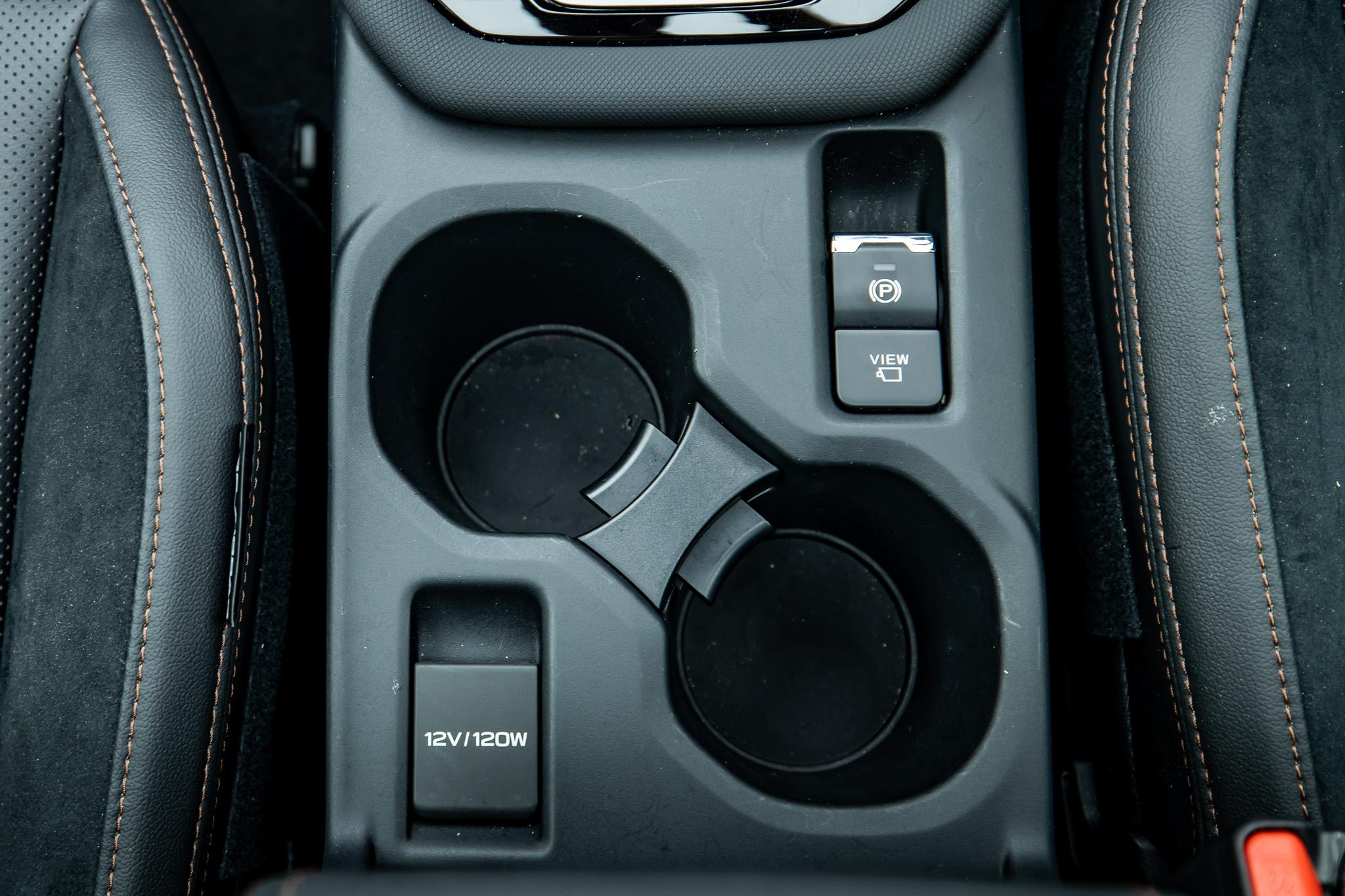
There are some great storage options – cup and bottle holders, loose-item caddies, a wireless phone charger, and more – and while the materials mightn’t be as ‘wow’-inducing as in some rivals, the hexagonal finish on the dash in front of the passenger is neat, and the centre-stage section of the dash is proudly occupied by the vertical 11.6-inch touchscreen multimedia system.
That display will take some learning if you haven’t dealt with a current Subie screen, but I find it really easy to get to grips with.
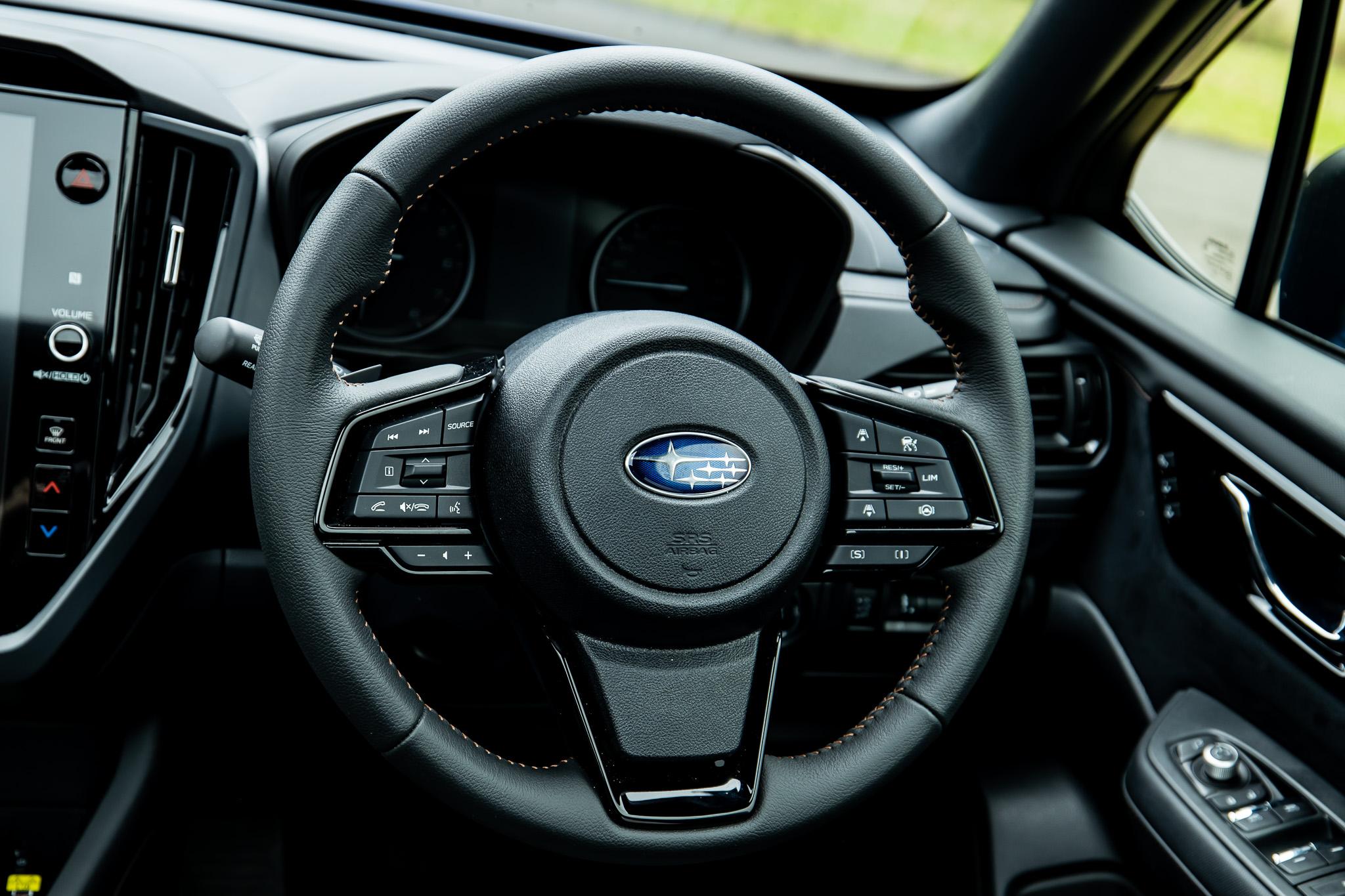
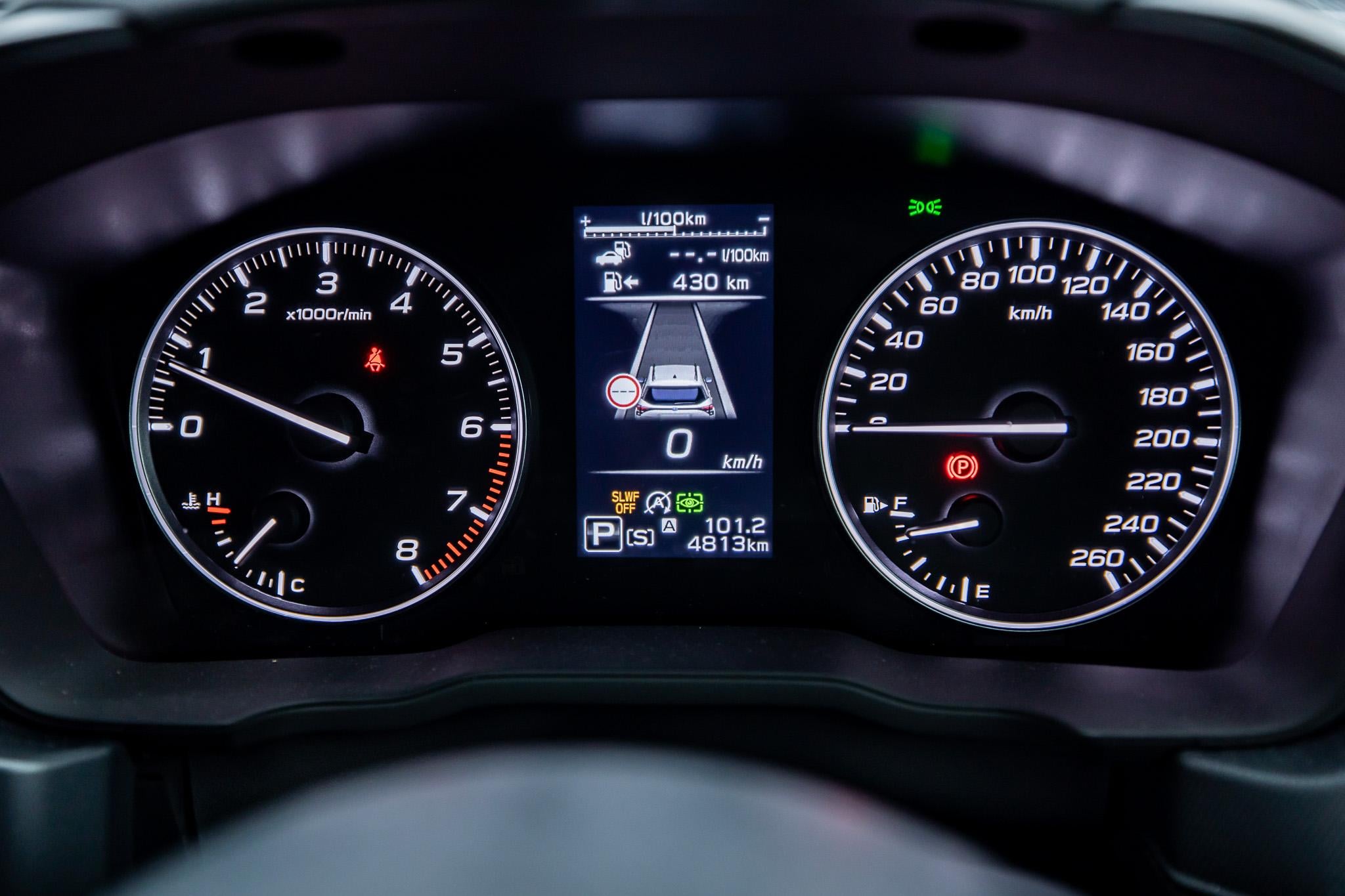
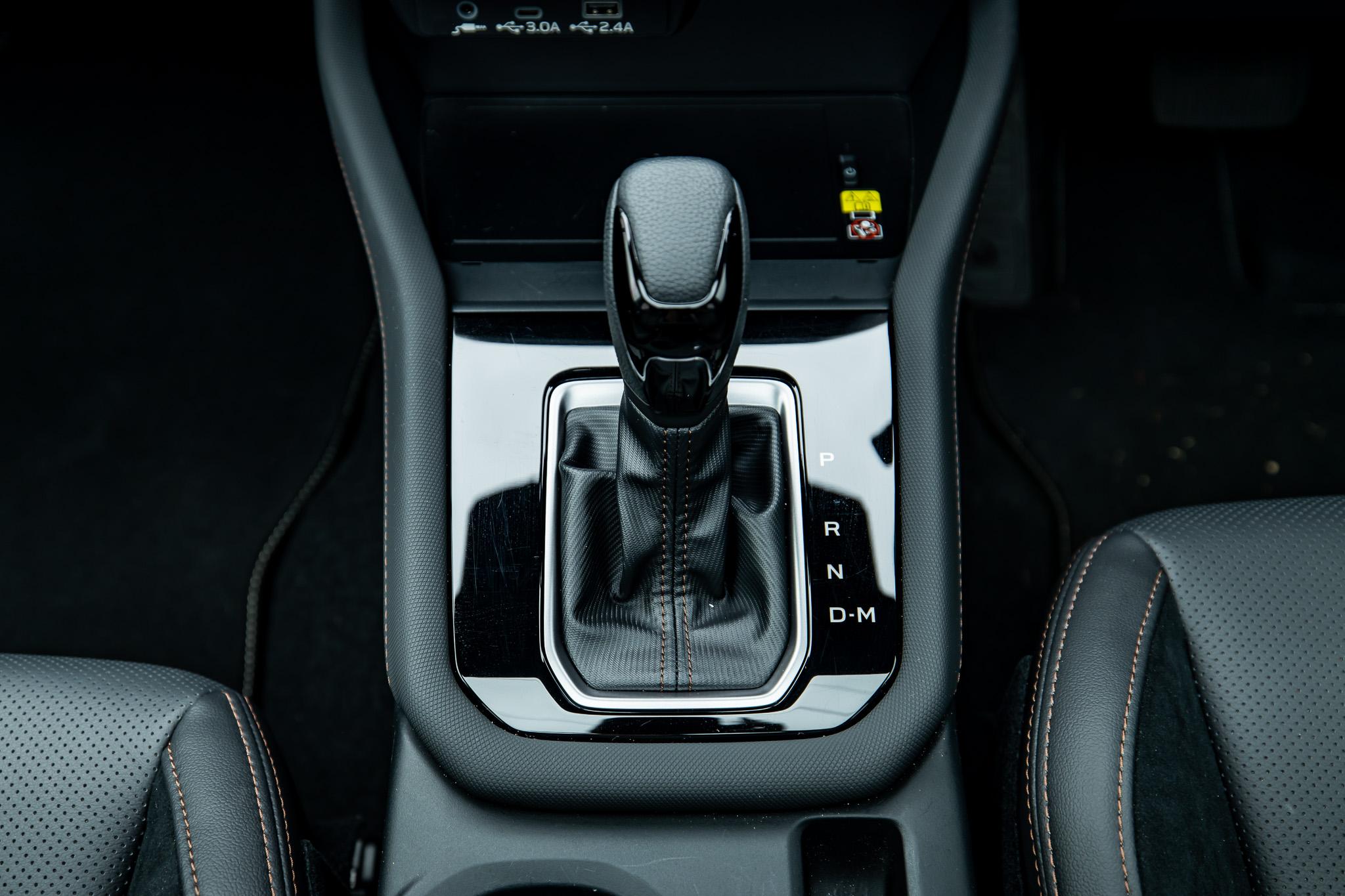
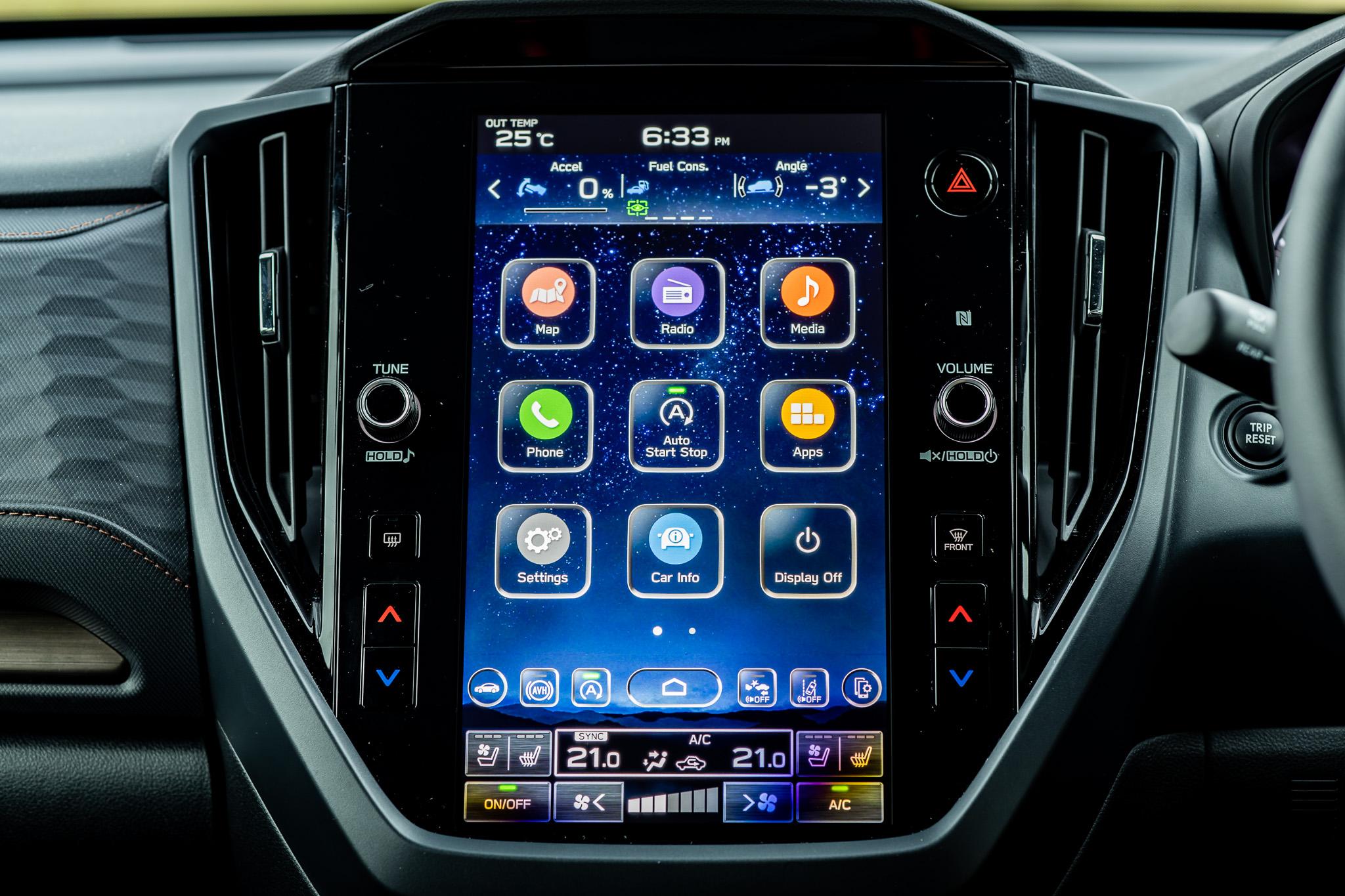
There are a number of icons to make it easy to make your way around the main menus, but if you’re like most people you’ll just set up your phone so that it can connect wirelessly up to Apple CarPlay or Android Auto. My experience was problem-free in that regard.
However, it’s not perfect. You get some controls for the temperature and demisters around the screen, but you have to tap the screen to adjust fan speed and direction, and it takes a few taps of the screen to turn on the recirc system, too.
You will also have to learn the pathway to turn off the driver monitoring camera system if you don’t like it (as it defaults back on each time you drive) and the same goes for the lane-keeping system. It’s not as simple to disable some of those systems as I’d like, and I dare say you’ll find the same.
At least there are volume and tuning dials, and again, once you’re across the screen layout, you should be okay.
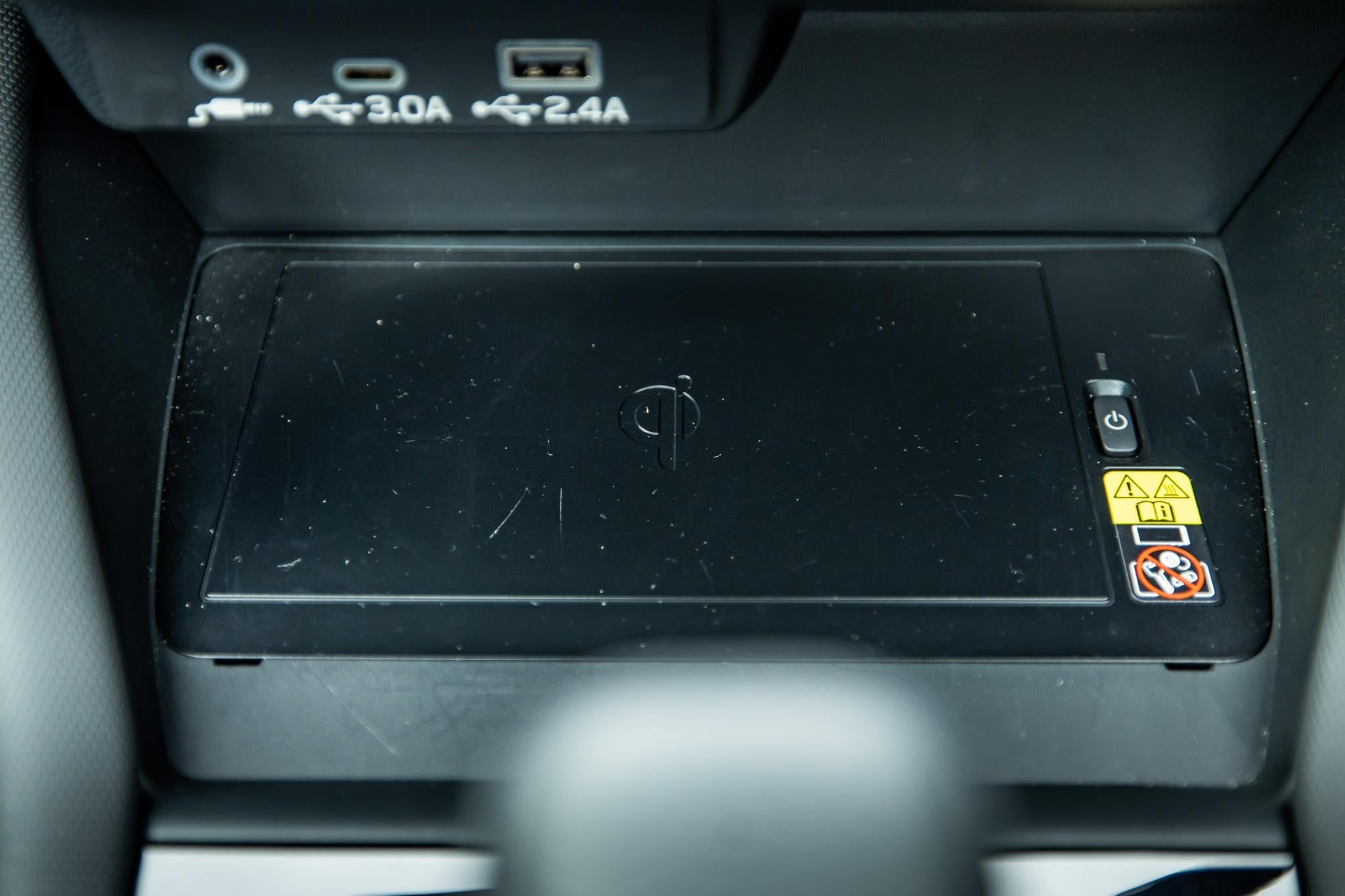
The high-spec petrol Forester still misses out on fully digital instrumentation for the driver, whereas the high-end hybrid variant has it. That’s a shame, because the dials and smaller centre screen look a bit old-school, but in some ways that sort of fits with the Forester mindset.
The seats are comfortable and offer good adjustment, and compared to many other new SUVs you really feel like you can see out of the Forester – the big glasshouse design has always been part of the appeal here, and it really makes a big difference for urban driving in particular.
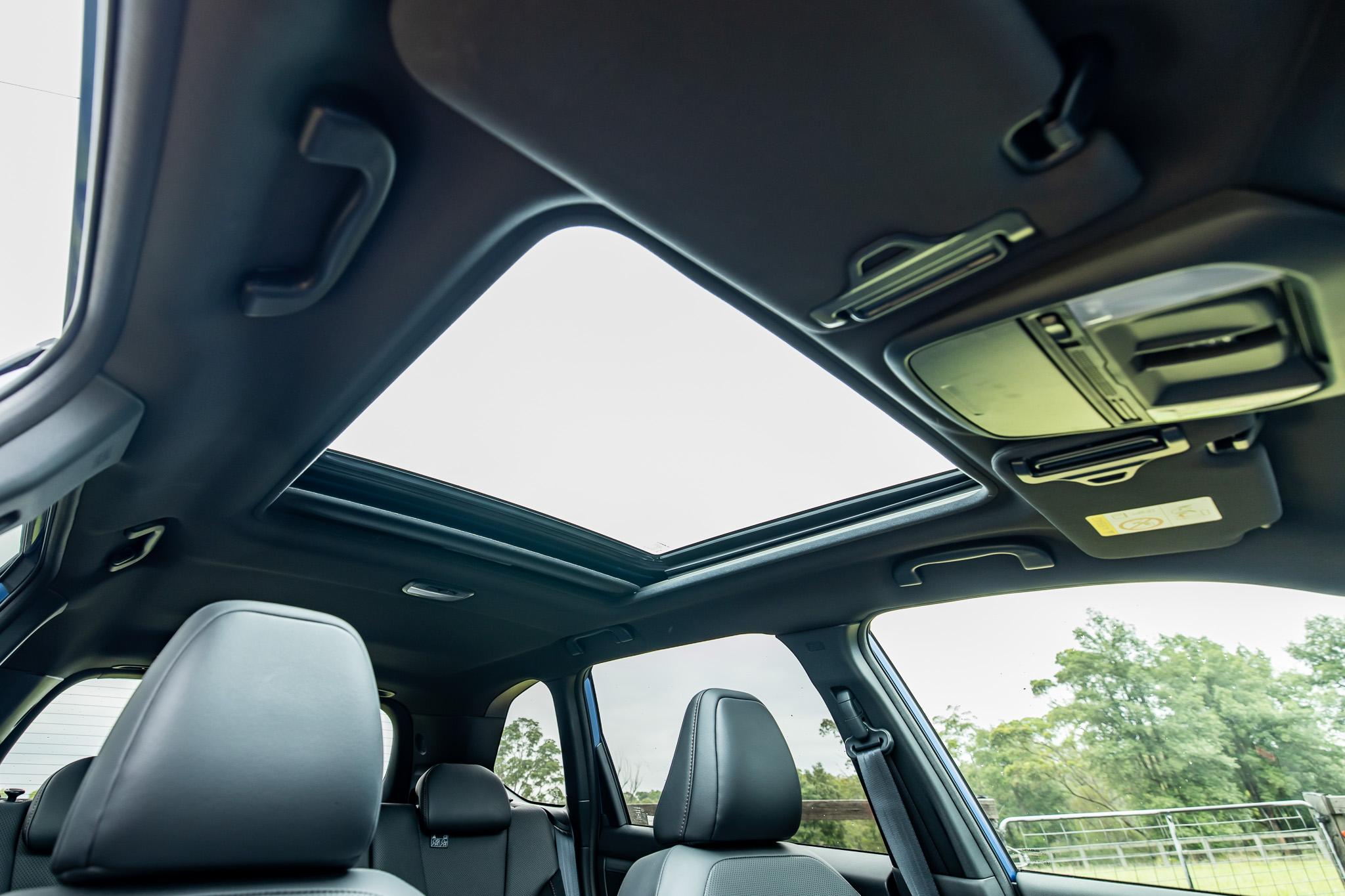
There’s also a ‘not enormous’ sunroof in this model. It’s not one of those heat-dissipating, full glass roof jobs – instead, there’s a small openable area above the front seats, with a thick cover that is manually operable. It adds some nice airiness overhead, because otherwise the black headlining is a bit gloomy.
The rear seat space is roomy, with enough space for a six-footer to fit with room to spare behind their own driving position. I had ample leg, foot and head room, and you will be able to squish three adults in the back if need be. There’s a small transmission tunnel intrusion, but it’s manageable.
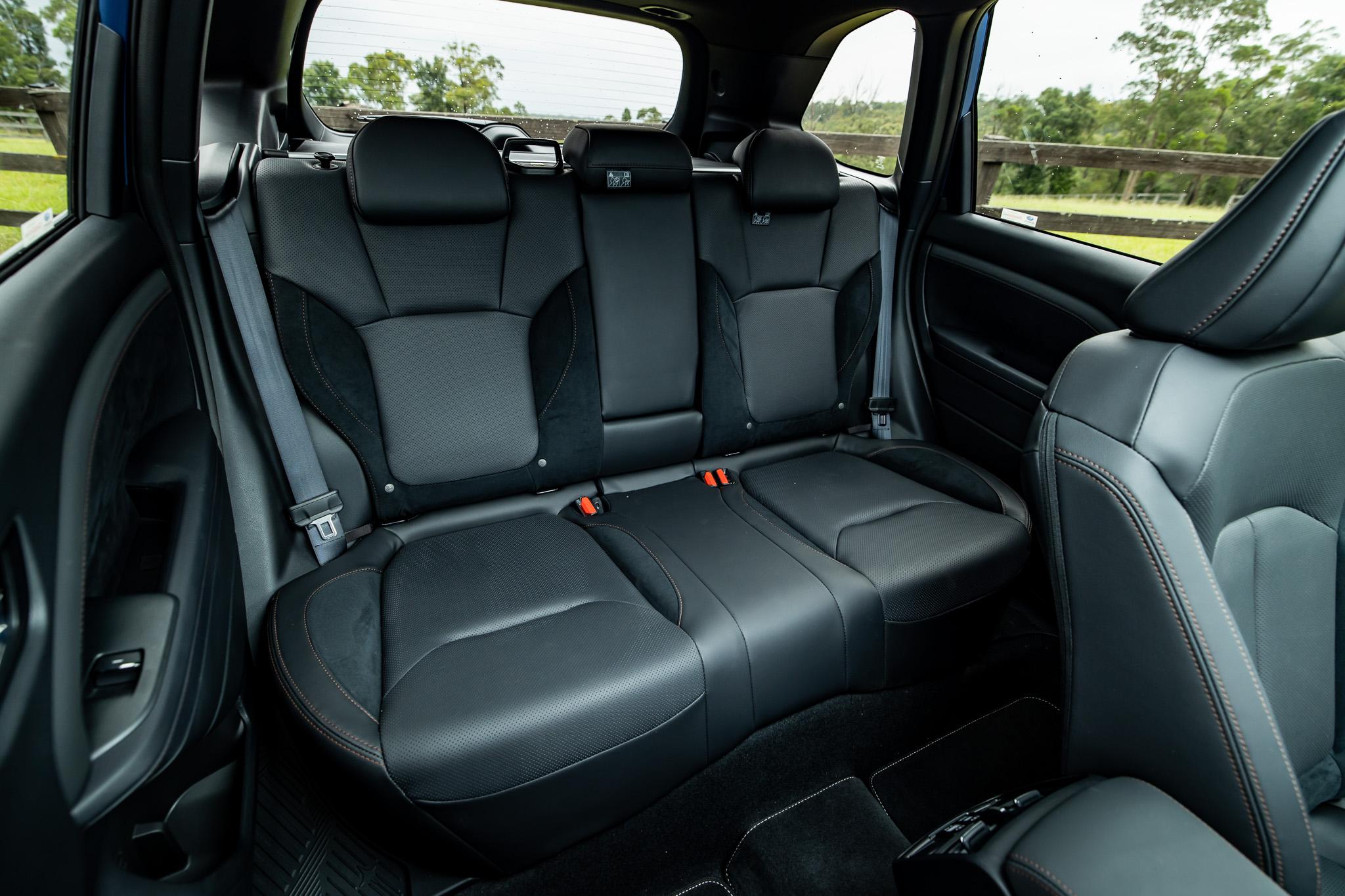
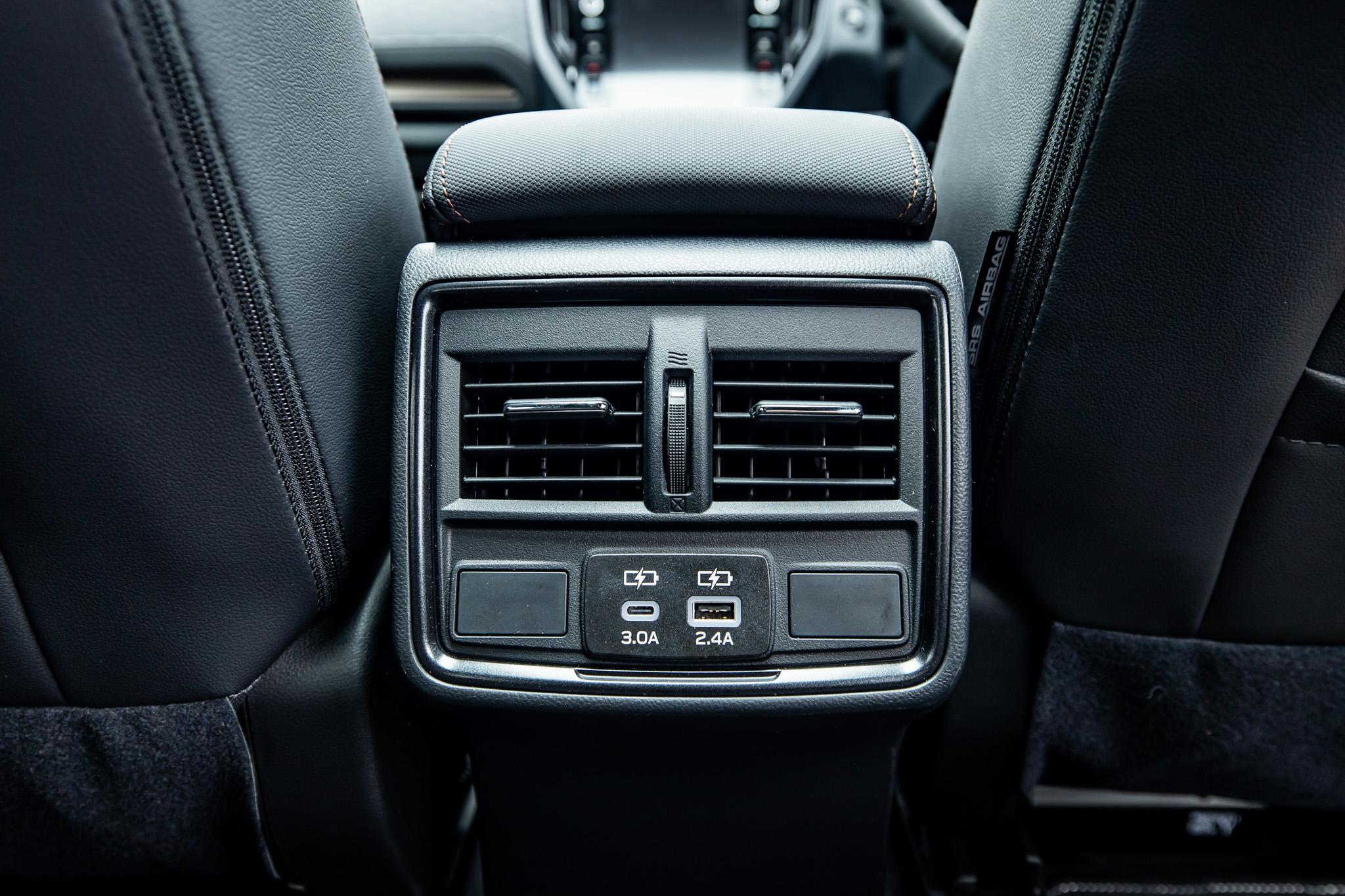
Subaru’s storage smarts run through to the rear, with multiple pockets on the seatbacks, door storage that fits bottles easily, and a flip-down armrest with cupholders.
Strangely though, the Japanese brand still hasn’t figured out how to integrate the middle seatbelt into the seat. It still hangs down from the ceiling, which is annoying if you have large items in the boot and a full back bench.
Keeping the kids happy are directional air vents, plus USB-A and USB-C ports, but this one doesn’t come with heated rear outboard seats, despite there being blank plates in the back telling you what you’re missing out on.
If you have youngsters, there are ISOFIX child seat anchors in the window positions, and three top-tether points as well.
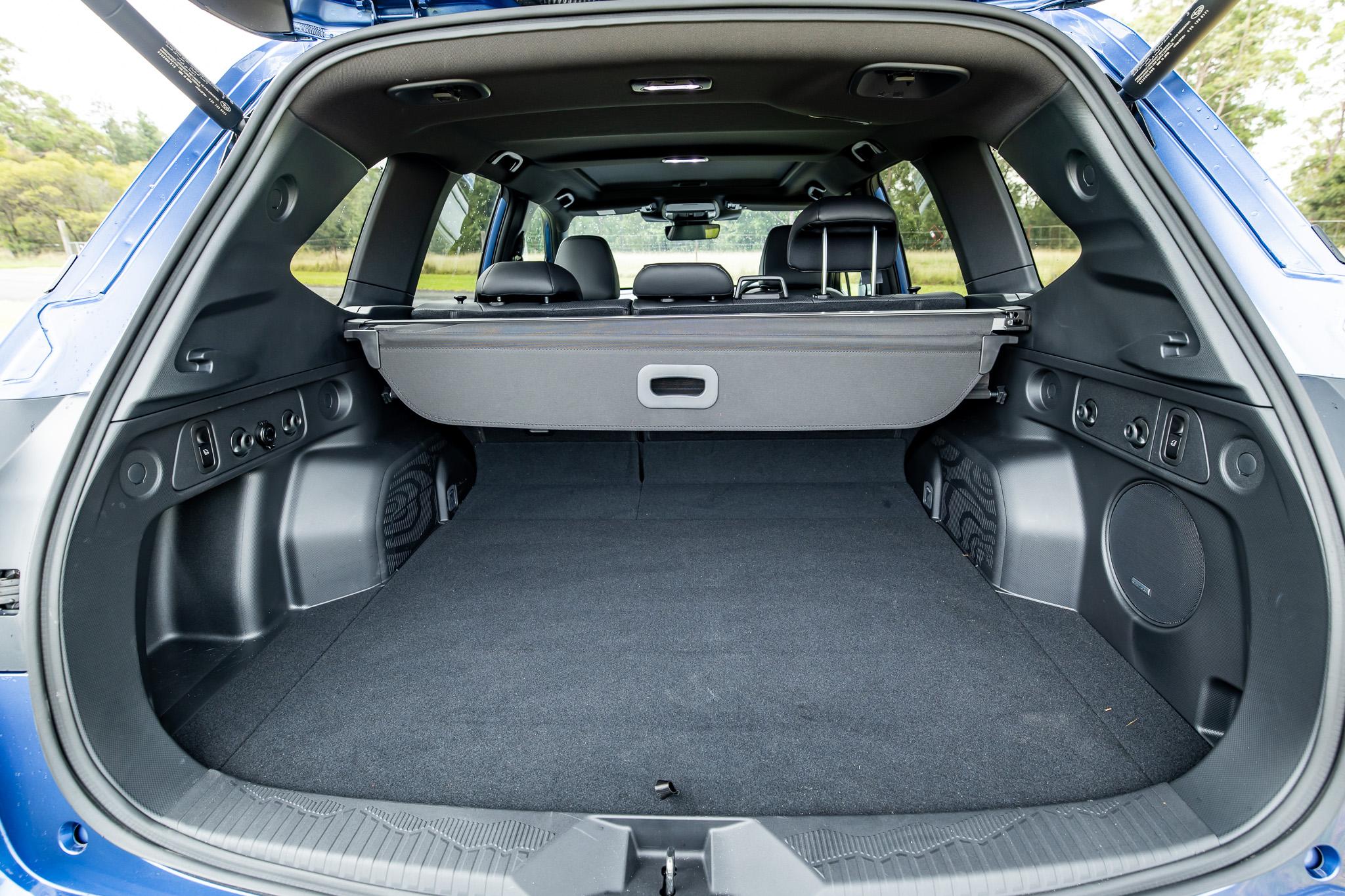
In the boot of the petrol models you still get a spare wheel under the floor, which is better than in the hybrids (which offer a tyre repair kit only), and there are some neat inclusions in the cargo zone.
There are two shopping bag hooks on either side of the load space, 12-volt power, rear seat triggers for easy deployment, and even a couple of item hooks overhead as well, meaning you could possibly hang wet clothes up at the back windowline. There’s an overhead light, too.
The boot capacity in the petrol models is better than in the hybrids, too. So, if you value boot usability and spare-tyre practicality, it’s the obvious option.
| Dimensions | Subaru Forester AWD Touring |
|---|---|
| Length | 4655mm |
| Width | 1830mm |
| Height | 1730mm |
| Wheelbase | 2670mm |
| Cargo capacity (to window line) | 496L (rear seats up) 1174L (rear seats folded) |
To see how the Subaru Forester lines up against the competition, check out our comparison tool
What’s under the bonnet?
The Subaru Forester petrol model range carries over the same powertrain that was offered in the last model, and while it’s hardly a game-changer in the modern era, it is an honest and oomphy thing. More refined now than ever, too…
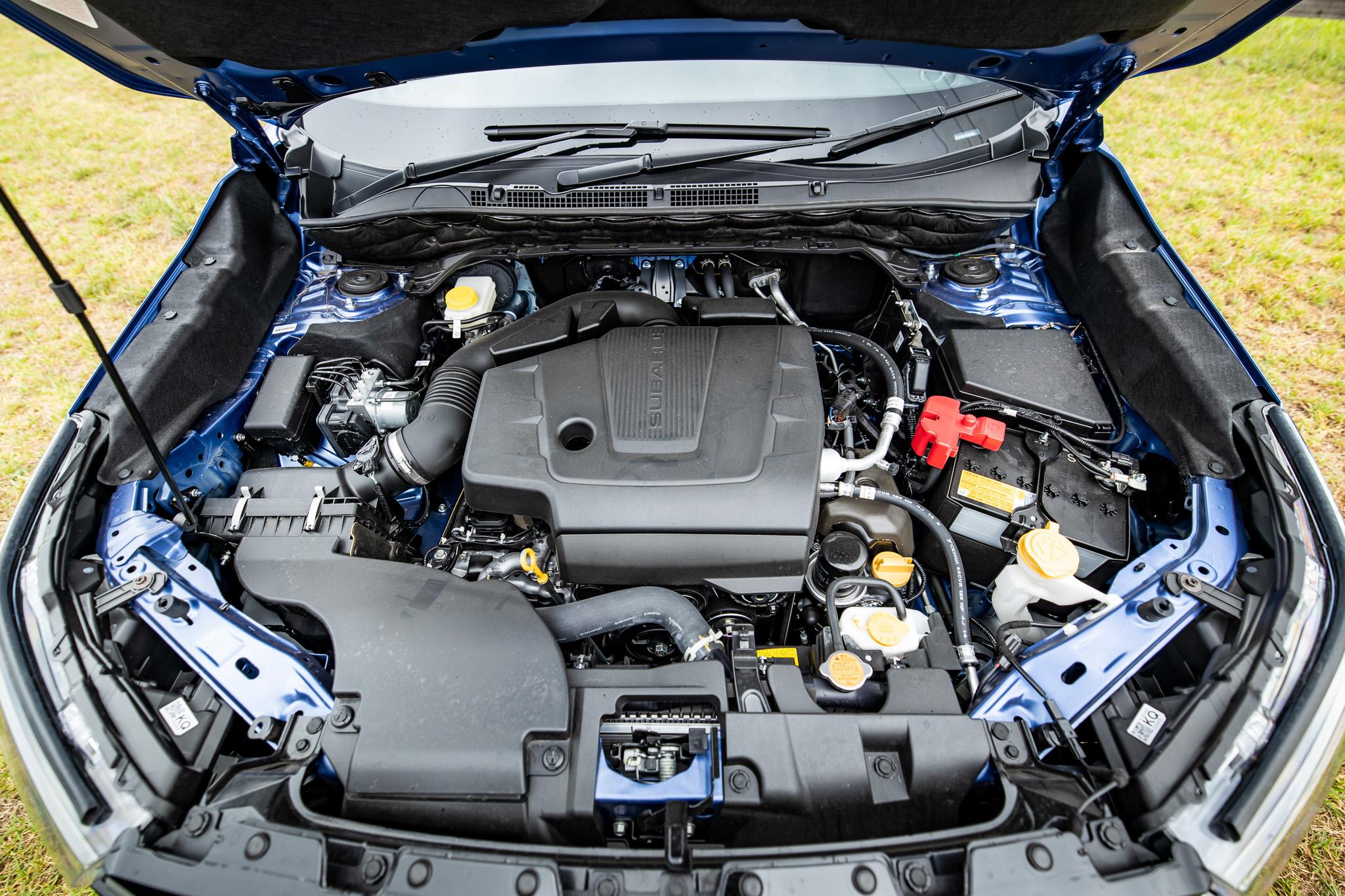
| Specifications | Subaru Forester AWD Touring |
|---|---|
| Engine | 2.5L 4cyl ‘boxer’ petrol |
| Engine power | 136kW @ 5800rpm |
| Engine torque | 247Nm @ 3700rpm |
| Transmission | CVT |
| Drive type | All-wheel drive |
| Weight | 1622kg |
| Fuel economy (claimed) | 7.9L/100km |
| Fuel economy (as tested) | 9.3L/100km |
| Fuel tank capacity | 63L |
| Fuel requirement | 91-octane regular unleaded |
| CO2 emissions | 180g/km |
| Emissions standard | Euro 6c |
| Braked towing capacity | 1800kg |
| Payload | 572kg |
If you aren’t convinced about the step up to the hybrid model, the fuel consumption story here might further stoke your argument against spending more to get the electrified Forester.
On my test – which was almost identical to another test I did in the hybrid – I saw a displayed return of 9.3L/100km… admittedly, not a terrific number but still respectable across a mix of urban, highway, freeway and errand-running duties.
For reference, when I did the same sort of thing in a high-spec hybrid Forester, I got 7.1L/100km.
Now, I’m no mathematician (ask my Year 11 teacher about my exam results!), but I reckon it’d take a fair few kays of driving to recoup the extra cost of buying the hybrid version at that rate of real-world consumption.
To see how the Subaru Forester lines up against the competition, check out our comparison tool
How does the Subaru Forester drive?
If you ever drove the previous-generation petrol Forester, the experience here will be familiar, that’s for sure.
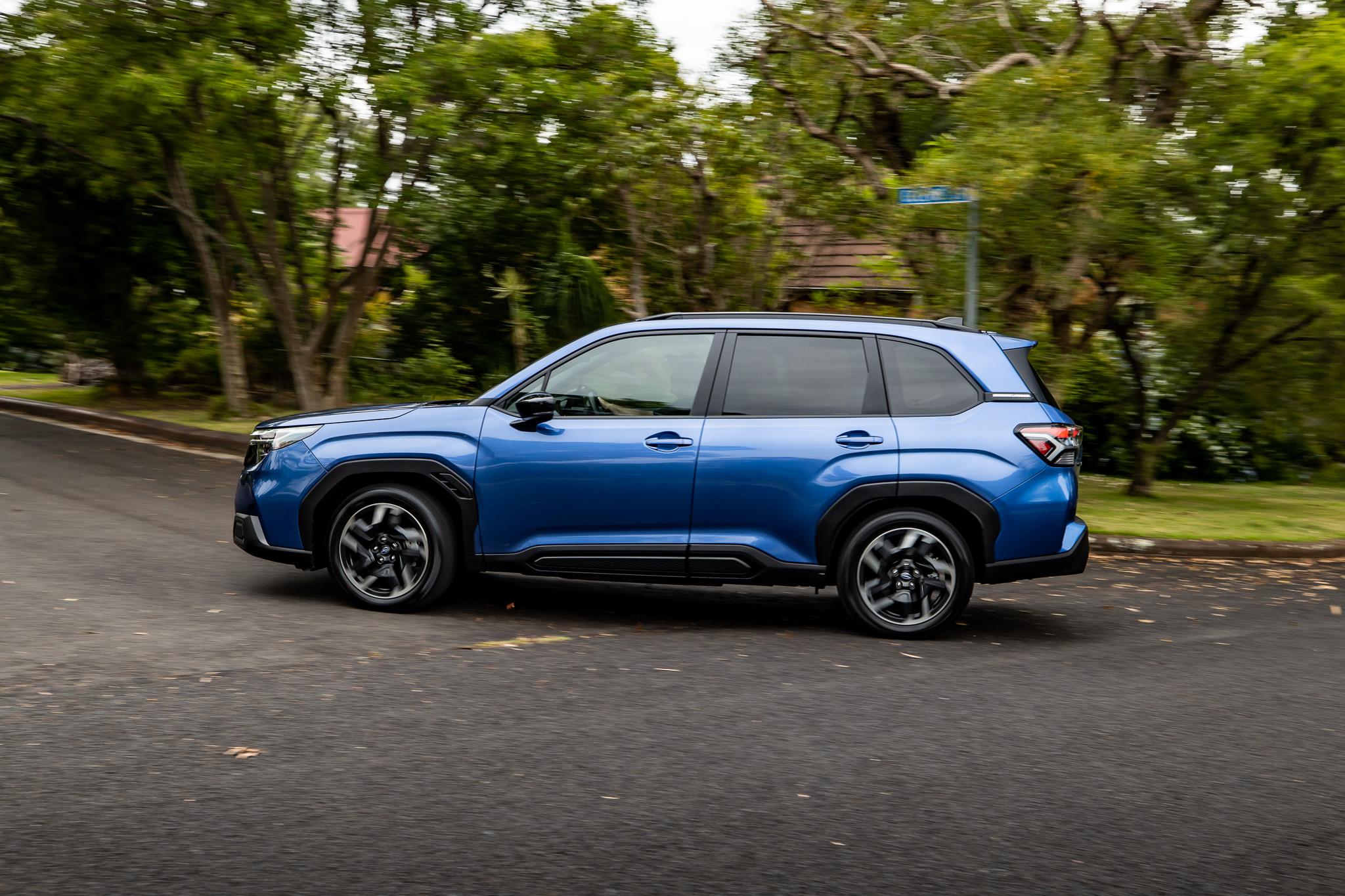
A lot of that comes down to the carryover engine and transmission, which mightn’t be cutting-edge in the modern era, but it’s a tried-and-tested option that still offers exactly what it has for years now.
It’s a strong operator, and while the power and torque numbers mightn’t be mind-blowing, the way the CVT auto harnesses the power and offers up some ‘shift’ actions to make it feel more conventional means that it feels pretty, well, conventional.
Sure, there are moments when you can feel the slurry sort of nature of the transmission, but a lot of the time it responds snappily and, like I said, it’s not short of shove. It’s also more refined and quiet than in generations past.
The steering is predictable and well weighted, and again, while it’s not a thriller to drive, it is pivotable and you can push it through bends with some fun factor if you find yourself out and about on a weekend drive.
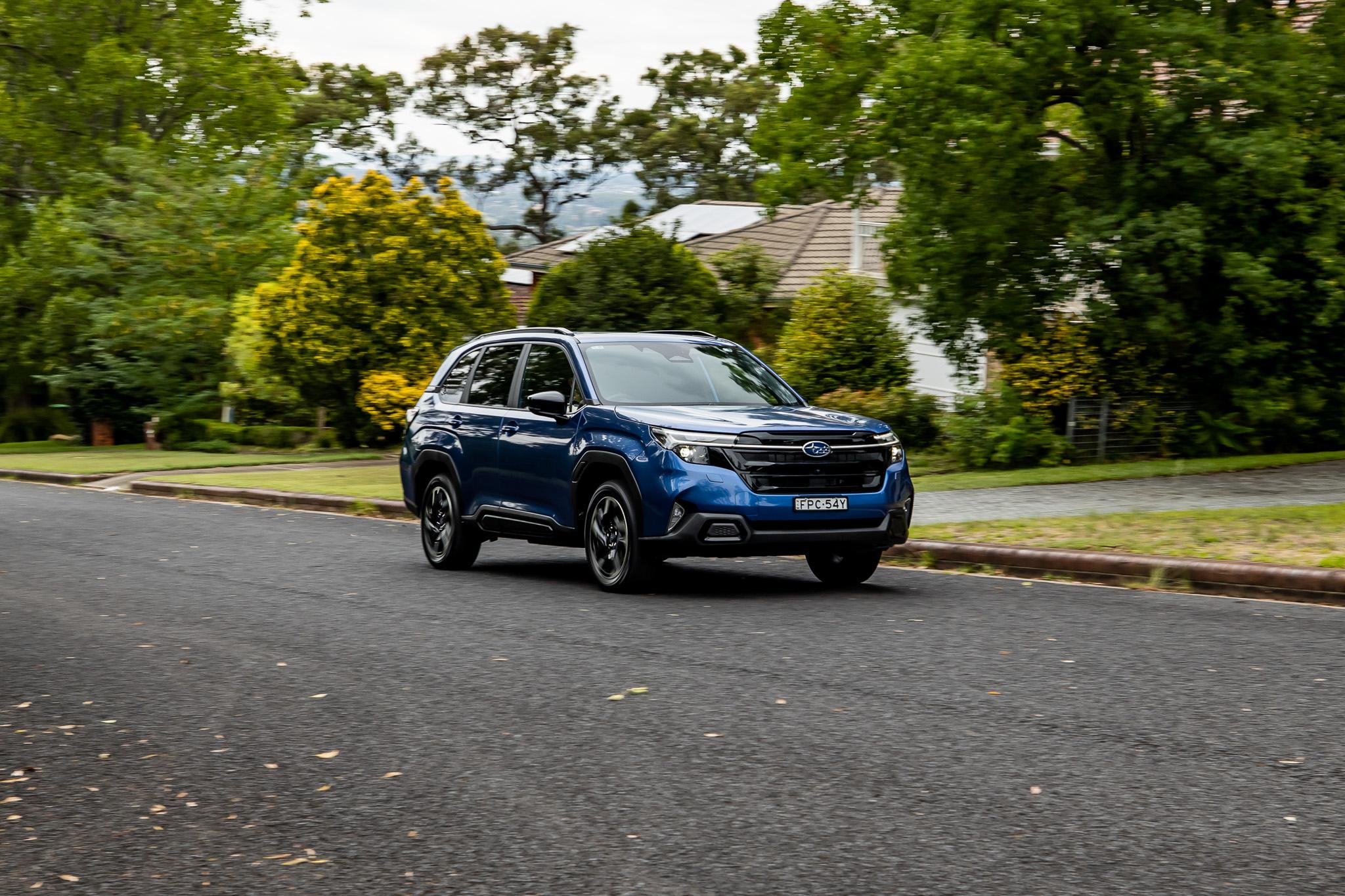
If the road is damp or unsealed, you’ll really be able to feel the traction that the all-wheel-drive system offers. And while many city-dwellers mightn’t need AWD, when you’ve got it and you suddenly need it, it’s a pretty nice thing to feel the confidence of.
The suspension is smooth enough in most situations, and while there’s a bit of body wobble if you change directions quickly or when you’re moving in and out of driveways and so forth, it is composed and comfy over broken surfaces and bumpy bits.
I really rate the drive experience as one of the most easygoing and livable in the mid-size SUV segment – in most ways, at least…
The active safety tech sours that somewhat, with a driver monitoring camera that seems to think that you’re ALWAYS looking somewhere that isn’t straight ahead, and there are some beeps that could happily beep off, like the fact it constantly chimes about things in your blind-spot when you’re indicating in traffic.
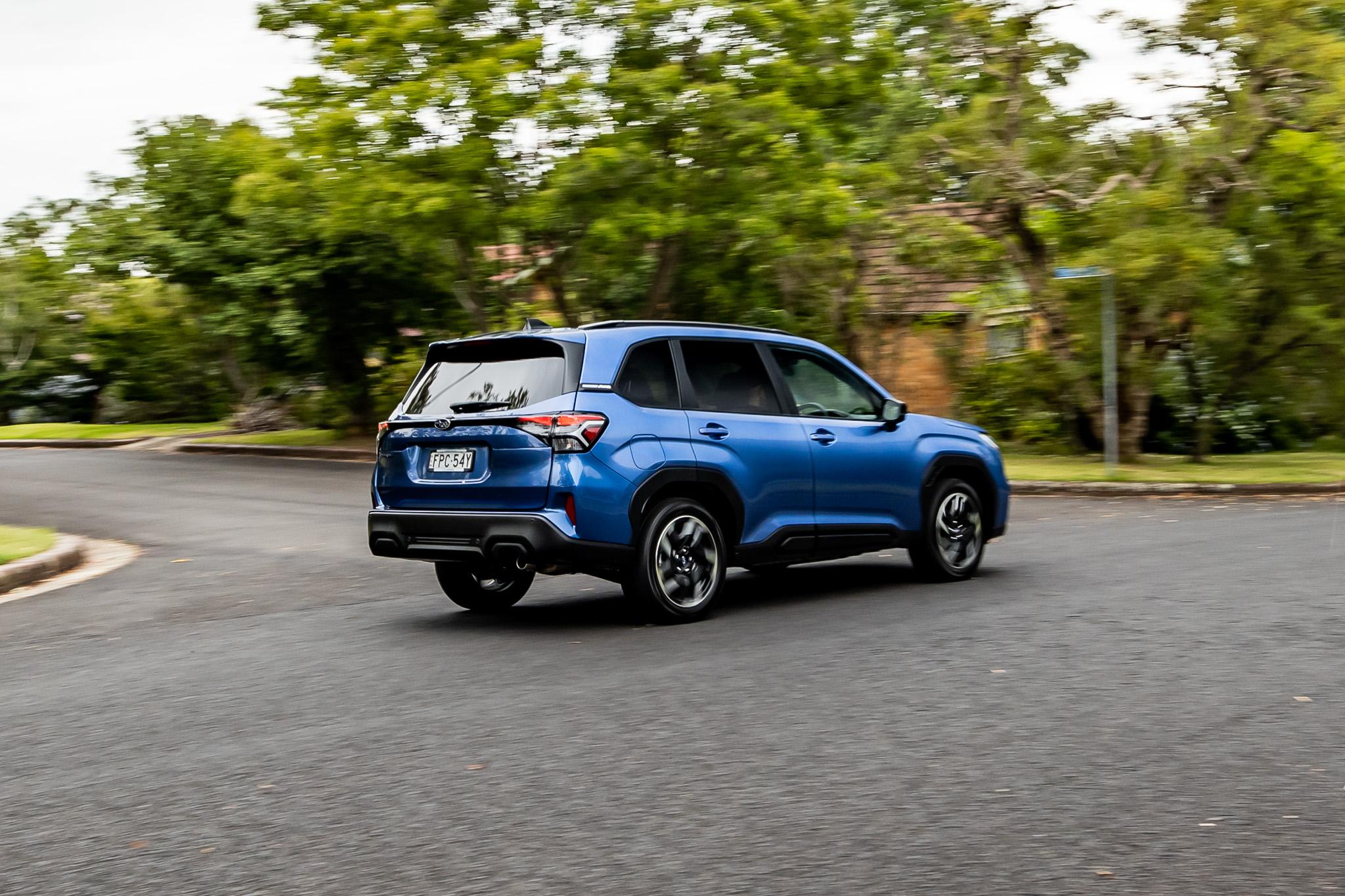
Look, test drive one in your daily-duty situations, and you’ll pretty quickly figure out whether you like the tech or not.
I just wish it was a bit simpler to disable some of those functions quickly… in other words, the touchscreen is begging for a drop-down menu to easily disable things, as many rivals now offer.
To see how the Subaru Forester lines up against the competition, check out our comparison tool
What do you get?
Three of the Forester’s trim levels are available with either petrol or hybrid power, but standard equipment differs for each.
2026 Subaru Forester AWD equipment highlights:
- 18-inch alloy wheels
- Full-size spare tyre
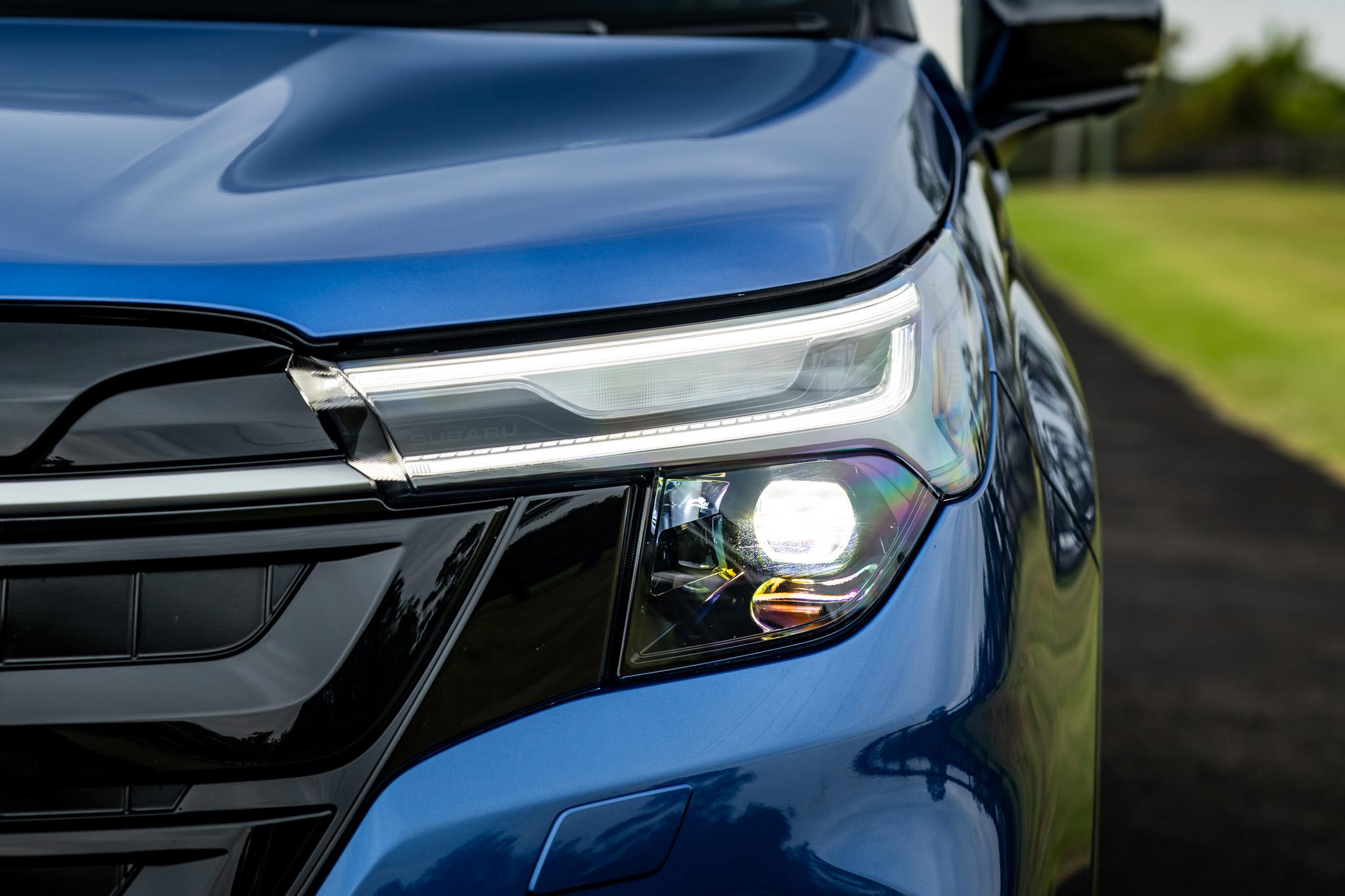
- Automatic, steering-responsive LED headlights
- Power-folding exterior mirrors
- LED front fog lights
- Front cornering lights
- Ladder-style roof rails
- ‘X-Mode’ with one drive mode
- Subaru Intelligent Drive (SI-Drive) with two modes
- Hill descent control
- Proximity entry with push-button start
- 11.6-inch portrait-oriented touchscreen infotainment system
- Wireless Apple CarPlay
- Wireless Android Auto
- Wireless phone charger
- USB-A and USB-C outlets
- 4.2-inch instrument cluster screen
- 6-speaker sound system
- Heated front seats
- Cloth upholstery
- Dual-zone climate control with rear vents
- Leather-wrapped steering wheel
- Silver interior stitching
- One-touch power-folding rear seats
- 60:40 split/fold rear seats
- Auto-dimming rear-view mirror
Forester AWD Premium adds:
- Power tailgate with kick sensor
- 8-way power driver’s seat with lumbar
- 8-way power passenger seat
- Satellite navigation
- Auto-dipping passenger-side mirror
- Power-folding exterior mirrors with memory
Forester AWD Sport adds:
- Dark metallic 18-inch alloy wheels
- Power sunroof
- ‘X-Mode’ with two drive modes
- Black front grille with green insert
- Green badging
- Water-repellent synthetic leather upholstery
- Leather-wrapped steering wheel
- Green interior stitching
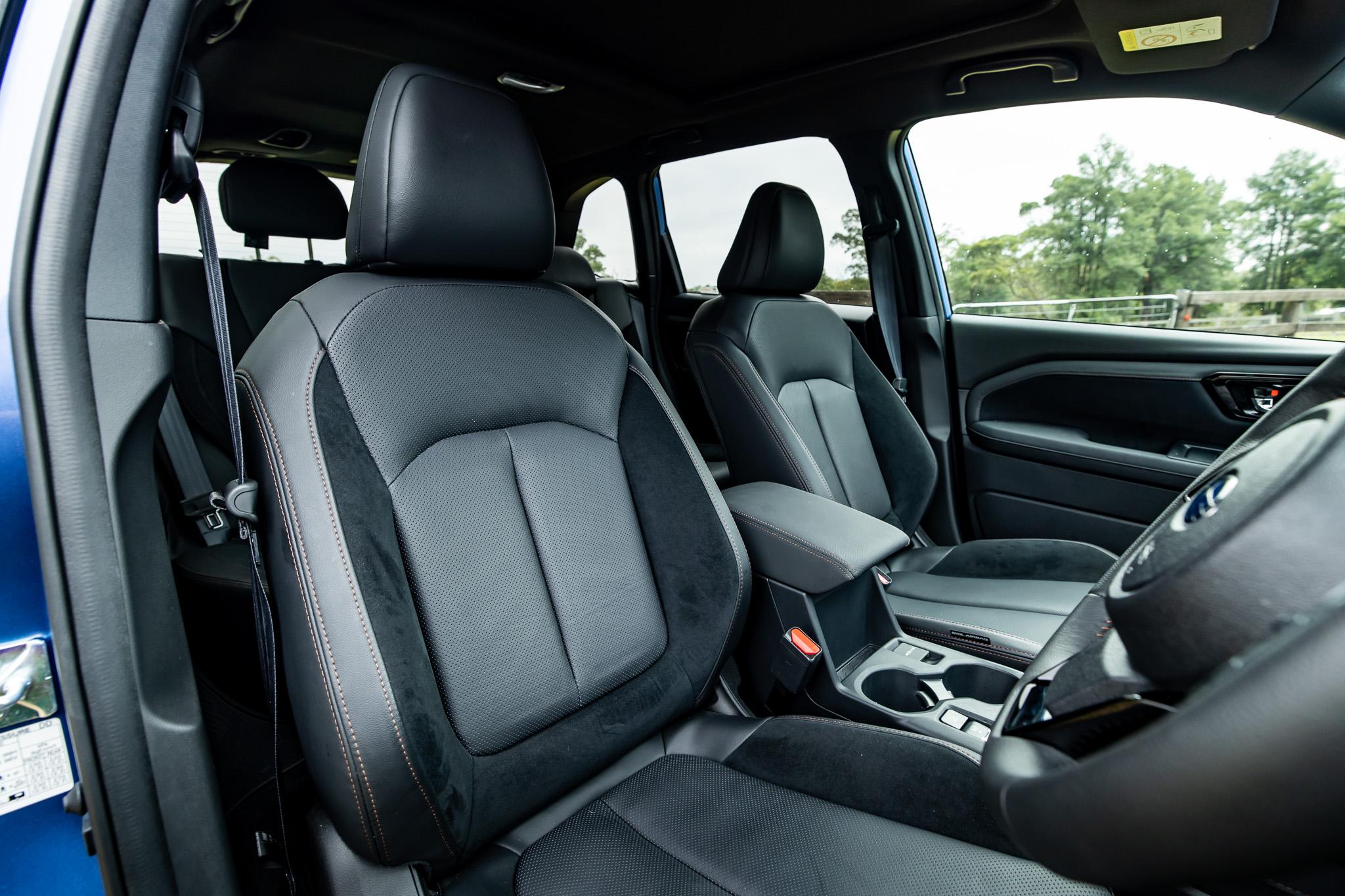
Forester AWD Touring adds:
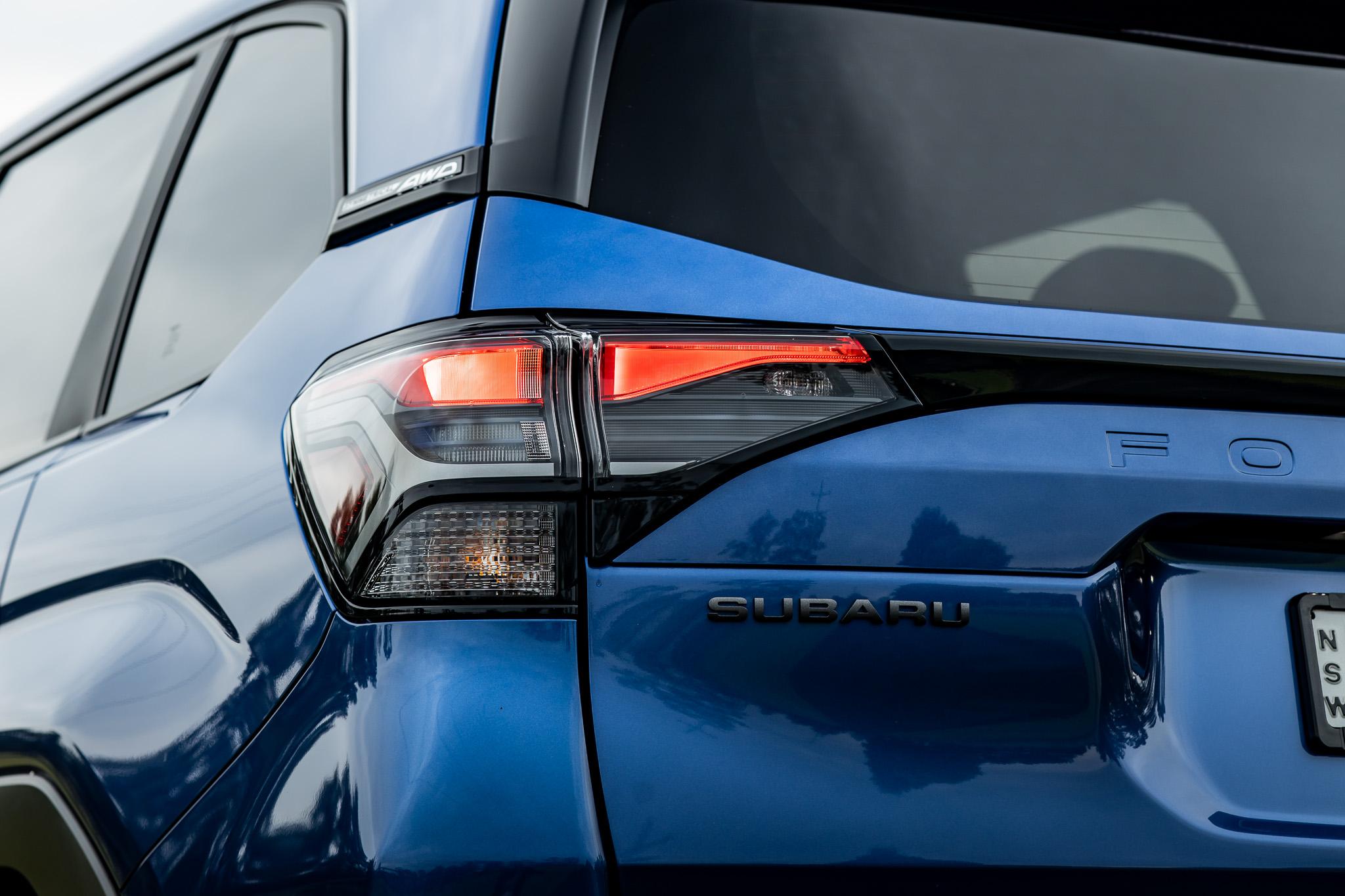
- Gloss black front grille, front and rear bumper accents, side mirrors
- Low-profile roof rails
- Leather and suede upholstery in black or brown
- Brown interior stitching
- Ventilated front seats
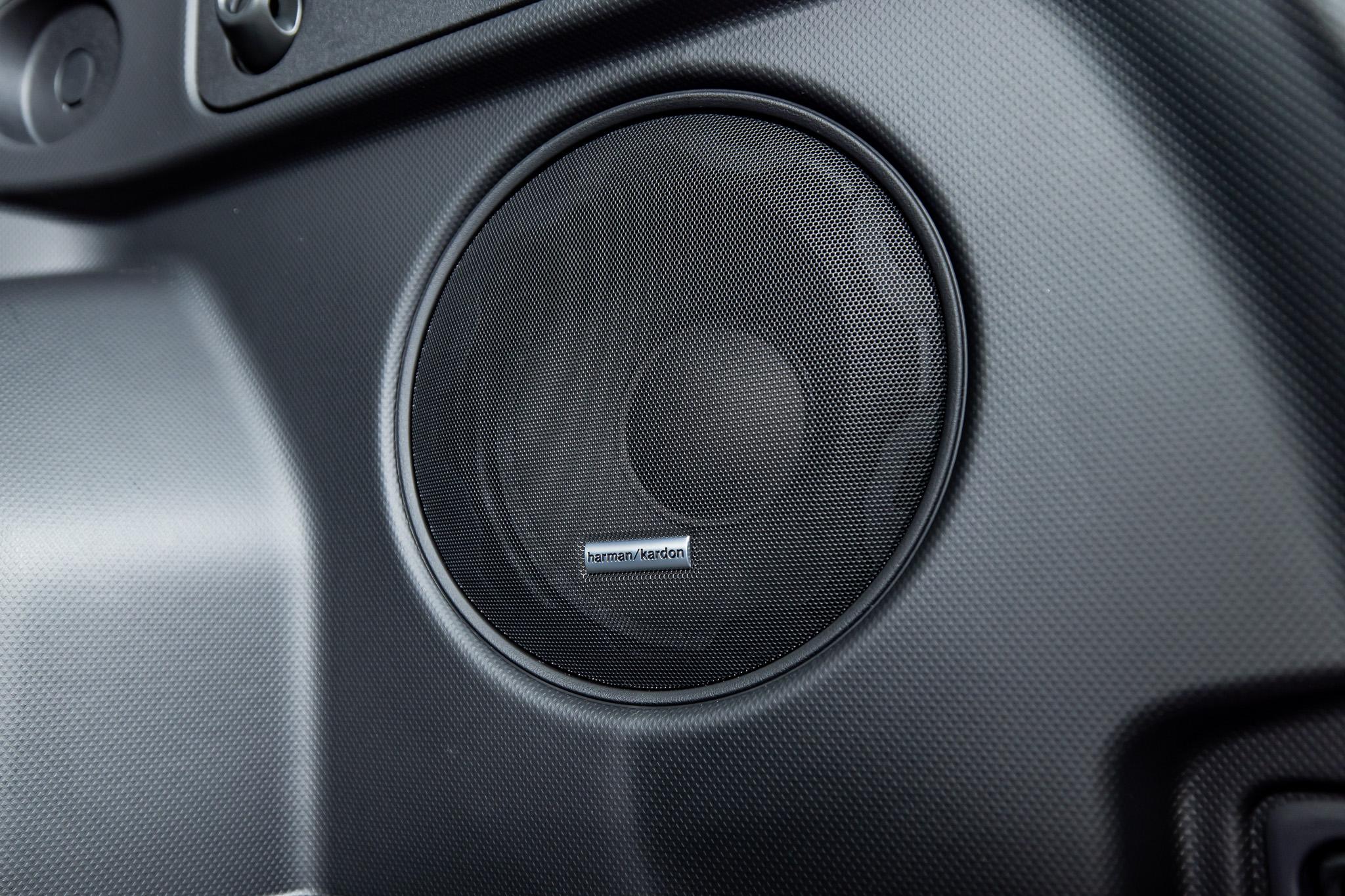
- 10-speaker Harman Kardon sound system with subwoofer
Forester AWD Hybrid adds (over base Forester):
- Tyre repair kit (instead of full-size spare)
- Paddle shifters for regenerative braking
Forester AWD Hybrid Sport adds (over Forester Sport):
- Bronze 19-inch alloy wheels
- Bronze exterior accents
- Low-profile roof rails
- Brown interior stitching
- 12.3-inch digital instrument cluster
- 10-speaker Harman Kardon sound system with subwoofer
Forester AWD Hybrid Touring adds (over Forester Touring):
- Dark grey machined gloss finish 19-inch alloy wheels
- Leather and suede upholstery
To see how the Subaru Forester lines up against the competition, check out our comparison tool
Is the Subaru Forester safe?
The Subaru Forester achieved a maximum five-star ANCAP safety rating against the 2024 testing criteria. That rating applies to all variants sold from mid-2025.
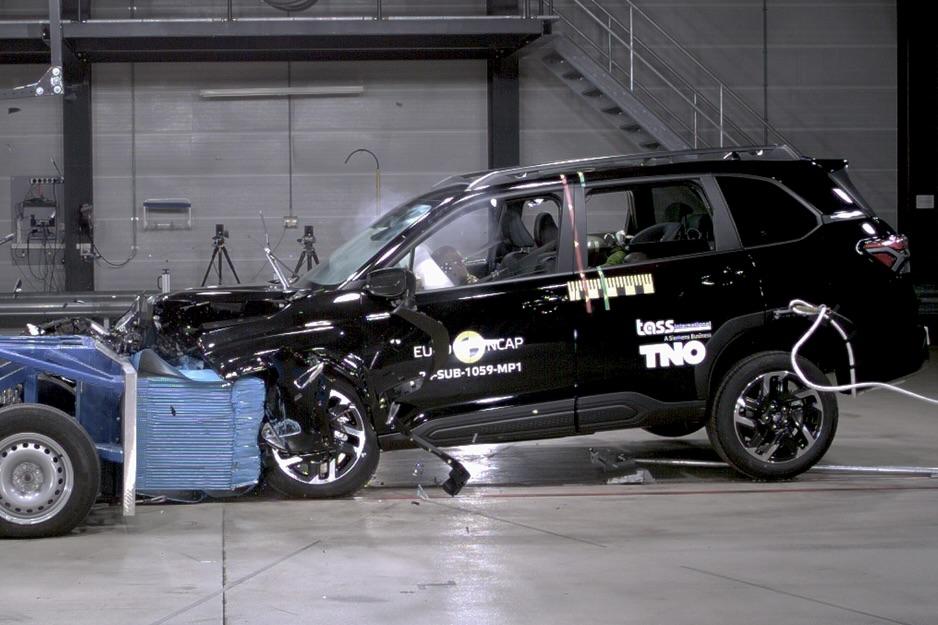
| Category | Subaru Forester |
|---|---|
| Adult occupant protection | 83 per cent |
| Child occupant protection | 91 per cent |
| Vulnerable road user protection | 86 per cent |
| Safety assist | 75 per cent |
Standard safety equipment includes:
- 9 airbags, including:
- Far-side
- Front passenger seat cushion
- Active torque vectoring
- Autonomous emergency braking (forward and reverse)
- Autonomous emergency steering
- Adaptive cruise control
- Blind-spot monitoring
- Driver monitoring system
- Emergency driving stop system
- Emergency lane-keep assist
- Front side radar
- Lane centring
- Lane change assist
- Lane-keep assist
- Rear cross-traffic alert
- Rear parking sensors
- Surround-view camera
- Traffic sign recognition
- Tyre pressure monitoring
- Wide-angle monocular camera
There are some annoyances to the implementation of the safety systems here, as mentioned in the driving section.
The Forester has nine airbags fitted: dual front, front ‘far side’ centre, passenger cushion, driver’s knee, front side, and full-length curtain airbags.
To see how the Subaru Forester lines up against the competition, check out our comparison tool
How much does the Subaru Forester cost to run?
Subaru Australia offers a five-year, unlimited-kilometre warranty for all of its models.
| Servicing and Warranty | Subaru Forester |
|---|---|
| Warranty | 5 years, unlimited kilometres |
| Roadside assistance | 12 months |
| Service intervals | 12 months or 15,000km |
| Capped-price servicing | 5 years |
| Average annual service cost | $459.80 |
| Total capped-price service cost | $2299 |
The brand has a capped-price servicing program if you want to opt for the ‘pay as you go’ approach to your first few years of ownership, but there are also prepaid servicing options that might be more appealing.
The first is a three-year, 45,000km plan at $1261, and the second is a five-year, 75,000km plan for $2299. That means your average costs work out the same as the regular servicing plan – an average of $459.80 per visit. That is a class-competitive cost.
But there’s an added perk if you choose the five-year plan: Subaru includes three years of roadside assistance at no cost.
The standard level of roadside cover is 12 months for free, then it’s an added cost each year thereafter.
To see how the Subaru Forester lines up against the competition, check out our comparison tool
CarExpert’s Take on the Subaru Forester AWD Touring
I’d have a petrol Forester over a hybrid. It makes more sense to me, and the fuel use isn’t that much higher.
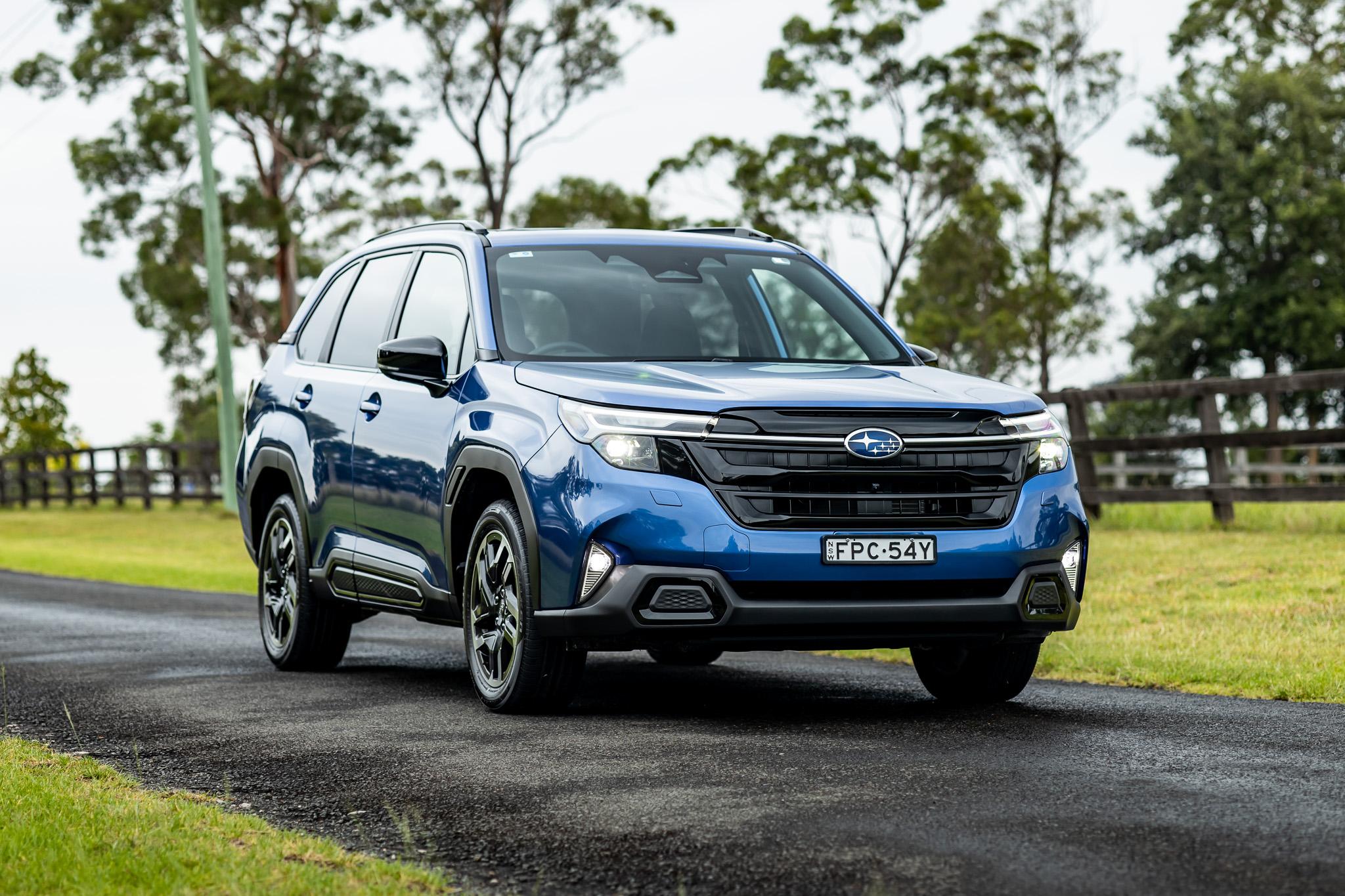
I don’t think I’d personally spend this much on a petrol Forester, though. The mid-spec Premium looks like it’d do the job.
CarExpert can save you thousands on a new Subaru Forester. Click here to get a great deal.
Click the images for the full gallery
