

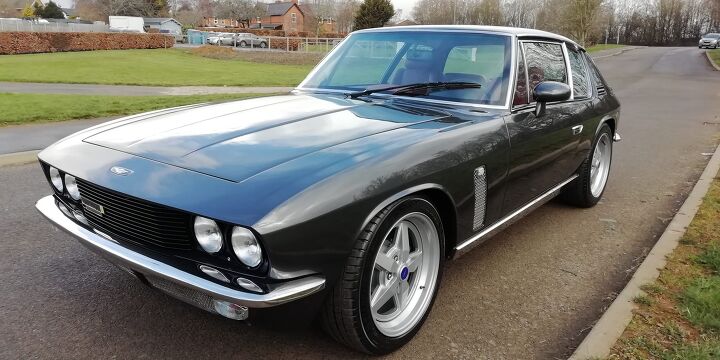
Jensen International Automotive (JIA), which is known for doing restomods of vintage Jensen automobiles, has promised to build a modern interpretation of the classic Interceptor. However, the vehicle in question won’t be an electrified model wearing the clothes of the original. JIA wants to build a V8-powered grand tourer that’s a true successor to one of the coolest cars ever to come out of Great Britain.
The company already restores old examples of the Jensen Interceptor with modern brakes, suspension, electronics, and often Chevrolet-sourced LS V8s. That means it knows its way around the vehicle. But the company wants to take things to the next level by building an entirely new model that’s based heavily upon the original.
“Inspired by the iconic 1960s Jensen Interceptor, JIA’s first-ever clean-sheet-designed product will be completely new from the ground up,” the company explained. “The car will blend an elegant yet striking contemporary body design with an aluminium chassis and a bespoke V8 engine to ensure a fully analogue driving experience, delivering a thoroughly modern take on a luxury British GT.”
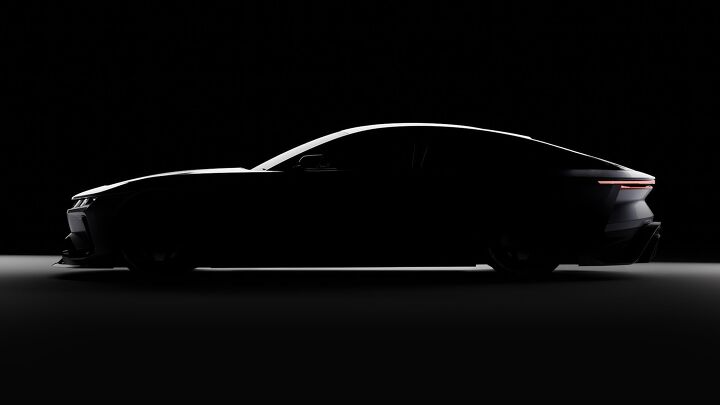
Based on the teaser image (above), the vehicle JIA has in mind carries over the long, fastback shape. If anything, it’s even longer and lower than the car it has been inspired by. But we don’t know how far along in the design process the team happens to be. What we’ve been shown could be a prototype or simply a concept.
We’ll also be curious as to how the next Interceptor will be built. Historically, Jensen Motors was more of a coachbuilder than a traditional automaker. The brand made a name for itself by designing more sporting (or luxurious) bodywork on Austin models in the 1920s. In successive decades, Ford models were incorporated. While the company dabbled in commercial vehicles leading up to World War II, it went back to its roots once the war had ended.
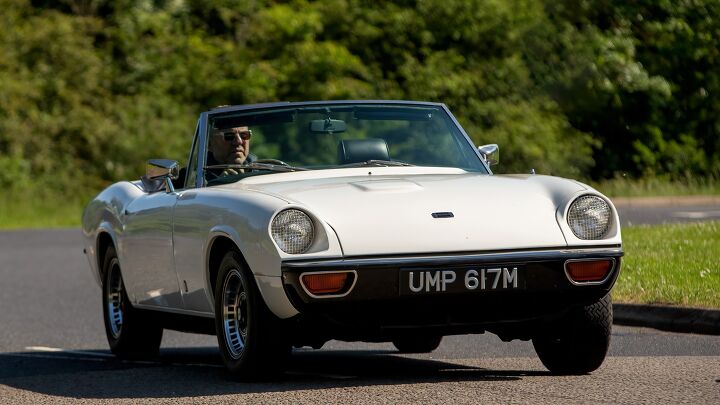
While Jensen built numerous iconic cars — including the 541 and sprightly Jensen-Healey (above) — it was the Interceptor that proved to be the most enduring. The original model debuted in 1950 as the company’s second post-war automobile and was quite a leap from the Jensen PW (which actually stands for “post-war”) in terms of both design and technology.
Like all of its vehicles produced in that era, the model borrowed loads of essential components from Austin (specifically the A70 model). The original Interceptor was an amalgamation of wood, aluminum, and steel, with a substantial amount of fiberglass thrown in for good measure.
Early versions of the car (equipped with the 4.0-liter, Austin D-Series I6) are relatively slow by modern standards, they were considered quite fast for their day. A couple later models were even built with early versions of the Chrysler HEMI “Firepower” V8, making them among the fastest production cars of the 1950s. However, the original Interceptor would be discontinued without a successor in 1957 — with fewer than 100 units produced in total.
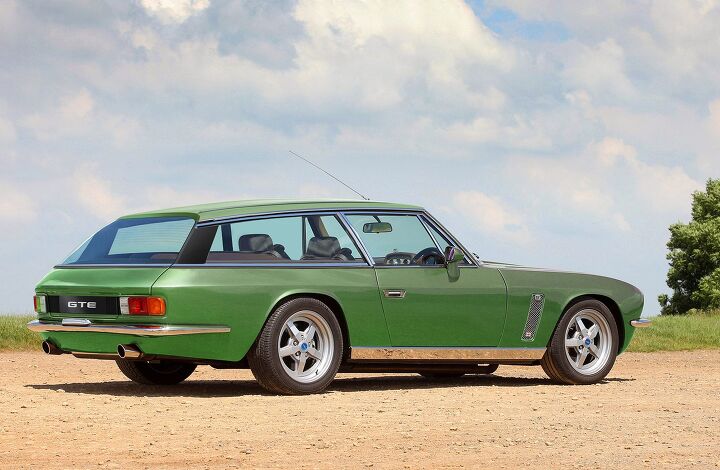
The Interceptor model we all think of wouldn’t arrive until 1966. The concept was largely the same, however. Jensen Motors still wanted to build a luxury grand tourer by harvesting parts from other automakers and giving it the best body the company could source from other firms.
This time, Jensen went with an entirely steel body shell and asked Chrysler to provide the powertrain. The initial offering was the 383 cubic-inch (6.3-liter) V8 Chrysler developed as replacement for the older “Firepower” HEMIs. But the Interceptor would eventually come with the legendary 440 big block HEMI as an option.
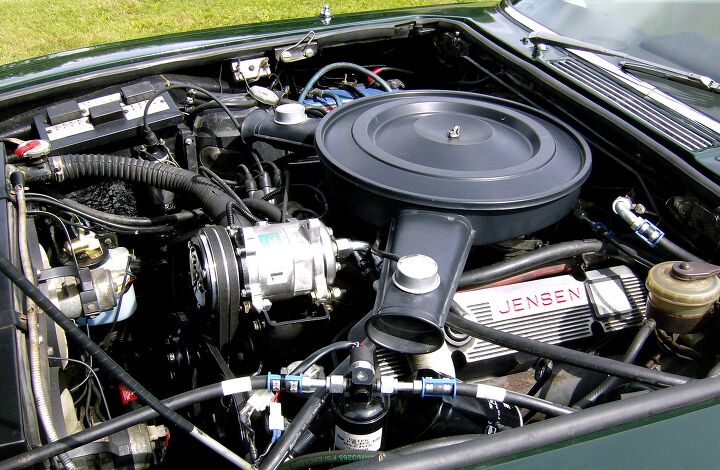
In both cases, the car would rival many American muscle cars in terms of acceleration and was often capable of surpassing their top speed, which was ideal for a high-end GT car that was supposed to compete with the likes of the Aston Martin DBS and Jaguar E-Type.
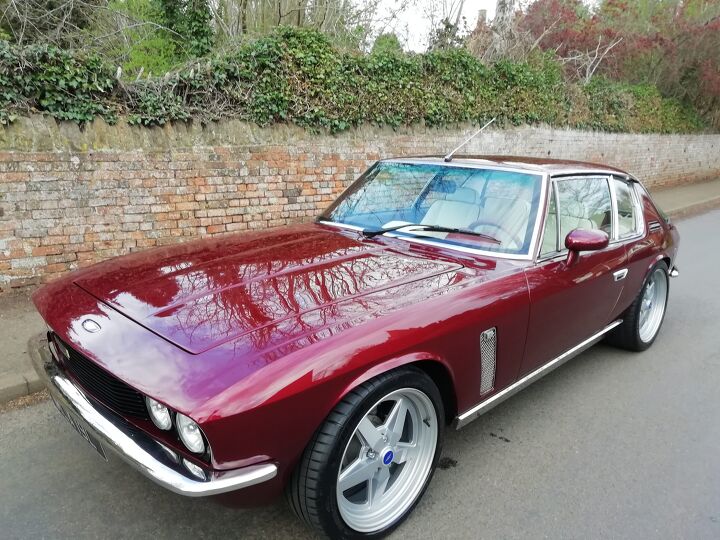
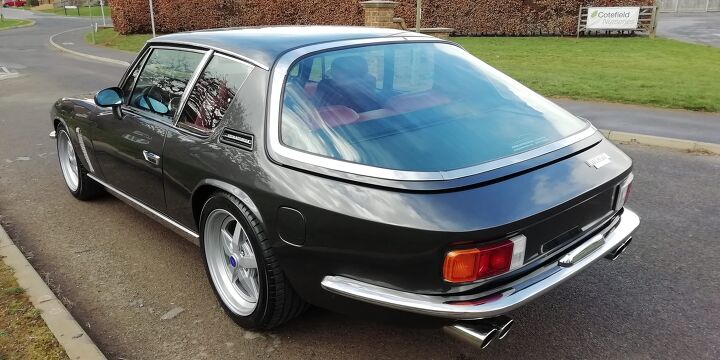
Criticisms of the model are that it shares the poor build quality of most British-made automobiles from the era. But the perks were that it had one of the most open cabins of any high-end GT car and a design that convinced oodles of celebrities to purchase one. Jensen sold over 7,000 examples of the Interceptor, if we include the cutting-edge, all-wheel drive FF variant and ultra-rare convertible/coupe models that lacked the massive rear windshield.
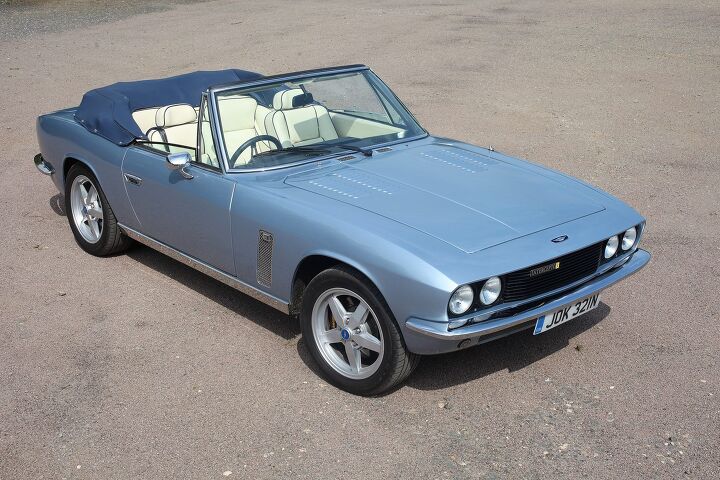
Corey Lewis did a very excellent edition of Rare Rides on the convertible model, for those interested in learning more.
As far as remakes go, the Interceptor seems like a good candidate. Similar to films, remaking cars can be a tricky business. Running with an established franchise likely means good sales from recognition. But expectations are significantly higher than running with a lesser-known nameplate.
We’ve seen the former work both for and against Dodge Charger and Challenger models over the years. The 1960s originals are easily two of the most beloved and famous American automobiles ever built. However, the front-wheel drive, L-body Charger and Mitsubishi-based Challenger from the 1980s strayed too far from the original formula. While they have their fans (including myself), the cars clearly lacked the appeal of the originals.
Acclaim returned to the Charger and Challenger when they came back in the 2000s. These vehicles had much more in common with the originals. The heritage-inspired menacing appearance, V8 powertrain, rear-wheel drive, and focus on providing comfortable cruising and insane straight-line performance for a low price was all there. But the good will was undone when Dodge opted to lead with an electrified redesign of the Charger, abandoning the V8 in the process.
Jensen is likewise going to need to tread carefully. But it has a few things working in its favor. For starters, all versions of the Interceptor are rare enough for most people to have no clue what they are actually like to drive. The car similarly served as something that rode the line between traditional and cutting edge automotive design, perhaps providing some wiggle room for JIA.
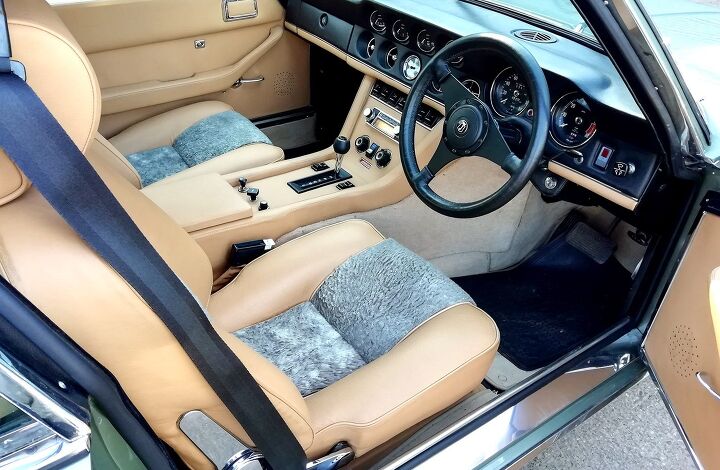
At a minimum, the company has promised the new Interceptor will offer a bespoke V8. It’s also promising an “analog driving experience,” which sounds very promising in an era where the average car has become increasingly appliance-like. We’re not sure if that means there will be a manual option, especially as most Mk2 Interceptors were sold with a Chrysler TorqueFlite automatic transmission. But it’s providing some amount of hope.
What makes us less hopeful is the fact that a previous announcement the model would return in 2011 (made by CPP Global Holding and Healey Sports Cars) never yielded anything. The car was announced and then cancelled before development had even been completed. We’re putting more faith in JIA. But the new Jensen Interceptor also sounds as though it’ll be even rarer than its predecessor. The company has said the vehicle will be produced in “ultra-limited” quantities, most of which we doubt will be making it out of Europe. Odds are good that you’ll never see one in person unless you have the kind of money to buy it for yourself.
[Images: Jensen International Automotive; Sue Thatcher/Shutterstock]
Become a TTAC insider. Get the latest news, features, TTAC takes, and everything else that gets to the truth about cars first by subscribing to our newsletter.
