

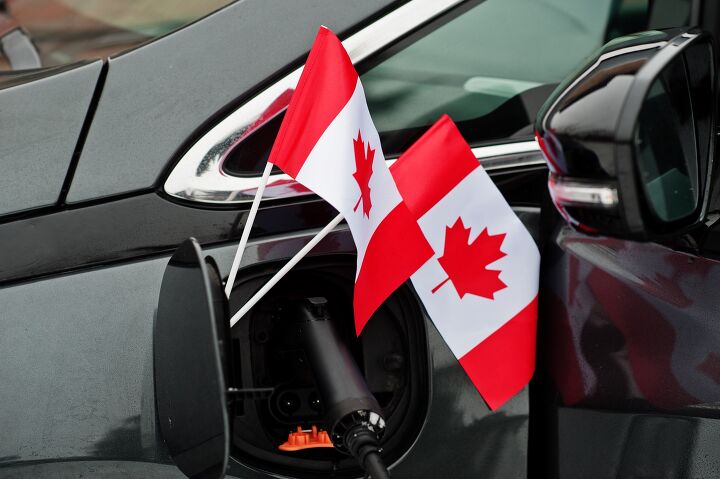
Canada is reportedly considering abandoning its preexisting electric-vehicle mandates. The nation has been targeting 100 percent zero-emission vehicle sales by 2035, with automakers having to achieve 20 percent by the end of 2026. But the goals aren’t remotely realistic, forcing leadership to revisit the issue as automakers are begging for regulatory clarity.
The country’s Electric Vehicle Availability Standard (EVAS) is notoriously aggressive and follows similar targets set by California and the European Union. However, data shows that drivers are starting to shy away from all-electric models.
This is causing automakers to grow concerned that they’ll be required by the relevant nations to build vehicles that they likely won’t be able to sell. According to the CBC, leadership from Ford, General Motors and Stellantis have reached out to Prime Minister Mark Carney.
Automakers sent a joint letter to Carney, who had already expressed concerns about the EV mandates, in December. But the pressure has allegedly continued to mount as the industry grows more concerned with its inability to meet the stated production targets. While there is the faintest chance that the companies could build enough EVs to meet those targets, Canada certainly doesn’t have enough customers interested in buying them.
From CBC:
“Time is of the essence,” the automotive executives wrote in their Dec. 12 letter to Carney. “In recent discussions with your colleagues, we learned that the government may not provide direction to companies on the future of EVAS until next year.
“Auto manufacturers are currently making critical production and potential credit purchase decisions that require clarity on EVAS,” the letter continued. “If a decision on EVAS is not communicated by the end of 2025, companies will face extraordinary and unnecessary compliance costs.”
Brian Kingston, head of the Canadian Vehicle Manufacturers’ Association — which represents the three automakers — said those costs have now become a reality as the companies plan for the 2027 model years and beyond.
“Companies are making significant and impactful decisions about how they comply with this regulation right now,” he said. “So every day that passes without a decision increases uncertainty and raises costs.”
Automakers have prioritized increasingly large and complicated vehicles to maximize profits. But their customers have long been signaling that they cannot afford this for several years now. Wages have not kept up with inflation for years, yet automobiles have continued to balloon in price. Meanwhile, fresh tariffs from the United States (done in an effort to bring back more domestic manufacturing) has resulted in higher overhead for automakers since so much labor is already outsourced from abroad.
Officially, most automakers continue to state that they’re focused on an all-electric future — especially after investing so much capital into the program. But most are walking back EV production to accommodate buying trends. Many drivers want to see traditional vehicles with lower MSRPs and are growing tired of the modern tech trends being wedged inside of modern automobiles.
This has been an issue for loads of consumer goods, not just cars. It’s also hardly limited to electrified models. EVs simply represented the bleeding edge of those polarizing trends.
Another issue is the fact that environmentalism simply isn’t as trendy as it used to be. Corporations were formerly laser focused on the issue, boosted by the fact that governments were often offering a lot of money (via subsidies) for their doing so. Environmental, social, and governance (ESG) also became a clever way for financial institutions to pick winners and losers on what was arguably questionable grounds.
But the public is now far more worried about economic pressures, geopolitical concerns, social decline, and the risk of war. Many now openly criticize environmental initiatives as financial schemes while others simply have more pressing matters to contend with. Environmentalism has taken a back seat to other matters.
Meanwhile, electrification never seemed like a genuine solution. Claims that all-electric vehicles would be the best way to save the environment always seemed to be surrounded by nebulous data points being shared by the very same businesses desperate to sell you on the relevant products.
When governments started insisting upon EV mandates, I was reminded of Cash for Clunkers (Car Allowance Rebate System). In both cases, the government was insisting that the solution to sustainability concerns was more conspicuous consumption. But the truth of the matter is that keeping your old car running is unquestionably more environmentally friendly than having a company build you a new one from scratch.
It’s highly plausible that those initiatives did more harm than good in terms of vehicle affordability, material waste, and net pollution.
Concerns about the ecological ramifications of battery production and disposal have also gone largely unanswered by the industry. However, anyone who has bothered to look into those topics themselves understands that it’s not all roses and sunshine. Any legitimate pollution mitigation seems to be wholly dependent upon what type of powerplant the vehicle is sourcing its energy from. All other aspects (e.g. mining, battery production, vehicle assembly, waste disposal) seem to offer questionable environmental benefits at best.
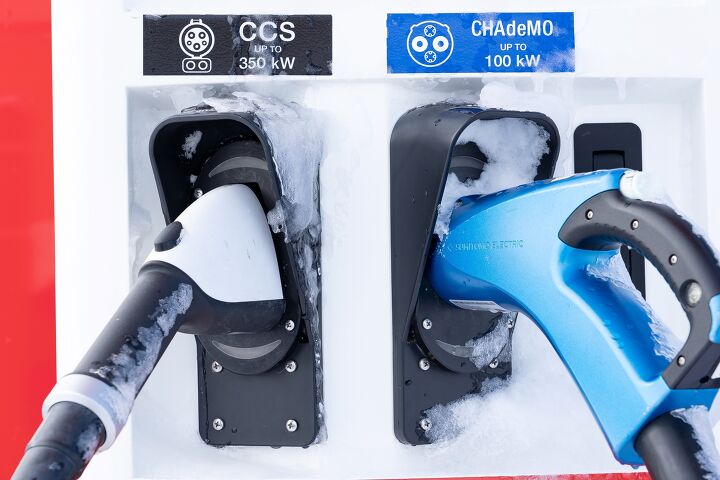
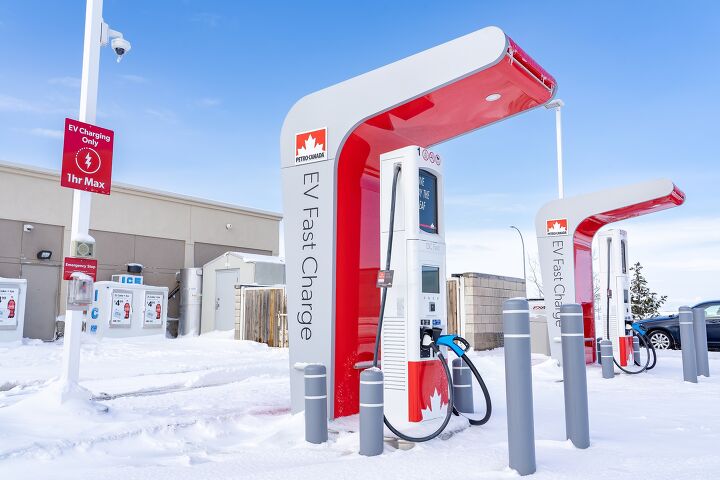
Dubious environmental assertions aren’t what harmed EV adoption the most, however. Lackluster charging infrastructure exacerbated some of the drawbacks of living with an all-electric vehicle, particularly in North America. EVs can likewise struggle in extreme climates
But the biggest issue seems to be cost. While you can often find EVs at a sizable discount, electric models typically see much higher MSRPs than their internal combustion counterparts. The industry likewise attempted to prioritize expensive luxury models, resulting in fewer affordable EVs (e.g. Nissan Leaf) on the market.
The theory was that government subsidies would help make up the difference in cost. But they’ve been evaporating, with EV sales following suit.
Early models having subpar quality control (often yielding expensive repairs) and insufficient range or charging times to be taken on a longer road trip have been the final nail in the coffin. Automakers arguably rushed EVs into production before the technology had matured to a point that they were universally competitive with combustion models. This resulted in electrified models developing a stigma that’s been difficult to shake.
These are things Canadian leadership is being forced to take into account while it decides how to handle its Electric Vehicle Availability Standard (EVAS). The Canadian Vehicle Manufacturers’ Brian Kingston, has likewise stressed how important the choice will ultimately be.
Automakers need years of advanced planning before they put models into production. Last minute changes mean delays and higher production costs. But the EV situation is currently extremely volatile. Some markets are acting like they’ll continue trying to regulate combustion vehicles out of existence, whereas others (like the United States) have recently done away with EV mandates in hopes of restoring consumer choice. As a byproduct, this also creates a lot of leeway for the industry.
The Canadian Vehicle Manufacturers’ Association believes that the only serious pathway forward is for the country to heavily revise its environmental regulations. Forcing automakers to attempt to sell carbon credits to offset financial losses isn’t particularly realistic (we’d argue it’s also environmentally nonsensical) and sufficient government subsidization to offset losses would need to be beyond massive.
However, restricting the sales of combustion vehicles doesn’t look much better for 2026 — and the situation is poised to worsen every year through 2035.
“Based on current sales rates, we could be talking about pulling between 700,000 and 900,000 gas-powered vehicles from the market this year,” Kingston explained.
“If the government holds these sales rates in place in a market where about two million vehicles are sold every year, that is disastrous,” he continued. “That is an economic catastrophe.”
But there’s also real pressure for Canada to do what it can to bolster EV sales. A large number of its labor initiatives, originally launched under Justin Trudeau, are presently tied to environmental issues. This includes automotive production, as several major automakers have agreed to build all-electric vehicles in the country. Sadly, several of those projects had been delayed or outright cancelled in 2025.
Canada has invested billions upon billions of dollars into these initiatives under the assumption that they’ll create loads of jobs. Attracting the automakers wasn’t cheap. But it’s all tied to EVs and companies are growing increasingly hesitant to build them for a market that doesn’t look terribly interested in buying them.
Now, Canada is reportedly in discussions with China about lowering (if not eliminating) tariffs on Chinese-made EVs and automotive components. While this could encourage Asian manufacturers to grow their economic presence within the region, domestic brands area already expressing their displeasure. A deal with China could also upset Mexican and U.S. trade partners. That’s less than ideal when those nations are prepared to negotiate the regional trade relations under the USMCA later this year.
[Images: AS photo family/Shutterstock; Ramon Cliff/Shutterstock]
Become a TTAC insider. Get the latest news, features, TTAC takes, and everything else that gets to the truth about cars first by subscribing to our newsletter.
