

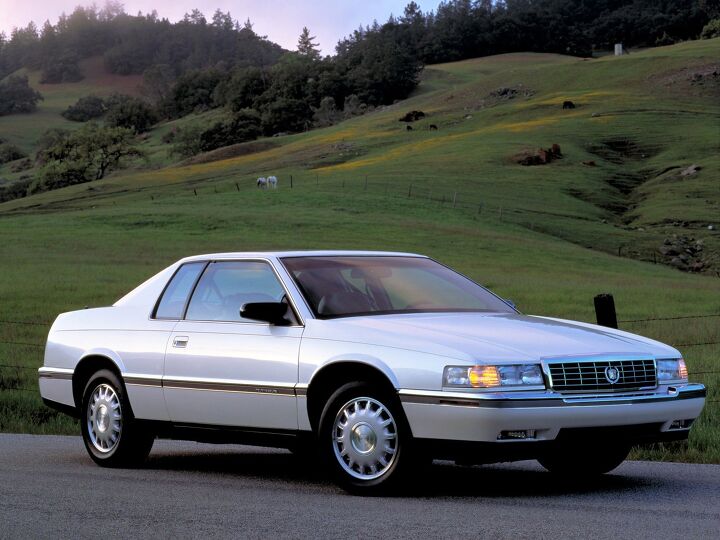
After 12 generations and an impressive 50-year run, the very last Cadillac Eldorado rolled off the line on April 22, 2002. When the Eldorado bowed out it stood as the last of an old, previous style of Cadillac products. Its styling was no longer worn by any of the other vehicles in the lineup, and Eldorado was sold alongside models that had been replaced twice since it launched in 1992.
With the new Eldorado and Seville in ‘92, Cadillac began its attempts to climb out of the hole it fell into in 1986. The first year of its downsized products in 1985 sold very well, but 1986 sales figures found that over 100,000 of the brand’s usual customers bought a car elsewhere. By 1991 amongst higher prices and visually lengthened front-drive models, sales sunk even further to 220,284 in total.
Cadillac’s lineup was the fullest it would be for some time in 1992. The base model DeVille and its upmarket Fleetwood variant were still the bread and butter at Cadillac. The Brougham from 1977 was sold one final time in 1992, as Cadillac prepared for aerodynamics to take hold of its largest model. It was also the last time the Brougham name would function as a standalone model.
The exciting product was in the upper-middle section of the portfolio with the arrival of the new Seville and Eldorado, albeit without the impressive Northstar that wasn’t ready. Much more expensive than either of those was the oddly positioned Sixty Special, an exclusive DeVille trim which appealed to few. Finally at the top of the range was the Allanté, which experienced content cuts (the hardtop was an optional extra now) and was already doomed via incredibly slow sales.
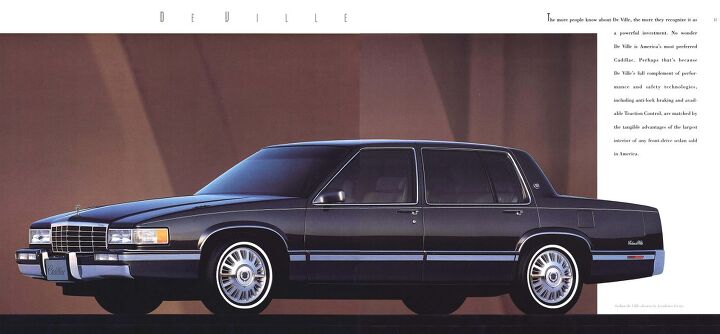
DeVille and Fleetwood sales held steady in 1992 at 142,231 cars, though the model was very aged next to modern competition. The Coupe DeVille managed 8,423 sales, while the sedan sold 133,808 times. Both coupe and sedan DeVille carried the same base price of $31,740 ($74,478 adj.). The trim package Fleetwood was notably overpriced for what it was, at $36,360 ($85,319 adj). 1992 was the final year of the Fleetwood coupe.
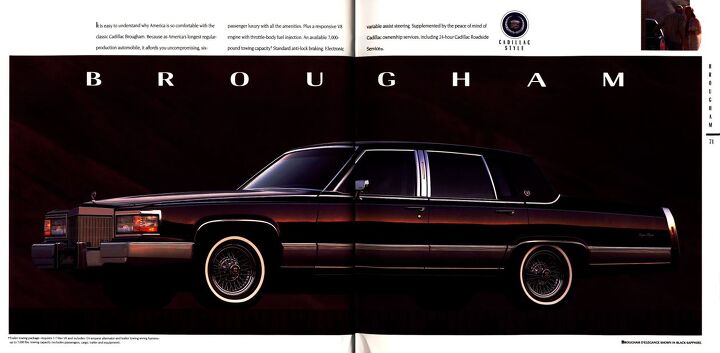
The only traditional product left at Cadillac, Brougham, was offered one final time with little technology, no airbags, little in the way of aerodynamics, but yards and yards of velour or vinyl and leather. It asked $31,740 ($74,478 adj.) in 1992. Few found it appealing given its outdated nature and the upcoming new B-body, and its sales figures were the lowest ever at 13,761.
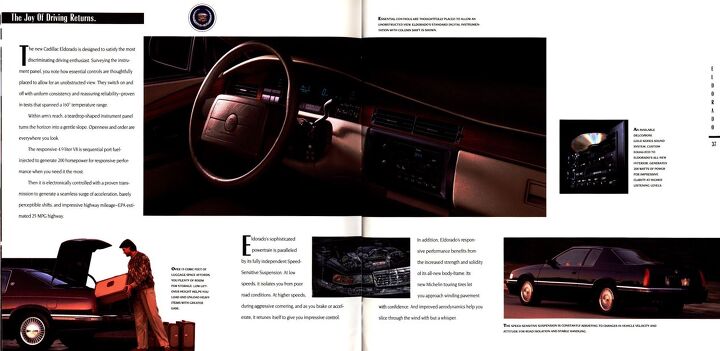
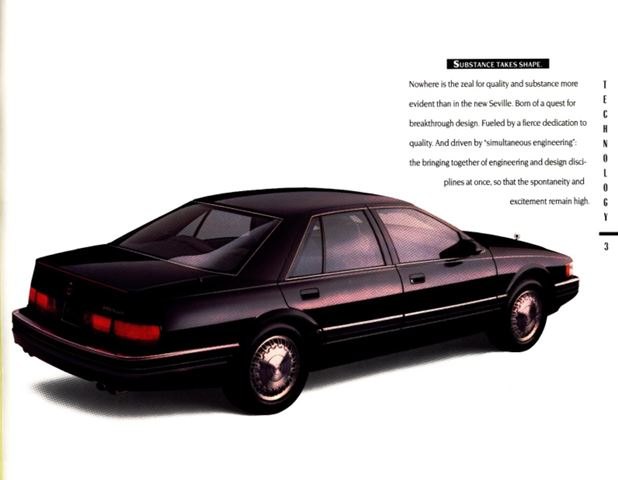
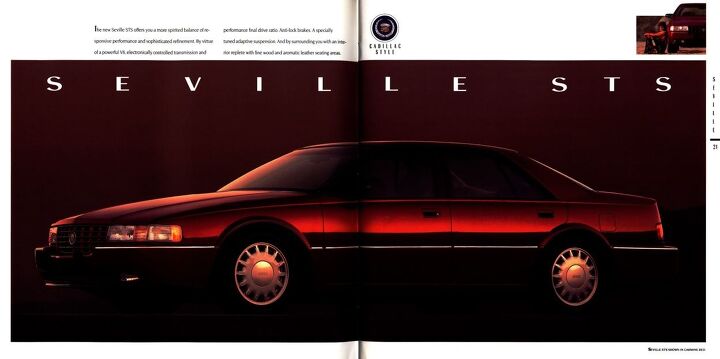
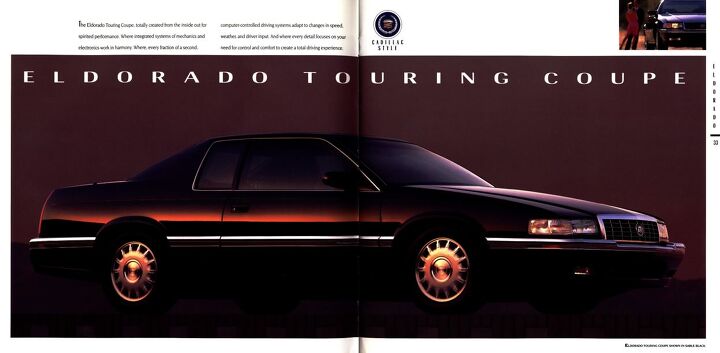
Seville sales shot up to 43,953 in 1992, a great improvement over 1991’s figure of 26,431. Likewise the Eldorado saw its fortunes improve from a paltry 16,212 sales in 1991 to 31,151 sales in 1992. The Seville at base trim asked $34,975 ($82,069 adj.) that year, while the Eldorado was less spendy at $31,740 ($74,478 adj.).
Sixty Special increased its price in 1992 to a rough $39,860 ($93,532 adj.). Unsurprisingly, only 554 were sold nationwide. It was even less popular than the Allanté, which at $58,470 ($137,200 adj.) with canvas roof and $64,090 ($150,388 adj.) with hardtop sold only 1,698 times. Prices were dropped mid-year to entice sales, but it didn’t work. This year four special convertibles were built for export to Canada.
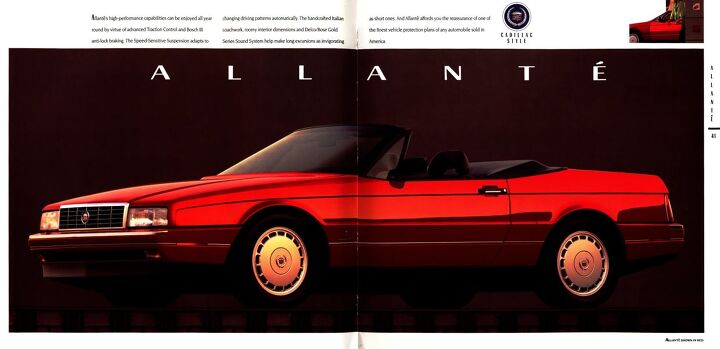
With bright spots at Seville and Eldorado, the rest of the brand’s aging lineup meant sales were a wash. Total volume increased minutely to 221,112 in 1992. In 1993 it was time to say hello to a new full-size model, and goodbye to a couple others.
DeVille was rolled out in its square body guise one final time in 1993, which would be the last time there were both coupe and sedan options. The front-drive Fleetwood was eliminated from the lineup as there was a new usage for the name: An all-new B-body Fleetwood debuted for 1993. It was enormous, and available in upmarket Brougham trim (often selected).
SeVille and Eldorado received Northstar power in their upper trims in 1993, while base models were still powered by the 4.9 V8. Sixty Special and Allanté would both see their final outing in 1993, the latter oddly receiving a Northstar V8 for a singular year after it persisted with the mid-eighties 4.5 V8 since its inception.
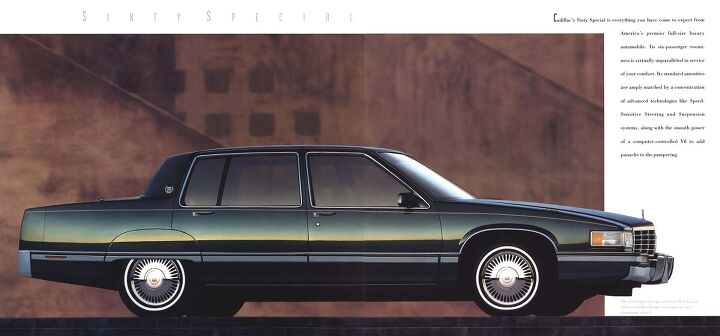
Unsurprisingly, DeVille sales fell a bit in its final year as an aged C-body, to 130,674. Only 4,711 buyers selected the Coupe DeVille, but the sedan managed a very respectable 125,963 sales. The DeVille asked $32,990 ($74,968 adj.) in 1993.
The new Fleetwood impressed traditional buyers as an even larger alternative to the Town Car that dominated the market segment since the late Eighties. Its mostly elderly customer base purchased the 225-inch sedan 31,773 times in 1993, more than doubling the sales of the 1992 Brougham. A base Fleetwood asked $33,990 ($77,241 adj.) while the upmarket Fleetwood Brougham piled on luxury and trim for $37,320 ($84,808 adj.).
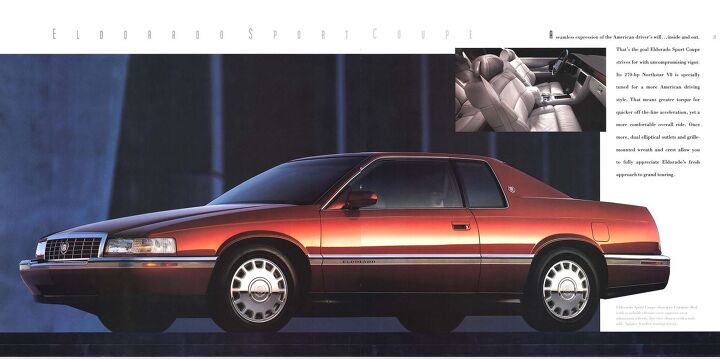
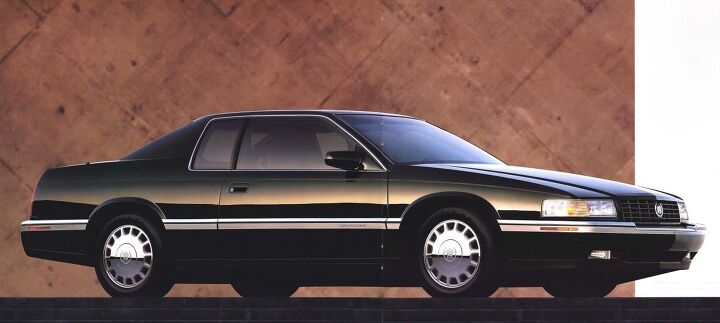
It turned out the availability of the Northstar in 1993 was not a huge draw for STS customers, and Seville’s overall sales fell to 37,239. Eldorado sales were also down, to 24,947 cars. Seville started where Fleetwood left off, at $37,590 ($85,422 adj) and increased to $41,990 ($95,420 adj.) for the STS. Eldorado was notably more expensive in 1993, and asked $34,490 ($78,377 adj.) for a base model.
For its final outing, the Fleetwood Sixty Special was simply “Sixty Special” in marketing. It was the only time the Fleetwood name was not associated with the model in over 50 years, as Fleetwood had migrated to the new B-body and was unavailable. To offer a lower base price leather was now an optional extra, and Sixty Special asked just $34,230 ($77,786 adj.). Sales increased tenfold to 5,286 examples, and proved the only issue with the Sixty Special all along was the price.
Likewise the Allanté was pared down for its final outing. There was only one trim available, the soft top convertible, which asked $61,675 ($139,018 adj.) including the gas guzzler tax of $1,700. With a Northstar V8 and new active dampers, the Allanté had its most successful year ever with 4,670 sales. 85 were for the Canadian market and 30 total went to Europe and Japan.
Sales fell in 1993 to a total of 214,807 cars as Cadillac continued to slip. Each model would have to carry more volume in 1994 as the lineup was slimmed, but there was a bright spot in the marketing: The DeVille was all-new for 1994! We’ll pick up there next time.
[Images: GM]
Become a TTAC insider. the latest news, features, TTAC takes, and everything else that gets to the truth about cars first by subscribing to our newsletter.
