

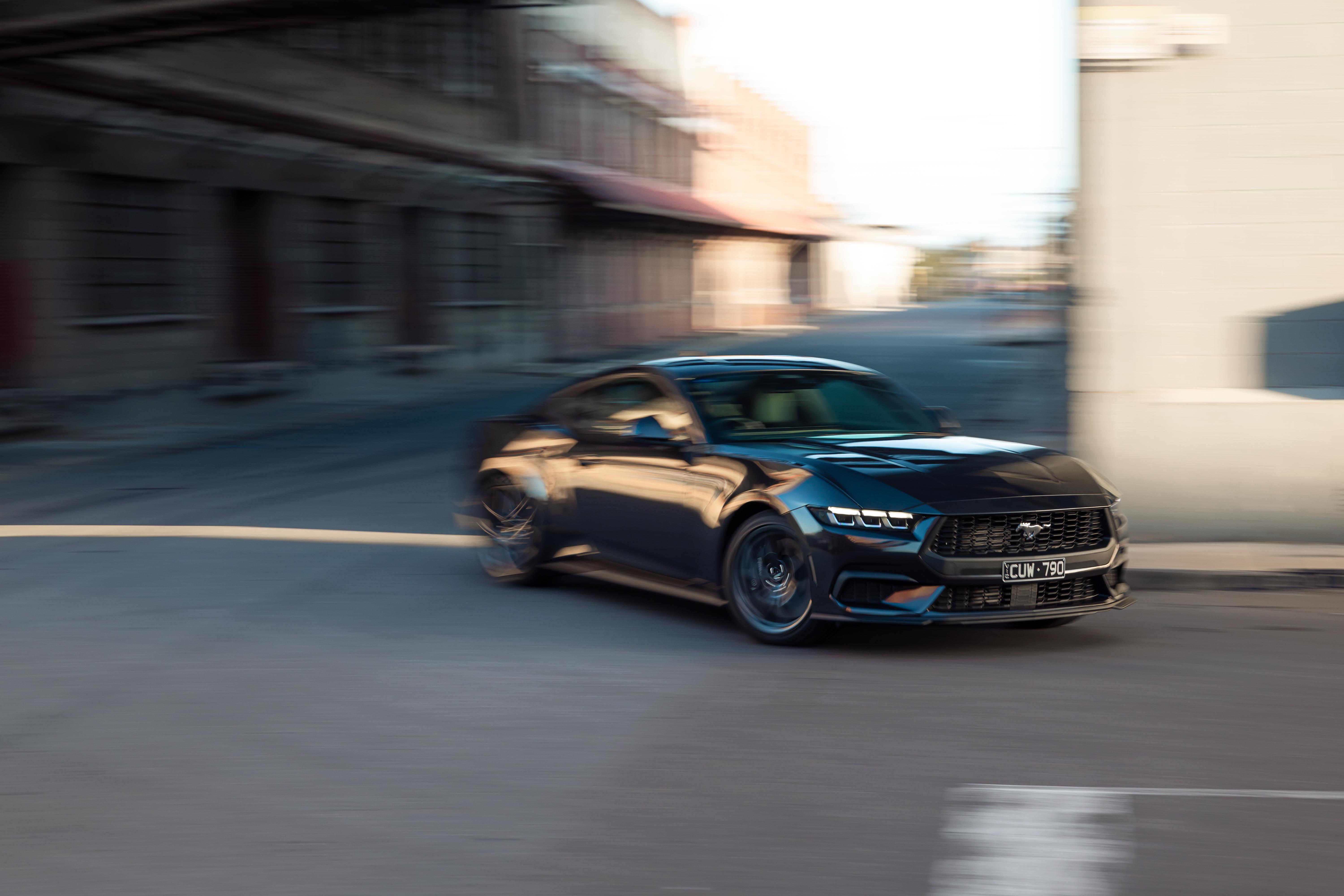
It looks like a Mustang, feels like a Mustang, and goes like a Mustang, but is the EcoBoost really a Mustang?
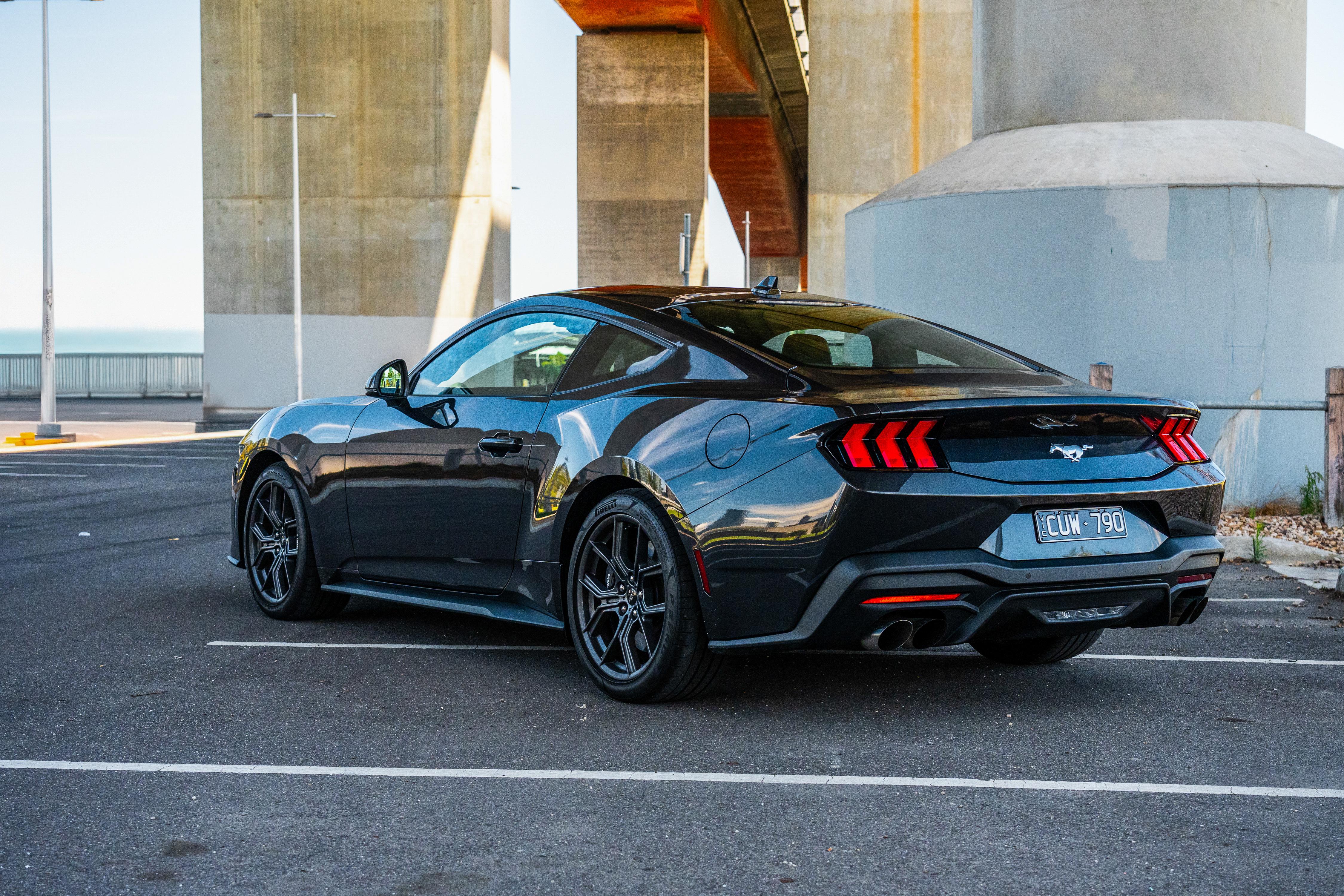
After all, modern takes on Ford’s famous muscle car have become synonymous with eight-cylinder power, and that’s nowhere to be seen in this base model.
Rather, the entry-level EcoBoost is powered by the same turbocharged four-cylinder petrol engine found in the old Focus RS hot hatch. Not very Mustang-y, if you ask me.
Australian buyers tend to agree. The EcoBoost accounts for just 10 per cent of Mustang sales locally – where the Blue Oval’s fabled pony car reclaimed its mantle of the nation’s favourite sports car in 2025, thanks to freer supplies of the seventh-generation S650-series – despite the lure of a lower price tag.
However, it’s a slightly different story in the US – the birthplace of the ‘Stang. Over there, the EcoBoost and GT sell in equal numbers, with young enthusiasts drawn to the prospect of ‘cheap horsepower’ and tuning potential.
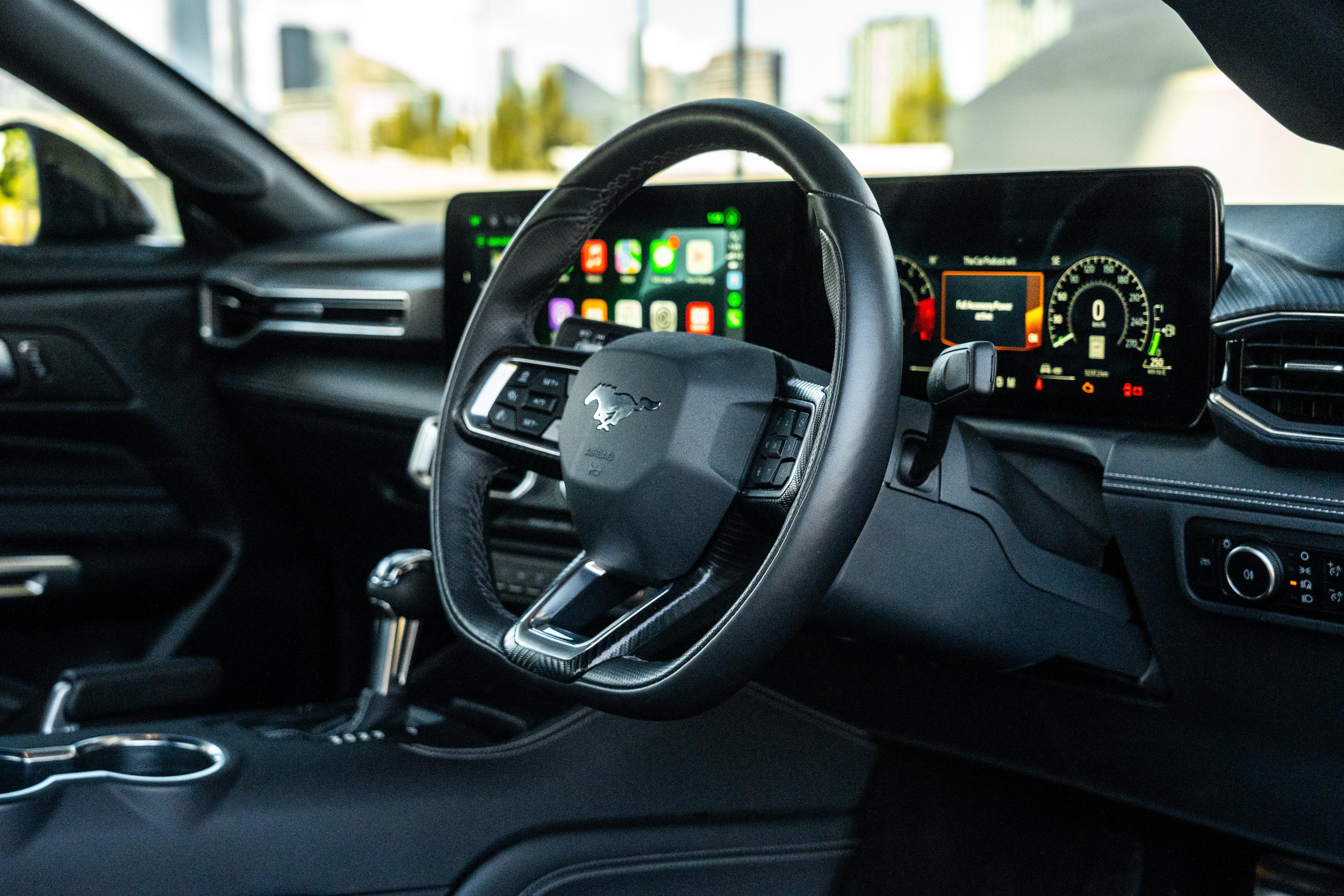
And here I was, thinking there was nothing more blasphemous than a four-pot Mustang.
So, are the Yanks onto something? Or does the EcoBoost deserve to remain a niche player in Australia’s diminishing sports car market?
How much does the Ford Mustang cost?
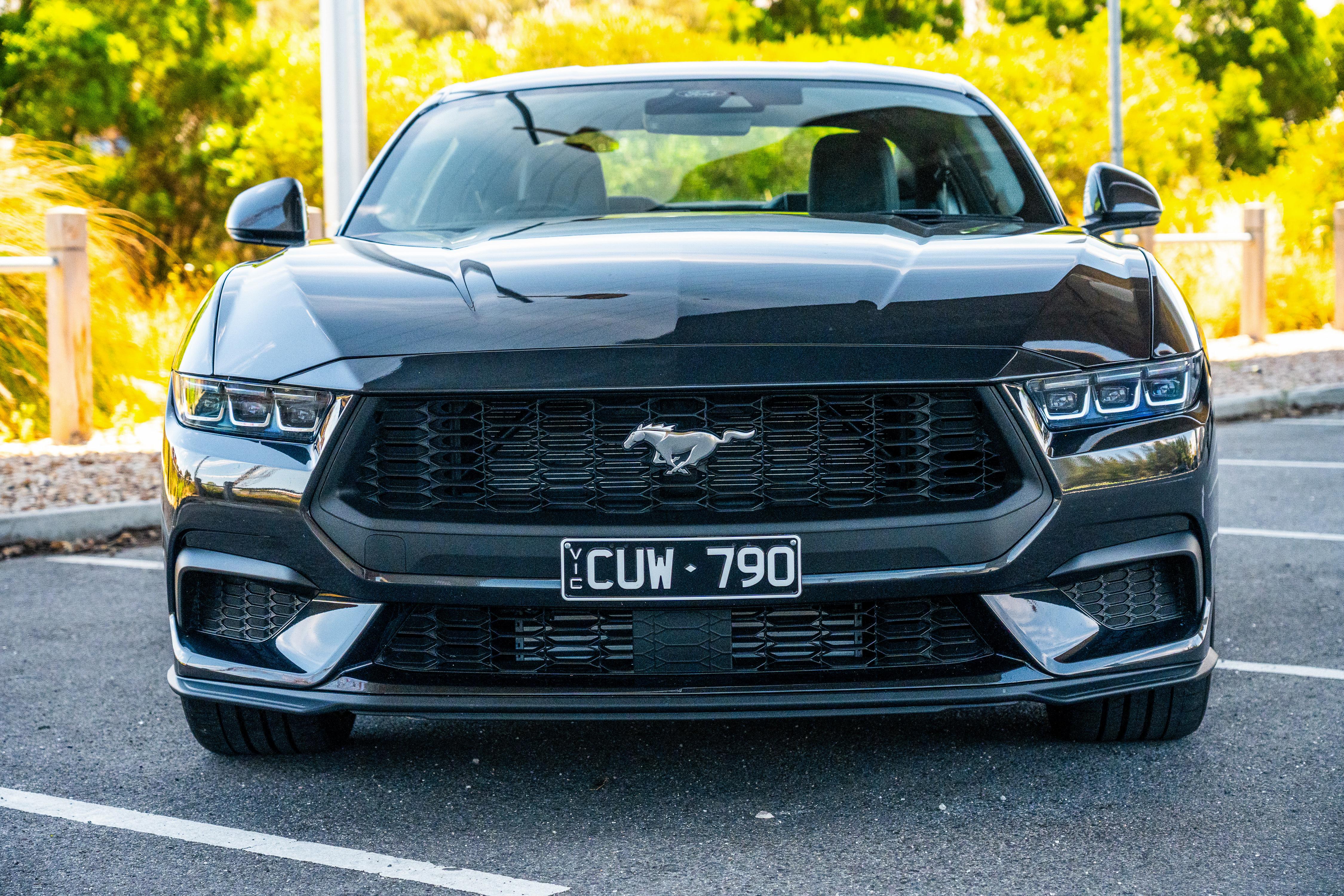
The price of the Ford Mustang has risen by $1000 for the 2026 model year, with the entry-level Mustang EcoBoost now listed at $72,990 before on-road costs.
| Model | Price before on-road costs |
|---|---|
| 2026 Ford Mustang EcoBoost Fastback auto | $72,990 |
| 2026 Ford Mustang GT Fastback manual | $84,990 |
| 2026 Ford Mustang GT Fastback auto | $84,990 |
| 2026 Ford Mustang GT Convertible auto | $93,666 |
The $1000 increase comes after Ford Australia upped the list price of all Mustang variants by $5000 from July 1, 2025, when it pointed the finger squarely at the introduction of the federal government’s New Vehicle Efficiency Standard (NVES) as a key factor.
The price rise comes despite the loss of some minor features, with MY26 EcoBoost vehicles losing their monochromatic mirror and remote starting key – although it can still be started using the FordPass app.
To see how the Ford Mustang lines up against the competition, check out our comparison tool
What is the Ford Mustang like on the inside?
You’d never call the Mustang ‘premium’, but it nails most of the fundamentals and offers more interior features than any alternative at this price point.
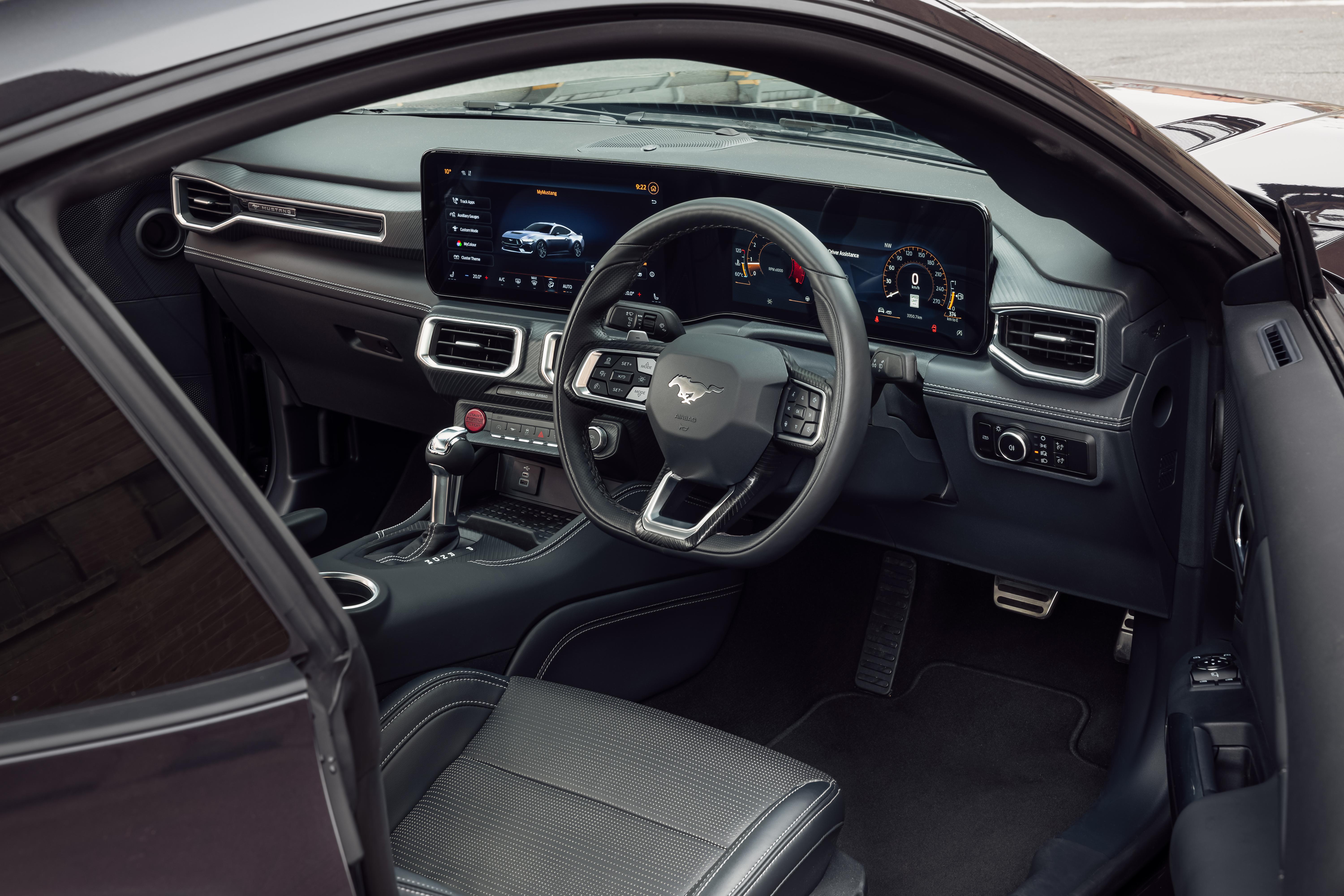
For starters, the Mustang is far easier to hop in and out of than smaller sports cars such as the Nissan Z, Mazda MX-5, Toyota GR86, and Subaru BRZ.
Dimensional differences also make the ‘Stang a less compromised car to sit in. There’s plenty of room for two adults to co-exist up front, and an extra set of seats in the back for small children and excess luggage.
But don’t get me wrong, it’s hardly an SUV (unlike the Mustang Mach-E). You sit low down in the cabin, and a bulging bonnet is always visible from the driver’s seat.
The front seats are among the most comfortable you’ll find in a reasonably priced sports car. Wide and not particularly aggressive by design, the pews are best likened to your favourite leather armchair, if your armchair boasted heating and cooling functions. Now, while that’s great for daily driving and long-distance cruising, it’s not so appropriate for spirited driving – a hobby shared by many Mustang drivers.
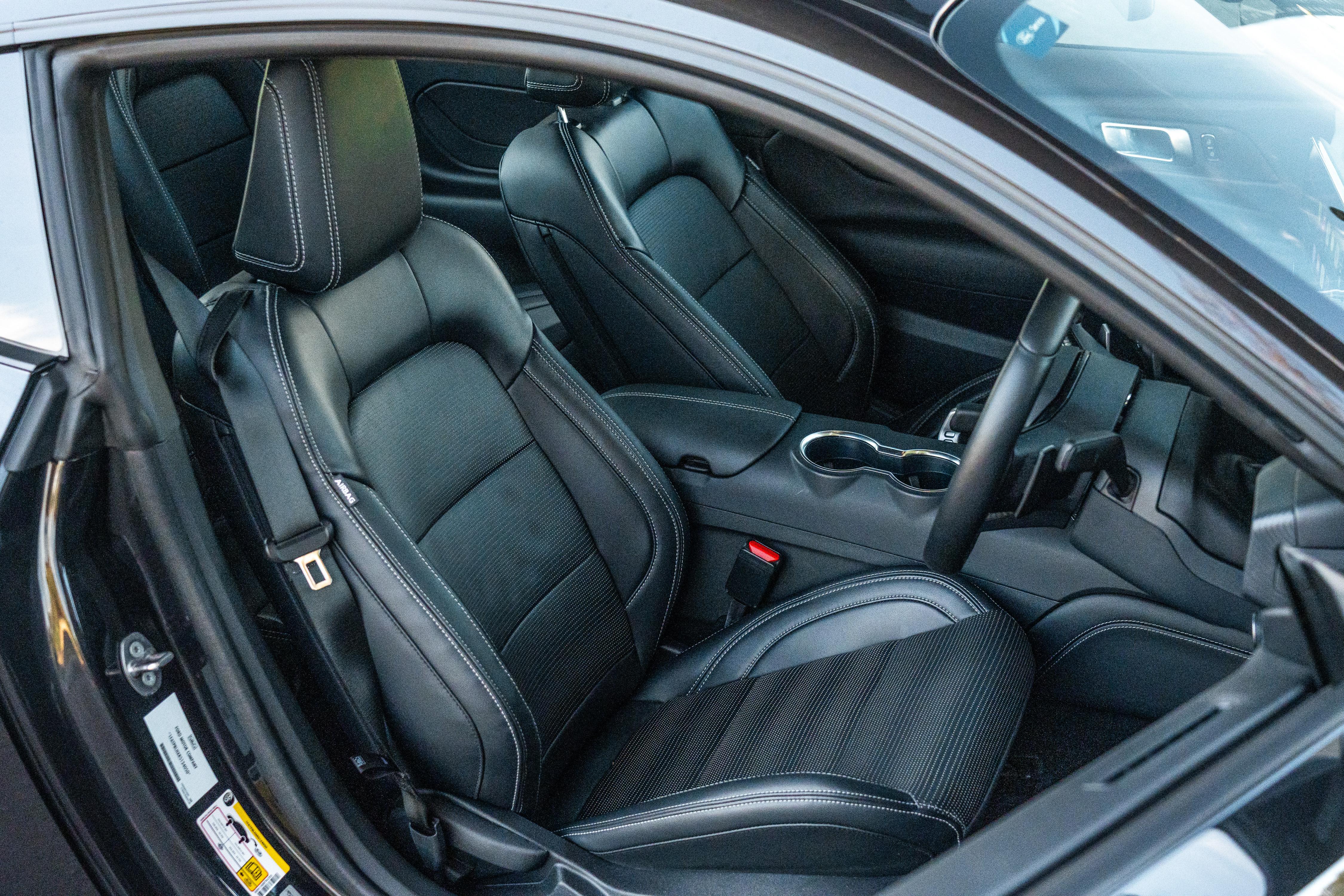
That’s where the optional Recaro sports seats come in… except they’re a GT-only option, and cost $2950.
There’s no complaining about the steering wheel though, which is a chunky leather-trimmed item that feels suitably sporty. The plastic shift paddles, however, do not. Rather, they lack the tactility passionate drivers crave, and sap some of the joy from shifting gears yourself.
Sub-par build quality also detracts from the Mustang experience. Our test car presented with a few poorly fitted interior panels, and that’s not entirely uncommon in our experience.
Still, most high-traffic areas are finished in soft-touch materials and your elbows rest comfortably on sections of padded leatherette. At the end of the day, you’re buying a Ford, not a Ferrari.
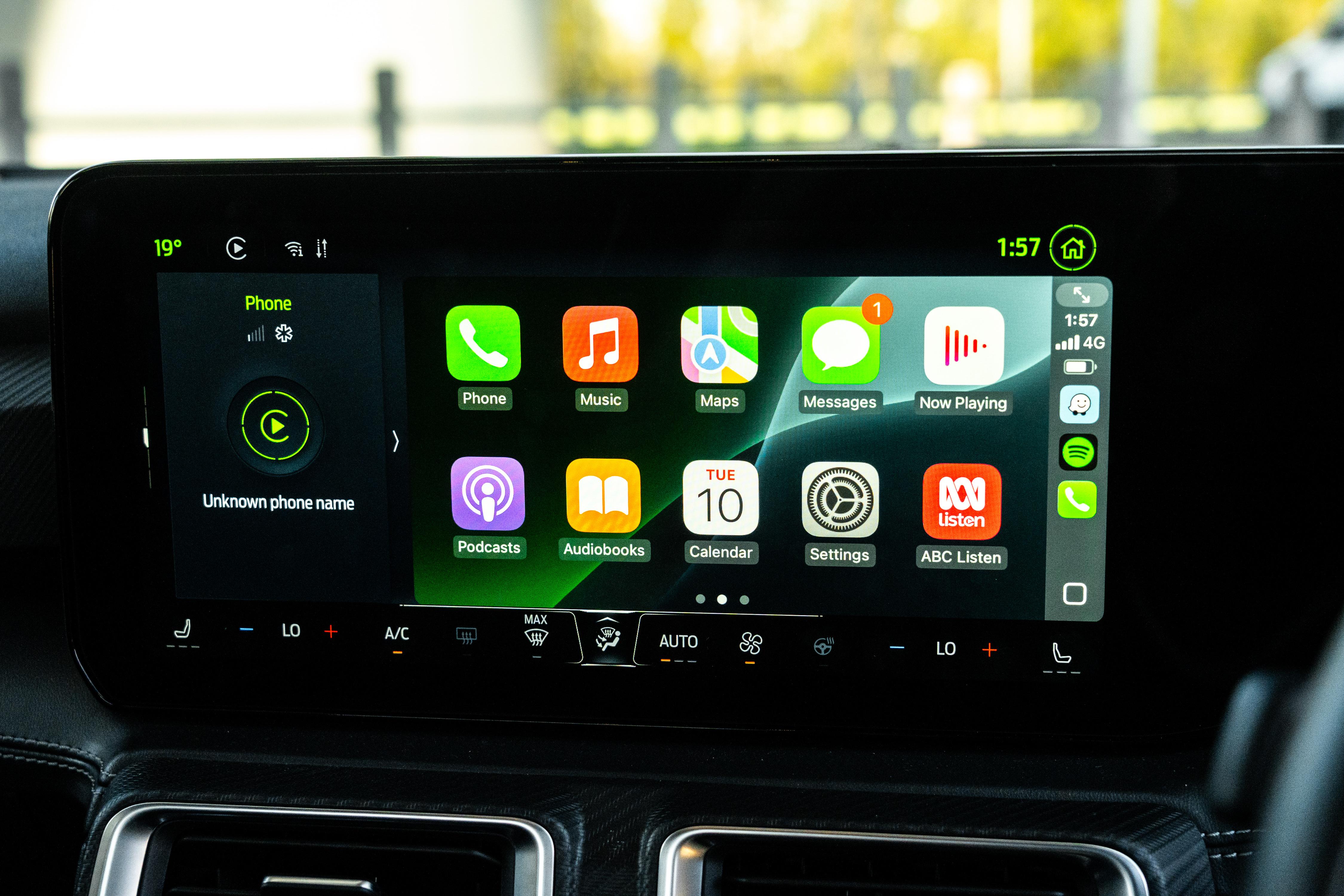
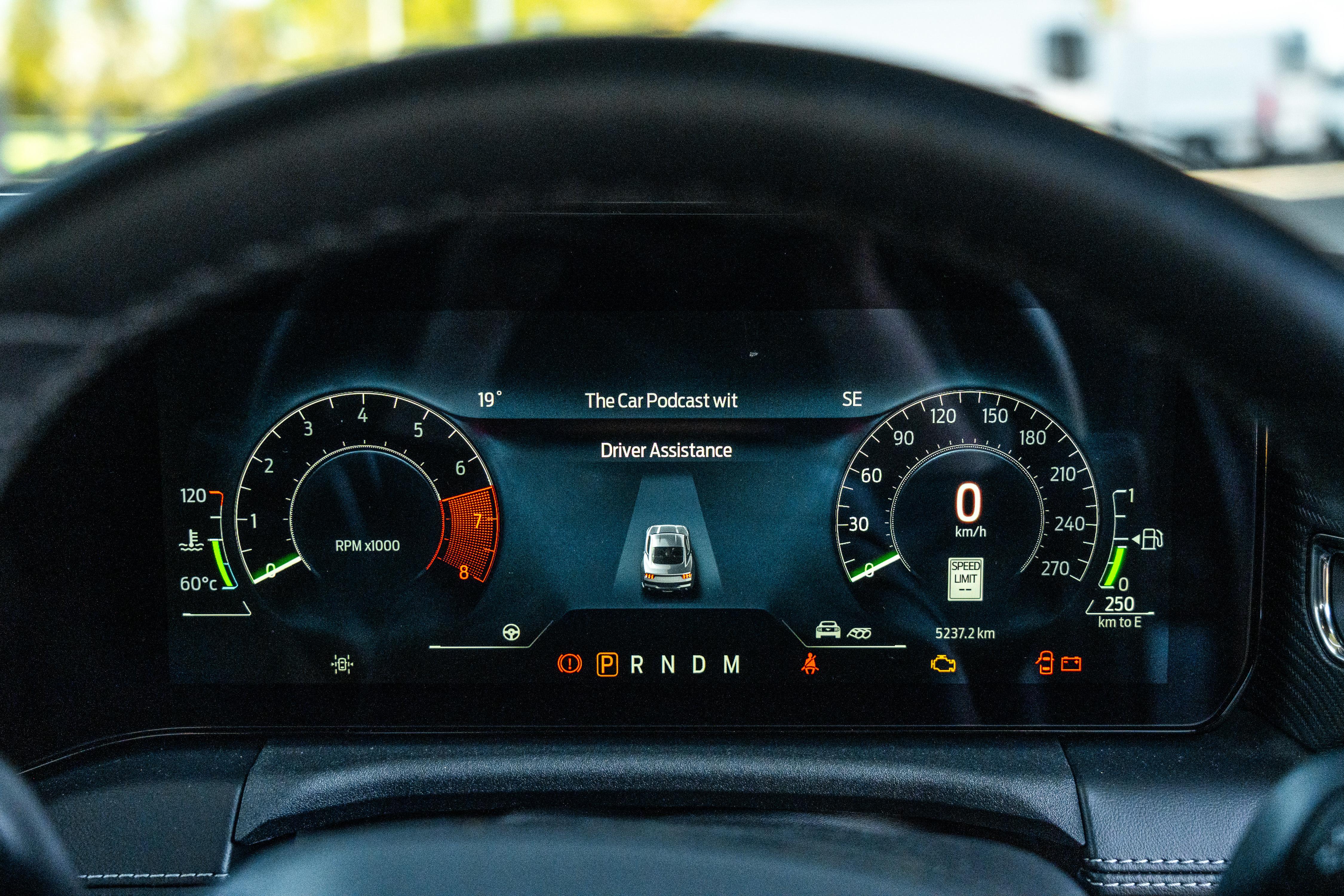
Having said that, Ford’s infotainment technology stacks up against the best. Some Mustang fans bemoan the shift to an entirely digital cockpit for the S650-generation model, but there’s no escaping the convenience and configurability it brings.
The 13.2-inch central multimedia is bright, vibrant and easy to use, with all the functionality we’ve come to love in modern vehicles. That means native navigation, wireless smartphone mirroring, connected services and, in the case of the Mustang, performance driving apps.
The latter can be accessed by hitting a physical ‘Pony’ button, which serves as a shortcut to customisation of the interior lighting, exhaust volume, and drive modes. Additionally, you can bring up a selection of auxiliary gauges that show G-forces, battery voltage, oil pressure, and more.
Shifting across, there’s likewise an impressive degree of configurability built into the 12.4-inch instrument display. The timeless class of physical gauges might’ve been lost, but Mustang owners can now choose from digital versions of the instruments of yesteryear, namely the first-gen dials of the 1960s, retro green-tinted ones from the late 1980s Foxbody model, and the white-face ‘New Edge’ dials from the early 2000s SVT Cobra.
It’s all very cool, in a 2026 kind of way. What’s not so cool is the way in which the colossal panoramic housing sits on the dash – it just looks a bit tacked on.
Regardless, the technology suite in the Mustang is head and shoulders above what you get in any alternatives at this price point, bar the BMW 230i.
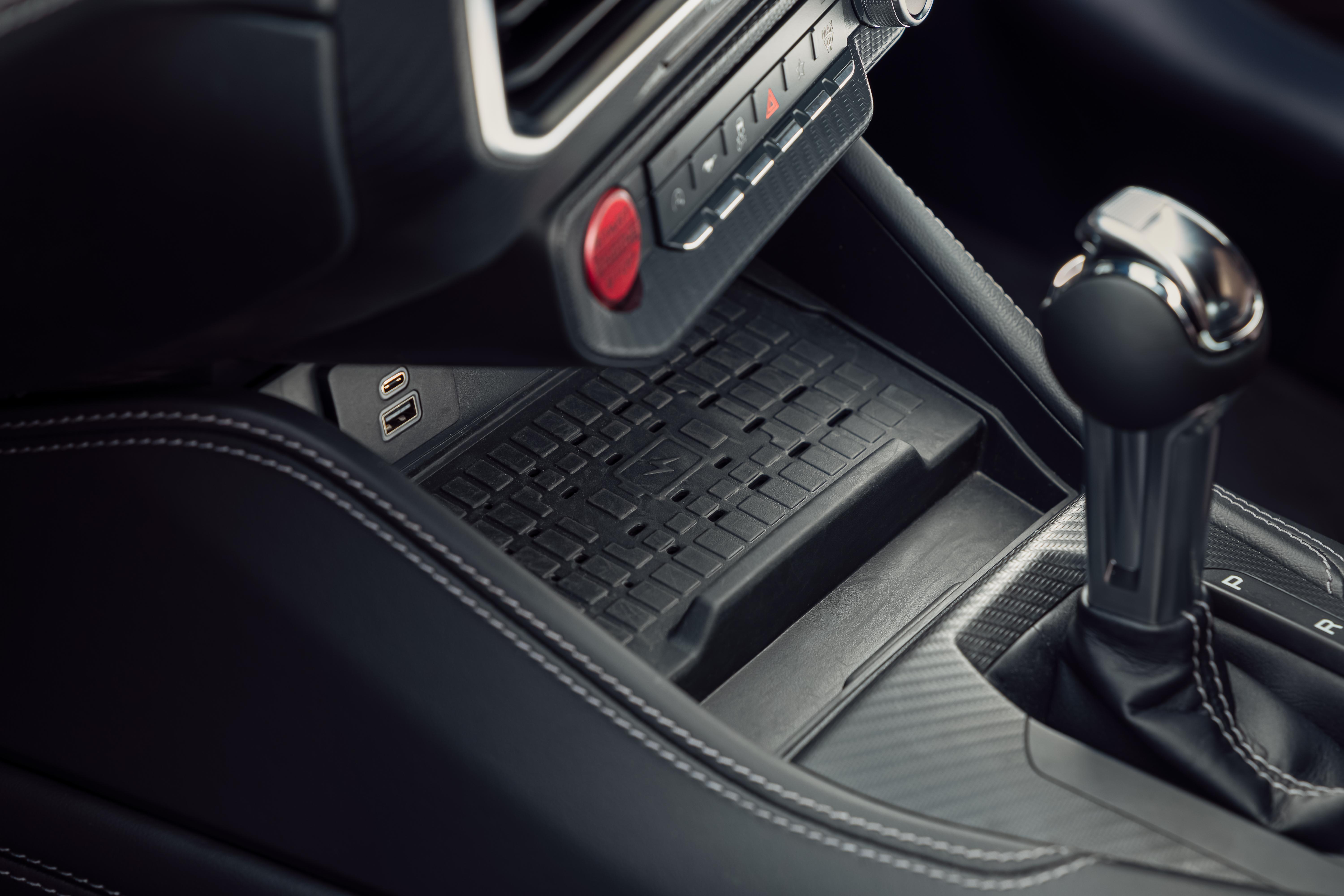
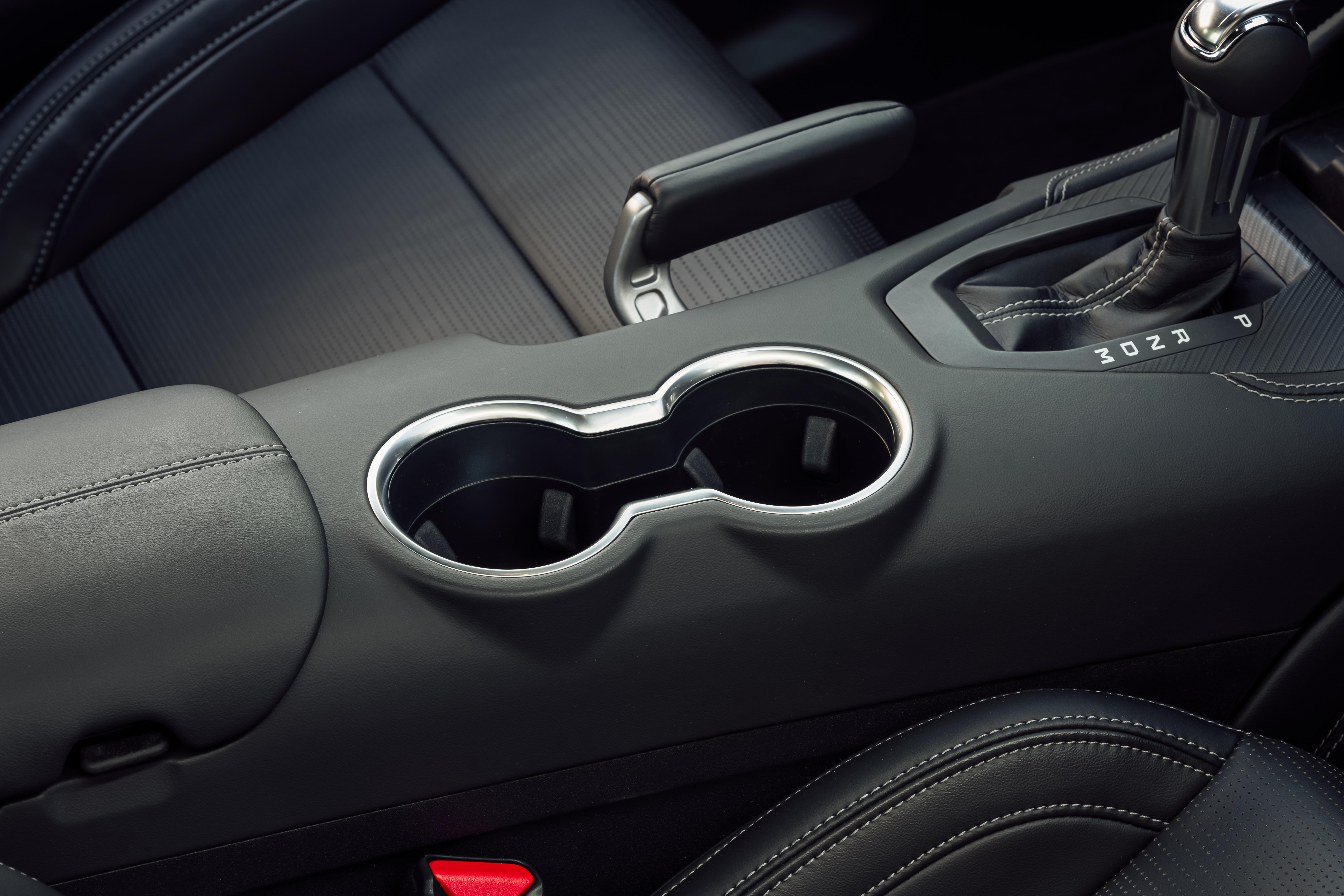
And, as previously alluded to, Ford’s sporty coupe also ranks highly for space per dollar. There’s room for four people (just!), but also storage solutions in the first row for drinks, snacks, sunglasses, and other loose items. A wireless charging pad sits at the base of the centre stack, as well as USB-A and USB-C outlets.
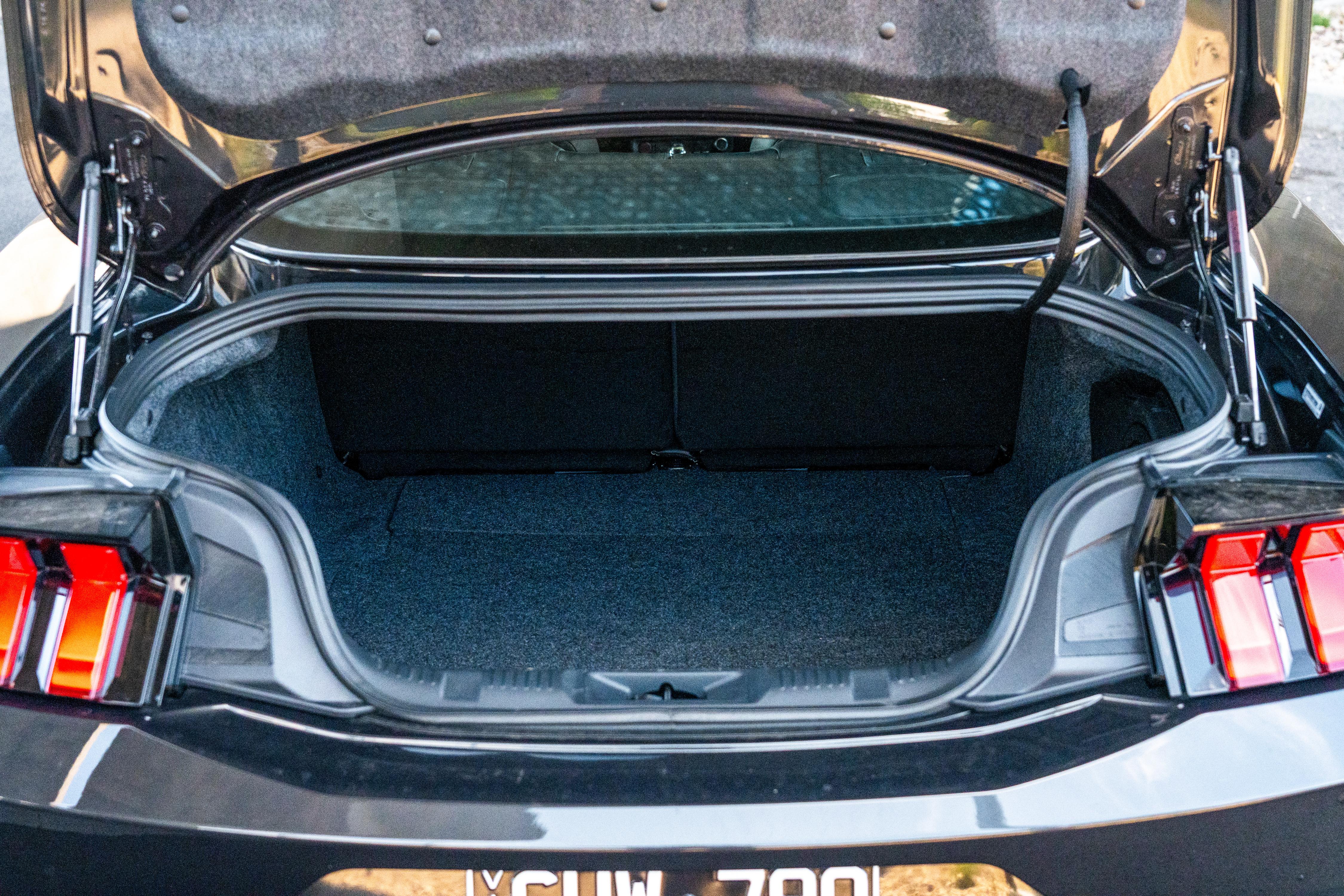
Larger luggage items can be stored in the 376-litre boot, which is exceptionally deep and just about wide enough for two suitcases. Good luck fitting that in the back of a Z or MX-5.
| Dimensions | Ford Mustang EcoBoost Fastback |
|---|---|
| Length | 4811mm |
| Width | 2097mm |
| Height | 1407mm |
| Wheelbase | 2719mm |
| Cargo capacity | 376L |
To see how the Ford Mustang lines up against the competition, check out our comparison tool
What’s under the bonnet?
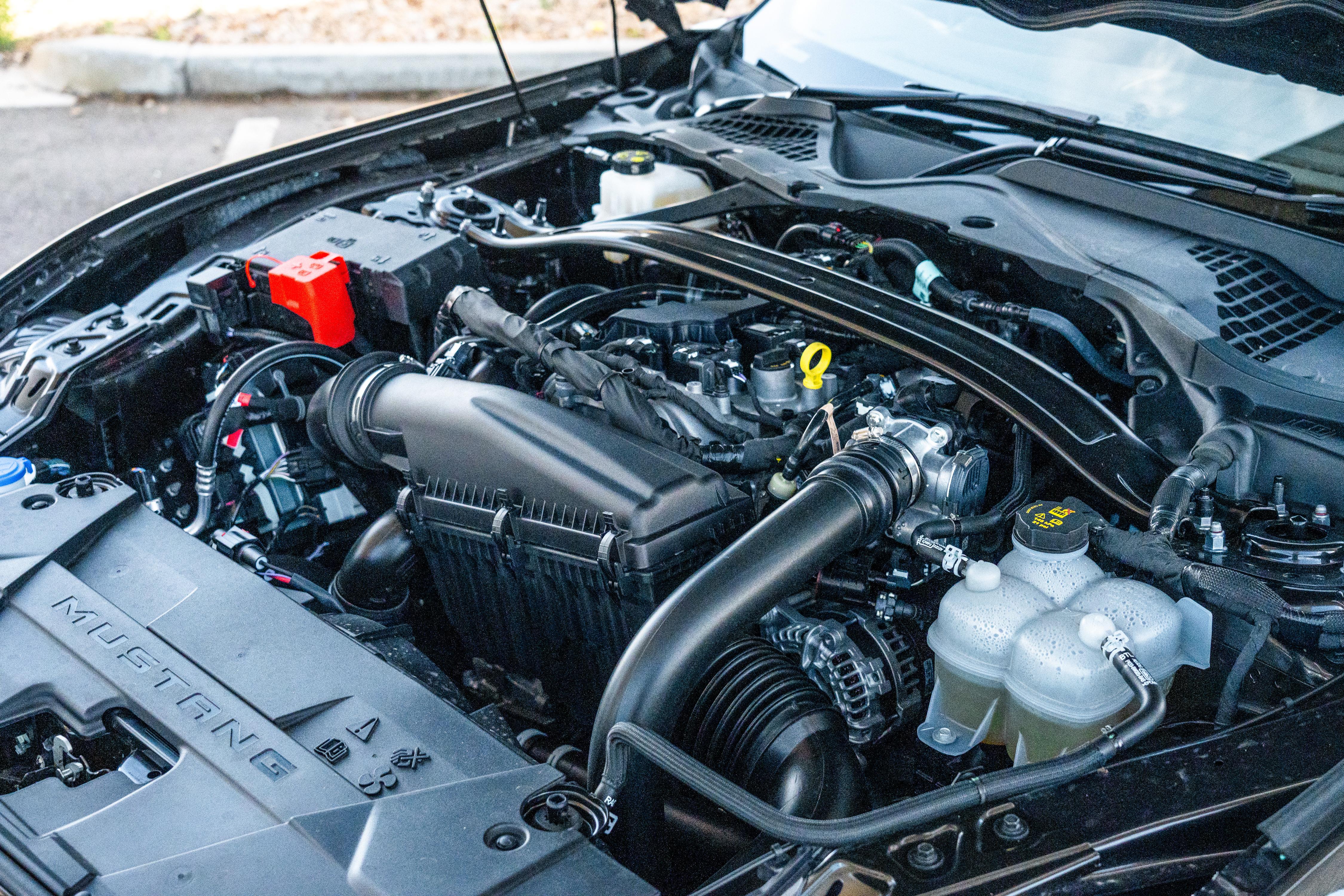
The EcoBoost Fastback uses a turbocharged 2.3-litre four-cylinder petrol engine producing 232kW of power at 5500rpm and 475Nm of torque at 3000rpm. It’s mated exclusively with a 10-speed automatic transmission.
| Specifications | Ford Mustang EcoBoost |
|---|---|
| Engine | 2.3L 4cyl turbo-petrol |
| Power | 232kW |
| Torque | 475Nm |
| Transmission | 10-speed auto |
| Drive type | Rear-wheel drive |
| Weight | 1746kg |
| 0-100km/h (claimed) | 5.6 seconds |
| Fuel economy (claimed) | 9.4L/100km |
| Fuel economy (as tested) | 10.7L/100km |
| Fuel tank capacity | 61L |
| Fuel requirement | 98-octane premium unleaded |
| CO2 emissions | 215g/km |
To see how the Ford Mustang lines up against the competition, check out our comparison tool
How does the Ford Mustang drive?
It doesn’t matter how you spin it, there’s something inherently wrong about a four-cylinder Mustang.
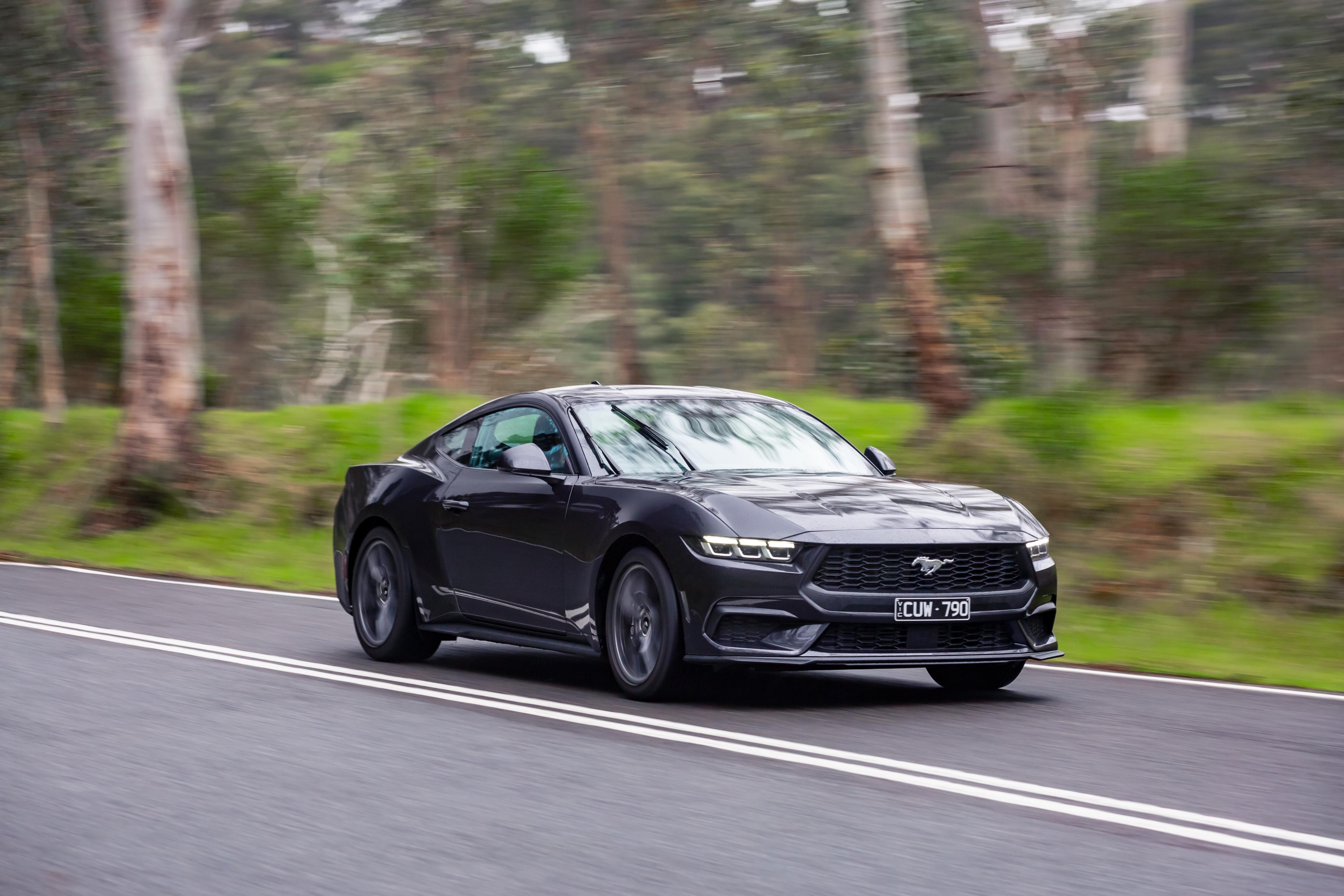
A big, heavy muscle car deserves a theatrical engine that turns every drive into an event, and the 2.3-litre turbo just doesn’t meet that brief.
It grumbles to life in a muffled manner – hardly tone-setting – and remains relatively muted unless you switch the bi-modal exhaust into its angriest setting. Doing so ups the volume, but also increases your awareness of fake engine noise coming from the interior speakers, which creates a weird mishmash of four-pot exhaust and piped-in V8 tones.
As such, the EcoBoost lacks the brutish charm of the Mustang’s lauded 5.0-lite Coyote V8, and that charm represents much of the Mustang’s appeal.
Because dynamically, the Mustang isn’t as resolved as other modern sports cars. Weighing in at 1746kg, this EcoBoost is a bit of a porker, and that shows in how it takes corners. The front-end is lighter than that of the GT but it can still be slow to react to steering inputs, while the steering itself varies in weight (depending on settings) but rarely truly satisfies.
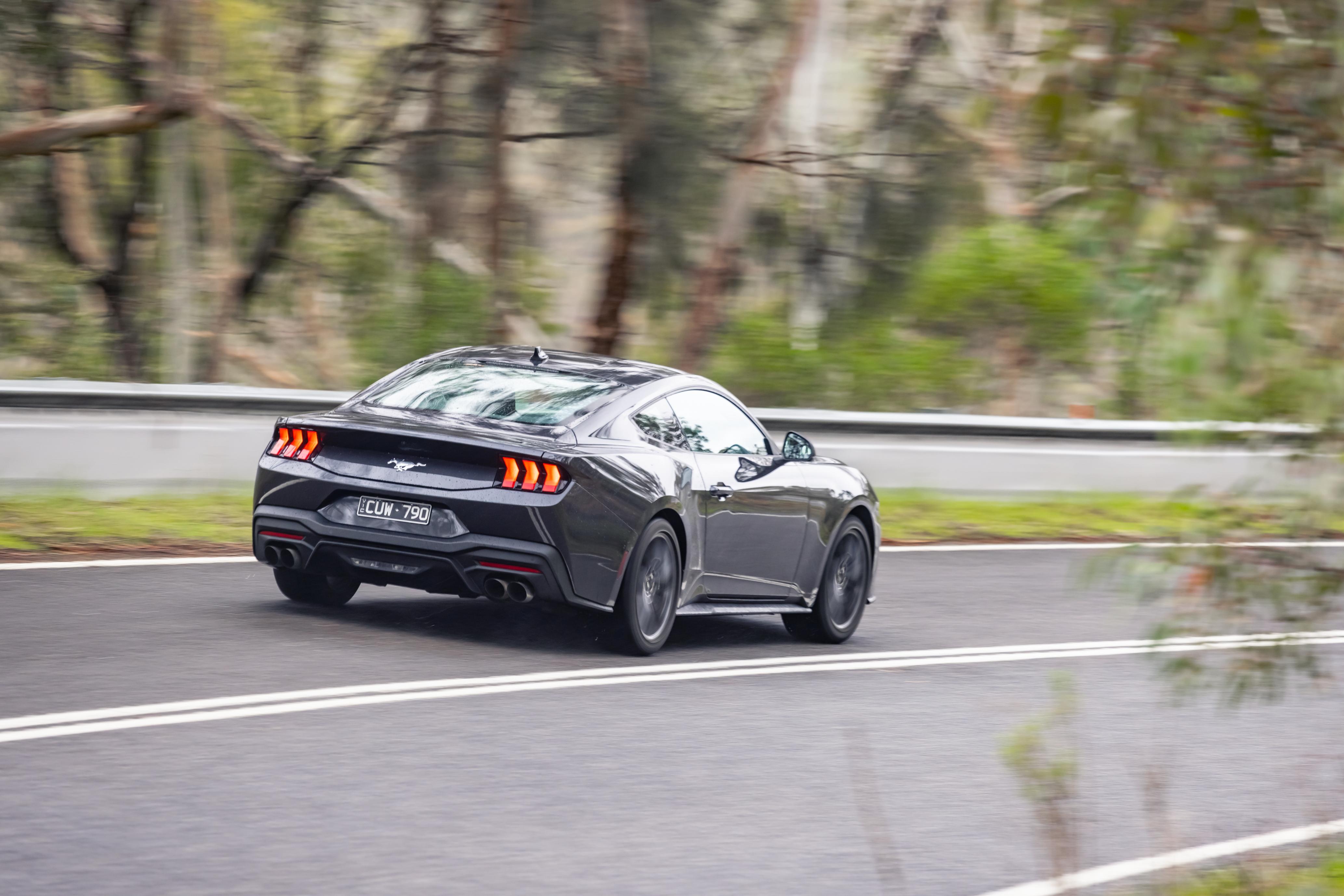
The width of the Mustang also poses challenges on tighter sections of country tarmac, and you’ll need a fair bit of room to execute a U-turn. That said, the S650 and its closely related S550 predecessor – released as the first global Mustang in 2015 – are lightyears ahead of their predecessors in terms of dynamics and stability.
But if agility is a priority, you’re far better off buying an MX-5 or one of the Toyobaru twins. Even a Z feels tighter, given it’s 113kg lighter and 252mm narrower than the base Mustang.
However, if straight-line speed is more your thing, there’s something to be said for the EcoBoost.
Despite its dearth of cylinders and displacement, the entry-level Mustang still feels genuinely quick from behind the wheel. It’ll spin the rear wheels from a standstill, and pulls strongly to the end of each gear – just like the V8, albeit without the noise.
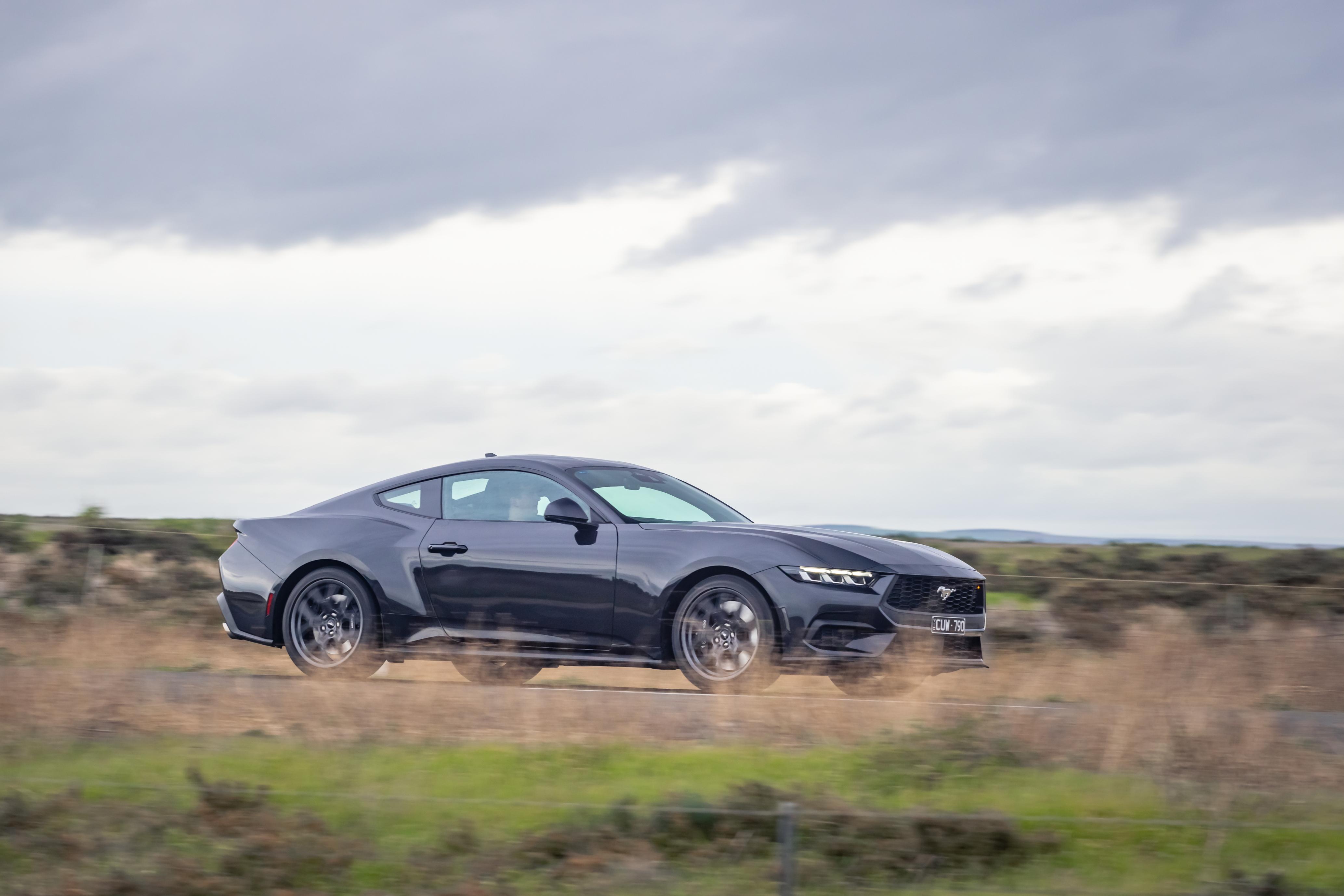
On that note, 10 gears is about two or three too many. Unless you’re driving with consistent vigour on a back road, the Mustang is easily confused and often hunts for an unnecessarily high gear. Bear in mind this is a performance car, not an eco-friendly runabout.
Thankfully, unlike your average econobox, the Mustang offers a proper ‘manual’ mode and steering wheel-mounted paddle shifters. However, switching from auto to manual often requires several downshifts to find the meat of the torque band.
As they say, with every cloud comes a silver lining. In this case, that silver lining is excellent efficiency and highway refinement. All those extra cogs allow the EcoBoost to sit at 1500rpm during extended periods of high-speed cruising, resulting in lower fuel consumption and NVH (noise, vibrations, and harshness). Having said that, the automatic Nissan Z is similar in this regard.
And the EcoBoost’s touring credentials are let down somewhat by its choppy suspension setup. I was taken aback by how even small imperfections cause the chassis to shudder, while potholes ripple through the base of the seat.
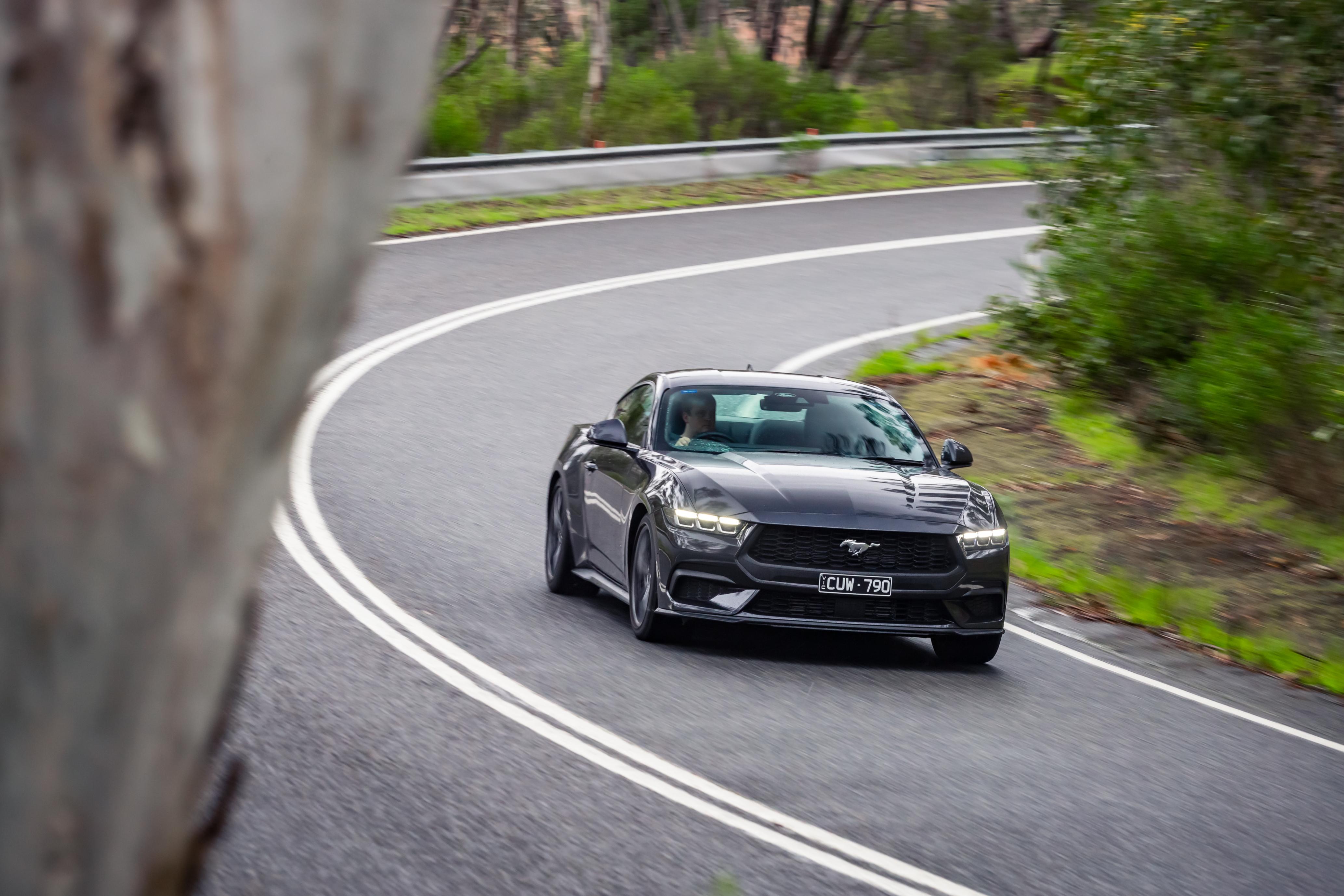
Having driven Mustang models equipped with Ford’s MagneRide adaptive dampers, I can safely say they’re a worthwhile upgrade over the standard items. Again, however, MagneRide is a GT-only option, and costs $2950.
It’s a shame, because just about all other aspects of the EcoBoost driving experience are configurable. You can adjust steering weight, exhaust volume, and traction control parameters through the infotainment system, with the option to create a custom drive mode. Preset drive modes are also available if you can’t be bothered setting up your own.
No amount of fiddling fixes the sensitivity of the throttle pedal in low-speed driving, which can make the EcoBoost feel a bit jerky around town. It isn’t the easiest sports car to park either, due to long overhangs, limited visibility, and a grainy reversing camera.
Therefore, all versions of the Mustang are best suited to galloping the open road.
To see how the Ford Mustang lines up against the competition, check out our comparison tool
What do you get?
Despite sitting at the bottom of the Mustang range, the EcoBoost doesn’t miss out on much standard equipment compared to its V8 siblings.

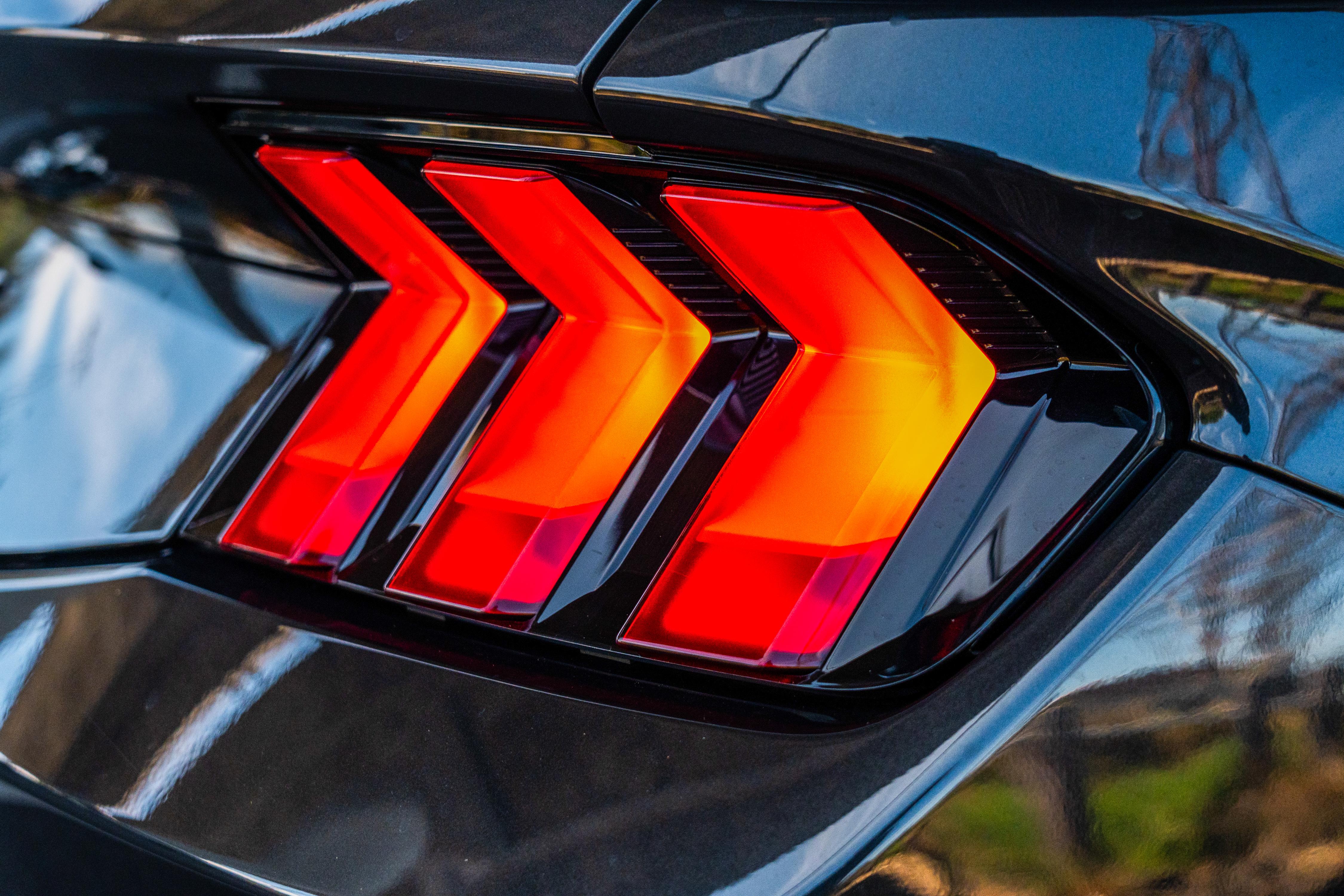
2026 Ford Mustang EcoBoost equipment highlights:
- 19-inch (19-inch x 9.0-inch front and rear) Carbonised Grey alloy wheels
- Brembo six-piston front brake calipers, four-piston rear calipers
- Limited-slip differential
- Electronic park brake with Drift Brake
- Track Apps
- Quad-tip Active Valve Performance Exhaust
- Automatic LED headlights
- Automatic high-beam
- Puddle lights with Mustang logo
- Leather-accented upholstery
- Heated and cooled front seats
- Six-way power driver’s seat with power lumbar, manual backrest adjustment
- Six-way power passenger seat with manual backrest adjustment
- Split-fold rear seats
- 12.4-inch digital instrument cluster
- 13.2-inch touchscreen infotainment system
- Wireless Apple CarPlay and Android Auto
- Satellite navigation
- Wireless phone charger
- DAB+ digital radio
- FordPass Connect embedded modem
- 12-speaker Bang & Olufsen sound system
- Leather-wrapped steering wheel
- Tilt and telescopic steering adjustment
- Leather-wrapped shifter and park brake
- Metal pedals
- Dual-zone climate control
- Electrochromatic rear-view mirror
- Colour-adjustable ambient lighting
- Proximity entry with push-button start
- Illuminated sill plates
- One-touch up/down front windows
Mustang GT adds:
- V8 engine
- 19-inch x 9.5-inch rear alloy wheels
- Pirelli P Zero tyres
- 6-speed manual variant
- Soft-top convertible roof variant
- Bonnet vents
- Static rear bench seat
- Auxiliary engine oil-cooler
To see how the Ford Mustang lines up against the competition, check out our comparison tool
Is the Ford Mustang safe?
The Ford Mustang has not been crash-tested by ANCAP and is therefore ‘unrated’.
Standard safety equipment highlights:
- 7 airbags, incl:
- Front
- Front-side
- Passenger knee
- Curtain (Fastback)
- Head-side (Convertible)
- Autonomous emergency braking
- Pedestrian detection
- Cyclist detection
- Adaptive cruise control
- Stop/go (auto only)
- Blind-spot assist
- Evasive steer assist
- Deployable bonnet
- Lane centring (auto only)
- Lane keep assist
- Post-collision braking
- Reversing camera
- Rear cross-traffic assist
- Rear parking sensors
To see how the Ford Mustang lines up against the competition, check out our comparison tool
How much does the Ford Mustang cost to run?
Ford Australia backs the Mustang with its five-year, unlimited-kilometre warranty, while servicing is required every 12 months or 15,000km – whichever comes first.
| Servicing and Warranty | Ford Mustang EcoBoost |
|---|---|
| Warranty | 5 years, unlimited kilometres |
| Roadside assistance | Up to 7 years |
| Service intervals | 12 months or 15,000km |
| Capped-price servicing | 5-year pre-paid service plan |
| Average annual service cost | $258 |
| Total capped-price service cost | $1290 |
Ford’s roadside assistance program is extended by 12 months after each service, up to a maximum of seven years.
The five-year service pack for the Mustang EcoBoost costs $1290. The Nissan Z, meanwhile, costs a total of $2495 to service over five years, as the first five services are capped at $499 each, and its service intervals are 12 months or 10,000km.
To see how the Ford Mustang lines up against the competition, check out our comparison tool
CarExpert’s Take on the Ford Mustang EcoBoost Fastback
You should definitely buy a Mustang… just not this one.

Because, as much as the EcoBoost is still a decent car, it pales in comparison to the epic and truly iconic GT.
Now, not everyone has $85k to spend on a V8-powered ‘Stang, I get it. But, at $72,990 before on-road costs, the EcoBoost isn’t exactly ‘cheap’ either. For context, the price gap is more like A$21,000 in the US, where the EcoBoost is infinitely more popular.
And, putting price aside, buying the four-pot just about guarantees an ownership experience punctuated by regret and derogatory comments from strangers.
Instead, scrape together a few extra pennies for a Nissan Z, or drop down to one of the relatively cheap and very cheerful Toyota GR86/Subaru BRZ twins. The BMW 230i is also an option if you’re after something less focused.
Better yet, save up that little bit longer to get behind the wheel of a Mustang GT – a loud and proud example of a dying breed.
CarExpert can save you thousands on a new Ford Mustang. Click here to get a great deal.
Click the images for the full gallery
