

The first-ever Audi RS5 Avant will be motivated by a plug-in hybrid drivetrain – but fear not, the Bavarian company hasn’t dropped the ball like Mercedes-AMG, which went with four-cylinder power.
Instead, the new RS5 – which will come as a Sedan as well as the wagon-shaped Avant we’re so familiar with – employs an enhanced version of the old 2.9-litre biturbo petrol V6, which saw service in the preceding RS4 Avant.
Effectively, the new RS5 is the sixth entrant in a series, continuing a line which originally began with RS2 Avant of 1994.
CarExpert can save you thousands on a new car. Click here to get a great deal.
By the time 1999 had rolled around, the RS2 had morphed into the B5-series RS4, a 2.7-litre twin-turbo V6 wagon with a steroidal appearance and 280kW of grunt to match.
From there, the RS4 evolved through three more generations – B7, B8 and B9 – with either naturally aspirated 4.2-litre V8 engines, or latterly the 2.9-litre V6 biturbo.
But, after 27 years in service with that nameplate, and 32 years in total if you chuck the RS2 into the mix, the RS4 is no more – due to Audi’s own convoluted in-house badging policies for ICE versus EV, a baffling system which it has since gone back on.
Therefore, it’s the RS5 which will carry on the legacy of the mid-size, super-fast Audi into the late 2020s and beyond.
Think of it as a direct competitor for BMW’s own M3 Sedan and Touring models, and you’re on the right track.
However, instead of sticking with pure internal combustion, or indeed going down a milder hybrid route, Audi has decided to twist on the same plug-in hybrid (PHEV) status that saw the Mercedes-AMG C63 lose all of its street cred when it switched to hybrid propulsion in 2022.
New powertrain
The good news here is that the 2.9-litre V6 is carried over, and even on its own it makes more power than the old B9 RS4 – that car made 331kW in standard guise and then 346kW for the 250-off, ultra-limited 25 Years special edition that signed the RS4 line off.
Here, Audi says the V6 is “all-new” as it has been subjected to extensive modification, which in turn liberates a new output of 375kW from the petrol engine alone. It makes no more torque than before though, still peaking at a rudely healthy 600Nm.
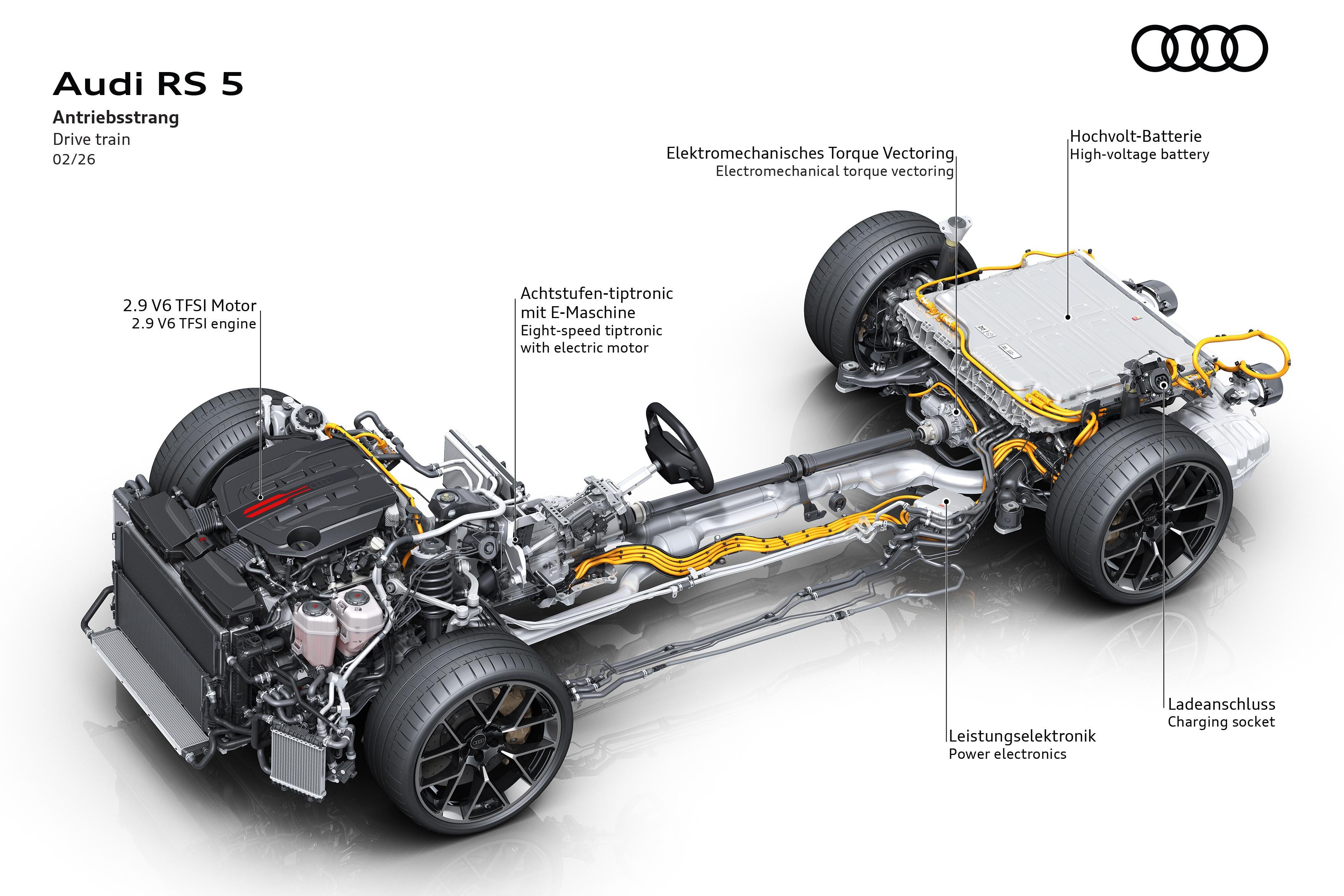
Assisting this is a 130kW/460Nm electric motor, and so while the sum-of-their-parts totals for the RS5 are a ginormous 505kW and 1060Nm, Audi nevertheless pegs the powertrain back to an ever so slightly more reasonable 470kW and 825Nm for reasons of both longevity and controllability.
Those numbers, by the way, mean the new RS5 is more potent than its supposed big brother. Even the spectacular run-out GT variant of the C8-series RS6 Avant only developed 463kW, although it produced marginally more torque from its twin-turbo V8, at 850Nm.
Sadly, there is a price to pay for all this sheer force, and that’s weight. The RS6 may be a physically bigger and hierarchically grander car than the RS5, but the latter is 205-220kg heavier, due to the electrical part of its PHEV setup.
We’re talking 2355kg for the RS5 Sedan, and another 15kg for the desirable Avant.
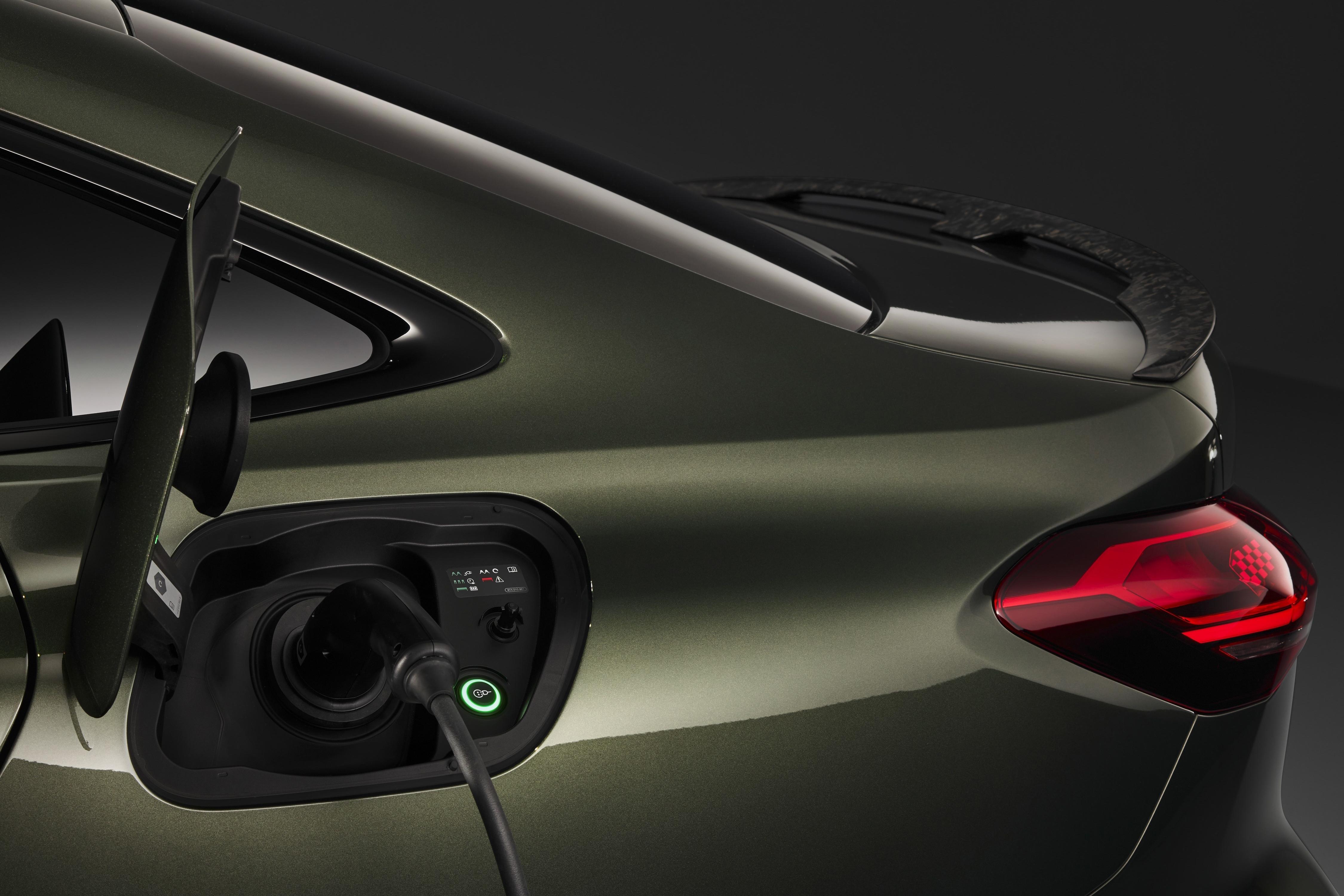
Mind you, a 22kWh (net capacity) lithium-ion battery pack allows more than 80km of all-electric range no matter how you spec the RS5 (81-86km officially).
Charging the battery is by AC only, with no DC capability, and a full top-up of the power cells at the maximum rating of 11kW requires two-and-a-half hours to complete.
Sublime design
It’s clear the RS5 should sound good and go like holy stink. And there’s a lot of technical prowess in its chassis and underpinnings that will hopefully help it corral its significant mass.
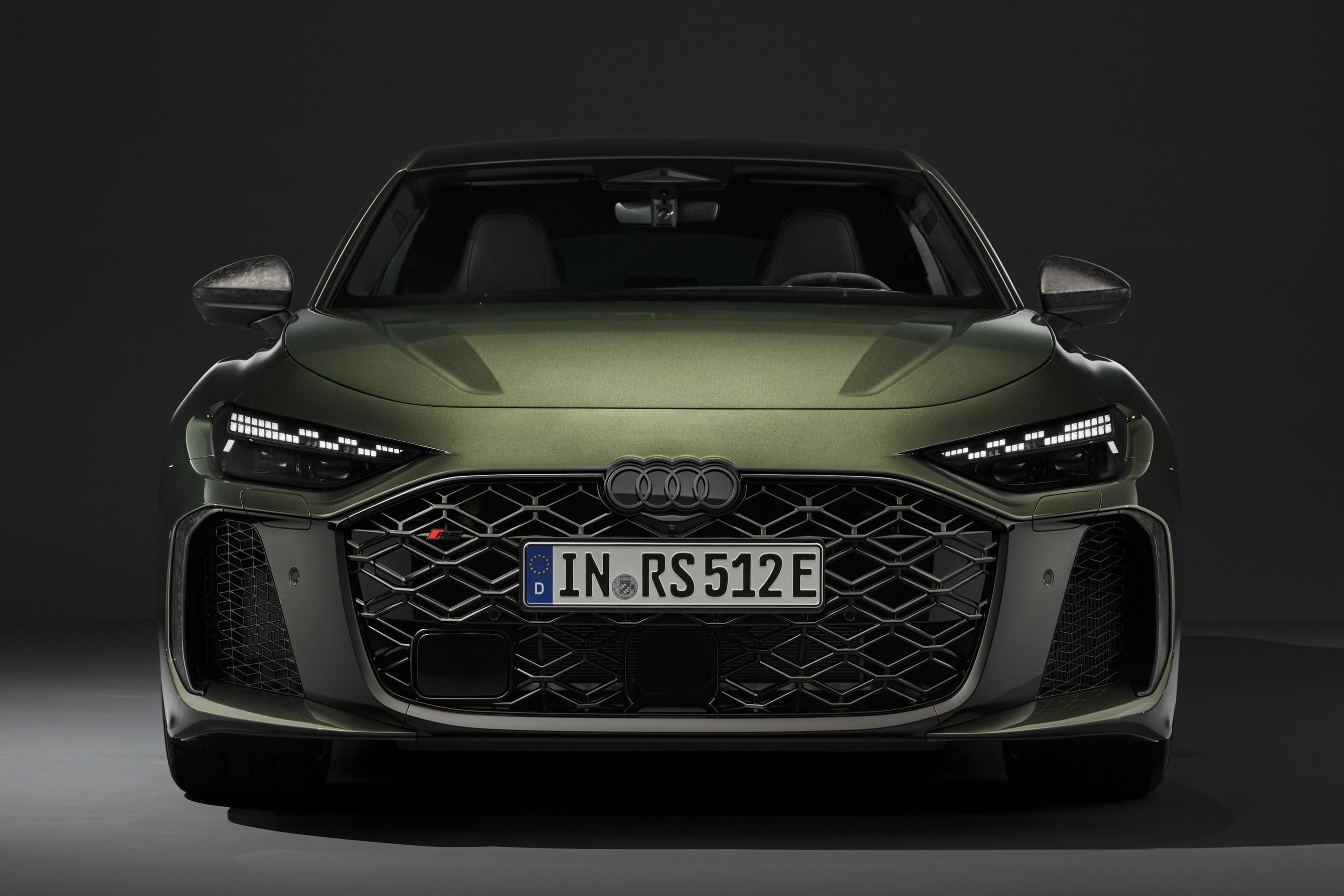
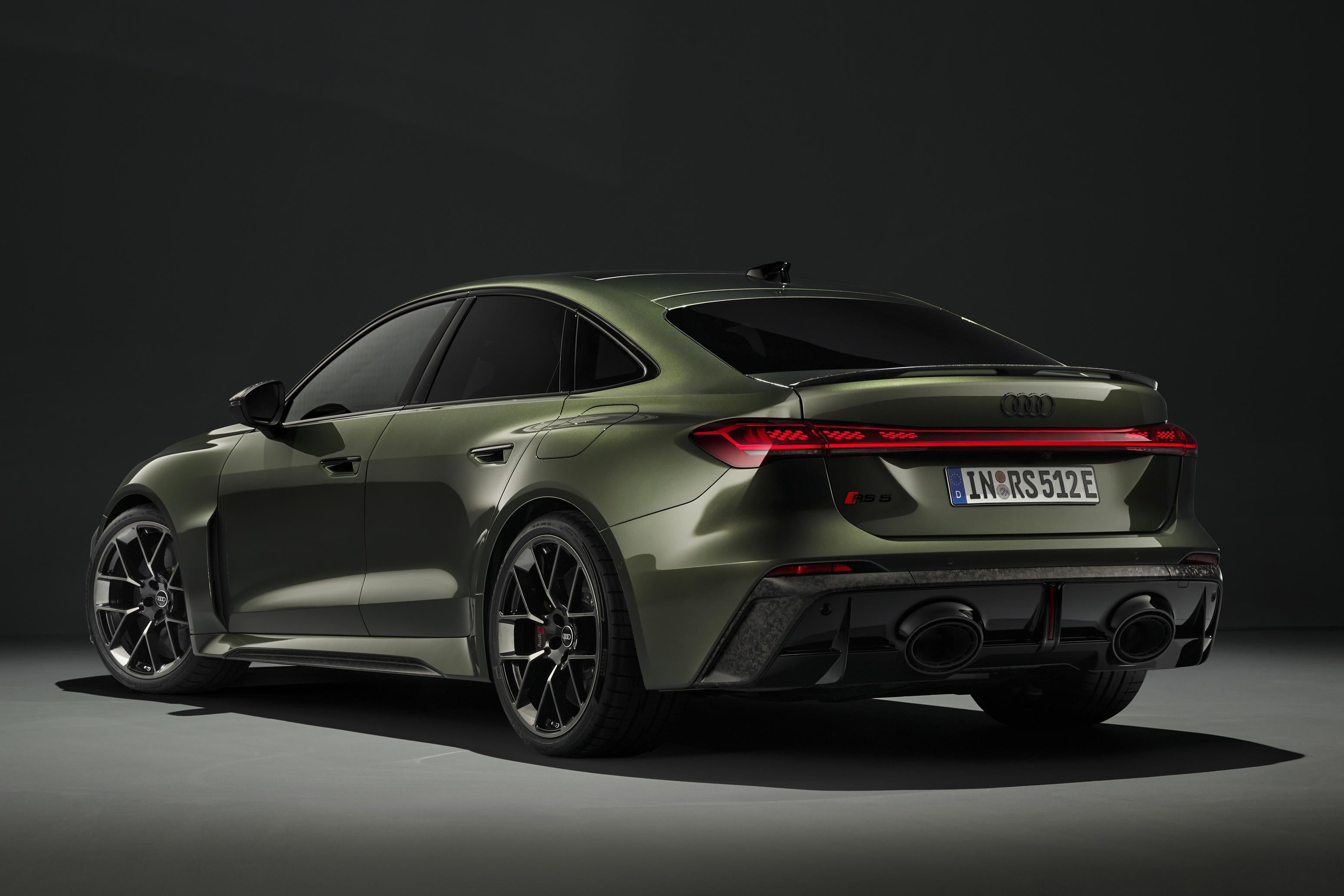
Before we get onto that, a word on looks. CarExpert was one of a handful of media outlets invited to a sneak preview of the RS5 Sedan and Avant in Munich in early February, so we’ve seen the car up close and personal. And it looks utterly phenomenal.
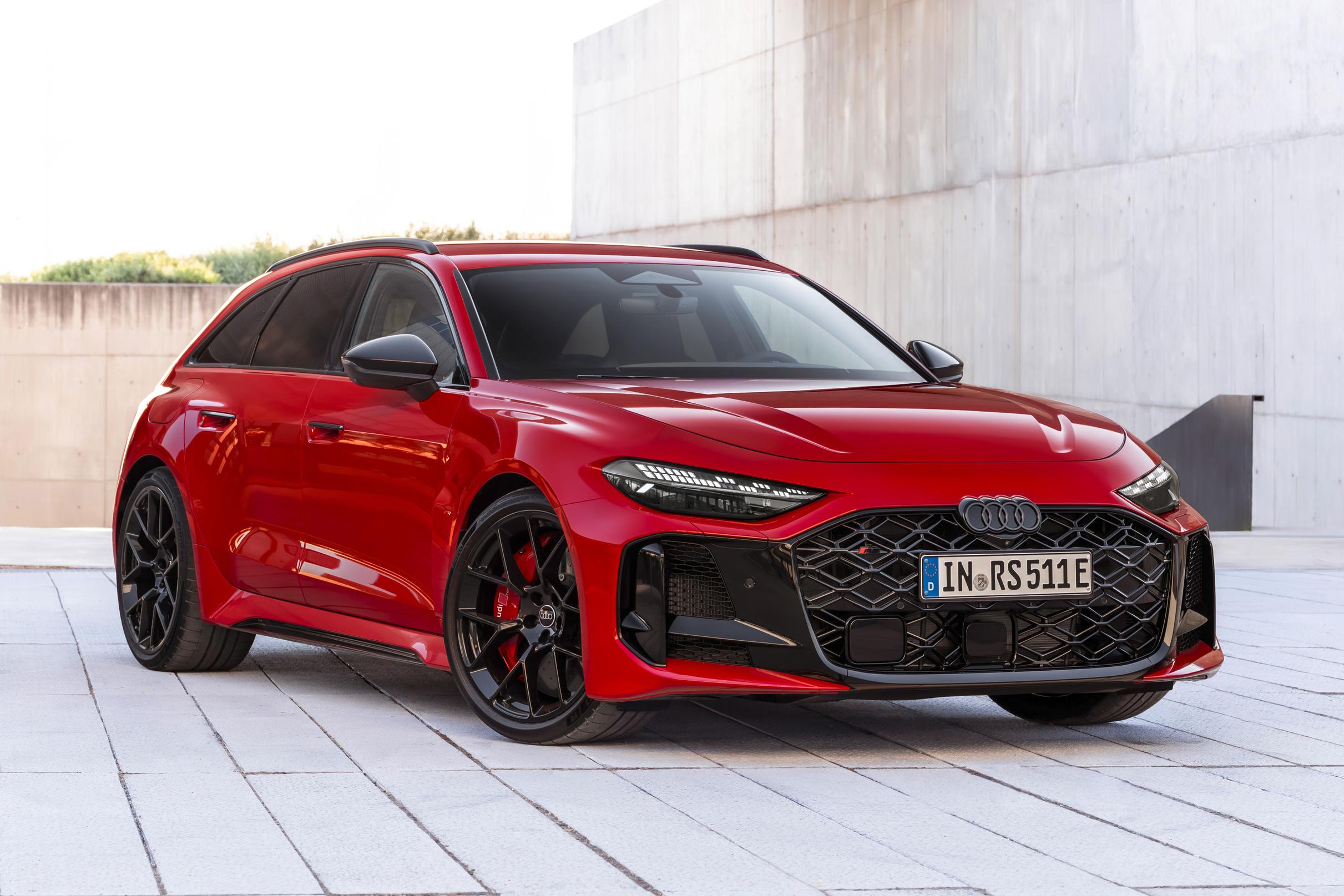
Even by Audi RS standards, the bodywork of the RS5 is incredibly muscular. Its blistered wheel-arches and wider tracks make it 90mm broader across the beam than any regular A5 model in the range.
It’s even 77mm fatter than the old RS4, which itself was no shrinking violet.
Taking its lead from the C8 RS6 GT, the RS5 sports a huge, wide air-intake region at the front that’s all in black, as well as a complementary rear diffuser in the same colour – both tricks which visually broaden the car.
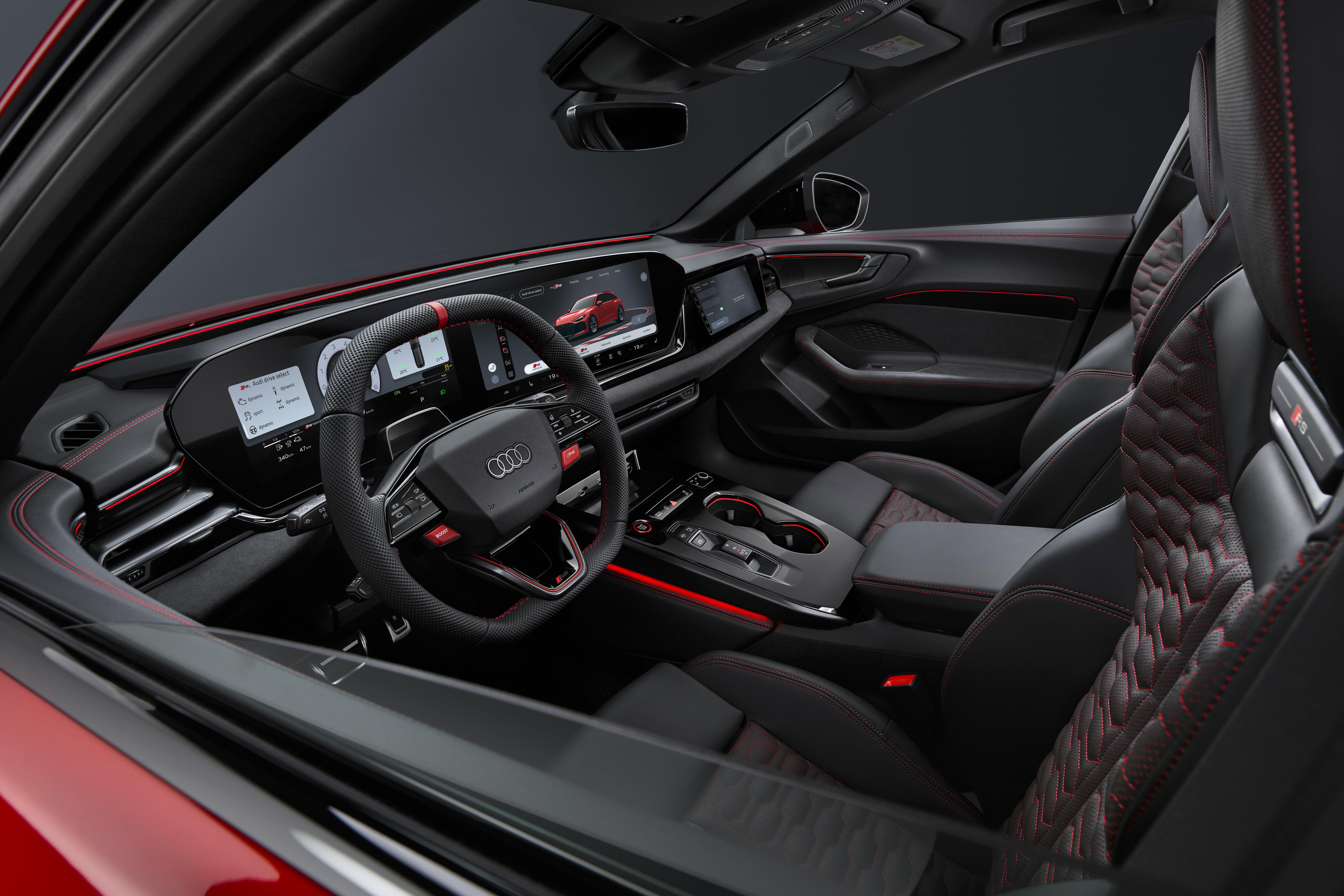
Indeed, so specialised is the bodywork on the RS5 that it only shares four items with the regular A5, these being the roof, the front doors and the tailgate.
The keen-eyed among you will also have spotted that the RS5 has outlet vents at the trailing edge of its front wings – another development taken from the RS6 GT.
And all of its light signatures, including the high-level brake light, have a chequered-flag motif which is bespoke to this RS model.
As standard, the RS5 runs 20-inch alloy wheels with vast steel brakes behind them – 420mm discs up front and 400mm rotors at the rear.
Alternatively, 21-inch rims are offered, as are carbon brakes. And given the sheer heft of the RS5 overall, there is a ‘segment-first’ here in that opting for these upgraded anchors sees carbon discs fitted on the rear axle as well as the front.
On other high-power Audis with this option, like the RS3 for instance, selecting carbon brakes will only transform the front-wheel discs to the material.
Choosing the carbon option on the RS5 will cut 30kg from the kerb weight of the car, which is a small drop in a 2.4-tonne ocean in all reality. But still, many customers will want these fitted.
Bespoke interior
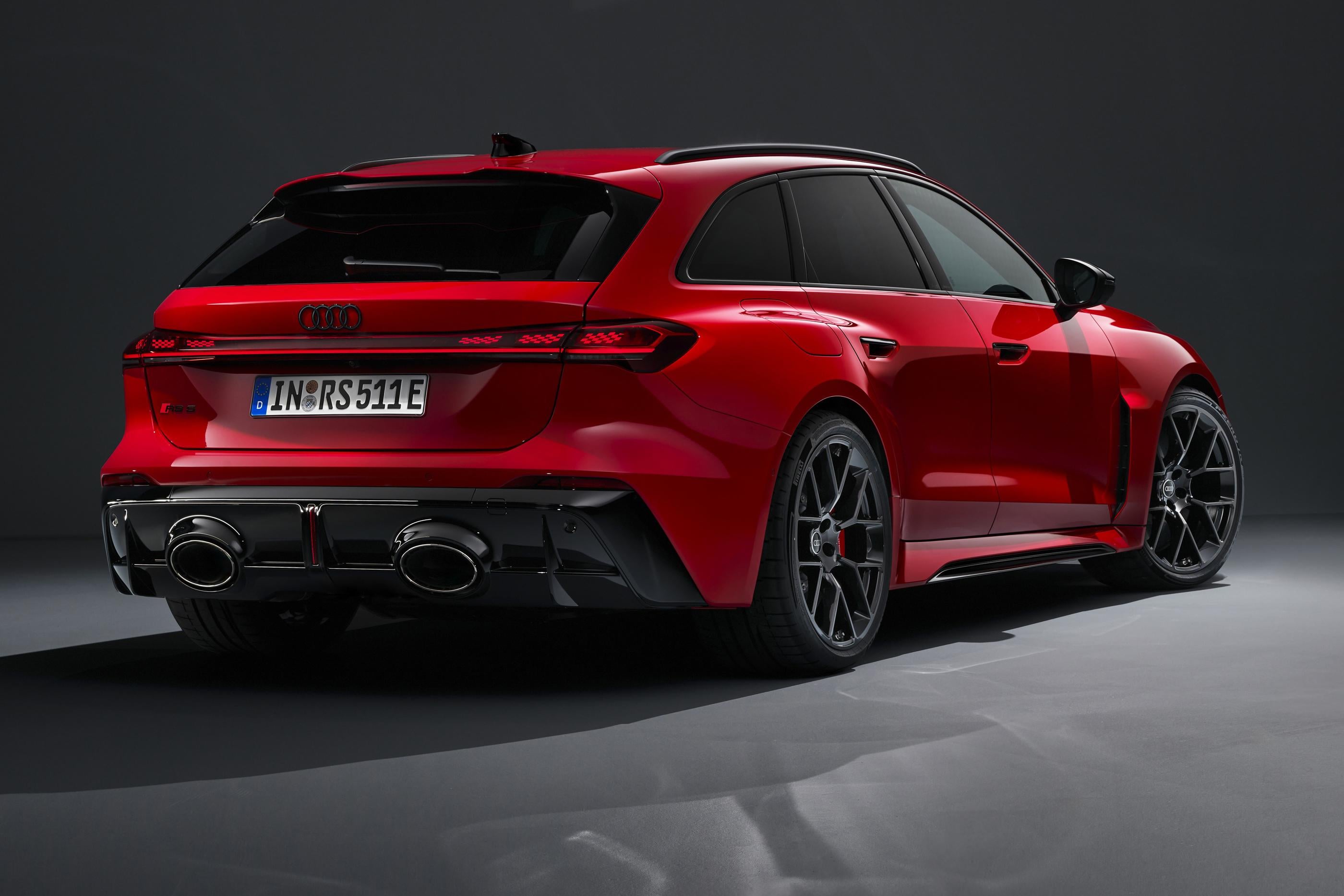
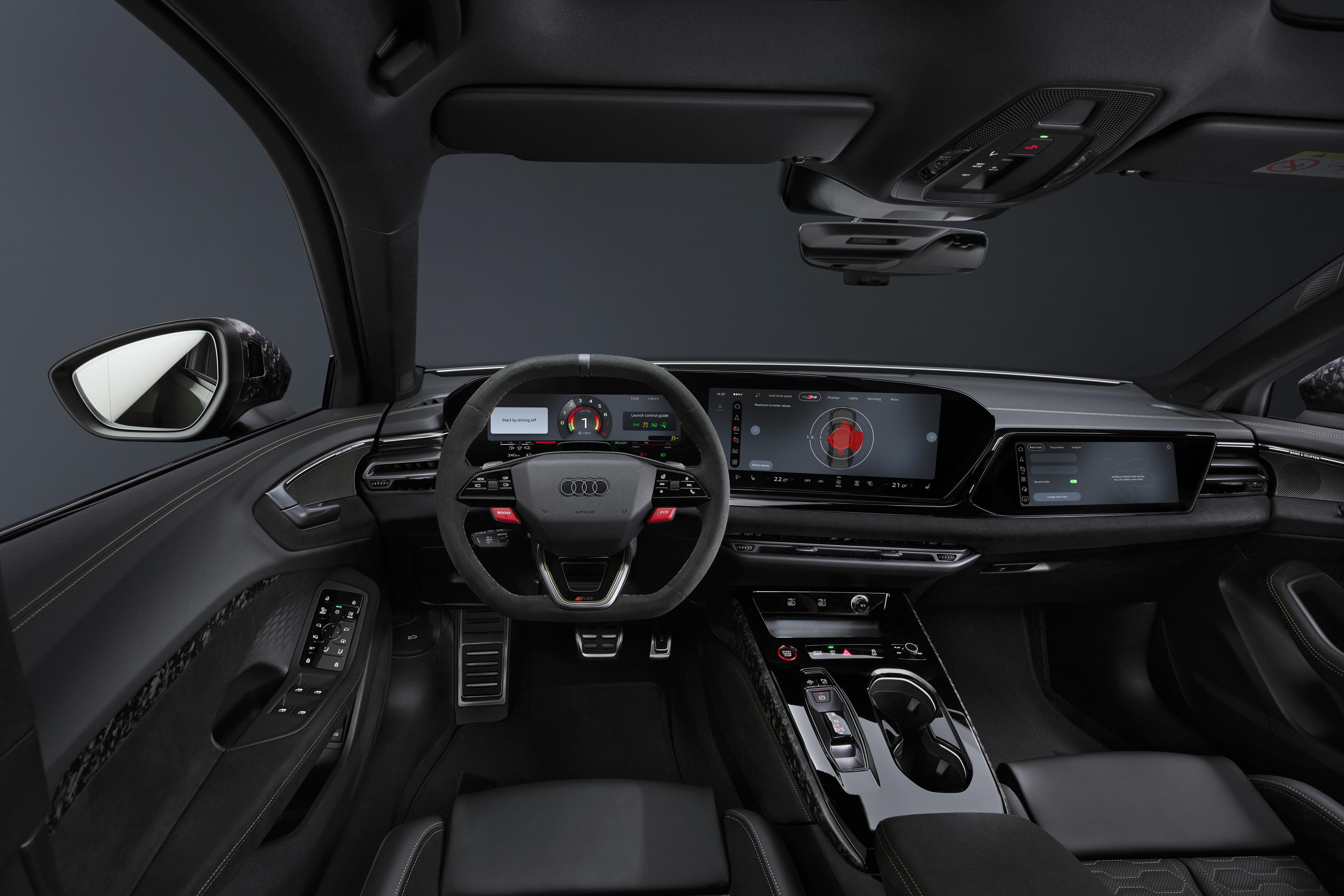
Inside, there are many appealing RS-specific features, like bucket seats, a Dinamica-clad steering wheel with a 12 o’clock marker and various displays, graphics and details which are unique to the RS5.
Yet the main interface is still centred on Audi’s ‘Digital Stage’ arrangement, which majors on touchscreens and TFT panels. Some will like the tech-heavy status this confers, others will perhaps lament the lack of physical buttons and controls in certain places.
There’s another drawback of the PHEV setup of the RS5, too, and that’s impacted practicality. The battery pack is situated under the boot floor, so even the Avant can only lay claim to very modest cargo-capacity figures of 361 litres with all seats in use, and 1302L with the second row folded away.
Beware the Sedan (it’s actually a five-door fastback, but we’ll stick with Audi’s nomenclature here) in this instance. Its numbers are trimmed back to 331 and 1170L, respectively. And, having sat in both cars, we can confidently state that headroom in the rear is noticeably reduced in the Sedan compared to the Avant.
Nevertheless, the RS5 Sedan might interest you because of its relative rarity value from a historical perspective. Aside from the B7 generation of the RS4, which was sold as a saloon, an estate and a convertible, every other RS4 (and indeed the RS2) has only ever been offered by Audi as an Avant.
So this new, sleeker-looking RS5 marks the first time since the late 2000s that you can get any body type other than the wagon for this M3 challenger.
More RS goodies
Moving onto the hardware, channelling such a huge amount of power and torque to all four wheels via Audi’s fabled quattro system is the job of a swift-shifting eight-speed Tiptronic torque-converter auto.
Audi’s claiming another world-first with the rear axle on the RS5. It has Dynamic Torque Control (electro-mechanical vectoring), and it’s the hybrid nature of this which is what Audi reckons is unique in the market.
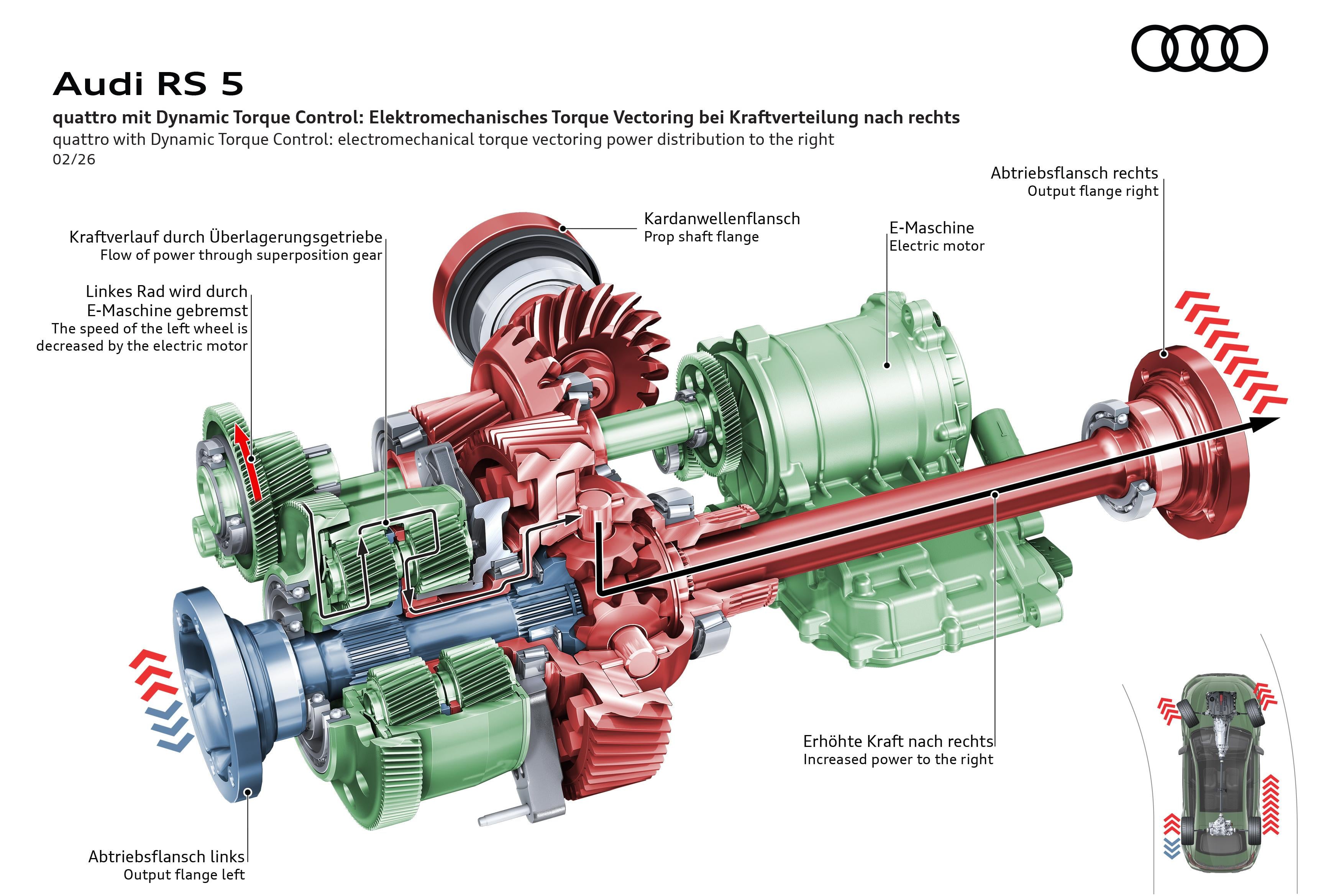
A small 8kW/40Nm permanent-magnet electric motor on the rear diff can apparently shunt up to 2000Nm of torque to wherever it is needed within just 15 milliseconds, making the Audi RS5’s quattro system a state-of-the-art iteration of the long-serving, all-wheel-drive tech.
The company says this will not only limit understeer but could allow for a greater degree of torque to be thrown at the outside rear wheel in certain modes and settings, perhaps hinting at a ‘drift’-mode type scenario for the RS5.
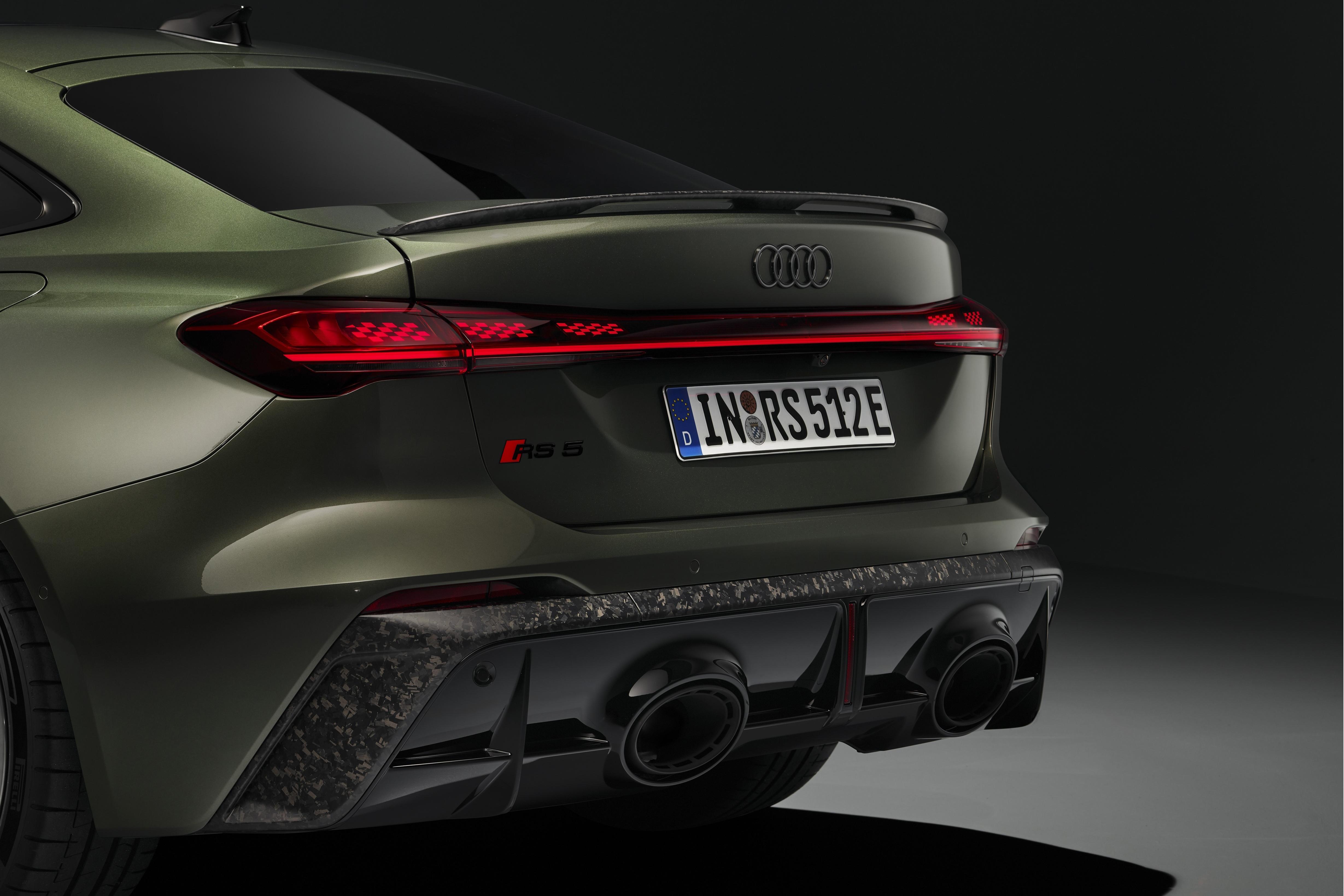
Alongside the monster powertrain, massive brakes and the fancy fast-acting quattro diffs, the RS5 has an Audi RS Sport chassis with twin-valve dampers and a five-link suspension front and rear, a sports exhaust system toting a pair of ginormous oval-shaped outlet to make the most of the V6’s voice, and RS-tuned steering with a rapid and direct 13:1 ratio.
As for price, we’re not sure what the RS5 Sedan and Avant will cost here in Australia as yet, although the old B9 RS4 was priced from around $165,000 when it went off-sale last year.
Given the level of technical complexity in the PHEV RS5’s package, we expect the drive-away cost of the Audi to increase significantly once the final figures are announced.
But we are going to get both body styles in our market, and we’re very much looking forward to trying the RS5 out for size, to see if it can properly contain its bulk and deliver a truly thrilling drive for Audi fans.
Watch this space to find out when we get behind the wheel.
Six of the best: From RS2 to RS5
- 1994: Audi RS2 Avant, 2.2 5cyl turbo, 232kW/410Nm, 0-100km/h 4.8sec, V-max 262km/h, 1595kg
- 1999: B5 Audi RS4 Avant, 2.7 V6 biturbo, 280kW/440Nm, 4.9sec, 250km/h (limited), 1620kg
- 2006: B7 Audi RS4, Sedan/Avant/Cabriolet, 4.2 V8, 309kW/430Nm, 4.8-4.9sec, 250km/h (limited), 1650-1845kg
- 2012: B8 Audi RS4 Avant, 4.2 V8, 331kW/430Nm, 4.7secs, 250km/h (limited, with option to raise to 280km/h), 1795kg
- 2018: B9 Audi RS4 Avant, 2.9 V6 biturbo, 331kW/600Nm, 4.1sec, 250km/h (limited, with option to raise to 280km/h), 1790kg
- 2026: B10 Audi RS5, Sedan/Avant, 2.9 V6 biturbo PHEV, 470kW/825Nm, 3.6sec, 285km/h (limited), 2355-2370kg
