

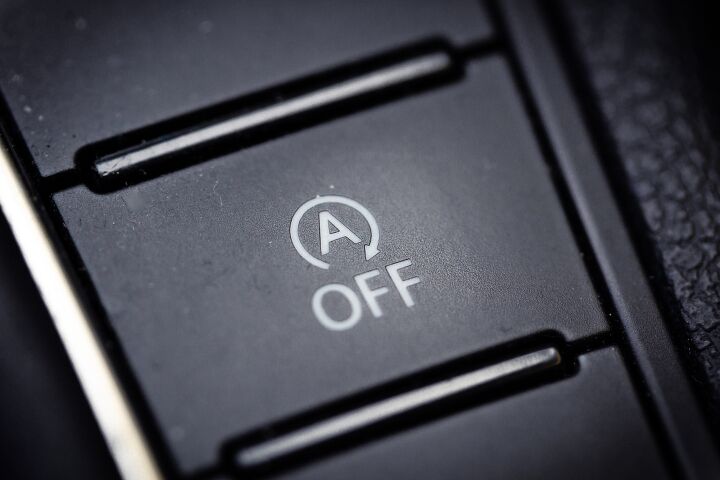
As part of the Trump administration’s changing emissions policy, the Environmental Protection Agency (EPA) has said it would be abandoning support of engine stop-start systems on all vehicles sold within the United States. However, the matter needs some serious clarification due to the resulting coverage.
Many outlets seemed to be under the impression that automatic stop-start was previously being mandated by the government. But the system, which deactivates an engine at idle in an effort to boost emissions and save some fuel, has never been formally required. Instead, the United States had implemented a credit system in 2012 that would take the feature into account when determining emissions compliance.
That’s what’s being done away with.
However, the Trump administration also wants to leverage this news into broader support of its deregulation efforts pertaining to vehicle emissions. It’s no secret that, despite being fitted to a majority of modern vehicles, automatic stop-start is broadly disliked by drivers. Trump himself suggested that the decision was part of his goal of deregulating the industry away from stringent emission requirements that he claimed have yielded increasingly expensive automobiles with features Americans don’t want. Placing auto stop-start at the front of its emissions rollbacks presumably provides the White House with its best chance of garnering some additional support.
This was reiterated by the EPA, which focused the brunt of its messaging on claiming that the Obama-era 2009 Greenhouse Gas (GHG) Endangerment Findings set the stage for untenable emission standards that have driven up the cost of automobiles. The agency is likewise claiming that pushing back against decades of stringent emission regulations would save American taxpayers over $1.3 trillion.
From the EPA:
The 2009 Endangerment Finding was used to justify trillions of dollars in regulations, including the Obama and Biden Administrations’ illegal push towards Electric Vehicle (EV) mandates and compliance requirements, while simultaneously driving up the cost of vehicles for American families and small businesses — limiting economic mobility and the American Dream. The final rule will save Americans over $1.3 trillion by removing the regulatory requirements to measure, report, certify, and comply with federal GHG emission standards for motor vehicles, and repeals associated compliance programs, credit provisions, and reporting obligations that exist solely to support the vehicle GHG regulatory regime. Americans will have certainty, flexibility and regulatory relief, allowing companies to plan appropriately, and empowering American families.
In finalizing this rule, EPA carefully considered and reevaluated the legal foundation of the 2009 Endangerment Finding and the text of the Clean Air Act (CAA) in light of subsequent legal developments and court decisions. The agency concludes that Section 202(a) of the CAA does not provide statutory authority for EPA to prescribe motor vehicle and engine emission standards in the manner previously utilized, including for the purpose of addressing global climate change, and therefore has no legal basis for the Endangerment Finding and resulting regulations. EPA firmly believes the 2009 Endangerment Finding made by the Obama Administration exceeded the agency’s authority to combat “air pollution” that harms public health and welfare, and that a policy decision of this magnitude, which carries sweeping economic and policy consequences, lies solely with Congress. Unlike our predecessors, the Trump EPA is committed to following the law exactly as it is written and as Congress intended — not as others might wish it to be.
It goes without saying that opinions on the matter differ and Mr. Healey recently published a piece suggesting that the EPA under Donald Trump has gone too far with the rollbacks.
While I have significantly less faith in government regulators doing the right thing, they’ve still accomplished tasks worthy of serious praise. For example, forcing automakers to standardize on-board diagnostics in 1996 prevented the manufacturer-backed dealerships from monopolizing vehicle repairs. We may even need that kind of regulatory help again with right-to-repair legislation. Connected vehicles are hoarding your data and modern designs seem to intentionally make it difficult for anybody but the manufacturer to conduct maintenance or repairs.
I have likewise cursed the Obama administration for leveraging environmental language to push initiatives that seemed like they’d be horrible for the environment. For example, “Cash for Clunkers” was promoted as a way to financially motivate people to buy newer, allegedly “greener” automobiles. But the end result was just a temporary boost in slumping new-vehicle sales and over 600,000 functional used vehicles being destroyed.
Similar criticisms can be leveled at the Obama-era tweaking of corporate emission standards to incorporate a vehicle’s size based on its wheelbase and track width. This effectively incentivised automakers to pivot toward building increasingly large vehicles to exploit regulatory loopholes, arguably resulting in stagnating practical fuel economy averages for the entire nation.
The point of the above is to showcase that regulations can often sound nice while being counter to the proposed objectives. Of course, they can also be a boon to the public if properly implemented.
That said, it feels like there is a surplus of modern emissions tech that’s been encouraged by the government that most of us would be happy to see done away with. Anybody that works does their own maintenance has likely cursed some form of emissions-focused hardware before. But the worst items are the ones that are likewise loathed by everyday commuters who haven’t held a wrench in their lives. Automatic stop/start undoubtedly falls into this most unsavory category of mechanical horrors.
However, it actually does work by reducing fuel consumption — which makes this next bit so hard to write.
The concept of auto stop-start is fairly simple. Since you’re not doing anything other than wasting fuel and making noise whenever your vehicle is motionless, shutting down the engine means more miles to the gallon. While it depends heavily on where and how you drive, most studies estimate the system can reduce average fuel consumption by as much as 5 percent to 20 percent.
That is important to mention. But it also doesn’t encompass the whole picture. Despite saving some fuel, there are reasonable claims that repeatedly cycling your engine can prematurely wear out components. Granted, these aren’t cold starts and most vehicles come with beefed up starters to cope with the added load. However, there are valid concerns about the system placing additional stress on batteries and other components. This can add to repair bills further down the line, which may or may be offset by the slightly lower fuel consumption.
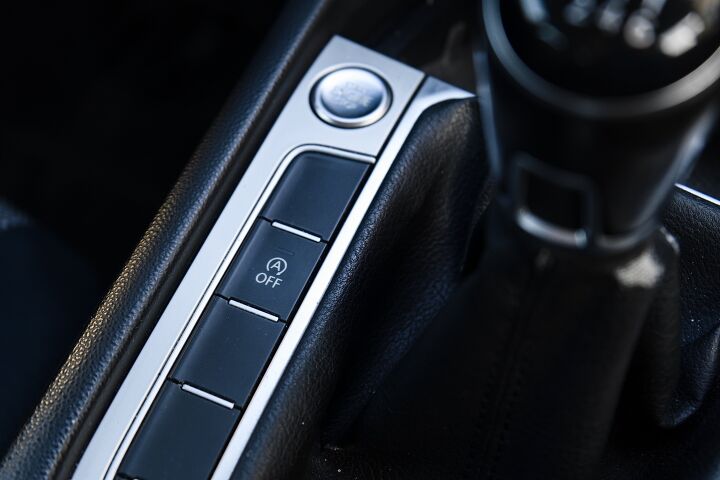
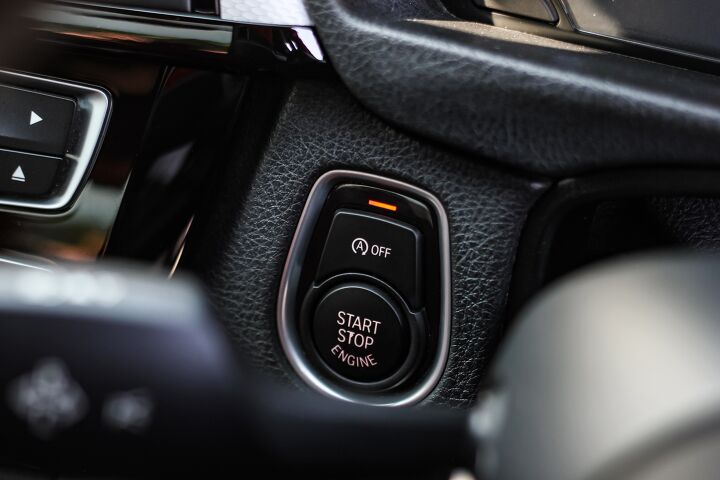
The technology has likewise improved quite a bit over the years. Early versions of stop-start could be truly jarring relative to their modern counterparts and were clearly harder on internals. Many of the models that have the technology equipped also provide drivers with the ability to temporarily disable it with the press of a button. But those improvements haven’t made stop-start any more popular with drivers. I have yet to meet a single person who actually appreciates the system and it was one of the biggest recurring complaints from the random drivers I’ve interviewed.
None of the above means things will change, however. Car and Driver recently reached out to several automakers to see if they had plans to abandon auto stop-start and the responses were mixed. That’s likely due to the very real possibility that whatever changes today’s EPA makes to emissions will be undone by the next administration. Official industry messaging stemming from the Automotive Alliance for Innovation (the world’s largest automotive lobby) directly hints at this.
“Today’s action is consistent with EPA’s earlier announcement that it intended to repeal the endangerment finding and correct some of the unachievable emissions regulations enacted under the previous administration,” stated John Bozzella, president and CEO, Alliance for Automotive Innovation. “I’ve said it before: Automotive emissions regulations finalized in the previous administration are extremely challenging for automakers to achieve given the current marketplace demand for EVs. The auto industry in America remains focused on preserving vehicle choice for consumers, keeping the industry competitive, and staying on a long-term path of emissions reductions and cleaner vehicles.”
Odds are good that you’ll continue seeing auto stop-start being installed into new vehicles for the foreseeable future. The government might even make it a mandatory, rather than incentivized, feature in the coming years. Without a crystal ball helping to predict the future, it’s anybody’s guess. But the current EPA has clearly stated that it wants to pivot regulatory decisions back toward congress, potentially stalling any executive actions seeking to undo Trump-era emission protocols. While it’s likewise difficult to have faith in congress, which rarely seems to consider the needs of the general public, we’ve effectively seen the executive branch make sweeping proclamations that undo whatever rules were emplaced by their predecessor after each election cycle.
While this has frequently yielded massive subsidies (and even bailouts) for automakers, it has also made vehicle development a bit of a nightmare and forced them down roads that didn’t exactly pay off (e.g. all-electric vehicles). Just remember that there’s always likely to be a lot of political grandstanding mixed in within the occasional example of sound policy and it all contributes to the kinds of vehicles manufacturers end up building — or not building.
“The Endangerment Finding has been the source of 16 years of consumer choice restrictions and trillions of dollars in hidden costs for Americans,” said EPA Administrator Lee Zeldin. “Referred to by some as the ‘Holy Grail’ of the ‘climate change religion,’ the Endangerment Finding is now eliminated. The Trump EPA is strictly following the letter of the law, returning commonsense to policy, delivering consumer choice to Americans and advancing the American Dream. As EPA Administrator, I am proud to deliver the single largest deregulatory action in U.S. history on behalf of American taxpayers and consumers. As an added bonus, the off-cycle credit for the almost universally despised start-stop feature on vehicles has been removed.”
Today we have an EPA that proposes to deregulate the industry and seeks to decouple itself from having regulations driven by the debatably controversial studies launched in the past. That same agency may take a very different position a few years from now under different leadership. With that in mind, automakers will probably refrain from outright abandoning auto stop-start. However, these regulatory changes still provide something to consider during the next development cycle.
[Images: Tudor Alexandru/Shutterstock; Jakub Snabl/Shutterstock; Muanpare Wanpen/Shutterstock]
Become a TTAC insider. the latest news, features, TTAC takes, and everything else that gets to the truth about cars first by subscribing to our newsletter.
