

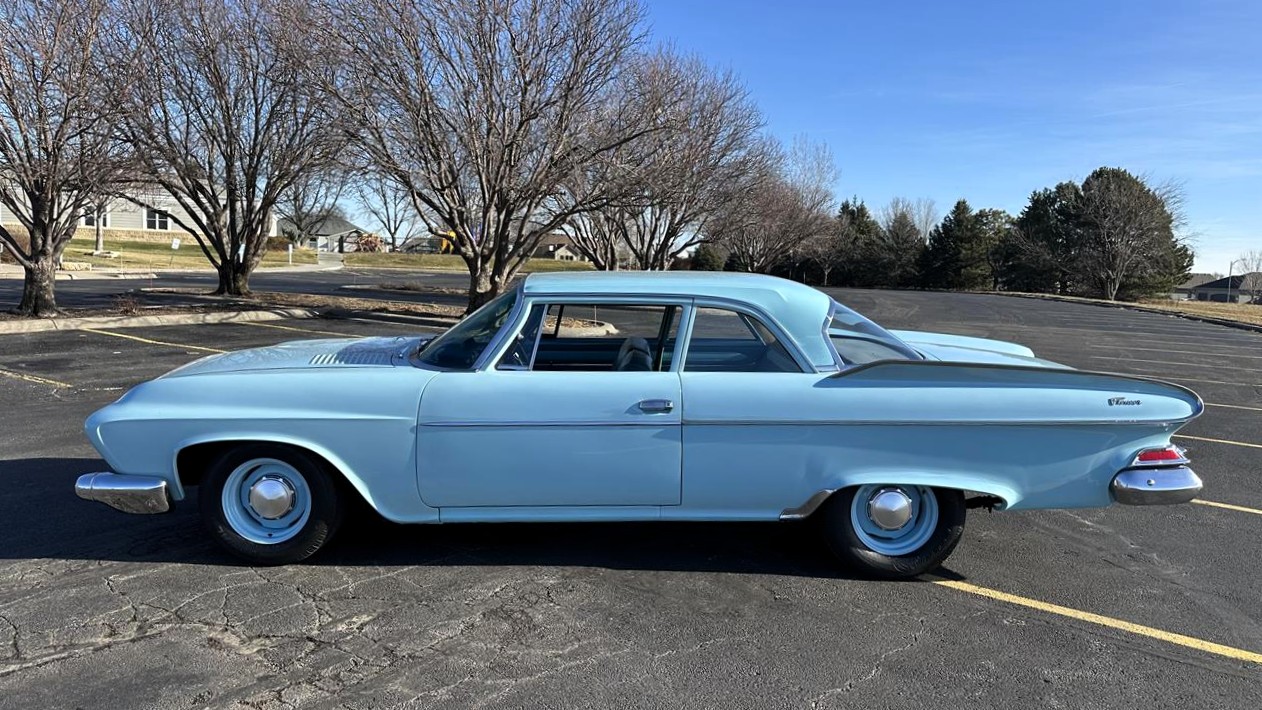
When the world seemed stable and the September 1983 issue of Life magazine could be found in all corners of the U.S., the cover highlighted a story on the “the 10 Best & 10 Worst American Cars Ever!” Looking at the automotive articles within, I imagine the mix of Best and Worst would be quite different today. Some may think our Pick of the Day may qualify for the latter, though there is something to be said for being so bizarre that it’s fantastic. This 1961 Dodge Dart Pioneer two-door sedan is listed for sale on ClassicCars.com by a dealership in Elkhorn, Nebraska.
Chrysler Corporation’s “Forward Look” was fine in 1955. The redesigned Forward Look for 1957 was absolutely fantastic. And then quality control became a casualty, with rattles, premature rust, and water leaks being issues that were non-negotiable to consumers. A recession the following year did not help things at all — especially for the corporation’s medium-priced cars—and then General Motors debuted its Forward Look-inspired 1959 offerings to make folks forget about Mopar.
Luck was on Chrysler Corporation’s side, however, as the manufacturer was lucky to have already committed to a new construction technique that was set to debut for 1960 and could regain the public’s trust. The answer was unibody construction, a lesser variation of monocoque construction, but this method (applied to the whole corporation save Imperial) helped address quality issues and bring peace of mind to those concerned. That being said, the 1960s were not embraced as well as the corporation had hoped.
This also was a moment of upheaval at the Chrysler Corporation. First, there was an insider-trading scandal involving several senior executives who sold shares before announcing earnings in 1960. And then there was Virgil Exner’s heart attack in 1956. Though under 50 years old at the time, the styling chief took a leave of absence, which compromised his ability to oversee the 1961 program. Additionally, Exner was caught up in his own bubble and therefore missed some indicators of the direction of the industry. Unstable corporate leadership combined with the corporation’s darling being out of the picture (if not out to lunch) was a concoction primed for disaster.
Starting in 1960, Dodge began producing two series of cars, and this continued for 1961: the longer-wheelbase Polara, and the junior version called the Dart. The Dart was available in three trim levels (in ascending order): Seneca, Pioneer, and Phoenix. The Dart Pioneer “compares in cost with middle-of-the-line low price cars,” which means akin to a Chevrolet Bel Air (say, isn’t that Plymouth’s domain?). “It shares with all 1961 Dodge cars an advanced Torsion-Aire suspension system, a method of ride control that is called by knowledgeable car men, ‘the best in the business.’” Available Pioneer body styles included a two- and four-door sedan, and a four-door station wagon with room for six or nine passengers. An unusual running change was the addition of an accessory taillight, as the original slim ones were not quite luminescent enough to approaching vehicles.
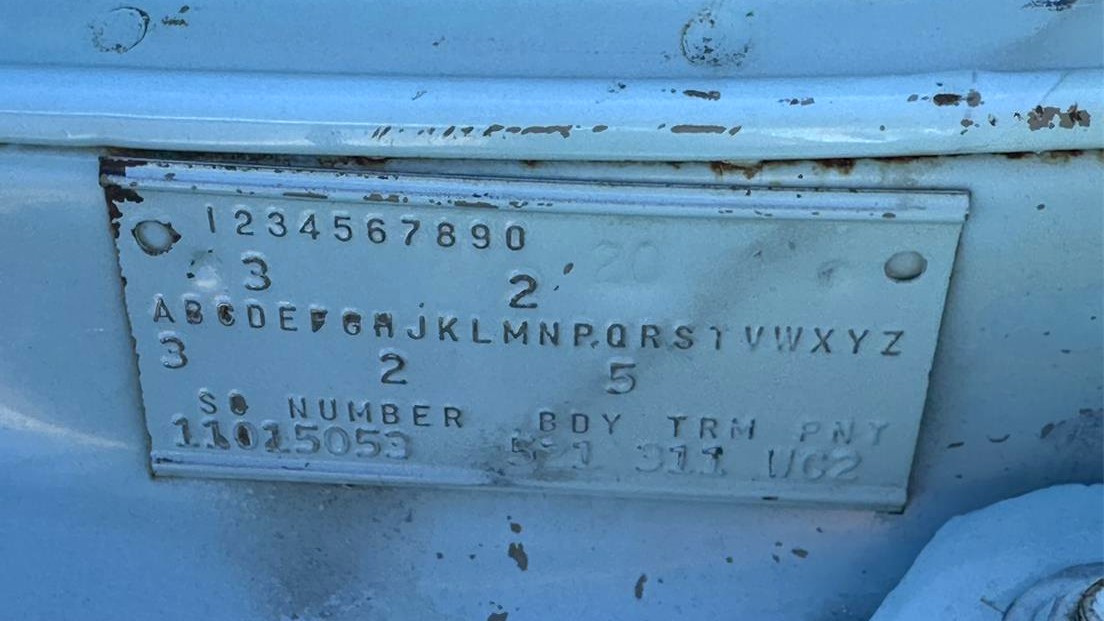
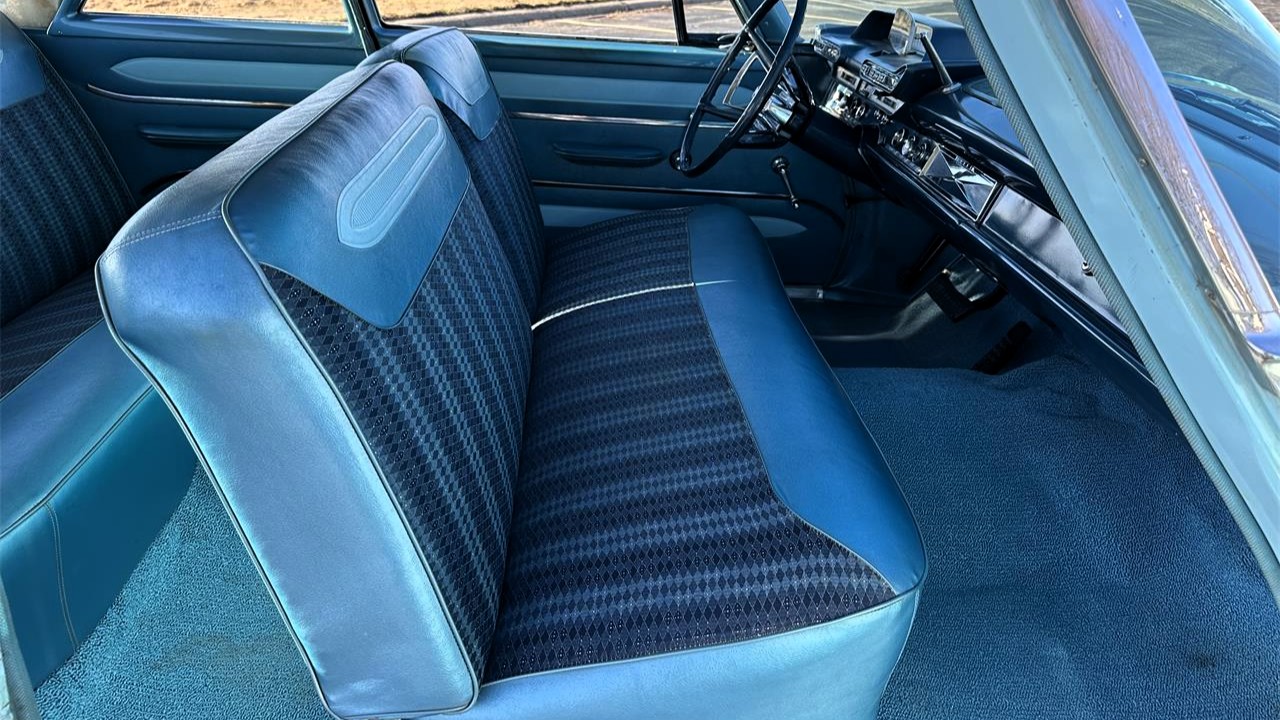
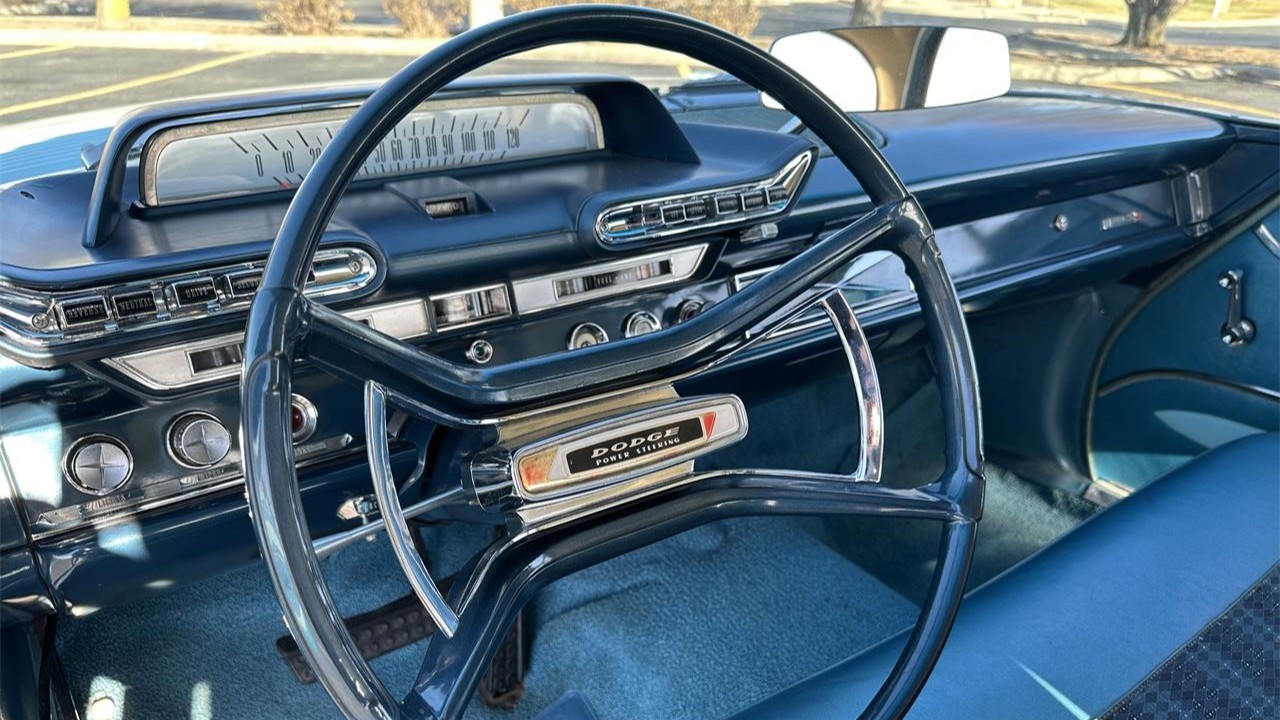
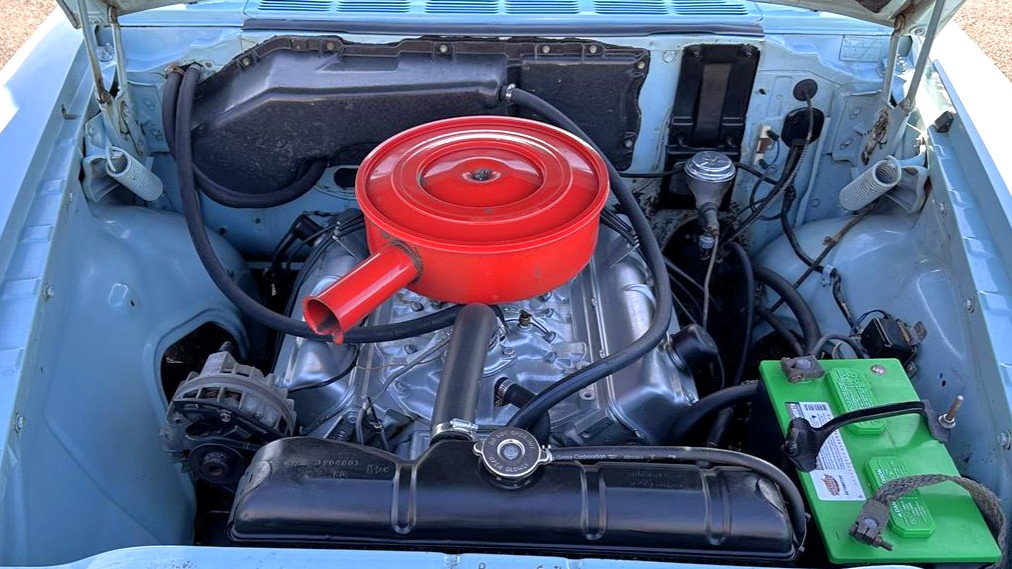
So, was the 1961 Dodge a disaster? You tell us, but the kitsch factor is strong for this 1961 Dodge Dart Pioneer two-door sedan, so the paradigm has shifted to the opposite pole. Upon inspection, you can see several things going on in terms of styling and design, many of which haven’t aged gracefully, but oh well, right? Seen as a whole, this Dodge projected a futuristic vision that seemed to be obsolete by industry standards when it finally hit the streets. That’s part of the charm! “From the space age styled dash, steering wheel and shifter to the rocket inspired go to the moon quarter panels!” says the seller. It is powered by a 318 Poly V8 and backed by TorqueFlite automatic, which means it has the push-button transmission. “Options and mentionables include torsion bar front suspension, power steering, AM radio, heater, dash-mounted rear-view mirror, and dual fender-mounted mirrors,” adds the seller. The tires, body-color wheels, hub caps, air shocks, and dual exhausts are all new.
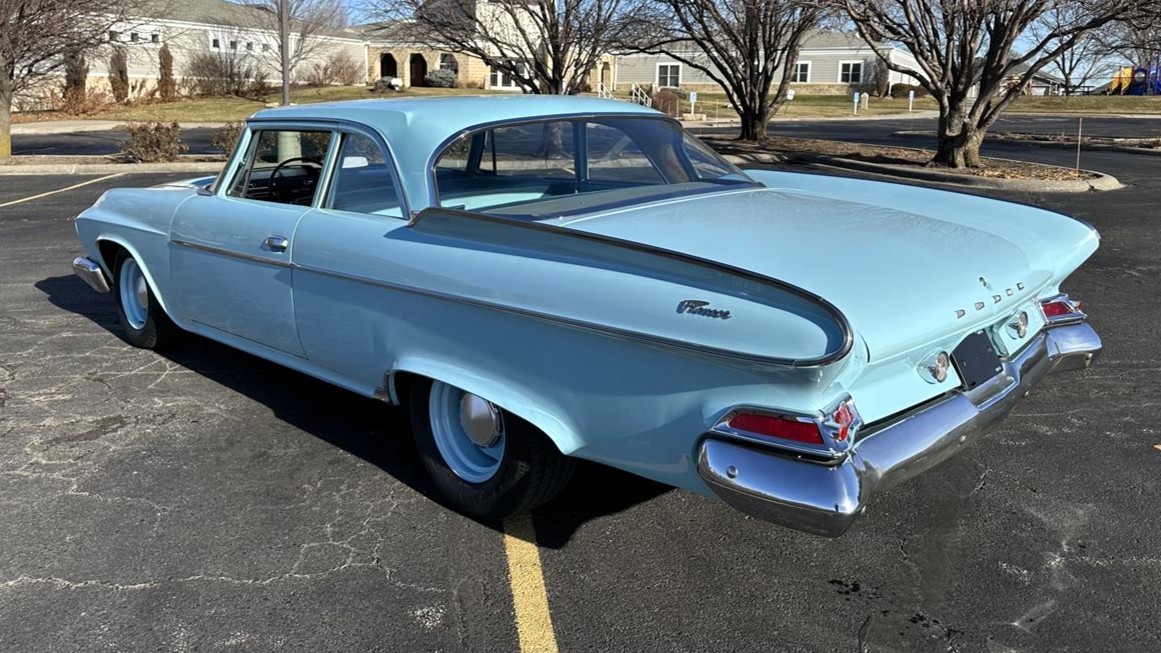
If this was a Chevy, it would have that “Batwing” roofline, which hasn’t aged well either, even though front and rear styling were among GM’s best for the decade. Instead, you can have a Mopar full of character, a car that was once disposable but can now be celebrated for capturing an odd zeitgeist in Detroit. For $26,500 (OBO), you can feel fortunate that this is one of the few that wasn’t junked.
Click here to view this Pick of the Day on ClassicCars.com
