

I love a pristine show car just as much as anyone else, but there is something charming about a vehicle that’s been used up and put out to pasture yet remains awaiting some restoration love. That’s part of why I enjoy my trips to salvage yards like Desert Valley Auto Parts.
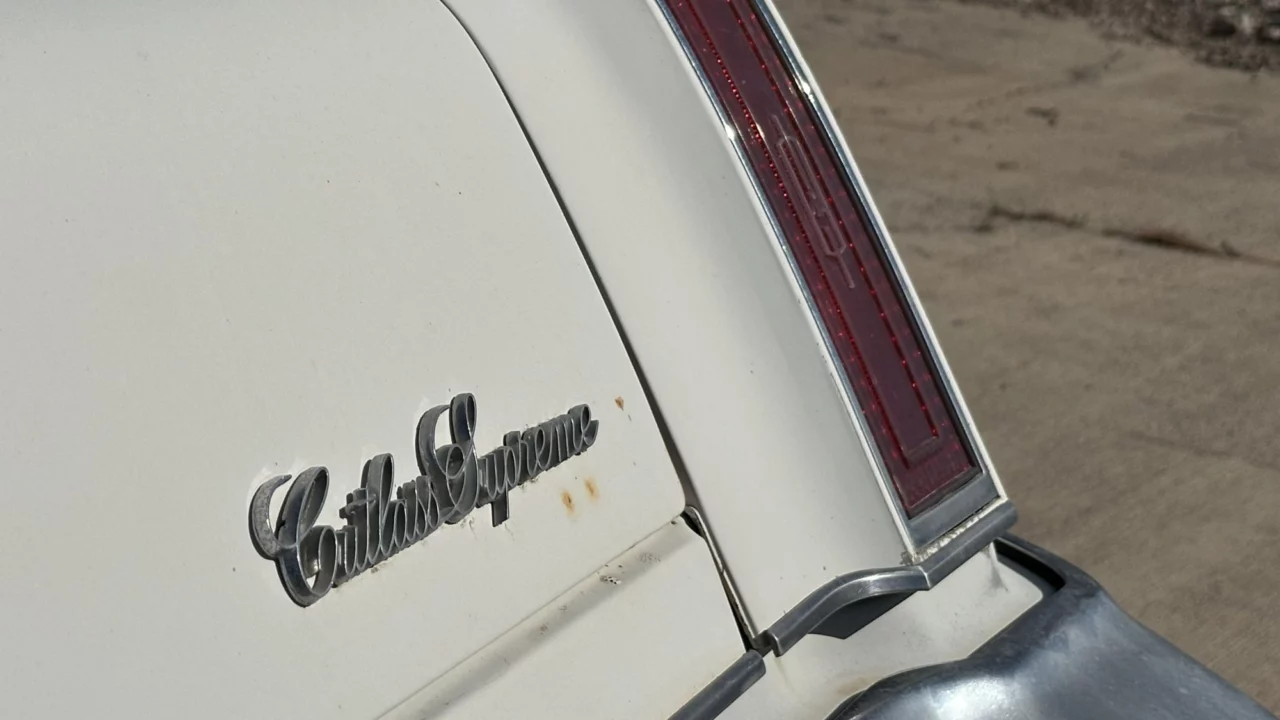
The fourth-generation Oldsmobile Cutlass debuted in 1973 on General Motors’ so-called “Colonnade” A-body platform. It was a front-engined, rear-wheel-drive car and was available as a coupe, sedan, or station wagon. Sales-wise, it was a heavy hitter for the brand, moving over 380,000 units in that initial model year and concluding with over 600,000 for 1977 alone.
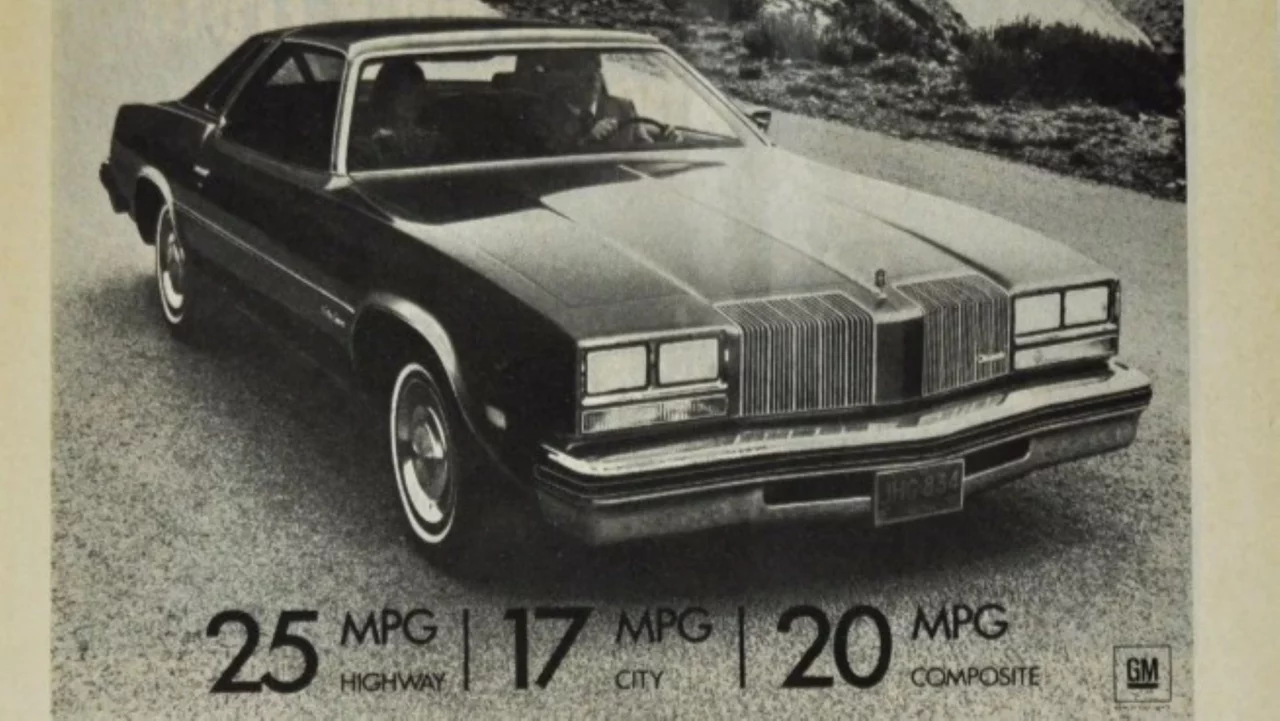
One of the magazine advertisements from GM said, “Your friends may think you bought a Cutlass Supreme for looks. But in your heart, you knew it was for Supreme’s practicality.” The ad went on to outline three reasons why the Cutlass was such a practical car:
- Gas mileage: When equipped with the entry-level 231ci V6, the Cutlass was cable of hitting 25 mpg on the highway and 20 mpg in combined city/highway driving. That was an important skill for the time since the oil crisis of the 1970s had put pressure on automakers to improve fuel economy.
- Maneuverability: “Supreme’s maneuverability makes it easy to get around in traffic. Easy to park. Easy on turns. To put it another way, Supreme is just plain fun to drive,” the ad said.
- Resale: Oldsmobile alleged that the Supreme had been returning a higher percentage of its purchase price than any other competitor in the midsize field. By the way, the 1977 Cutlass Supreme had a retail price that could range from about $4,670 to $5,124, depending on options.
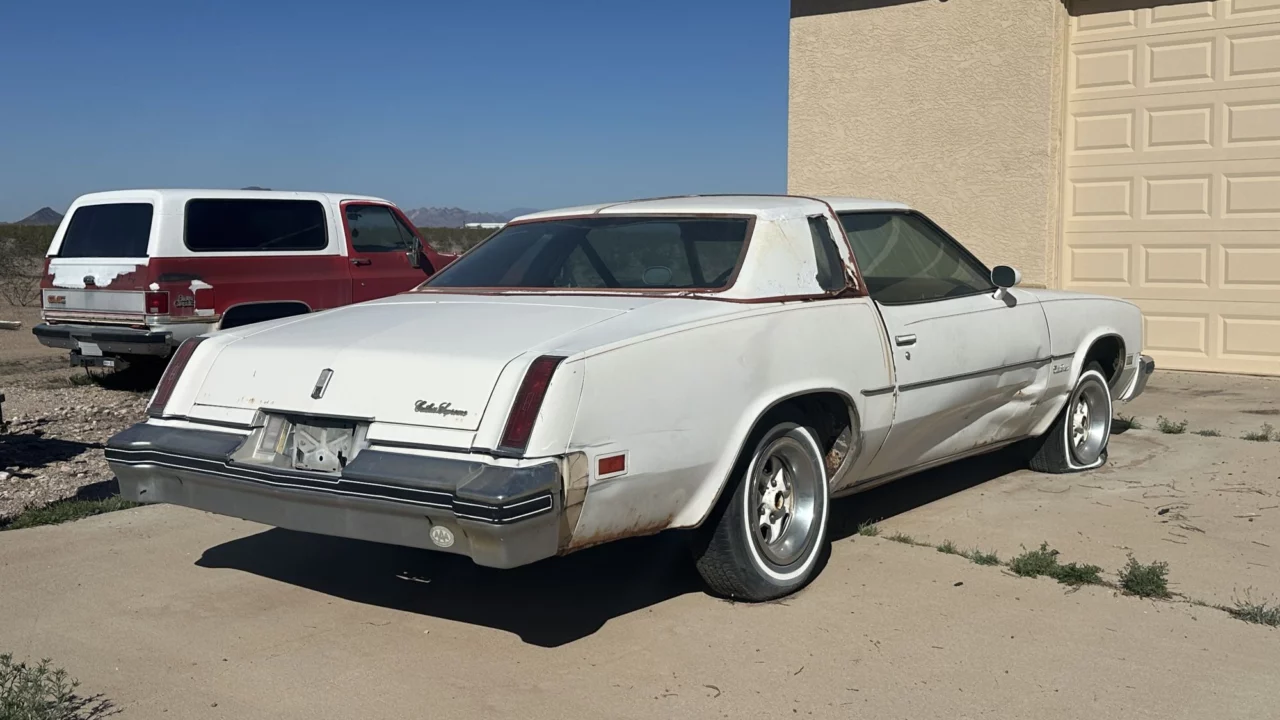
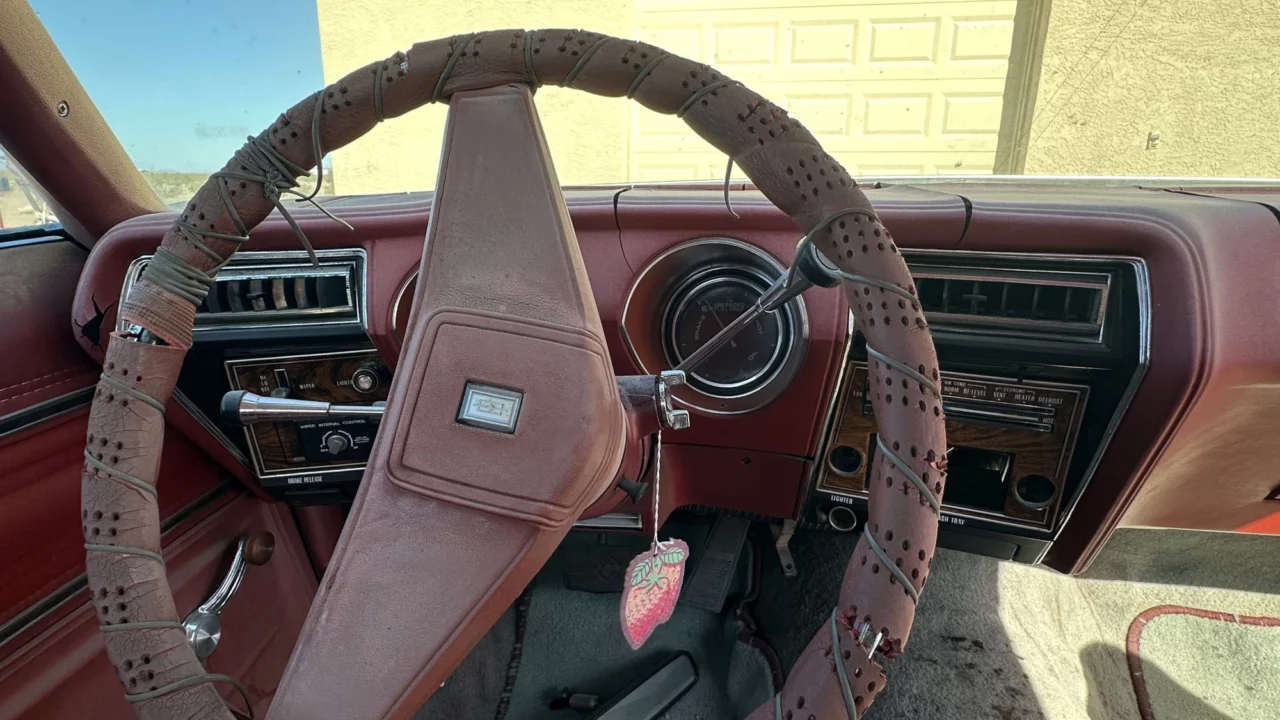
One of the vehicles I came across in recent weeks was a friend’s tired, white 1977 Cutlass Supreme Brougham. It had sat in his driveway for a decade or more, and it showed. The car was finished in White (paint code 2058) over a red interior, and it had 25,968 miles on the odometer (which probably meant the car really had 125,000 — or even 225,000 — miles on it).
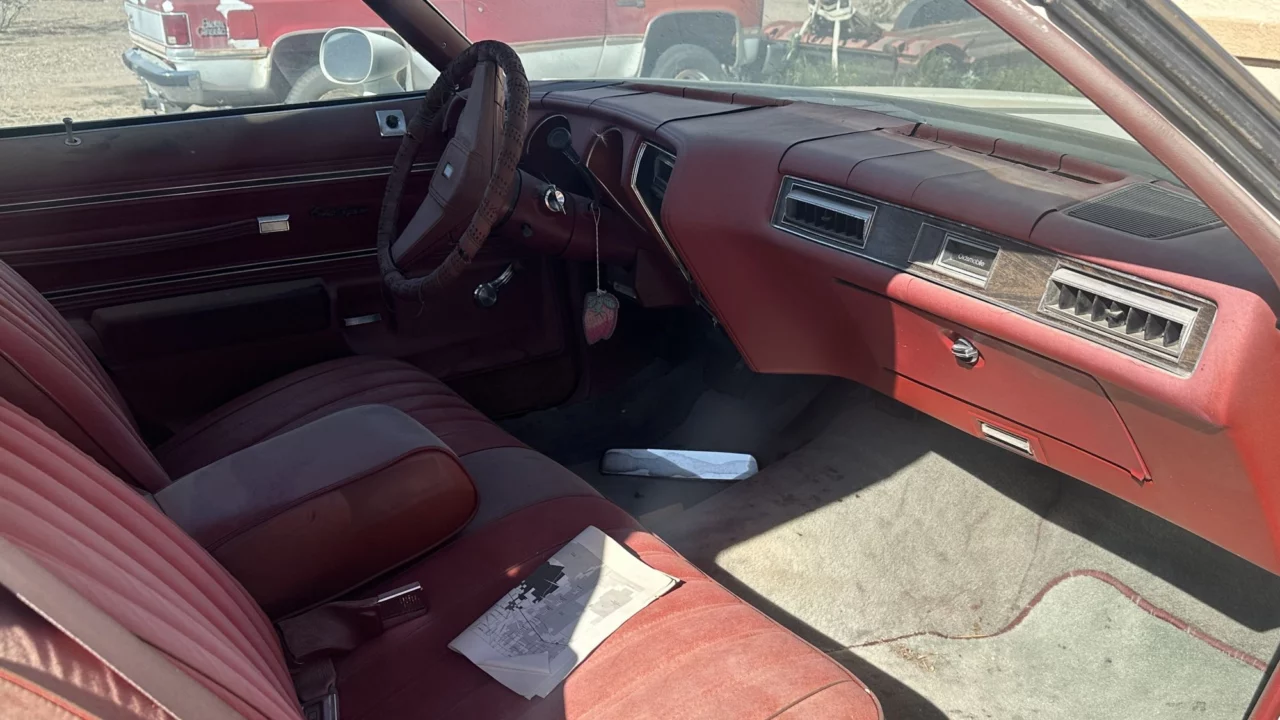
Even in its abandoned-looking state, the car had a sense of status. The radio had been removed, but the woodgrain trim bezel remained. The red interior had largely faded to pink, and the carpet was closer to white. The dash showed massive cracks consistent with long-term Arizona exposure, and the rearview mirror sat in the passenger footwell for some reason. Miraculously, the headliner was still intact and in nice condition.
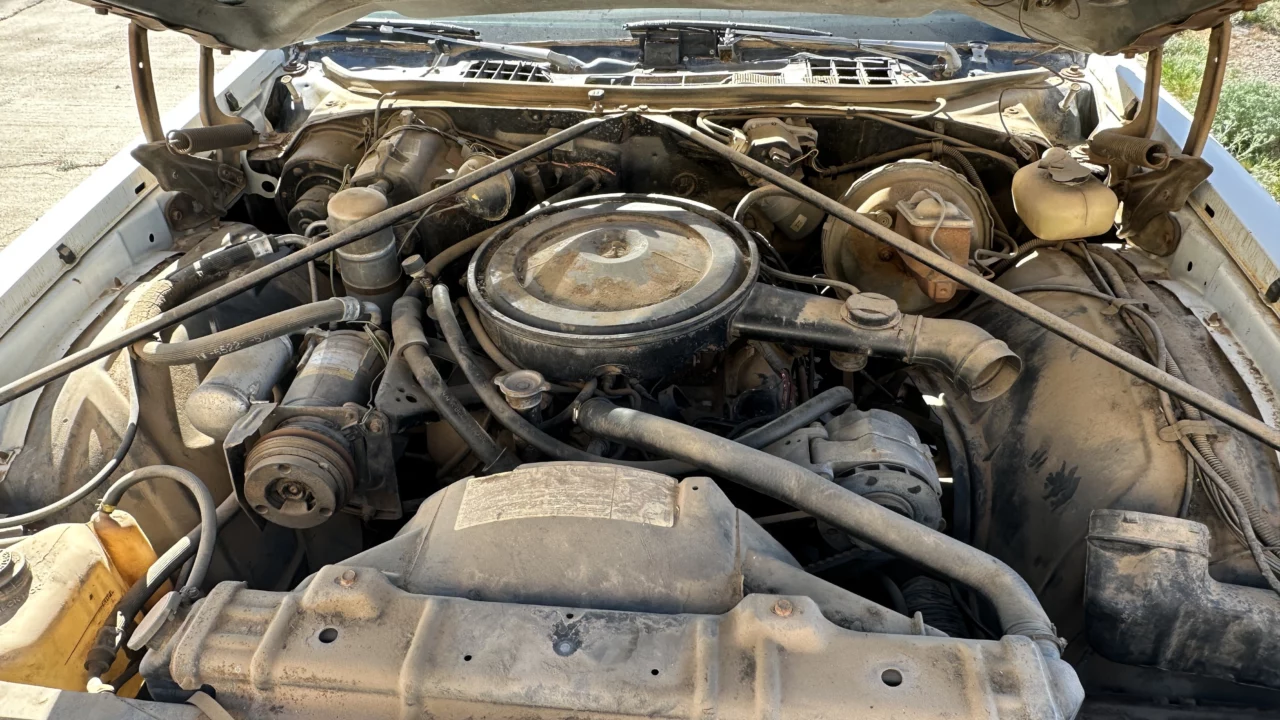
Power for the car came from a four-barrel Olds 350ci V8 mated to a Turbo-Hydramatic three-speed automatic transmission. How much work would it take to get this thing running again?
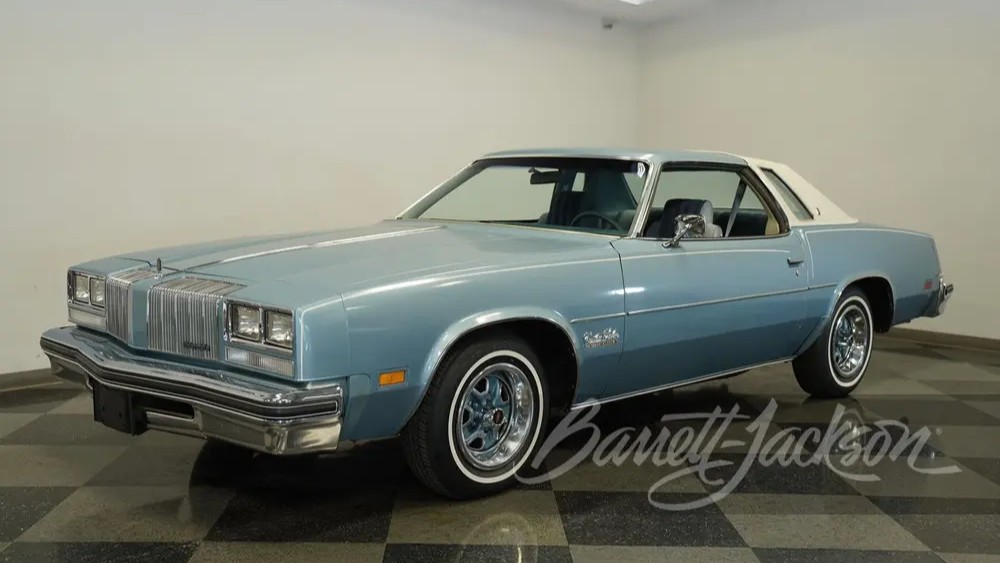
Interestingly enough, one of the reasons the white Cutlass stood out to me was because I saw one at the Barrett-Jackson 2026 Scottsdale Auction in January from the same model year (pictured below). It was a blue “Salon” variant showing just 67,894 miles. For being on the verge of turning 50 years old, it looked exceptional inside and out (unlike the white car that my friend has been letting rot in his driveway).
Do you have any fourth-gen Cutlass history in your automotive past? Do you think of the Cutlass as a desirable collectible car? Share your feedback in the comments!
