

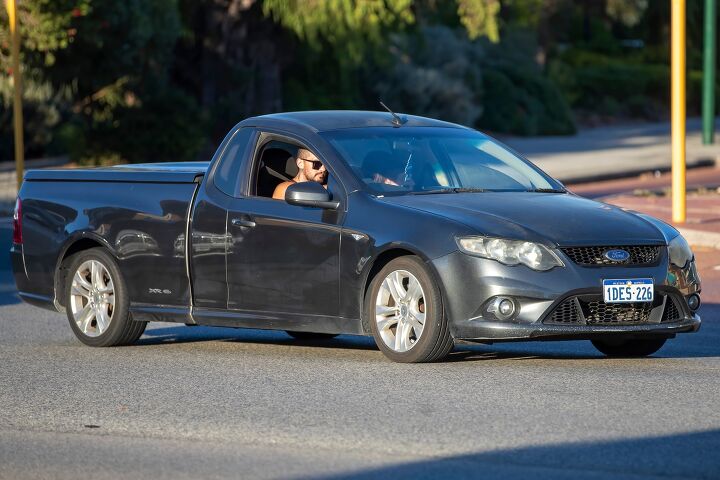
Ford CEO Jim Farley took a trip to Australia last week and is reportedly trying to set the country up with more utes. Australians should care because it sounds like Blue Oval wants to engineer more vehicles specifically for the Down Under market. But we should care because (non-ute) variants of those models occasionally migrate here when they are particularly good.
We’re thinking specifically of the 2004-2006 Pontiac GTO, 2008-2009 Pontiac G8, and 2014-2017 Chevrolet SS — all of which started as Holden models, originally built for the Aussies.
Despite there being decades of Australian-specific automobiles Americans would have loved to purchase, American automakers rarely bothered to bring them stateside. This was due to valid concerns that they would just end creating internal competition with models that were already well established in the United States. Showing up the parent company is a bad look and such an endeavor would likewise come with the added expense of converting vehicles to left-hand drive. The United States’ infamous 1964 “chicken tax” importation tariff would have certainly been the final nail in that particular coffin, however.
It was much more common to see automakers, especially Ford, doing things the other way round. By the 1960s, Blue Oval would routinely send American models (e.g. the Falcon and Fairlane) to Australia. These cars gradually developed their own identity there, eventually outliving their American counterparts and becoming staples of Australian roadways.
But North America did receive a lot of Australian-inspired automobiles. In 1934, Australian designer Lew Bandt effectively invented the coupe utility (or “ute”) by modifying the Model A Ford. The alleged inspiration stemmed from a letter he had received from a farmer’s wife two years earlier that requested the company offer a “a vehicle to go to church in on a Sunday and which can carry our pigs to market on Mondays.”
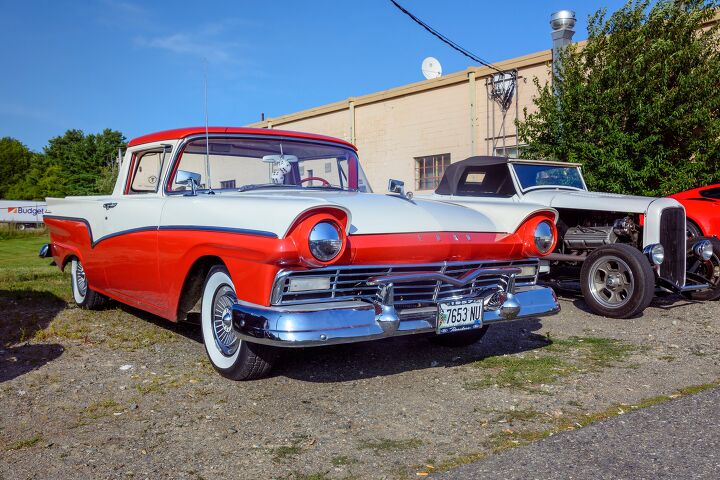
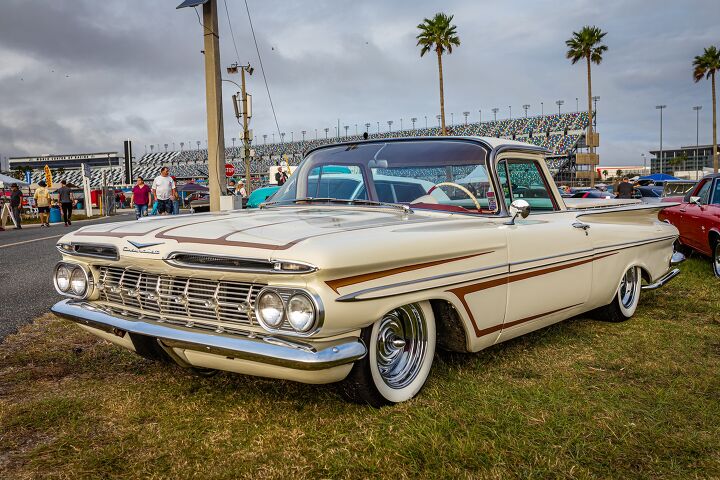
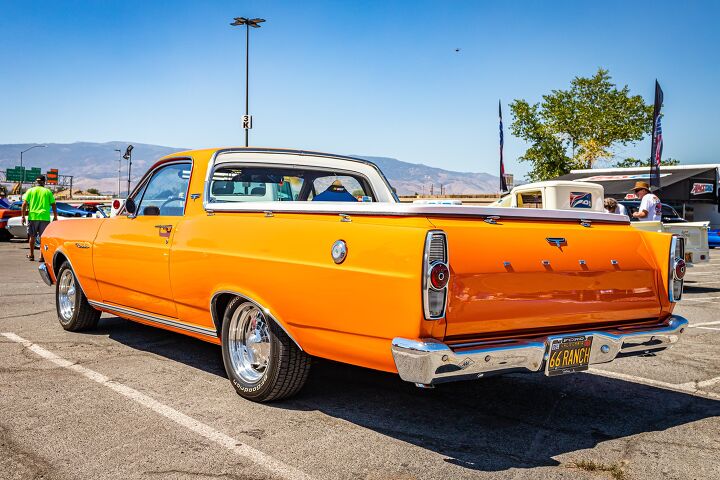
While the concept of modifying passenger vehicles to offer truck-like features was already fairly popular in the United States, Australia solidified the premise and purchased the resulting vehicles in large numbers. By the 1940s, Australians could purchase from-the-factory coupe utility models. A decade later, Americans would start to see models like the Ford Ranchero (above) and Chevrolet El Camino (below).
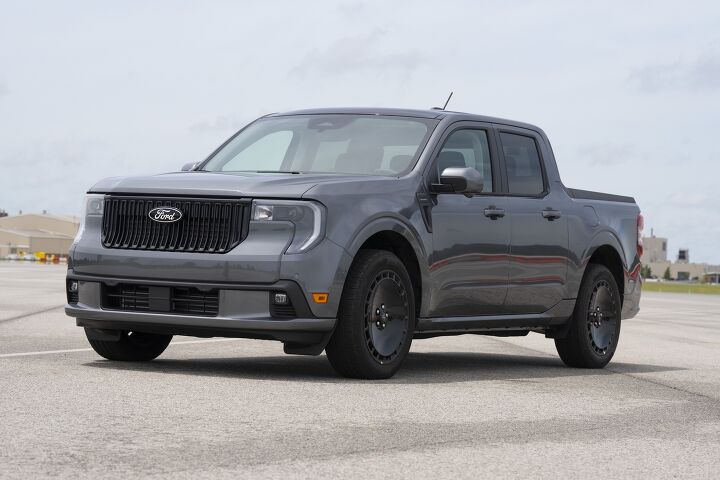
These days the term “ute” is used rather liberally. One could argue that many of the small (often Japanese-based) pickups that became popular after the 1973 oil embargo could be classified as utes. It’s likewise fairly common to see ladder-frame vehicles like the Toyota Hilux and Ford Ranger being called utes in Australia, even when they’re not in the traditional two-door configuration. With that in mind, it may even be fair to call the current Ford Maverick a ute — which brings us back around to CEO Jim Farley’s recent trip Down Under.
According to Car Expert, Ford has dropped hints about bringing manufacturing back to Australia and Farley has expressed a desire to see the automaker develop something akin to the defunct Ford Falcon Utility.
“I think this country gave the globe the ute,” he told the outlet, referencing Ford’s 1934 Coupe Utility specifically. “So, I’m pretty serious about it.”
From Car Expert:
Mr. Farley sees such a vehicle as a way to further stamp the brand as an authority in commercial vehicles, something that’s proving popular around the world.
He also clearly sees it as a way to steal a march on arch rival Toyota.
“Even today, there’s no Toyota unibody pickup in the US,” he said.
While Ford already sells the mid-size Maverick ute in the United States, Mr. Farley indicated Australia would likely get something different rather than simply importing the Escape-based model.
“We have really been successful with Maverick [in North America]. We sell 200,000 Mavericks a year,” he noted, adding that any forthcoming monocoque ute would be designed to cater to the Australian market.
“No, I don’t think it should be the same, necessarily [as the Maverick],” he said. “I’m not going to get into specifics. All I’m saying is, Aussies would love — on paper — a unibody, efficient, even performance [ute] because they have [previously].”
Farley said that Ford wasn’t looking for a global solution and that his trip to Australia was focused on determining the region’s vehicular needs. But we don’t know exactly what that means. While there have been rumors that both General Motors and Ford have considered bringing manufacturing back to Australia, those rumors are absent any confirmation from leadership.
Car Expert speculated that Ford might source product from China, perhaps modifying the region-specific midsized Territory SUV into a ute.
But that’s not particularly exciting and Farley vowed that the automaker wouldn’t just hurriedly cobble something together in the hope that Australians were receptive. Ford is allegedly going out of its way to make sure the resulting model would respect the country’s tastes and performance heritage — pointing to the hi-po versions of the Falcon as an example.
“We have a long history [with Australian utes] and so there’d be a lot of performance expectations here. People would be asking ‘can I get it with a V8’,” he said.
How feasible a V8 would be in the modern regulatory climate is another story, however. While less aggressive than what we’ve seen across most of Europe, Australia’s government still has some rather aggressive goals about electrification and emissions reductions.
Ford plans on releasing at least one new all-electric model for the global market by 2027 and it’s reasonable to assume that there could be a pickup or ute-adjacent variant. But it sounds as if it’ll have a combustion-focused sibling that’ll probably drive the majority of sales. American versions of the latter are slated to go into production sometime in 2029, perhaps serving as the basis of the next Ford-badged ute. Only Ford knows the answer for certain and leadership isn’t quite ready to spill the rest of the beans on Australia.
[Images: Karolis Kavolelis/Shutterstock; Ken Morris/Shutterstock; Ford Motor Co; Gestalt Imagery/Shutterstock]
Become a TTAC insider. Get the latest news, features, TTAC takes, and everything else that gets to the truth about cars first by subscribing to our newsletter.
