

Pontiac. Triumph. Studebaker. There are numerous dead car brands that enthusiasts wish would be revived. The odds of that happening are slim to none. But in the mid-1960s, Duesenberg, a brand that ended production in 1937, was revived … sort of. Shortly after its rebirth, it was killed once again, but not before a single 1966 Model D prototype was built. This car is featured in the latest Jay Leno’s Garage.
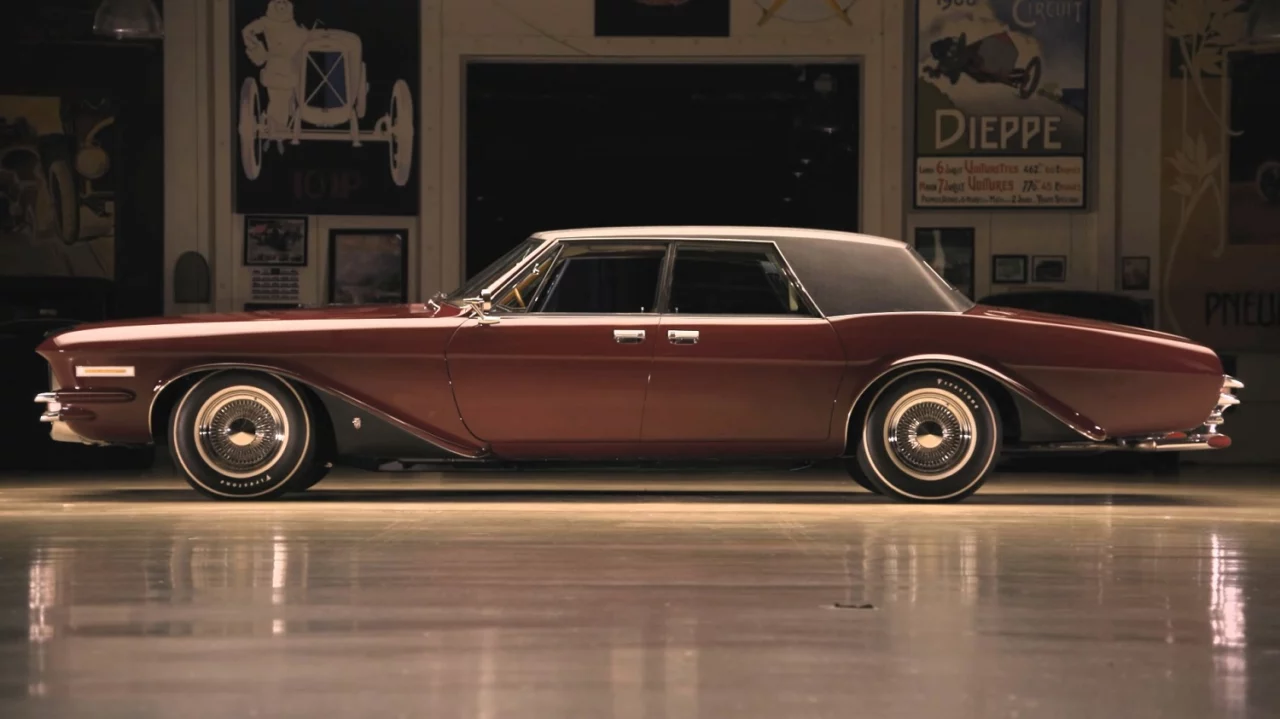
In 1963, Virgil Exner, the former head of Chrysler design, sketched theoretical new Stutz, Packard, Mercer, and Duesenberg models for Esquire magazine. The Duesenberg didn’t make it into production form, but it led to a model made by the new Duesenberg Corporation, which had Fred “Fritz” Duesenberg (son of August S. Duesenberg) as its chairman. Exner designed the one-off in 1964, with Ghia building it on a stretched Imperial convertible chassis in 1965. Celebrities such as Elvis, Liberace, and Jerry Lewis placed orders, but those wouldn’t be fulfilled. By October 1966, the Duesenberg Corporation was no more.
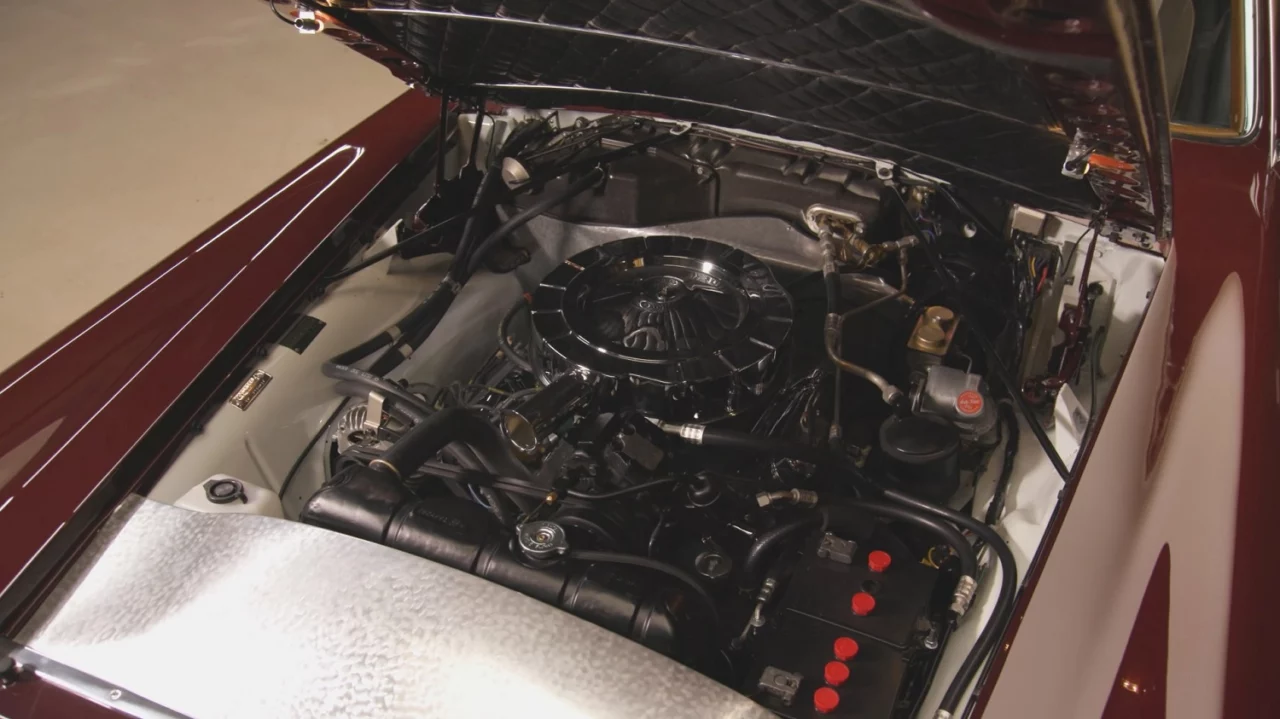
Tom Shannon, the current owner of the Model D, points out that, contrary to many accounts, his car is powered by a Chrysler 413ci V8 with the “torque of a steam locomotive,” not a 440. He first saw it in the Auburn Cord Duesenberg Automobile Museum when he was 17. Seven years ago, he became its new owner — 43 years after he last saw it. The Duesenberg needed a lot of work to get back to its former glory. In fact, given that it was only 95 percent developed, Shannon had to finish what Duesenberg 2.0 started, then begin restoring the car. All the parts were still in place, but many needed cleaning and the paint was shot. Along with the necessary touch-ups and fresh paint, Shannon had the original Dayton wire wheels fitted with reproductions whitewalls.
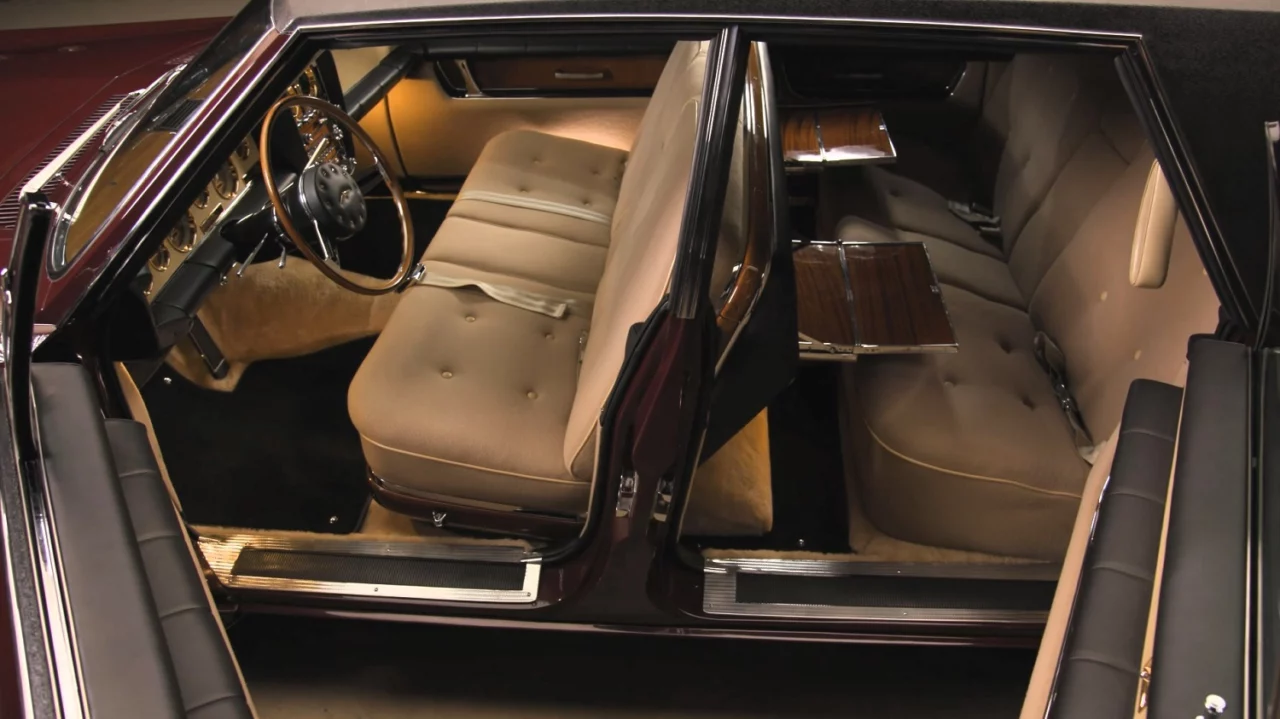
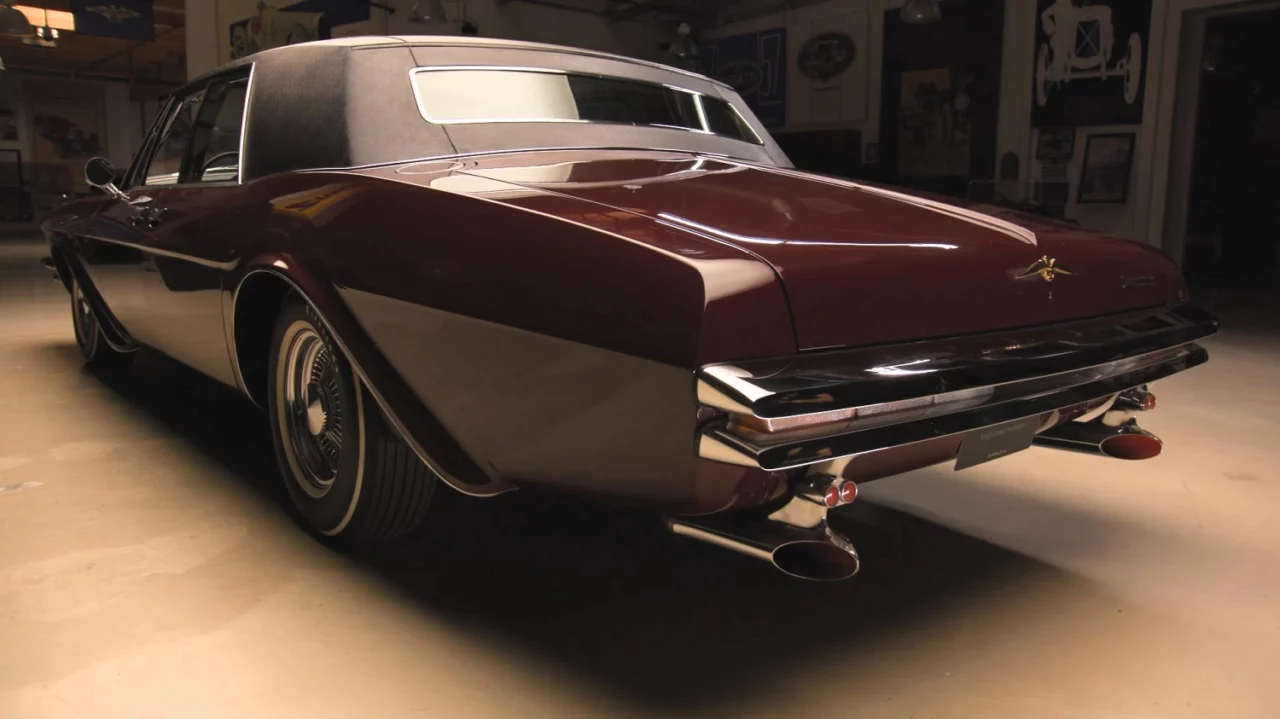
Although the Model D lacks the hulking physical presence of its ancestors, it certainly draws attention. The twin-bar bumpers, island-like grille, flamboyant wheel arches, and slim profile make the Model D impossible to miss. The suicide doors open to thick pieces of wood, gold trim, and leather and cashmere seating. Shannon may have spent more on the restoration than the car is worth but, as Leno puts it, all that work was done “to respect and honor the men who built” the car originally.
Watch as Leno takes this interesting, obscure product of a short chapter in American automotive history out on the road in the video below.
