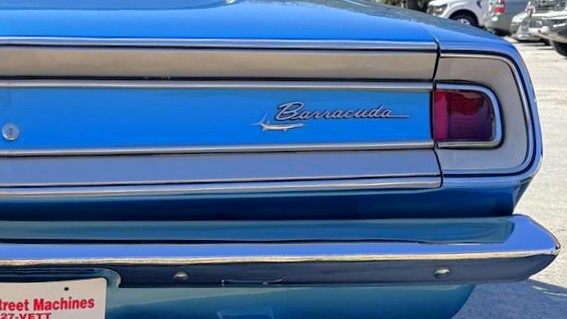
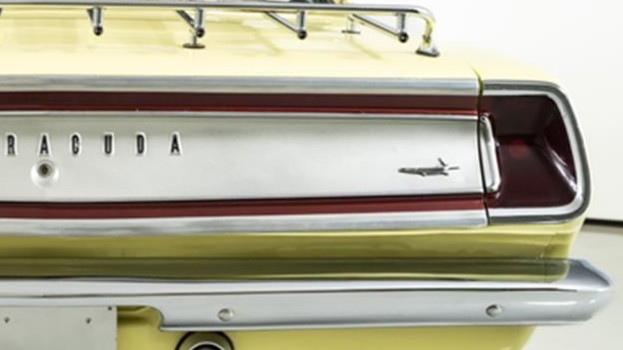
On a recent weekend, I saw a second-generation Plymouth Barracuda down the street. The owners were outside, so I was able to approach them and ask, “1967?” Indeed it was, but they did not know how to tell the other years. After reading this, you’ll have a better idea.
My friend Bob Harnsberger had a 1968 Barracuda in high school, and since then, it’s been my favorite of the three years. Sure, having experiences with a car helps rub in the preference, but it also forced me to learn the nuances among the model years. Let’s start with the 1967.
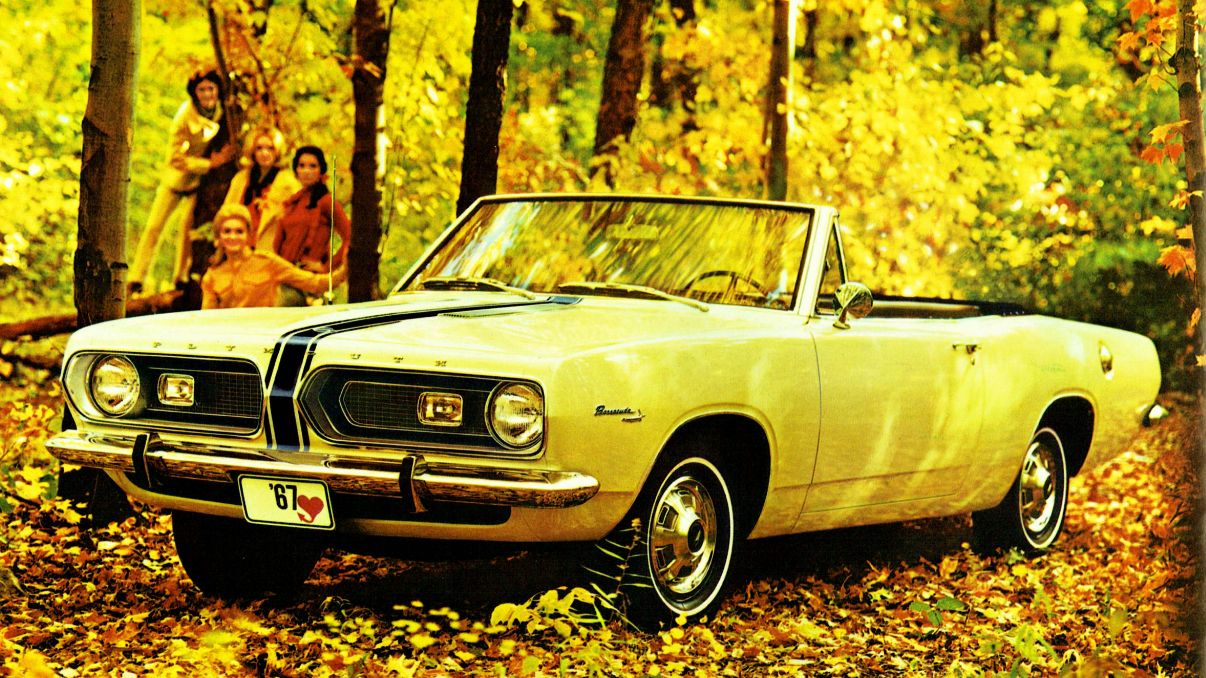
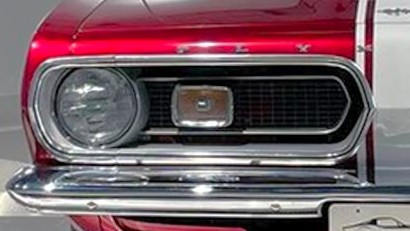
Notice the floating eggcrate grille with the prominent perimeter frame. That’s specifically a 1967 thing. Ditto the stripe that goes from the nose to the tail. It was available in white, black, red, blue, or copper.
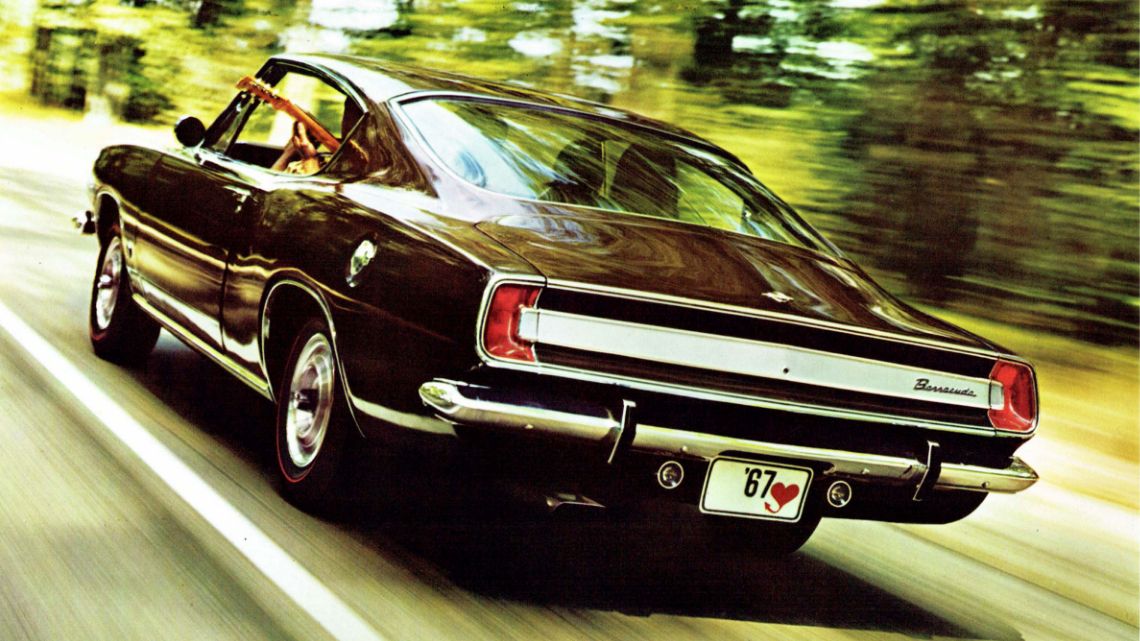
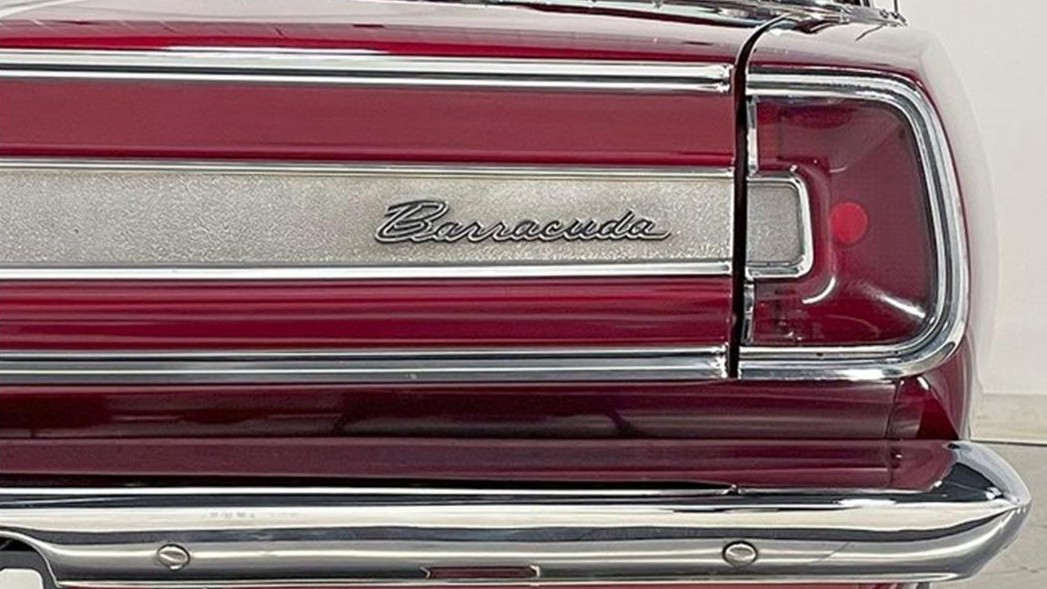
Here’s the rear end. You may think the taillights for all three years look the same, but it is difficult to start describing the ‘67’s taillights without comparing them to subsequent years so, for now, just take note of how the horizontal panel bleeds into the taillights.
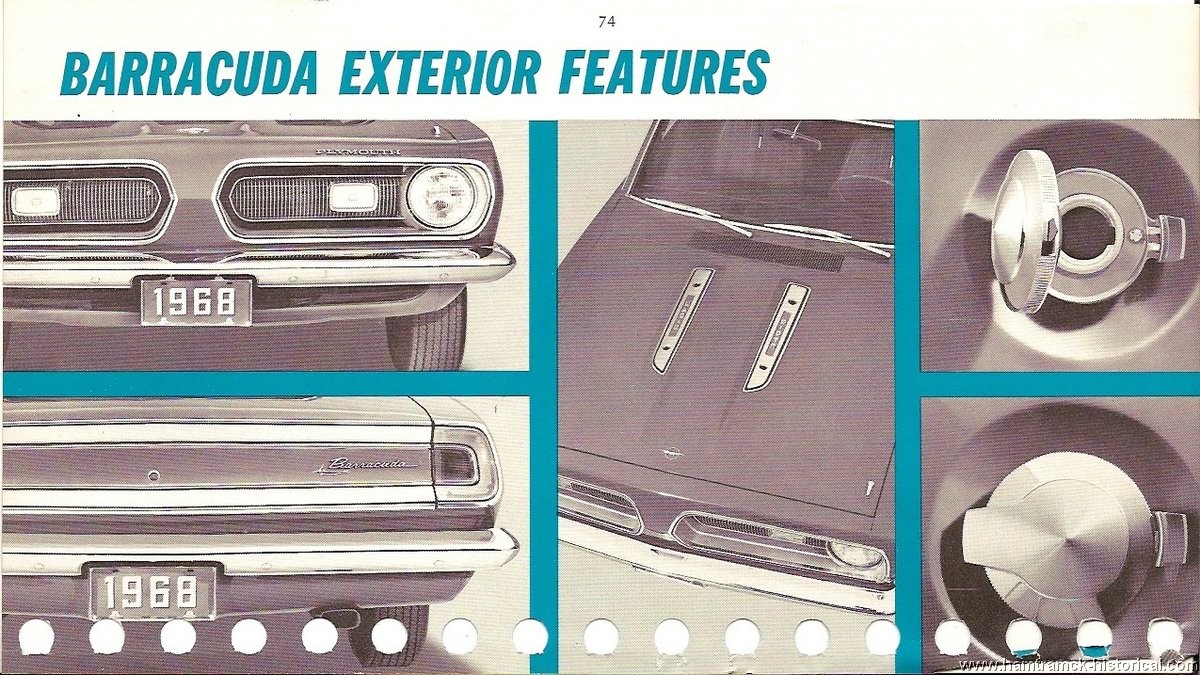
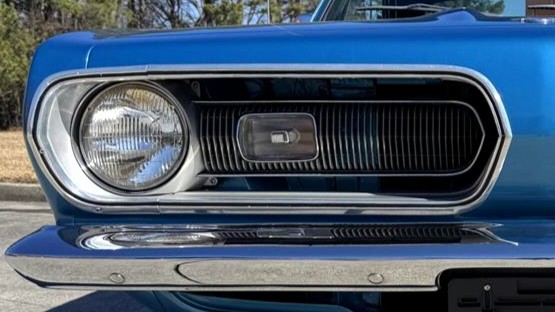
Let’s move on to 1968. The grille appears to share the same framing, but the texture is a series of fine vertical bars, almost looking like an electric shaver. For the taillights, notice how the rear no longer has a panel bleeding into the lenses. Also note how the brake lights are in the center, surrounded by a white lens that appears to wrap around the perimeter. If you can remember the lenses are white, then you’ll be fine identifying a ’68.
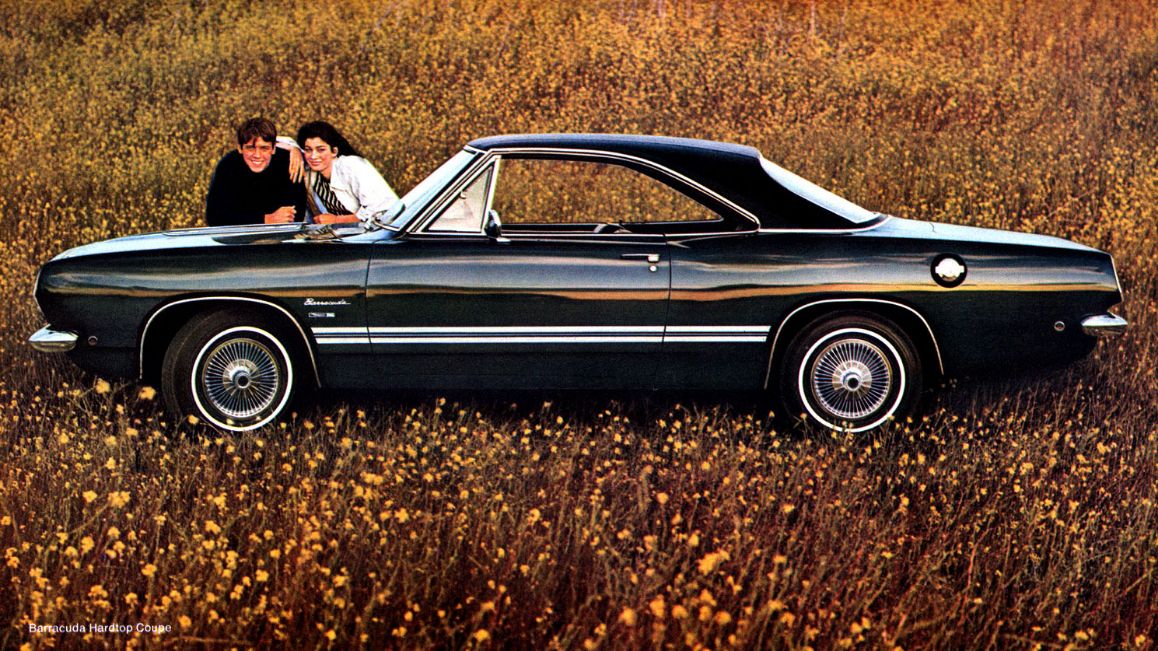
Nineteen sixty-eight was the year that the federal government required side-marker lights, and the Chrysler Corporation embraced them in style. In the case of the Barracuda, you’ll find round side-markers. In addition, the optional stripes appeared longitudinally between the wheels. They were available in white, black, red, “ledger” green, and light blue.
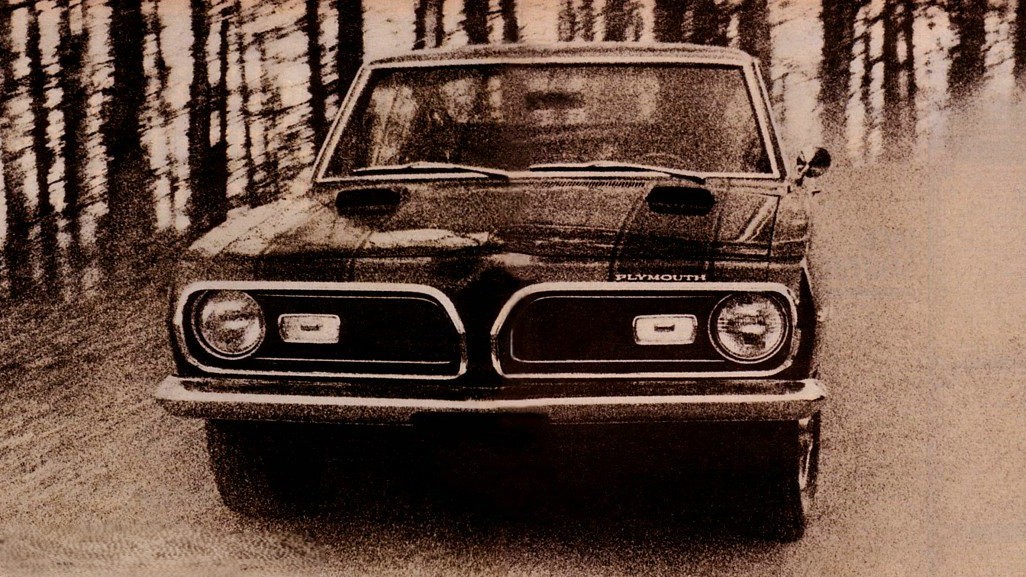
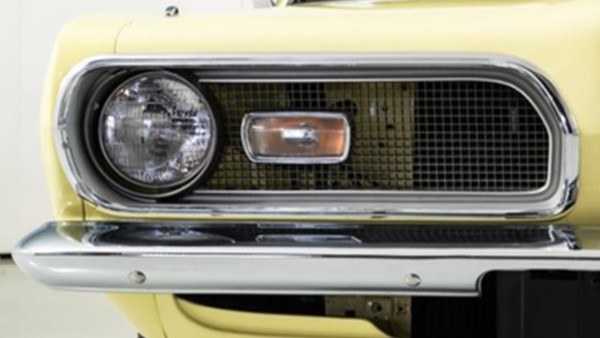
When it comes to available equipment, 1969 is the high-water mark for the Barracuda, but we’re focused on identifying traits. The grille experienced the biggest change among the three years — in fact, you may not have even realized the nose changed too. Whereas for 1967-1968 the grille looks like it forms an arrow as it moves to the center, the 1969’s cavity is reshaped in the center portion and no longer forms a proper point. The texture returned to an eggcrate affair that eschewed a frame, instead filling the cavity.
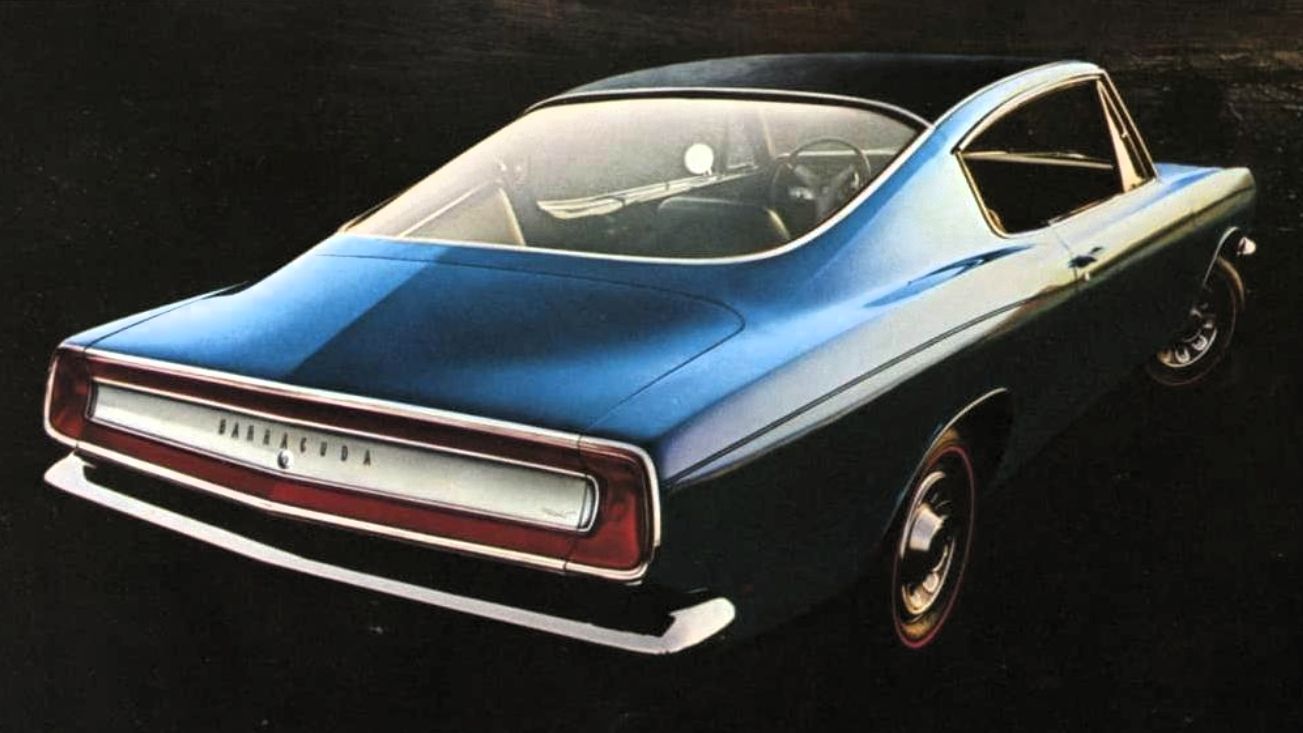
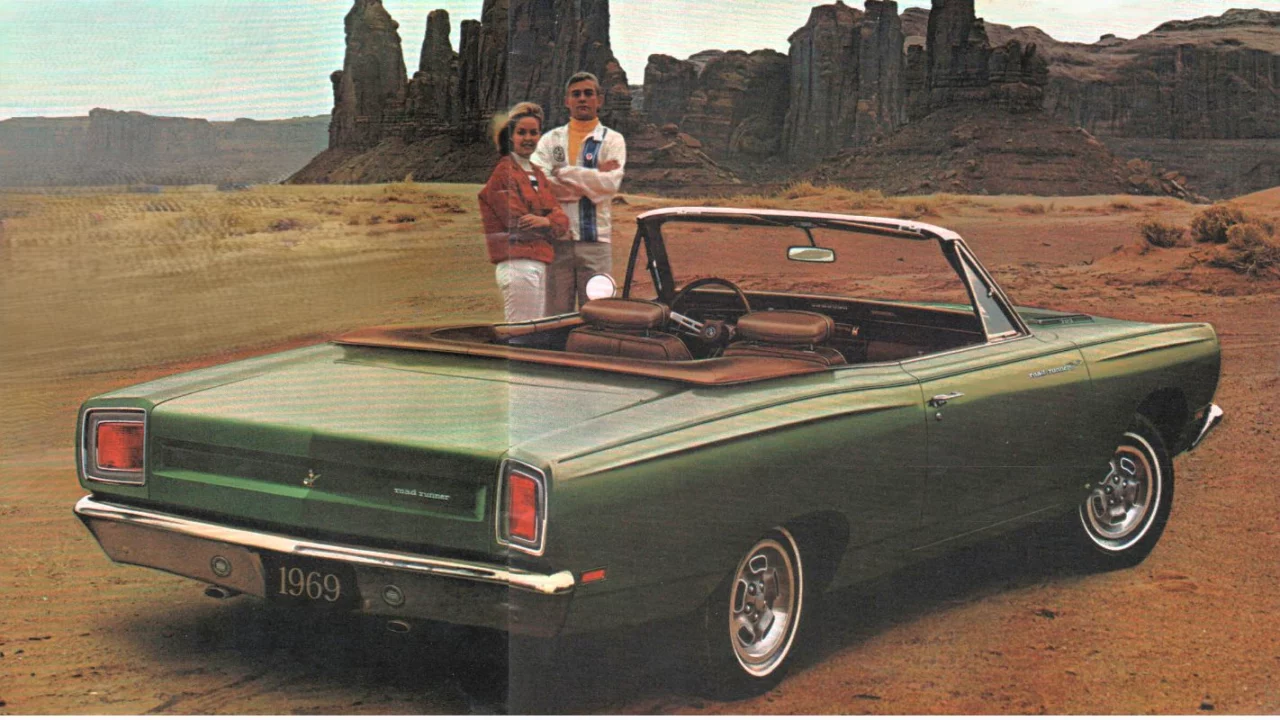
The taillights resemble the ‘67’s, but the center insert barely bleeds into the taillights. In fact, if you can imagine a 1969 Road Runner’s taillights (below), you can see how there’s a slight theme between the two. Additionally, red trim helps create a full-width taillight look for the Barracuda.
The mandated side-markers were now rectangular, almost seeming generic in comparison to the 1968’s. Optional, full-length sport stripes showed no engine displacement unless the car was equipped with the Formula S package (340 or 383) or the stand-alone 340 sans the Formula S. These decals were available in white, black, or red.
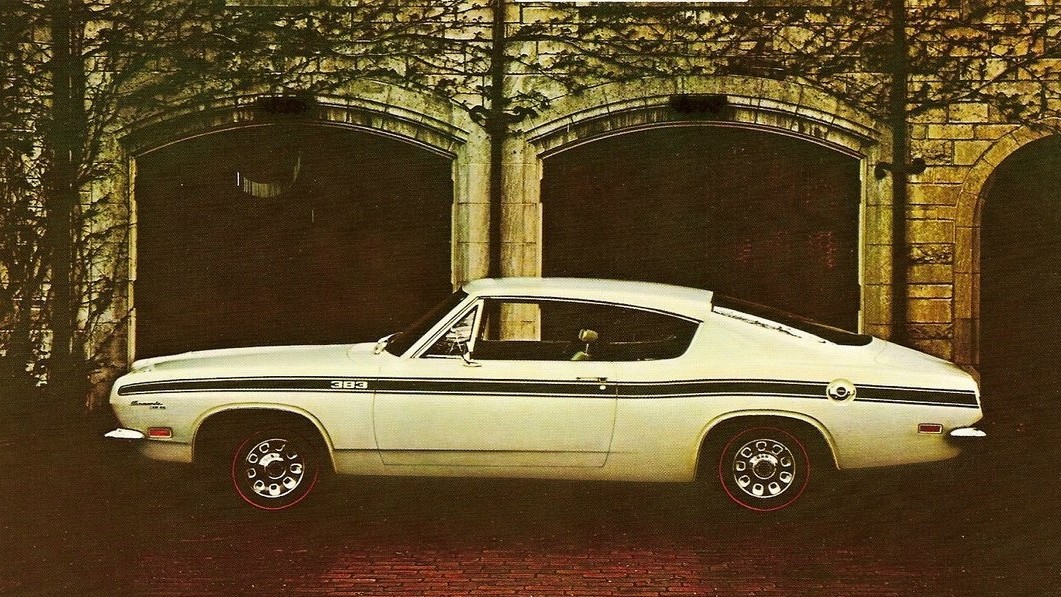
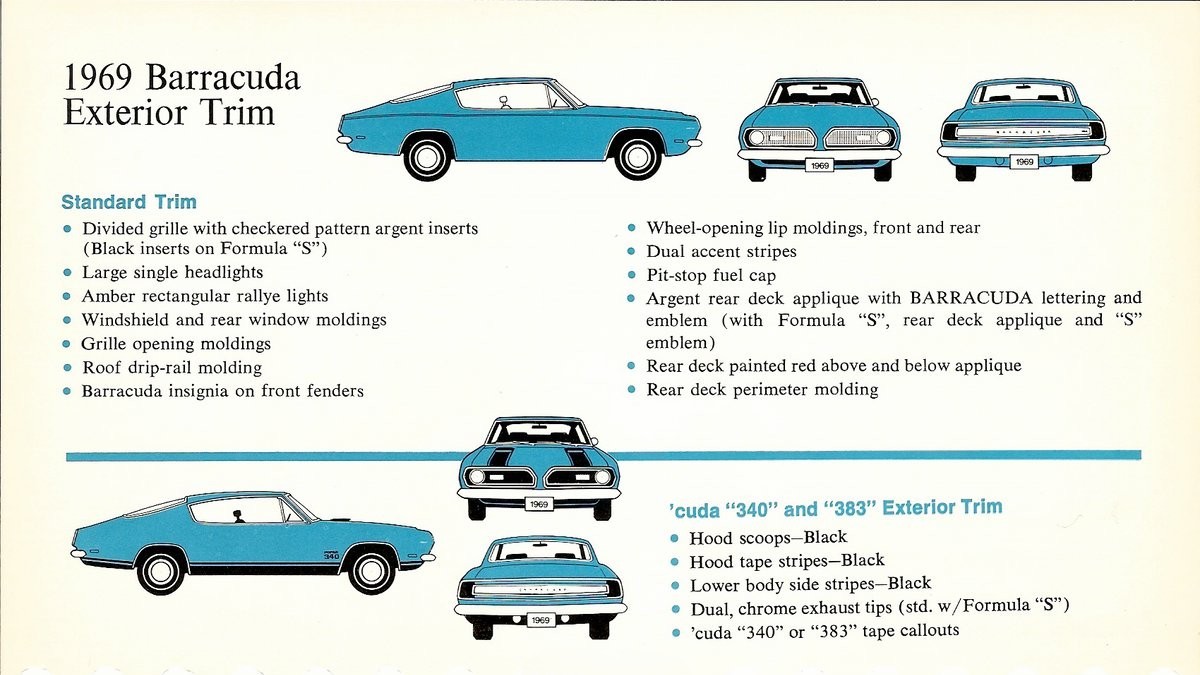
Thanks to the success of the Road Runner, Plymouth applied the same low trim level persona to a new performance package called ‘Cuda. Unique to the package were black nonfunctional hood scoops, black hood stripes, and black lower-body longitudinal stripes.
Below is your key to comparing the 1967-1969 grilles and taillights (in ascending order). Click on each image to be taken to its respective ad on ClassicCars.com.