

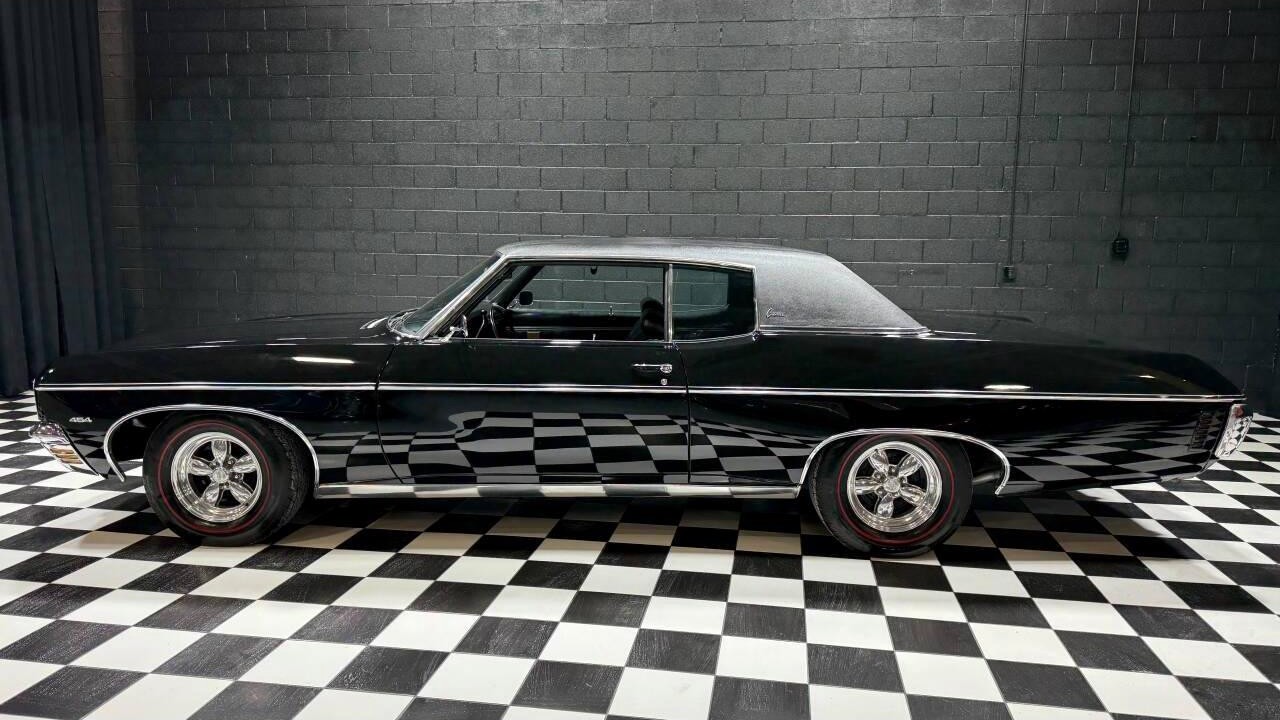
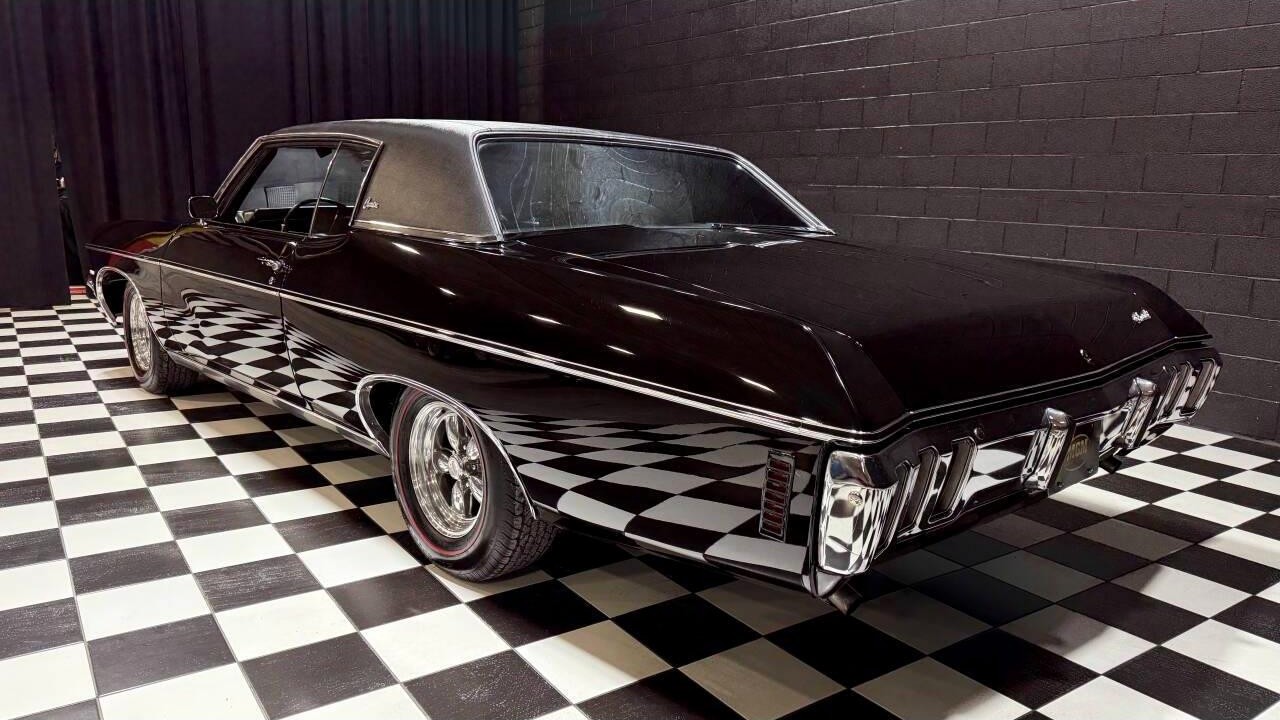
Pontiac may have the performance image, but Chevrolet was the “Hot One,” seducing the performance market on equal terms with the “Wide-Track” division. However, while Chevrolet’s performance offerings peaked in 1970, the same cannot be said for its full-size cars. Our Pick of the Day is a lingering effect of Chevrolet’s performance image. This 1970 Chevrolet Caprice Coupe is listed for sale on ClassicCars.com by a dealer in Addison, Illinois.
Sure, the Hot One was a reference to the 1955 Chevy, but it set the tone for all subsequent Bow Tie vehicles. It also marked an egalitarian view on performance, as horsepower originally was an upper-middle-class or higher thing until then (bear witness to Cadillac’s and Chrysler’s proto-horsepower wars earlier in the decade). Starting in 1956, Chevrolet offered dual quads and, for 1957, fuel injection.
A big-block 348 came for 1958, available with several states of tune and levels of carburetion. The top version started at 315 horsepower and, by 1961, it was rated for as much as 350 horses. However, it was the mid-year introduction of the Super Sport package (RPO 240) for the 1961 Impala that gave Chevrolet its first true high-performance model. Though we normally associate the SS with being a buckets-and-console model, in ’61 it was a true performance model thanks to the requirement of the big-block and other heavy-duty equipment. Nineteen sixty-one also marked the introduction of the 409, which also appeared mid-year.
A mid-year introduction was made again with the 409’s replacement, the 396. The 425-horsepower version was only available for 1965 (the 325-horse version continued for several years), but that was because it was replaced by the 427. In L72 guise, a full-size 427 Chevrolet could give many popular mid-size cars a run for their money. Additionally, in 1967, Chevrolet introduced the SS 427 package for the Impala, which was the perfect companion to the Chevelle SS 396. The SS 427 lasted through 1969, though it was an odd duck of sorts because full-size performance cars hadn’t been a “thing” for several years.
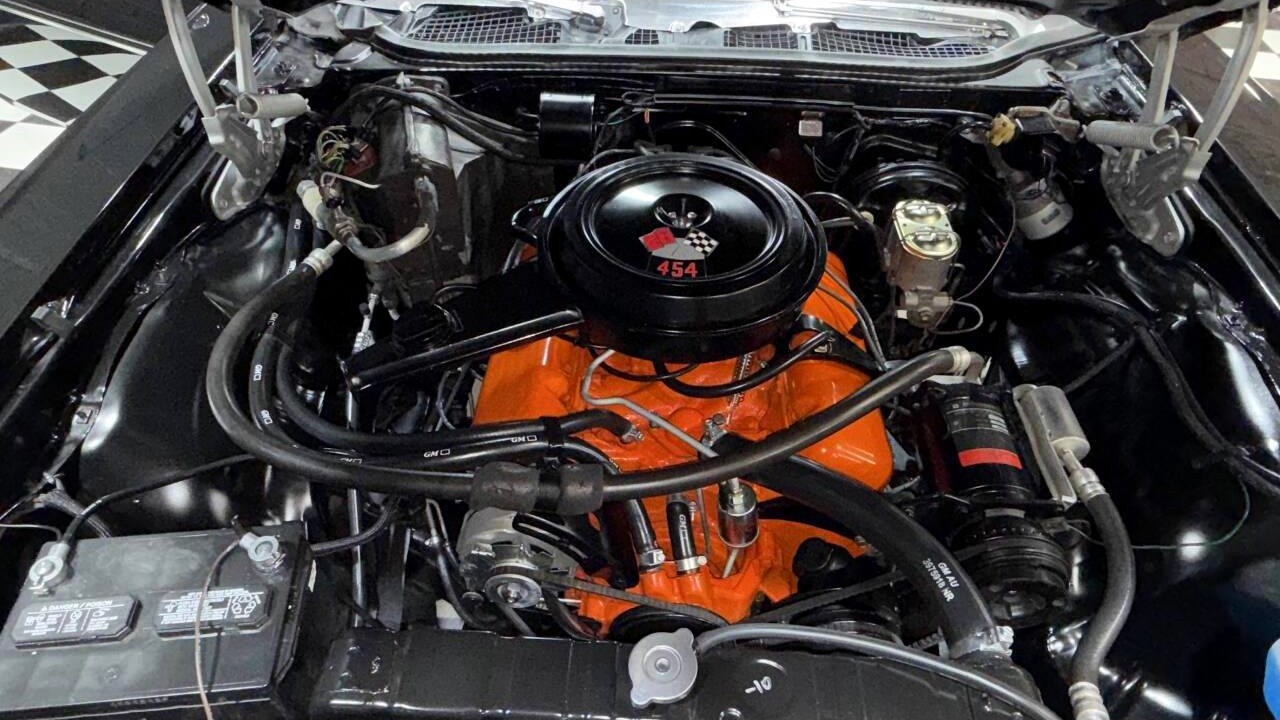
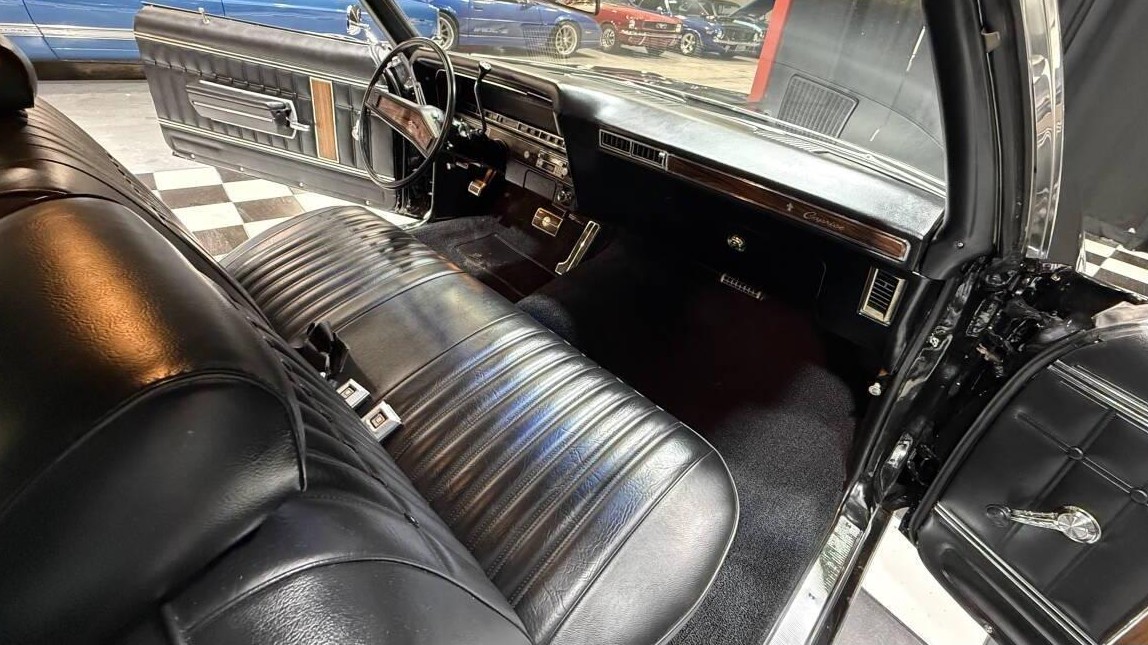
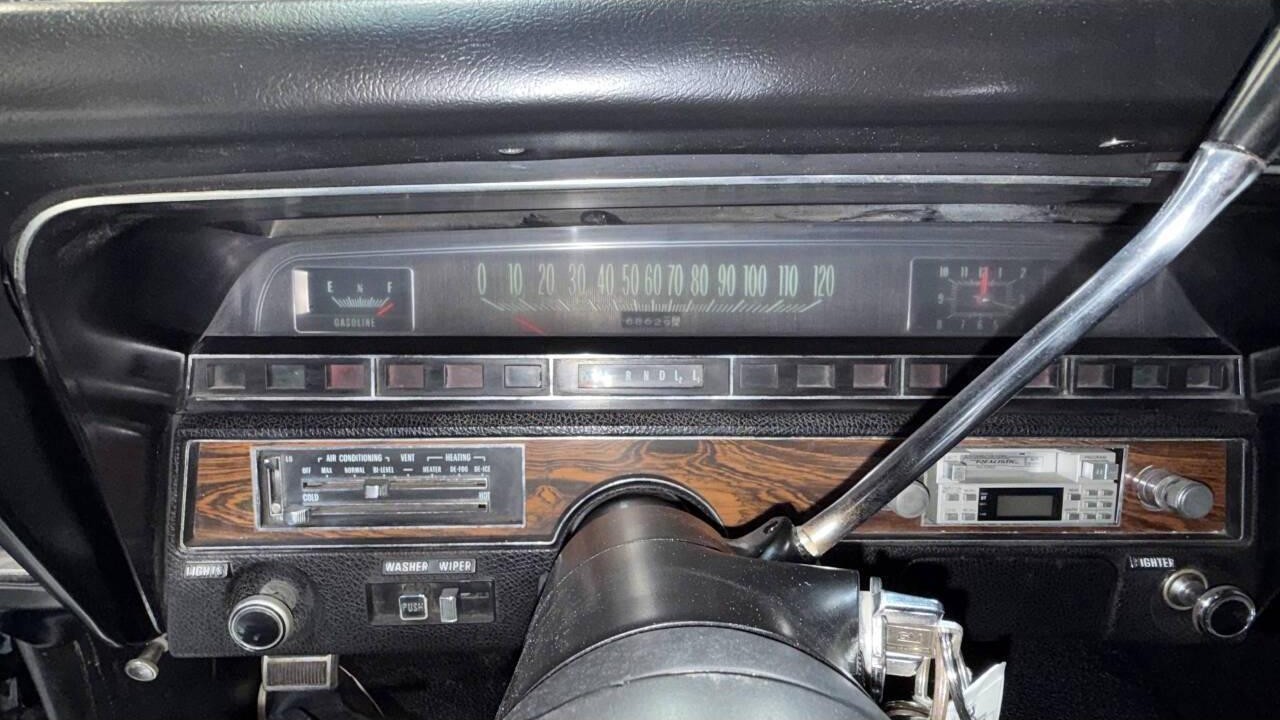
So, when Chevrolet returned to 1970 with the 454, there was no performance model to highlight the big-block. The engine was available as a 345-horsepower LS4 and a 390-horse LS5, both available in any full-size model. And that is what makes cars like this 1970 Chevrolet Caprice Coupe interesting: it’s the last of the high-compression big-blocks, but the manufacturer did not see fit to continue a performance package, though, truth be told, the Caprice was fancier than the late Impala SS 427 anyway. This is reflected by its seats, door panels, woodgrain dashboard, and formal coupe roofline. Though the version is not specified, the engine’s air cleaner appears to suggest that this car is powered by the LS4 backed by a column-shifted TH400 automatic. “Fresh, high-quality restoration. Strong factory drivetrain combination,” says the seller. “Deep black paint with excellent presentation, black vinyl top, and NOS moldings throughout.” Note the polished Torq Thrust mags wrapped in BFGoodrich redlines. Though not seen in pictures, this Bow Tie has Positraction—always a nice feature.
High-compression engines first appeared in 1949. Chevrolet’s small-block first appeared for 1955, coinciding with the beginning of the “Horsepower Race.” This 1970 Caprice is the perfect bookend for the Chevy performance fan.
Click here to view this Pick of the Day on ClassicCars.com
