When it comes to B-body Plymouths, you may have wondered what the difference is between the Plymouth Road Runner and GTX. The differences go deeper than just a standard engine (383 and 440, respectively), as both are based on different trim levels. This two-tiered approach was not generally found within General Motors, though Ford Motor Company dabbled in it after responding to the Road Runner.
Since the GTX first appeared in the market (in 1967), let’s start with it. If you glance past the GTX’s standard 440, you’ll notice it shared a fancy interior with the Satellite, the top “pedestrian” model in the Belvedere lineup. Most mid-size performance cars at the time followed the same formula: The Pontiac GTO also shared the same trim level with the LeMans, the Fairlane GT with the Fairlane 500/XL, and the Chevelle SS 396 with the Malibu.
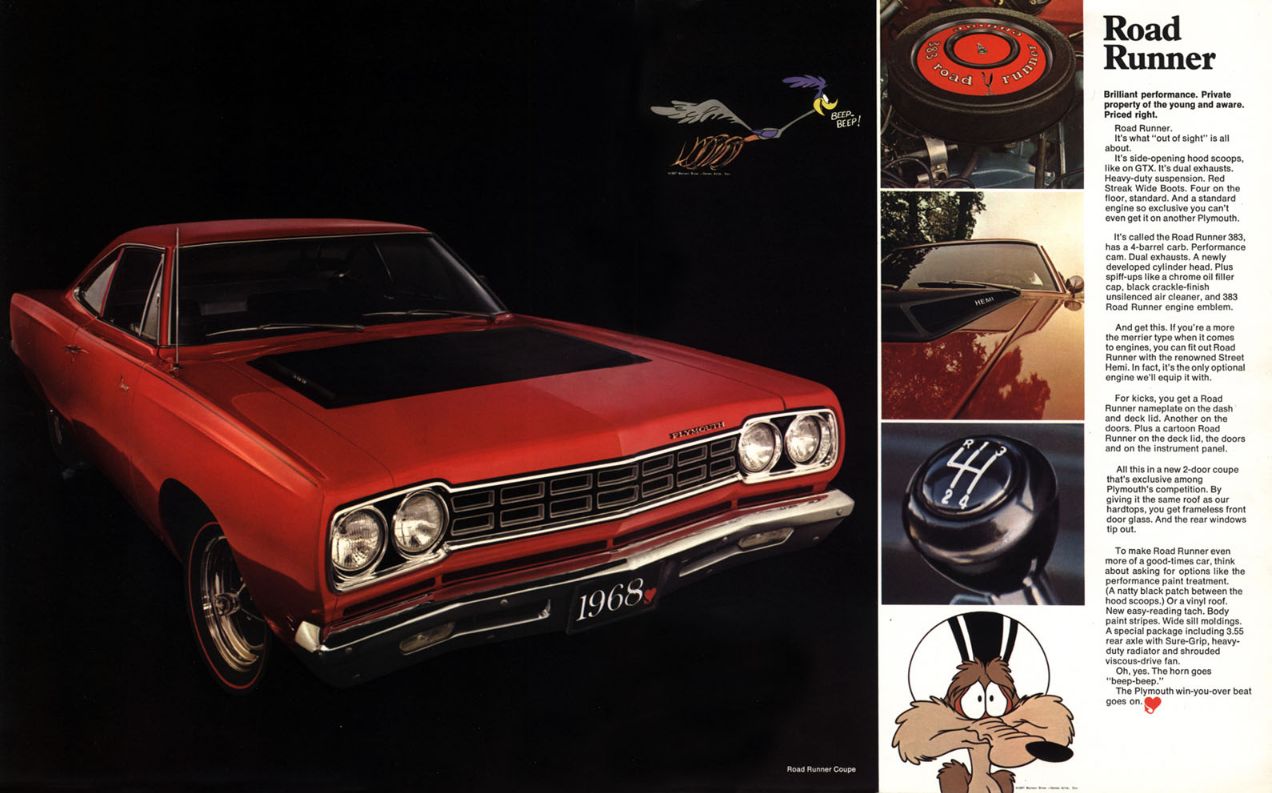
The above models are the reason the Road Runner was introduced in 1968 — because the cars were on the expensive side of their respective series, while there still was a demographic clamoring for cheap performance cars. Since Plymouth reshuffled its lineup for 1968, let’s look at the hierarchy of the Belvedere series for the two years.
| 1967 | 1968 |
| Belvedere I | Belvedere |
| — | Road Runner |
| Belvedere II | Satellite |
| Satellite | Sport Satellite |
| GTX | GTX |
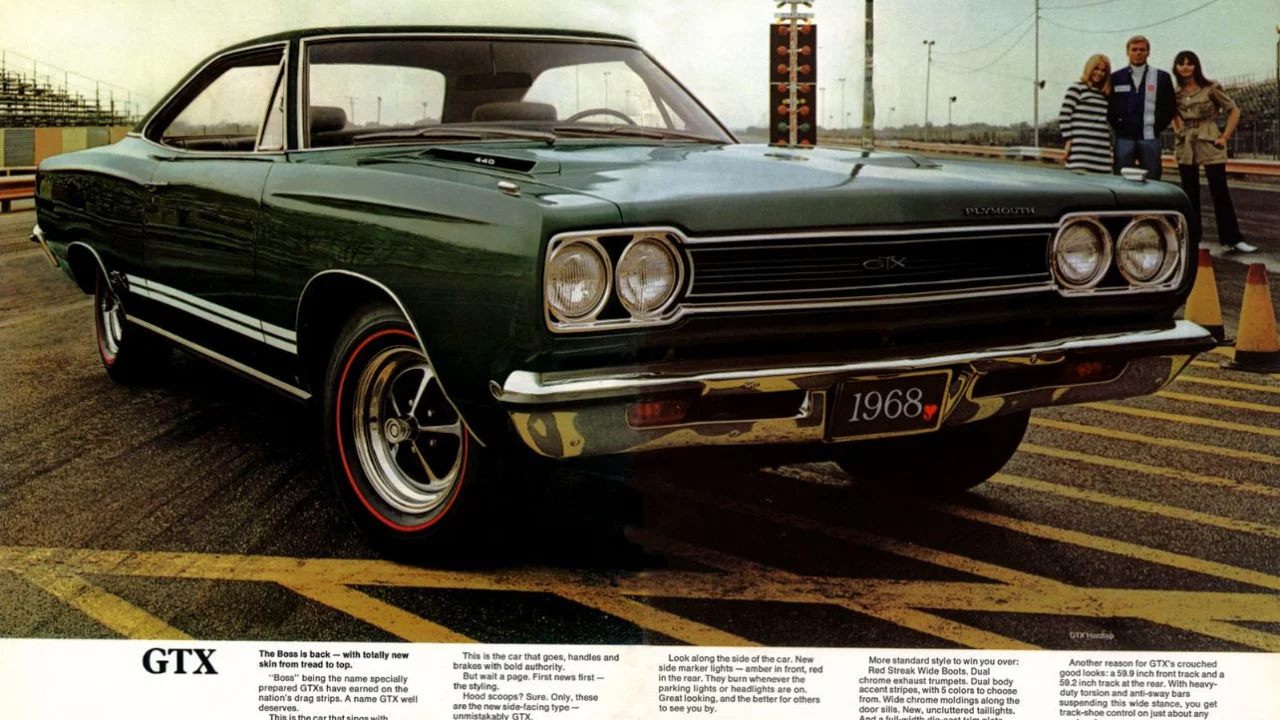
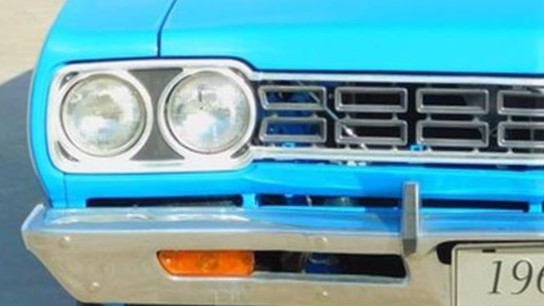
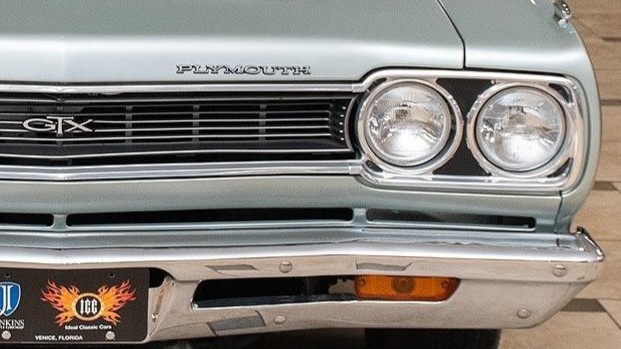
For 1968, Plymouth grouped the Belvedere series in two segments, which readily could be identified by the grille. Belvedere, Road Runner, and Satellite models featured an “aluminum grille [featuring] several rows of rectangular openings”; the Sport Satellite and GTX featured a “deeply recessed horizontal-bar grille.”
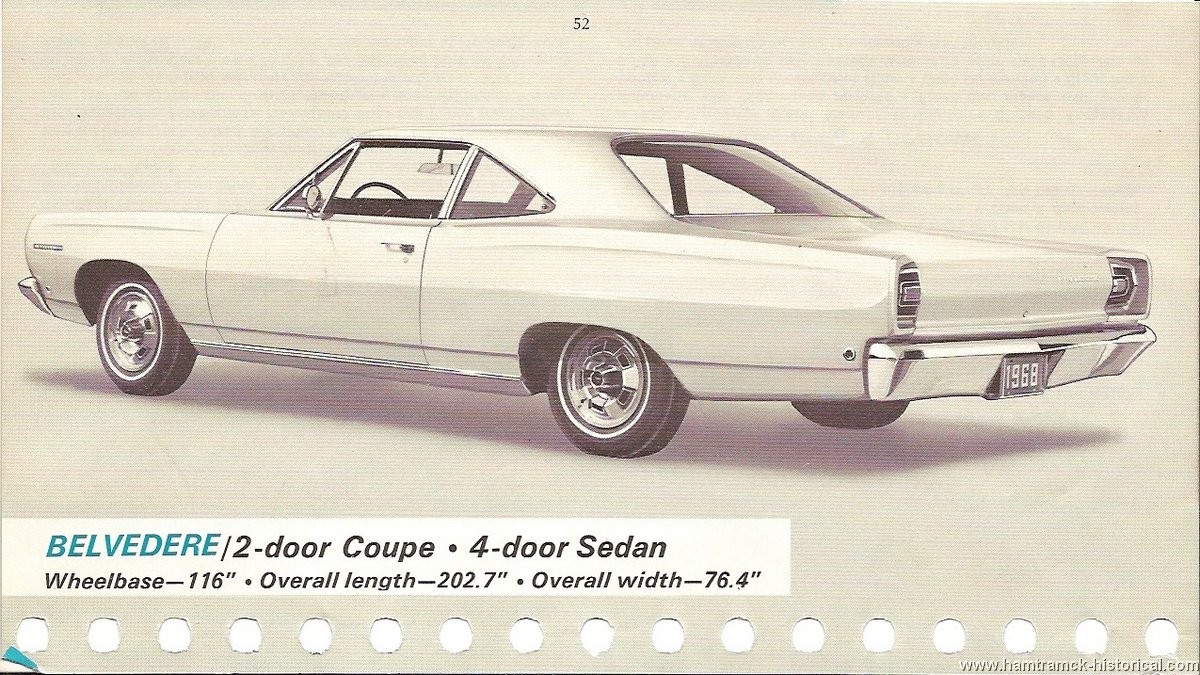
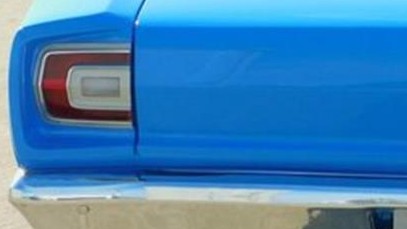
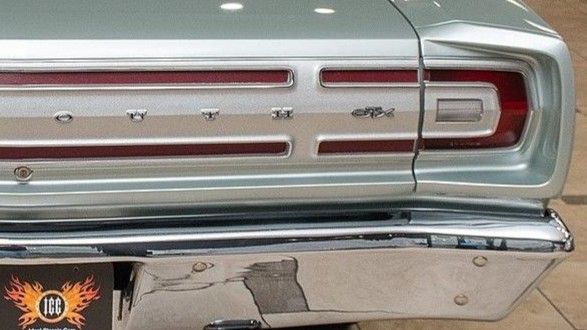
The rear end also distinguished the two segments, though the difference came from the decklid trim (or lack thereof) in between the horseshoe-shaped taillights.
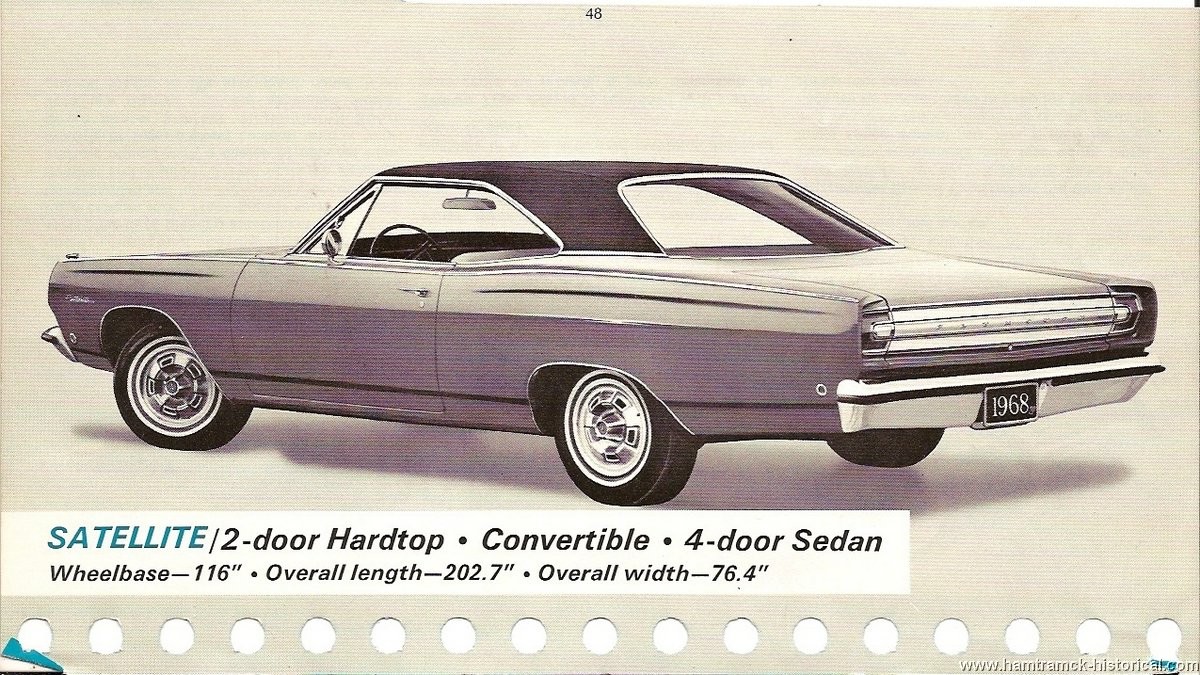
The Belvedere and Road Runner Coupes had nothing on the trunk panel, while Road Runner Hardtops featured a brushed aluminum applique across the deck between the taillights that was shared with the Satellite. Order a Road Runner Coupe with the Decor Group and you’d receive the same applique (among other trim).
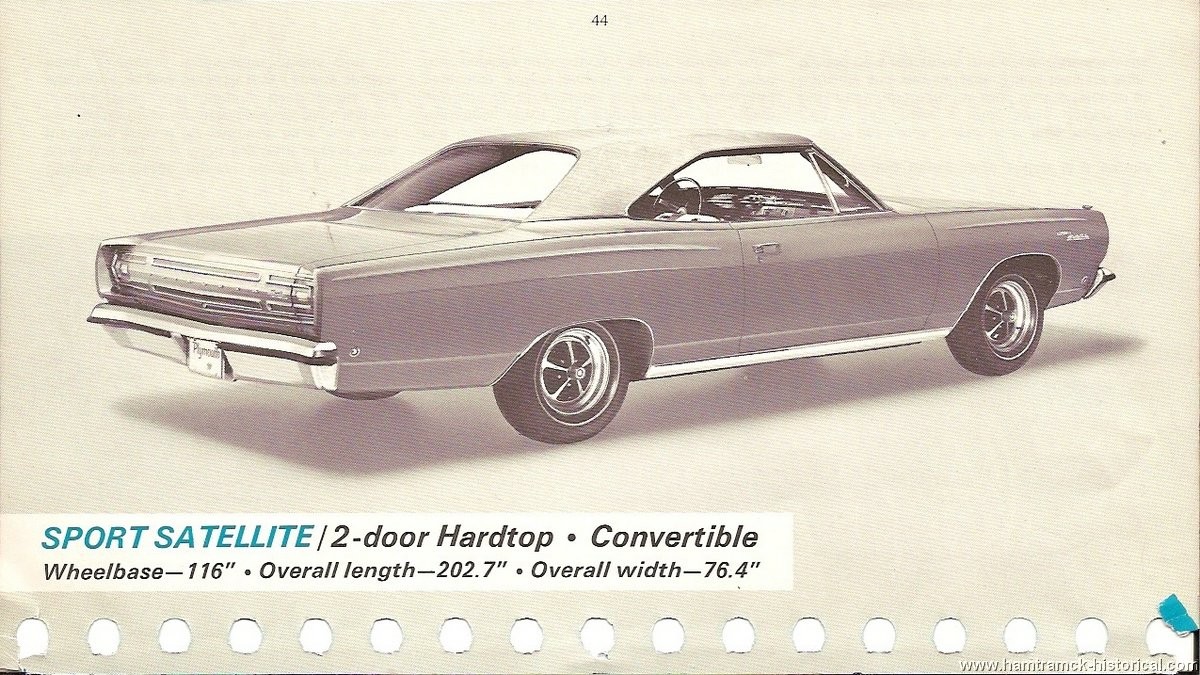
The Sport Satellite and GTX received a fancy applique that gave the illusion of full-width taillights.
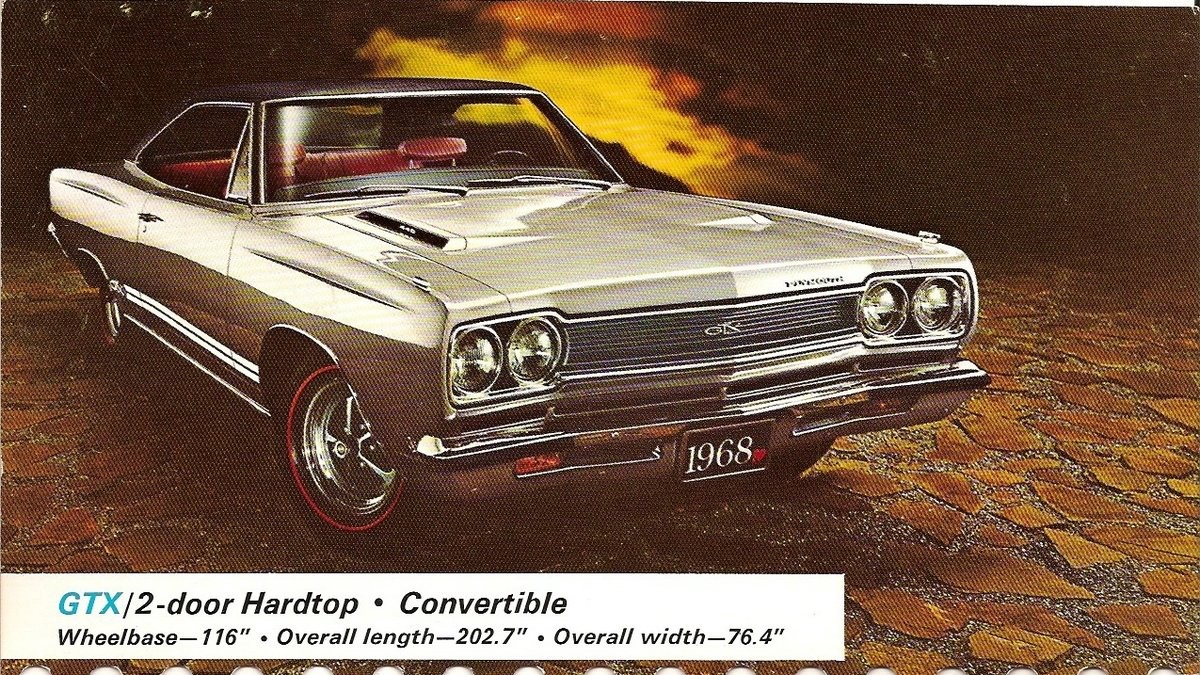
The GTX featured lower-body stripes that started at the GTX badge on the rear fenders and stopped at the front wheels. The dual stripes were available in white, black, red, “ledger” green, or light blue.
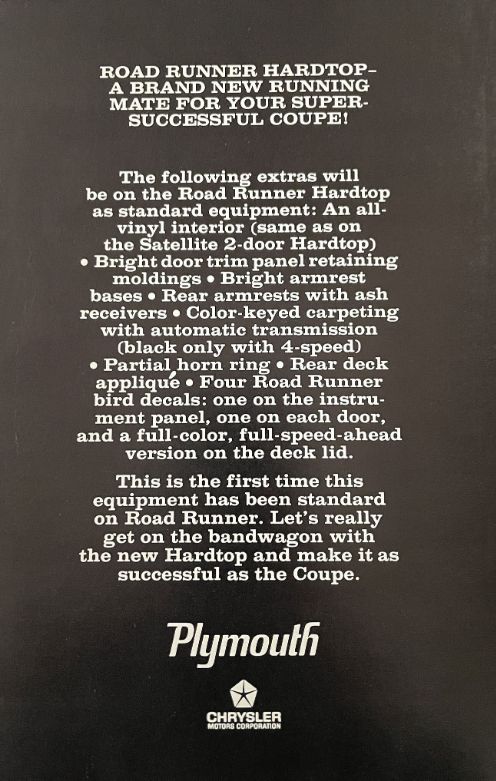
It’s worth noting that when the Road Runner Hardtop was introduced in January 1968 (several months after the Coupe), its standard interior was a step up from the Coupe’s — more like the Satellite’s, including carpet instead of a rubber mat. This upgrade was also available for Road Runner Coupes with the Decor Package.
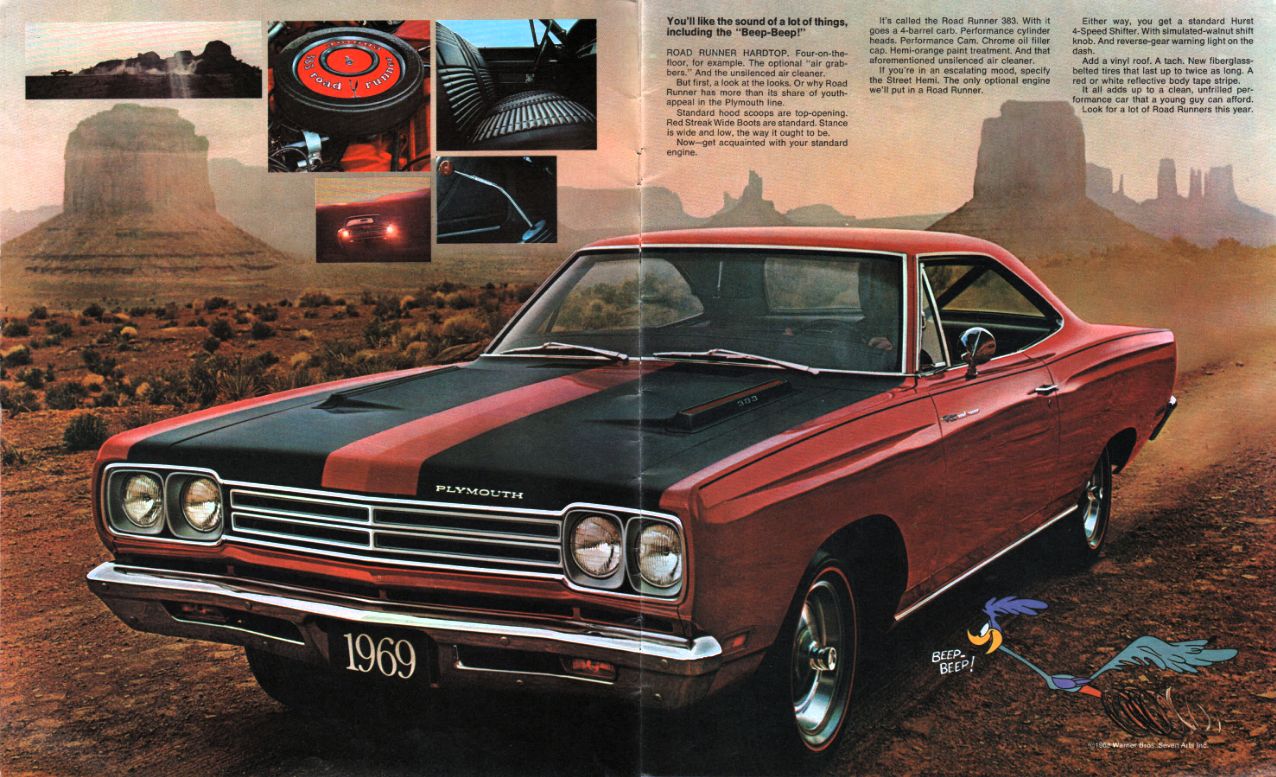
Plymouth refined the Belvedere series for 1969, as was common for sophomore efforts. A Road Runner Convertible joined the roster which, like the Hardtop, included the Decor Package. That package remained optional for the Coupe.
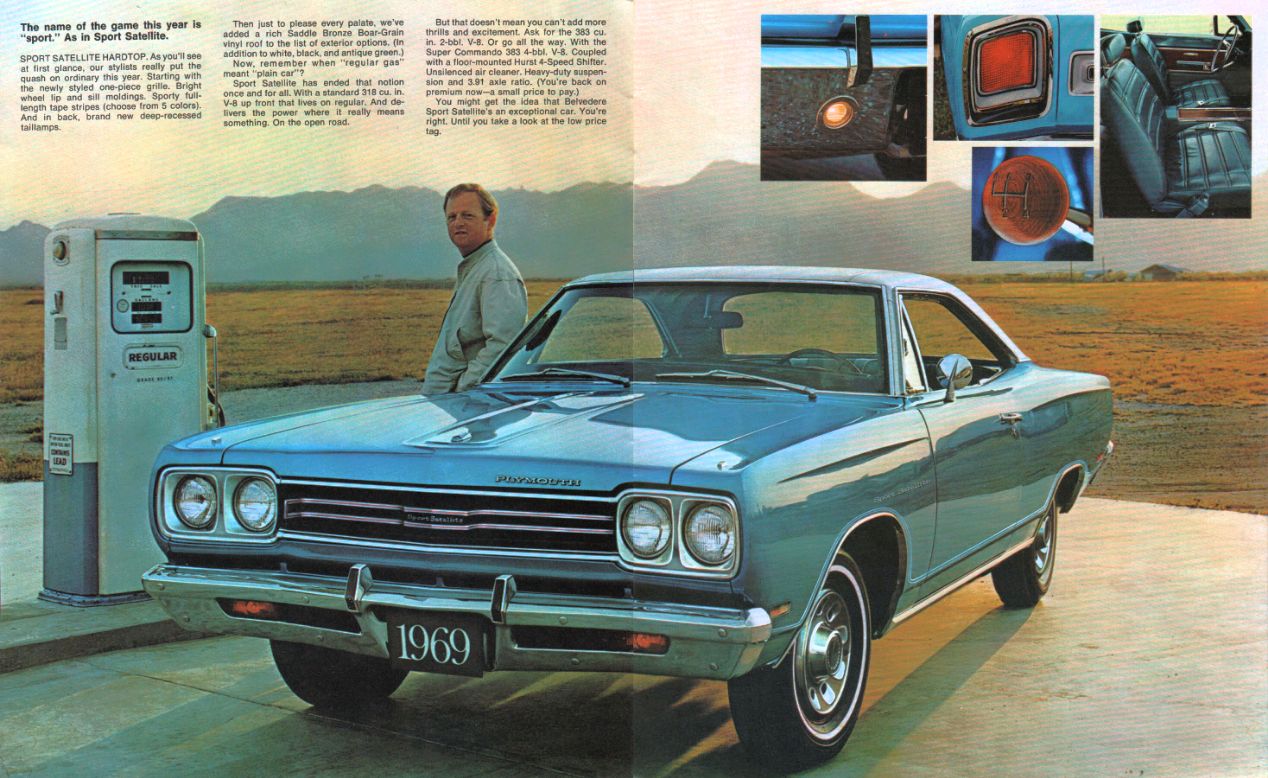
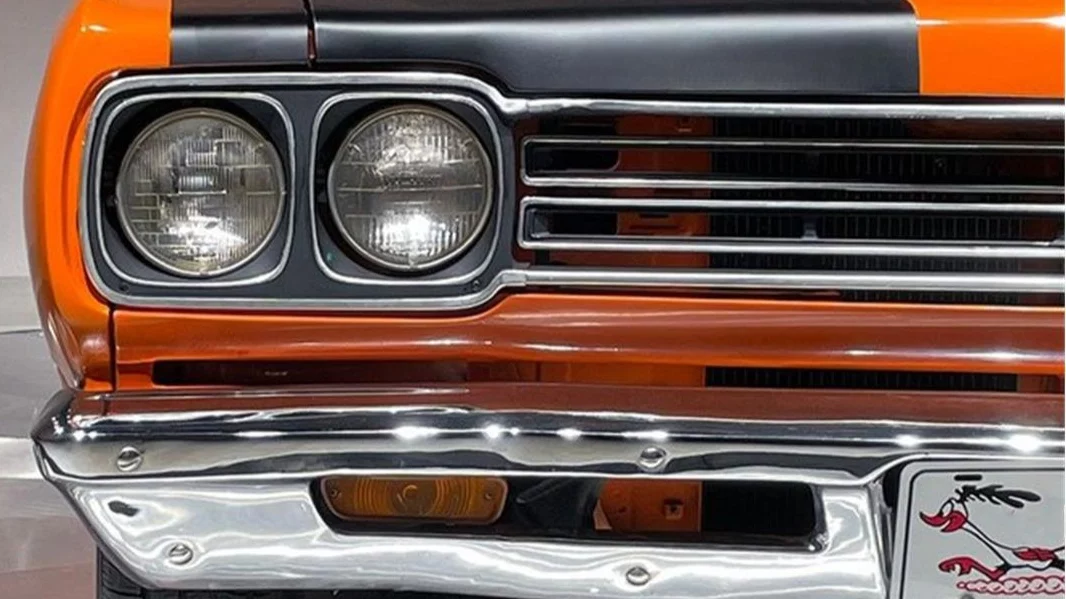
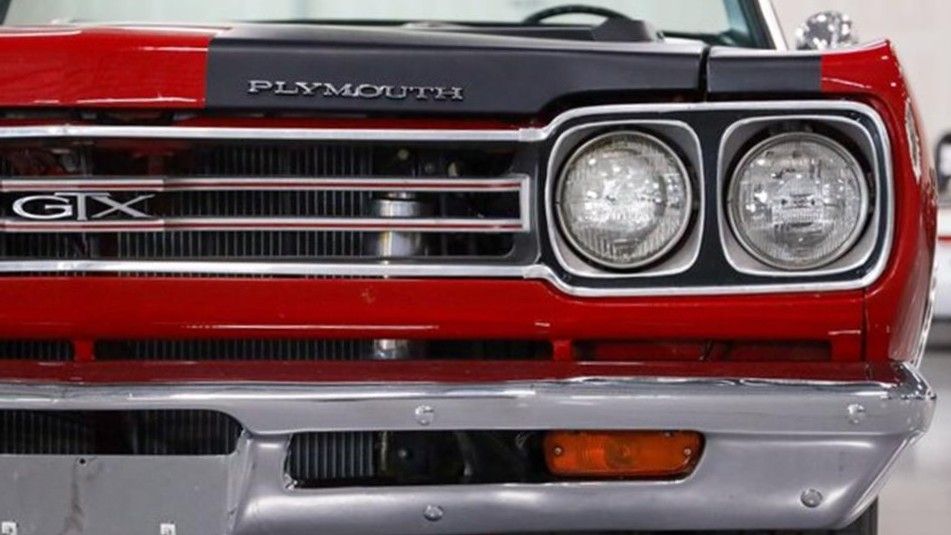
The Belvedere, Road Runner, and Satellite featured a “dual horizontal bar grille insert,” while the Sport Satellite and GTX featured a “single horizontal bar insert in deep-set grille.”
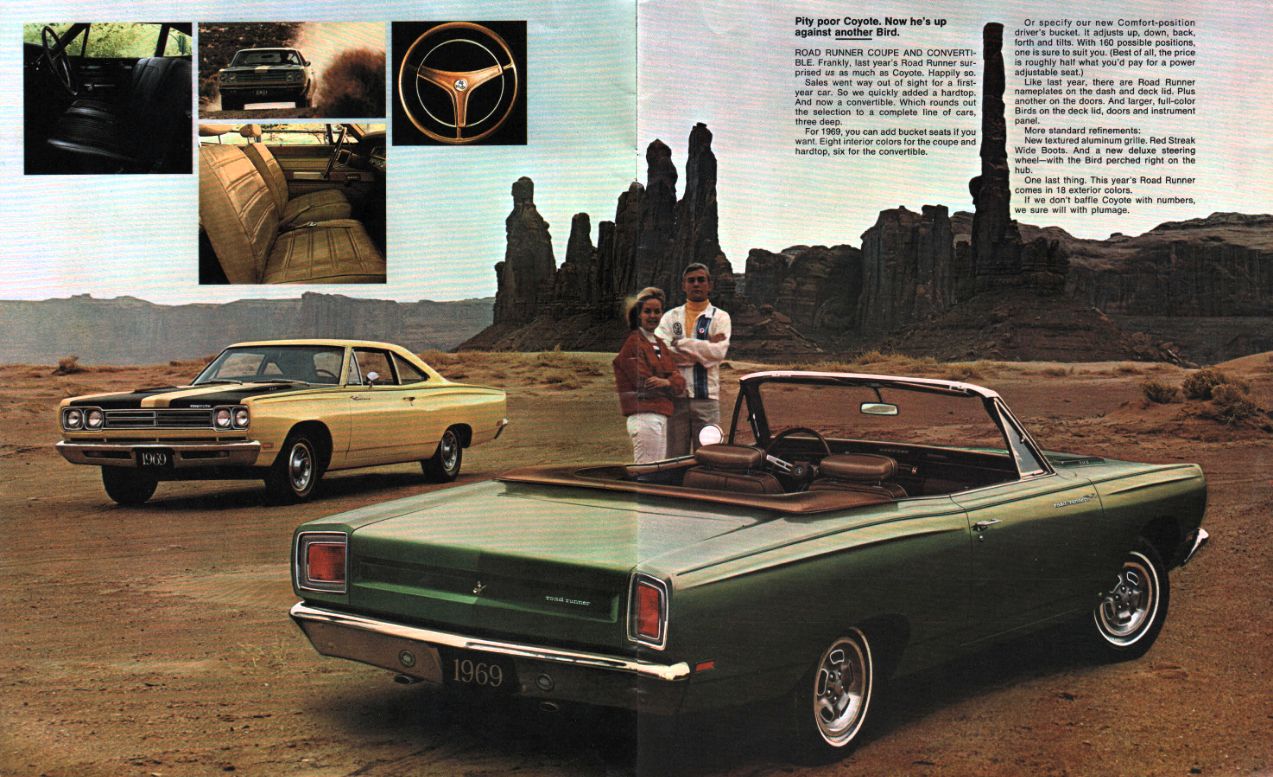
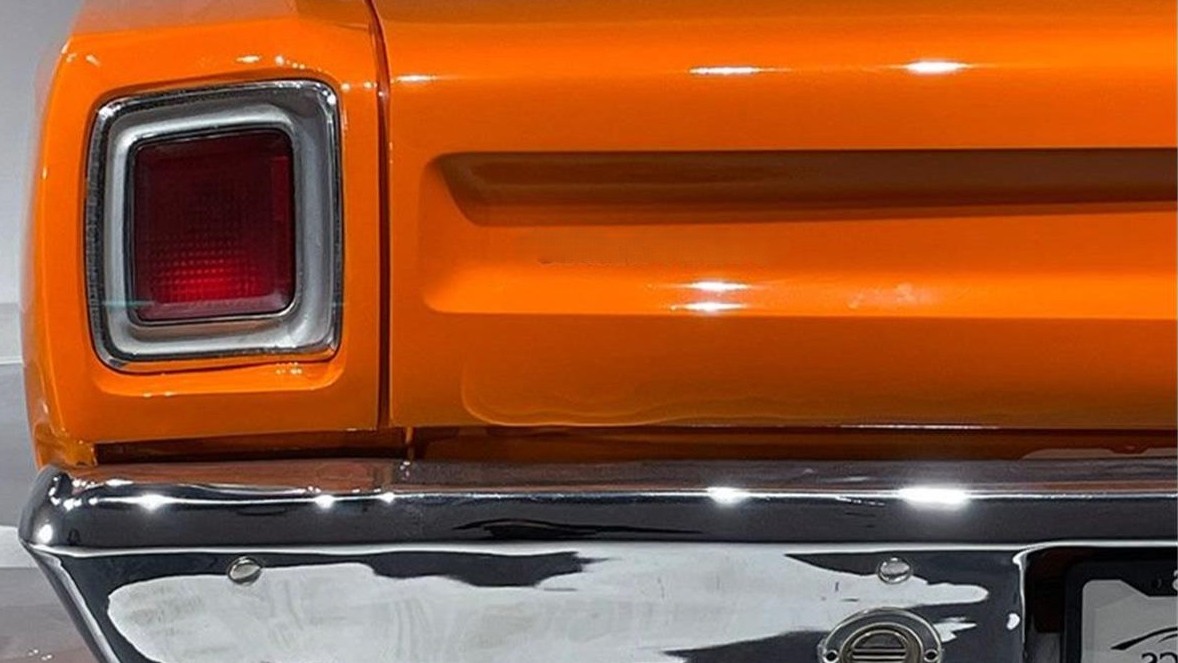
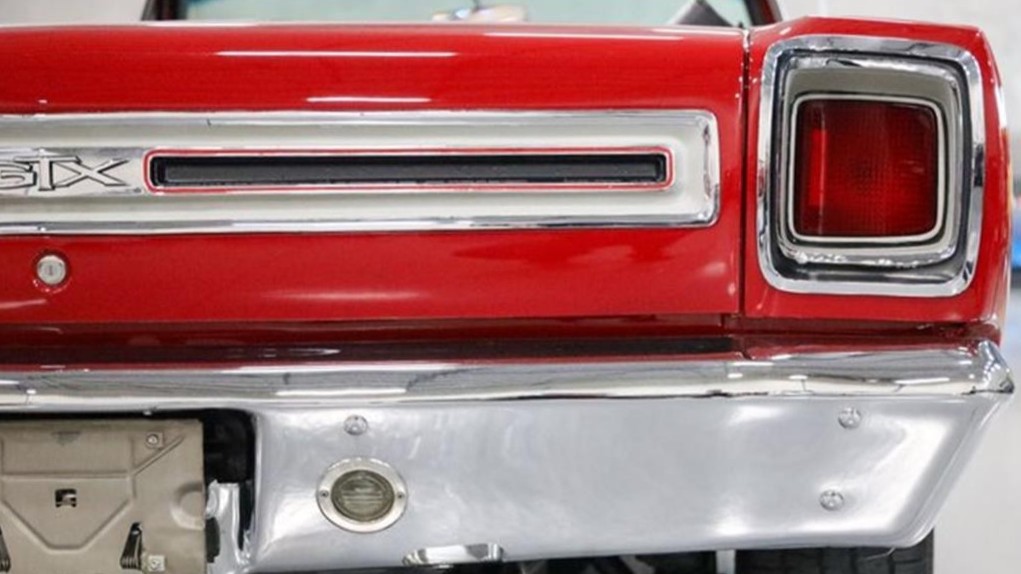
Out back, new taillights were now inset and angled at the corners, with back-up lights migrating to the bumper. The Belvedere and Road Runner featured no trim on the trunk lid, while the Satellite featured silver paint and trim around the cove on the trunk lid.
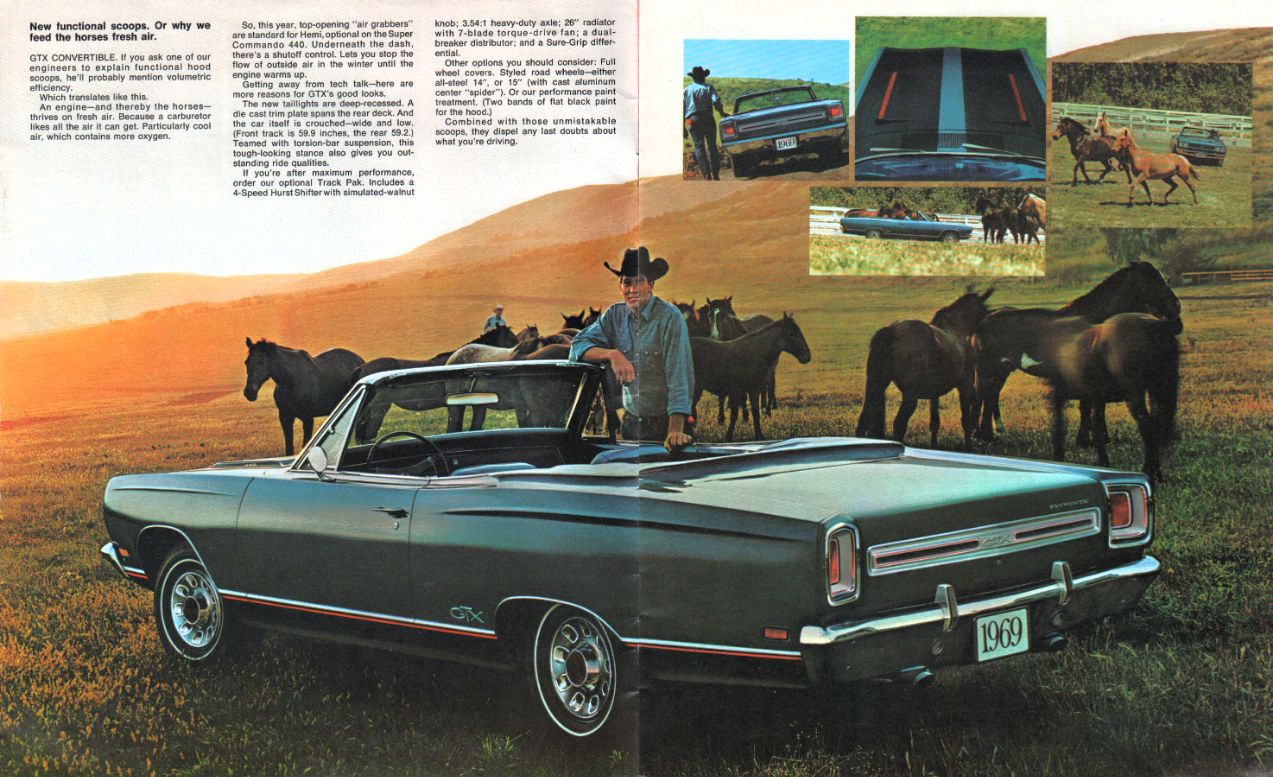
Both the Sport Satellite and GTX featured a “bright applique across rear deck,” with the GTX also having black inserts.
The stripes identifying the GTX were gone, replaced by a “full-length lower body molding” with “black textured paint on all sheet metal below [the] molding.” Either white or red reflective tape Sport Stripes ran longitudinally under the molding. Road Runners were also available with longitudinal Tapered Sport Stripes, also available in reflective white or red.
Below is your key to comparing the 1968-1969 grilles and taillights (in ascending order). Click on each image to be taken to its respective ad on ClassicCars.com.