

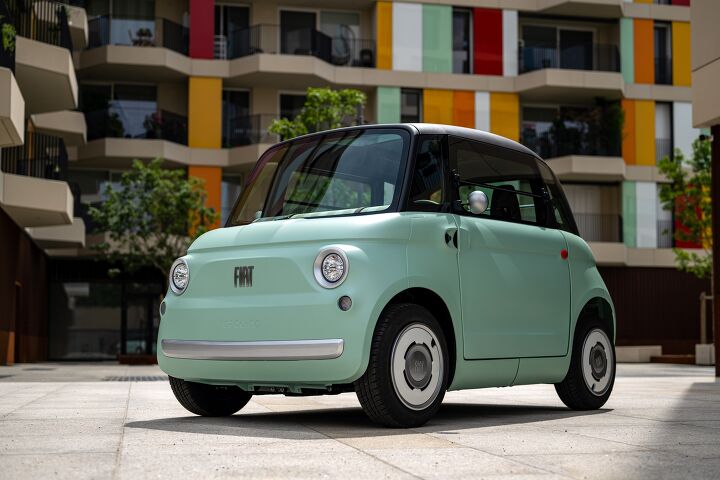
Fiat has confirmed that it will be bringing the Topolino to the United States, just days after the White House announced a desire to see more ultra-small cars on American roads.
The vehicle’s announcement coincided with the unveiling of an art car, painted by pop artist Romero Britto, at Miami Art Week.

“Our one-off collaboration with Britto makes perfect sense. Together we have joined two iconic brands with global influence that represent color and happiness, bringing a smile to people’s faces,” said Fiat CEO Olivier Francois. “The Fiat Topolino, our small, joyful, colorful car that is now everywhere in Europe, has made several appearances in the U.S. over the past year, including last month at the LA Auto Show, where it’s creating tremendous excitement among consumers. So much so that I’m happy to share that we’ll be bringing the Fiat Topolino to the U.S., with more details to come next year.”
Before we get into where the Fiat Topolino is supposed to slot into our market, let’s discuss what it is and where it comes from.

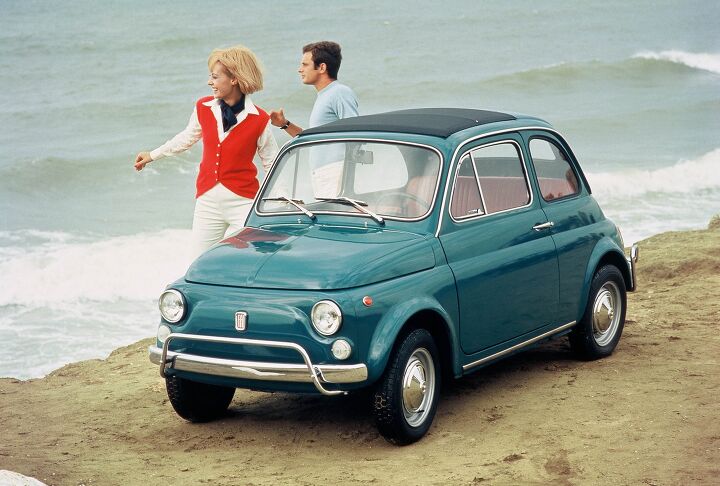
Originally, the Topolino (which means “little mouse” in Italian) was what everyone called the Fiat 500 that was built between 1936 and 1955. After that, the “Nuova 500” model embraced the body shape that we’re all familiar with today.
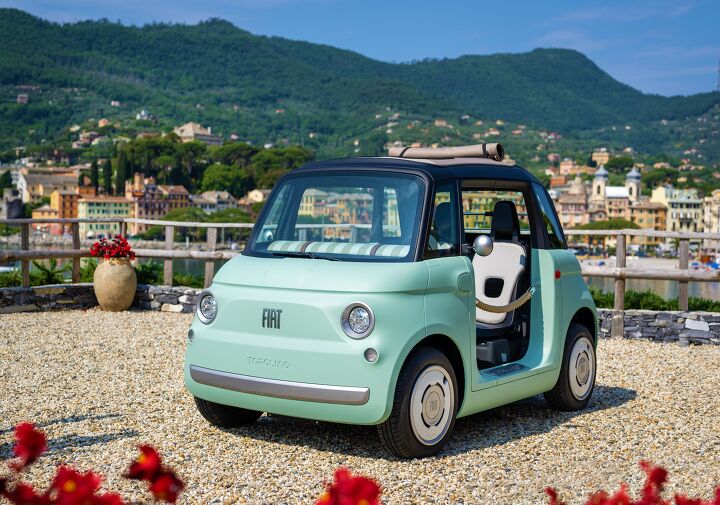
The modern Topolino taps into that nostalgia by borrowing the pet name of the original and leaning into the body style of the iconic Nuova Fiat 500. It also exists in a similar niche by filling the gap between Italian scooters and larger passenger vehicles.
But the current Topolino isn’t even technically a car. It’s an all-electric quadricycle, raising some serious questions about its legal status on public roads once it lands in North America.
According to Stellantis, this little cutie offers a whopping 8 horsepower and a top speed of just 28 mph. This is acceptable if you never plan venturing beyond the city limits of Paris or Rome. But expressways are off the table entirely for the Topolino EV. For the sake of comparison, the original 1937 Fiat 500A “Topolino” managed to squeeze 13 horsepower from its 569-cc motor and was allegedly capable of achieving a top speed of about 50 mph.

Not bad for a micro car that’s nearly a century old.
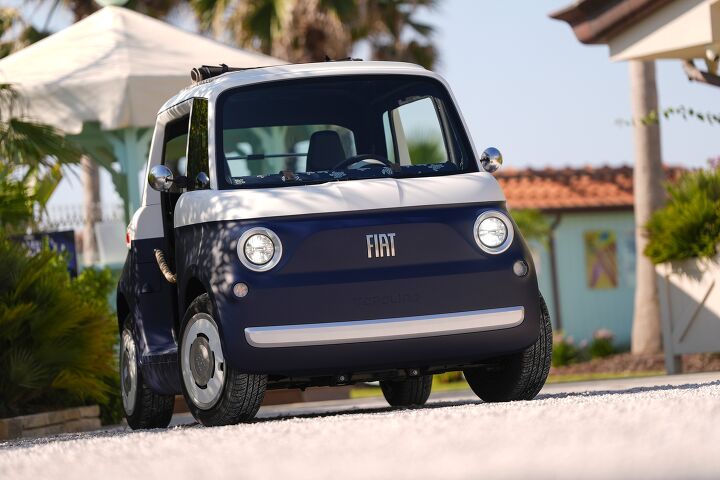
To be fair, it’s a little hard to dislike the modern Topolino for what it is. But what it happens to be is still less broadly useful than the now-ancient vehicle that it was inspired by. Fiat even sells a version of the car that doesn’t come with any doors. That’s mainly to provide an open air, recreational feel. However, it underlines just how rudimentary and presumably unsuited for serious tasks the electric Topolino is as a vehicle.
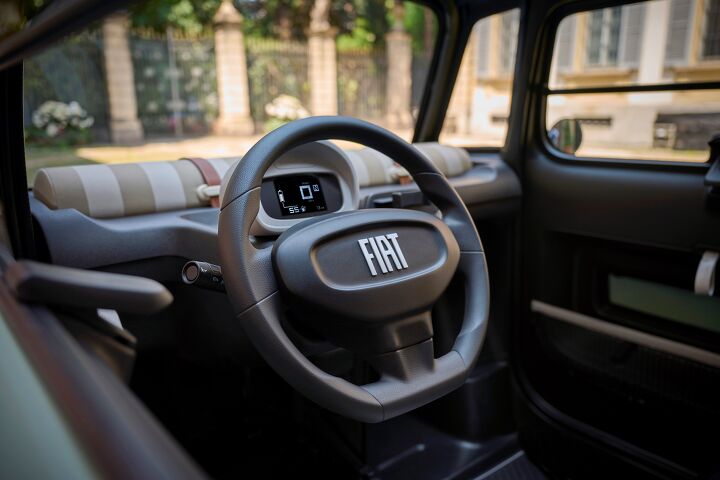
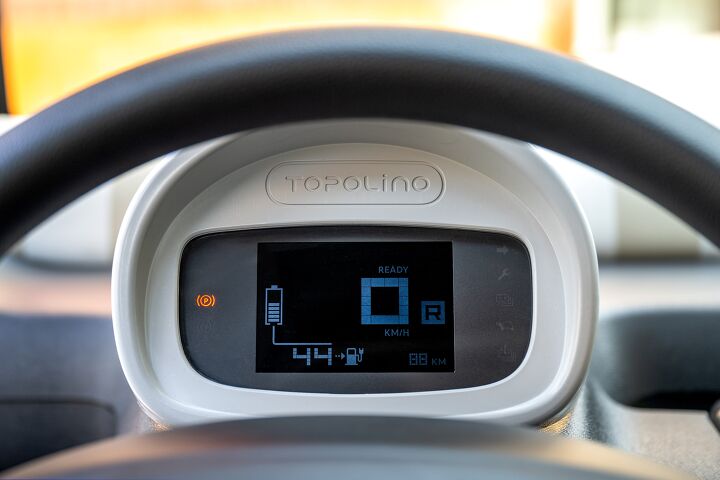
The interior is austere, offering a couple of pedals, two seats, a steering wheel, and a few buttons to select the gear you want. Instrumentation is achieved via a singular digital screen that’s more basic than the ones you’d find on the cheapest motorcycles. While slightly unkind, calling it a premium golf car likely isn’t that far from the truth.
Its total length falls just shy of 100 inches, meaning it’ll be dwarfed by the 154 inch Mazda MX-5 Miata. Maximum range from the Fiat’s tiny 5.4-kWh power source is pegged at 46 miles using European testing standards, so the EPA will likely rate it a tad lower.

Since you’d never be sitting in for more than a few miles, and it would sap the battery anyway, Euro-spec models don’t get air conditioning. But drivers can have a heater and a singular windshield wiper — which they’ll probably want if they already splurged on the model with doors and side windows.
Built in Morocco and rebadged as several other all-electric city cars (e.g. Citroen Ami), the little electric obviously isn’t intended to be a household’s mainstay automobile. But its announcement comes just days after Donald Trump announced plans to bring the kind of small cars he’s seen outside of the United States into the country.

Focusing wholly on ultra-small cars as a way to lower today’s bloated transaction prices admittedly feels like a mistake. It’s not that the United States doesn’t need more small cars, because it absolutely does. Considering how many automakers culled their small, entry level options a decade ago to chase margins by trying to get more people into larger models with body styles that were less subject to government emission regulations, it’d be nice to see their return.
Small and efficient cars likewise tend to see a rise in demand whenever an economy is in rough shape, suggesting that they can indeed sell. We’ve seen this repeatedly throughout history. But these periods tend to be very short lived in America, reverting back to a normal where the Toyota Corolla is about as small as the average driver is willing to go.
That doesn’t preclude something like the Honda Fit/Jazz or Toyota Yaris from still being successful. But the Fiat Topolino certainly isn’t in their league and barely offers more utility than your average bicycle with a basket.
The concern with pushing in a bunch of ultra-small models is that it doesn’t really address the core issue. Americans are not clamoring for smaller vehicles, they want more affordable options. Since 2019, the average car price has increased by anywhere from 30 to 40 percent — which stems from a mix of sustained inflation, increased tariffs, claimed part shortages, increased dealer markups, and the automotive industry simply doing whatever it can to improve its own profitability.
In Europe, the tiny EV retails for about €9,500. That breaks down to about $11,000 USD, putting the model about $6,500 away from the more practical ( albeit discontinued) Mitsubishi Mirage. This also means it’s about $19,000 cheaper than the 2026 Nissan Leaf (the cheapest EV currently on our market). It’s also simpler than the Leaf, which would be great if it were half as useful as an everyday car.
However, the Topolino clearly isn’t for the cash-strapped family that needs to buy a new daily driver. It’s for trendy urbanites who want to flex with their cute runabout while running errands or heading to the beach.
Based on the lack of success Fiat has had with importing the 500, especially after pivoting exclusively to the all-electric version, running with an even smaller EV seems ill advised. It’s hard to imagine the Topolino landing anywhere but inside the garages of a few fashionable townhouses, some tourist-focused rental fleets, the occasional high-end golf course, and a handful of luxury resorts.
Your author could always be wrong, of course, and I’d be curious if anyone out there has a different perspective on who exactly Fiat expects to purchase the Topolino. But its true appeal seems quite limited, making one wonder what exactly Stellantis is going to say when it reveals its grand plan for the model in 2026.

[Images: Stellantis]
Become a TTAC insider. Get the latest news, features, TTAC takes, and everything else that gets to the truth about cars first by subscribing to our newsletter.
