

When the compact Ford Ranger pickup was born in the early 1980s, it was positioned as a fuel-efficient alternative to the F-Series, and it competed directly with Japanese imports like the Toyota Pickup. Smartly, Ford engineers optimized some parts-sharing between the Ranger and its SUV sibling, the Bronco II (as well as the Ford Explorer later on).
For 1993, the Ranger received a more aerodynamic design. Although some cosmetic and mechanical tweaks were made in the ensuing years, the pickup carried a lot of its same architecture all the way through 2011. It’s worth noting that for select model years, the Mazda B-series was a rebadged variant of the Ranger.
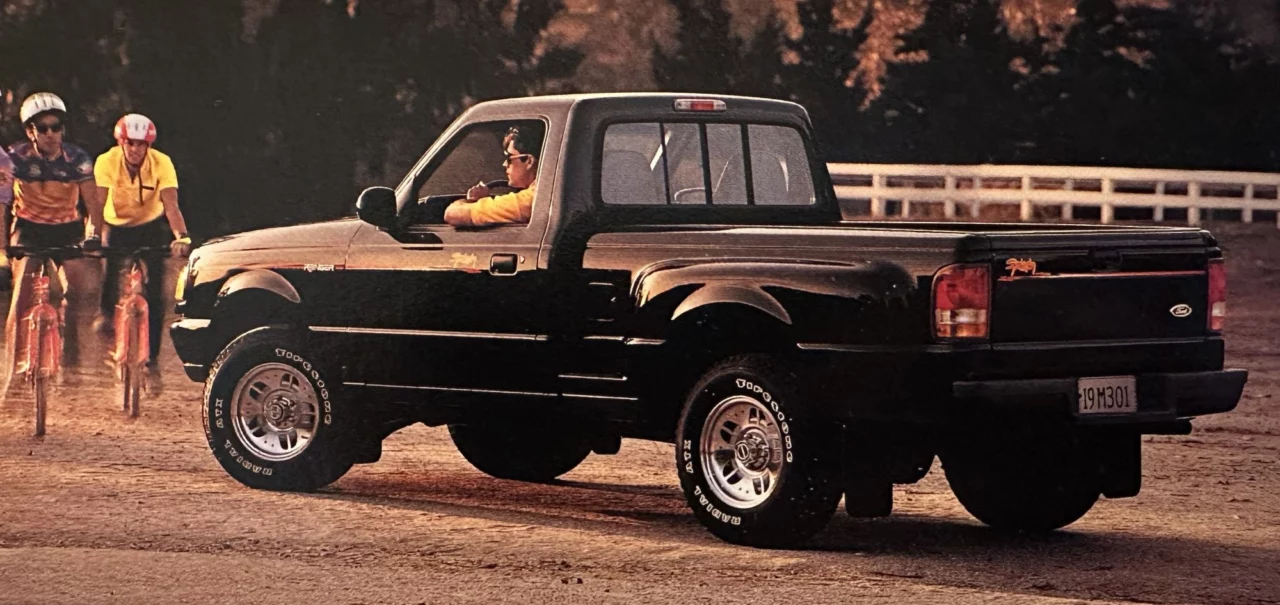
What made the Ranger such a capable truck for its size? A few things come to mind. It came with what Ford called the Twin-I-Beam (on 4×2 models) and Twin-Traction Beam (on 4×4 models) to optimize handling. Nitrogen gas-pressurized shock absorbers were standard, and the front coil and rear leaf springs were matched to the desired target payload. The all-welded pickup box had double-wall construction and a removable tailgate. Power front disc brakes were standard on all models. Finally, depending on configuration, the Ranger could come with a maximum trailer towing capacity of up to 6,000 pounds and a payload of 1,650 pounds, which was plenty of muscle for a truck that was small in stature.
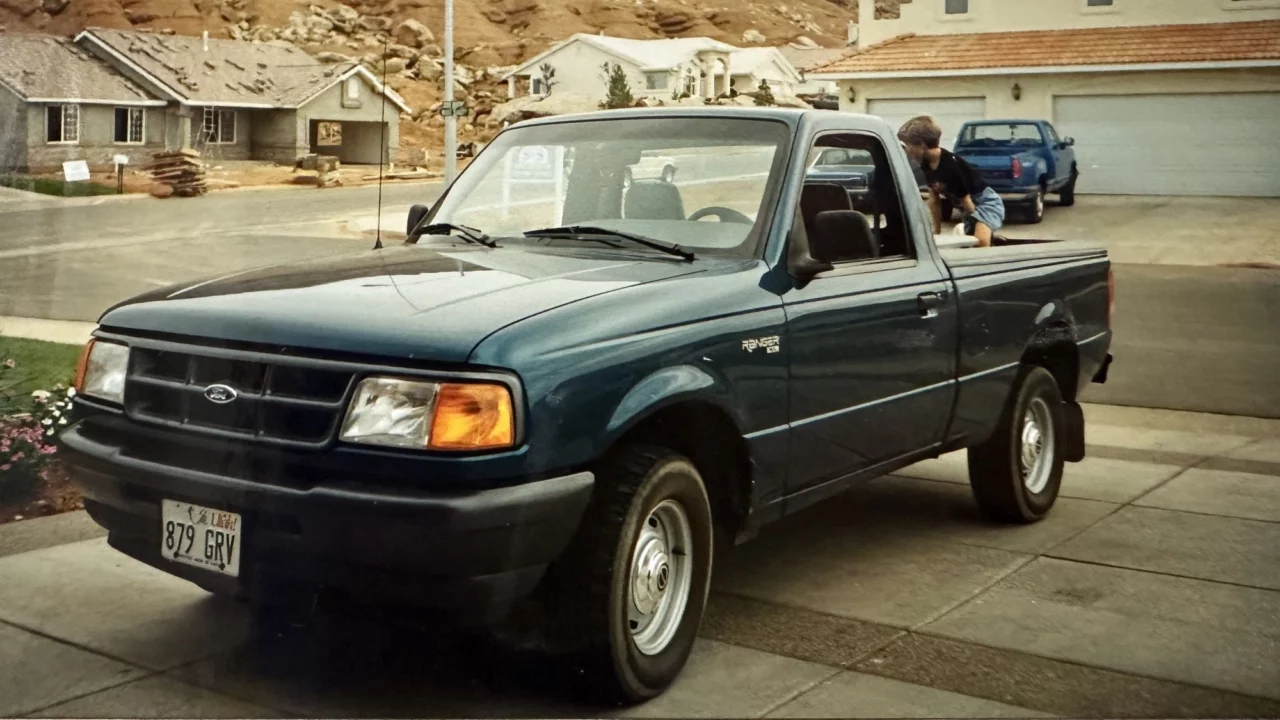
As is likely the case for many of our readers, the Ranger has been a member of my family. I learned to operate a manual transmission while behind the wheel of my dad’s green 1994 Ranger XL 2WD five-speed. My brother and I got driving lessons from my dad on the rural dirt roads of the “Arizona Strip” region at the southern Utah/northern Arizona border.
Two of the most eye-catching versions of the second-generation Ranger were the STX and the Splash. Let us look at each of these in greater detail with the help of a 1994 Ford brochure.
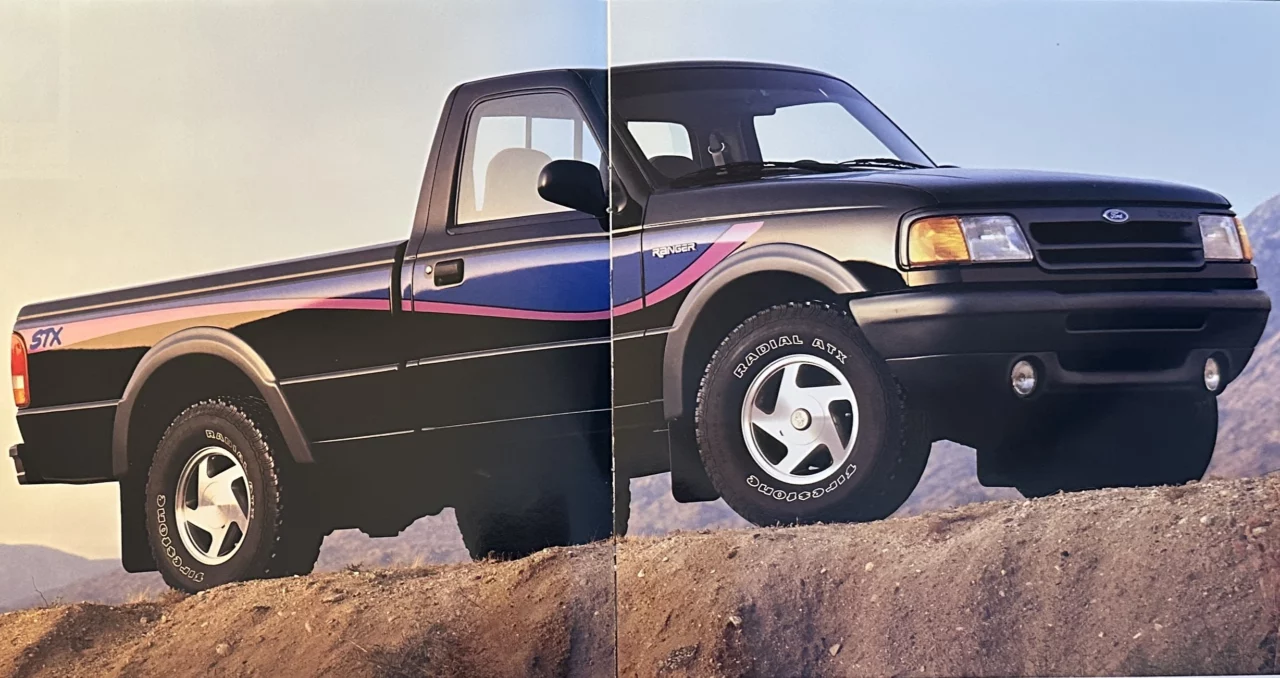
The STX was known for its eye-catching (and oh-so-1990s) colorful accent striping. It could be optioned with either a 3.0-liter or 4.0-liter V-6. The STX was available in either Regular Cab or SuperCab models, and it came with cloth captain’s chairs and floor console, power steering, tachometer, and leather-wrapped sport steering wheel. All 4×4 models came with the Ford “Touch Drive” transfer case which allowed for shifting between 2WD and 4WD on the fly.
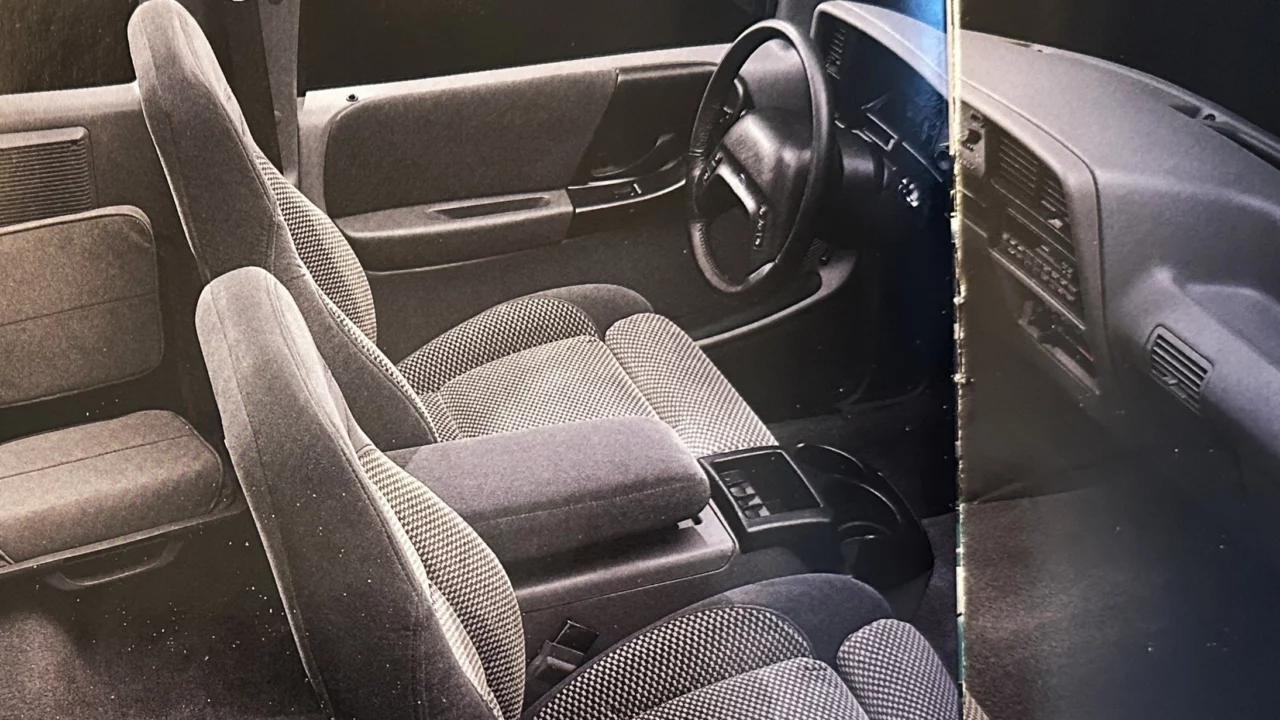
Ford said, “Whether you’re four-by-twoing a moonlit highway or four-by-fouring some rewardingly obstinate off-road trail, Ranger STX is definitely the way to go.”
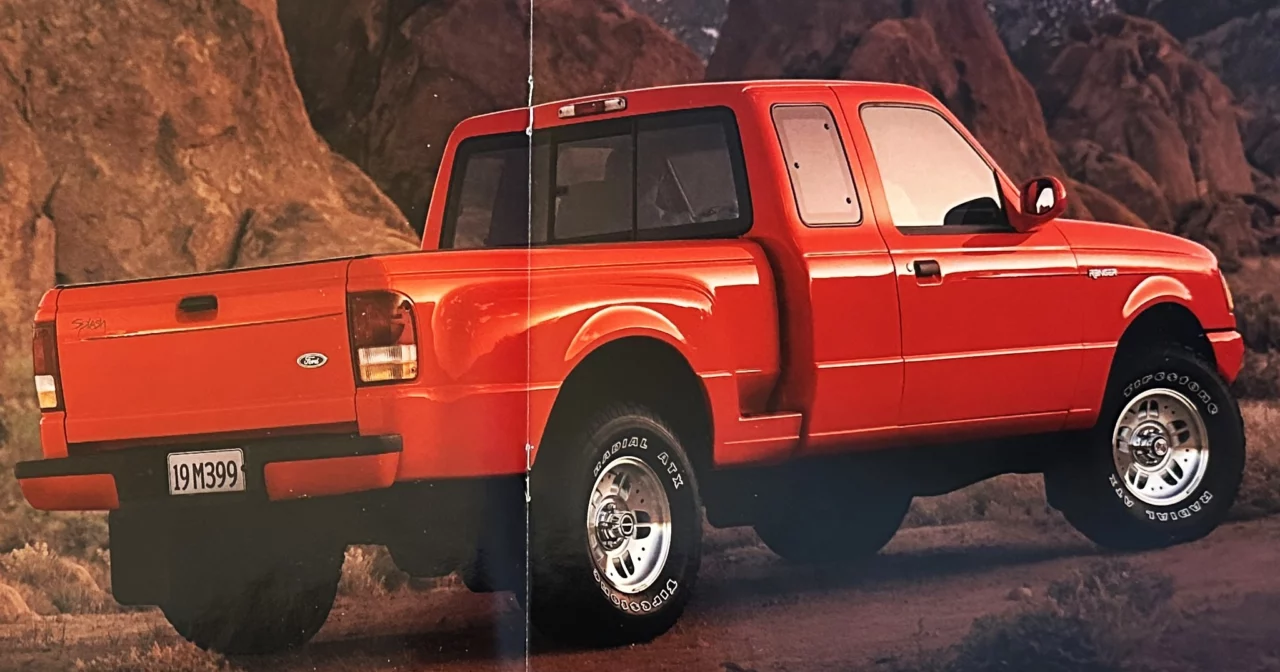
The Ranger Splash was the industry’s first compact pickup with a flareside design. Like the STX, it could be configured in Regular Cab and SuperCab body styles, and in 2WD and 4WD drivetrains. The 4×4 came standard with a 3.0-liter V-6 and special deep-dish, cast-aluminum 15-inch wheels. Ford said of this truck, “Whichever Splash model you choose, you’ll be getting an affordably priced and well-equipped pickup with a very contagious attitude about fun.”
Speak of fun, there were all sorts of accessories you could add:
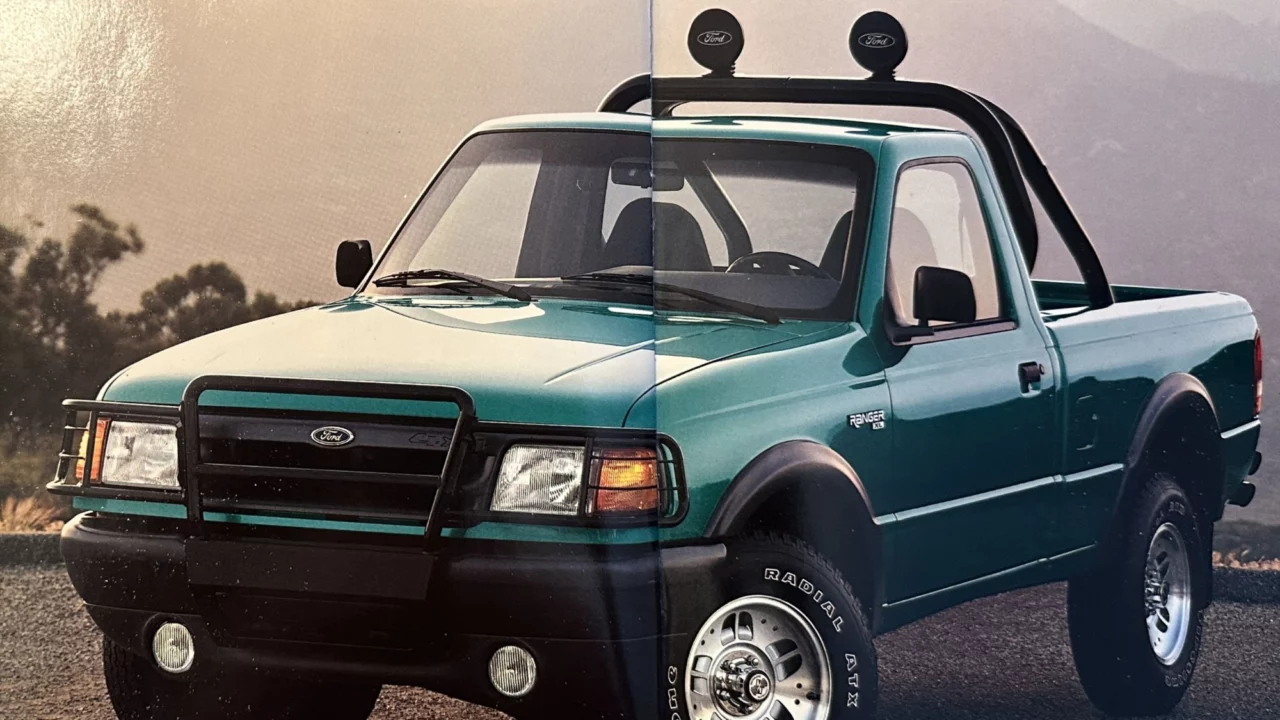
At the end of the day, the Ranger was a value-oriented pickup that offered a lot of bang for the buck. Sometimes, I wish I could track down my dad’s old green 1994 XL. It would certainly get better mileage than my current big-block-powered 1994 Ford F-250 (which is way more truck than I normally need).
