

The third-generation Audi Q3 was seemingly just launched in Australia, and already it’s in line for an update.
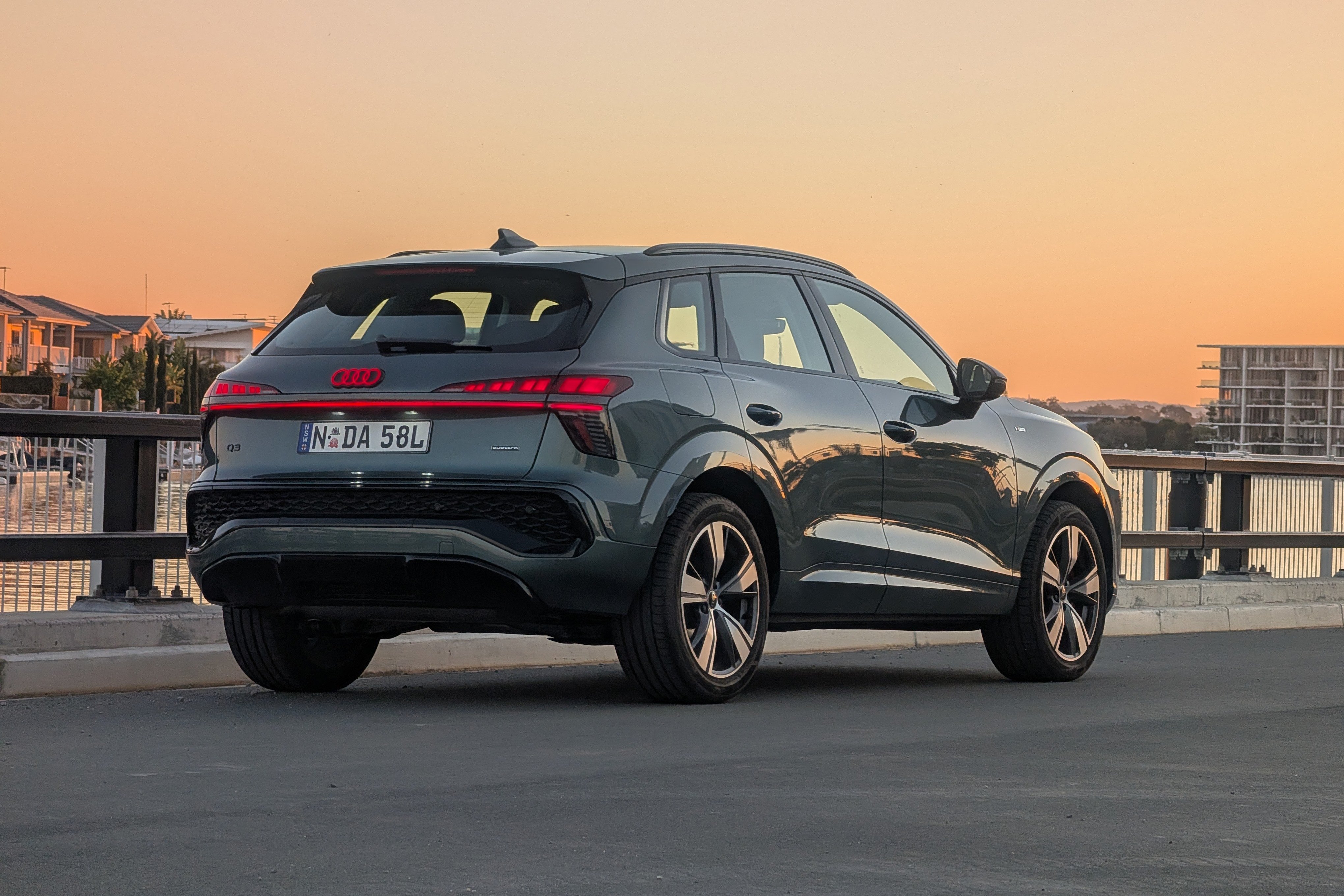
Audi Australia has yet to confirm release timing for this updated model, but has said it will come here at some point, and will bring fresh infotainment, new steering wheel controls, and some tech upgrades.
But maybe you want to buy a new small luxury SUV now and don’t want to wait around. Is the Audi Q3 that’s currently in stock worth your money?
We put the mid-range 150kW Q3 to the test, with the more practical wagon (SUV) body.
A caveat here: this is a Launch Edition variant.
Launch Edition versions of the Q3 SUV and Q3 Sportback, surprisingly, weren’t just cosmetic affairs. They introduced more significant features, like adaptive dampers and a sound actuator, which are ordinarily exclusive to the top-spec 195kW grade.
That makes these special launch models a rather intriguing option, but the 150kW model they’re based on is already a very good thing.
How much does the Audi Q3 cost?
As mentioned, the Audi Q3 is offered as either an SUV or ‘coupe’ SUV, the latter wearing the Sportback moniker.
|
Model |
Price before on-road costs |
|---|---|
|
2027 Audi Q3 SUV TFSI 110kW |
$61,600 |
|
2027 Audi Q3 Sportback TFSI 110kW |
$64,600 |
|
2027 Audi Q3 SUV TFSI quattro 150kW |
$70,200 |
|
2027 Audi Q3 Sportback TFSI quattro 150kW |
$72,700 |
|
2027 Audi Q3 SUV TFSI quattro 195kW |
$81,827 |
|
2027 Audi Q3 Sportback TFSI quattro 195kW |
$84,327 |
The Q3 lineup opens at $61,600 before on-road costs for the front-wheel drive TFSI 110kW, with the all-wheel drive TFSI quattro priced at $70,200 plus on-roads; opting for the Sportback body costs an extra $2500.
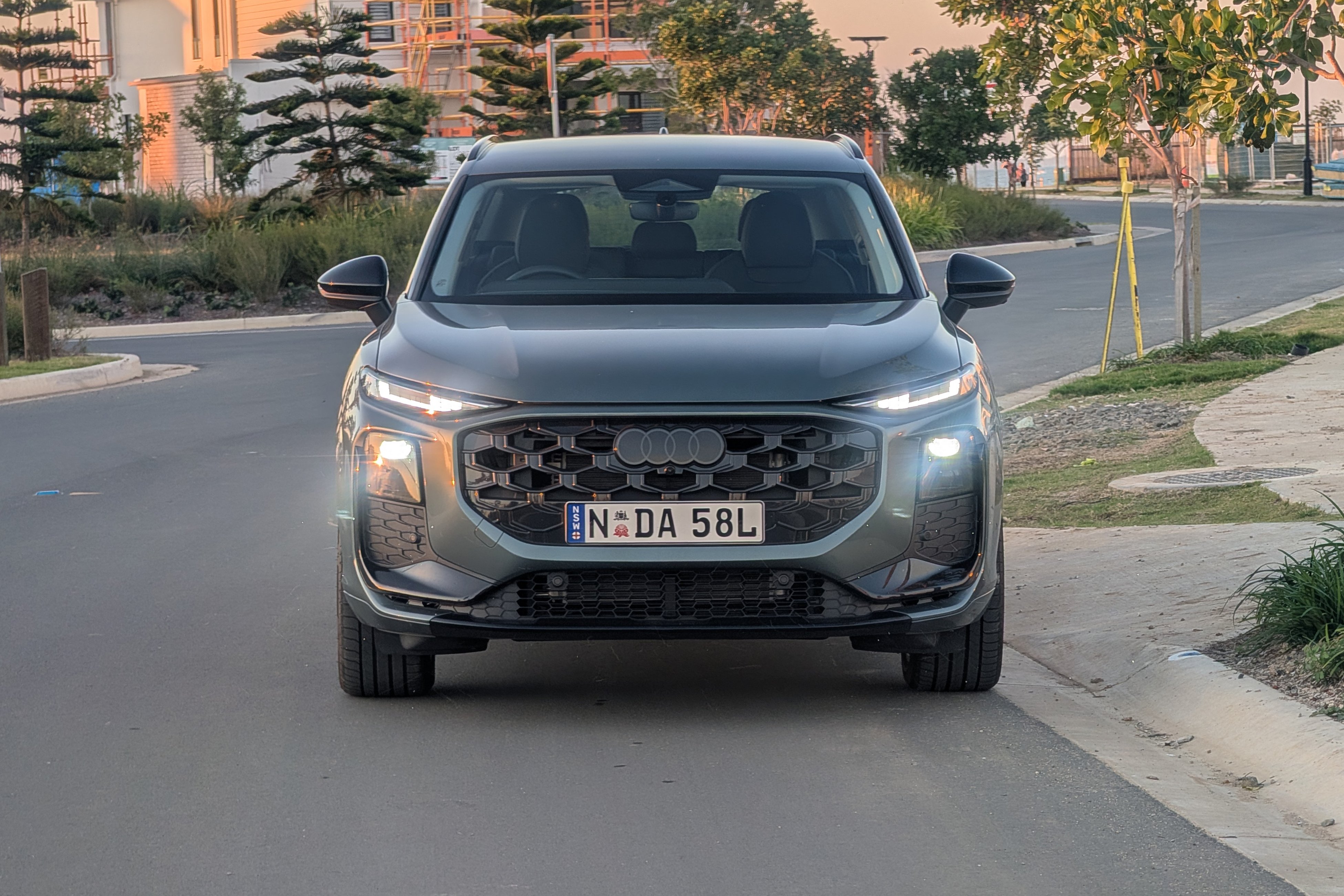
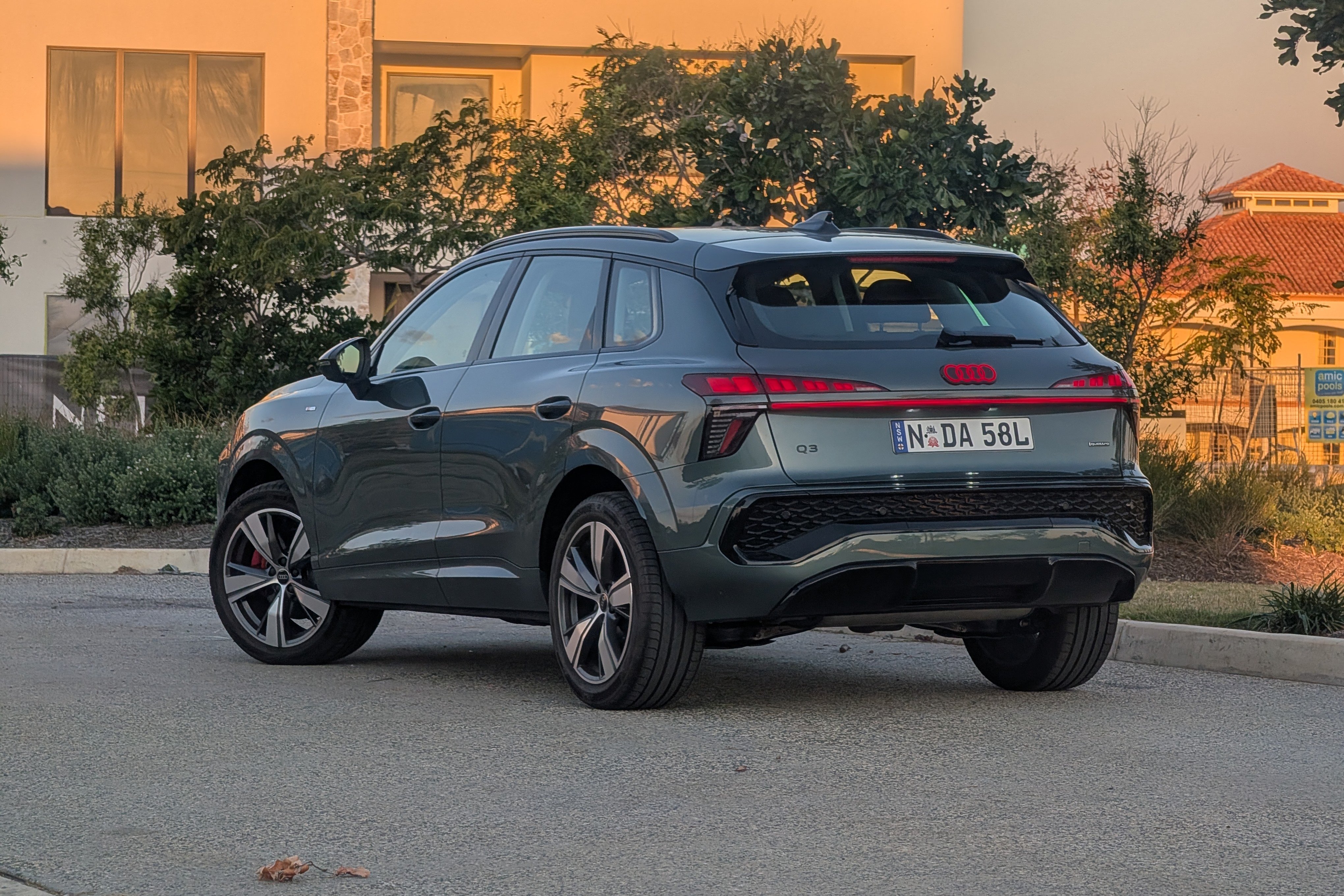
Our Launch Edition tester was priced at $74,600 plus ORCs, bringing an exterior black package, 19-inch Audi Sport alloy wheels, metallic paint, red brake calipers, adaptive dampers and a sound actuator.
To add the wheels alone to the standard 150kW, you’re looking at an extra $1300. This lovely Sage Green metallic paint costs an extra $1480 like the other premium finishes, while the black package costs an extra $1600 and the red brake calipers and adaptive dampers are exclusive to the 195kW.
Not only does the 195kW bring these features, it also adds the features of the 150kW’s $4400 Premium package – a panoramic sunroof, head-up display, higher-output USB ports, and a Sonos sound system – for a list price of $81,827 plus ORCs.
The Q3 rivals the likes of the BMW X1 ($67,500 to $94,700 plus ORCs), the Mercedes-Benz GLA ($64,300 to $100,026 plus ORCs), and the Lexus UX ($55,370 to $73,210 plus ORCs).
But its toughest competition could come from within Audi’s own showroom. The similarly sized, electric Q4 e-tron has been repositioned, and is now priced from $71,650 to $83,250 plus ORCs.
This means you can get an all-wheel drive electric Audi with more power and torque than this Q3 for not much more money.
Personally, I’d be tempted by another SUV in the Volkswagen Group stable – the Cupra Formentor VZx at $74,990 drive-away. It’s not quite as plush inside, but it offers greater performance and more distinctive styling.
To see how the Audi Q3 lines up against the competition, check out our comparison tool
What is the Audi Q3 like on the inside?
I was quite critical of the new-generation Audi A5 and its interior, which simply didn’t feel premium to me, with its questionable material and design choices.
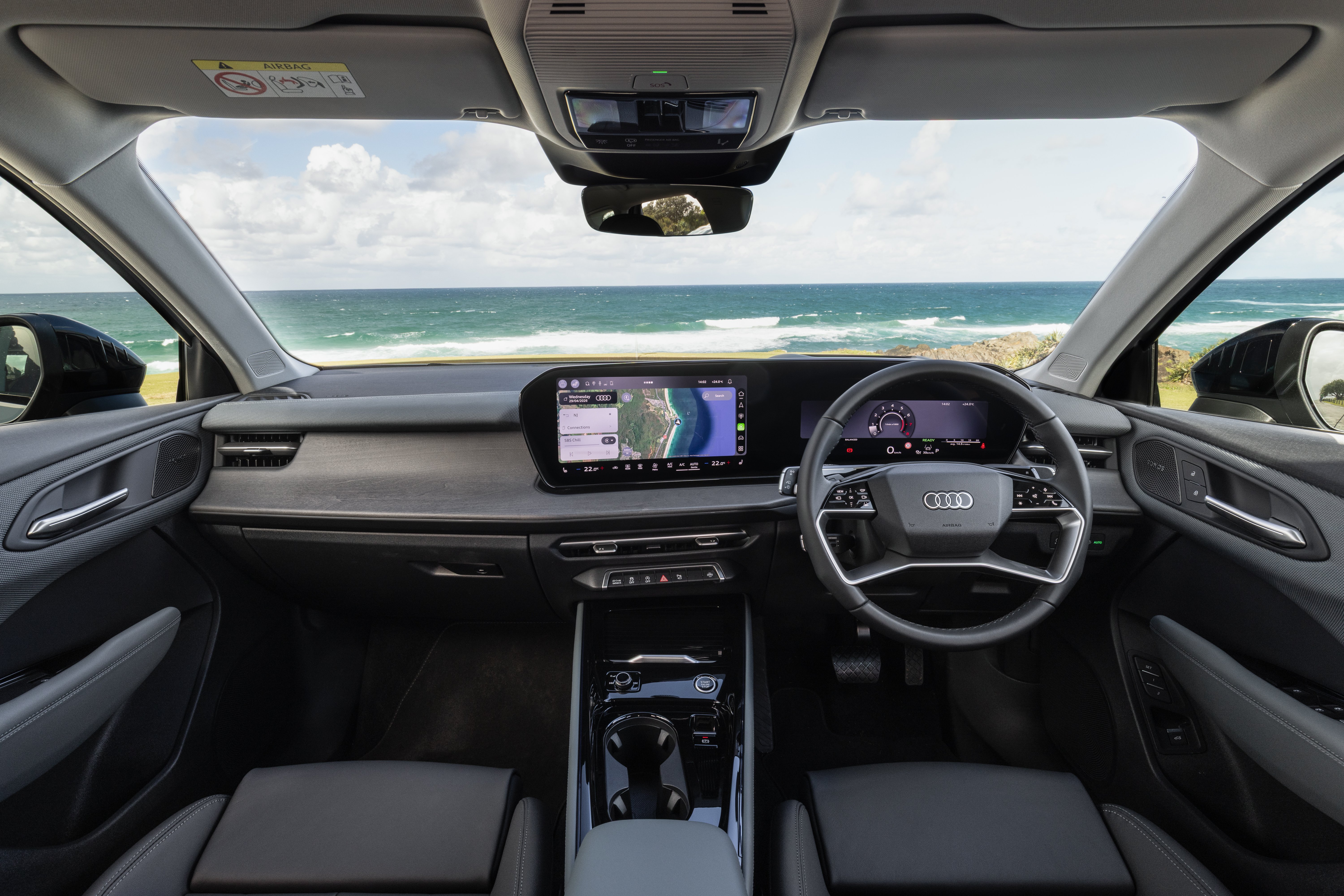
The Q3’s is much more impressive. Our tester was equipped with a black interior with sweeping brushed aluminium inlays, giving it a distinctive look, though you can option attractive wood inlays as seen here.
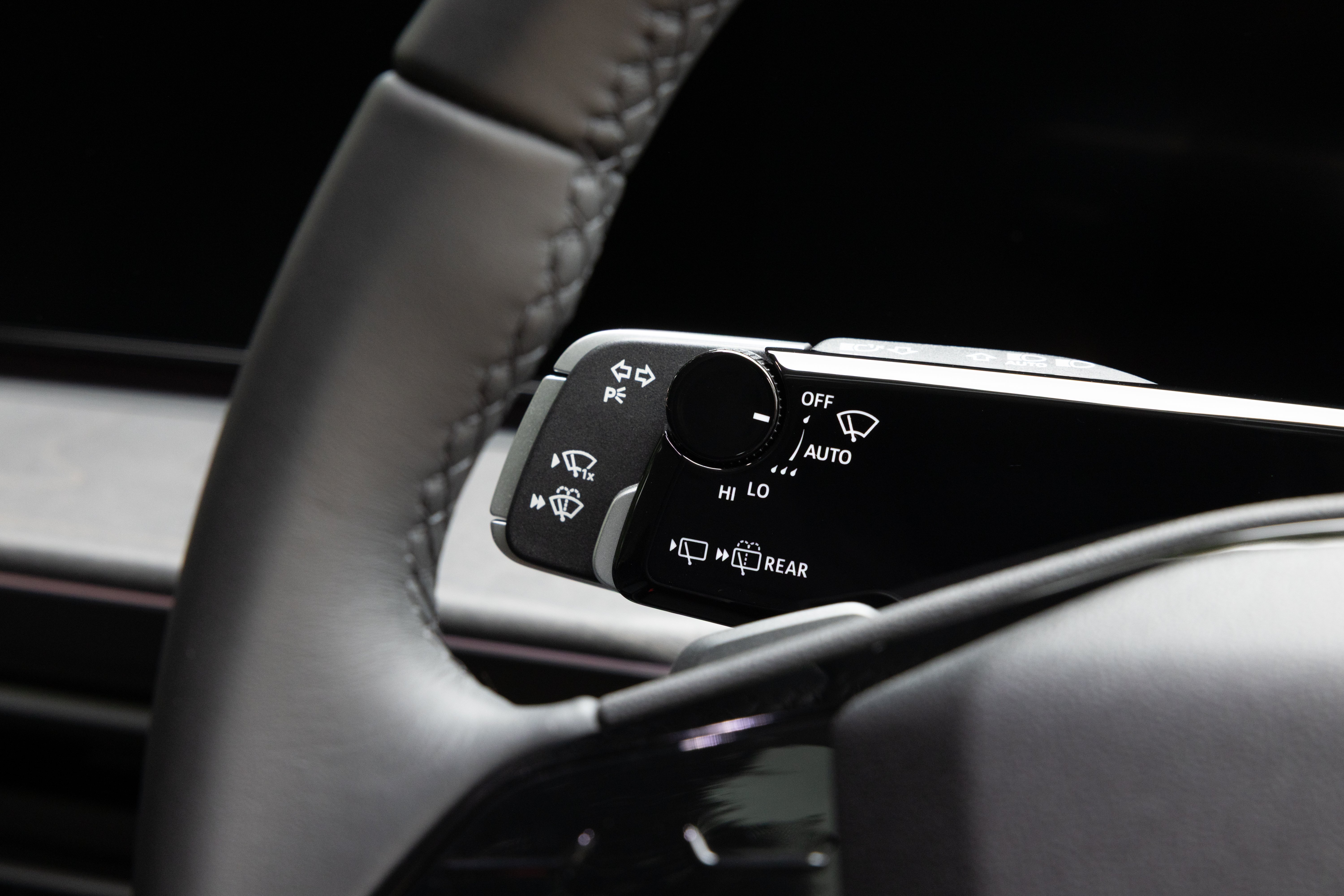
Perhaps the first thing that’ll get your attention is the unusual hub behind the steering wheel, which integrates wiper, high-beam and indicator controls on the left-hand side, and the gear shifter on the right-hand side.
Instead of a stalk on either side of the steering column, there’s this fixed assembly with small movable parts at either end for changing gear and turning the indicators on and off, as well as small buttons for functions like the washers and a little dial for the wipers.
It’ll feel weird for about 20 minutes – I know it did for me. But after that, I was pleasantly surprised by how natural it felt. There’s a satisfying mechanical operation to turning the indicators on and off, and everything’s clearly labelled and visible. Audi may have tried reinventing the traditional steering-column stalks, but in this case, it actually worked.
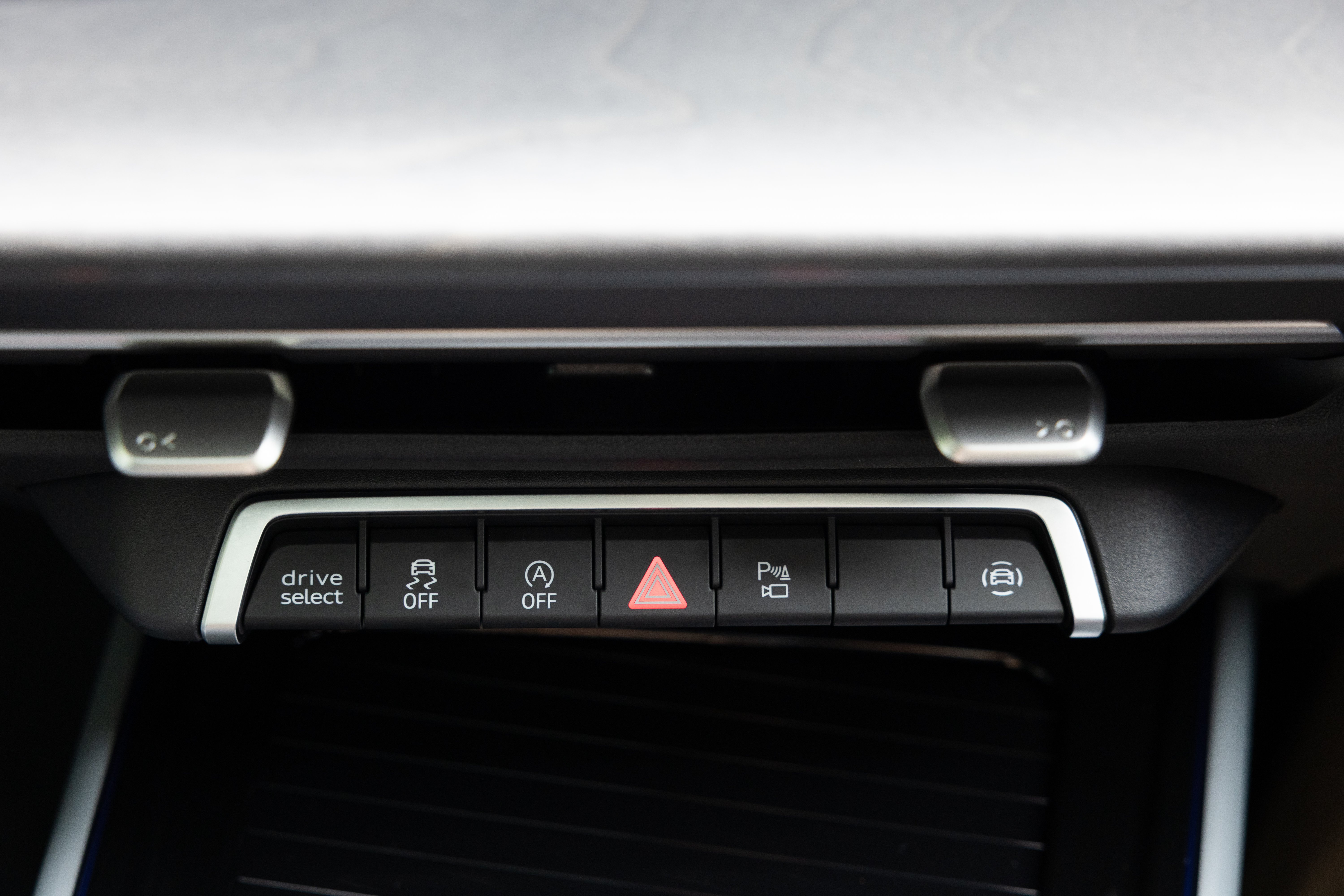
There’s still a traditional stalk for the cruise control, and it remains intuitive to use. There’s very little physical switchgear on the dashboard itself: just a row of buttons, which includes the drive select controller, traction control and idle-stop/start system buttons, the camera, and a shortcut to the driver assist settings menu.
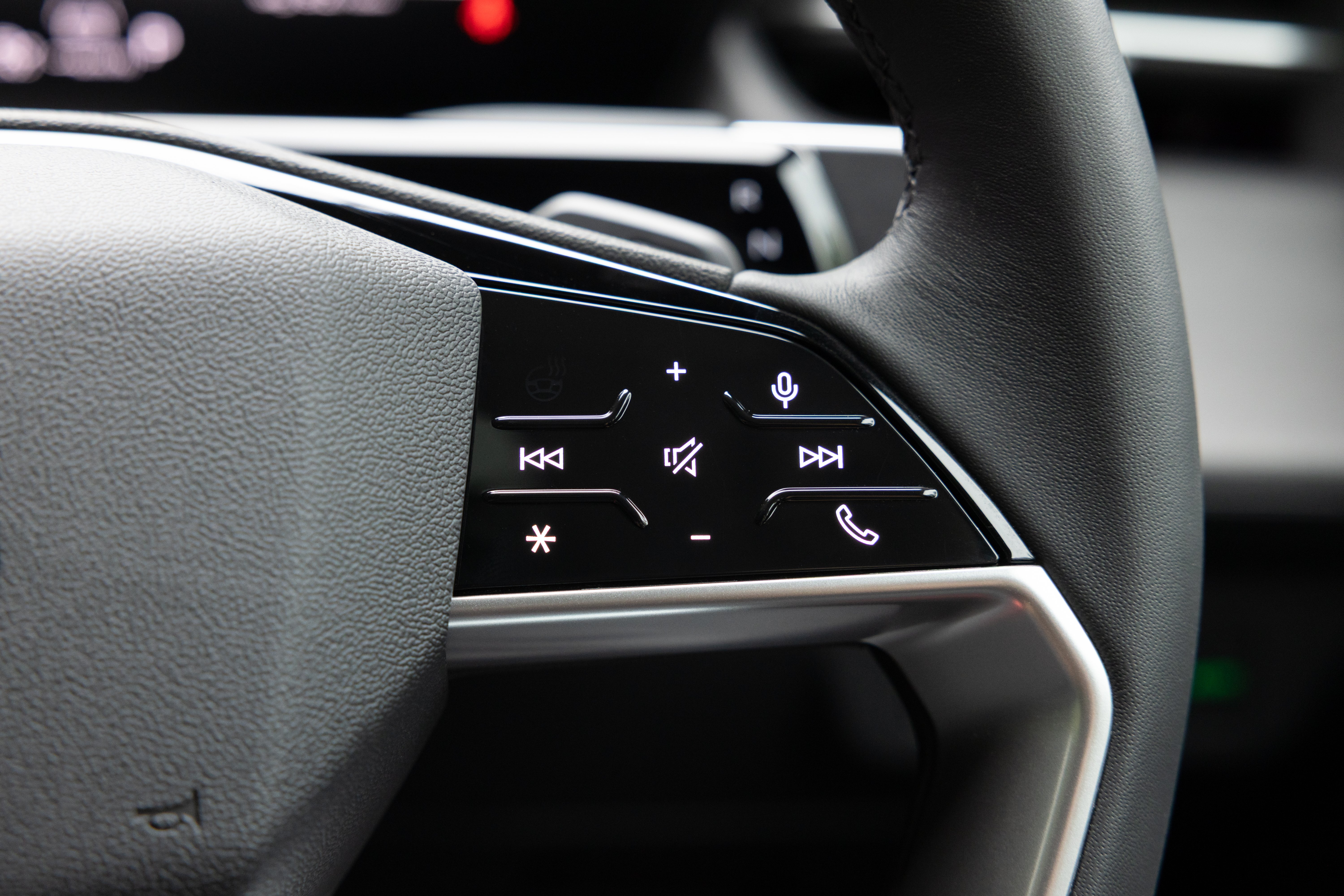
The gloss-black touch-capacitive buttons on the steering wheel attract smudges and can be a bit awkward to operate. For the upcoming update, Audi will return slide wheels to the steering wheel, which will make skipping tracks or adjusting the volume easier.
As is becoming common with Volkswagen Group products, there’s no knob or dial for headlight control – you simply press a button multiple times. Your high-beam controls are still found behind the steering wheel.
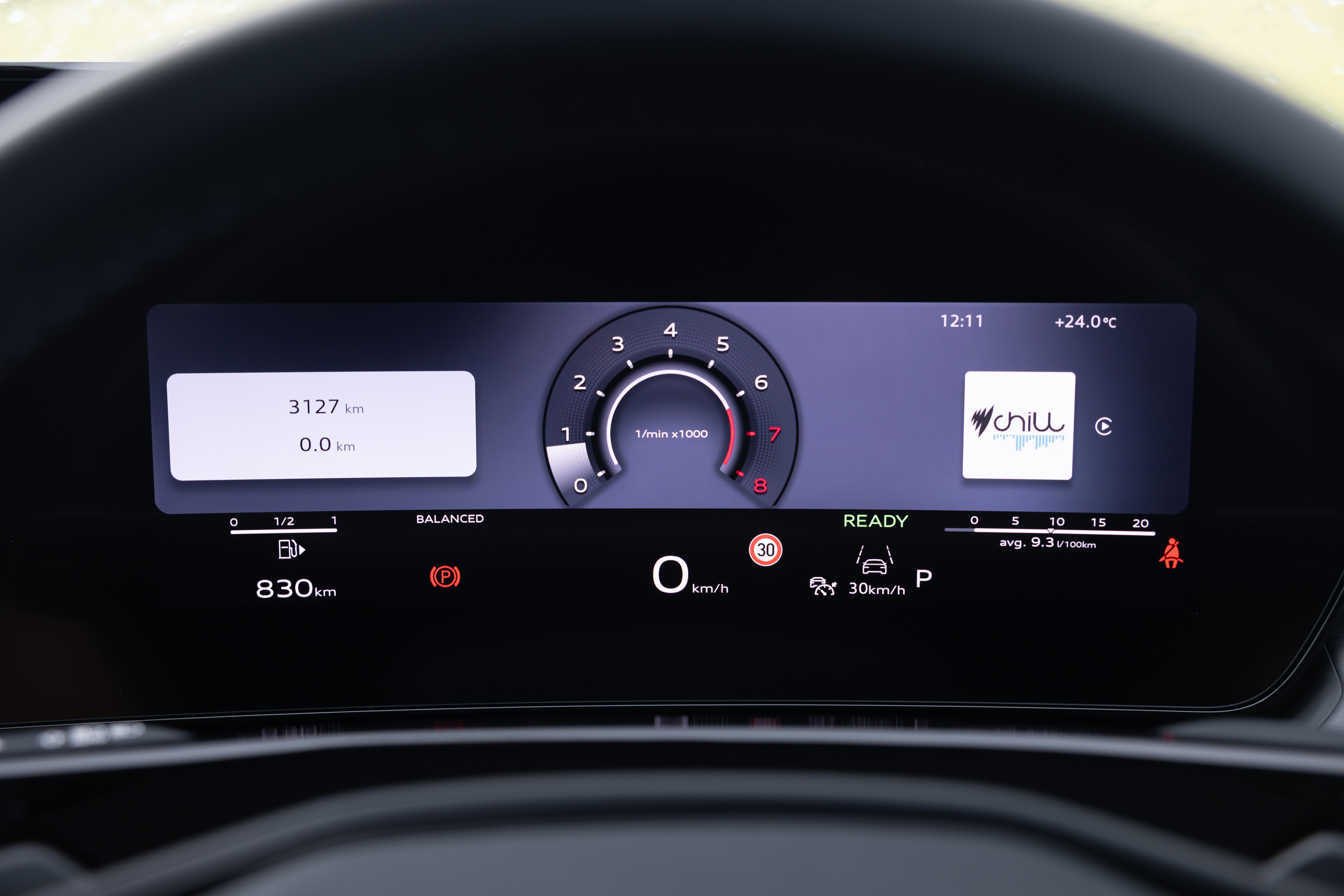
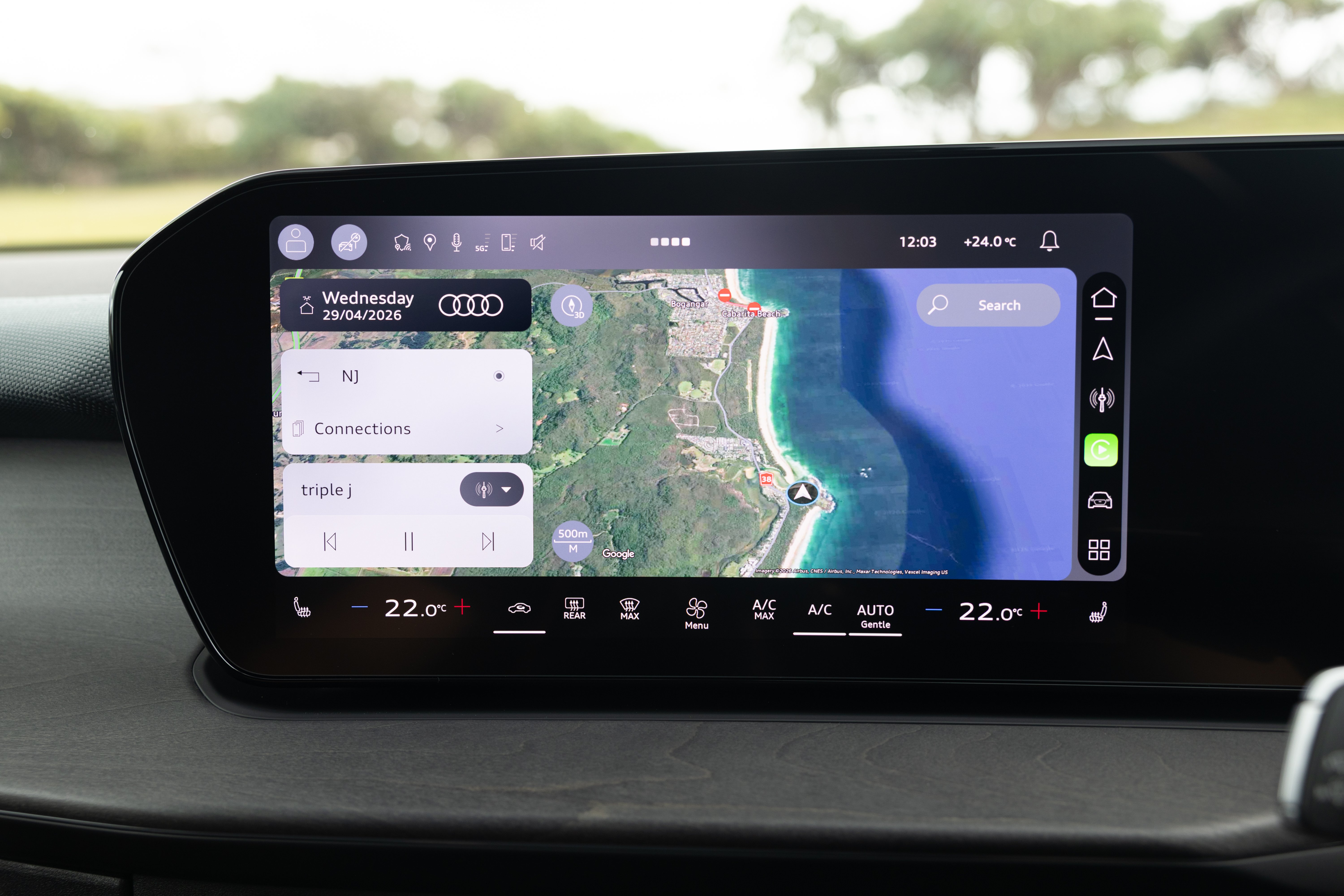
The integration of the screens is less graceful, and the technology has some bugs. Audi has designed a curved, sweeping array that integrates the 12.8-inch infotainment touchscreen and the 11.9-inch digital instrument cluster, but it doesn’t integrate them harmoniously.
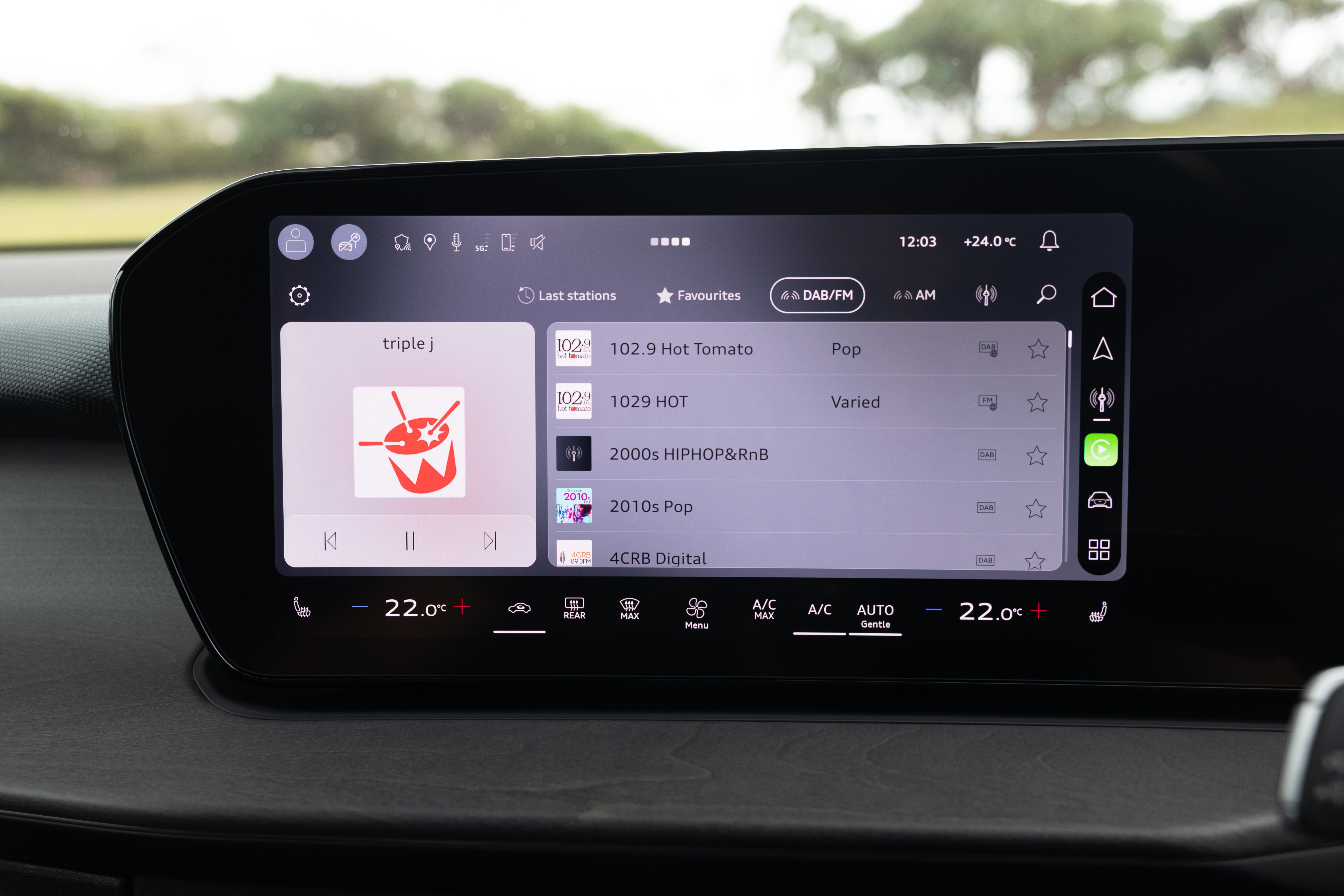
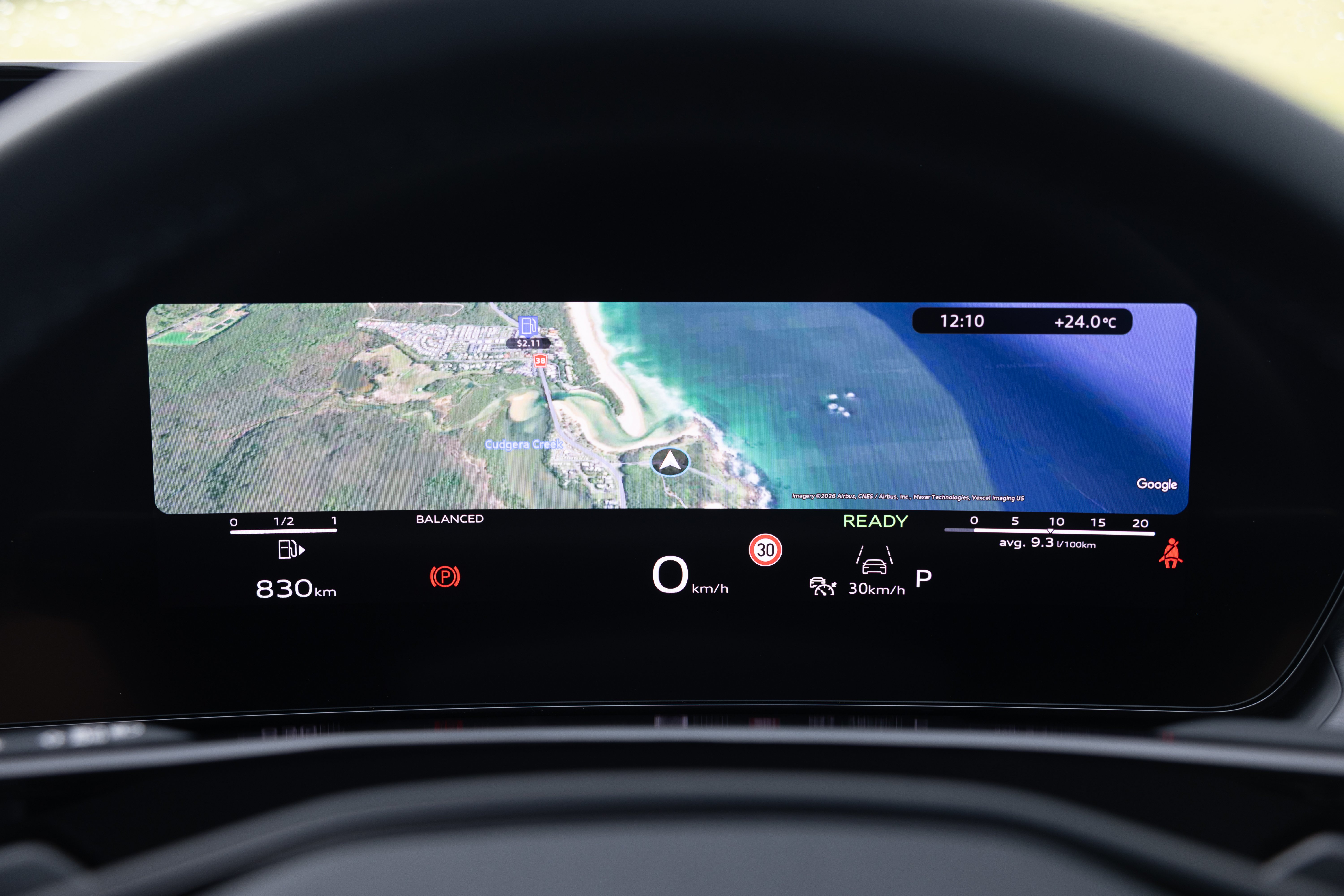
There’s a lot of dead space here, with a thick bezel around the touchscreen and an even thicker bezel around the digital instrument cluster, so much so that the display looks lost in a sea of black.
For a brand that’s long been known for elegant interiors, it’s a baffling design choice and detracts from what’s otherwise quite an attractive cabin.
The infotainment interface is quite intuitive. There are anchored shortcut buttons for the climate control at the base of the screen, and anchored shortcut buttons for key functions like the settings menu, navigation and media on the right-hand side of the screen. There’s also a swipe-down menu.
The graphics are neat and elegant, and the screen’s responsive. We’d give this infotainment system top marks were it not for the horribly unreliable Android Auto connectivity we experienced. Technically, Android Auto’s wireless, but on some occasions it’d repeatedly drop out. Plugging in your phone would either resolve this issue or still result in repeated dropouts.
It was the most unreliable Android Auto experience I’ve had this year. While you may be inclined to blame my phone, it’s a brand-new Google Pixel, and I’ve had no issues with any other vehicle since getting it earlier this year.
I’m unsure if this is related to the driver profile, but the vehicle would almost always revert to Balanced drive mode, fan speed three, and traditional-looking instruments in the gauge cluster. Except when it wouldn’t. Sometimes it’d only default to one of these things.
I’m not sure what the system logic is there, but at least all of those things are easily resolved. Perhaps not fan speed, because, annoyingly, that requires an extra tap on the screen to adjust compared with other cars, and compared to adjusting the temperature.
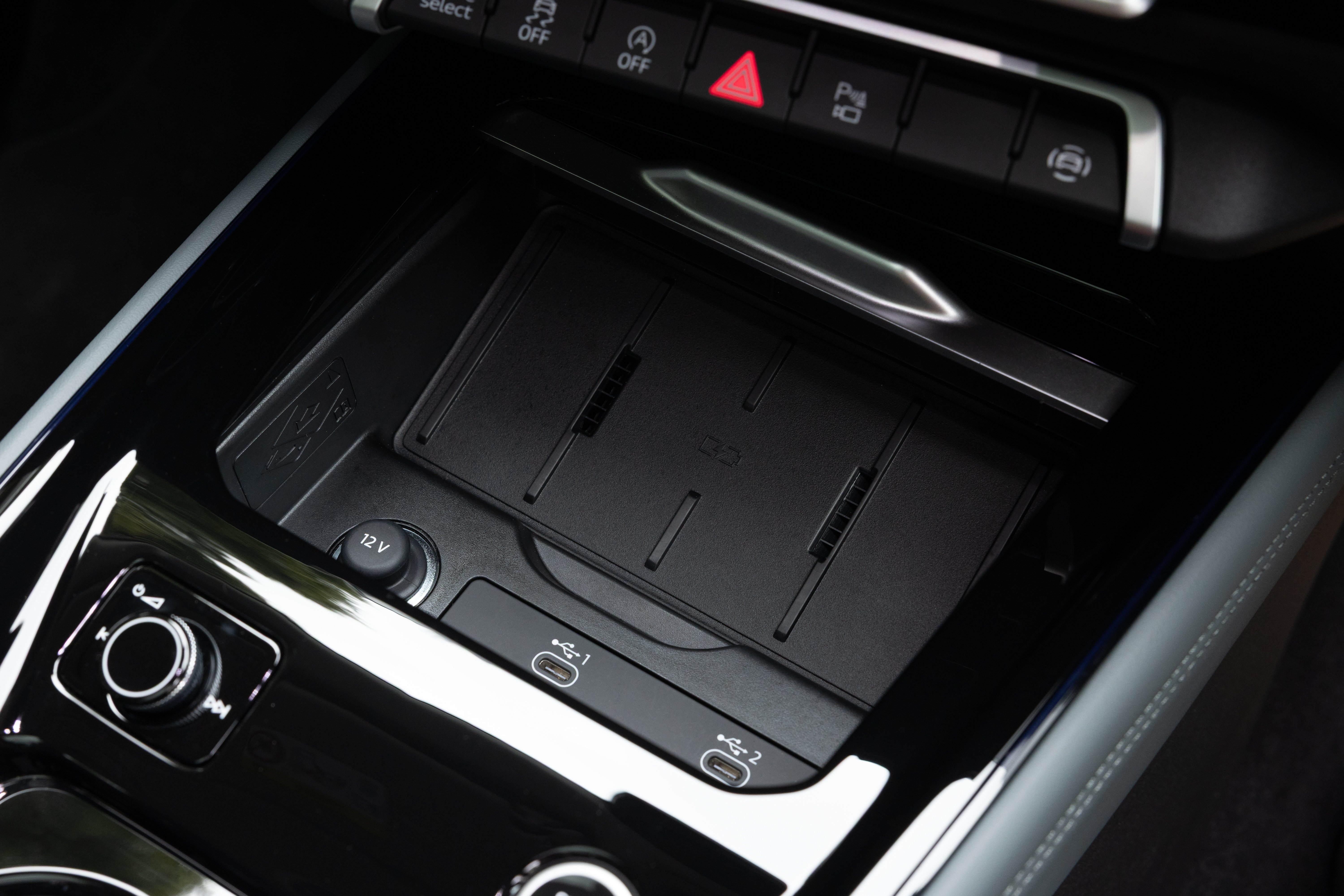
There’s a wireless phone charging pad located at the base of the centre console. As with many other wireless charging pads, to ensure best performance you should probably remove any chunky phone cases. It’d also occasionally sound an alert and display a warning on the screen saying there’s a foreign object in there when there wasn’t.
There’s no head-up display in this car, but the instrument cluster itself is excellent. It’s easy to toggle between views and customise the information that’s on screen. Audi’s long been known for its excellent digital instrument clusters, and this one’s no exception, even if it does look like it’s fallen into a pitch-black abyss.
The instrument cluster will display the embedded navigation or your smartphone mirroring navigation. Once you put in a destination in Google Maps in Android Auto, it replaces the embedded navigation map with a projection of your Google Maps map.
Other things Audi’s known for include a physical volume control, helpfully located on the centre console for passengers, and a height-adjustable centre console armrest.
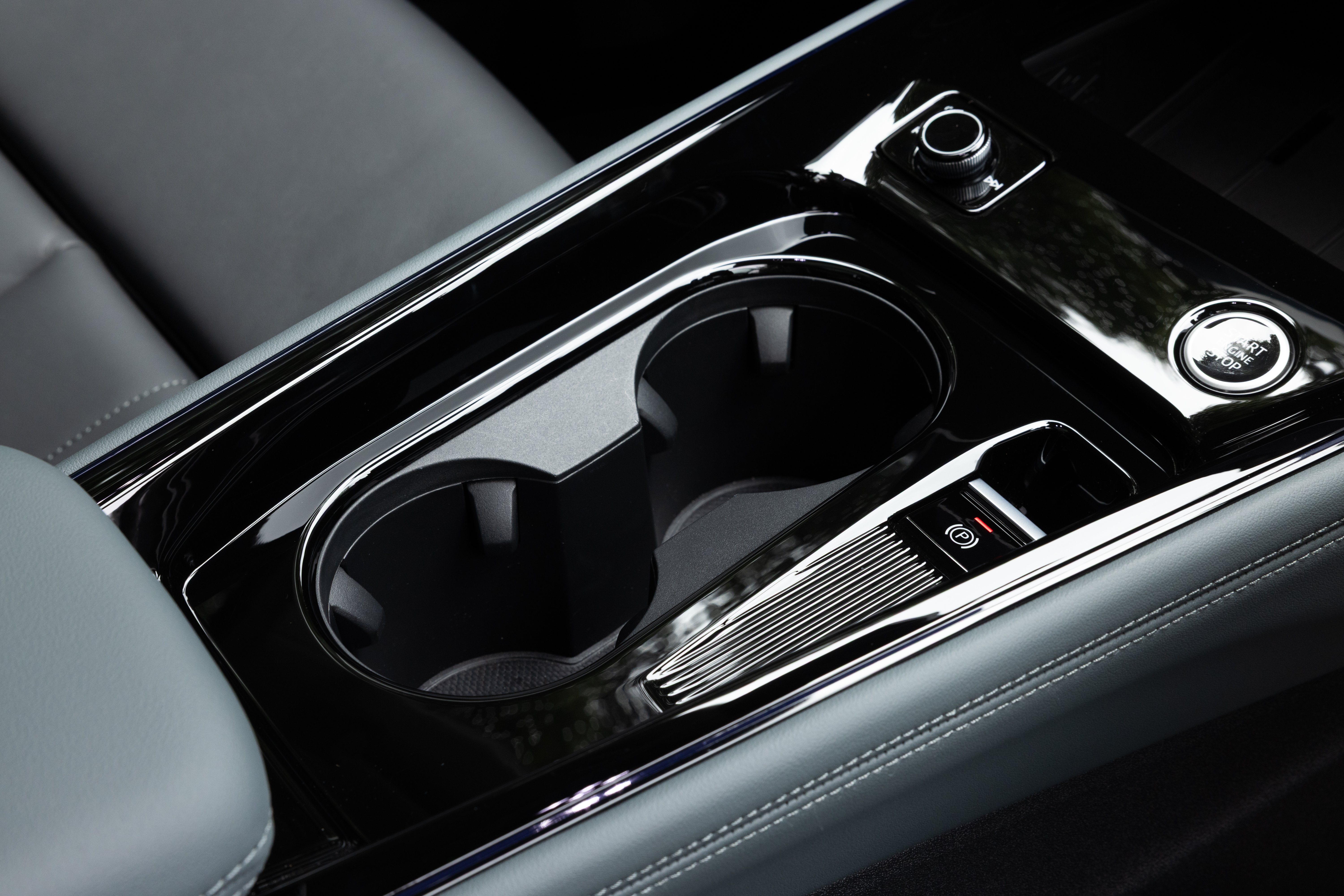
The centre console bin underneath is relatively deep and also continues under the cupholders. It’s subtly illuminated, which is helpful given you can’t quite tell where it ends without sticking your hand in.
Other storage includes rubberised door pockets that can easily swallow a 1.5-litre bottle, plus a decently sized glove compartment that isn’t completely used up by the owner’s manual. There’s no shelf under the centre console though, despite this becoming increasingly common among SUVs.
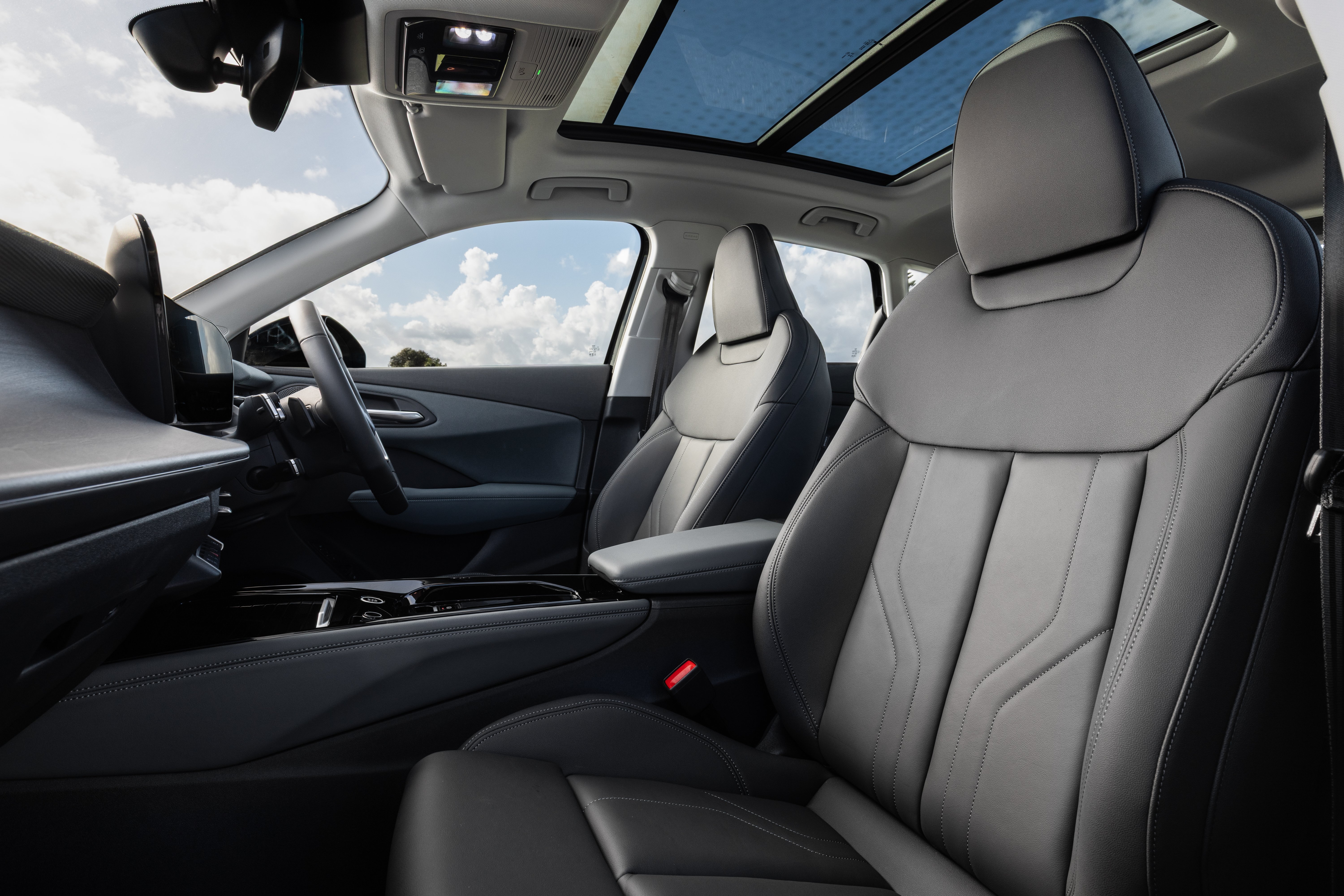
The front seats in the Q3 feel rather flat, hard and unsupportive to me. There’s heating and power lumbar adjustment, but there’s no ventilation or massage.
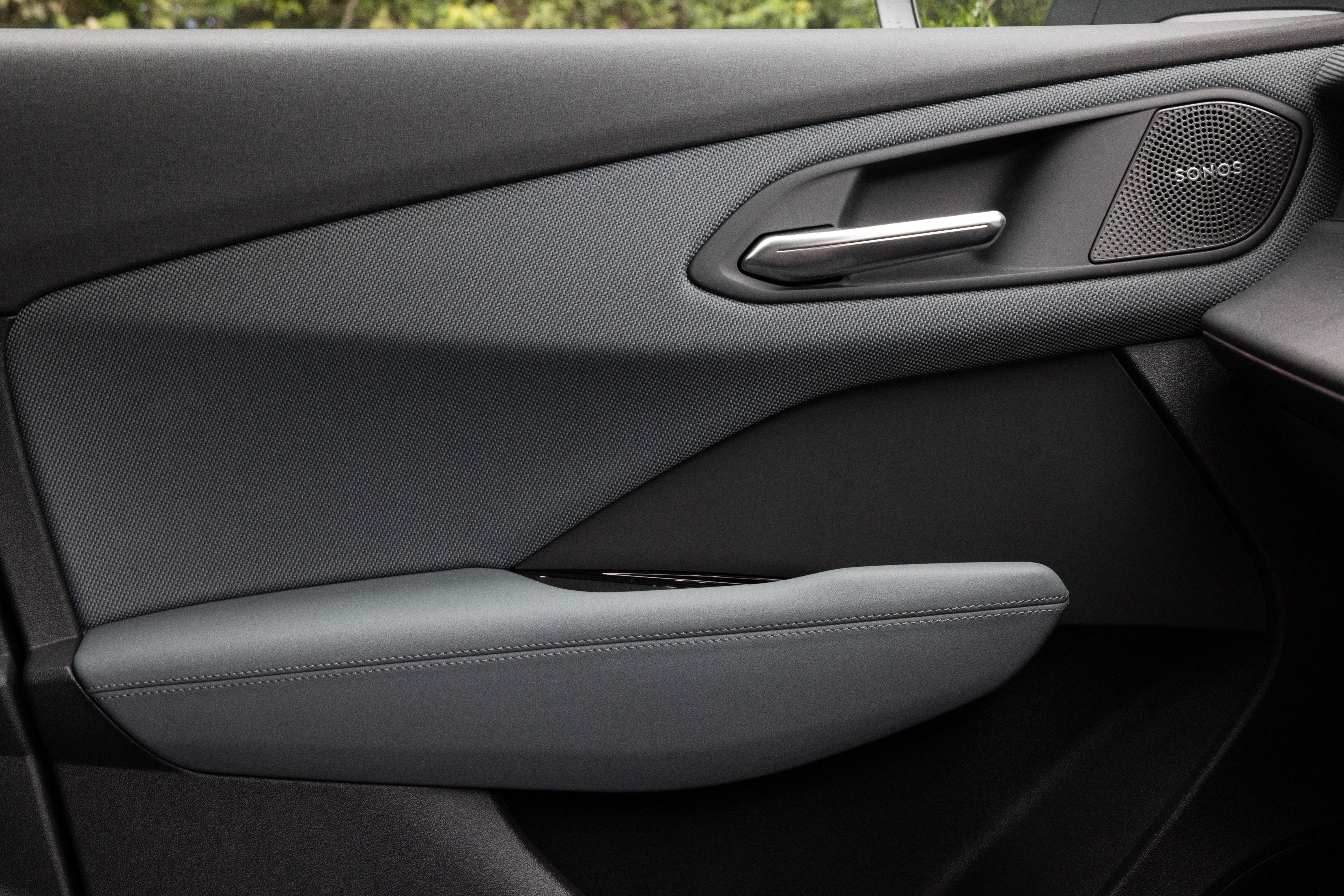
There’s some gloss-black trim on the centre console, but Audi’s made some other material choices in the cabin that are quite welcome. Fabric upholstery running along the doors and the top of the dash may not be to everyone’s taste, but we’re quite fond of the large metallic insert on the dashboard itself.
Soft-touch plastics are also used for the top of the dash and the doors. You’ll find leather inserts on the door armrests and on the sides of the centre console, so your knee has somewhere comfortable to rest.
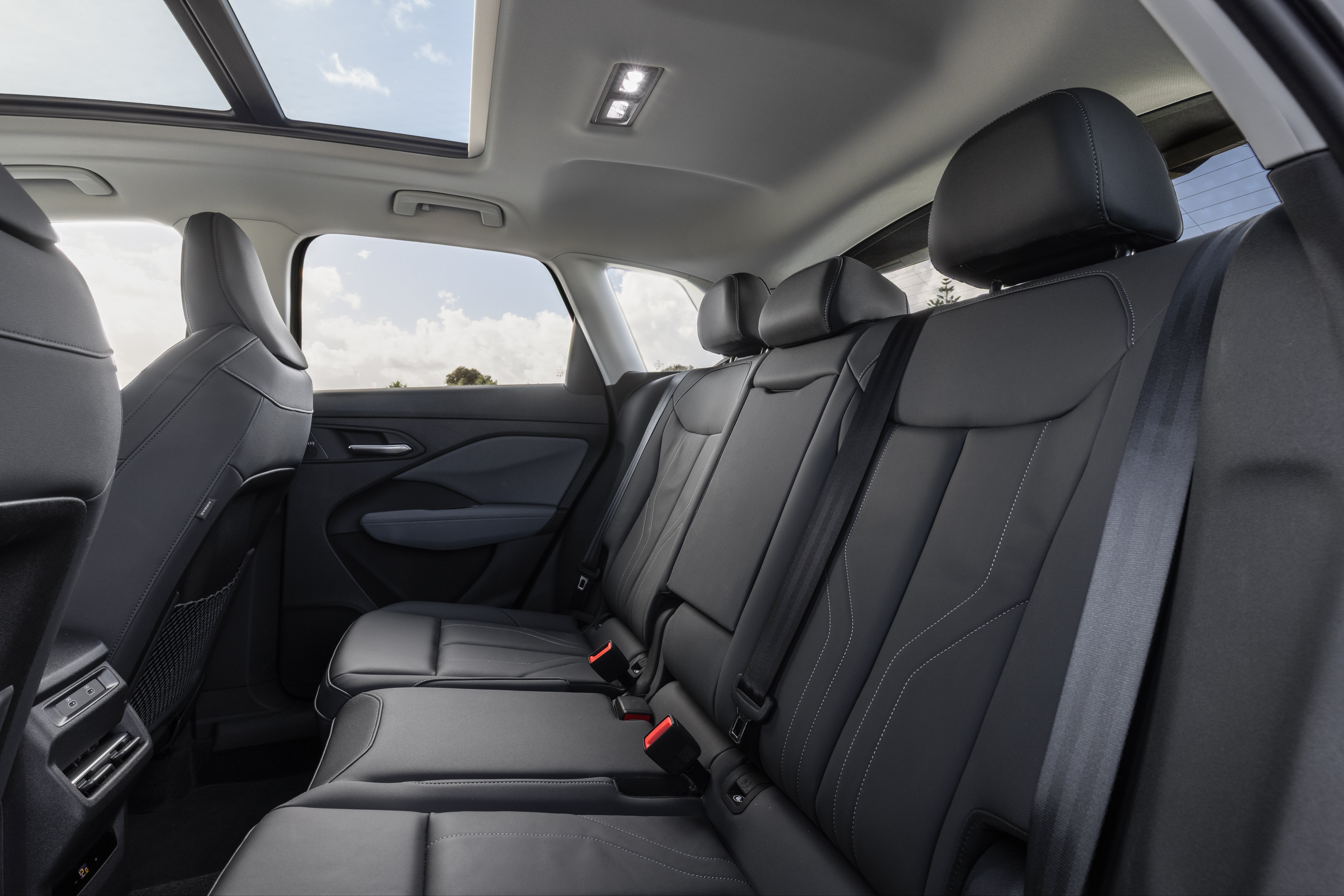
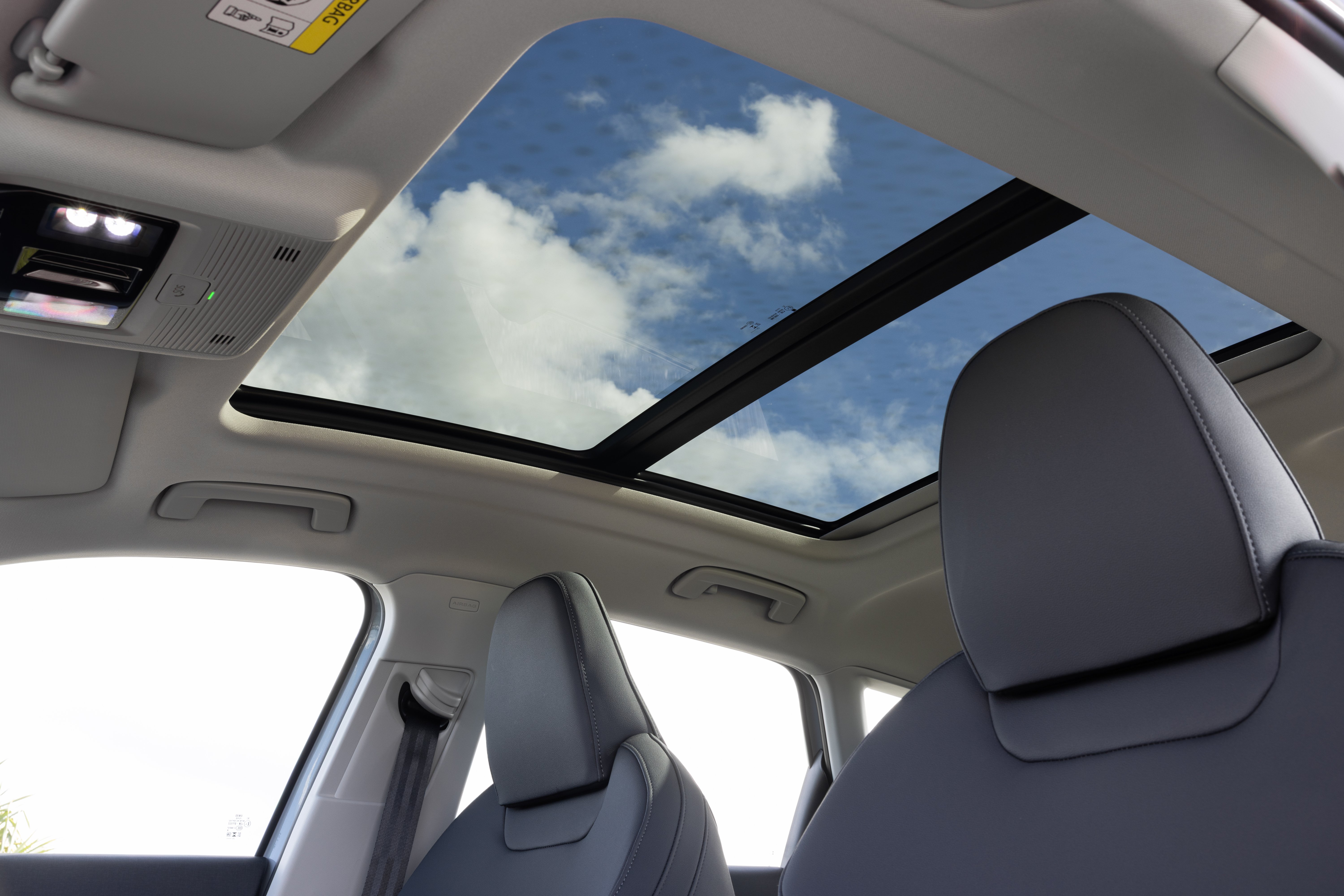
Step into the back and there’s an acceptable amount of room. At 180cm tall, I can sit comfortably behind myself, with headroom to spare, though it’s worth noting our tester didn’t come with the optional panoramic sunroof seen in these interior images.
There’s not an overwhelming feeling of spaciousness in the back of the Q3, but it’s not cramped. There’s a narrow but tall driveline hump, which slightly eats into legroom for the centre-seat occupant.
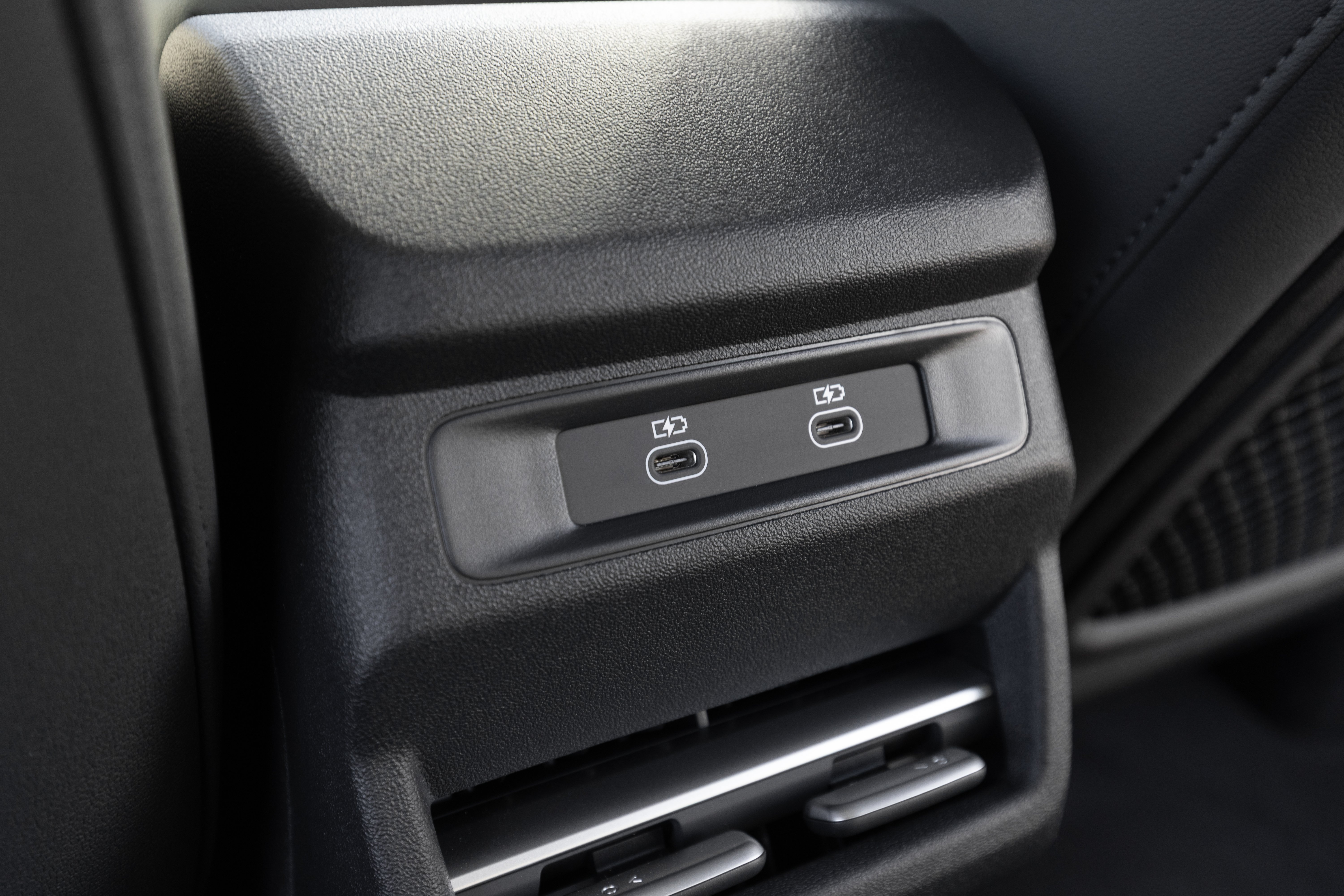
Amenities back here include air vents, controls for adjusting the third zone of climate, a pair of USB-C outlets and a fold-down centre armrest with cupholders.
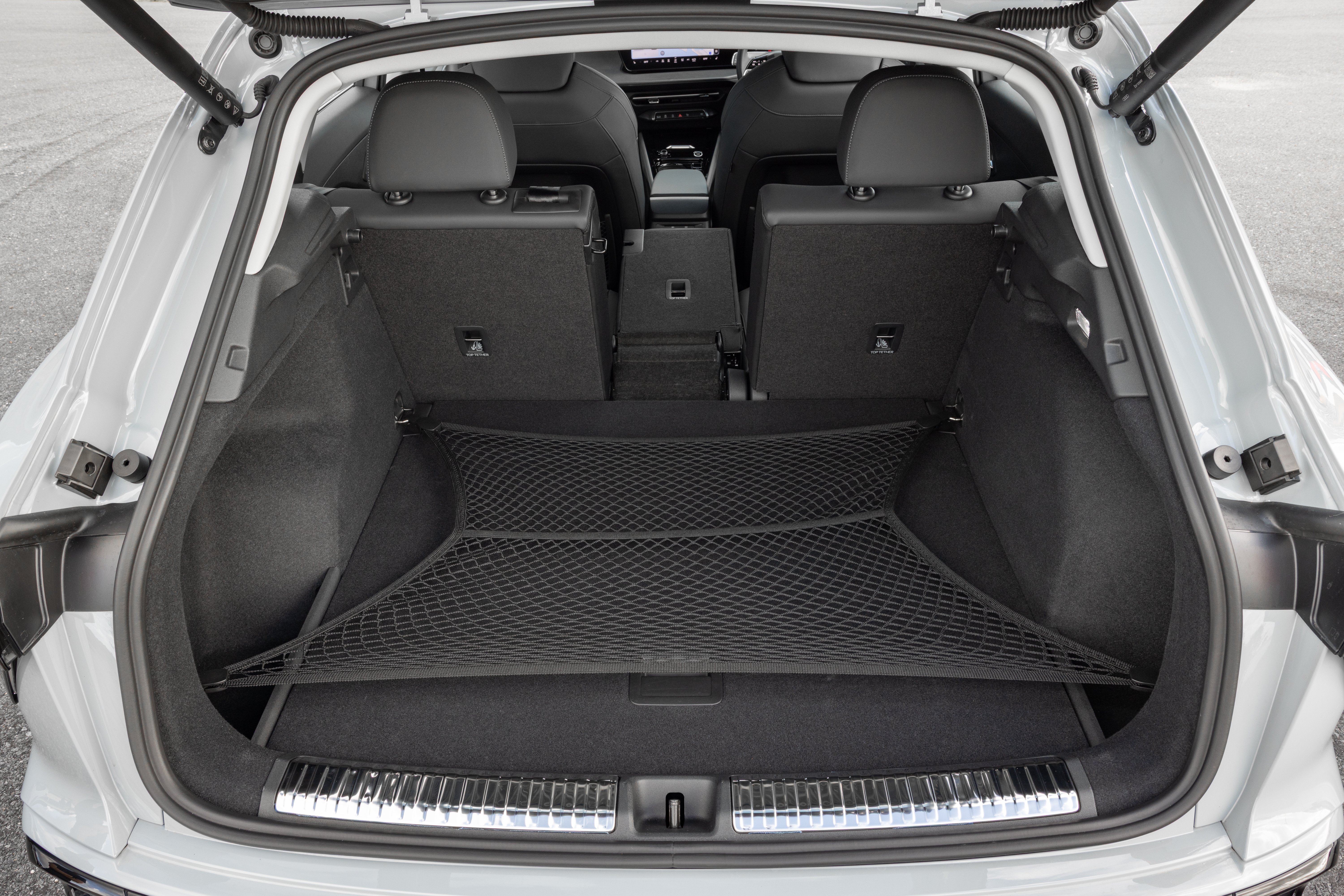
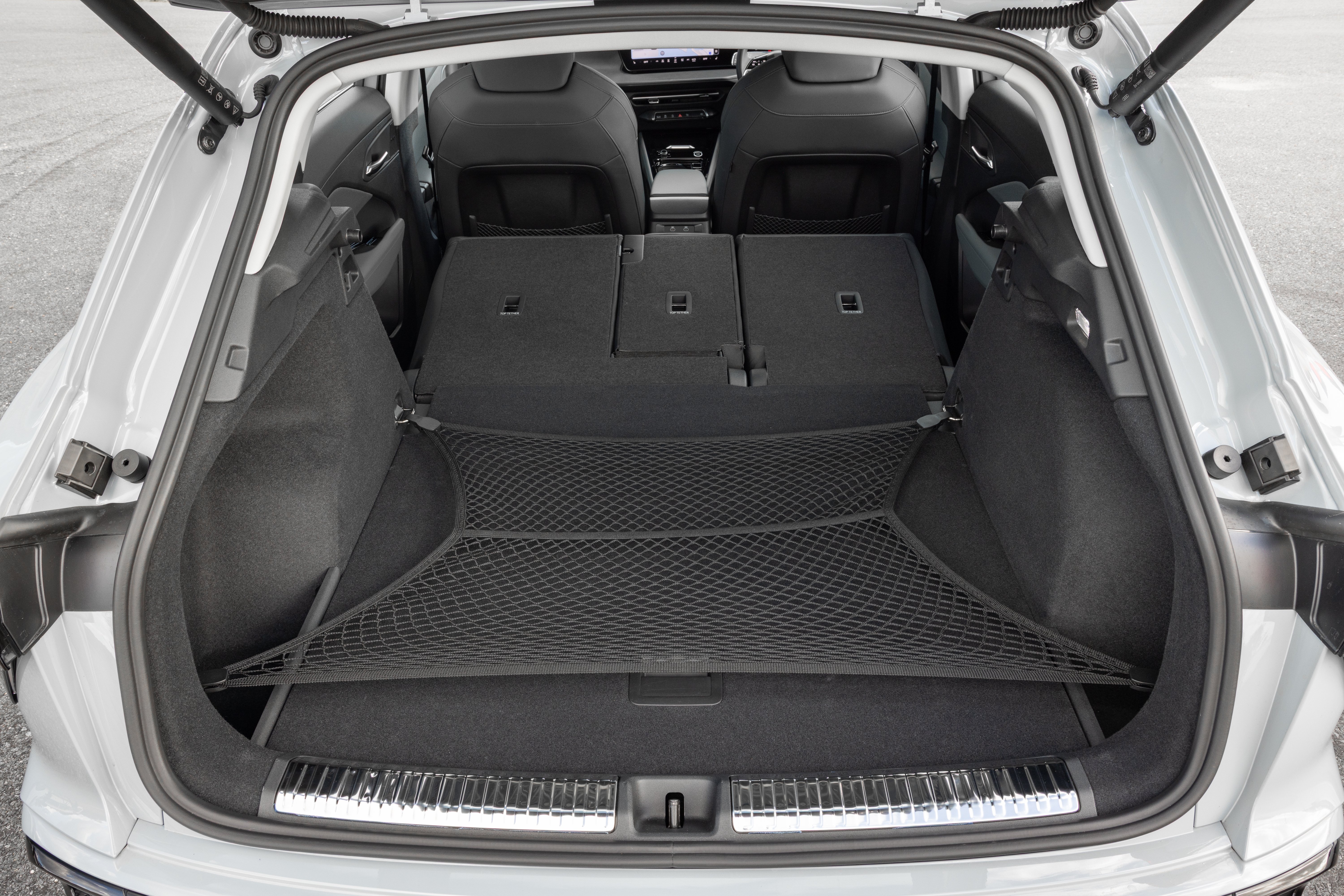
Open the power tailgate and there’s 488 litres of cargo space, expanding to 575L if you slide the 40:20:40-split/folding rear bench, plus a helpful luggage net to keep things tied down. There’s also a small recess on the left-hand side for smaller items, with a 12V outlet. Underneath the boot floor, you’ll find a space-saver spare.
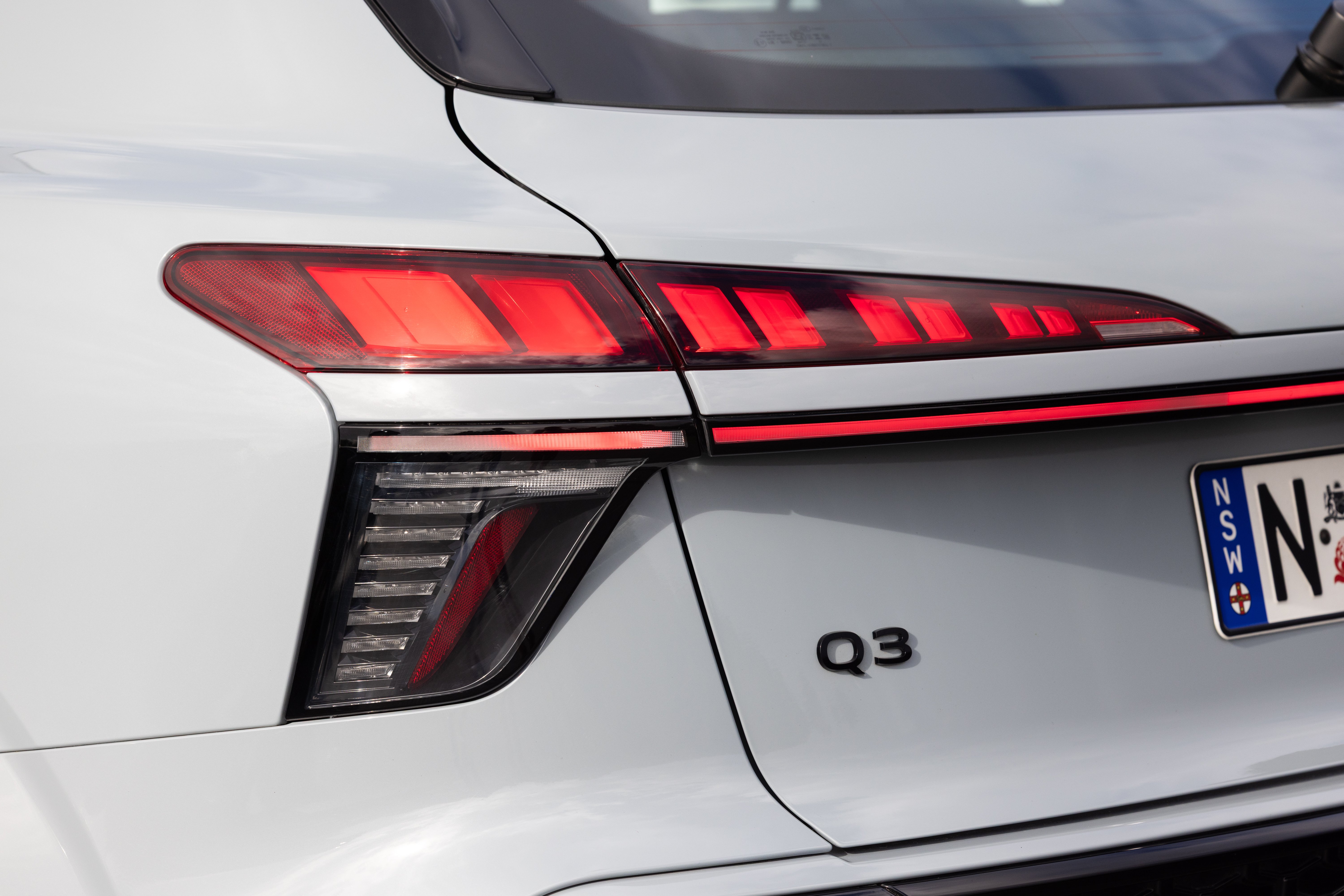
In what may be the most pointless feature we’ve seen on a new car, you can adjust the signature of the LED daytime running lights.
I showed this to someone, and their response was: “Why would you ever do that?”. I think that sums up that feature nicely. Pick one of the three themes, set it and forget it.
|
Dimensions |
Audi Q3 |
|---|---|
|
Length |
4531mm |
|
Width |
1859mm – excl. mirrors2087mm – incl. mirrors |
|
Height |
1601mm |
|
Wheelbase |
2681mm |
|
Cargo capacity |
488L-575L – rear seats up1386L – rear seats folded |
To see how the Audi Q3 lines up against the competition, check out our comparison tool
What’s under the bonnet?
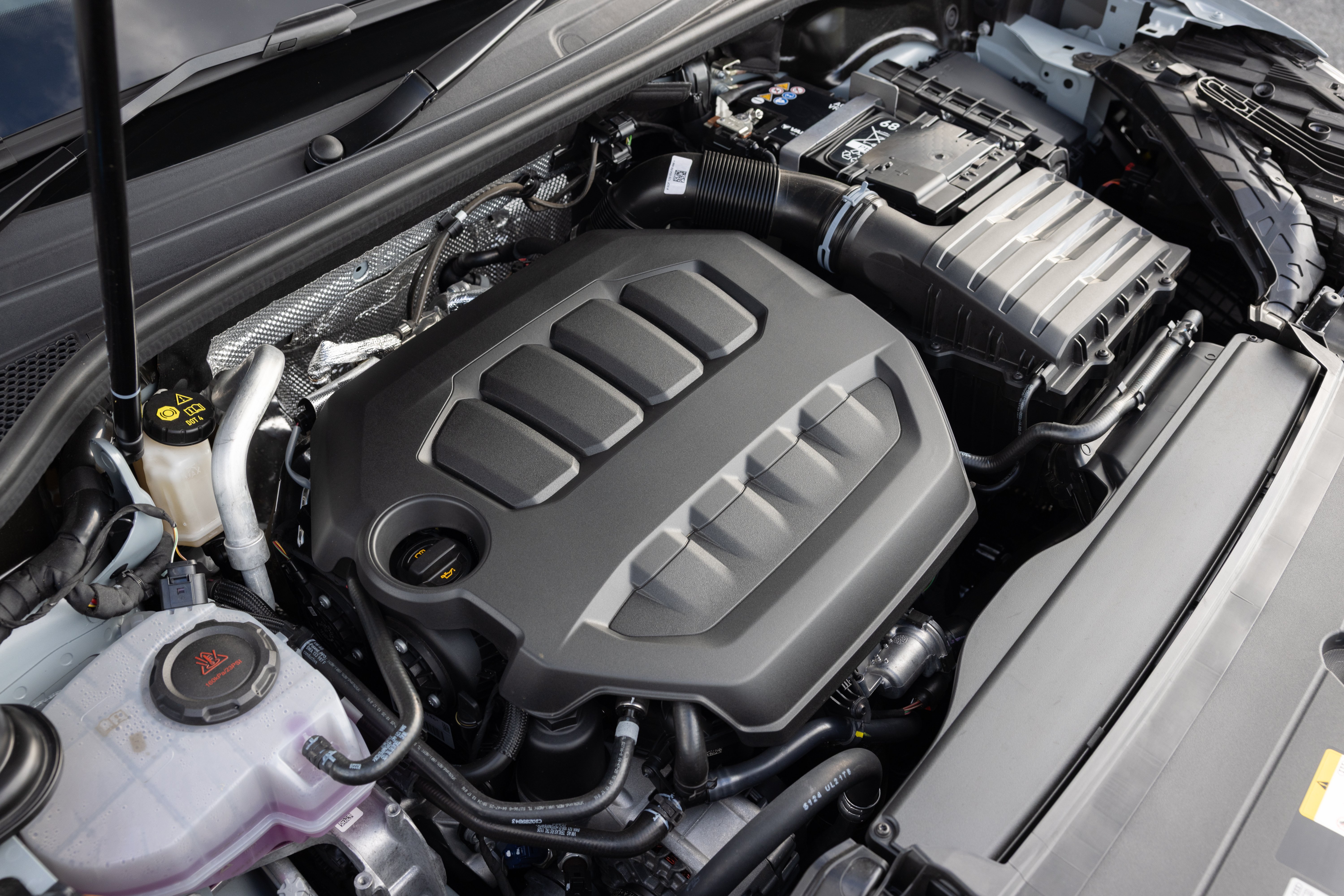
There are three engines available in the local Q3 lineup, with our tester’s 150kW turbocharged 2.0-litre petrol four sitting right in the middle.
|
Specifications |
Audi Q3 |
|---|---|
|
Engine |
2.0L turbo 4cyl |
|
Power |
150kW |
|
Torque |
320Nm |
|
Transmission |
7-speed dual-clutch auto |
|
Drive type |
All-wheel drive |
|
Weight |
1823kg |
|
0-100km/h (claimed) |
7.1 seconds |
|
Fuel economy (claimed) |
7.3L/100km |
|
Fuel economy (as tested) |
8.7L/100km – inner-city, suburban and highway loop8.7L/100km – over the course of a week |
|
Fuel tank capacity |
60L |
|
Fuel requirement |
95-octane premium unleaded |
|
CO2 emissions |
166g/km |
|
Braked tow capacity |
2000kg |
To see how the Audi Q3 lines up against the competition, check out our comparison tool
How does the Audi Q3 drive?
As mentioned, this is a Launch Edition, so there’s one key difference between this and regular 150kW variants: the inclusion of adaptive dampers, allowing you to choose between three levels of firmness from the suspension.
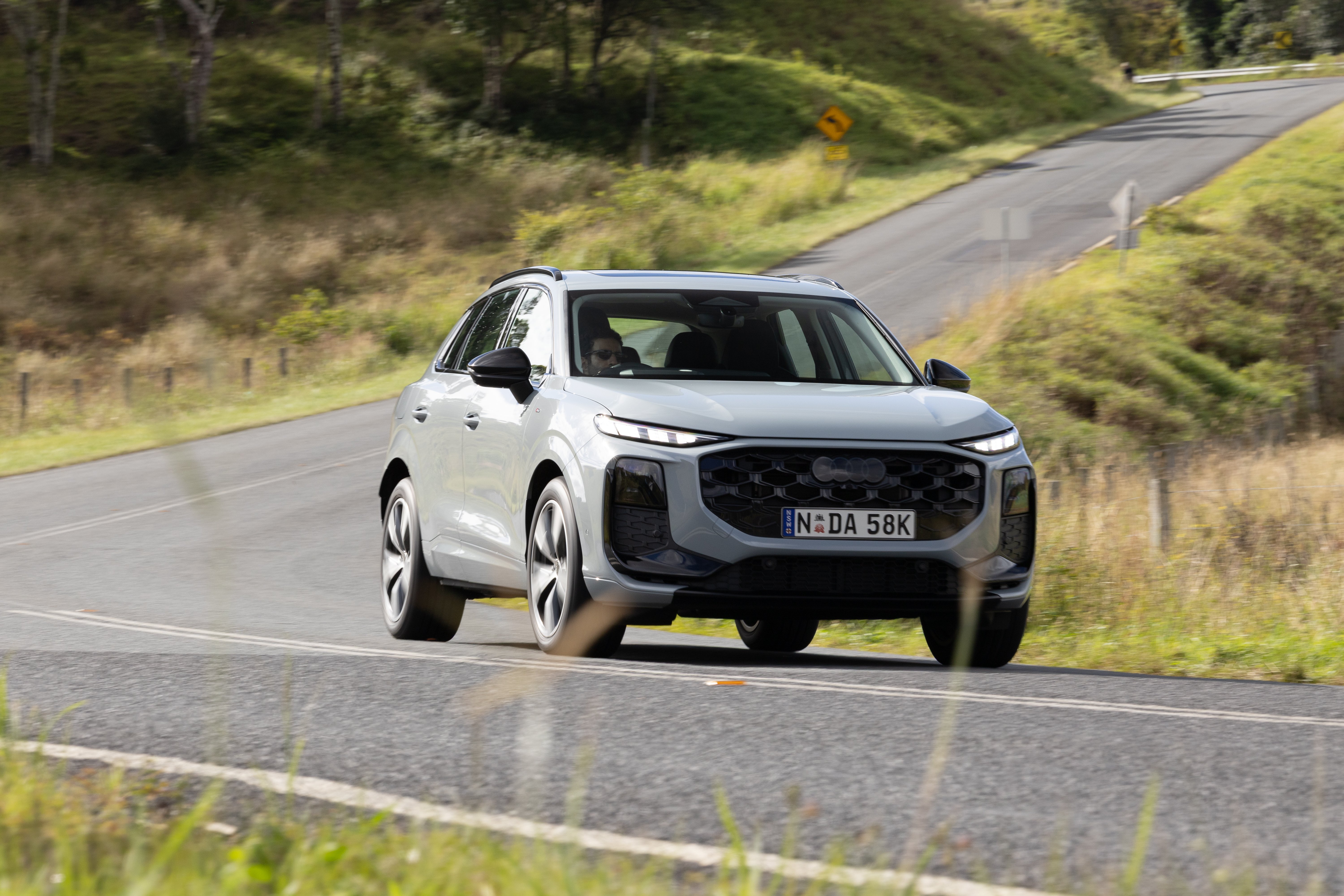
In theory, it’s a great idea. In practice, we didn’t feel the need to deviate from the standard Balanced drive mode, which can also be customised. In addition to Balanced, there are Dynamic, Comfort, Efficiency and Offroad Plus modes.
Comfort definitely seems to add some degree of float to the ride and numbs the steering somewhat. Dynamic, in contrast, firms up the suspension and makes the steering heavier.
In practice, there’s not a massive difference between Balanced and Dynamic, which means that, in its standard drive mode, the Q3’s thoroughly enjoyable to drive.
Indeed, if the 150kW Q3’s this enjoyable, it stands to reason the 195kW variant’s a gem.
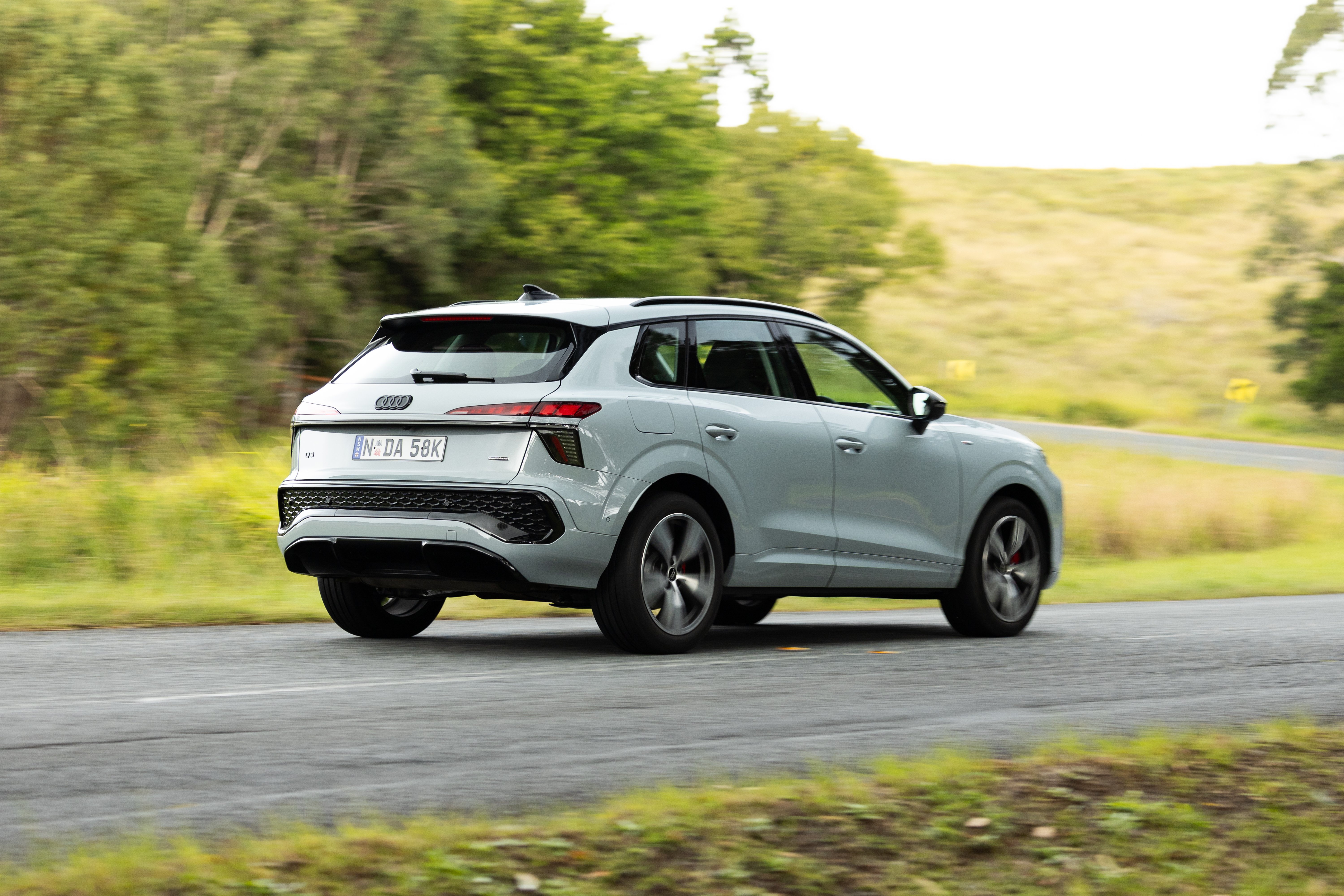
We took the Q3 on a spirited mountain drive over some of the best and twistiest mountain roads in Southeast Queensland and were pleasantly surprised.
The steering’s nicely weighted and does transmit the feel of the road to your hands. There’s perhaps just that last little bit of feel missing from the Q3, which, in combination with a slightly spongy brake pedal, prevents this from being the most entertaining SUV it could be.
But we were delighted with the speed you can carry into corners, the sharp turn-in, the balanced feel, the well-controlled body roll, and the overall feeling that this Q3 drives more like a hatchback than an SUV.
The turbo engine’s peppy, though if you’re after real thrills, there’s a more powerful option available in the Q3 lineup.
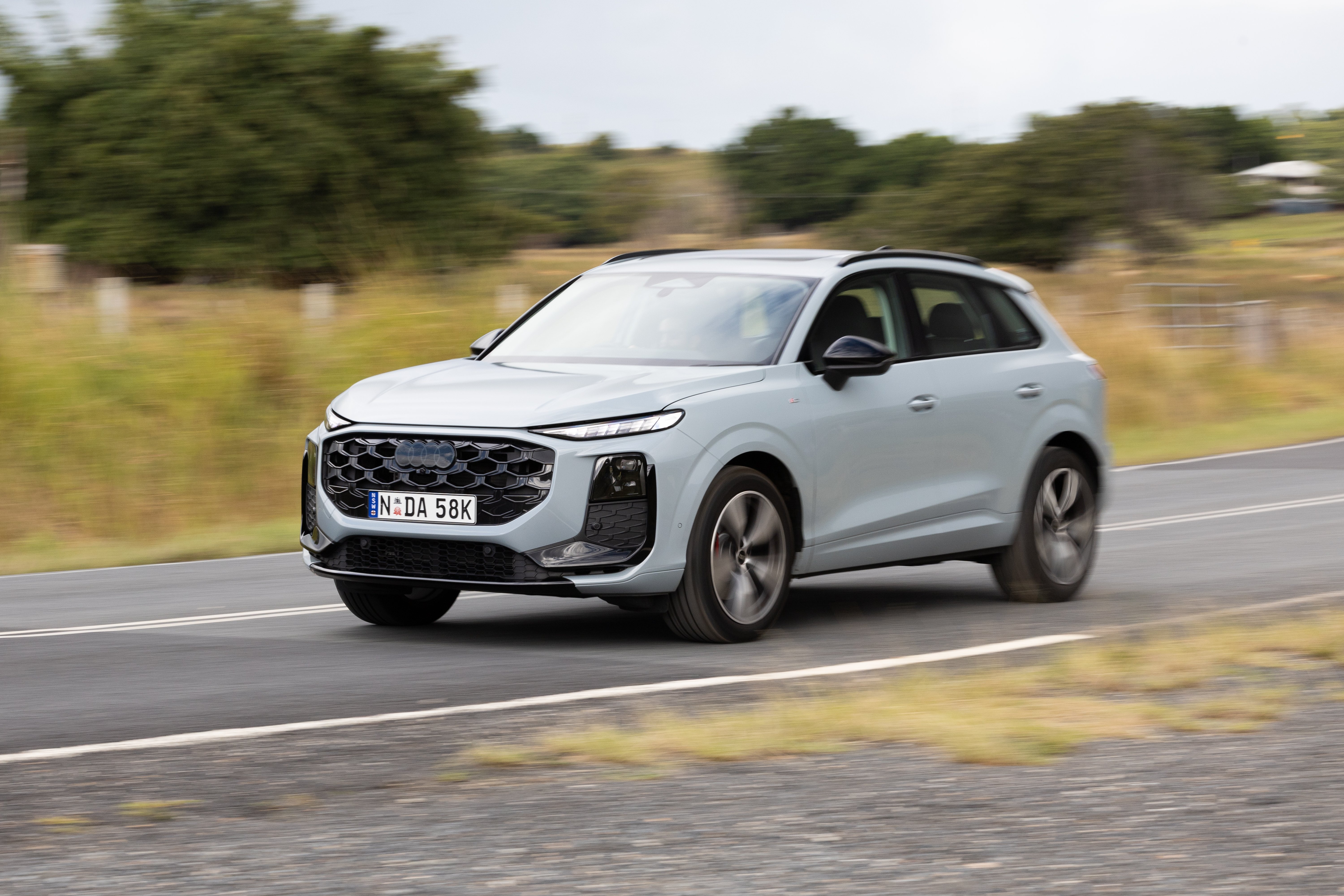
The transmission proved to be well-calibrated. On a spirited mountain drive, it pleased with smooth, quick shifts, but it was also extremely pleasant in day-to-day traffic.
Dual-clutch automatic transmissions have a tendency to exhibit low-speed vibration, roughness or clunkiness, particularly when creeping through heavy traffic, and yet the Q3’s transmission exhibited none of this. This is one of the best dual-clutch autos we’ve experienced.
Also a pleasant surprise was the level of refinement in the Q3. German cars are known for their refinement, but one issue we’ve observed with many of them, particularly below the $100,000 mark, is their tendency to allow too much tyre noise to enter the cabin at highway speeds or on coarse-chip roads. Yet the Q3’s interior is nicely insulated and engine, tyre and wind noise around the vehicle is kept well at bay.
The ride’s on the firmer side, but it’s generally comfortable. We did observe a slightly knobbly feel on urban streets at low speeds, but we don’t feel you’ll be shortchanged by picking up a non-Launch Edition 150kW.
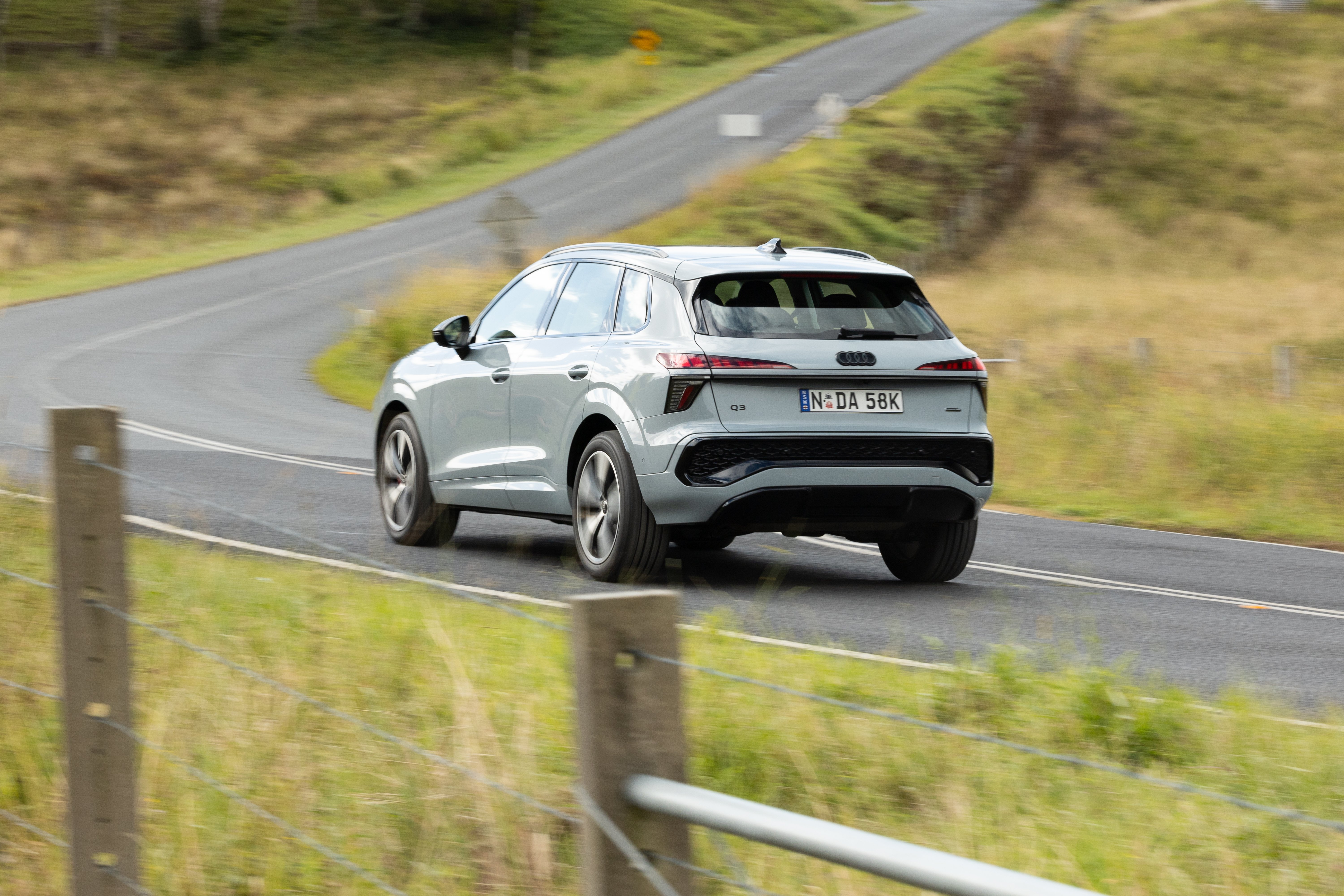
The driver-assist systems are well-calibrated. Lane-keep assist is standard, and you can toggle lane-centring to work when you’ve got the adaptive cruise control on. It works quite well, keeping you centred within your lane.
It was refreshing to see that the overspeed alert doesn’t default to on, as it does in a distressingly large number of cars today. We had no issues with the operation of features like adaptive cruise control, autonomous emergency braking and blind-spot monitoring.
We did observe an error message flash up on the cluster almost every time we drove the vehicle, briefly displaying a warning about the driver-assist features, but their actual operation never seemed to be interrupted.
We wondered why the reversing camera seemed to stagger around like a wino. If you watch closely, you’ll see it actually moves – or rather, jerks – with your steering inputs. It’s bizarre, but at least the resolution is good, and it will give you the distance to an obstruction which is handy in tighter parking situations.
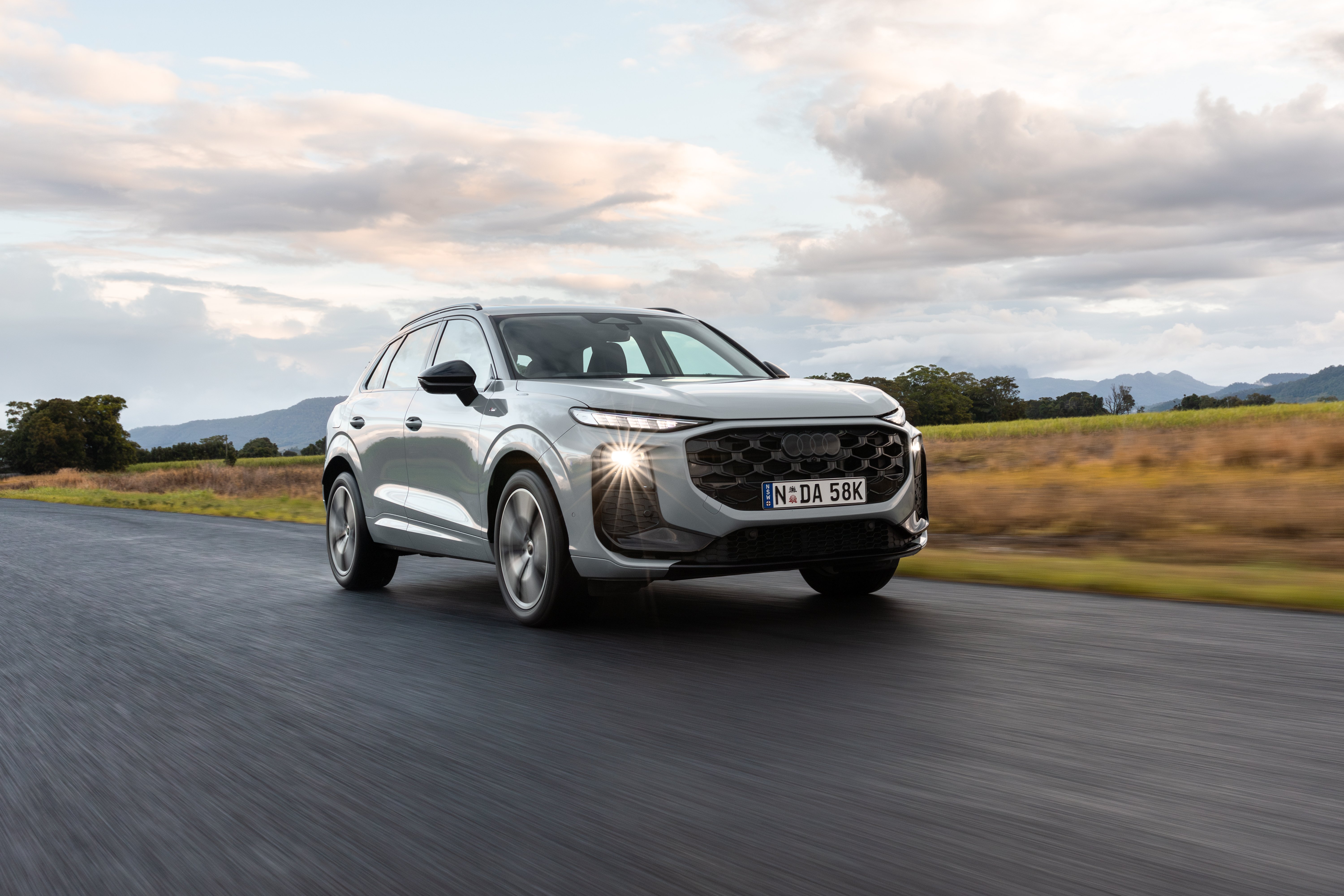
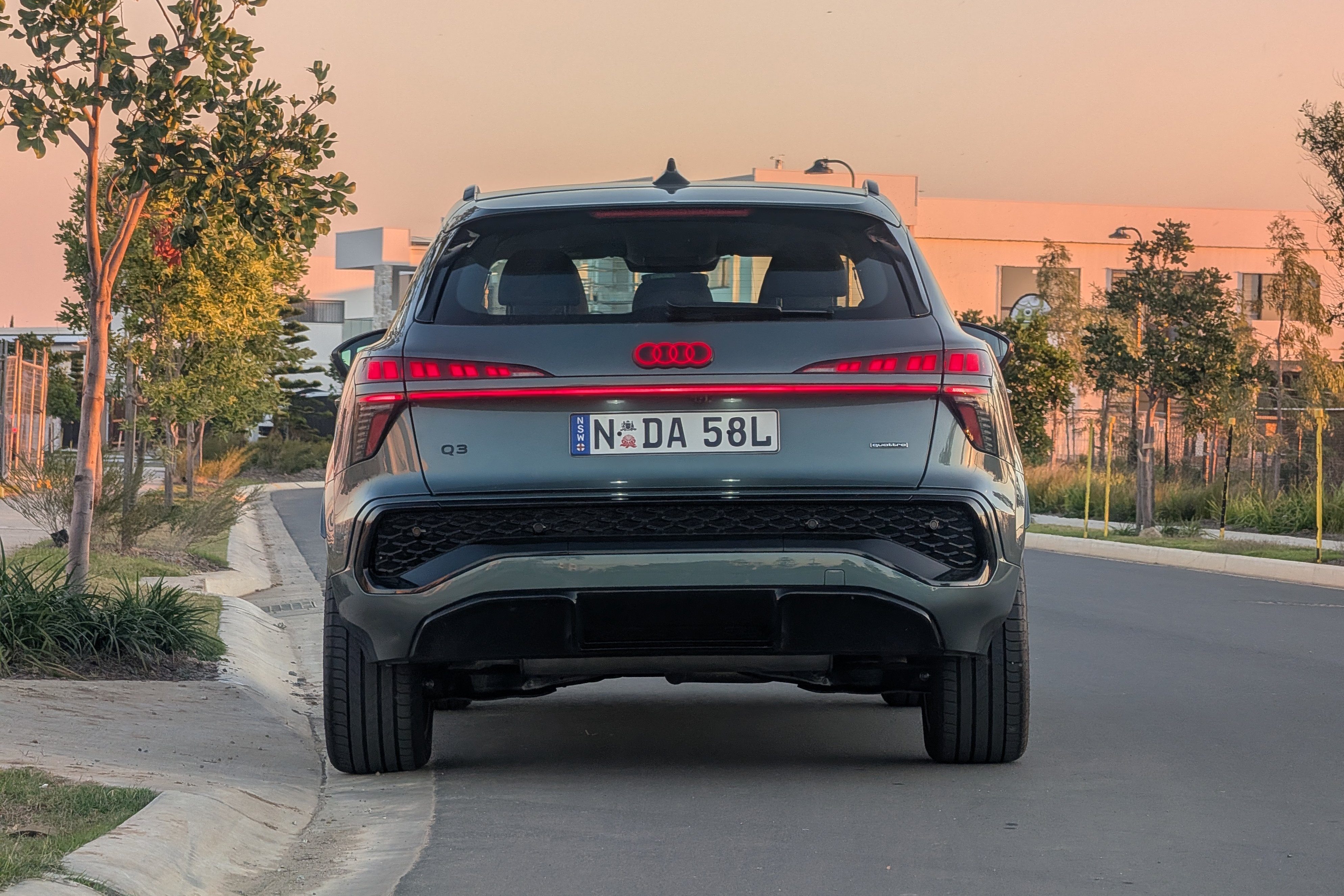
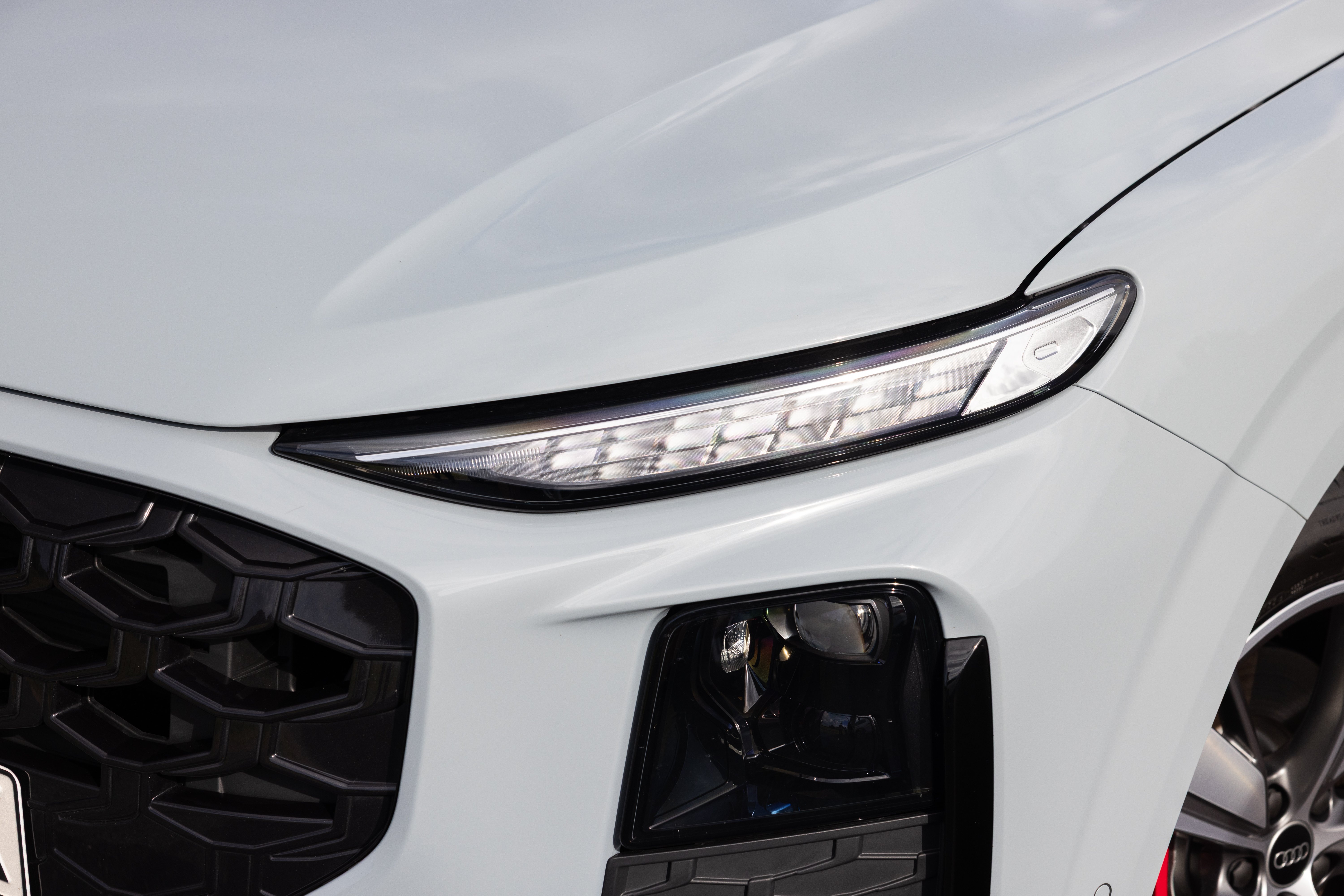
Audi is known for its matrix LED headlights, but these aren’t standard on any Q3, with only more basic automatic high-beam available here.
Matrix LED headlights are bundled with digital OLED rear lights as part of a $3250 option package for 150kW and 195kW variants. We’d rather see them as a standalone option rather than being tied to the purchase of the much less useful digital OLED tail-lights.
To see how the Audi Q3 lines up against the competition, check out our comparison tool
What do you get?
While the SUV and Sportback are both available in 110kW, 150kW and 195kW variants, there are some minor specification differences between the body styles.
2027 Audi Q3 TFSI 110kW standard equipment highlights:
- 18-inch alloy wheels (SUV)
- 19-inch alloy wheels (Sportback)
- S line exterior package (Sportback only)
- Semi-autonomous parking assist, incl. five programmable parking manoeuvres
- Power tailgate
- Automatic LED headlights
-
- Cornering lights
- Intersection light and motorway light
- Automatic high-beam
- 12.8-inch touchscreen infotainment system
- Wireless Apple CarPlay and Android Auto
- Satellite navigation
- DAB+ digital radio
- 2 x front USB-C outlets
- 2 x rear USB-C outlets
- Audi Connect plus Security & Assistance services – 10-year complimentary subscription
-
- Car finder
- Remote lock and unlock
- Emergency call
- Audi Connect plus Navigation & Infotainment services – 3-year complimentary subscription
-
- Parking information
- Live traffic
- Cooled wireless phone charger
- 10-speaker sound system
- Leather-appointed upholstery
- Power-adjustable front seats
-
- 4-way power lumbar
- Heating
- Driver memory
- Sliding rear bench with adjustable backrest
- 3-zone climate control
- Leather-wrapped steering wheel
- Aluminium door sills
- Matte cross-brushed aluminium inlays
- Colour ambient lighting
The TFSI quattro 150kW adds:
- 19-inch alloy wheels
- Front sport seats
The TFSI quattro 195kW adds:
- 20-inch alloy wheels
- Adaptive dampers
- Heated steering wheel
- Illuminated aluminium door sills
- Black headliner
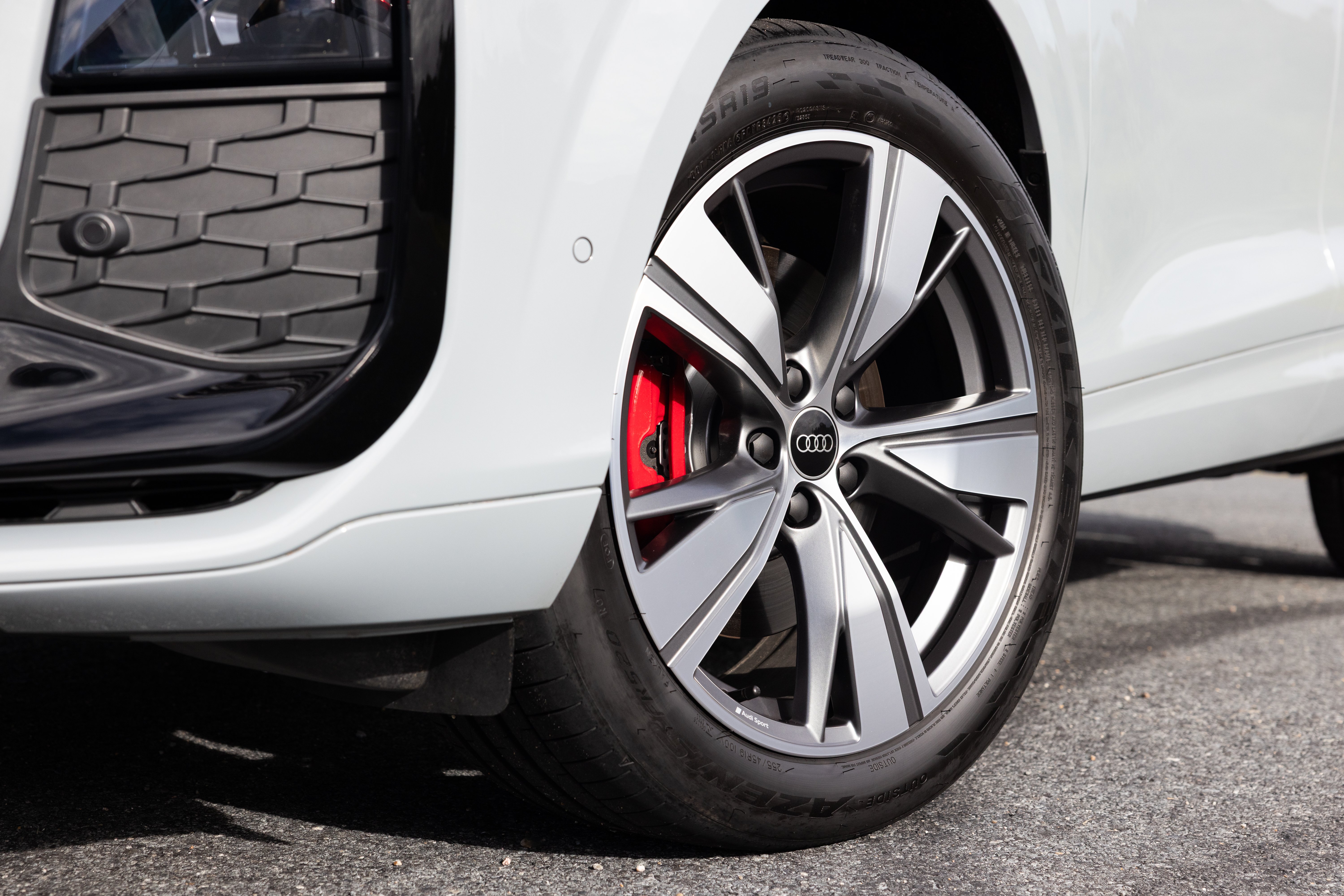
As mentioned, our tester was a TFSI quattro 150kW Launch Edition, which over the regular 150kW adds:
- Metallic paint
- 19-inch Audi Sport alloy wheels
- Red brake calipers
- Black exterior styling package, incl. black bumper, window and mirror trim, black roof rails
- Adaptive dampers
- Sound actuator
If you’ve missed out on the Launch Edition, you can specify the Q3 SUV TFSI quattro 150kW with various options. These include:
- Metallic paint: $1480
- Black exterior styling package: $1600
- Panoramic sunroof: $2600
- American Whitewood inlays: $370
- Advanced lighting package: $3250
-
- Digital matrix LED headlights
- Digital OLED rear lights
- Premium package: $4400
-
- Panoramic sunroof
- Head-up display
- 12-speaker Sonos premium sound system
- Higher-output USB outlets
To see how the Audi Q3 lines up against the competition, check out our comparison tool
Is the Audi Q3 safe?
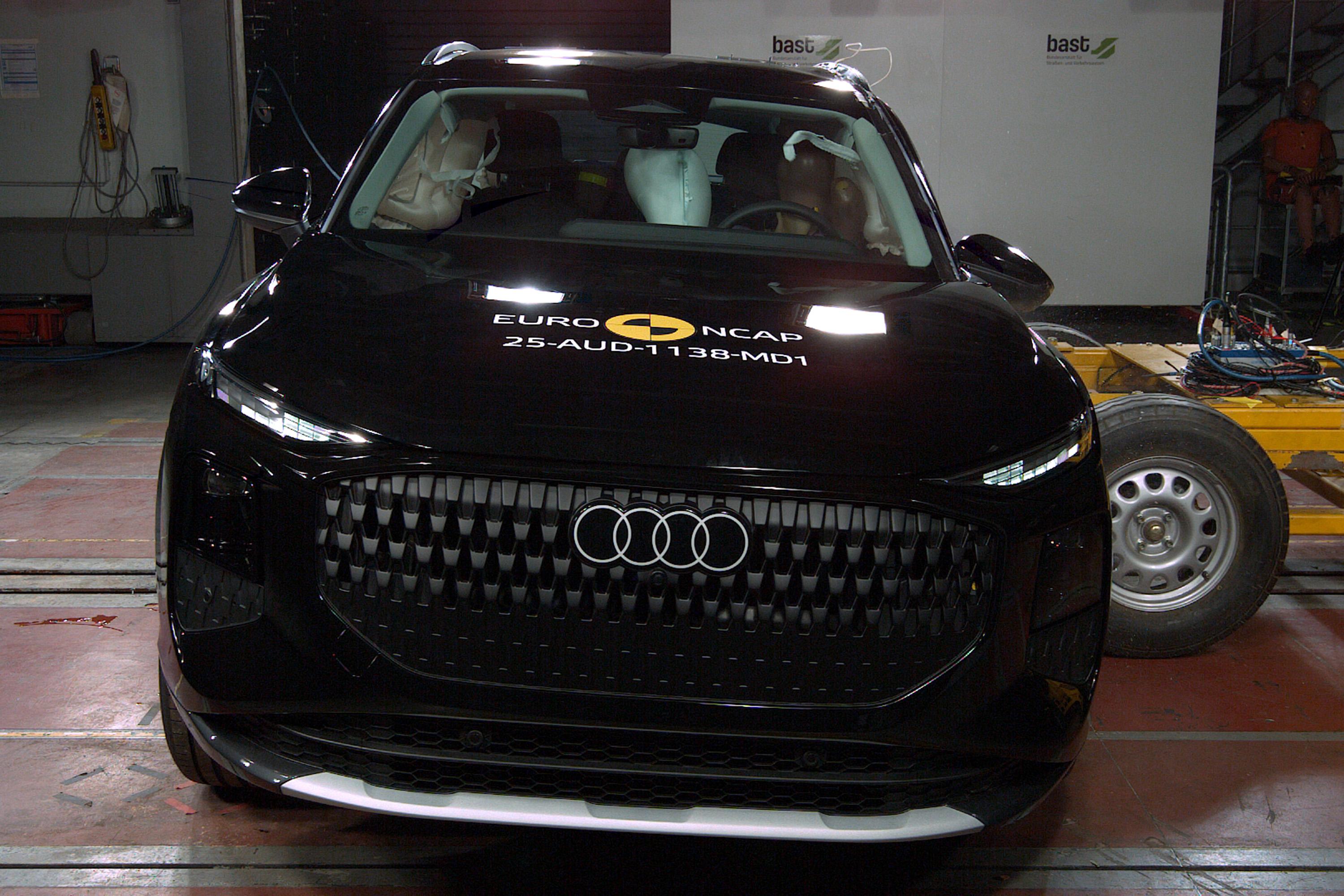
The Audi Q3 has a five-star rating from independent safety authority ANCAP, based on testing conducted in 2025.
|
Category |
Audi Q3 |
|---|---|
|
Adult occupant protection |
87 per cent |
|
Child occupant protection |
86 per cent |
|
Vulnerable road user protection |
80 per cent |
|
Safety assist |
83 per cent |
Standard safety features include:
- Adaptive cruise control with stop/go
- Autonomous emergency braking with intersection assist
- Blind-spot monitoring
- Lane-keep assist
- Front cross-traffic assist
- Rear cross-traffic assist
- Safe exit warning
- Speed sign recognition
- Surround-view camera
- Swerve assist
- Front, front-side, curtain and front-centre airbags
To see how the Audi Q3 lines up against the competition, check out our comparison tool
How much does the Audi Q3 cost to run?
All Audi models are covered by a five-year, unlimited-kilometre warranty, with five years of roadside assistance.
|
Servicing and Warranty |
Audi Q3 |
|---|---|
|
Warranty |
5 years, unlimited kilometres |
|
Roadside assistance |
5 years |
|
Service intervals |
12 months or 15,000km |
|
Capped-price servicing |
5 years |
|
Total capped-price service cost |
$3330 – 5-year pre-paid plan |
To see how the Audi Q3 lines up against the competition, check out our comparison tool
CarExpert’s Take on the Audi Q3
The Audi Q3 isn’t cheap, but you won’t feel shortchanged coughing up over $70,000 for this small SUV.
On paper, many small SUVs from luxury brands – the Q3 included – don’t seem to be worth the steep price premium they command over similarly sized models from mass-market brands. The performance figures for this 150kW variant are nothing to write home about, and the standard equipment list is put to shame by cheaper Chinese SUVs – there’s no head-up display or ventilated seats, for example. Seriously, Audi?
However, Audi has ensured the Q3 offers the premium feel expected of a vehicle in its lineup – and frankly, we think it’s much nicer inside than the A5 – while also imbuing this crossover SUV with genuinely engaging dynamics.
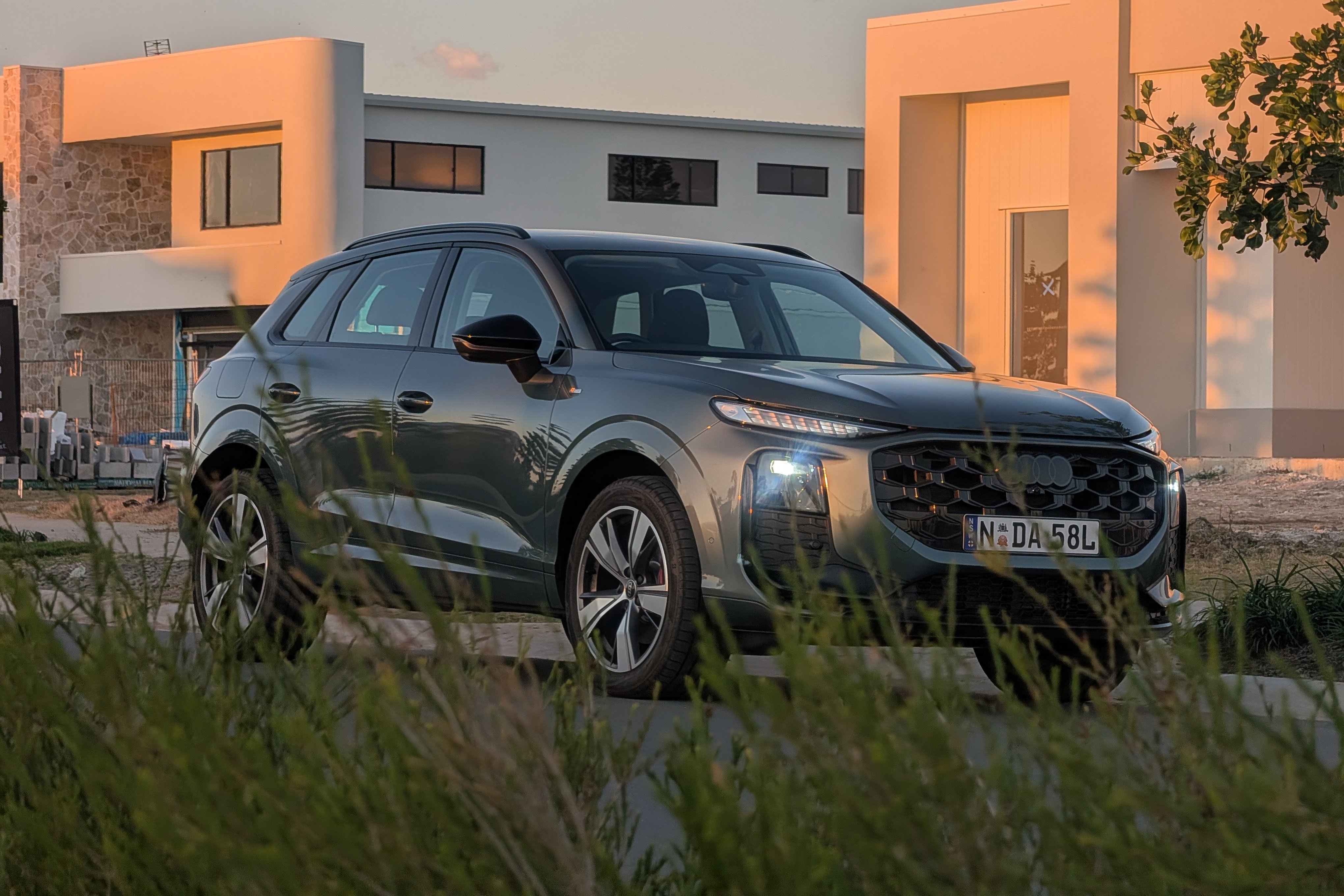
We’re looking forward to Audi’s new, cleaner Concept C-inspired design language. The Q3 is mostly attractive, but its puffy face and awkward screen integration stop it from being truly elegant.
Nevertheless, it carries the cachet of an Audi while having the quality and feel to make this car seem worth the premium over mass-market SUVs. Not only that, but we’d say this is one of the most compelling models in the small premium SUV segment.
Interested in buying an Audi Q3? Let CarExpert find you the best deal here
Click the images for the full gallery
