

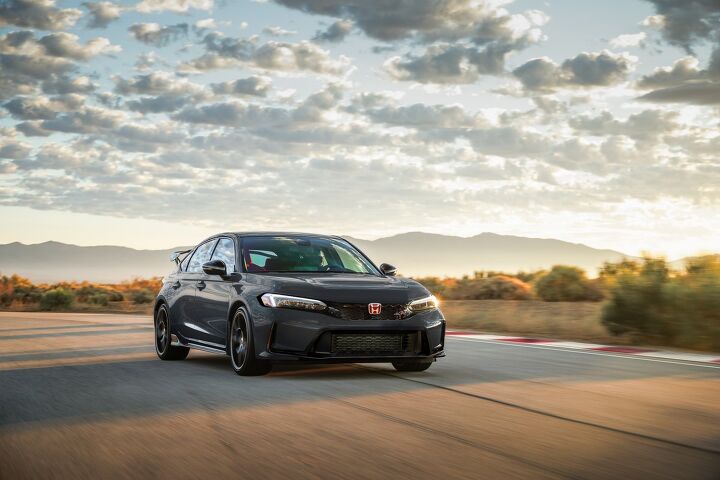
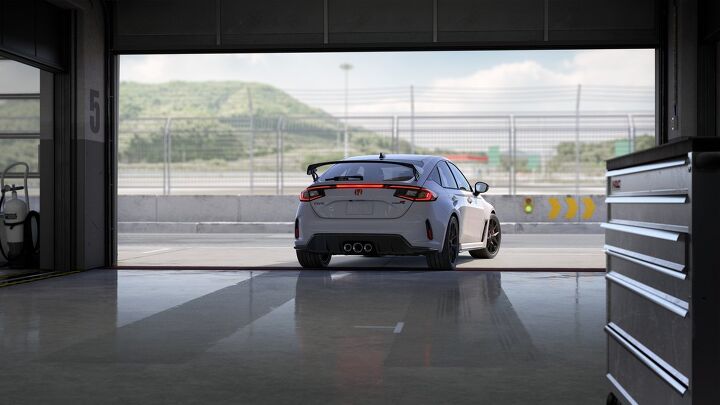
The 2027 Honda Civic Type R is being updated to incorporate a few creature comforts and some minor performance enhancements. While both are presumably unnecessary factors in driving sales, they will allow the manufacturer to brag that they’ve improved an already excellent performance vehicle.
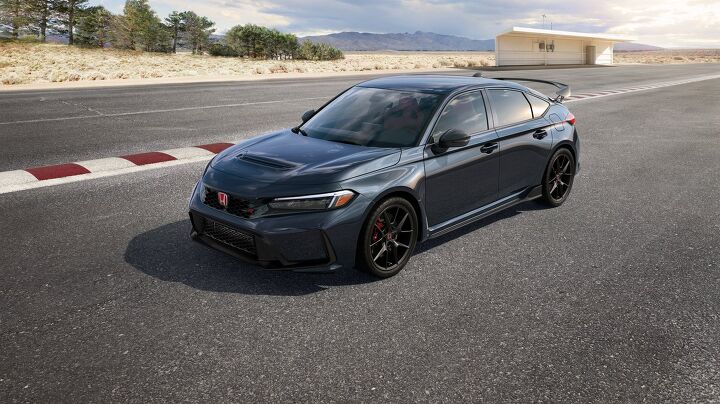
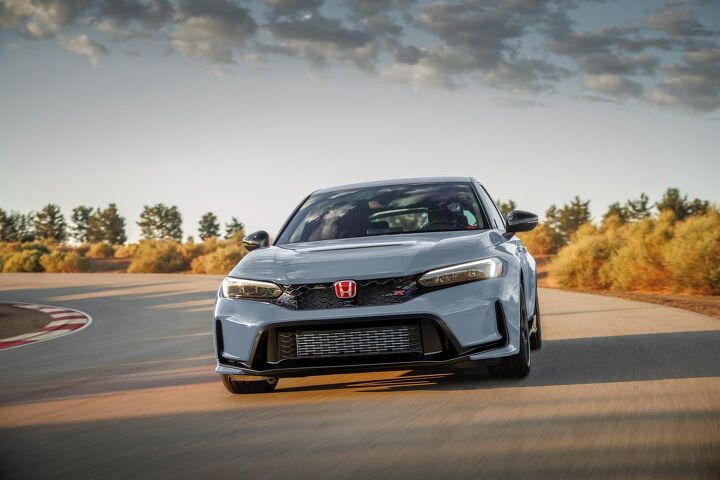
But the visual changes are beyond subtle. Honda claims to have altered the front fascia to improve airflow. An enlarged grille is supposed to help keep the engine cooler, whereas an updated front splitter is alleged to improve downforce. But this is one of those instances where you’ll just have to trust the manufacturer.
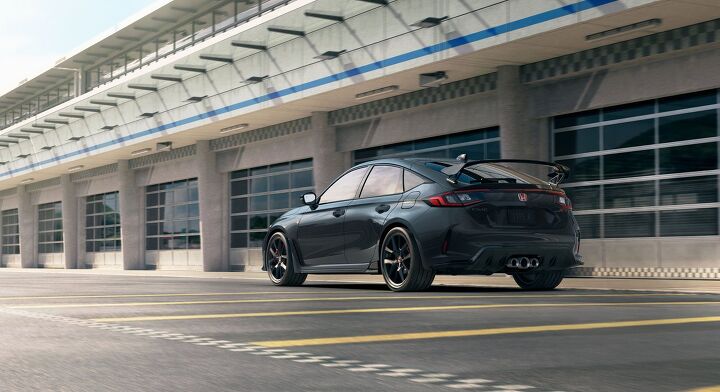
One could likewise argue that they don’t realistically matter outside of a racing context. If anything, this will become the kind of minutia elderly gearheads argue about when reminiscing about the FL5 Civic decades from now. But nobody is going to be upset if they add up to help give those front tires a little extra grip at speed or allow the car to run half a degree cooler on track.
More noticeable will be the improved suspension damping. One of the only recurring gripes about the Type R has been that its extra-aggressive R+ mode was clearly optimized for glassy smooth racetracks. On normal roads it had a tendency to make the suspension bouncy and harsh, discouraging some drivers from using it. Honda says that this has been dealt with for the 2027 model year, with the R+ setting now being more compliant than before.
This should theoretically make it easier to hustle down a backroad in that particular setting. But it’s not as if the car was having any trouble doing that in any of the softer driving modes.
The Civic Type R will also see an updated rev matching system that quickens engine response when downshifting. Brake feel should be better, too. Honda says it has fitted a yoke spring to the brake pedal to minimize play and improve feedback to the driver.
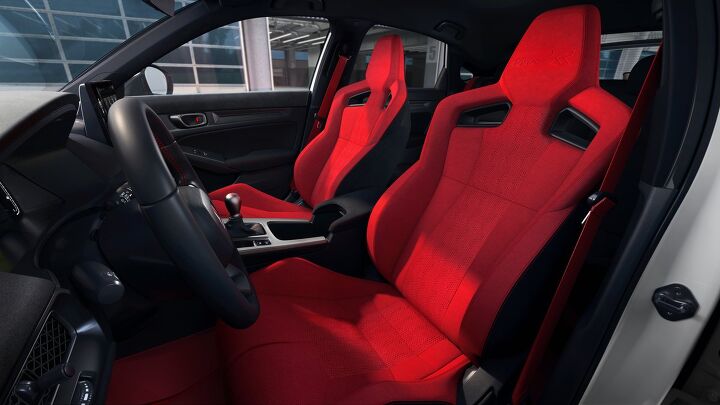
Unlike the exterior, the interior of the 2027 Honda Civic Type R will yield easily discernible alterations. Front-seat perforation has been changed to keep occupants from sliding around and should pair nicely with the already heavy bolstering.
Those seats now have the option to be heated, too, which is a first for the model.
Honda’s customers will also see Ultrasuede added to the instrument and upper door panels. While intended to reduce windshield glare on performance vehicles, plenty of manufacturers just liberally throw the material (or equivalents, like Alcantara) around the interior to give certain models an extra-sporty appearance. While this is fine, some OEMs neglect to place any atop the dashboard — which is the only place it really makes any difference in terms of mitigating reflective glare.
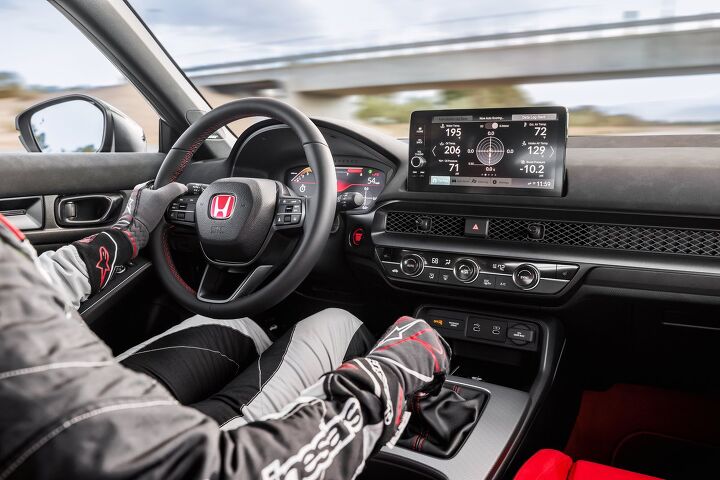
Honda has avoided doing this, opting for function over aesthetics and further legitimizing the Type R as a serious performance vehicle. But this does still come with a few drawbacks. Materials like Ultrasuede are more prone to capturing dust and require a semi-specialized cleaning regimen. It’s also unlikely to weather the harsh UV rays coming through the windshield as well as traditional polymer dashboards. Although, we doubt this will matter to most would-be CTR customers.
The rest of the interior has also been de-shined to a degree. Honda has made the formerly silver door handles, air vent inserts, and HVAC knobs black for 2027. This carries over to the aluminum shift knob, which is now a darker gray color.
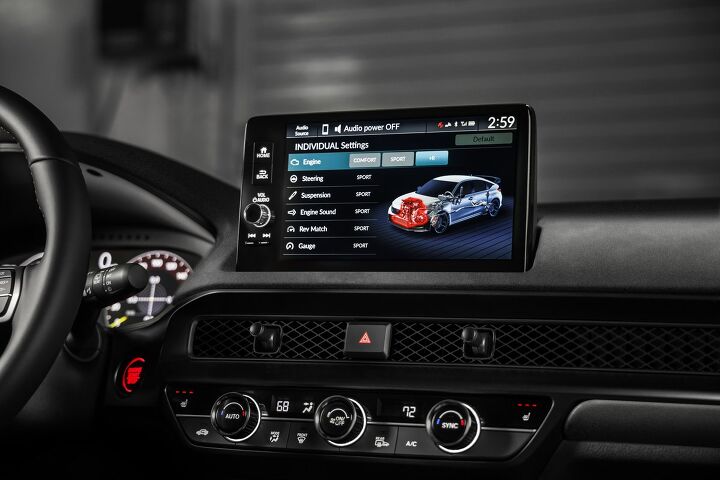
In terms of tech, there’s an auto-dimming mirror that’s now standard and some new USB-C ports. But most of the changes apply to the car’s connectivity features. The Civic Type R receives the Alexa digital assistant and the latest version of Google Gemini, Google Maps and Google Play. For those who enjoy talking to their car and have faith that it’ll actually be able to understand what you say, Honda seems to have you covered.
The automaker also noted that the car will receive the latest version of the “Honda Sensing suite of safety and driver-assistive technologies.” This now includes a post-collision braking system that’s supposed to help avoid contributing to a multicar pileup in the event of a serious accident.
While there’s not much to knock about that particular safety net (assuming it works and is secure), there are plenty of other features we imagine the typical Type R driver will simply find annoying. But this is an issue with all modern cars, as Advanced Driver-Assistance Systems have become the norm with certain features now being mandated by government regulators.
Outside of the new Meteorite Gray Metallic paint color, nothing else looks to be changing on the Civic Type R. The 2.0-liter turbo continues to deliver 315 horsepower and 310 lb-ft of torque, launching the vehicle to 60 mph in about five seconds. Handling should likewise remain sublime, especially for a front-wheel drive automobile.
However, Honda has elected to raise the MSRP of the updated Honda Civic Type R. The vehicle will now start at $49,990 — a bump of $1,300 over the 2026 model year.
While you are getting some upgrades and a tad more standard equipment, asking $50,000 for what is effectively a high-zoot economy car feels borderline insane in today’s economy. The Type R is now basically double the price of the vehicle it’s based upon. While it’s never been atypical for automakers to affix lofty MSRPs on high-performance variants of mainstream Japanese cars, the Type R has continued to move further away from the base model since it was launched on our market in 2017.
This likely comes down to a combination of tariffs and Honda knowing that it can probably get away with creeping MSRPs. But there are also plenty of alternatives on the market offering 90 percent of the fun for significantly less money. This includes Honda’s own Civic Si, which starts at $32,290.
[Images: Honda]
Become a TTAC insider. Get the latest news, features, TTAC takes, and everything else that gets to the truth about cars first by subscribing to our newsletter.
