

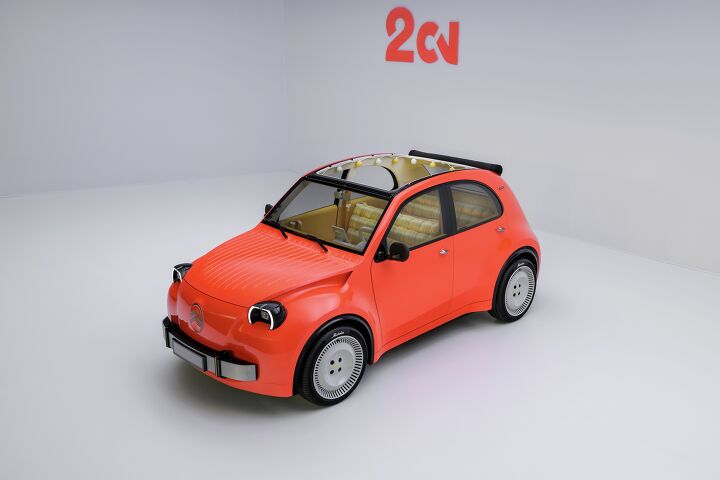
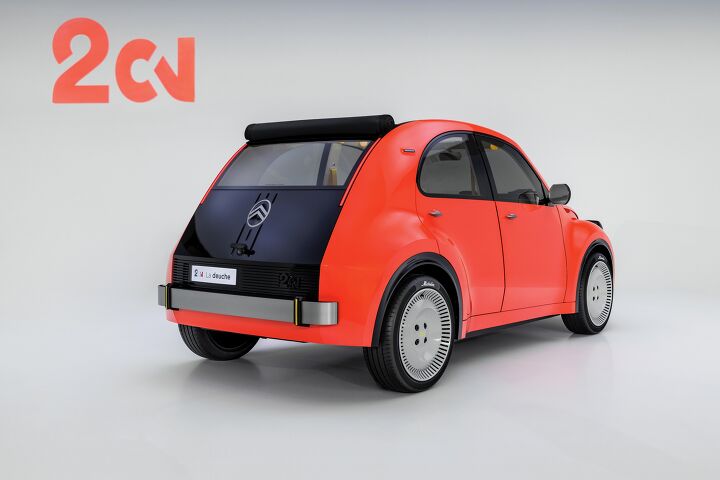
Citroën has revived the legendary 2CV, suggesting that a production model could land on the European market by 2028 with a claimed MSRP of €15,000 (about $16,800).
It’s the exact kind of car the world seems to need right now. The original 2CV debuted in 1948 to provide affordable transportation for Europeans still recovering from World War II.

The model was slow, basic, and quite possibly the most easily repairable vehicle ever manufactured in large numbers. Over 5-million examples of the 2CV had been built before production finally ended in 1990.
Legend has it that the car was designed to be capable of driving across extremely rough terrain without jostling the occupants and fixed on the side of the road with the most basic tools. The original engine was an air-cooled, 375cc flat-twin motor boasting just 9 horsepower.

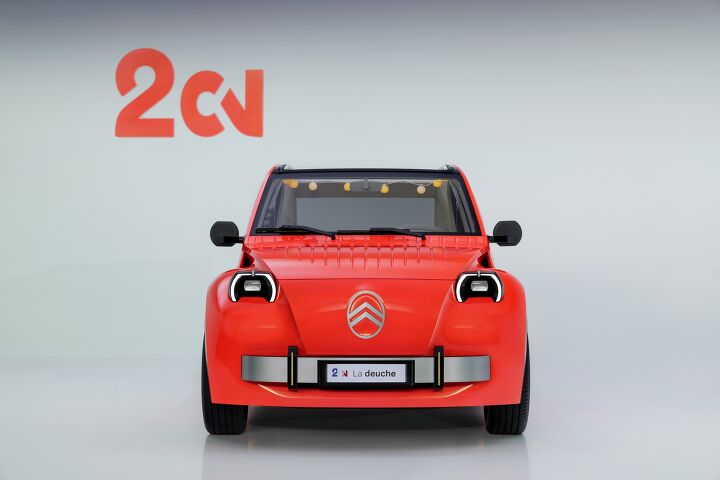
Excluding the extremely familiar and attractive exterior, the new concept will be quite a bit different. Rather than being an entirely analog affair, Citroën plans on making the new 2CV an all-electric vehicle.
However, it does appear to be retaining many of its predecessor’s key features — including the retractable cloth top and the hinged panel at the base of the windscreen that lets in fresh air.
Citroën likewise wants to keep the vehicle extremely lightweight, setting a target of just 2,205 pounds. That’s a featherweight for modern vehicles and almost unheard of when it comes with EVs.
This begs the question of battery size and usable range. In both cases, we expect it to come in well below the brand’s current entry level electric (the C3 crossover). That means the 2CV will likely boast a maximum output substantially under 100 hp and a peak range south of the C3’s maximum 190 miles.
However, the fear is that the model will effectively become a deluxe version of the Citroën Ami (below) — which is technically classified as a light quadricycle and is effectively just a fancy golf cart.

Ballparking around €8,000, the Citroën Ami tops out around 28 mph and is only capable of about 45 miles of range under ideal conditions. Fully loaded with two passengers and their luggage, occupants would be lucky to manage much more than 30 miles before they’ll need to take the bus. This effectively makes the Ami more of a novelty city car catering to tourists and locals who never plan on venturing out of town.
For the 2CV to launch some kind of legitimate all-electric revolution, it would need to surpass the original model’s top speed of 40 mph. Ideally, it should be capable of the same 70 mph that the final batch of cars that were equipped with the larger 602cc motor.

Sadly, matching its namesake’s range is probably out of the question. Despite coming equipped with a comically small fuel tank, the original 2CV could typically manage at least 300 miles before filling up. Rumor has it that the concept EV is supposed to be rated somewhere around 100 miles using the notoriously generous Worldwide Harmonized Light Vehicle Test Procedure (WLTP) preferred by European automakers. For U.S. ratings, you can expect at least a 20 percent drop, or somewhere around 80 miles of range — optimistically. That will likely relegate the 2CV to being a local runabout, rather than something that could be slotted into a wider use case.
“Reinventing the 2CV isn’t about replicating a car from the past; it’s about reinventing what made it unique: its simplicity, its accessibility and the freedom it offered,” said Citroën CEO Xavier Chardon. “With the 2CV Concept, we’re bringing that spirit into today’s world to make electric mobility simpler, more human and more desirable. The world has changed. But the idea remains the same: to make life more beautiful with Citroën.”
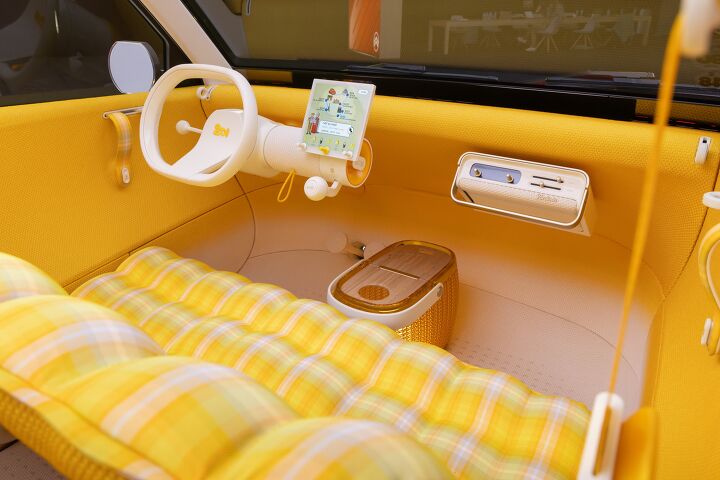
While the design of the vehicle is excellent, and it’s nice to see an affordable car that foregoes a lot of the unnecessary modern tech, simply reinventing the 2CV might have been sufficient. Making “life more beautiful” is certainly a worthwhile endeavor. But people have been clamoring for truly useful automobiles at lower prices, not prettier EVs that trade on nostalgia.
Volkswagen learned this the hard way with the ID. Buzz. Modeled after the iconic microbus (Type 2/Transporter), VW priced the model too high and made it too impractical. Buyers broadly agreed that a vehicle segment probably best suited to family road trims should probably offer more than 230 miles between charging — especially when the model in question started at $61,500.
The new 2CV may suffer a similar fate if Citroën cannot provide something that can suit a variety of needs. Frankly, it’s kind of maddening that automakers seem to understand that their customers want dirt-cheap cars and then try to gatekeep everything behind all-electric vehicles with limited ranges.
On the other hand, something like the 2CV could become an ideal secondary vehicle for households that already have something better suited to longer journeys. But this does limit the appeal and will probably not result in something that rivals the original’s sales record.
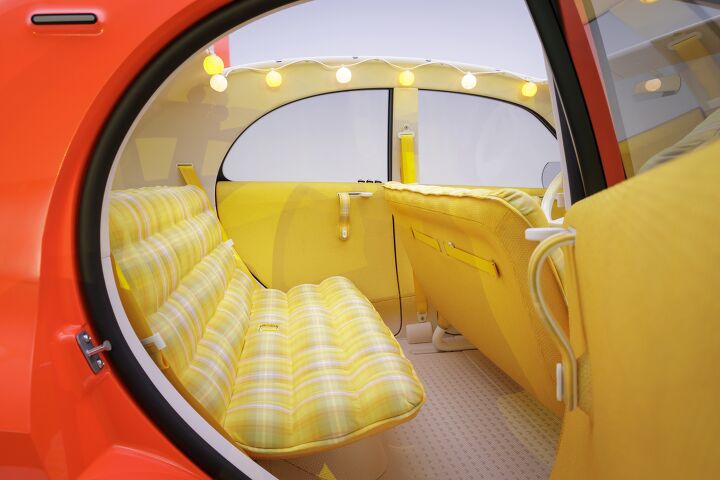
The bottom line is that this is one of the prettier cars we’ve seen previewed in recent years. Many of us also feel that, if there was any vehicle type that needed to make a triumphant return right now, it should be something like the Citroën 2CV.
However, we doubt the company will be fielding something as versatile or repairable as the original. It also seems unlikely that we’ll ever see it coming across the Atlantic Ocean.
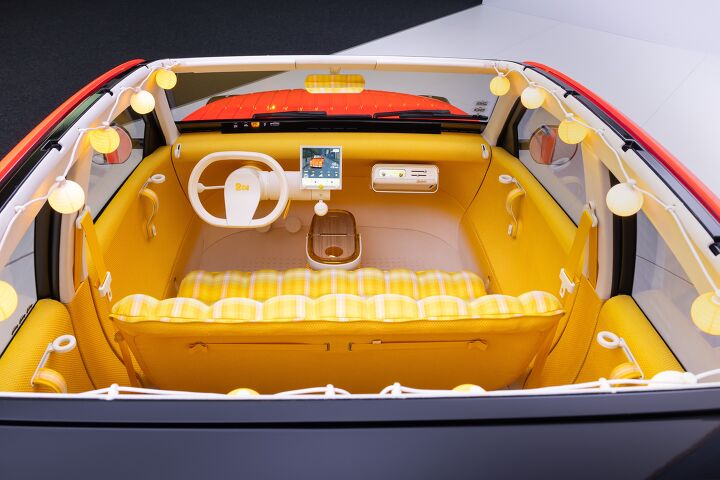
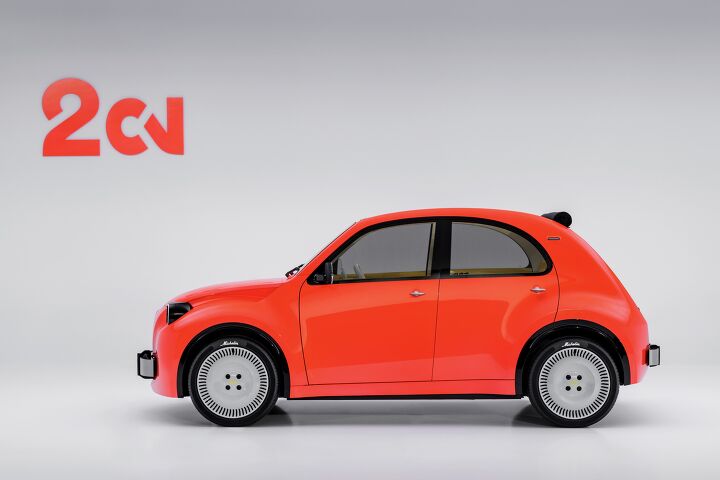
The concept 2CV measures an extremely short 148 inches in length, making it smaller than basically everything else that’s currently available on the market. But the real issue is the assumed range, which is something that has encouraged lackluster EV volumes in North America for years.
Since Americans tend to cover significantly more ground than their European counterparts, EVs with a maximum range of less than 250 miles tend to see extremely limited demand. But the low asking price (assuming Citroën actually can stick with it) may help would-be buyers warm to the concept anywhere it ends up being sold.
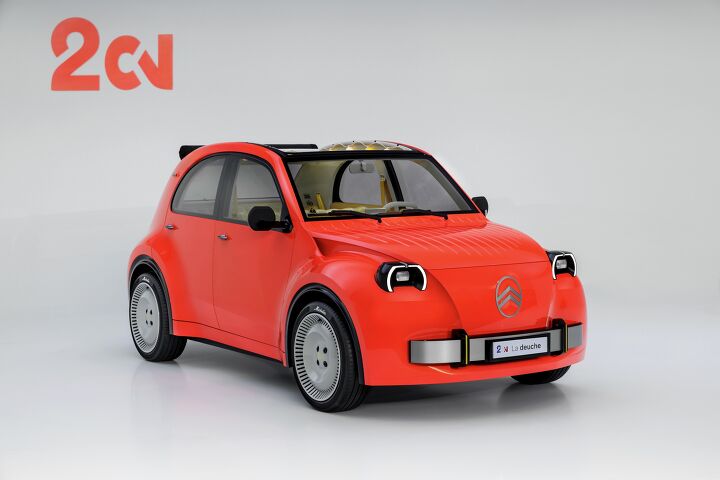
Still, one cannot help but think that all of these good ideas would have been better off being applied to a gasoline or hybrid model. One imagines that might end up raising the price by a few thousand.
But that’s presumably fine when there’s a better chance of seeing improved demand. All it would do is need to come in below the Toyota Yaris Hybrid (which should also be sold here) while trading on its attractive design, unique touches, and diminutive size.
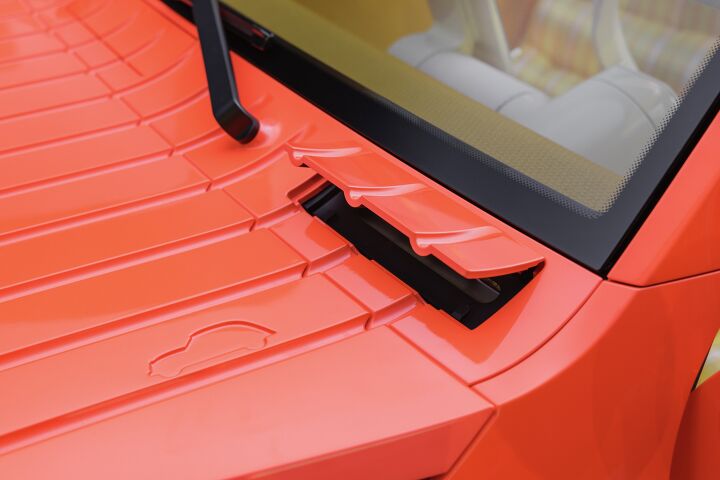
Odds are good the ship has already sailed on this model being offered as anything other than an EV, however. Citroën suggested that sales could commence by 2028, indicating that this concept is probably more of a pre-production example than design exercise.
We’re eager to see what the company has to say about the model. This debut seems to have been done to build hype ahead of the Paris Motor Show, meaning there’s a good chance we’ll learn more about the car very soon. Otherwise, we’ll just have to wait and see what Citroën has to say closer to its official launch.
[Images: Citroën]
Become a TTAC insider. Get the latest news, features, TTAC takes, and everything else that gets to the truth about cars first by subscribing to our newsletter.
