

The wild Peugeot E-T16 concept has been unveiled at the 2026 Paris motor show as both a preview of the next-generation E-208 electric hatch and an all-electric tribute to the 205 Turbo 16, which won multiple titles in one of rallying’s most infamous eras.
The ultra-aggressively styled all-wheel drive Peugeot E-T16 is described by the French brand as the “ultimate vision of the future E-208”. The new small hatchback is expected to be unveiled in the first half of 2027.
Australian availability of any future Peugeot models is currently in limbo after local importer Inchcape announced in July 2026 it was handing back local distribution rights to Peugeot parent company Stellantis after almost a decade, with a new distributor yet to be confirmed.
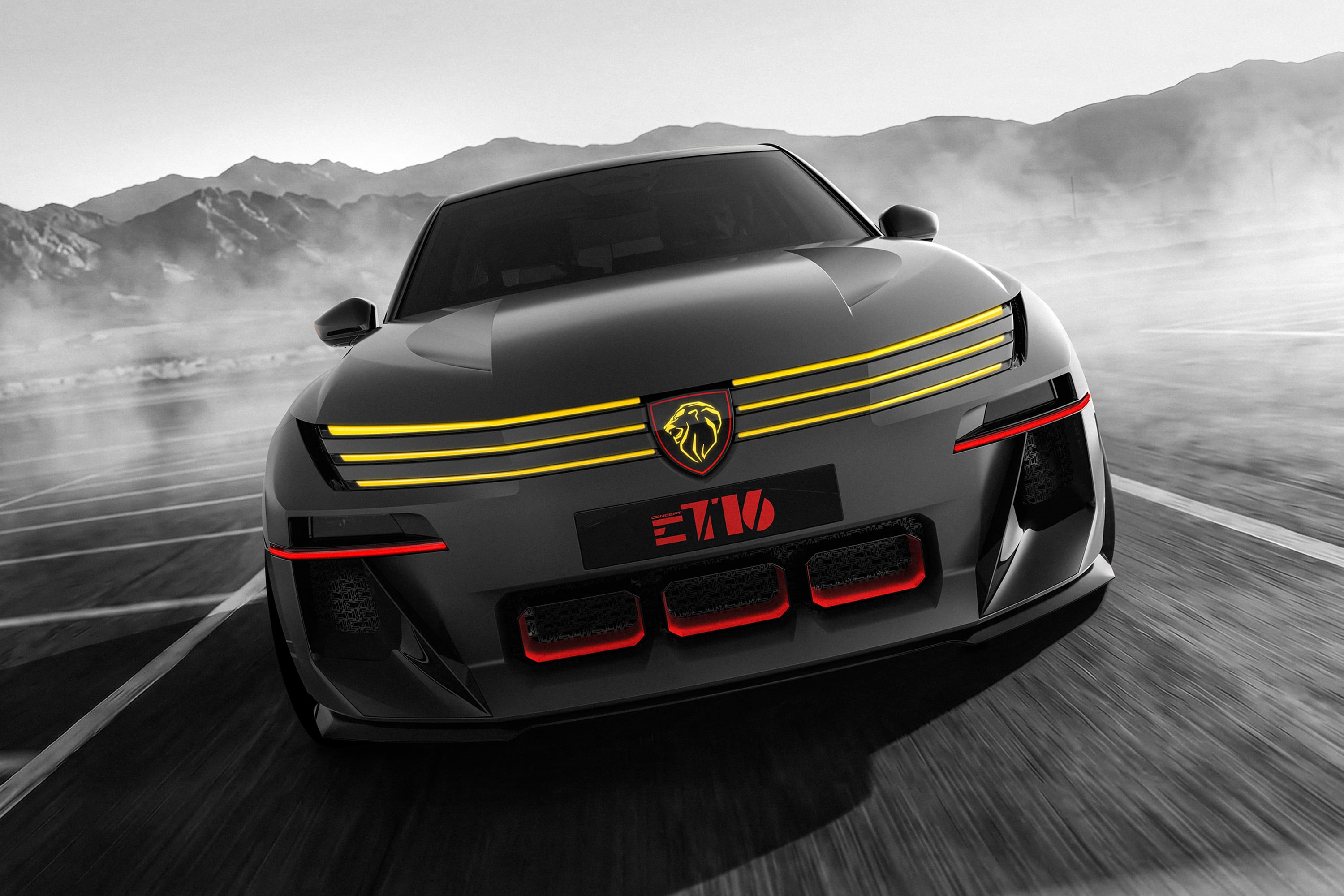
The E-T16 concept (electric T16) is the most powerful road-going Peugeot developed since the historic French brand began making cars in 1889, although its 816hp (608kW) power output is eclipsed by the 875hp (652kW) output of the 208 T16 Pikes Peak competition car driven by Sébastien Loeb in 2013.
The E-T16 is inspired by Peugeot’s 205 T16 Group B homologation special.
Group B rallying (1982 to 1986) is regarded as the sport’s wildest era, with cars boasting Formula 1 levels of power and massive body appendages to keep them on the road, but was marred by several competitor and spectator deaths, which led to its demise.
Group B World Rally Championship regulations demanded Peugeot produce 200 road-going homologation T16s for showrooms. Introduced in 1984, they are now highly prized collector’s items.
A Peugeot 205 Turbo 16 Evolution 2 Group B rally car sold for a record €977,440 (A$1,569,318) at auction in Paris in February 2021, while a road-going example achieved €419,260 (A$673,166) the following month.
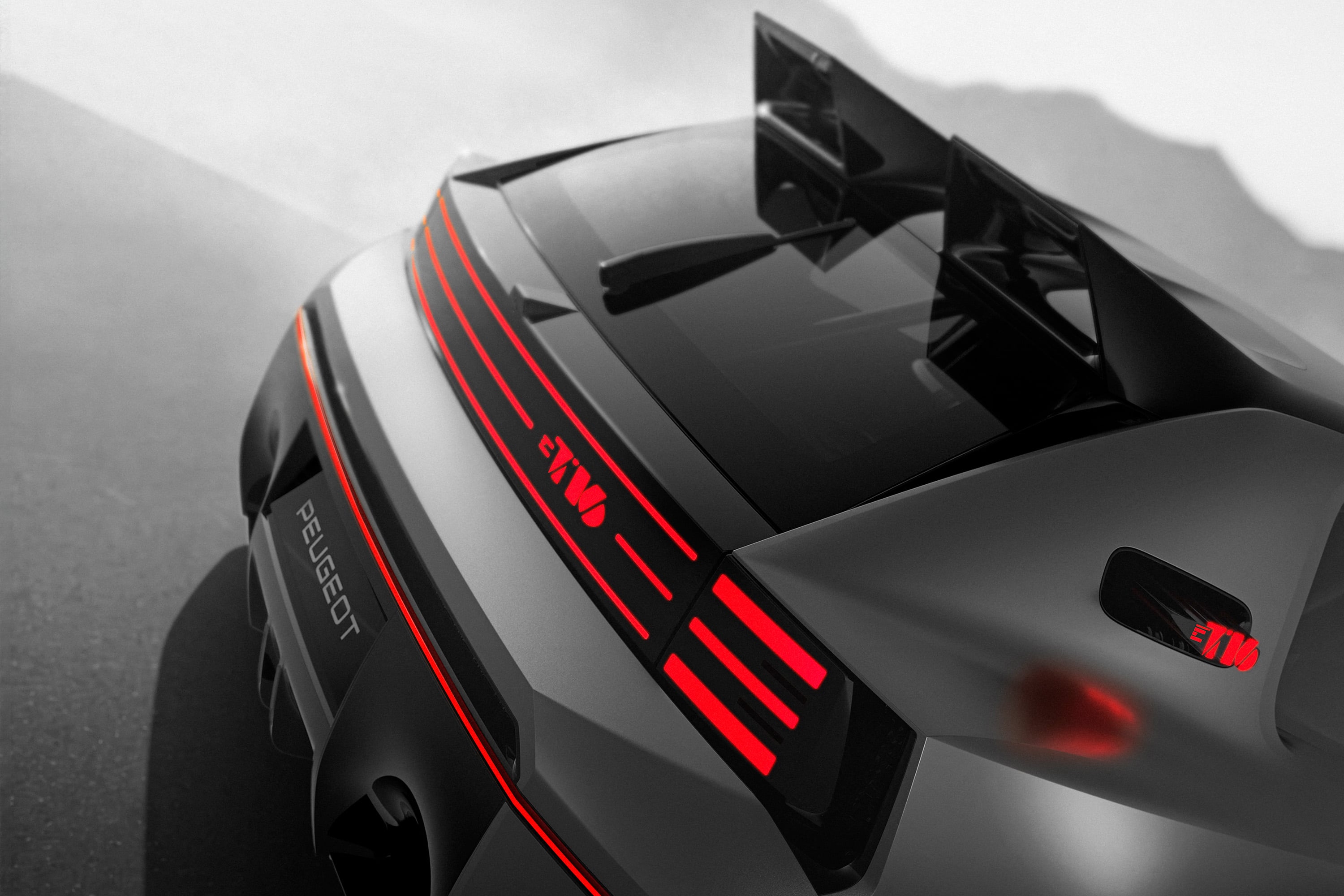
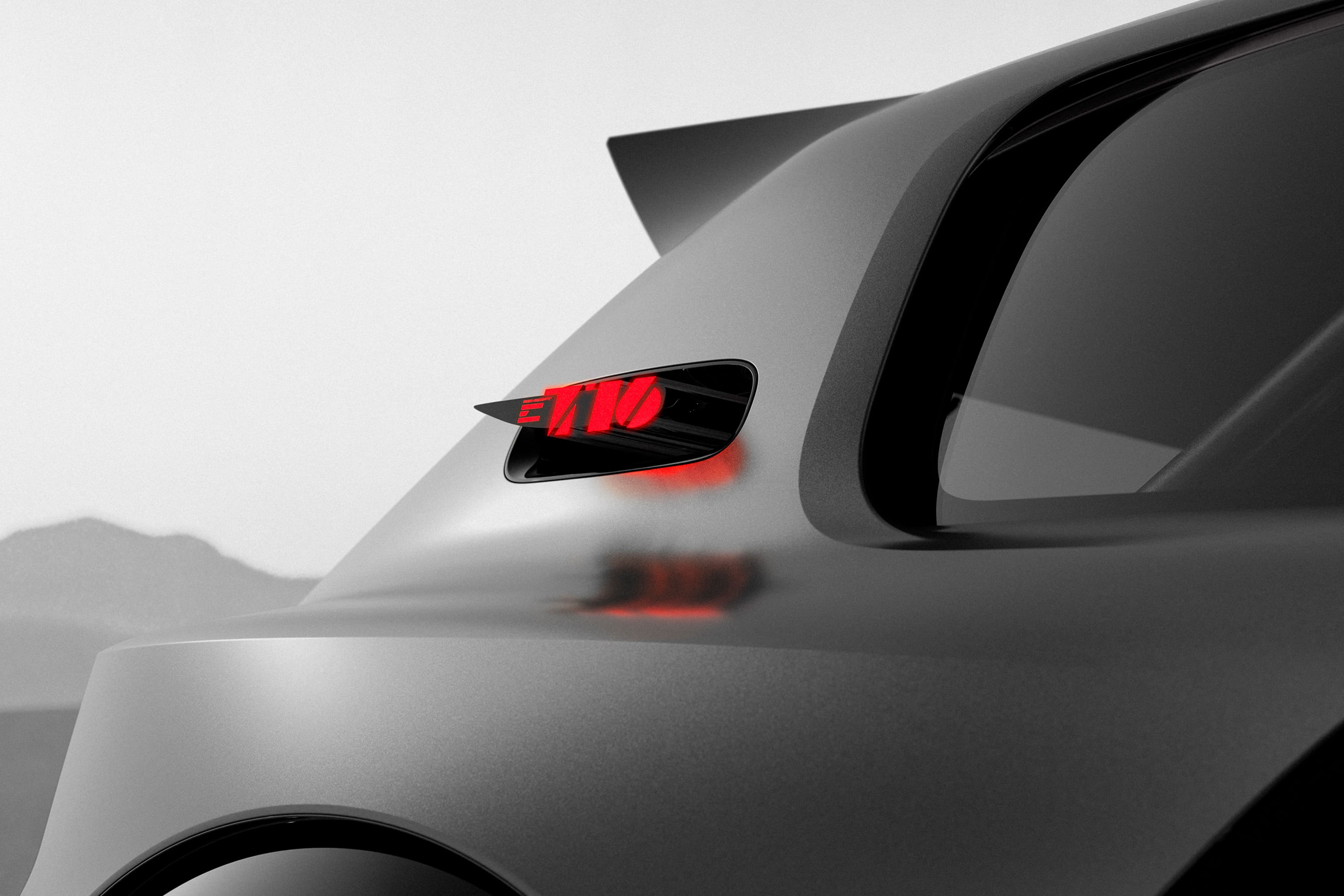
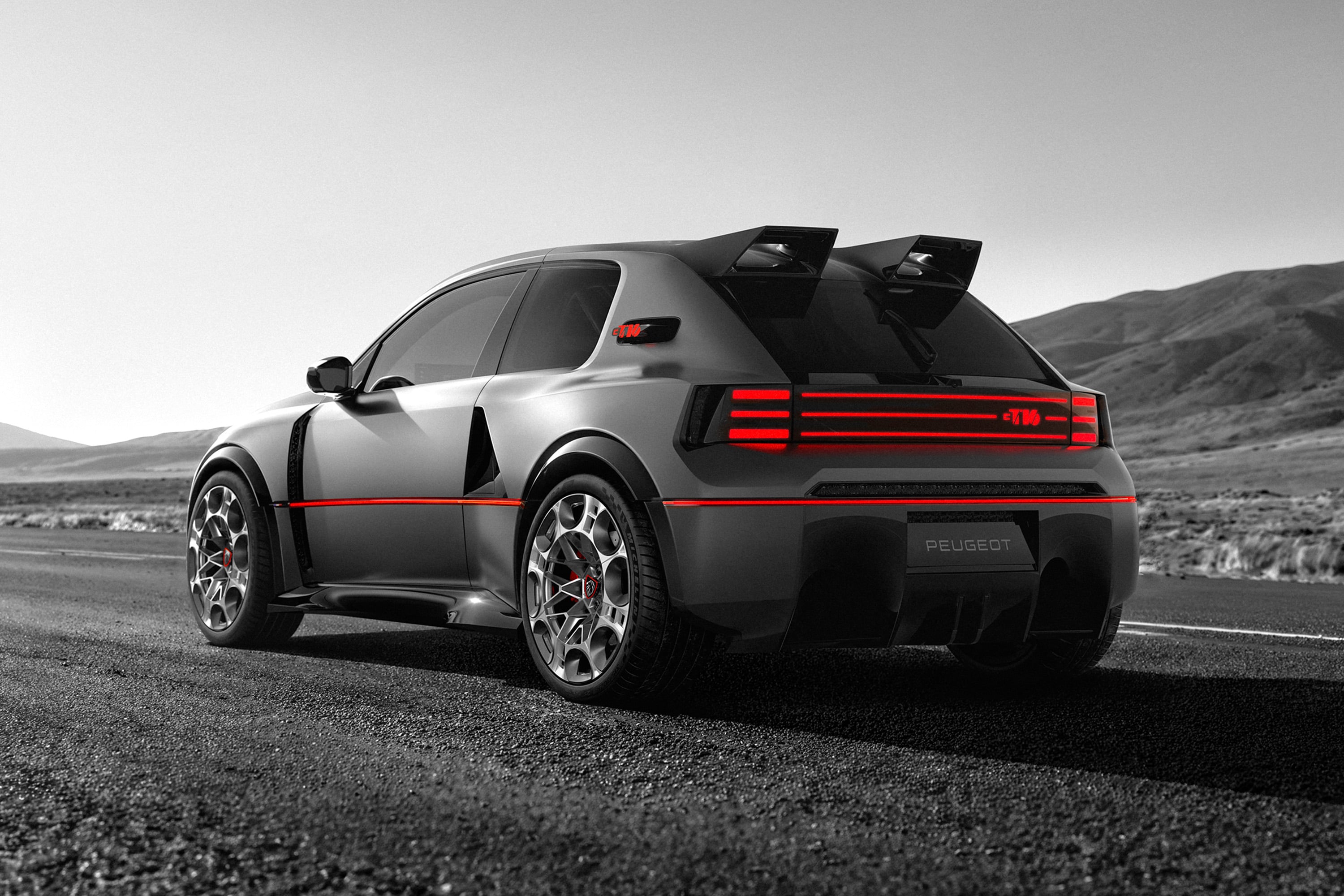
Like the 205 T16, the E-T16 brandishes pumped-up guards and wild body additions, with the entire rear bodywork tilting open to reveal two electric motors on the rear axle. A single front electric motor brings combined output to 816hp (608kW).
Weighing less than 1632kg, the E-T16 has a power-to-weight ratio of less than 2kg per horsepower, which Peugeot says enables a 0-100km/h time of 2.5 seconds, with only 16 seconds needed for the concept to reach its claimed 300km/h top speed.
Peugeot claims the car’s 800V electrical architecture and 85kWh lithium nickel manganese battery enable the E-T16 to lap the famous 20.8km Nürburgring Nordschleife circuit three times without power loss, even in its most potent driving mode.
Claimed WLTP range is 400km, with a 10-80 per cent charge said to take less than 15 minutes.
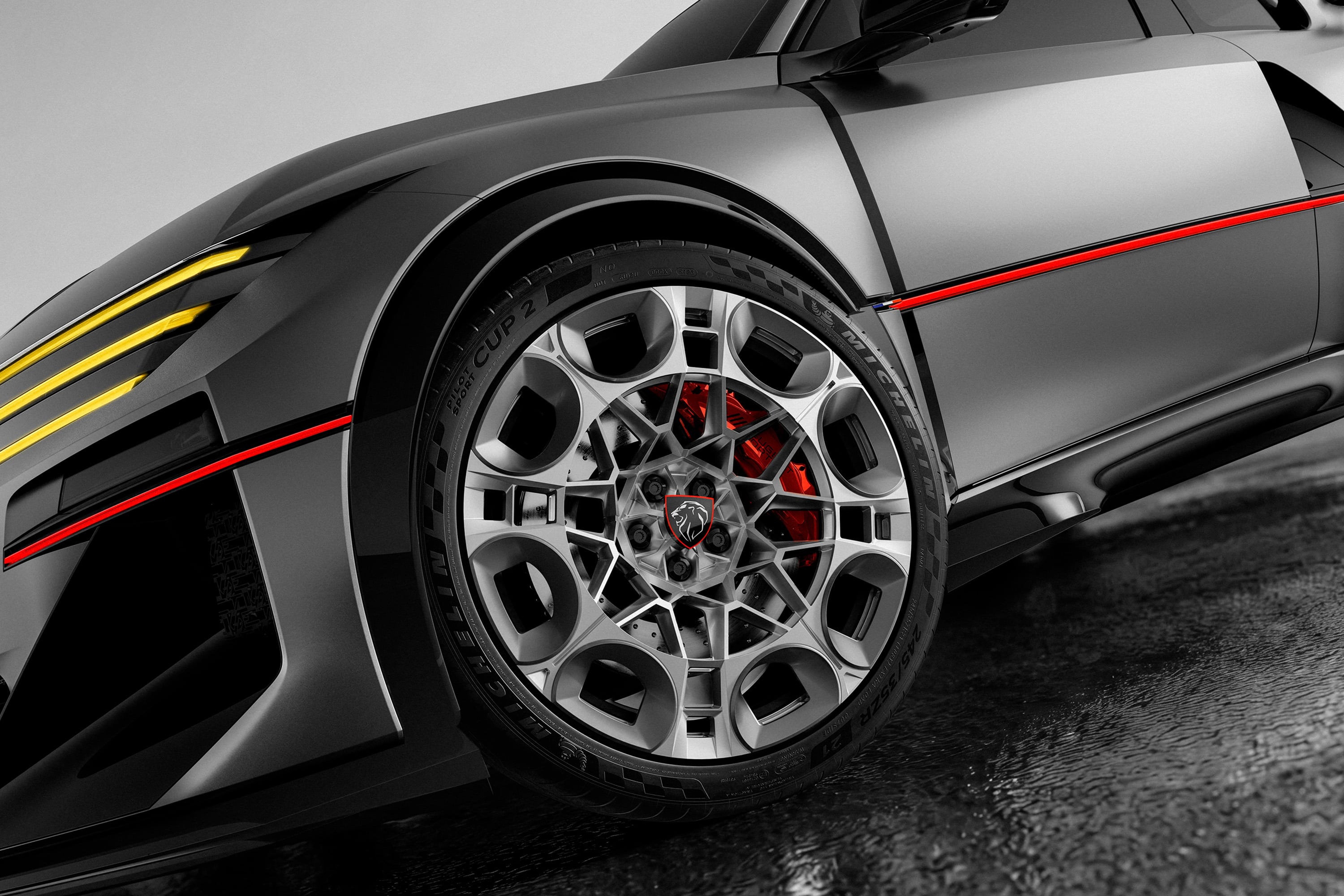
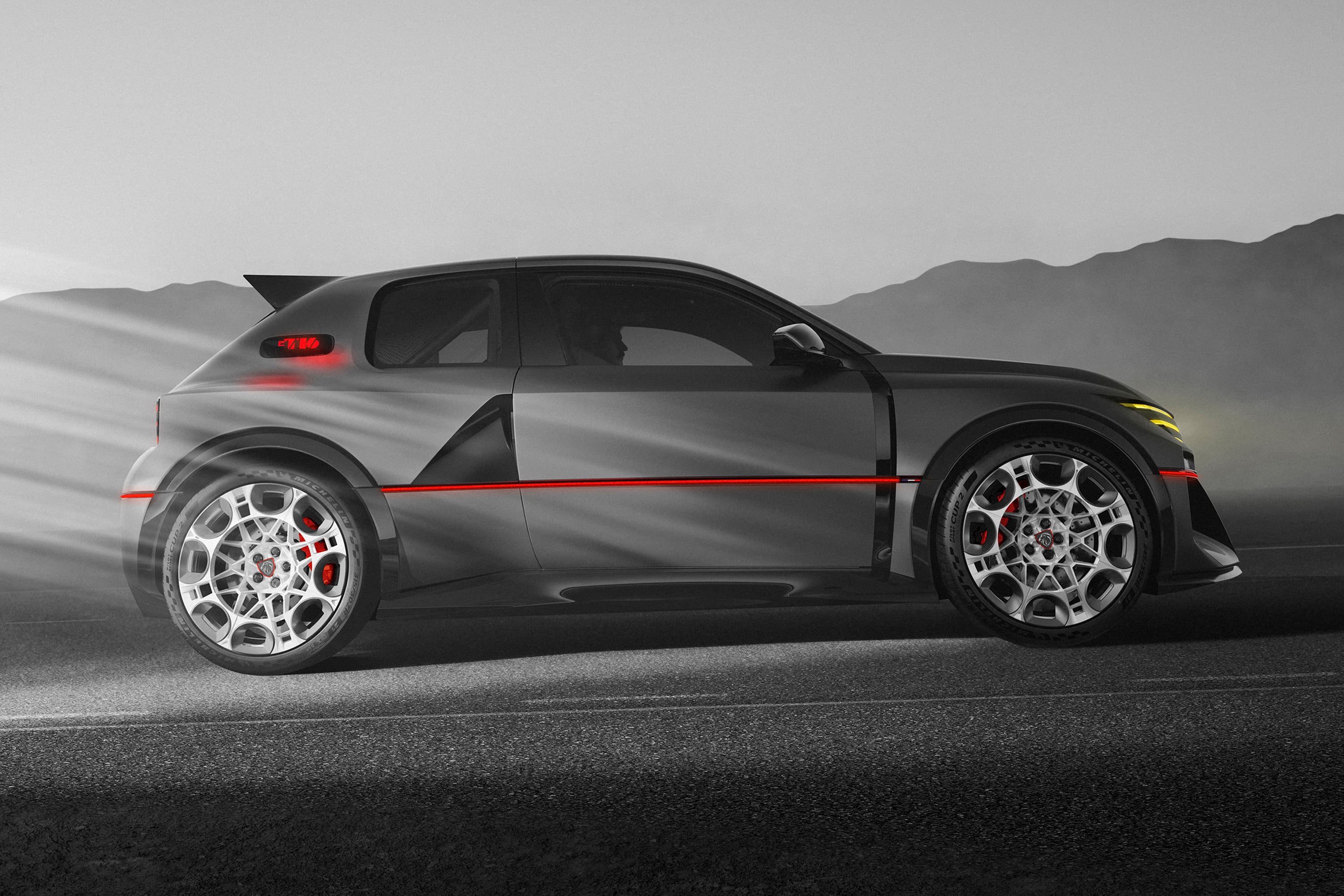
Torque vectoring distributes torque between the between the rear wheels, as well as front and rear axles, while there are three driving modes that also alter suspension settings – plus a custom mode. Massive 380mm brake rotors are fitted front and rear, along with 275mm-wide front and 315mm-wide rear Michelin tyres.
The E-T16’s stellar performance is helped by the wild bodywork, again inspired by the function-over-form Group B cars, but in this case it’s been designed to help cool the battery for sustained performance.
Visually, the Paris show car also borrows heavily from the gullwing-doored Polygon concept shown in 2025, which itself channelled the legendary 205 GTi hot hatch, on which the 205 T16 Group B rally car was loosely based.
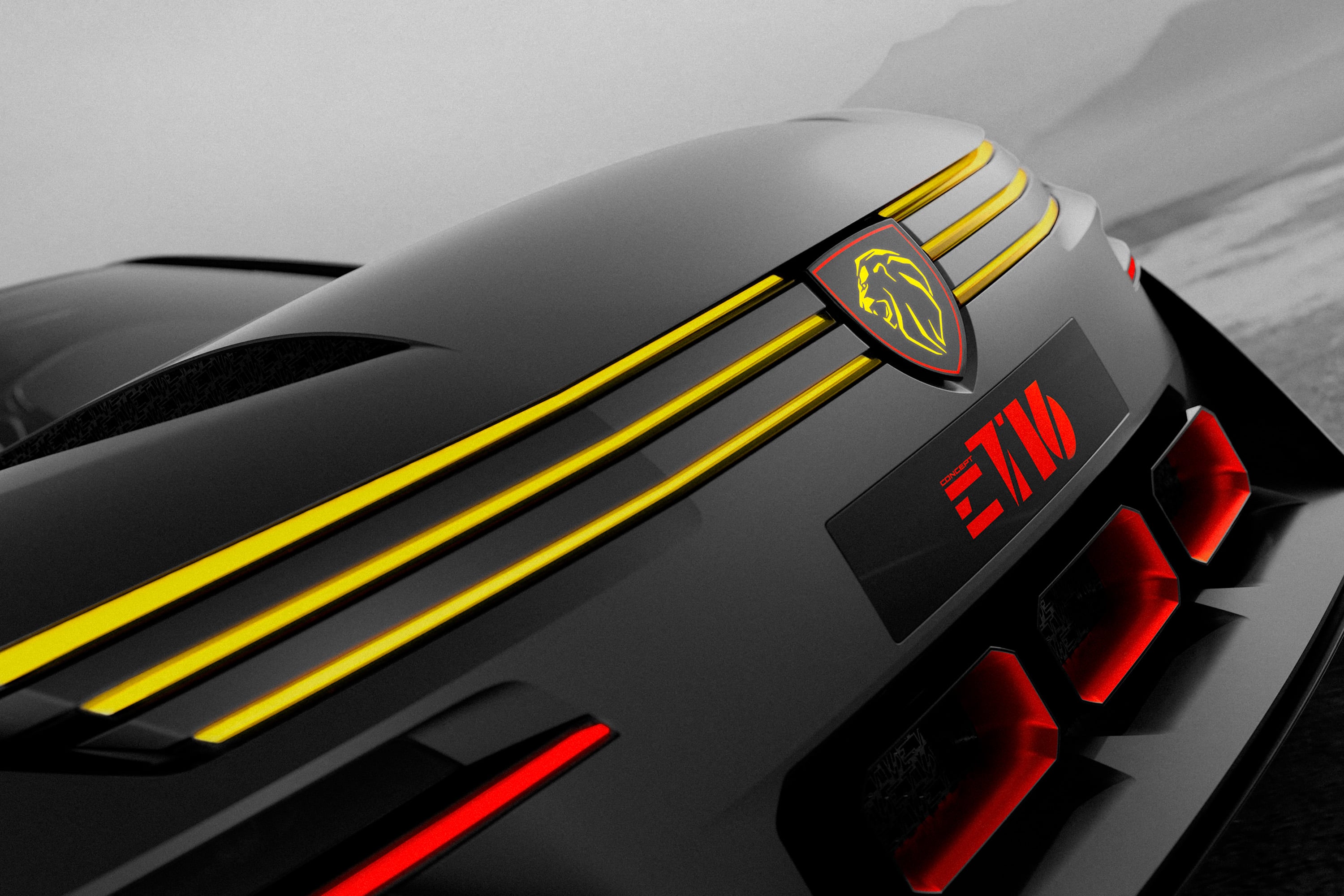
The E-T16, however, brings its own three-claw front lighting signature, plus deliberately oversized air intakes, an underbody extractor as part of a twin rear diffuser with adjustable aero blades, and a large ‘cat-ear’ rear wing.
The charging port is incorporated into what was the rear-wheel air intake for the petrol T16, which was powered by a mid-mounted 1.8-litre turbocharged four-cylinder petrol engine and all-wheel drive.
The concept car’s Winchester Matte Grey exterior body colour also pays homage to the original T16 road car’s grey paintwork, as does the silver wheel colour and the backlit red line around the entire vehicle.
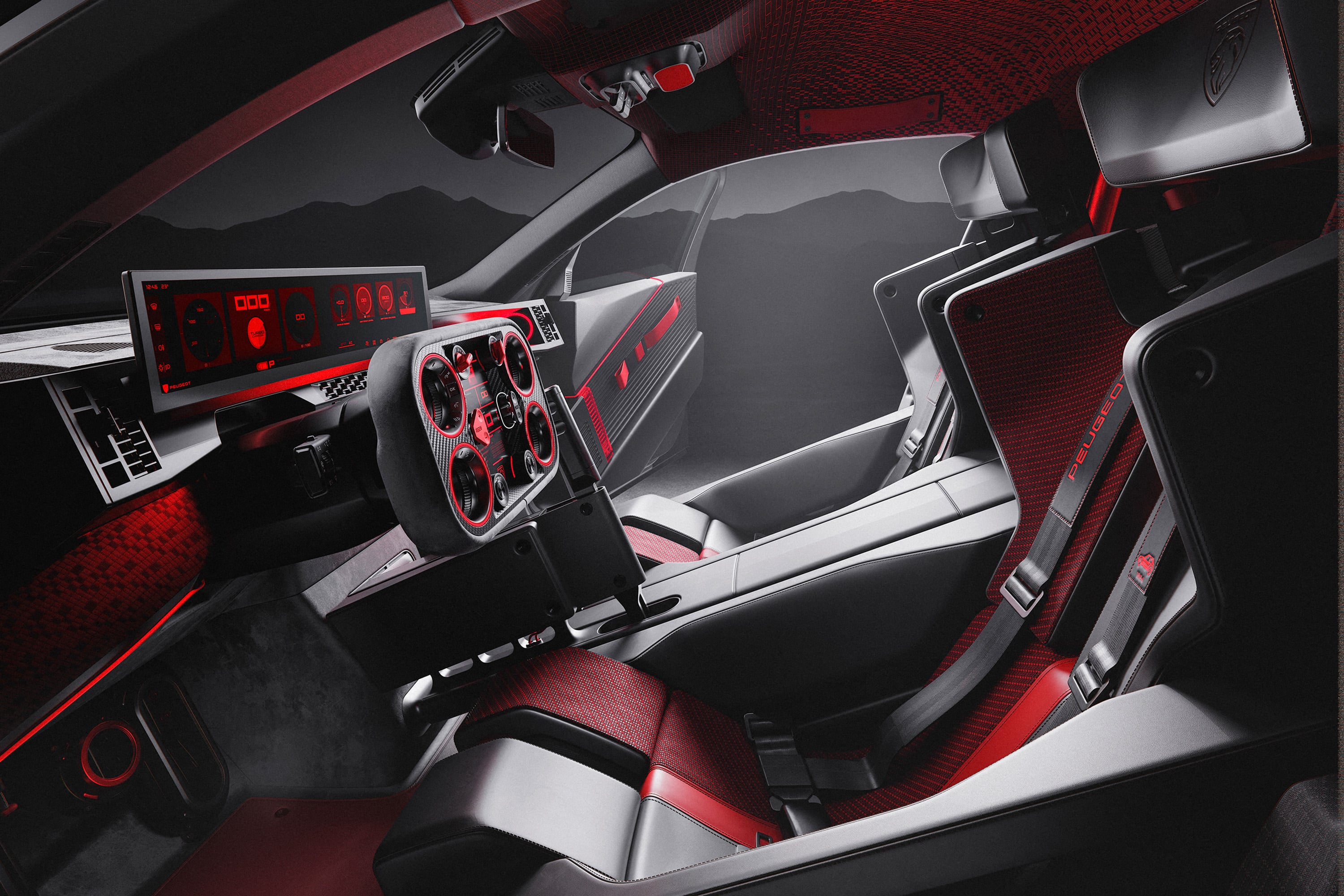
The striking red cabin includes a tubular roll cage, carbon-fibre bucket seats, and a moulded carbon-fibre centre console with anodised aluminium and technical mesh finishes.
The ‘Hypersquare’ steering wheel seen in the Polygon and other Peugeot concepts also features, as does the 21-inch curved panoramic display seen in the Peugeot 3008 and 5008 SUVs.
Peugeot won the 1985 and 1986 World Rally Championship manufacturers’ titles in the final Group B years, with its drivers Timo Salonen and Juha Kankkunen claiming the drivers’ titles in 1985 and 1986 respectively, before the brand returned to the championship in 1999.
