

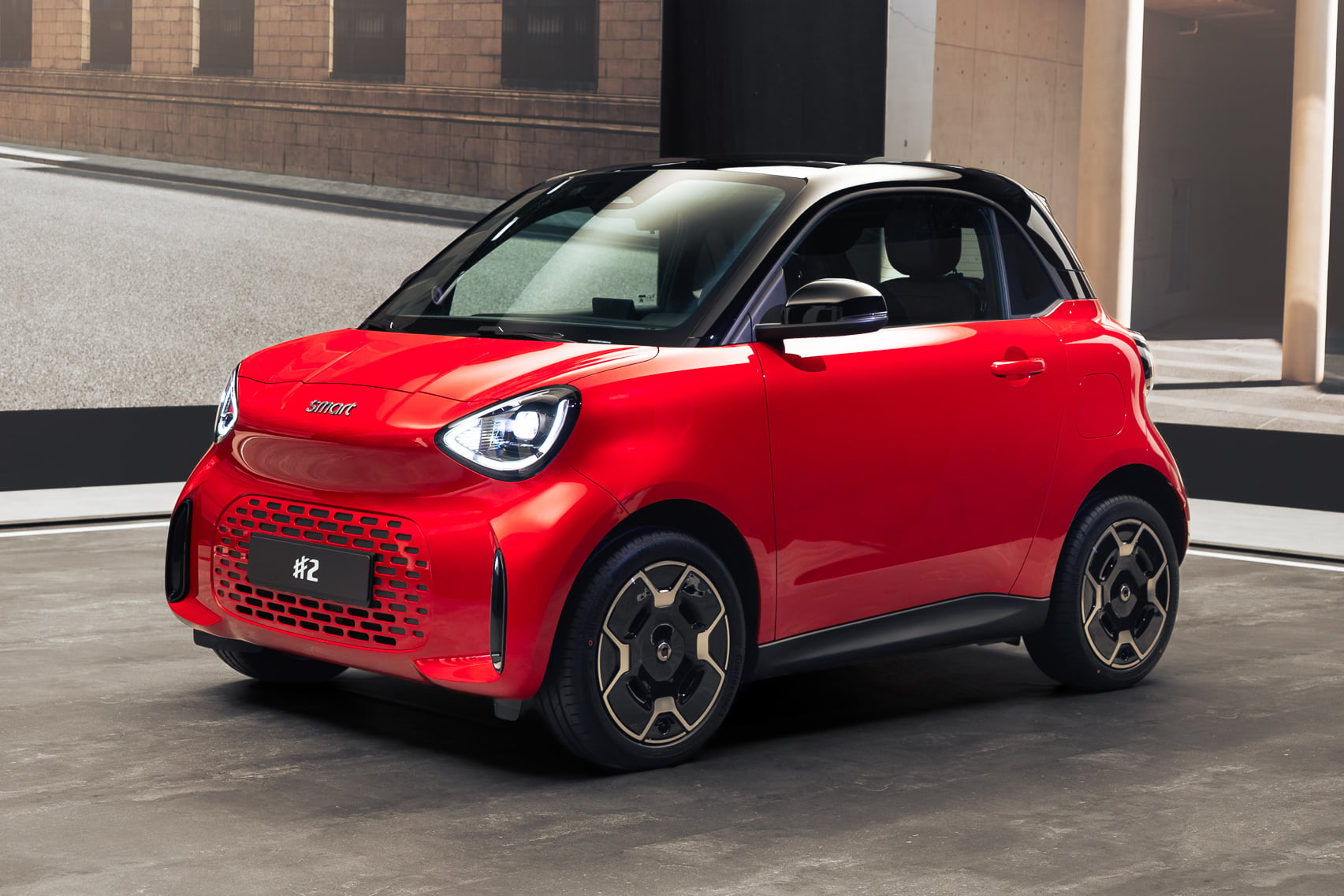
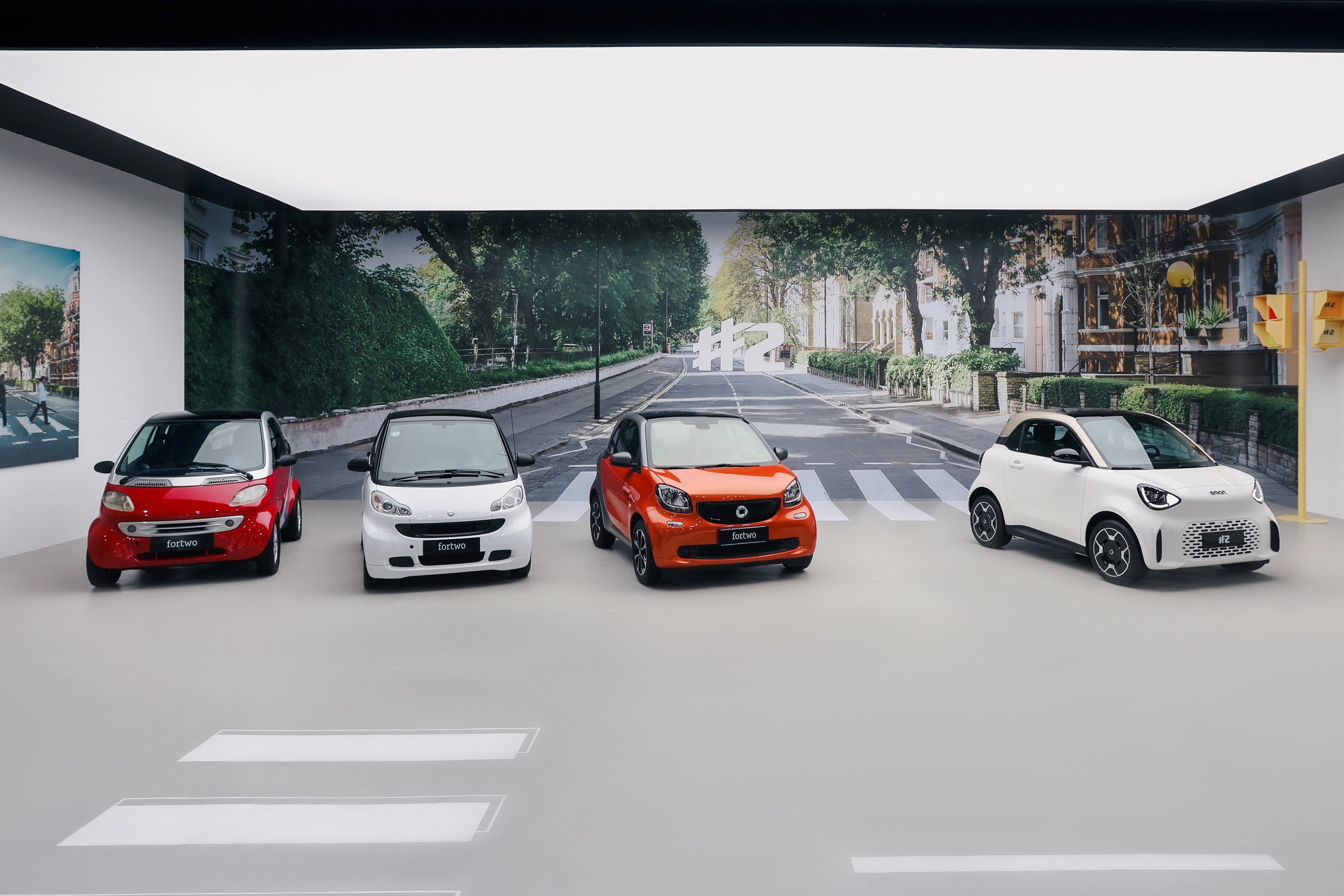
With its new #2, Smart is returning to the vehicle type that it started with and which has defined most of the brand’s 32 years existence.
Launched at this week’s Paris motor show, the new #2 is essentially a continuation of the City Coupe/ForTwo line that the marque launched with back in 1994.
The new #2 is 2746mm long, 1760mm wide, 1555mm tall, and rides on a 1875mm wheelbase. Compared to the fourth-generation ForTwo, it is 51mm longer and 97mm wider. The #2’s wheelbase is just 2mm longer, and its height is the same the last ForTwo.
Since Geely took a 50 per cent stake in Smart in 2019, all of the brand’s new cars have married platforms developed by Geely with bodies and interiors designed by Mercedes-Benz.
While the #1, #3 and #5 have made use of existing architectures, Geely has developed the Electric Compact Architecture (ECA) specifically for the #2.
As with all previous ForTwos, the #2 has a rear-mounted motor driving the rear wheels. While earlier generations were available with petrol engines, the #2 is purely an electric vehicle.
At launch all #2 variants are powered by an electric motor making 60kW and 130Nm. That’s actually down 30Nm on the motor employed by the fourth-generation electric ForTwo EQ.
What the #2 lacks in torque, it makes up for a 35.8kWh lithium iron phosphate (LFP) battery that has just a smidge over double the capacity of the old ForTwo EQ. The #2 supports AC charging up to 11kW, and DC fast charging up to 65kW.
Tipping the scales 1140kg, the #2 is said to have a WLTP driving range of 290km, which is, again, double what was offered by the ForTwo EQ.
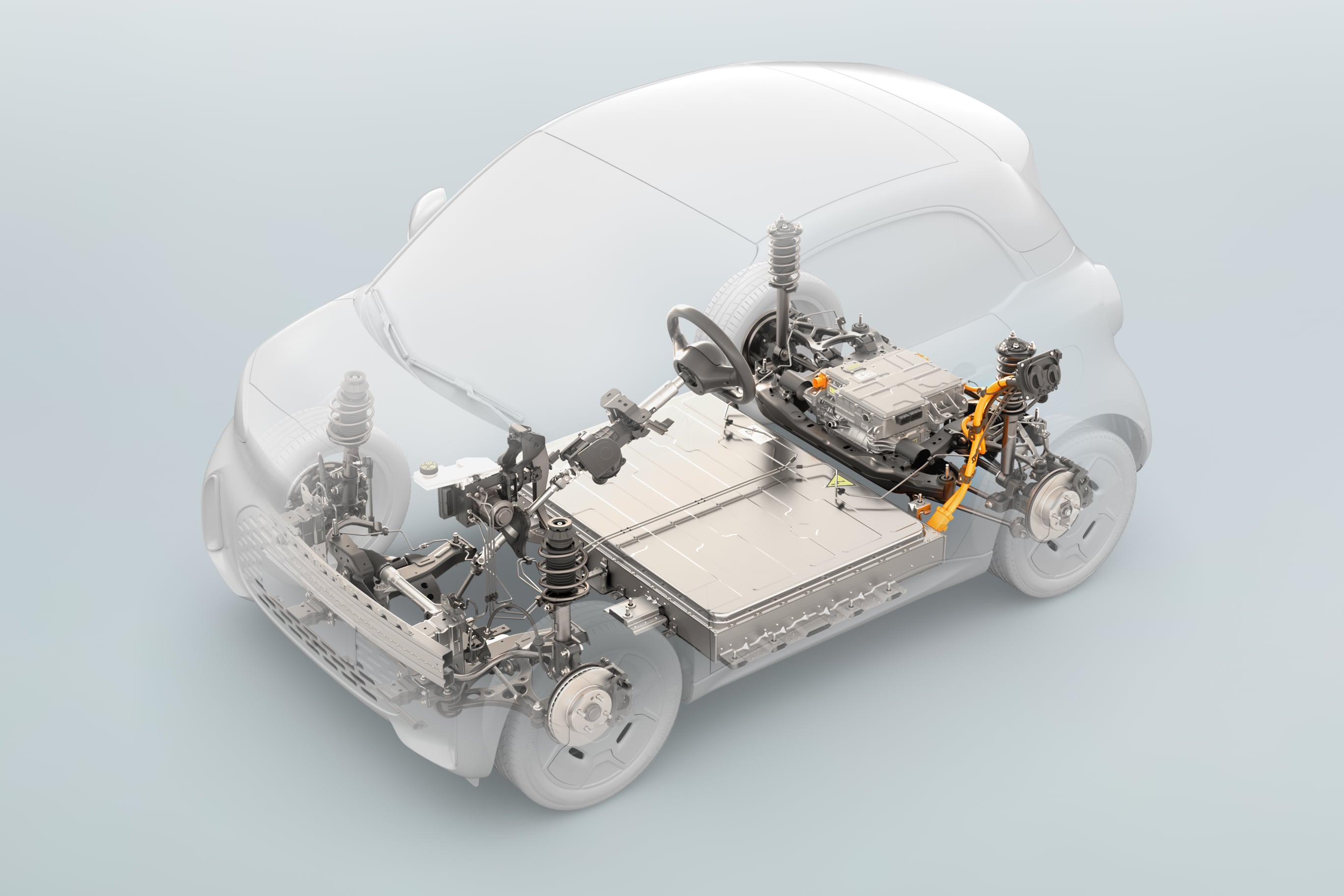
Smart claims the new #2 has sportier handling and greater ride comfort than earlier generations thanks to its new five-link rear suspension, and a low centre of gravity due to its floor-mounted battery pack.
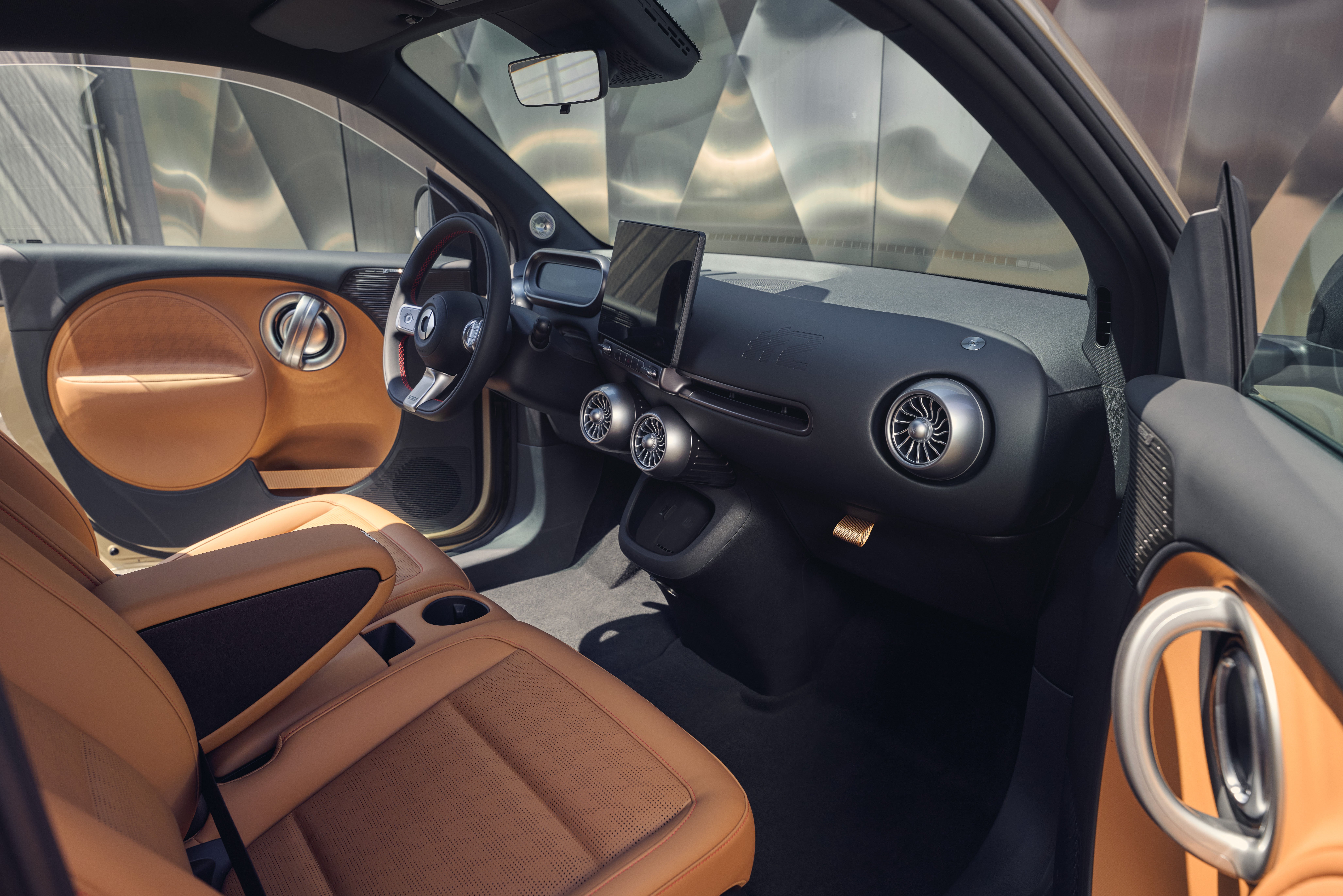
As the name, size and lineage suggest, the #2 is a strict two-seat proposition. The dashboard is arguably the most luxurious looking unit seen so far in a Smart two-seater, and features turbine-style air vents.
In the centre of the dash is a 10.1-inch infotainment touchscreen angled towards the driver. A smaller 8.8-inch instrumentation display sits behind the steering wheel.
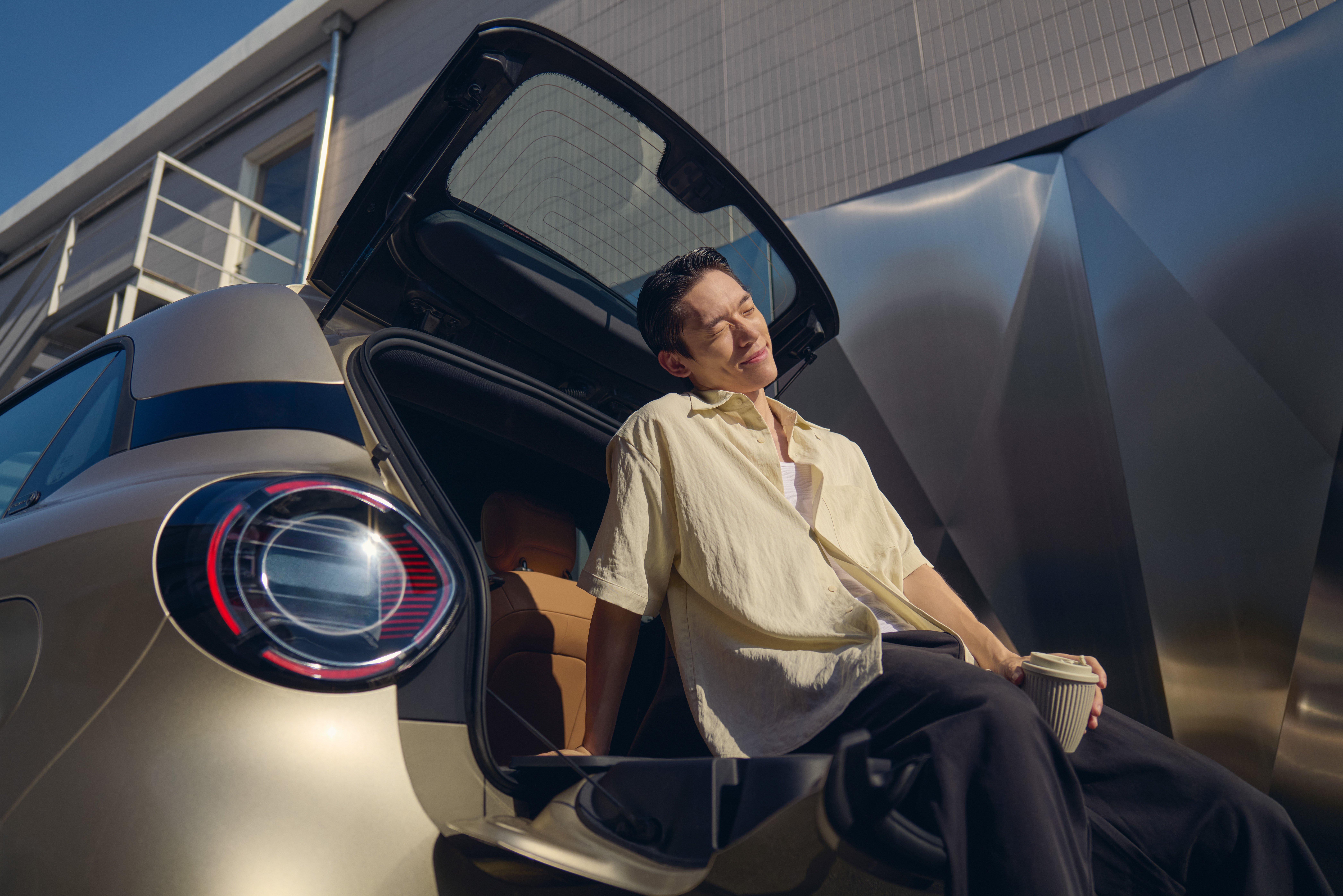
Access to the boot is via a tailgate, which has a glass upper portion that can lift up independently. The lower section can also fold down and, thanks to its 120kg load rating, can act as a seat. Depending on the position of the front seats, boot space is rated between 305 and 527 litres.
In Europe there will be three trim specs (Pure, Pure+ and Premium). All models feature adaptive cruise control with stop and go ability, automatic high beams, 7.4kW AC charging, 65kW DC fast charging, and the ability to power external appliances.
Higher-spec Premium models gain 11kW AC charging, blind spot monitoring, rear cross traffic alert, rear collision mitigation, a glass roof, faux leather seats, a seven-speaker Sennheiser sound system, and a selection two-tone exteriors.
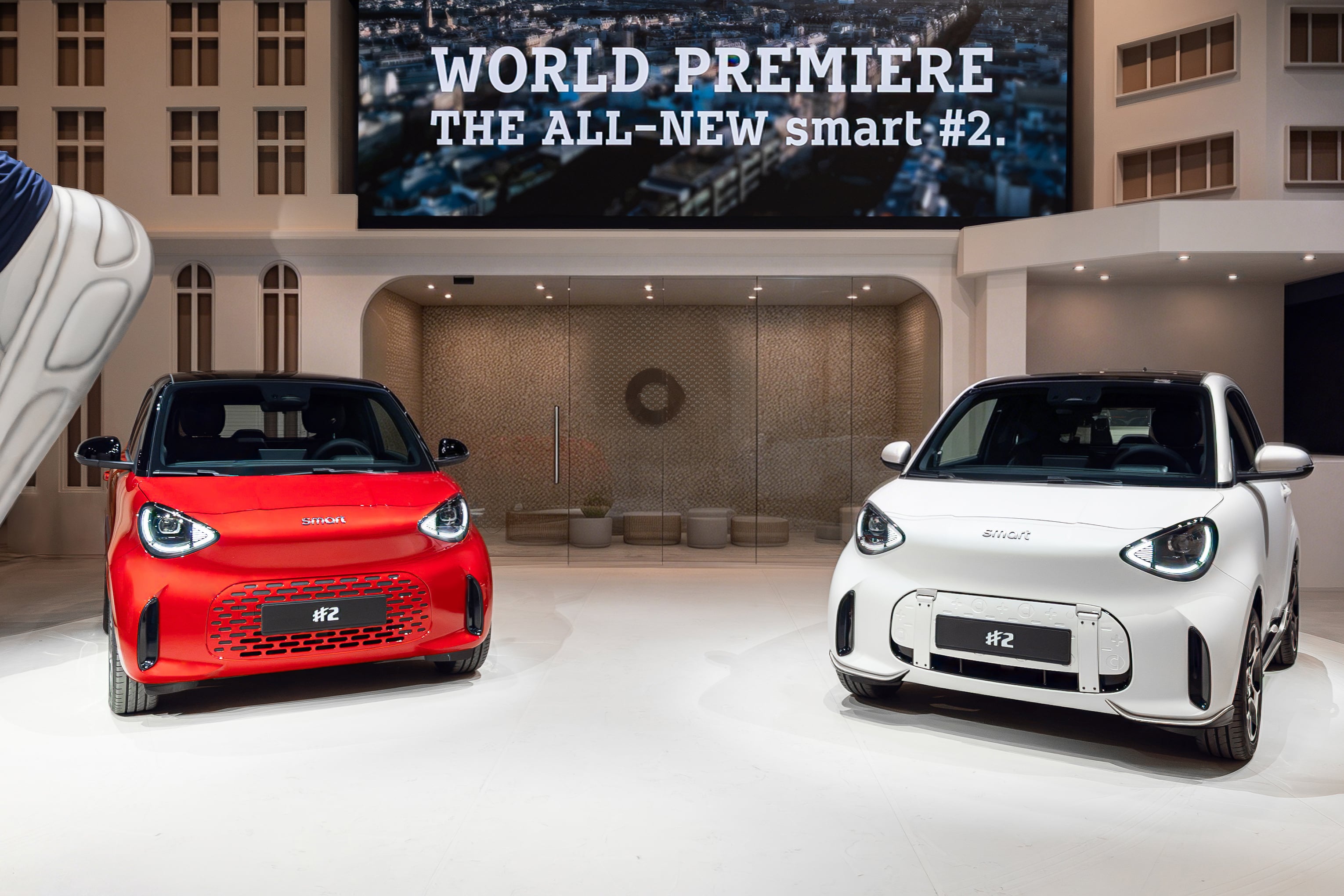
There will also be a Couture Edition with unique 16-inch Lyra wheels, matte white paint, a contrasting matte gold roof, other bits of gold-colour trim, and a grille that resembles a designer suitcase with leather straps. Just 999 units of the Couture Edition will be made for Europe, with a further 999 units allocated to China.
As it’s built in China, the Smart #2 is subject to a tariff surcharge when sold in Europe. Pricing has yet to be announced, but reports indicate the #2 will be priced at just under €20,000 (A$32,000). That’s same price point as the 3.8m Renault Twingo, which seats five and has a similar range.
