

The Electric Vehicle Council (EVC) has called on the Australian Government to begin work on extending its current new-vehicle emissions regime beyond 2029 to meet the national 2035 emissions reduction target.
In the ‘State of EVs 2026’ report it released today, the EVC said the record uptake of electric cars in Australia should prompt the federal government to bring in the next phase of the New Vehicle Efficiency Standard (NVES), which is currently scheduled to end in just over three years.
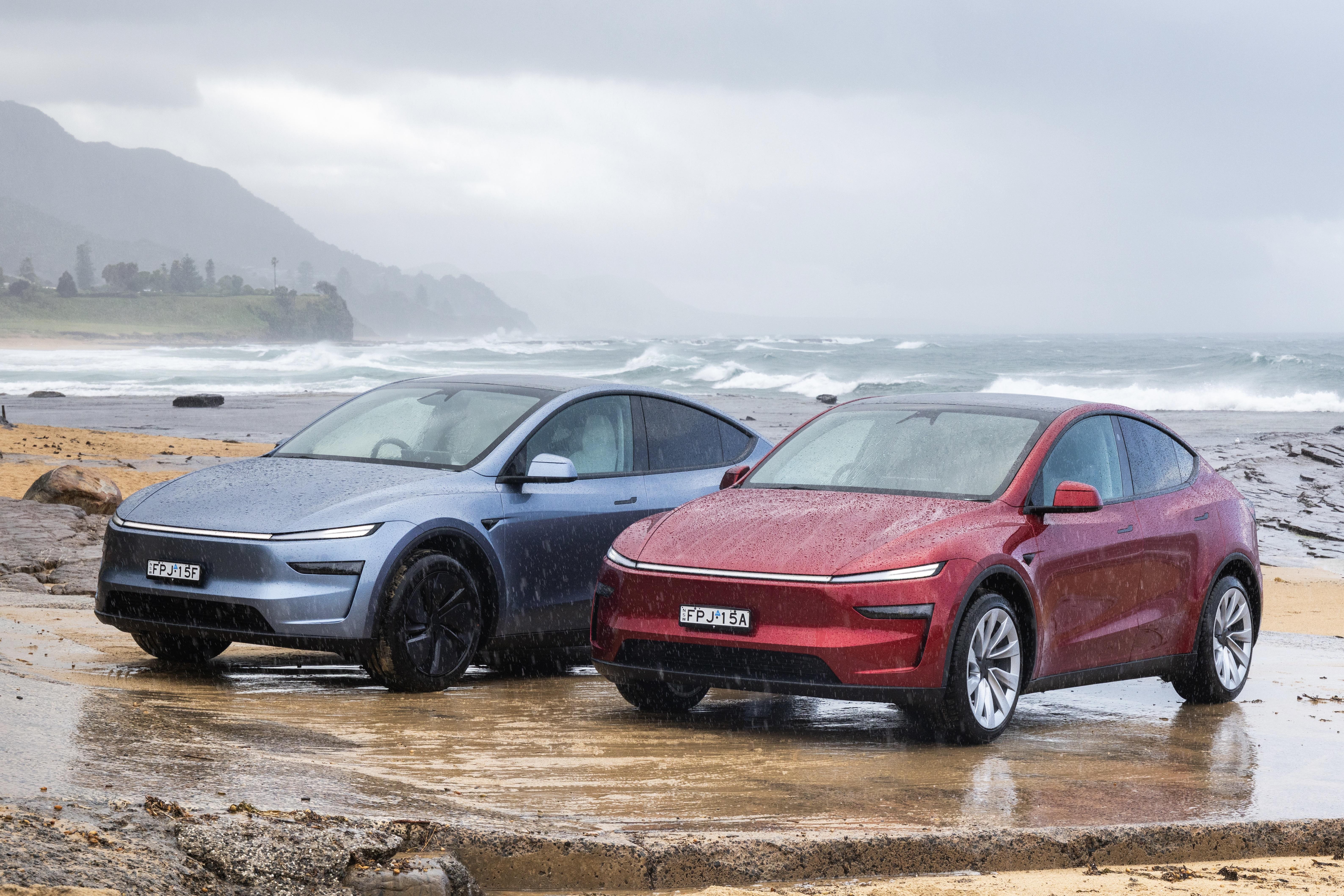
EV sales hit a record 24.9 per cent share of total new-vehicle sales in August, when the Tesla Model Y electric SUV was the top-selling model outright for the month, ahead of another mid-size SUV in the Toyota RAV4 hybrid, and the Toyota HiLux ute.
According to the State of EVs 2026 report, sales of EVs increased 117.1 per cent year-on-year in the first half of this year (January to June), but the EVC says that number will need to increase 10-fold to reach the federal government’s national 2035 emissions reduction target.
“If we look at the challenge ahead, there’s huge room for growth, but that really does hinge on what the federal government does with the vehicle efficiency standards by the end of next year,” said the EVC’s head of legal, policy and advocacy Aman Gaur during a media briefing attended by CarExpert.
“In the last couple of weeks, we just ticked over 500,000 battery-electric cars on Australian roads. However, that figure, that 500,000, needs to increase by 10 times to hit the 2035 target.”
The NVES came into effect on January 1, 2025, and sets caps on the amount of carbon dioxide (CO2) emitted across the entire model lineup of each automaker. Under the current NVES program, those CO2 caps decrease annually until 2029.
Automakers that break their CO2 caps will be forced to pay financial penalties, while those that fall below them will be able to sell ‘credits’ to other brands looking to lower their penalties.
The NVES is a contributor to the government’s 2035 target of a 62-70 per cent reduction in greenhouse gas emissions compared to 2005, as part of its longer-term goal of achieving net zero emissions by 2050.
“The CCA, the Climate Change Authority, said that in order to hit our 2035 emissions reduction target of 62 per cent, that’s the lower band. We needed five million battery-electric cars on the road,” Mr Gaur added.
“A critical part of [reaching] this is the vehicle efficiency targets from 2029 onwards. The reason for that is at the moment the standards only go to 2029.
“If they are not updated by the federal government, the federal transport minister, by the end of next year, they will stagnate at the 2029 levels. That will directly impact sales because we know that the thing that’s driven the increase in supply has been the vehicle efficiency standards.”
With CO2 caps for 2030 and beyond yet to be determined, the EVC is now calling for emissions limits that enable the federal government to meet its CO2-reduction goals.
“What targets we would like to see post-2029? The key thing here, the north star, is the 2035 emissions reduction target,” said Mr Gaur.
“We are doing some work ourselves to say what level of CO2 emissions are really permitted from the passenger fleet in order to hit the 2035 targets.
“We’ll have a bit more to say on that, but we’re doing what is sensible. That is, working back from the government’s own public commitments on 2035, and from there you can basically sort of figure out what the vehicle fleet emissions need to be.”
Under the current NVES, the CO2 cap for Type 1 (passenger) vehicles in 2029 stands at 58g/km, a figure not achieved by any purely combustion-powered or even hybrid new model currently available in Australia. For reference, Toyota’s smallest model, the Yaris hybrid, emits 76g/km.
|
Year |
Type 1 vehicles |
Type 2 vehicles |
|---|---|---|
|
2025 |
141g/km |
210g/km |
|
2026 |
117g/km |
180g/km |
|
2027 |
92g/km |
150g/km |
|
2028 |
68g/km |
122g/km |
|
2029 |
58g/km |
110g/km |
MORE: Australia’s new vehicle emissions regulations delivering results, says Bowen
