

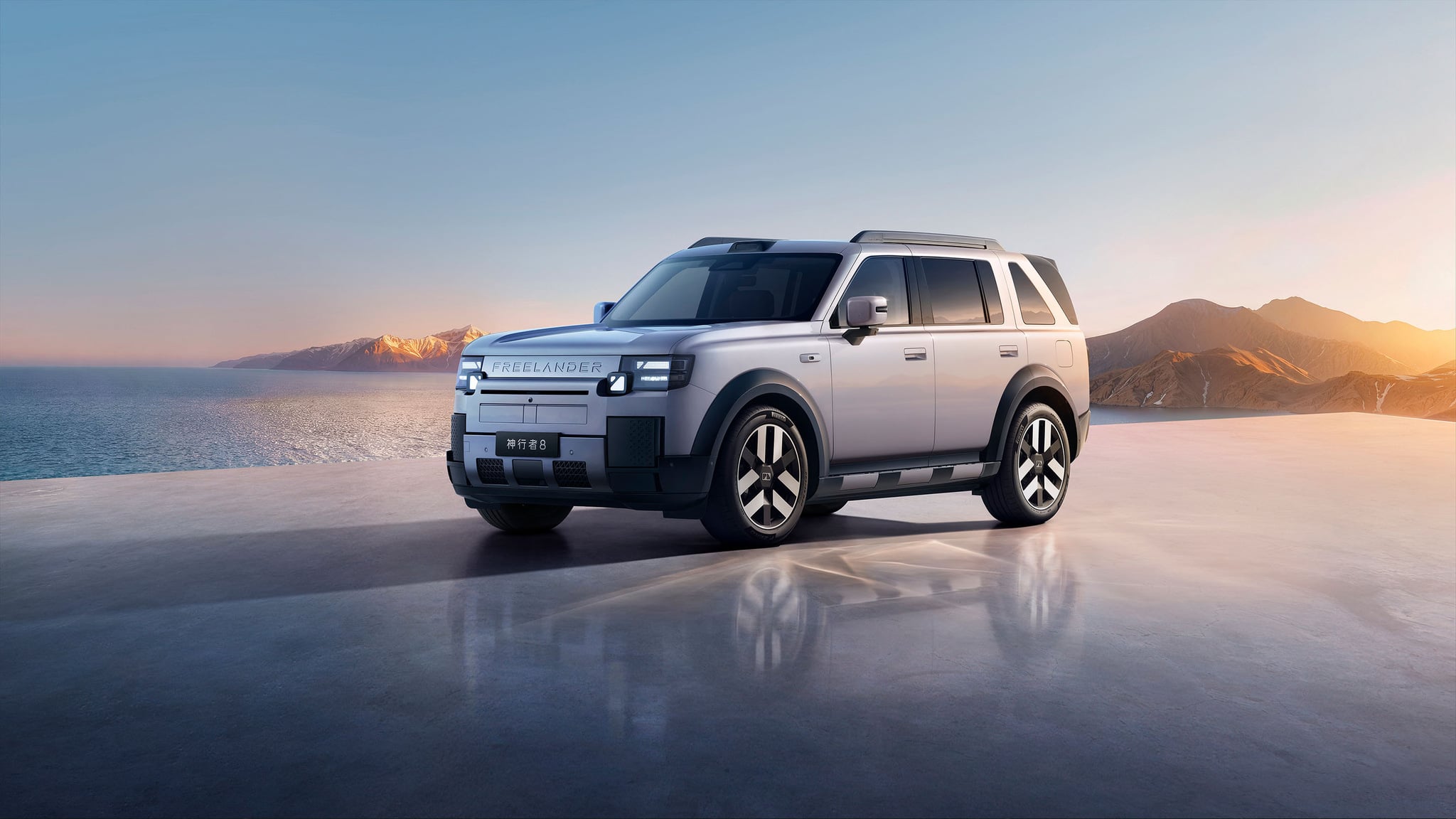
The Freelander 8 has been detailed in international form ahead of the JLR-Chery brand’s Australian launch, with a claimed 460kW plug-in hybrid all-wheel drive system, five- and six-seat configurations and a claimed 900mm wading depth.
At a presentation in China, the brand outlined the engineering and equipment of its first SUV, while naming Australia and New Zealand as priority markets for its right-hand drive rollout.
Freelander has previously confirmed plans to launch here in 2027, although Australian pricing, servicing and warranty details, final specifications and a more precise arrival date have yet to be announced.
The powertrain and battery figures presented at the event apply to the international left-hand drive version. They provide a guide to the overseas offering, with the Australian specification still to be confirmed.
Kym Mellow, Freelander’s head of brand for Australia and New Zealand, said discussions with prospective local customers had highlighted an appetite for familiar four-wheel-drive styling and capability combined with improved comfort and technology.
He described a business owner who enjoys exploring Australia but believes his existing four-wheel drive falls short in those areas.
“He loves his current four-wheel drive. He loves the way it looks and where it can take him, but he sees that it falls short on comfort and technology,” Mr Mellow said.
A second customer, a company CEO, was interested in electrification, a quieter driving experience and more modern cabin technology. Mr Mellow said the vehicle’s electric range appealed to that customer’s preference for long-distance travel.
“Two different people, but the same message. They don’t want to give anything up.”
Freelander is being relaunched as a standalone brand through Chery Jaguar Land Rover, the Chinese joint venture established by the two automakers in 2012.
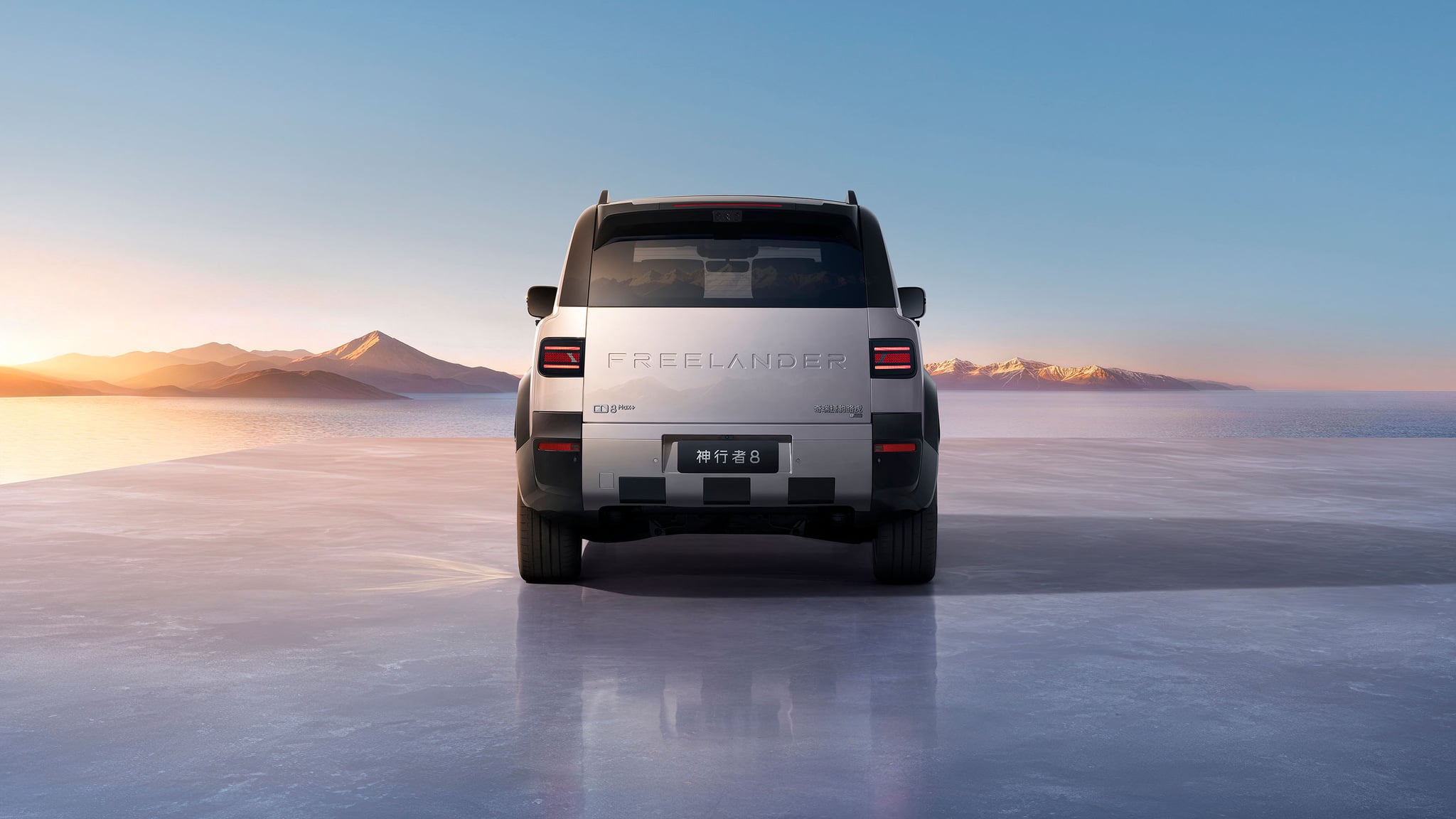
The name originated with the Land Rover Freelander, which debuted in 1997. JLR owns the name and leads the new brand’s design work through a dedicated Freelander design hub in Shanghai, while Chery supplies the underlying technology.
Freelander vehicles are built at the joint venture’s manufacturing base in Changshu, China. The company cites investment of more than US$3.1 billion (A$4.4bn) in the facility, more than 1100 robots and fully automated welding.
The new brand operates separately from JLR’s Range Rover, Defender, Discovery and Jaguar brands, and its vehicles carry Freelander branding.
Freelander International CEO Lucia Mao outlined a rollout beginning with the United Arab Emirates and other Middle Eastern and international left-hand-drive markets, followed by right-hand-drive markets prioritising Australia and New Zealand.
Continental Europe, followed by the United Kingdom and Ireland, forms a later stage of the plan. The Australian rollout slide didn’t specify a launch quarter.
Powertrain
The international plug-in hybrid version of the Freelander 8 combines a 2.0-litre turbocharged engine developed for hybrid applications with a dual-motor all-wheel drive system.
Chery R&D Centre chief engineer Antonio Maresca quoted peak power of 460kW and torque of 662Nm, with a claimed 0-100km/h time of 5.8 seconds.
The engine has a 14:1 compression ratio and claimed thermal efficiency of 45.95 per cent.
A 34.12kWh lithium iron phosphate (LFP) battery provides a claimed electric-only driving range of at least 110km on the WLTC test cycle. Combined petrol and electric range is quoted as at least 886km on the same cycle.
Freelander says DC charging from 20 to 80 per cent takes 20 minutes or less. It hasn’t disclosed a peak DC charging rate.
These figures differ from those previously reported for the Chinese-market extended-range electric (EREV) version.
Mr Maresca said the vehicle’s development program had involved more than 1000 test vehicles, with work conducted in the cold of Northern Europe, the heat and humidity of Southeast Asia, and the heat, dust and sand of the Middle East.
As previously reported by CarExpert, Australian roads also form part of Freelander’s global testing program. The company has outlined plans for six SUVs over five years, with the 8 its first model.
Dimensions and design
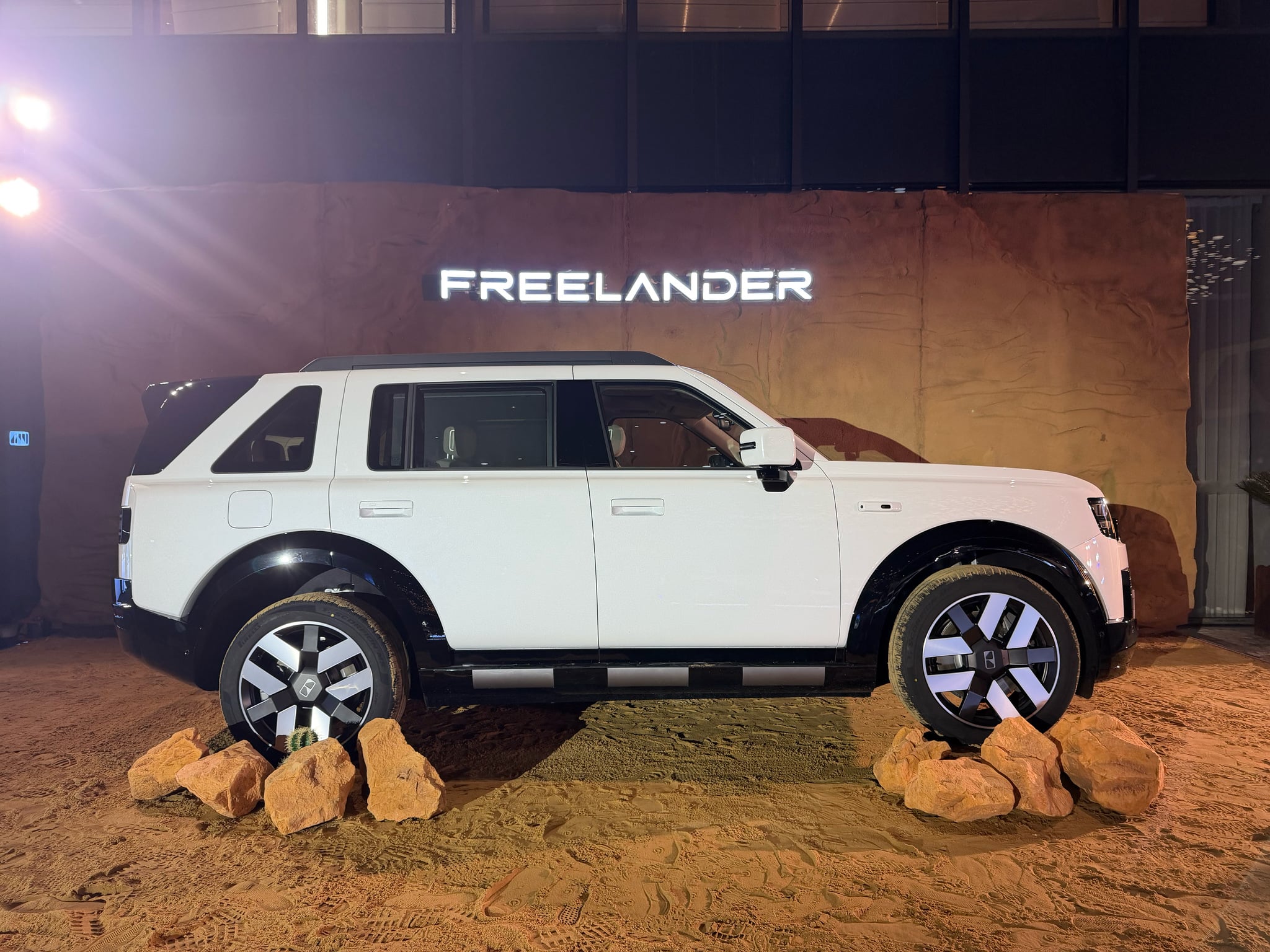
Dimensions shown for the international model put the Freelander 8 at 5118mm long, 2050mm wide and 1926mm tall, with a 3040mm wheelbase. That makes it 83mm longer, 54mm wider but 44mm lower than a Land Rover Defender 110 on an 18mm longer wheelbase.
The company displayed both five- and six-seat versions, with Ms Mao describing the event as the first public showing of the five-seat layout.
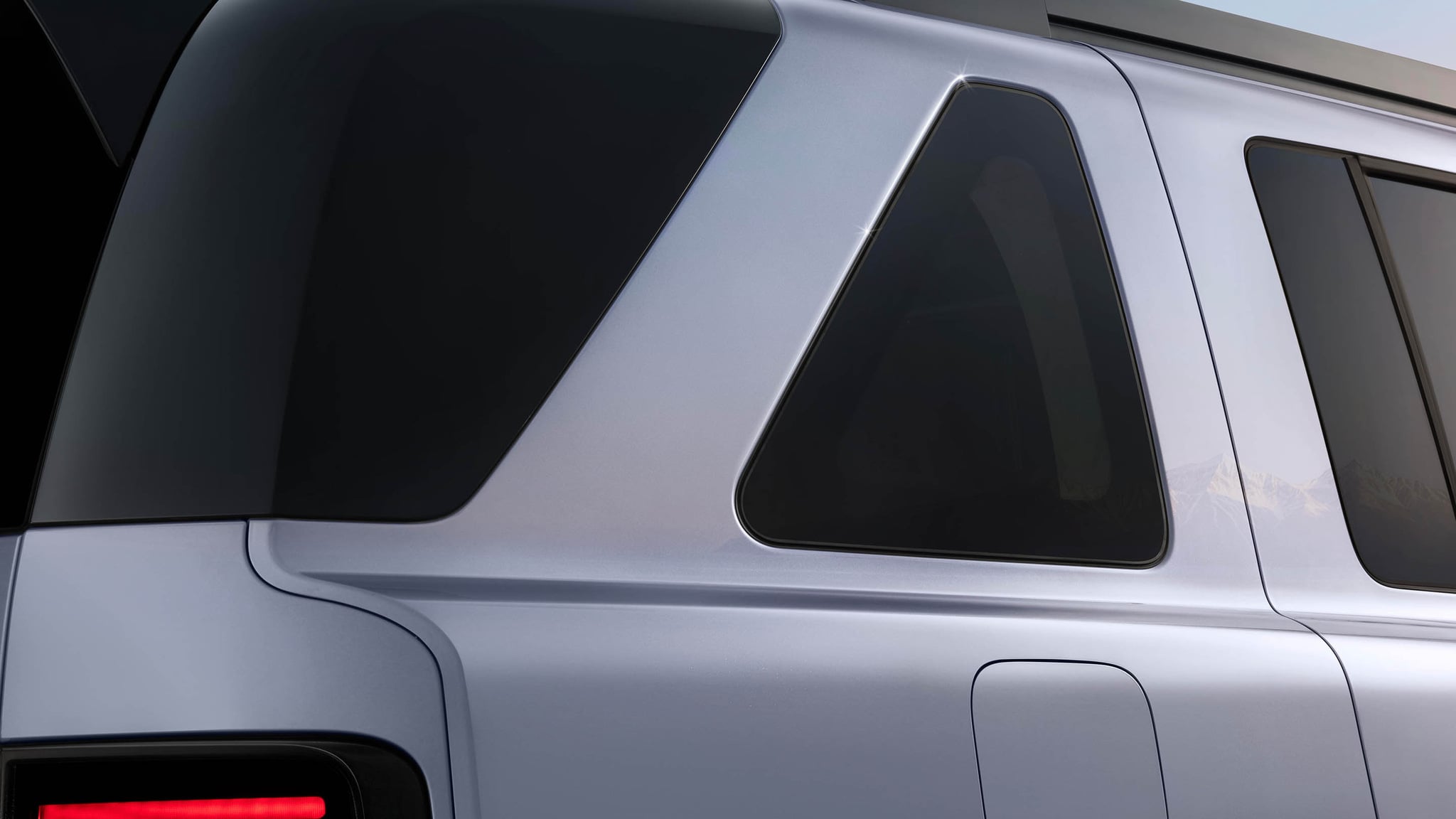
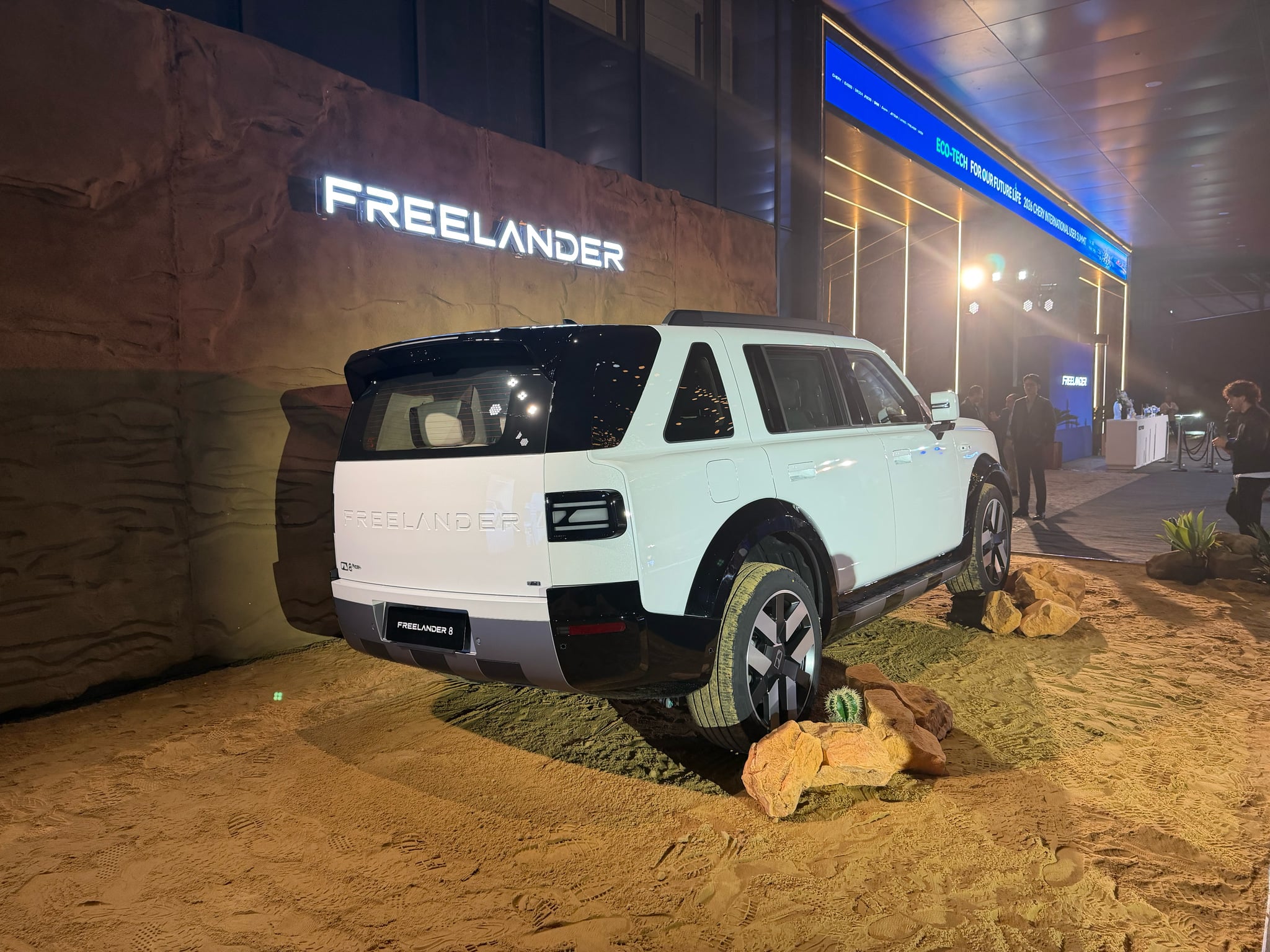
Freelander design chief Phil Simmons said the SUV retains visual references to the original model, including its triangular rear-quarter window, interlocking headlight shapes and twin raised sections of the bonnet.
Mr Simmons, who worked on the original Freelander during his career at JLR, said the design combines a substantial lower body with a visually lighter cabin. The triangular rear window also incorporates shapes intended to suggest the letters F and L.
The branding is recessed into the bodywork, with the lettering debossed to a claimed depth of 4mm.
Eight exterior finishes were shown: Lucent Lime and Dancing Silver in satin, plus Immersive Purple, Boundless Blue, Daring Black, Brilliant Bronze, Dancing Silver and Uplifting White in gloss.
A First Edition will feature a choice of satin Lucent Lime, Immersive Purple or satin Dancing Silver, along with specific treadplates, wheel caps, brake calipers, embroidered trim and badging. Australian availability has not been announced.
Cabin and technology
Inside, the Freelander 8 combines a full-width dashboard display with a separate central touchscreen and physical controls.
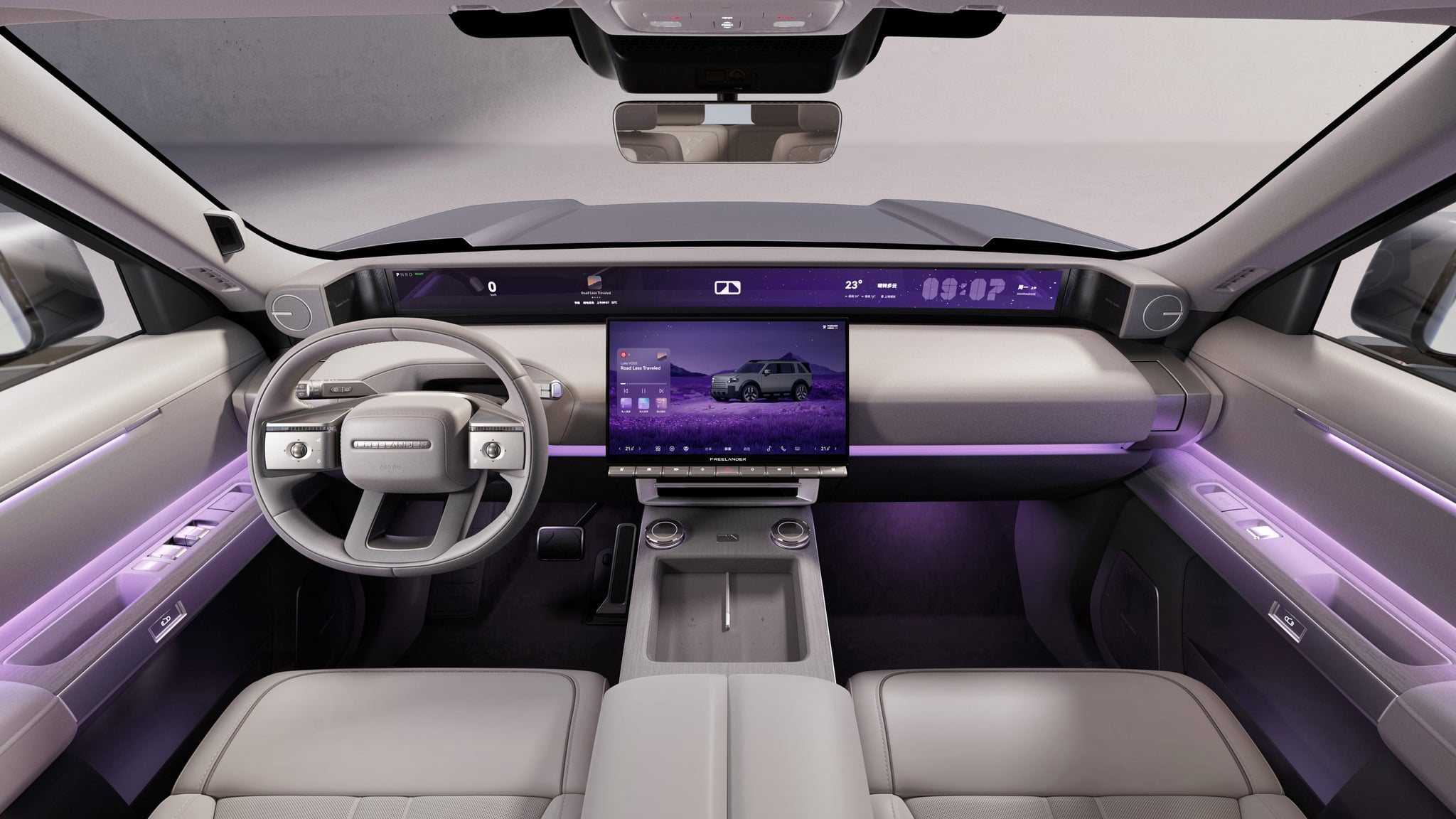
The 46.3-inch Mini LED display stretches across the base of the windscreen. It measures 1.2 metres wide and has an 8K resolution and claimed peak brightness of 1000 nits.
The central touchscreen measures 15.6 inches, with a 2560 x 1440 resolution, claimed peak brightness of 850 nits and anti-glare, anti-reflection and anti-fingerprint treatments.
Seven physical buttons operate regular functions, with another two programmable buttons. Separate crystal-style rotary controls provide access to driving and climate settings.
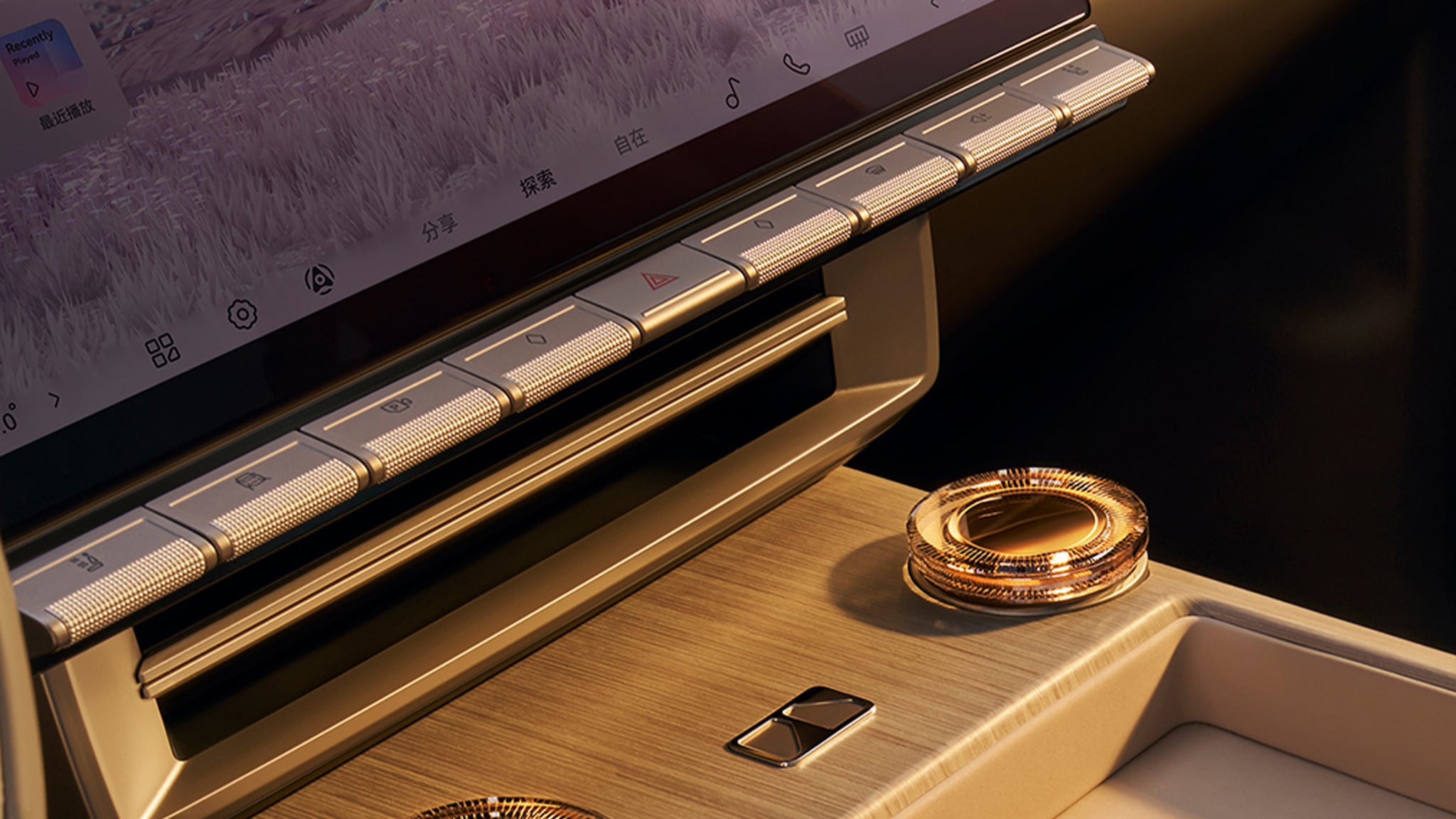
The cabin’s computing hardware includes a Qualcomm SA8295P automotive processor, while Freelander also announced a voice assistant powered by a large language model.
The company says the assistant is intended to support more natural conversations and a better understanding of vehicle functions.
Available cabin equipment includes a Harman Kardon sound system with up to 23 speakers and a quoted 2620W output, along with ambient lighting offering 256 colours across 22 zones.
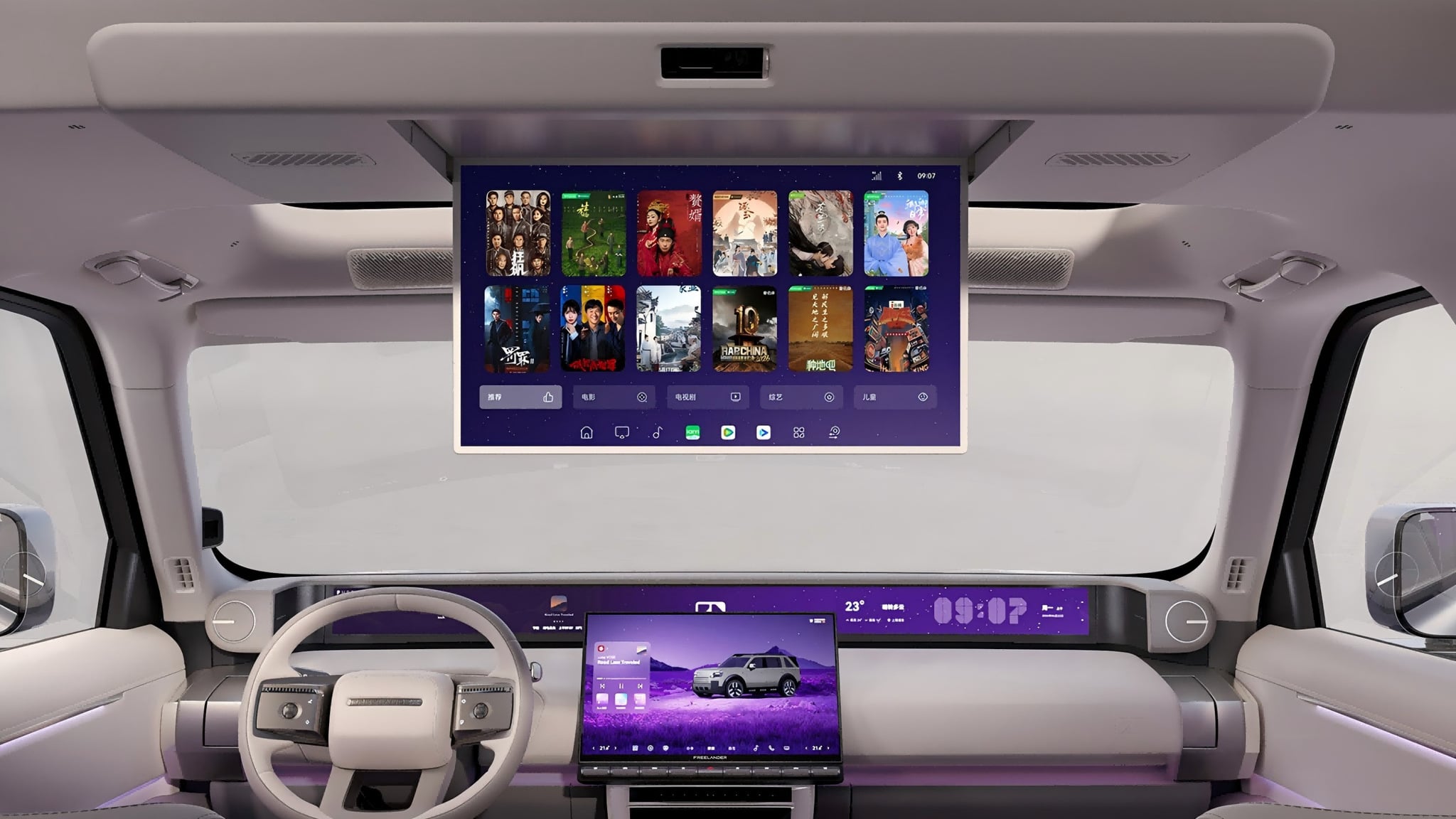
A 17.3-inch ceiling-mounted entertainment screen serves rear passengers, while a 10-litre refrigerator can cool its contents to between minus 6 and 8 degrees Celsius or heat them to between 35 and 50 degrees.
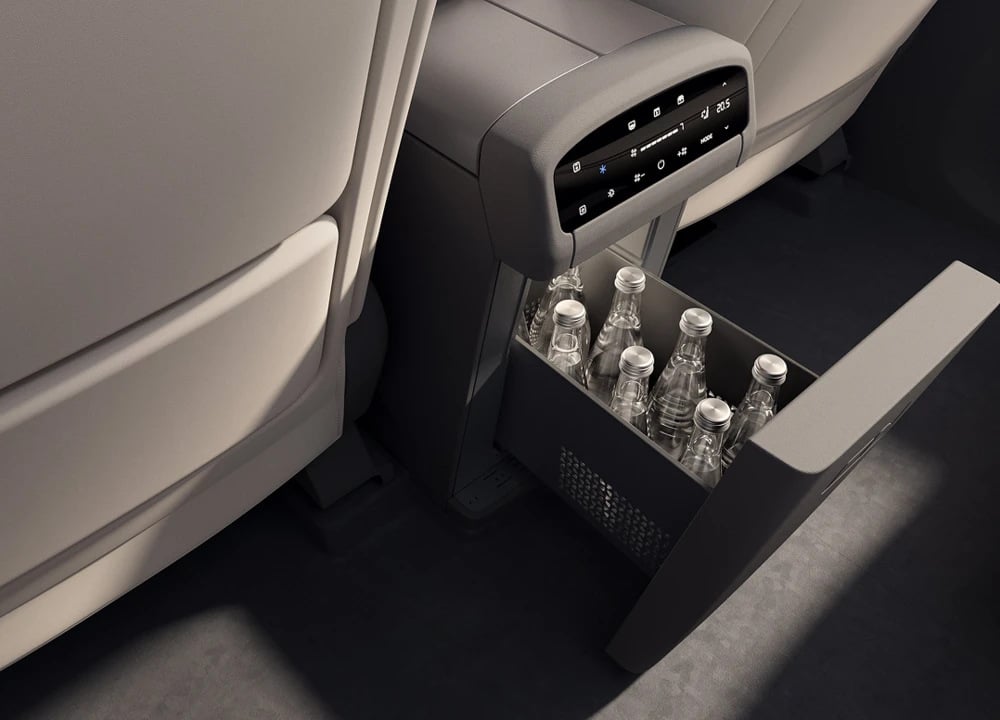
Freelander says the refrigerator can maintain its temperature for up to 24 hours after the vehicle is switched off.
The seating options include sliding second-row ‘zero-gravity’ seats with leg rests, a 10-point massage function and eight massage modes.
Ms Mao said the third row had been designed to accommodate adults and offered ventilated seating. Freelander quoted 834mm of leg room and a 960mm distance from the seat’s H-point to the roof lining.
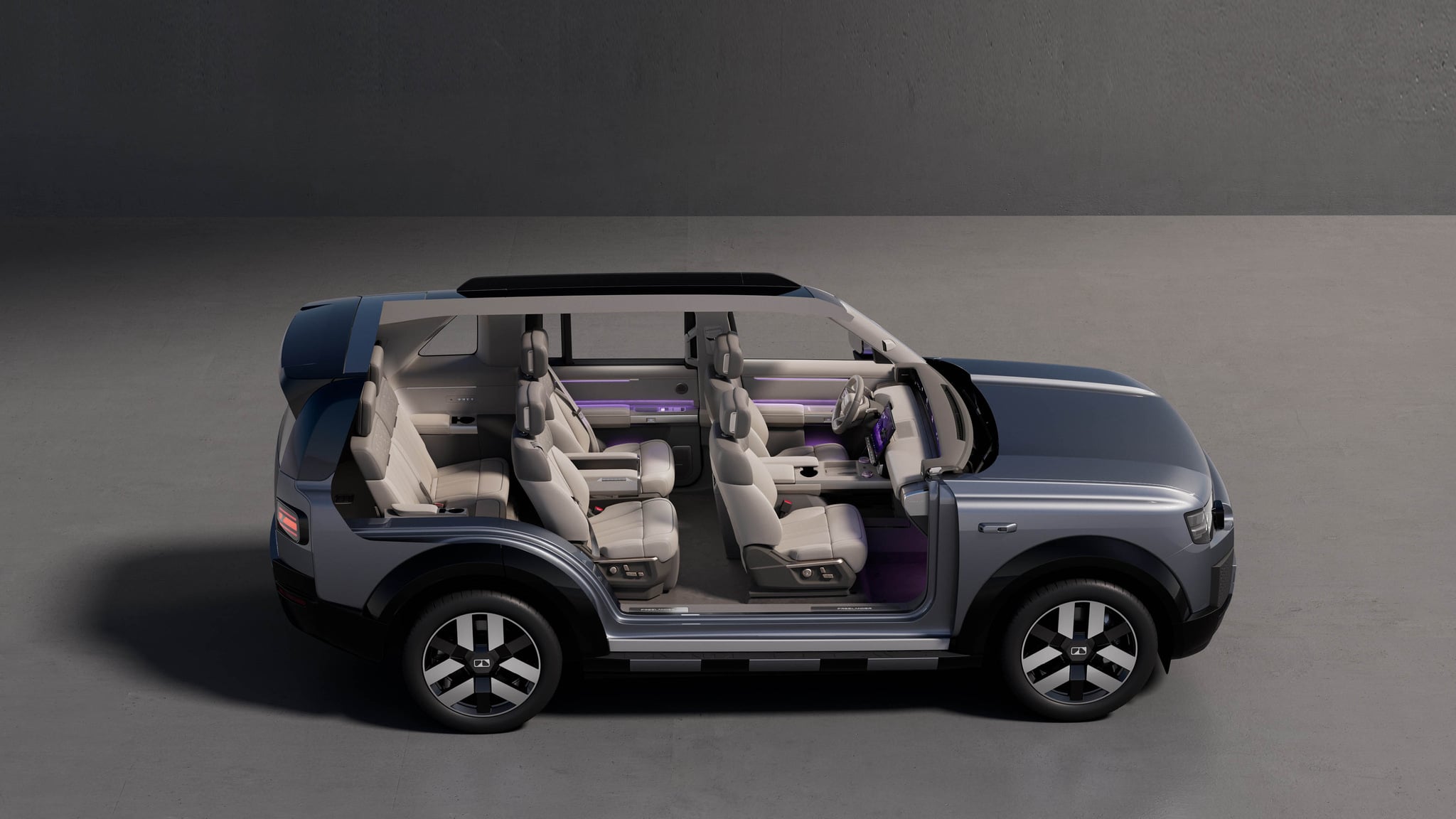
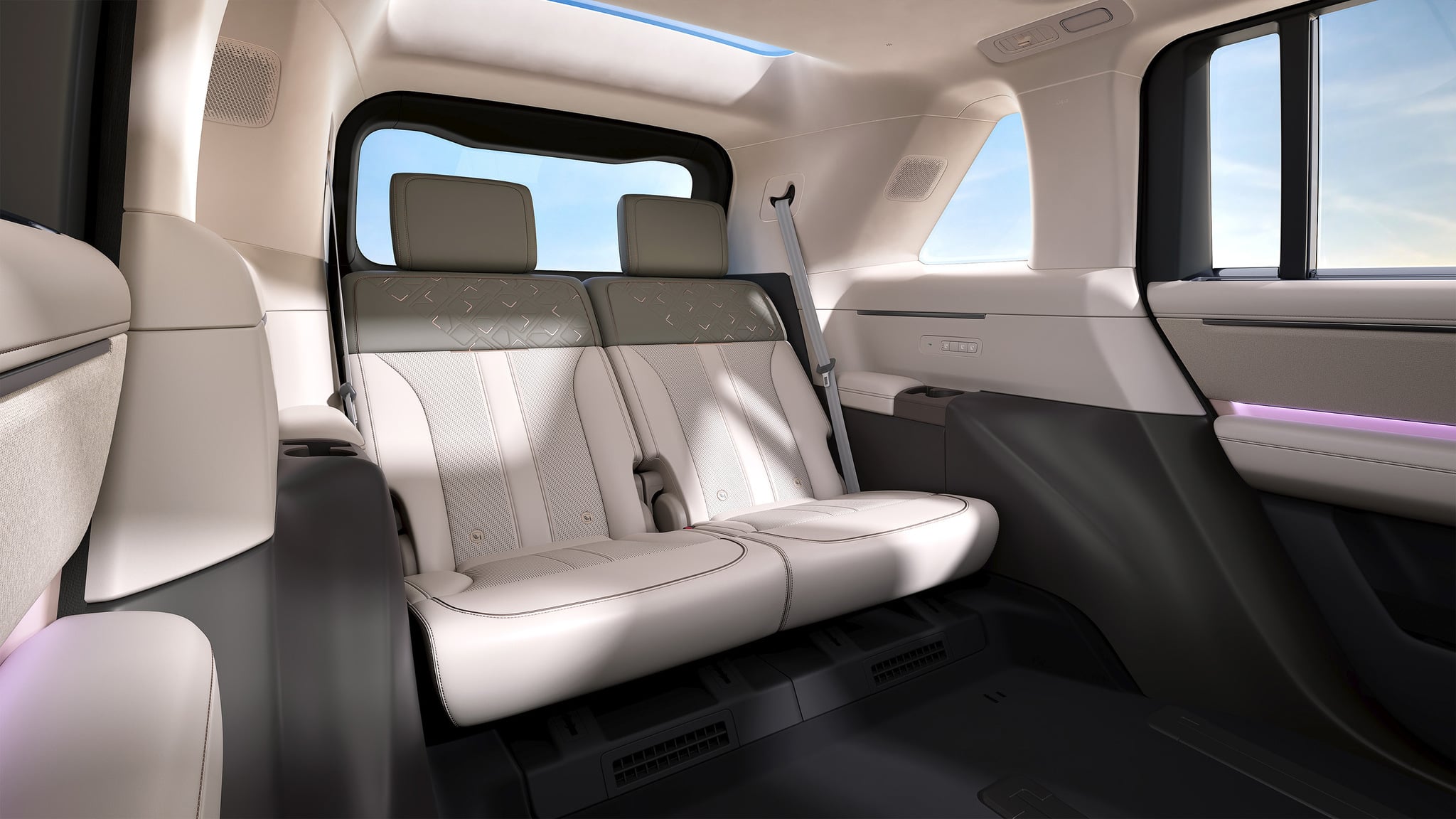
Open-pore Ayous wood veneer is among the cabin materials, while a fragrance system is also available.
The company highlighted its air-conditioning performance in hot climates, claiming the air temperature at the driver’s head position fell by approximately 33 degrees Celsius within 10 minutes during an internal stationary test following two hours in the sun.
Off-road hardware and safety
On the chassis side, the Freelander 8 uses dual-chamber air suspension and continuously controlled damping.
The suspension can raise the body by 70mm or lower it by 50mm, with maximum ground clearance quoted at 266mm. A lowering function is intended to make entry and exit easier.
Front braking hardware includes six-piston fixed calipers and 404mm ventilated discs.
Freelander’s terrain management system offers nine modes, comprising seven terrain programs, a smart mode and an expert mode.
The drivetrain’s traction hardware includes a virtual centre differential lock and an electronic limited-slip differential.
The company quotes maximum articulation of 800mm in its cross-axle test, with wheel travel of 240mm. It also claims the SUV can climb slopes of up to 35 degrees.
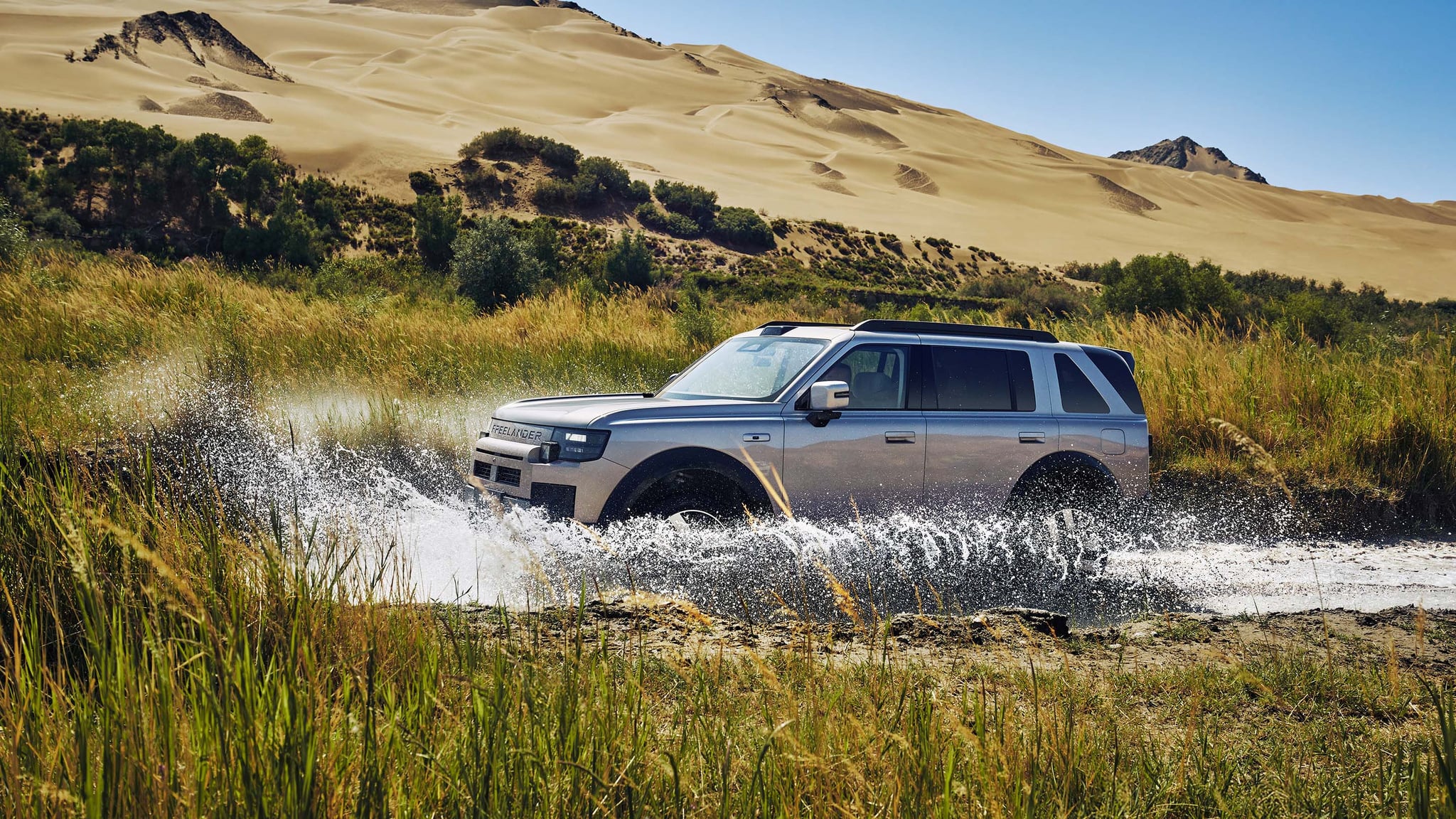
Maximum wading depth is quoted at 900mm. The engine air intake sits 1213mm above the ground, while the air-conditioning intake is positioned at 1141mm.
Freelander says a radar-based water-depth measuring system displays the depth and water level relative to the vehicle on the central screen.
Safety
The international model is also being presented with more than 30 driver assistance functions, including adaptive cruise control, lane assistance, autonomous emergency braking, blind-spot monitoring and rear cross-traffic alert.
A surround-view camera system includes a ‘transparent chassis’ view. The company also outlined automatic parking, remote parking and a supervised parking function.
Australian availability of the driver assistance and parking features, along with the final equipment lists for each variant, remains to be confirmed.
MORE: Official: Freelander 8 coming to Australia in 2027 to launch joint-venture brand
