

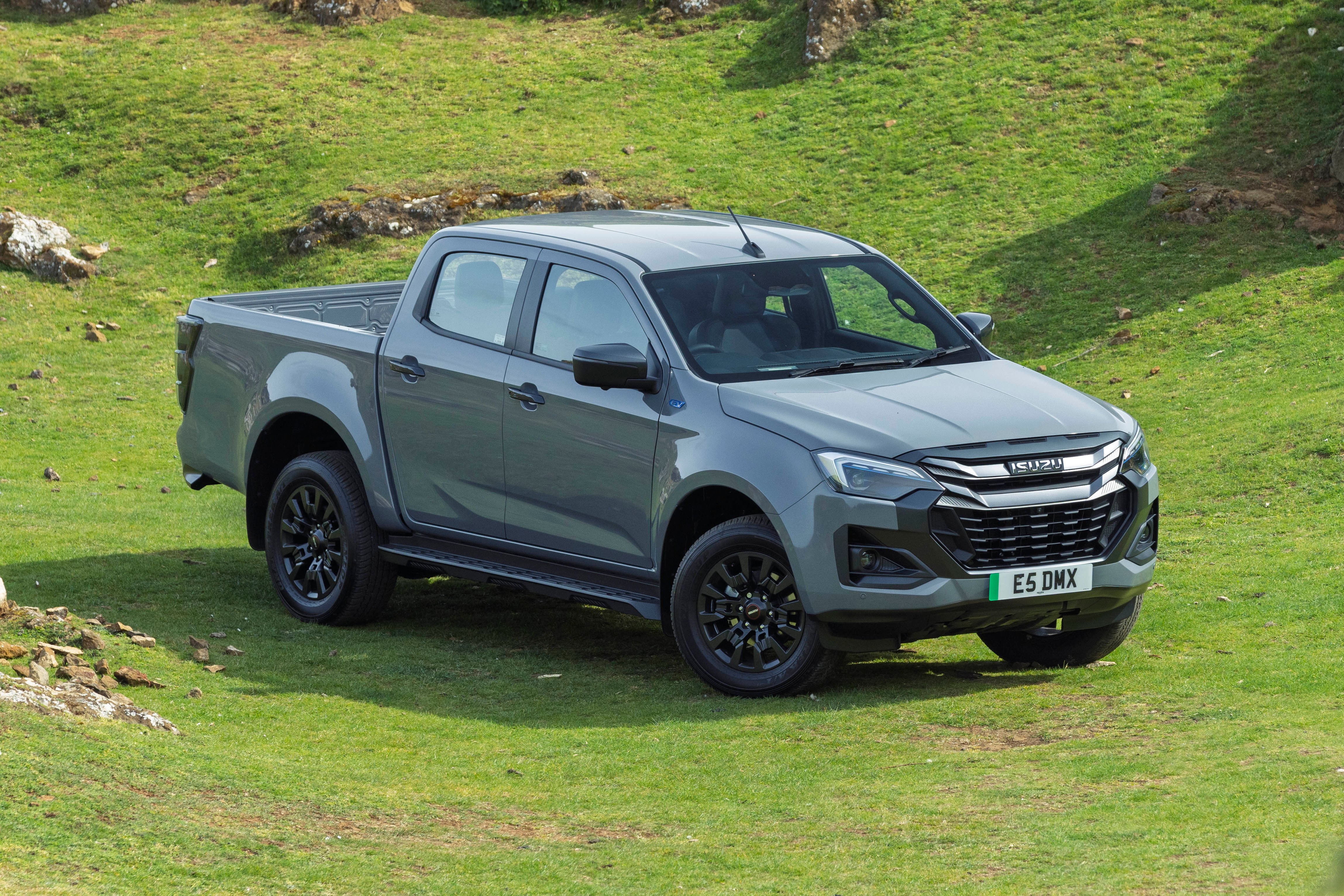
Isuzu Ute Australia (IUA) won’t bring an electric ute to Australia after all, despite having previously confirmed the D-Max EV for a local launch.
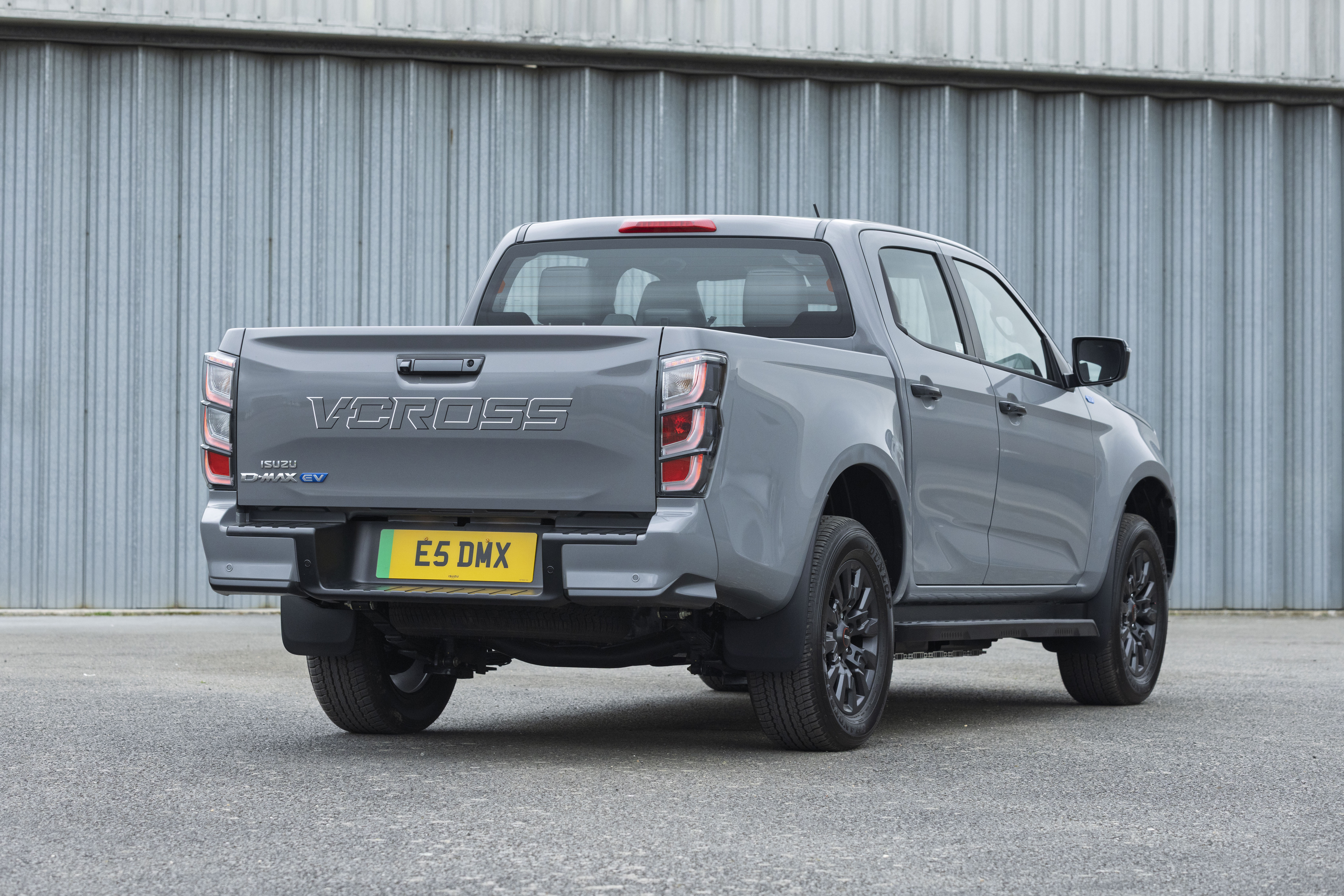
The cancelled electric ute, which is already on sale in its home market of Thailand and exported to Europe, won’t be launched here to rival the Toyota HiLux BEV and upcoming MG U9 EV.
“While Isuzu remains committed to exploring future electrification opportunities, the decision has been made not to export the BEV D-Max to Australia at this time due to the need to prioritise products that align with our current customer needs,” reads a statement from Isuzu Motors International Operations Thailand (IMIT).
“Customers don’t want it,” added Rod Caldwell, IUA executive general manager for the managing director and internal audit office.
“We’ve got a competitor out there, a big competitor, who’s got a BEV ute and it’s selling about 30 a month. And so probably we think we’d get a third of that. The customers are not looking for that,” he added, referring to the recently launched Toyota HiLux BEV.
“That’s not to say we don’t agree with lower CO2 emissions, we think there’s got to be a reduction.”
IUA says it “remains committed to exploring future electrification opportunities through initiatives such as the Earth Lab and ongoing evaluation of lower-emissions technologies”.
However, the move will see the IUA lineup continue to lack any form of electrification – even as electric and plug-in hybrid (PHEV) utes become increasingly common, and even as a mild-hybrid powertrain is offered overseas.
The company says diesels continue to account for 84 per cent of light commercial vehicle sales year-to-date, and the 2025 introduction of a more efficient 2.2-litre turbo-diesel four-cylinder engine has helped it reduce its fleet emissions – and in turn its liabilities under the Australian Government’s New Vehicle Efficiency Standard (NVES).
“I couldn’t say to you today we’re going to have a PHEV, or a diesel HEV, or a hybrid – we don’t know yet. That’s the truth,” said Mr Caldwell.
“There’s still not a firm ‘that’s the direction for Australia’. We just know that the battery-electric vehicle, right now, doesn’t work.”
IUA confirmed last year it had “a few powertrains under study”.
“One of those is obviously the existing powertrains that we have globally coming from Isuzu, one of which is that 2.2, but also investigating the probability or suitability of mild-hybrid and battery-electric vehicles as well,” said the IUA spokesperson early in 2025.
When asked whether a third electrified powertrain could eventually be sourced from Isuzu’s truck division for the D-Max or the related MU-X off-road SUV, specifically in the form of a plug-in hybrid or extended-range electric vehicle (EREV), IUA managing director Junta Matsui said: “Of course we are talking to Isuzu and that’s one of the options”.
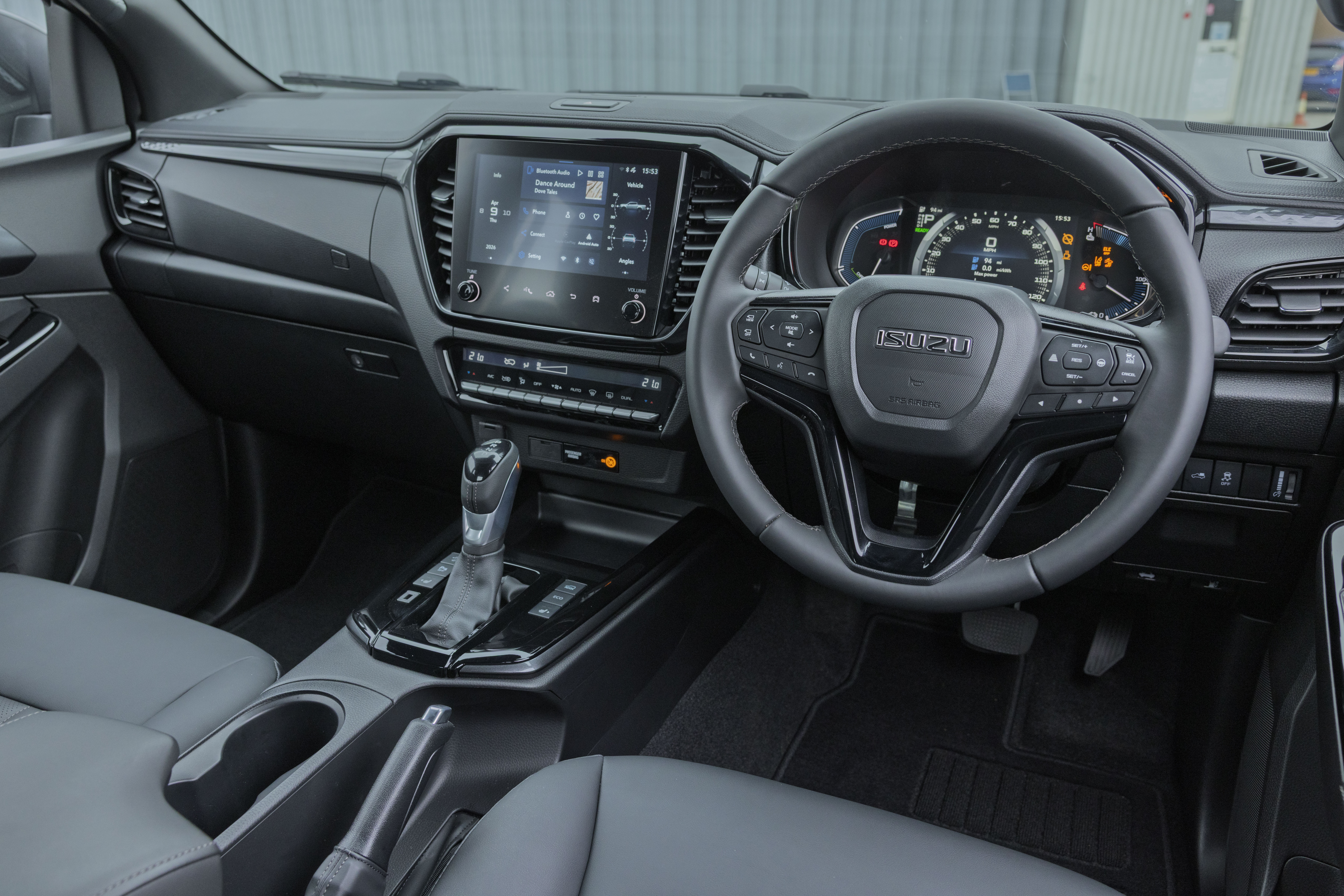
The D-Max EV was revealed in production form early last year, complete with 3500kg braked towing capacity and 1000kg payload figures that match the diesel D-Max and are better than those of the HiLux BEV, which has a towing capacity of 2000kg and a payload of 835kg.
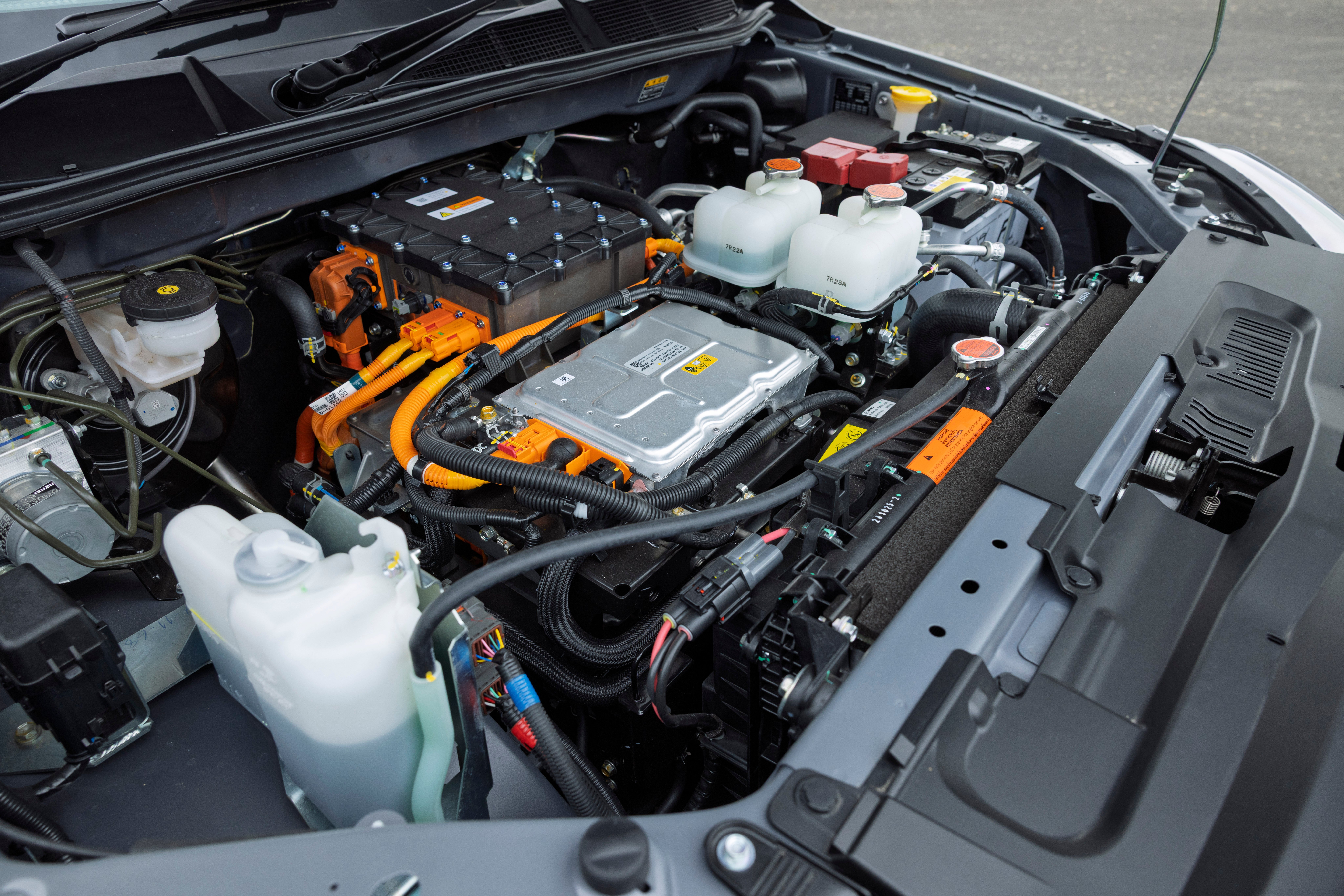
Combined outputs of the dual-motor powertrain are listed at 140kW (43kW for the front motor, 97kW for the rear), matching the 3.0-litre turbo-diesel, though its 325Nm of peak torque (108Nm front, 217Nm rear) falls short of the oil-burner’s 450Nm.
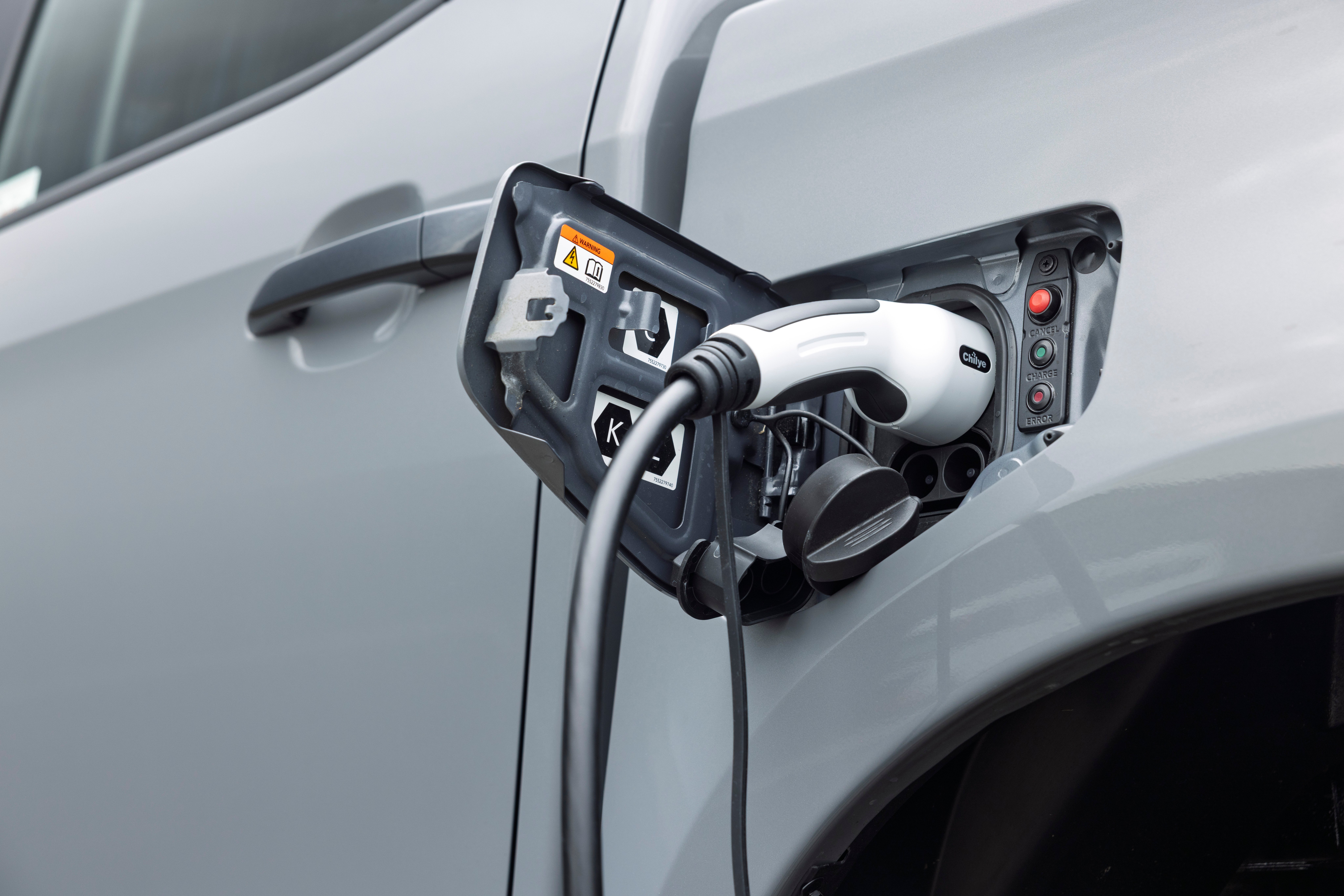
The result is claimed 0-100km/h acceleration in 10.1 seconds. WLTP range is 263km from the 66.9kWh battery pack mounted under the floor, which can be DC fast-charged at speeds of up to 50kW and topped up from 20-80 per cent in as little as one hour. AC 11kW charging to 100 per cent takes 10 hours.
In Thailand, it starts at 1,591,000 baht (~$67,800), compared to 595,000 baht (~A$25,400) for the cheapest D-Max. In Australia, the cheapest D-Max costs $36,200, while the Toyota HiLux BEV starts at $74,990 plus on-roads.
Besides the HiLux BEV and upcoming U9 EV, there’s only one other electric ute on sale in Australia: the unibody KGM Musso EV.
While EV ute sales have remained slow, PHEV utes have taken off.
The BYD Shark 6 led the charge early in 2025, and was quickly followed by the Ford Ranger Hybrid and GWM Cannon Alpha PHEV.
Last year, BYD delivered 18,073 Shark 6 dual-cabs, making it Australia’s fifth-best selling ute behind only the Ranger, HiLux, D-Max and Mitsubishi Triton, despite being available in just one variant at the time.
For reference, Isuzu delivered 26,839 D-Max utes across a wider range comprising not only dual-cab but single-cab, extended-cab, cab/chassis, and 4×2 variants.
