

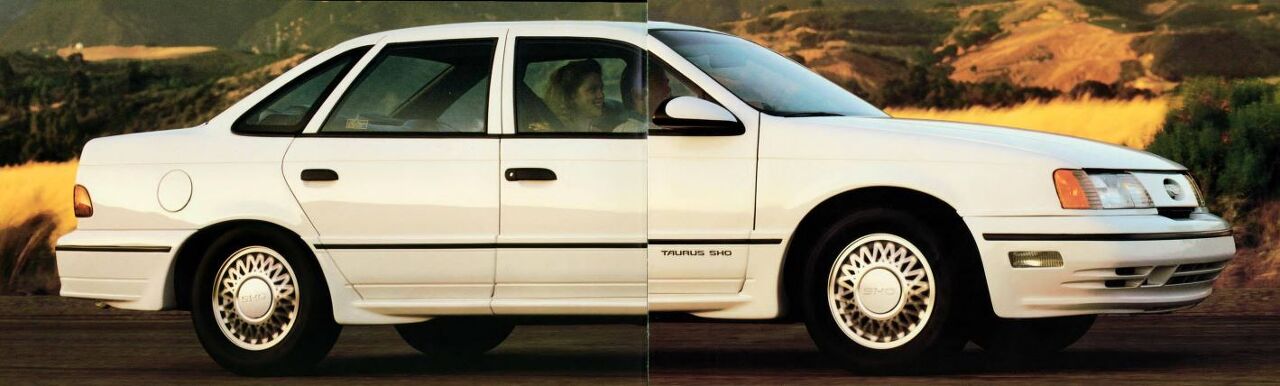
The Ford Taurus was still going strong in the latter half of its first generation. It spawned a new Lincoln Continental in 1988, and Ford’s SVO performance division created the SHO sedan for 1989. All models wore slightly revised exterior styling that year, which took a keen eye to notice. But the big news was the SHO, as Ford delayed interior revisions and engineering upgrades until 1990.
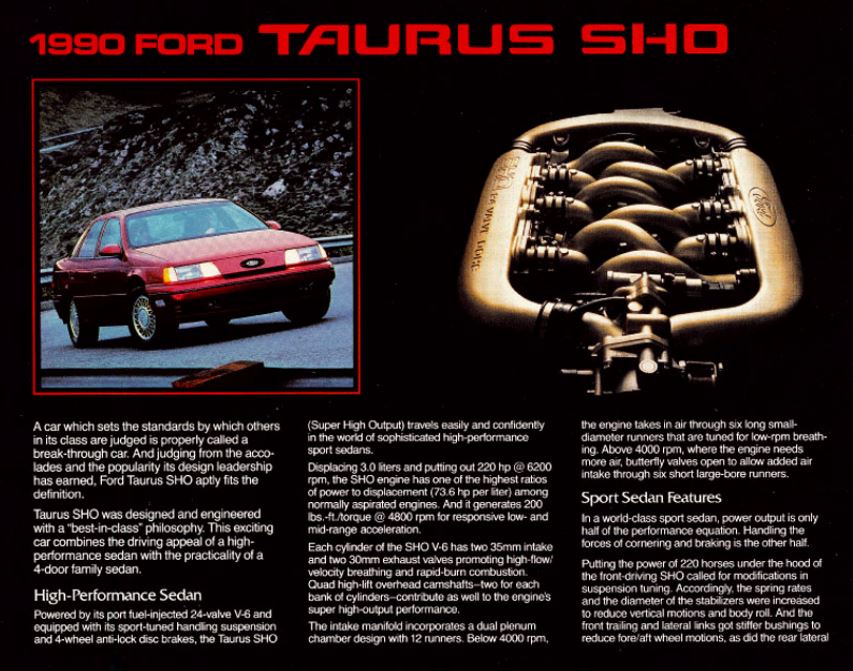
With a Yamaha-designed V6 and limited to a manual transmission, the SHO was an instant hit. Though it was originally intended as a limited-run vehicle, the SHO’s popularity caused Ford to make it a permanent member of the Taurus family. It was also established as a separate model rather than a trim of Taurus.
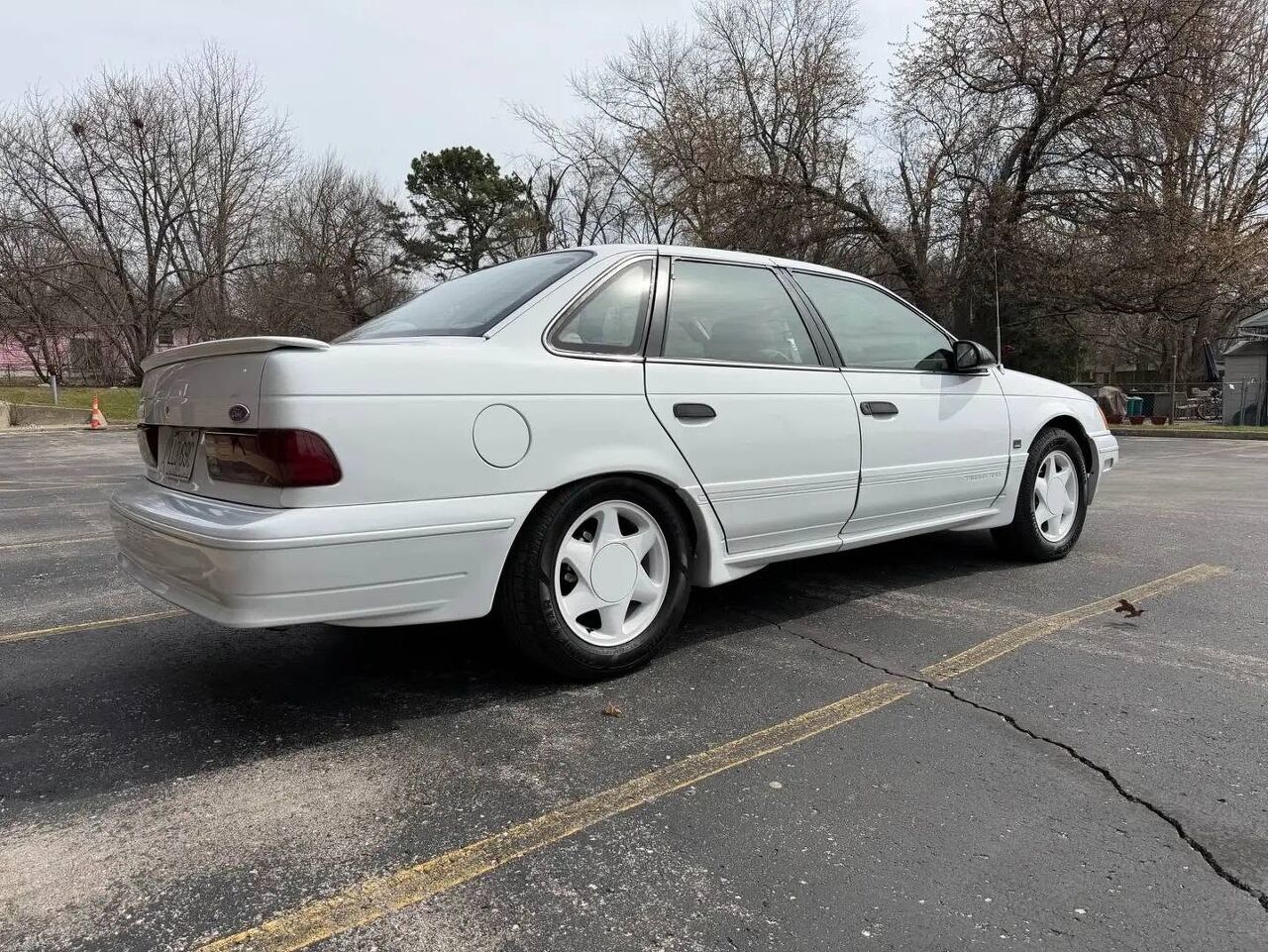
Minor updates were made to the SHO for its second outing. Lace alloy wheels shared with Taurus were less shiny for SHO duties, and there was an SHO center cap. Select black SHOs could be ordered with black wheels that had a chrome outer ring. White examples could have full color-matched alloys. The SHO also provided some of its performance parts for an important fleet variant that was new for 1990.
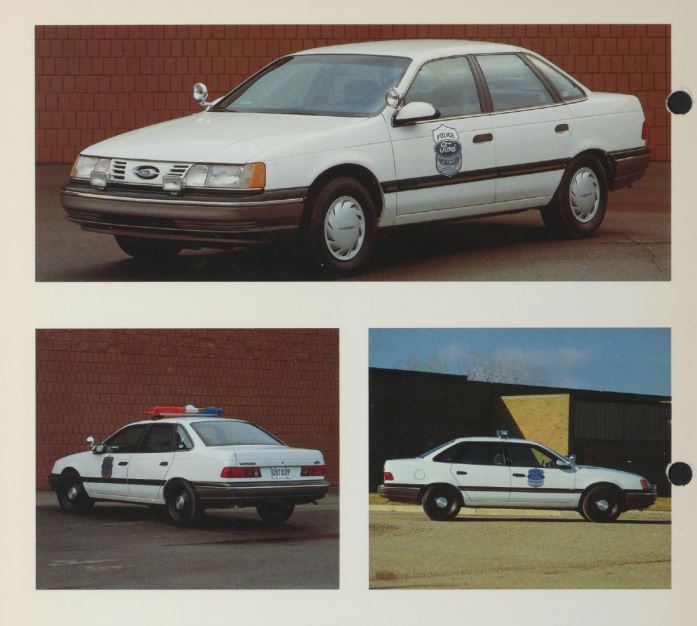
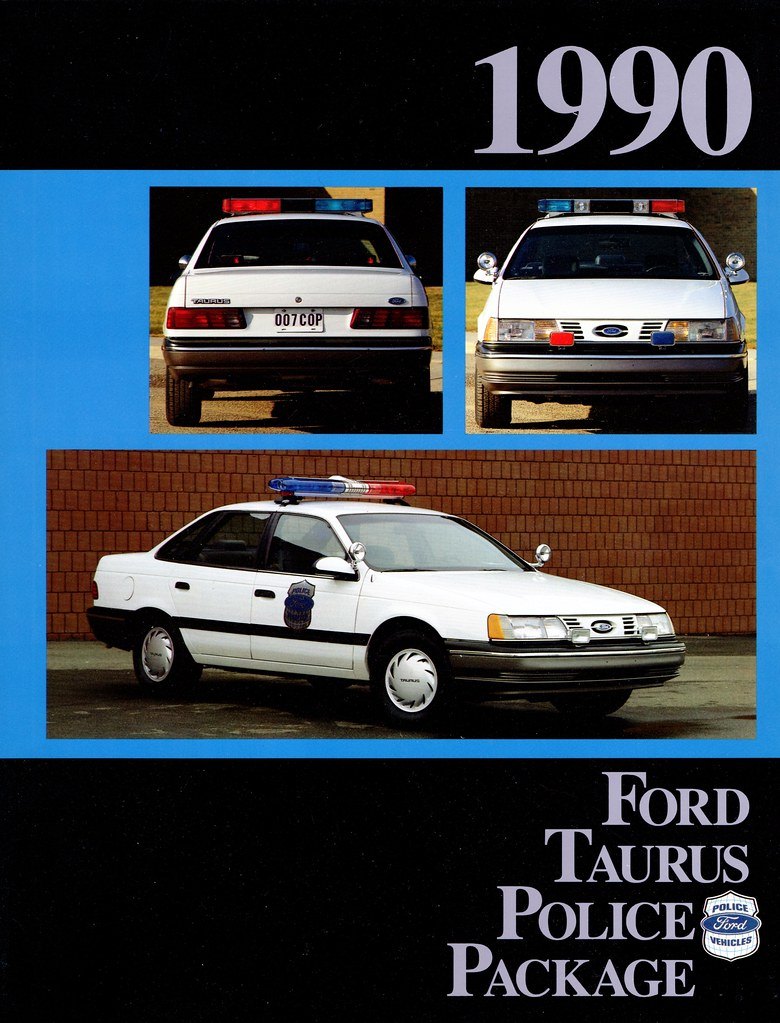
The Police Package Taurus was introduced in 1990. It was created from a basic L trim sedan. All examples were equipped with the police version of the Essex 3.8-liter engine with new electronic fuel injection. Horsepower (which varied by year) was 140, with 220 lb-ft of torque. Helping the performance-oriented engine breathe was a standard dual exhaust.
Slats at either side of the Blue Oval in the grille were added for extra air flow. Underneath, the sporty suspension from the SHO was grafted onto the Police Taurus. Ford advertised a “Certified Calibration” speedometer for the Police Package, and it read to 140 mph. Notably the gauge cluster was from the SHO. For a single year the Police Package had a speed governor: 110 mph, with a rev limiter of 5,500.
ABS was standard on all Police Package cars, as was a power steering cooler and a heavy-duty transmission cooler. Sway bars were beefier than standard models. Wheel covers were standard, but some examples were outfitted with 14-inch steel wheels with a chrome hubcap.
There was engine news for civilian Tauruses in 1990 as the 3.8-liter V6 was updated with electronic fuel injection and a new mass air flow sensor. Though it shared the same 140-hp figure of the Police Package, the torque of the civilian model was slightly less at 215 lb-ft.
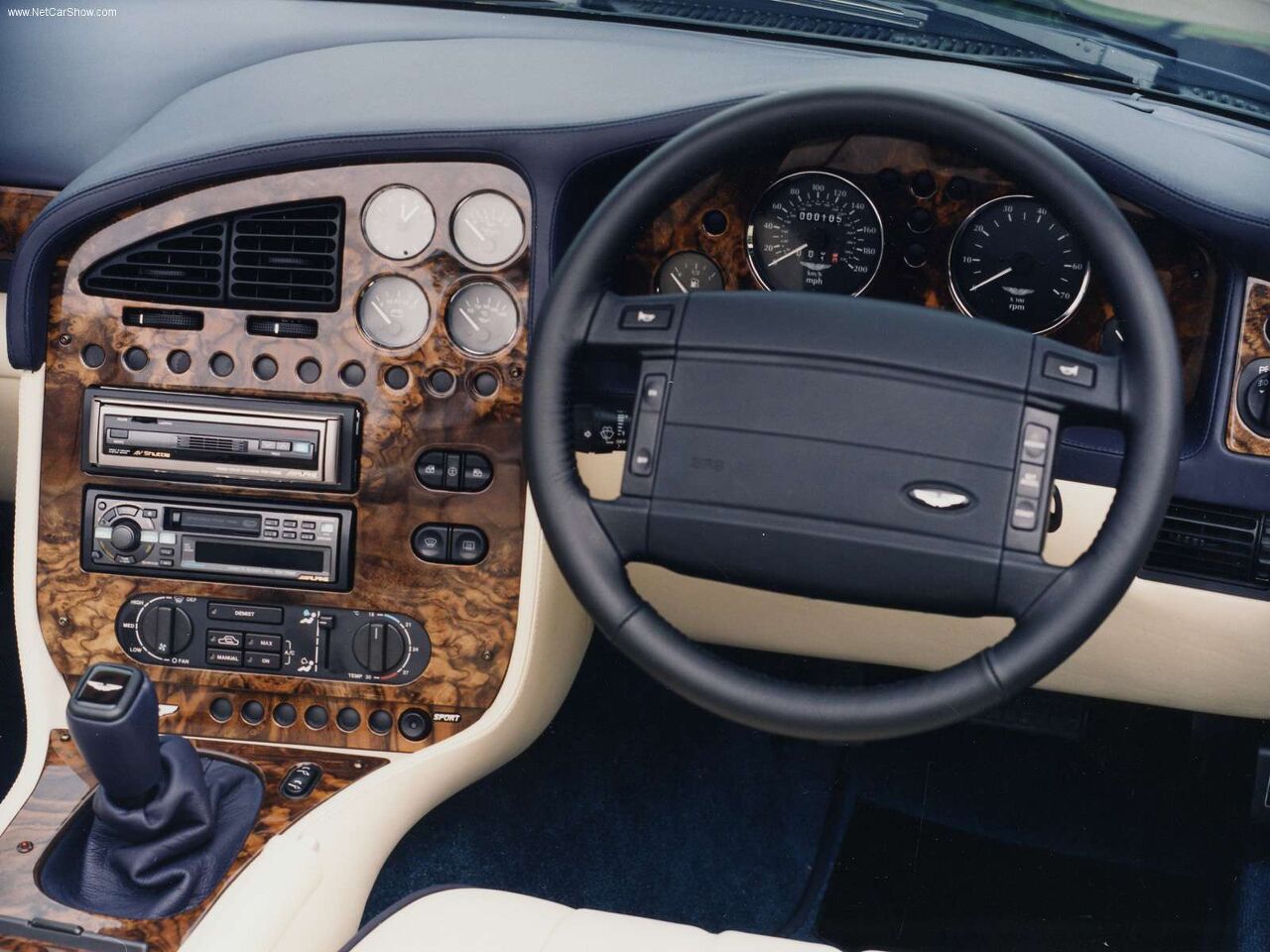
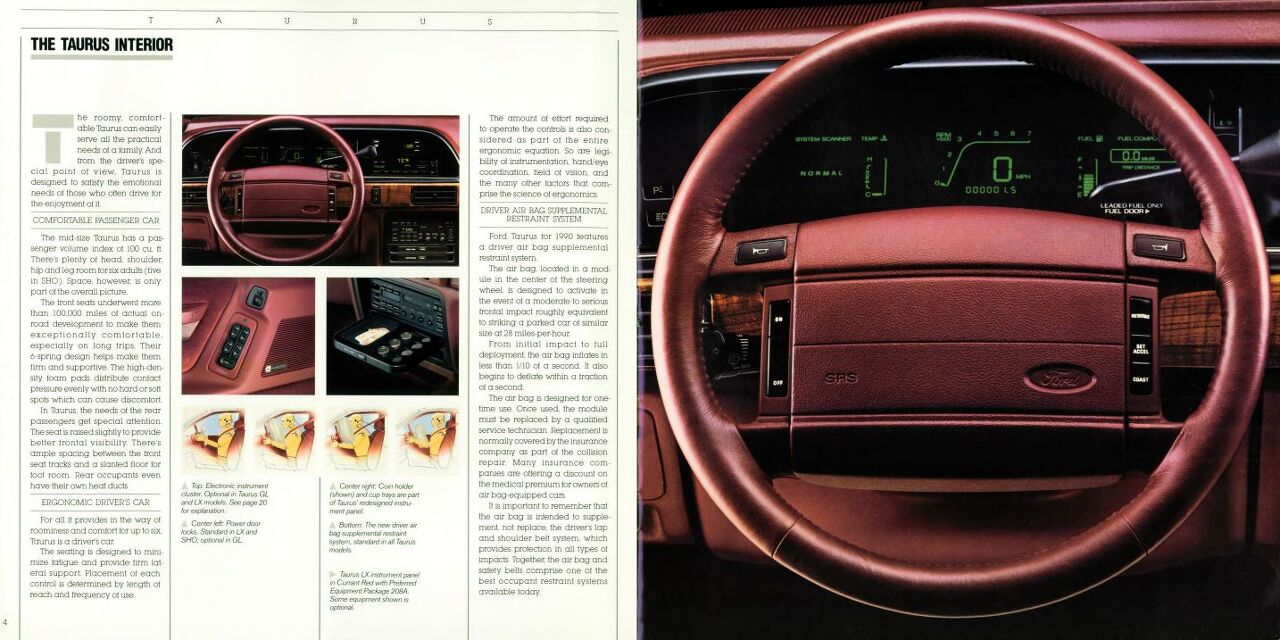
All Tauruses benefited from interior updates in 1990. It was a turning point for cars in the United States: Airbags were viewed as ever more important in passenger cars, and would soon be mandated by legislation. Ford’s new airbag wheel would be used across the Ford line of cars, trucks, vans, and in other Ford intellectual properties like Aston Martin (1992 V8 Vantage shown).
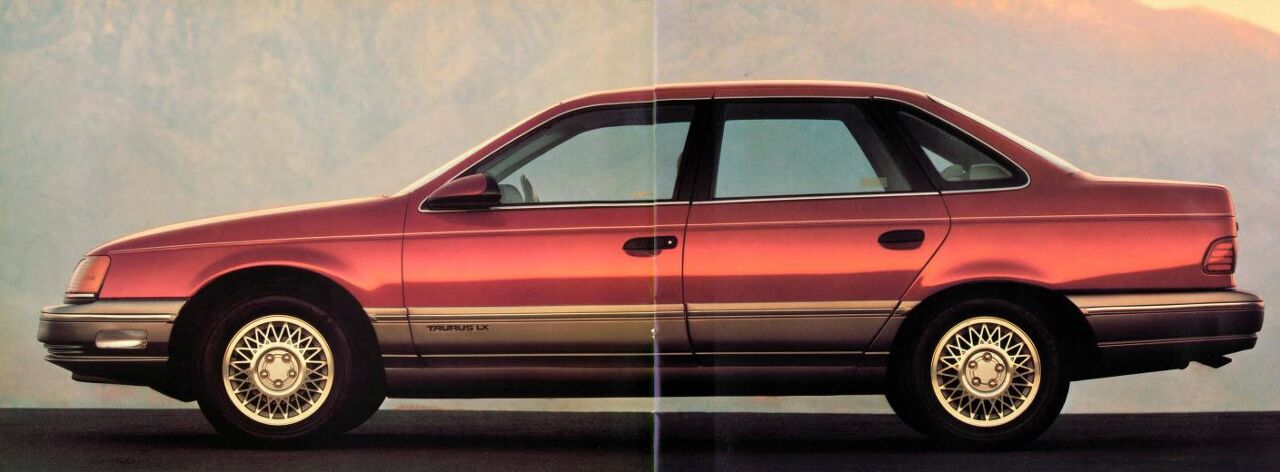
The dashboard of the Taurus was redesigned and modernized with the airbag update, as the binnacle that contained gauges and climate controls was curved more toward the driver. The clock was repositioned higher in the dash, above the climate controls. The space formerly occupied by the clock was used by a repositioned central vent.
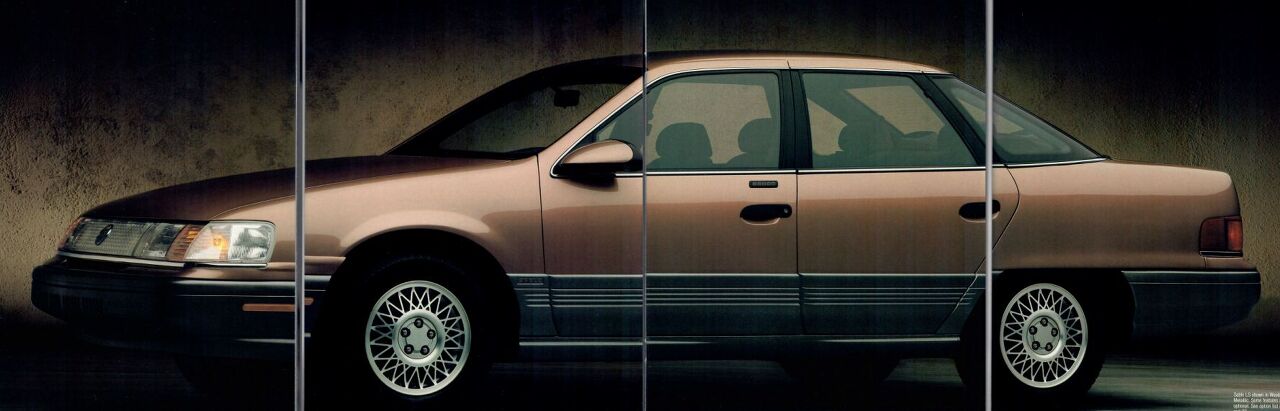
The radio’s position didn’t change, but beneath it was a new pop-out coin tray and button-activated cup holders. The shape of the dash in front of the passenger curved more toward the interior than in the pre-refresh version, and was more sculpted. Notably, the Taurus and Sable dashboards converged at this time, and the Sable no longer used its own design.
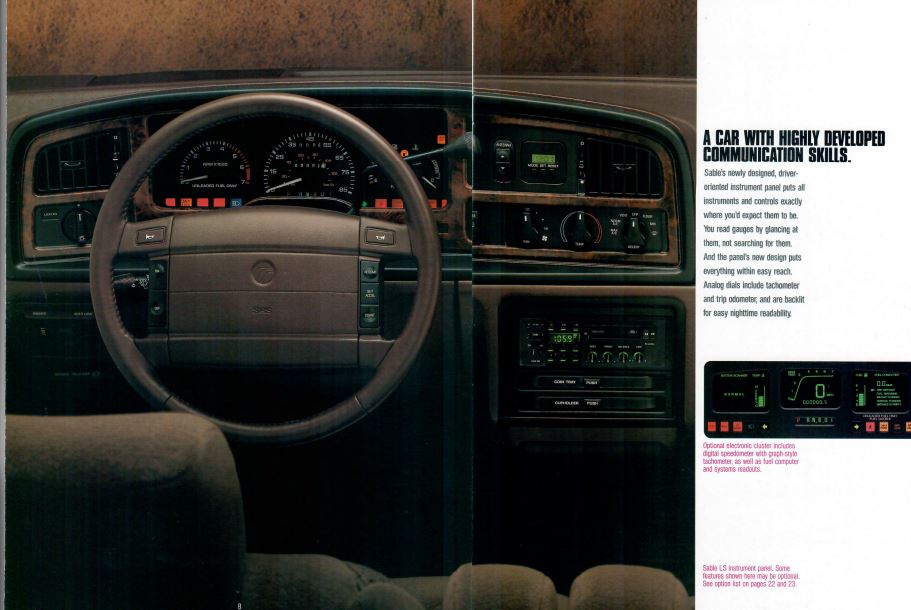
There was a trim panel in the Taurus that was removed for the Sable, so the binnacle appeared to curve farther away from the driver. The Sable also added a burl wood fascia to the entire binnacle area that was not available in the Taurus. Interior differences between the two models would continue to fade away from this point.
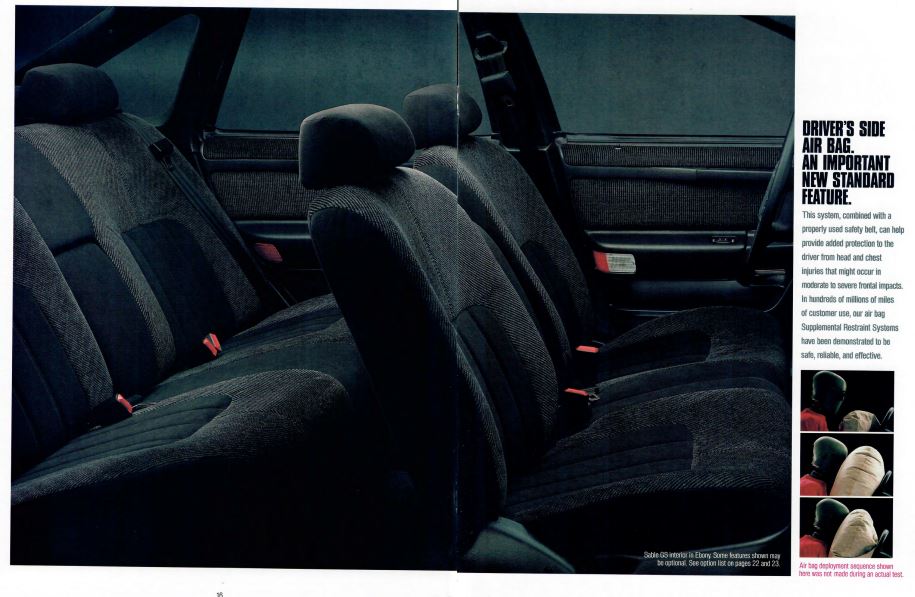
Tilt wheel was now standard on all Taurus trims, and the column shifter was redesigned. For cars with the digital gauge package, the cluster was redesigned to have three separate screens with a row of warning lamps below. There were no longer physical needles for engine temperature and fuel. The design was more straightforward and less “80s tech” looking than the original.
ABS with four-wheel discs were optional on all trims, as was an in-dash CD player. An expensive option at $491 ($1,298 adj.) in 1990, customers also spent $817 ($2,160 adj.) for the luxury of air conditioning. A GL with electronic climate control was surely a rare thing, as a $1,000 ($2,644 adj.) option.
In 1991 the first-gen Taurus had its last outing, as features and trim were repackaged but interior and exterior visuals stayed the same. The base inline-four engine and the Vulcan V6 gained electronic fuel injection and ditched throttle body and multi-point, respectively. For the LX wagon, the 3.8-liter engine became standard. LX also received four-wheel discs and ABS as standard.
Underneath all automatic Taurus examples was the new AXOD-E. An electronically-controlled version of the AXOD, the old ATX three-speed auto from the Tempo was discontinued. The new top speed for standard models with the automatic was 112 mph.
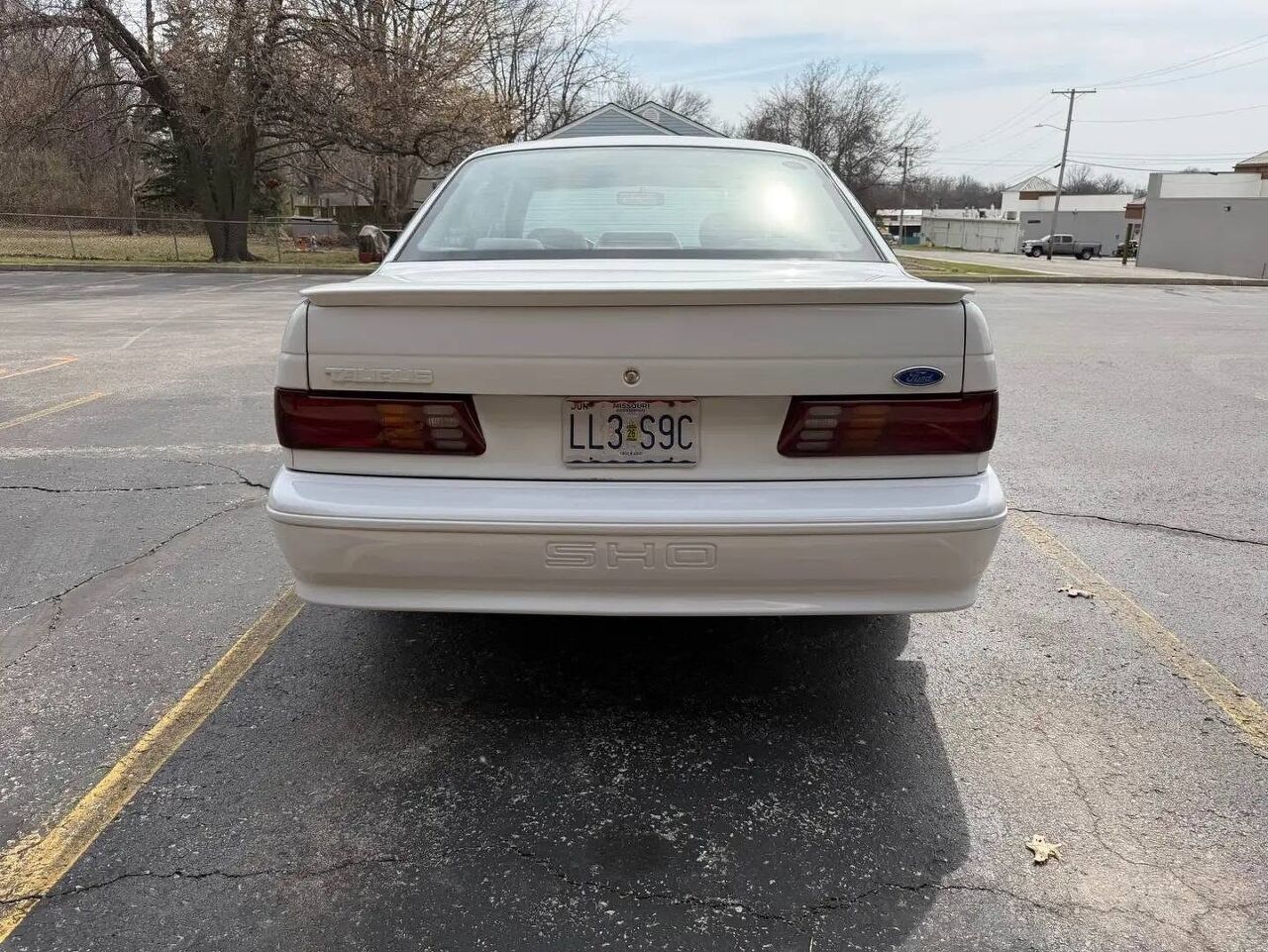
The SHO received more distinctive six-spoke wheels in 1991. Though the wheels would continue for the second generation SHO, 1991 was the only time when they had a center disc sans any branding. Amber turn signals were added to SHO rear lamps. Late-build SHOs received a new shifter and a larger clutch.
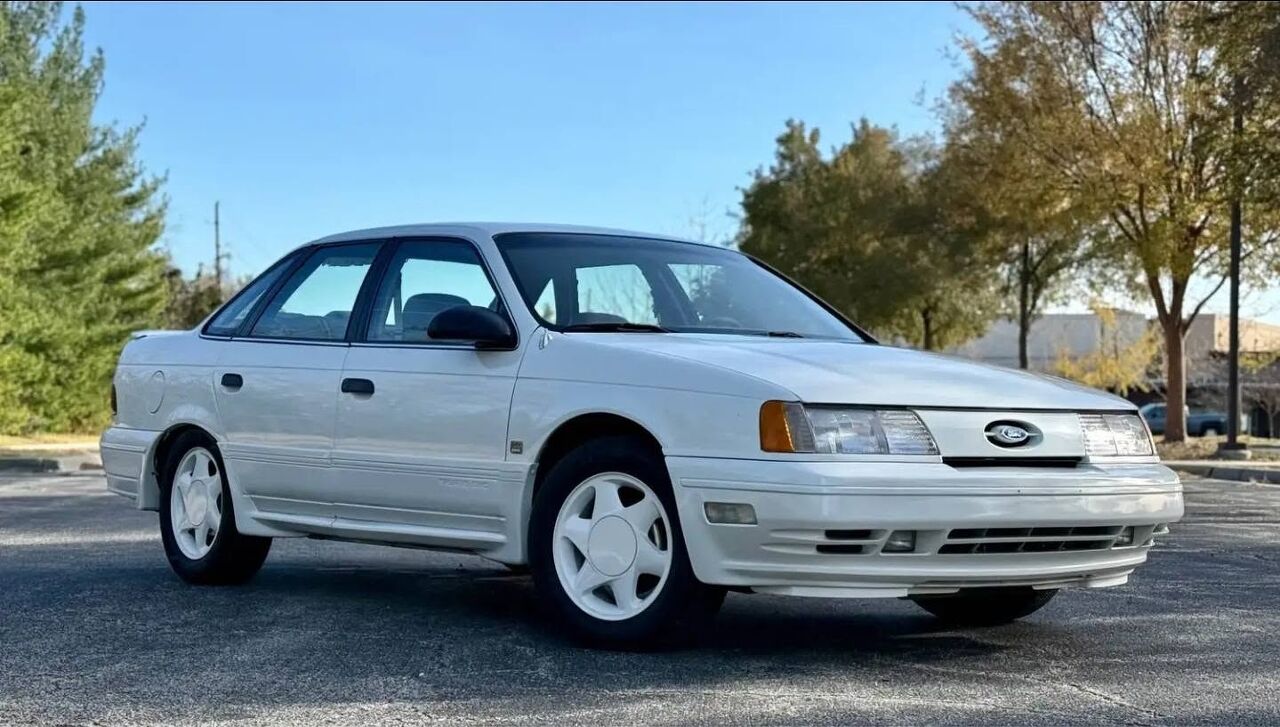
There was also a rare and elusive SHO Plus trim, offered only in 1991 and across 2,500 examples. In addition to all the standard SHO features, the Plus received a fiberglass hood with a power bulge design and a rear spoiler. It wore “24V DOHC” badges on both front fenders, and body colored trim strips on the exterior where regular SHOs had black.
All Plus versions received black trim on their B and C pillars, and Taurus badges that were body colored. Chrome window trim was added from the Taurus LX. While undocumented, it seems some examples of the Plus received the Police Package grille with the additional slats. The Plus version was the end of the first-gen SHO’s run, and closed out the first generation Taurus as a new one arrived in 1992. We’ll cover sales and pricing 1986 to 1991 in our next installment.
[Images: Ford, seller, Aston Martin]
Become a TTAC insider. Get the latest news, features, TTAC takes, and everything else that gets to the truth about cars first by subscribing to our newsletter.
