

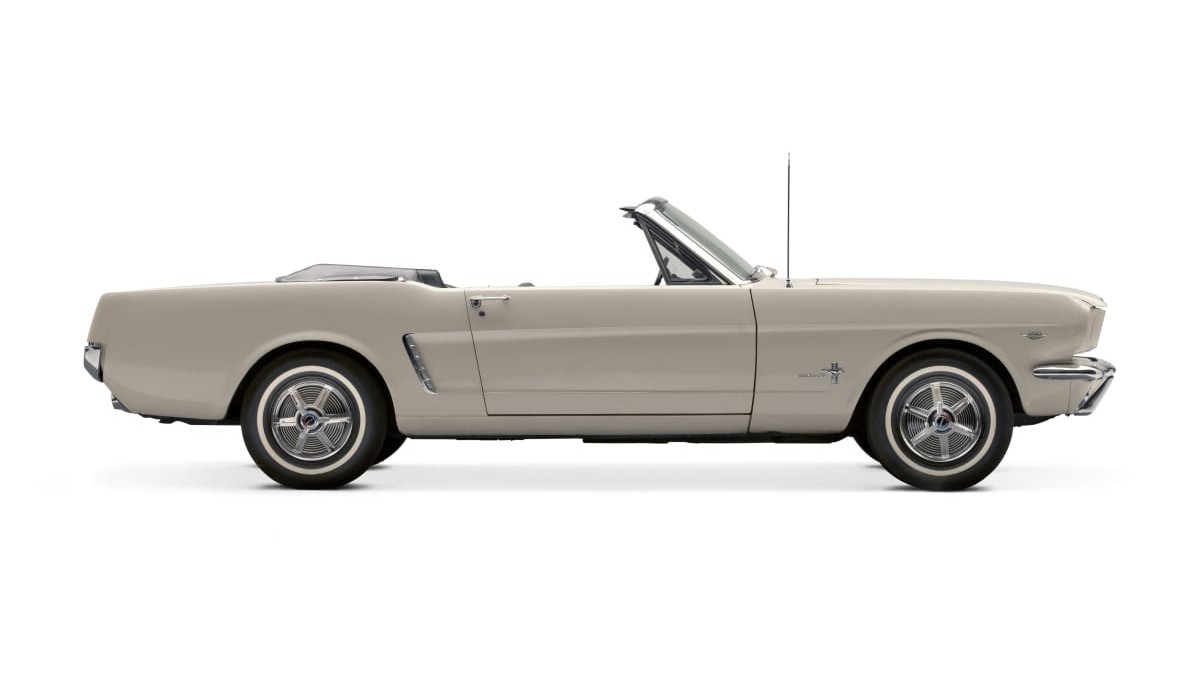
On March 2, 1966, Ford Motor Company celebrated the production of the one millionth Mustang. At the same time, it celebrated the return of Mustang number 001 thanks to a trade with the man who unknowingly purchased the first Mustang on record, Captain Stanley Tucker.
For the Captain, it was love at first sight. As the story goes, he walked into George Parsons Ford in St. John’s, Newfoundland, Canada, and the Wimbledon White Mustang convertible stopped him in his tracks. As soon as he rested his eyes on the pony car and admired its black vinyl interior, he knew it had to be his. There was just one problem: all this occurred on April 14, 1964, three days before Ford would officially make the Mustang available for purchase.
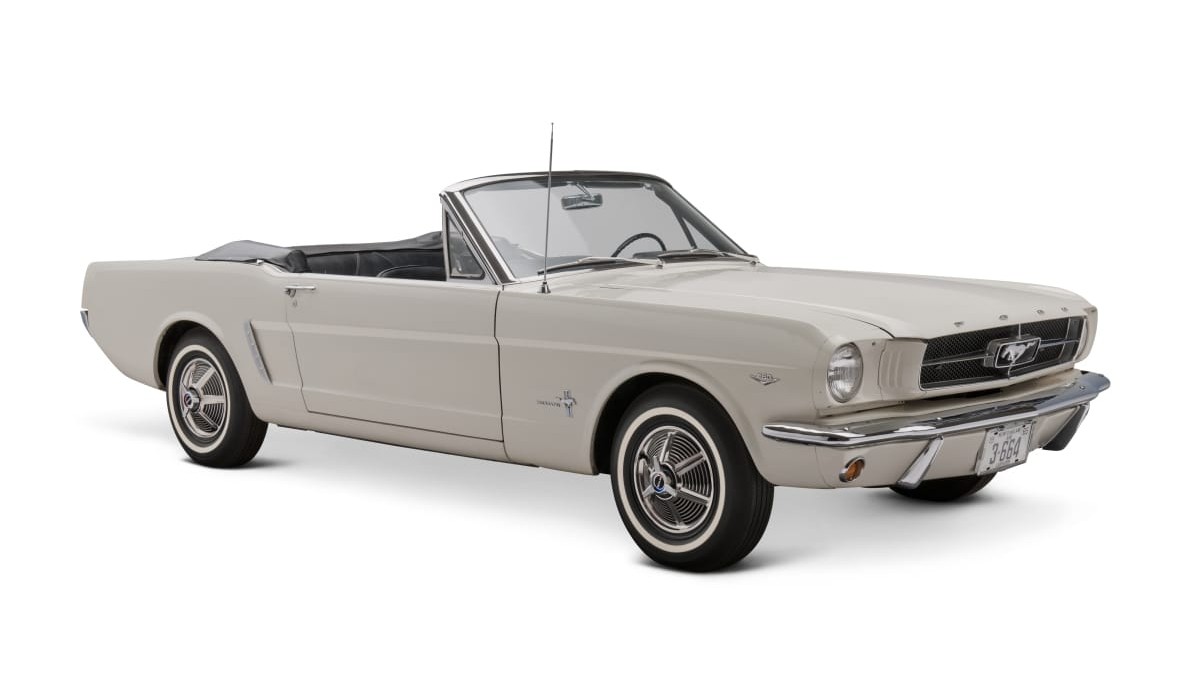
What the Captain was looking at was one of 180 pre-production Mustangs built between February 10 and March 5, 1964; Ford strictly forbade these cars to be sold in any scenario. They served two purposes: First, to familiarize workers and supervisors with the build process; second, to create a batch of physical cars to display before the official launch date. Fun fact: Twelve of these cars were put to use in Ford’s Magic Skyway ride at the 1964 New York World’s Fair.
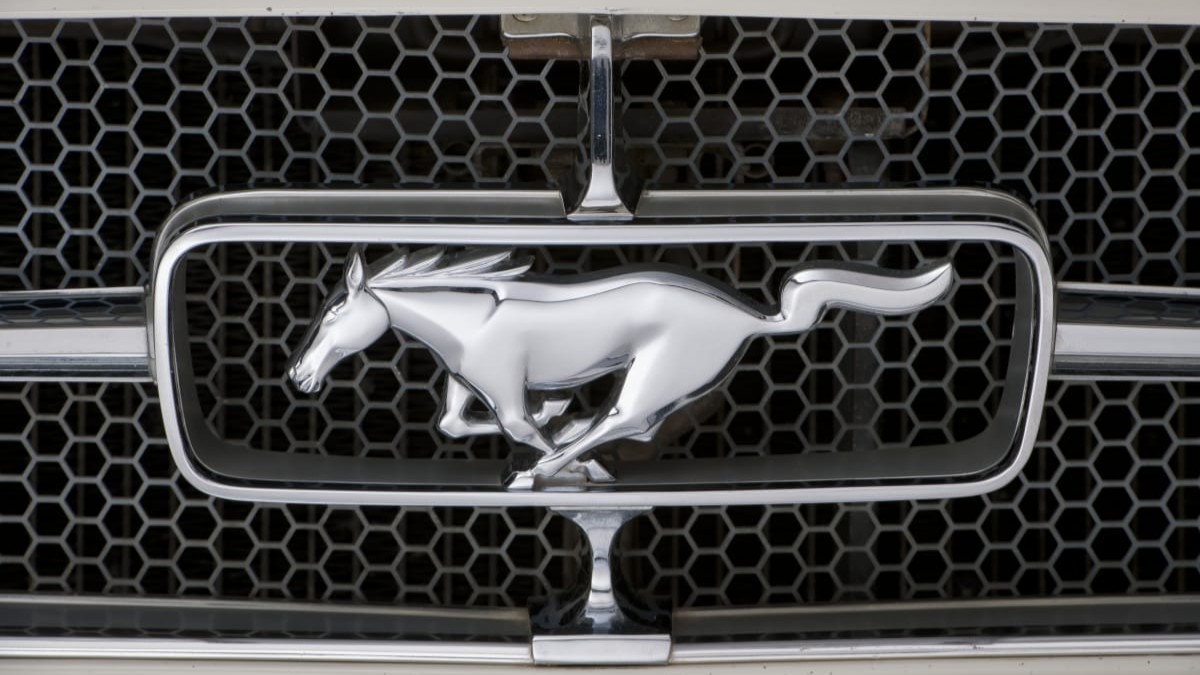
A closer look would show minor imperfections that would prove the pre-production pony cars were mainly for training purposes: the hood fit a little crooked, the door lock knobs had no grommets at their base, the engine block was gray instead of black, and the grille had more of a gray tint than the blueish that would be seen on the production Mustangs.
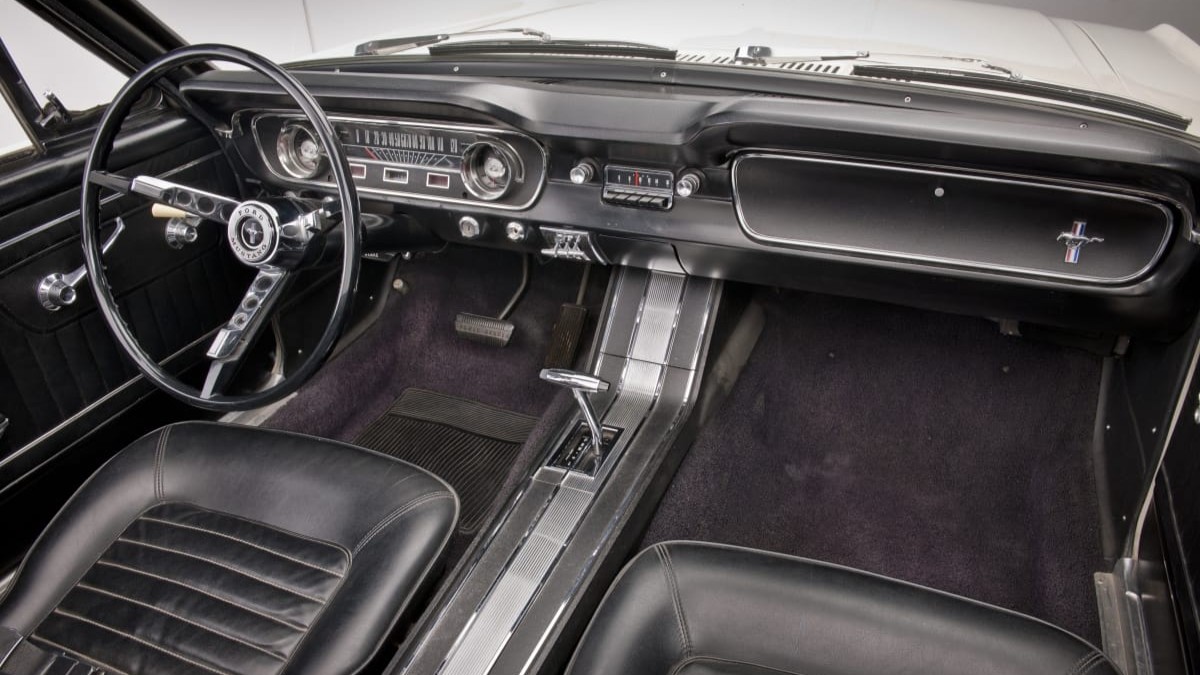
Even with all these imperfections, Captain Stanley Tucker was still head over heels to the point he was able to smooth-talk first-year salesman Harry Phillips into handing him the keys.
“I told him, ‘Come in, give us a deposit on it, we’ll hold it, but you can’t drive it, you can’t take it out, and it’s gonna be there in the showroom,’” Phillips would tell CBC News. “Every day, for seven or eight days, he used to come into the showroom, look around, walk around, and make sure nothing happened to it.”
For a short time, Tucker was the only person on planet Earth to own a Ford Mustang.
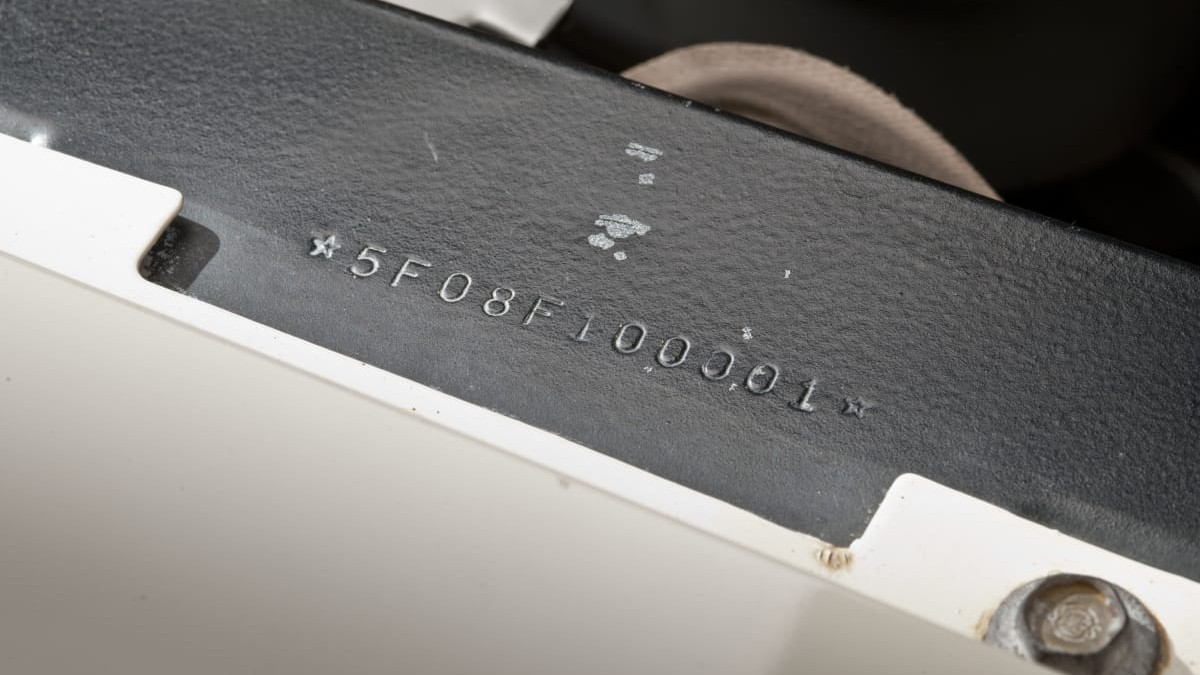
Several months after the purchase, Ford representatives came to the dealership in search of the car. Harry and the rest of the staff informed the representatives that the car was sold, and they didn’t know what happened to it once it left their showroom.
Soon after, Ford tracked down the Captain to ask him to return the car, yet their efforts would be unsuccessful. Stanley knew what he had and knew he had had leverage in this particular situation. In an interview with CBC News in 1989, he spoke of the first exchange: “I said ‘I’m sorry, you’ve cashed my cheque and I’ve got the car and I’m very happy with it,’ and I just refused to give them the car back.”
He would put 10,000 miles on his Mustang over the next two years when Ford would make another run at acquiring his historic pony car.
At this point, Ford was done playing games. It had been two years, and the company was fast approaching one million Mustangs built. The manufacturer twisted the Captain’s arm enough to agree to a deal: He would trade in his Mustang for the one millionth Mustang, to be built to his exact specifications. When Ford sent the option sheet, the Captain filled it out by covering the entire sheet with one large “X.” He wanted every option imaginable outside of the “K-code” High Performance 289ci V-8. Why? The High Performance 289 had a shorter warranty period than the other available engines. His Silver Frost convertible was built, and Ford now had Mustang number 001 in its grasp.
The Wimbledon White 1965 (or 1964½ if you’re fancy) Mustang convertible was eventually donated to The Henry Ford Museum, where it is pampered and set on display. If you find yourself in Dearborn, Michigan, you can see it today. Unfortunately, the one millionth Mustang did not get the same treatment.
It would be easy to provide grace to someone who unknowingly bought a car of historical value and treated it like any other car. The Captain does not deserve to have this excuse — not when Ford Motor Company’s leadership said, “Here is the one millionth built; come take photos with us.” Despite knowing what he had, Stanley used the millionth Mustang heavily all year, which included harsh Canadian winters and even utilized it to tow a trailer.
According to Motor Trend, sometime during the 1970s, Tucker sold the car to his mechanic, and all the documentation for the vehicle was lost to history.
The first Mustang is in a museum and the millionth for all we know is rotting in a Canadian junkyard, if it has not already been destroyed by the elements. So, we know what happened to the first Mustang, we somewhat know what happened to the millionth, and we know Captain Stanley Tucker has no regrets, but what about Harry Phillips, the original salesman?
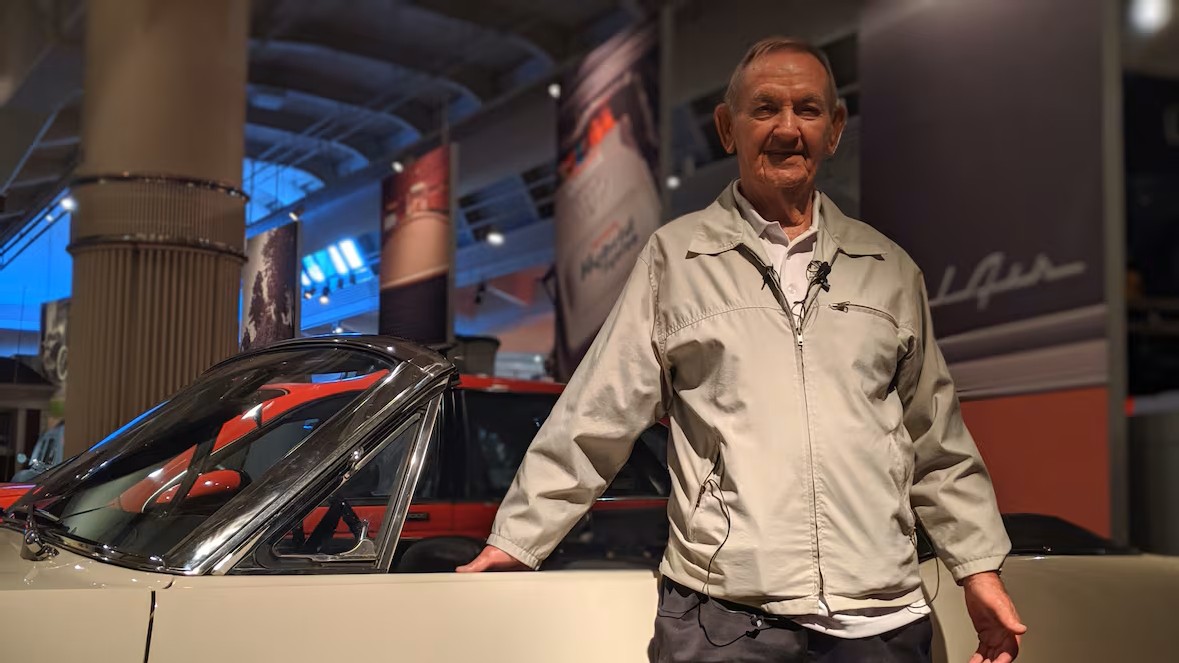
After that day in April 1964, Phillips would never see Mustang number 001 ever again … that is, until his granddaughter Stephanie Mealey created a campaign called “Send Harry to Henry.” The point of the campaign was to get him to Dearborn where the historic pony car was on display. It was successful, and at 85 years old, Harry commented, “It’s just the way I saw it. Like a new car.”
It’s amazing when you think about how automobiles can hold more than just seats, a drivetrain, and badging. Sometimes the vehicles we drive and admire can hold stories and clues to the past. Times when things were prosperous and times when things might have been so bad that taking a drive was the only escape you had available.
So, what story does your classic have? Tell us in the Comments below.
