

The Hyundai Kona small SUV is the Korean brand’s best-selling model in Australia, and the Kona Electric is also its most popular electric vehicle (EV), but it’s under threat from various new competitors from China, including the GWM Ora 5, which arrived in Australian showrooms back in June.
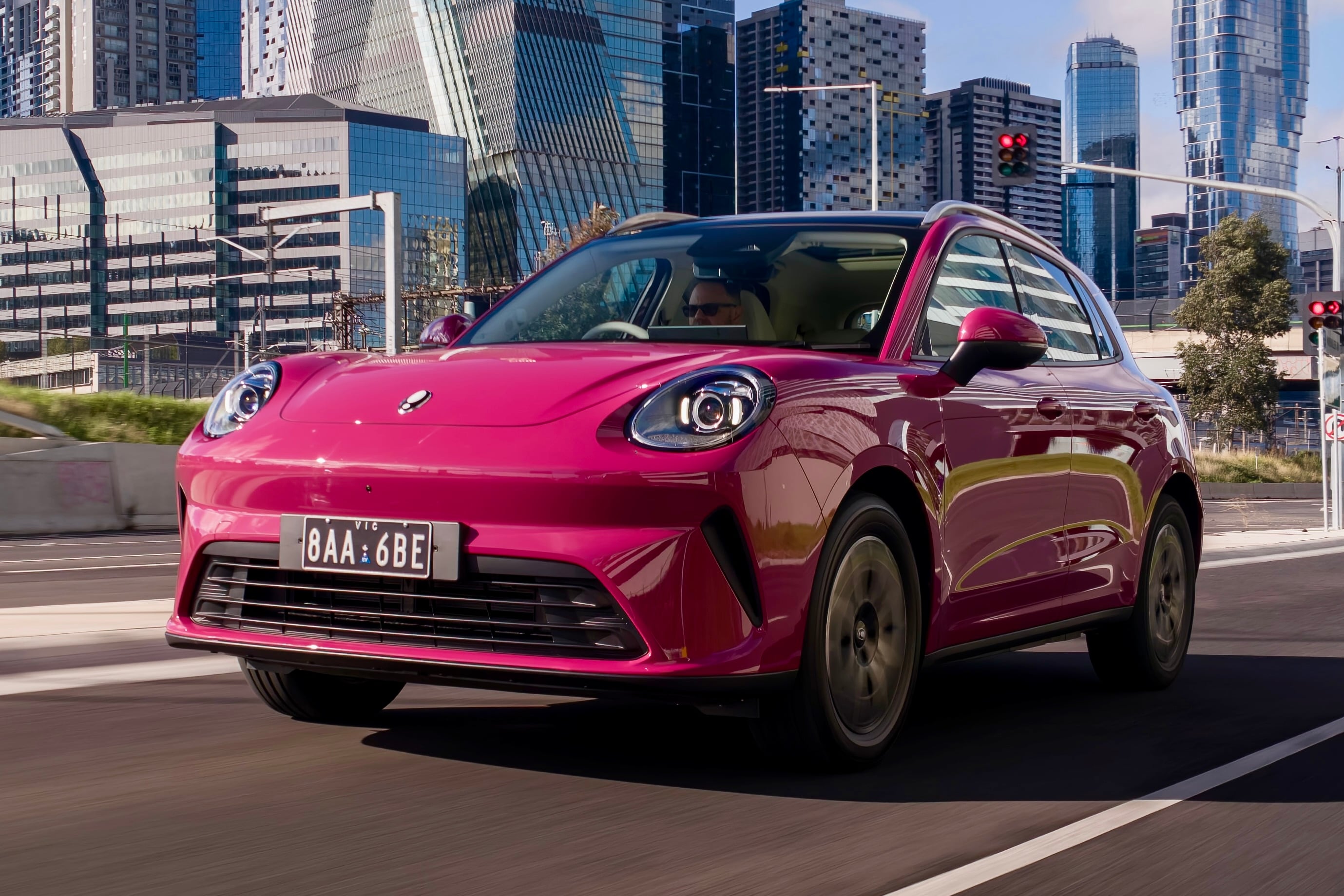
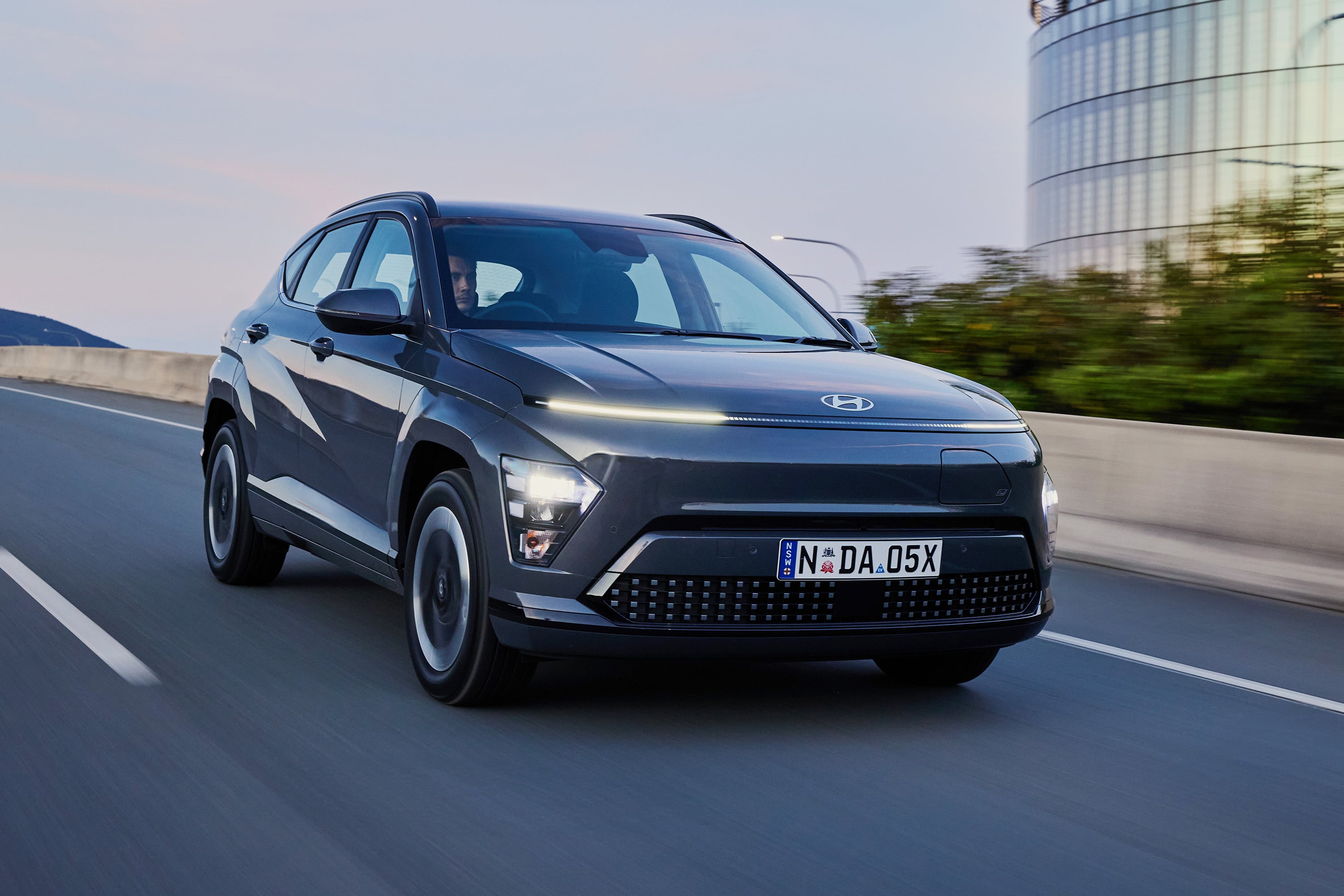
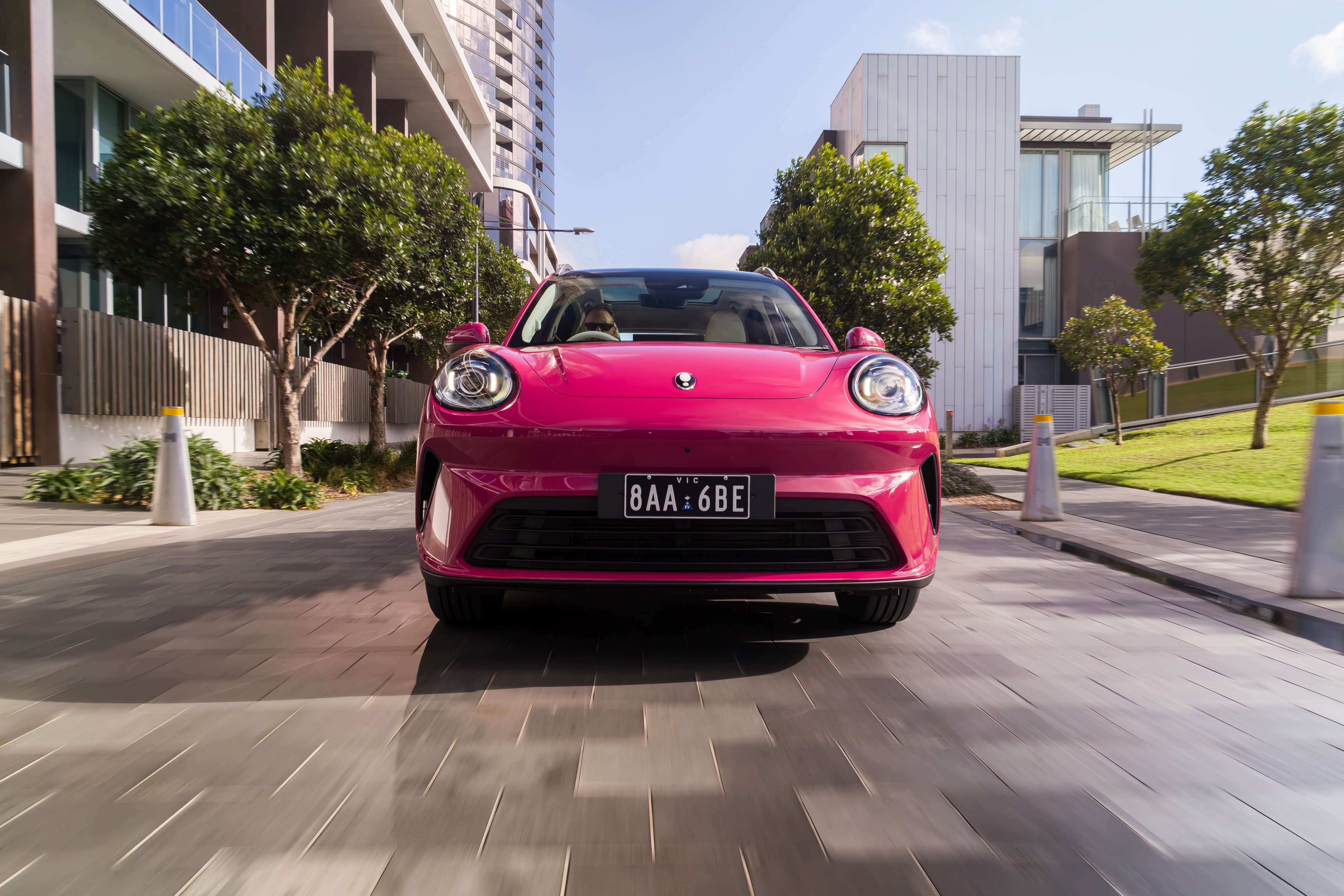
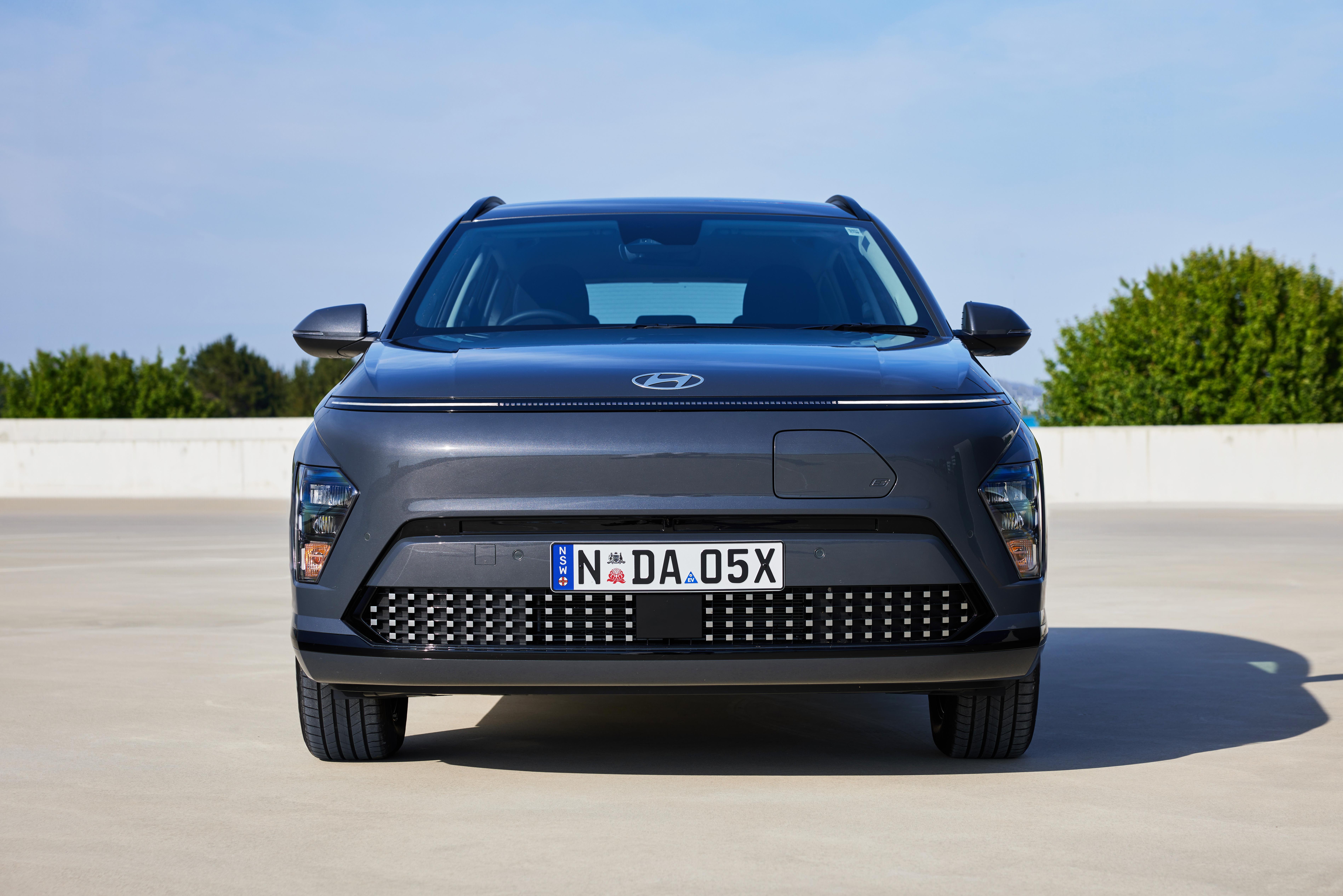
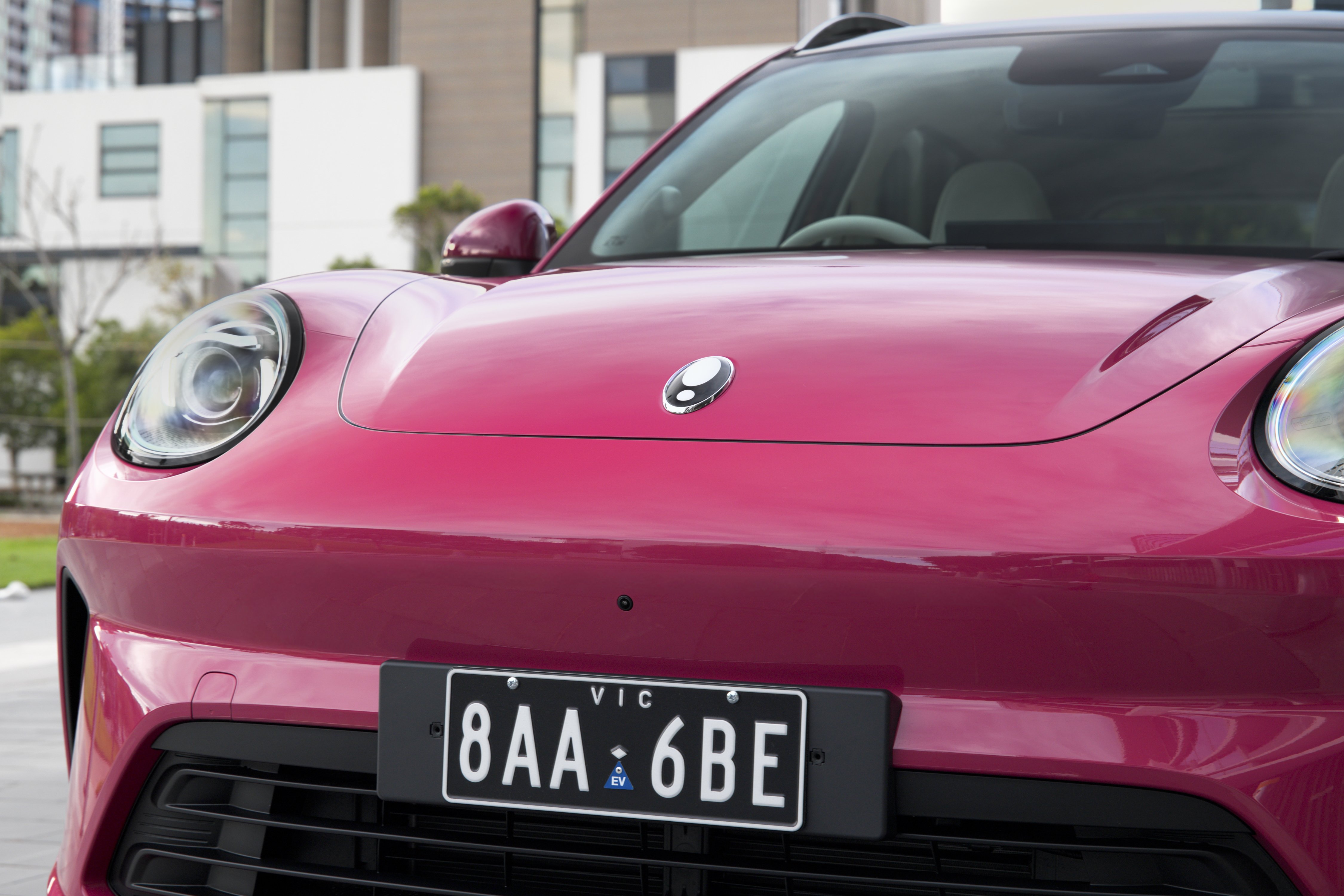
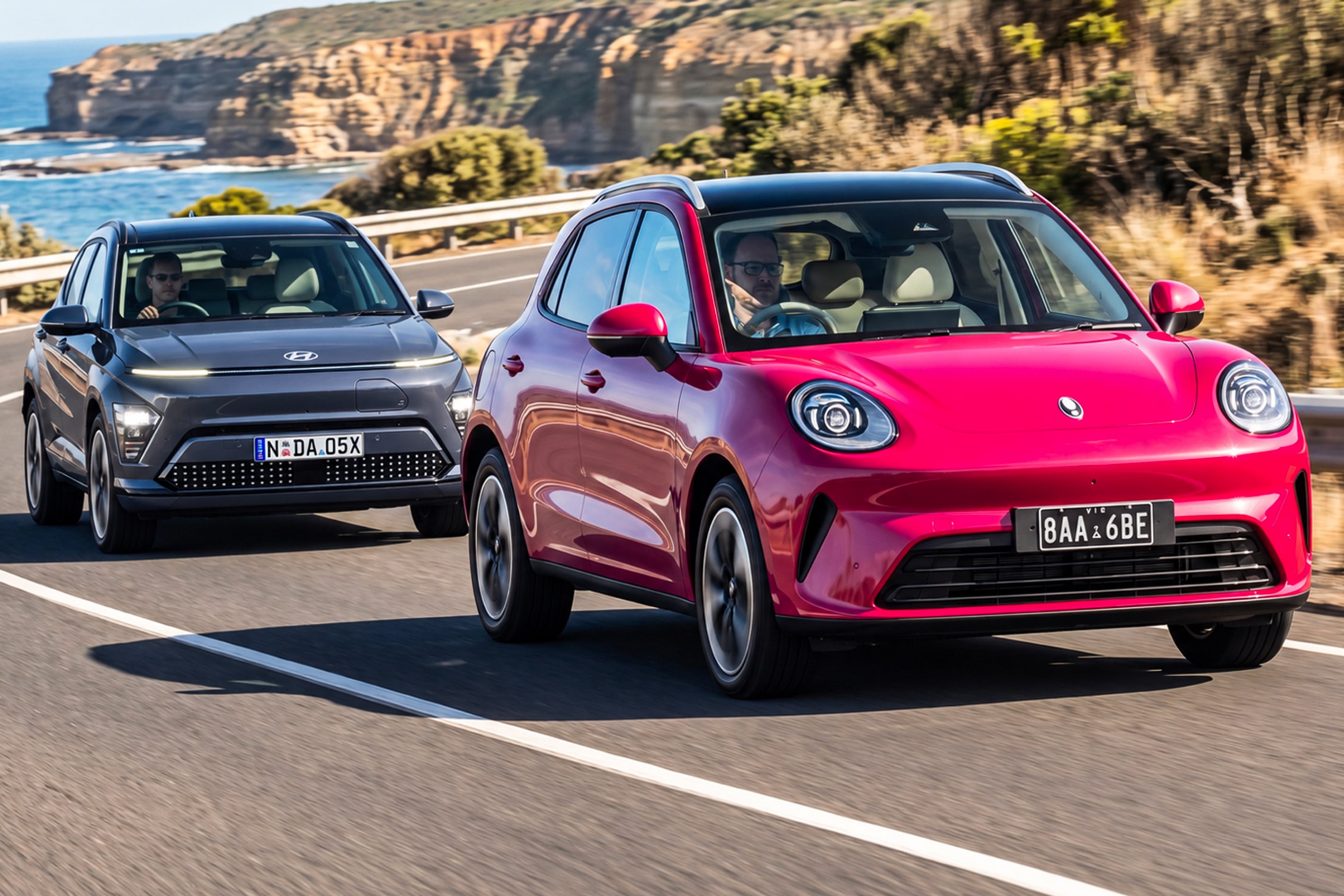
Both are small, five-door, five-seat electric SUVs, but their respective designs alone represent different approaches and completely different characters, with the Ora 5’s more upright stance and undeniable charm aimed at a different audience to the sleek, futuristic lines of the Kona Electric.
Ultimately, they’re designed to do the same thing, but the cute and playful look of the Ora 5 and the more angular, less organic shape of the Kona Electric may be the deciding factors for many in the market for a compact battery-powered crossover, so for them it may come down to only taste and price.
In this spec battle, however, we look beneath the skin of these two wonderfully different approaches to the same challenge of moving up to five people with battery-electric power with grace, pace and space, to find what set these two models apart beyond their designs and price tags.
How much do they cost?
The GWM Ora 5 is offered in two model grades, kicking off at $33,990 drive-away for the entry-level Lux and topping out at $36,990 drive-away for the Ultra.
|
Model |
Price before on-road costs |
Drive-away pricing |
|---|---|---|
|
GWM Ora 5 Ultra |
– |
$36,990 |
|
Hyundai Kona Electric Standard Range |
$46,000 |
$47,990* |
*Offer valid until December 31, 2026
The five-grade Hyundai Kona Electric lineup starts at $46,000 before on-road costs for the Standard Range variant, offered with a 99kW powertrain, while a more potent 150kW Extended Range also adds a larger battery for $50,000 plus ORCs. However, both are currently on offer from $47,990 and $51,990 drive-away, respectively, until December 31.
All other Kona Electric grades also score the beefier 150kW Extended Range powertrain, including the mid-spec Elite for $53,000 plus ORCs, the Premium for $60,000 plus ORCs, and the range-topping Premium N Line for $63,000 plus ORCs.
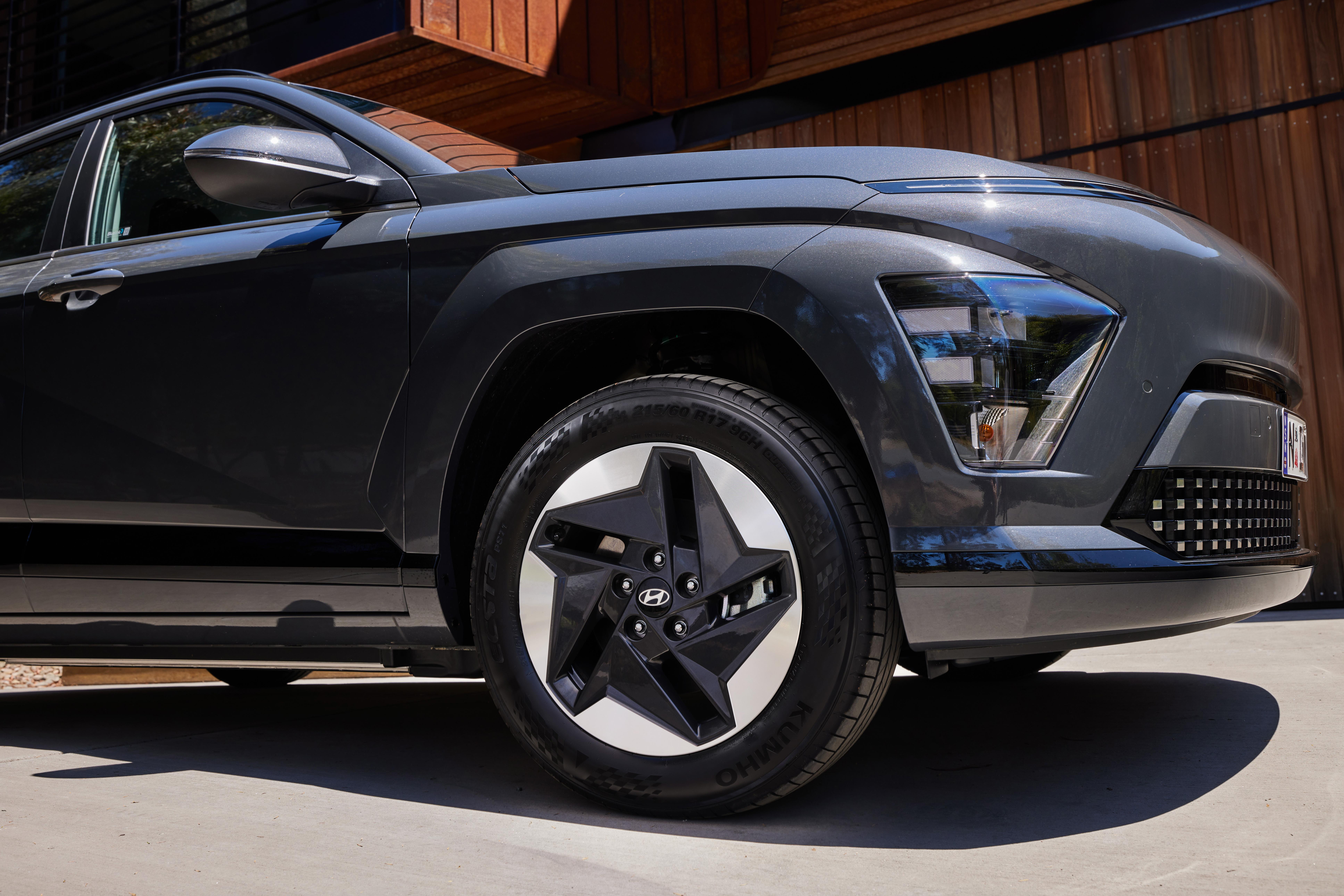
The cars shown here both wear premium paint, the Ora 5 in striking Flamingo Pink for an extra $595, which is the same price charged for the Meta Blue hue on the Kona Electric.
Pepper White is the only exterior paint colour that doesn’t cost extra for the Ora 5, while Atlas White and Mirage Green are standard colours for the Kona Electric.
What do you get?
Given the price difference between these two models, we’ve compared the range-topping Ora 5 Ultra SUV with the entry-level Kona Electric Standard Range, which are separated by $11,000 based on current promotional drive-away pricing for the Hyundai.
If you’re not convinced by the Ora 5, the higher model grades of the Kona Electric cost considerably more, but overall these vehicles are closely matched in terms of size and capability.
The Kona Electric measures 4355mm long, while the Ora 5 is almost 120mm longer at 4471mm, with the GWM having a 60mm-longer wheelbase as well as shorter front and rear overhangs than the Hyundai.
The Ora 5 is also 8mm wider at 1833mm, while its 1641mm height is 61mm taller than the Kona’s.
Standard equipment on both vehicles include:
- LED headlights with auto-high beam
- LED tail-lights
- Rain-sensing wipers
- Heated, power-folding mirrors
- Keyless entry, start
- Digital instrument cluster
- Touchscreen infotainment display
- DAB+ digital radio
- Bluetooth connectivity
- Apple CarPlay/Android Auto
- Wireless phone charger
- Satellite-navigation
- Connected services
- Over-the-air software updates
- Power windows front and rear
- Dual-zone climate control
- Rear passenger air vents
- Reversing camera
- Rear parking sensors
- Space-saver spare wheel
- Vehicle-to-load (V2L) capability
The Ora 5 Ultra comes with 18-inch alloy wheels compared to the Kona’s 17-inch rims, and also adds rear privacy glass, a panoramic glass roof, and a power tailgate as standard.
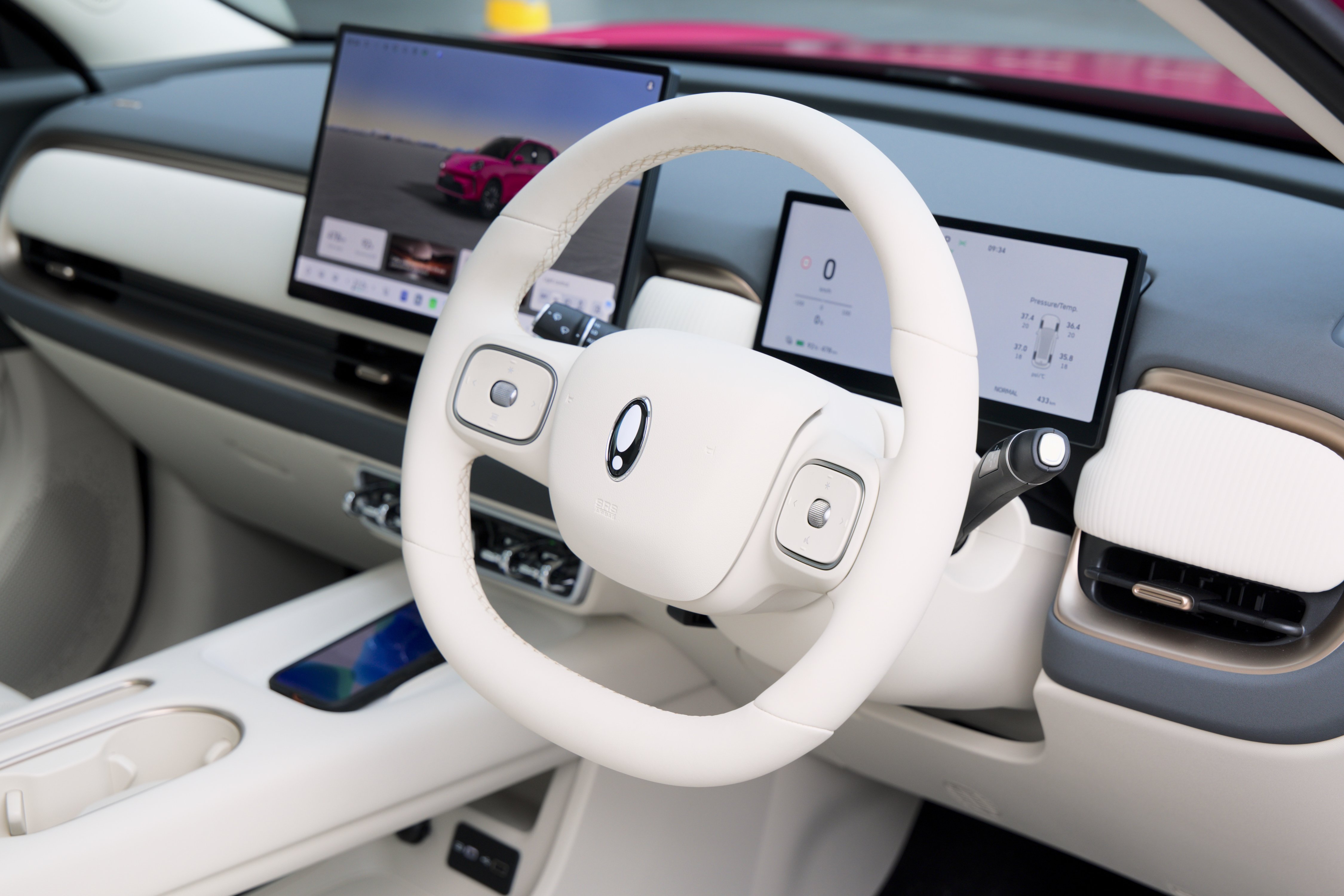
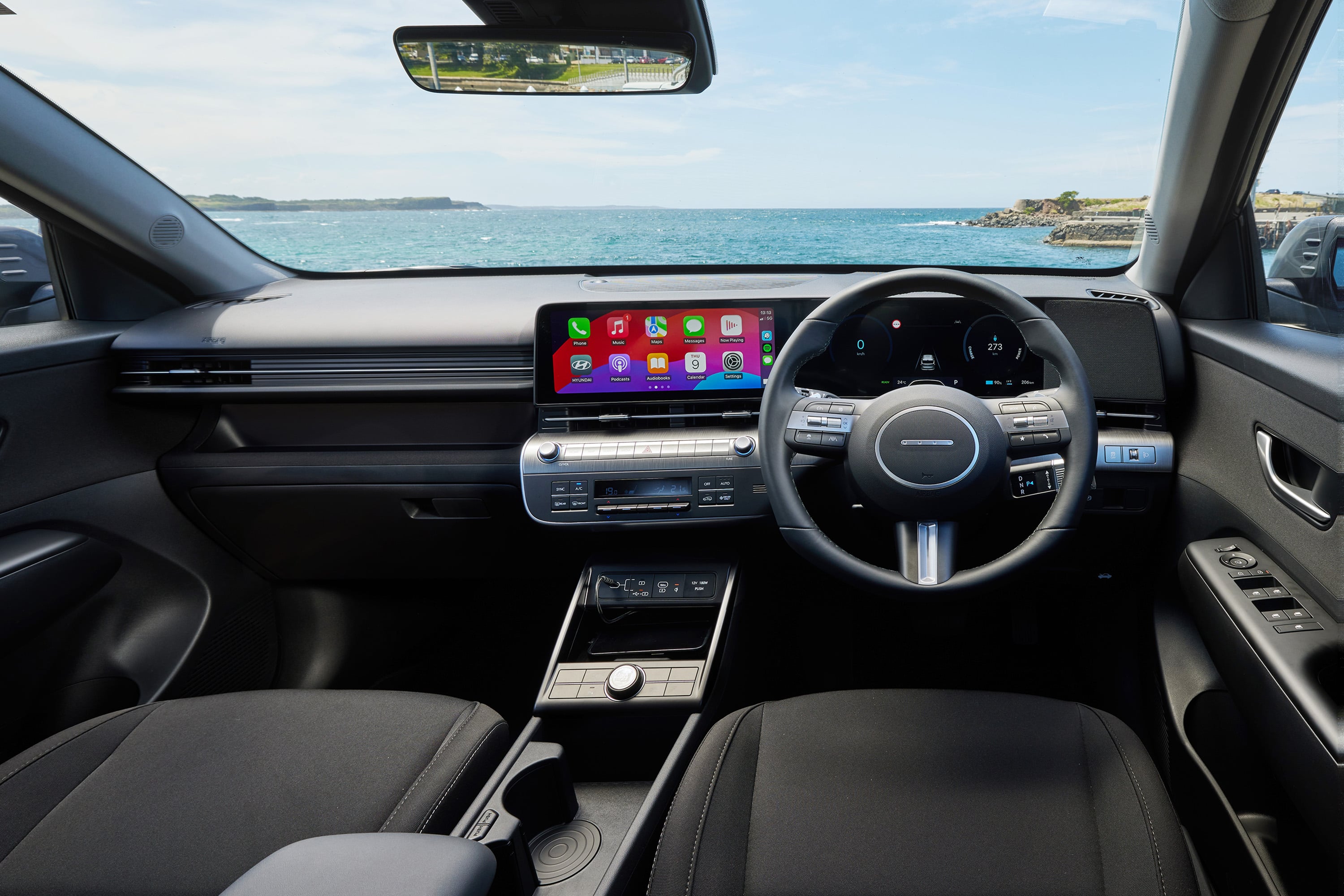
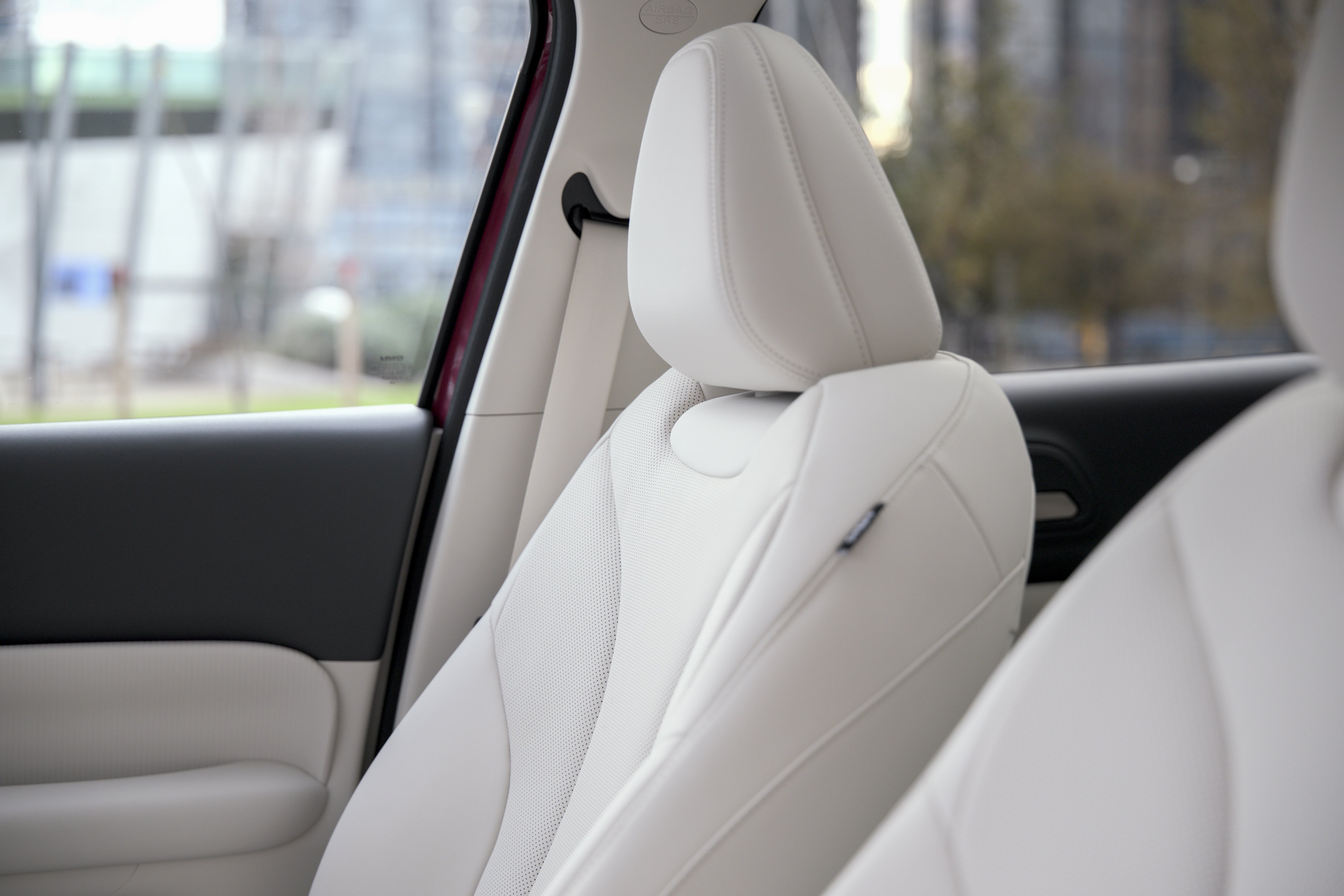
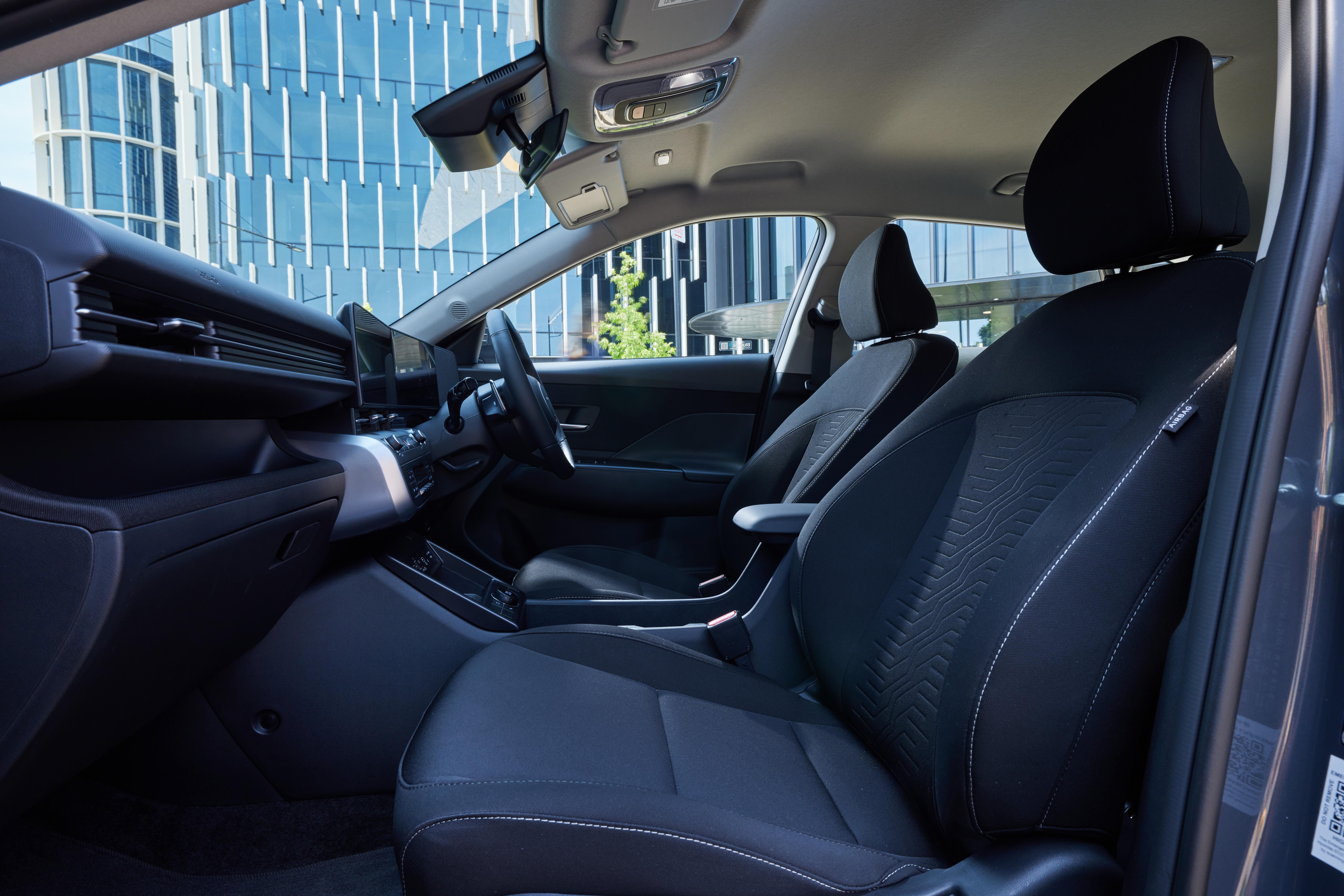
Inside, the Ora 5 Ultra has synthetic leather seat upholstery, plus power-adjustable, heated and ventilated front seats and a heated steering wheel. The Kona Electric has black cloth seat upholstery with manually adjustable front seats.
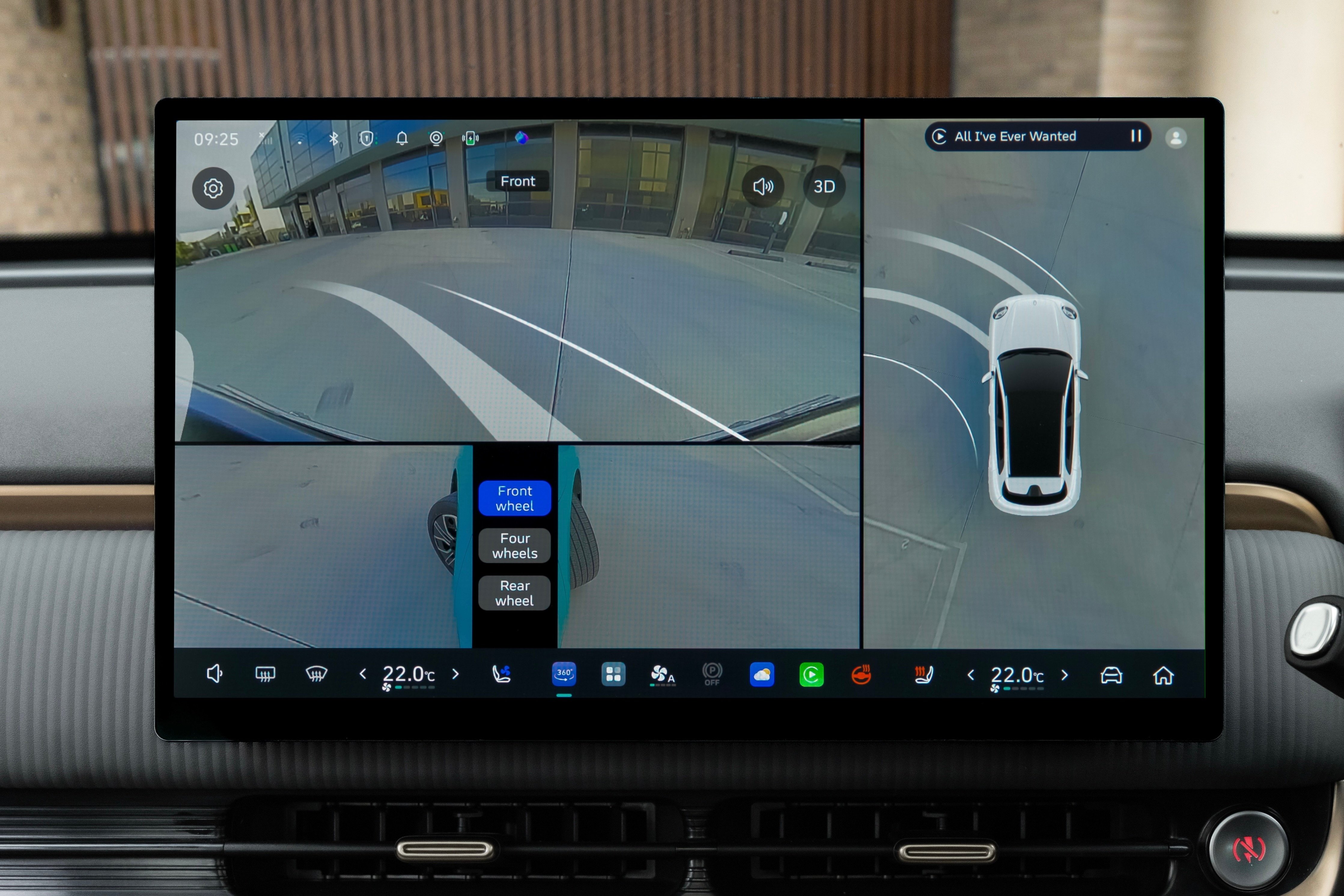
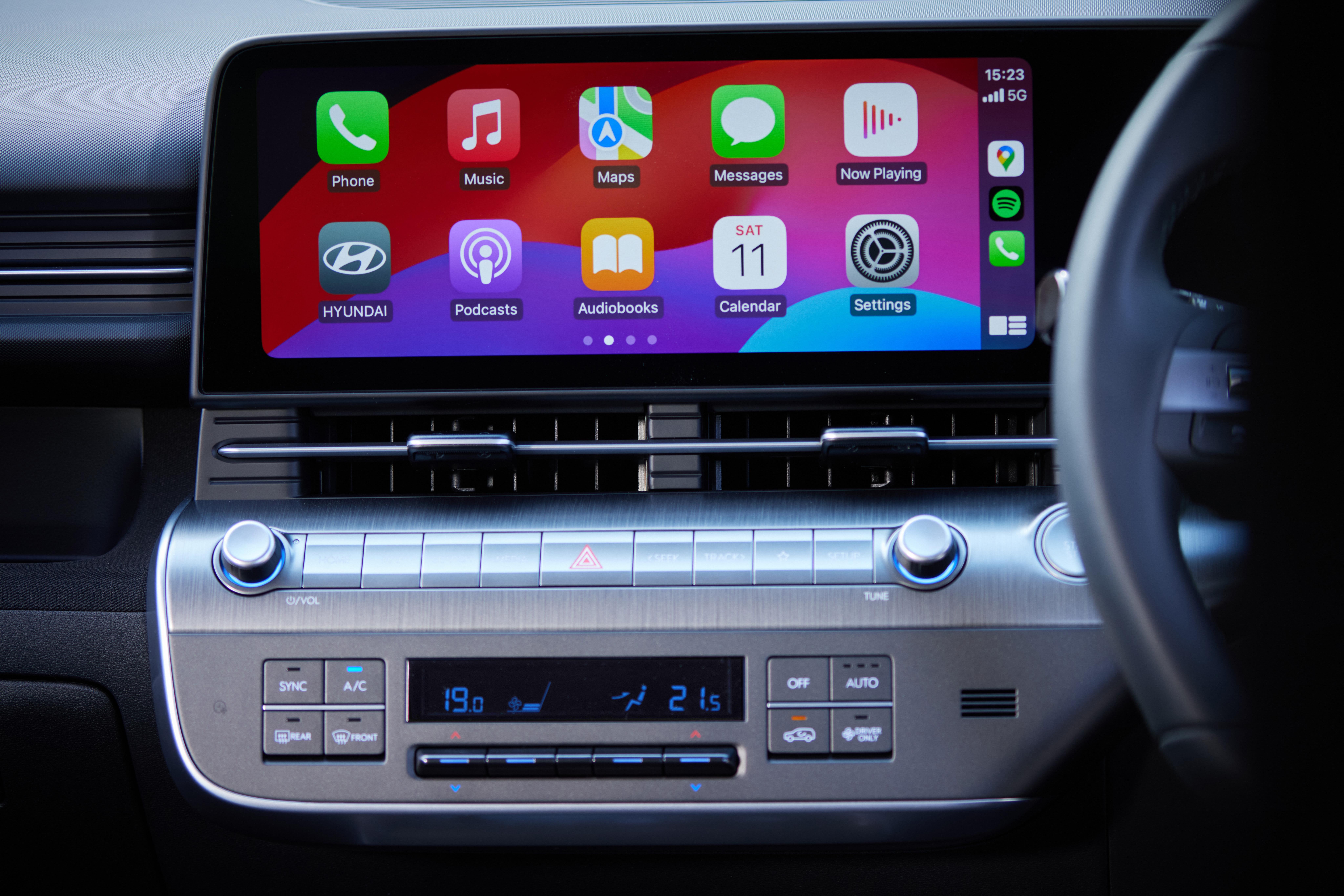
However, the Kona Electric hits back with a larger 12.3-inch digital instrument cluster compared to the Ora 5’s 10.25-inch digital display, but the Ora 5 has a bigger 14.6-inch infotainment touchscreen. It also has a full 360-degree camera showing multiple views and angles, which can be accessed by a steering-wheel shortcut button.
The Kona has a reversing camera with guides, but it doesn’t offer surround-view monitor, and while both have front and rear parking sensors, only the Ora 5 Ultra comes with a powered tailgate.
The Ora 5 Ultra also has ambient lighting with 64 colours and various sequences, plus a nine-speaker stereo compared to the Kona Electric’s six speakers.
It’s worth noting that many of these features are standard in higher grades of the Kona Electric, which of course cost more than the entry-level variant we’re comparing here.
Are they safe?
The Hyundai Kona Electric wears the same four-star ANCAP safety rating as the rest of the Kona lineup, achieved in 2023. The GWM Ora 5 is currently unrated, as it hasn’t yet been assessed by the independent auto safety organisation.
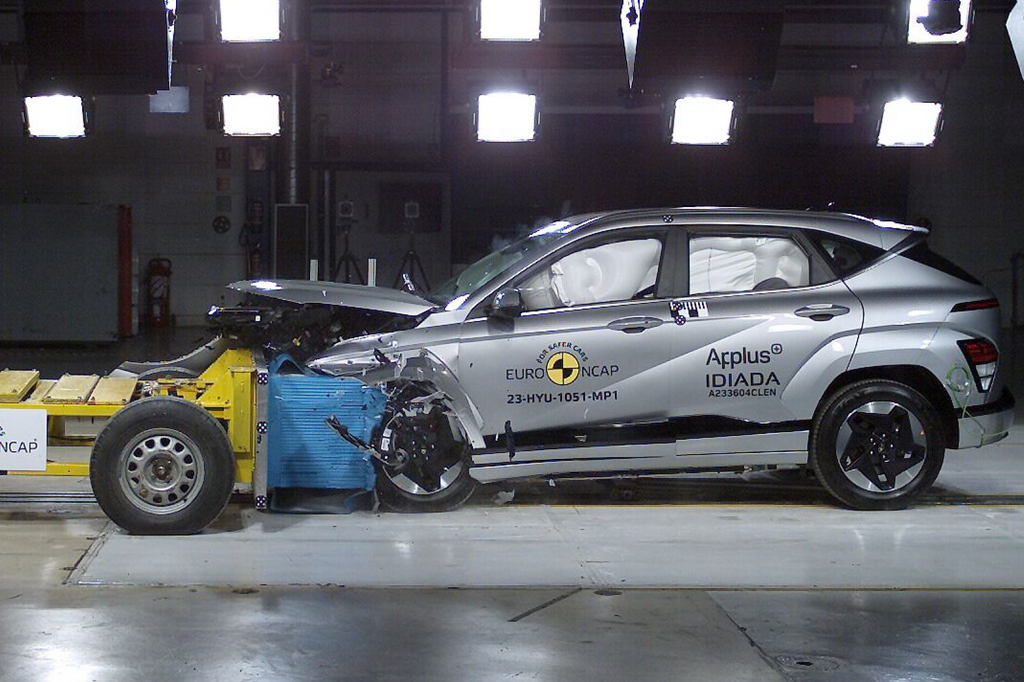
|
Category |
GWM Ora 5 SUV |
Hyundai Kona |
|---|---|---|
|
Adult occupant protection |
– |
80 per cent |
|
Child occupant protection |
– |
84 per cent |
|
Vulnerable road user protection |
– |
64 per cent |
|
Safety assist |
– |
62 per cent |
Neither has been tested to the latest ANCAP protocols, which were introduced in 2026, with the Kona’s 2023 score valid until December 2031.
Standard safety features across both models include:
- 7 airbags
- Autonomous emergency braking incl. pedestrian, cyclist detection
- Forward collision warning
- Adaptive cruise control with Stop & Go function
- Traffic sign recognition
- Blind-spot detection
- Blind-spot collision avoidance
- Lane-keeping assistance
- Rear cross-traffic alert
- Door-opening warning
- Driver attention monitoring
- Front and rear parking sensors
- Reversing camera (360-degree camera on Ora 5)
- Tyre pressure monitoring
- 2 x ISOFIX child seat mounting points
The Ora 5 has child presence detection, a feature assessed by ANCAP under its current protocols, but the Kona Electric has extra features included in its Forward Collision-Avoidance Assist 2.0 system, including lane-change collision avoidance, in addition to Leading Vehicle Departure Alert.
What are they like on the inside?
The Ora 5’s larger external dimensions also mean more cabin space, with an especially roomy second row compared to the Hyundai. However, its second-row seat lacks a fold-down centre armrest, and the funky ambient lighting covering the dash and front door trims doesn’t continue to the back.
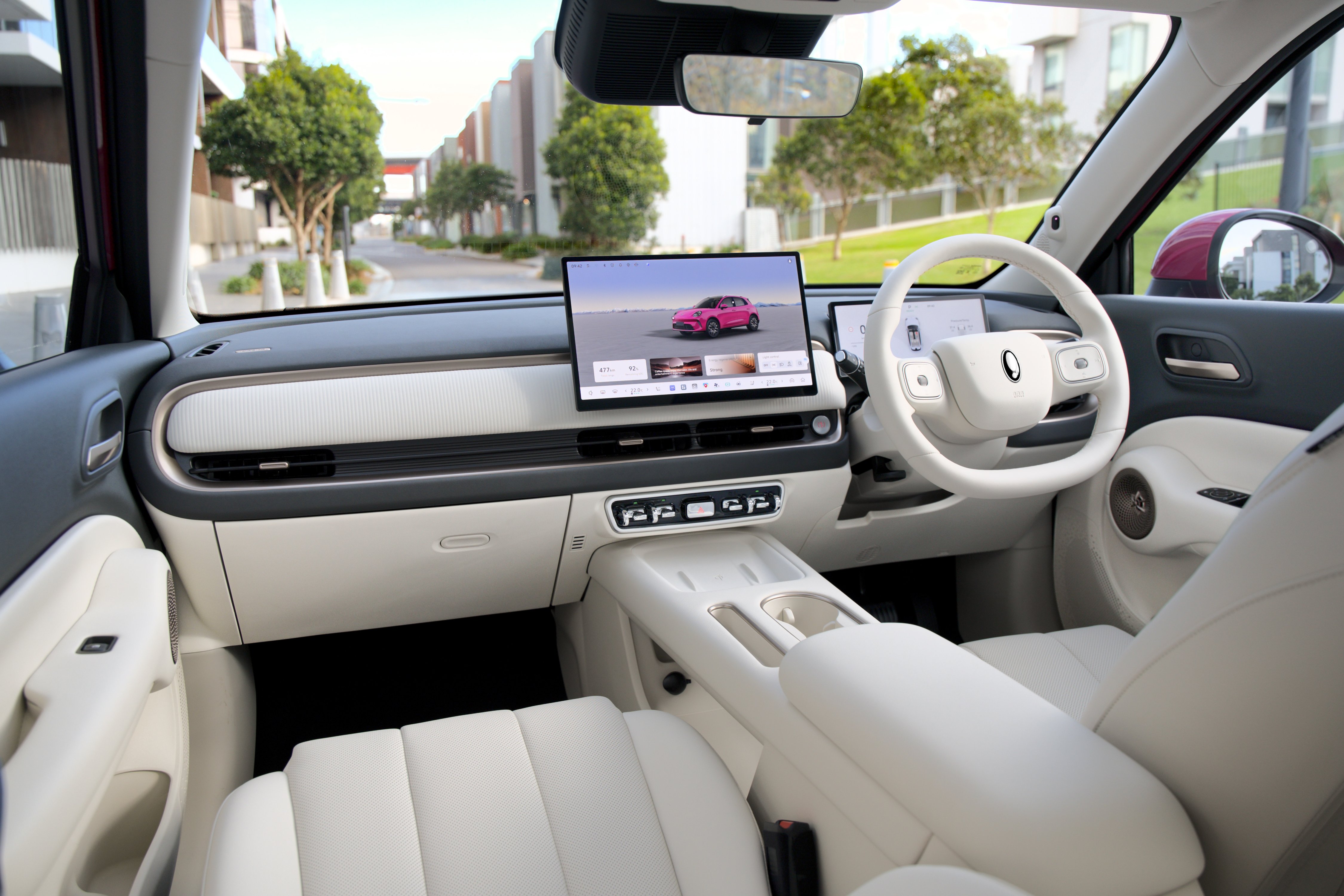
The GWM does have a row of beautiful aircraft-style chrome toggle switches beneath its centre touchscreen for rapid access to air-conditioning, driving modes and the hazard lights, even if the panoramic glass roof is operated through the touchscreen.
The latter has a customisable menu, allowing you to bring frequently used functions to the home screen, and it also has two programmable quick-access buttons on the steering wheel.
There’s also a centre console with good storage options, and even though the centre cubby is a tad small, there’s a second level of storage underneath, offering ample space below the cupholders.
The Kona has far more buttons, including for the separate climate-control display and drive modes, as well as a programmable steering-wheel button for your preferred functions.
The Hyundai has a deeper centre console, with one level to the Ora’s two, but also has stowable cupholders and easier-to-access USB-C ports, as well as a shelf on the front passenger-side dashboard above the glovebox.
It also has deeper door bins and a fold-down rear armrest, and there’s also only a single USB-C port on the back of the Ora 5’s centre console, where the Kona Electric offers two, as well as a 250V power socket as standard.
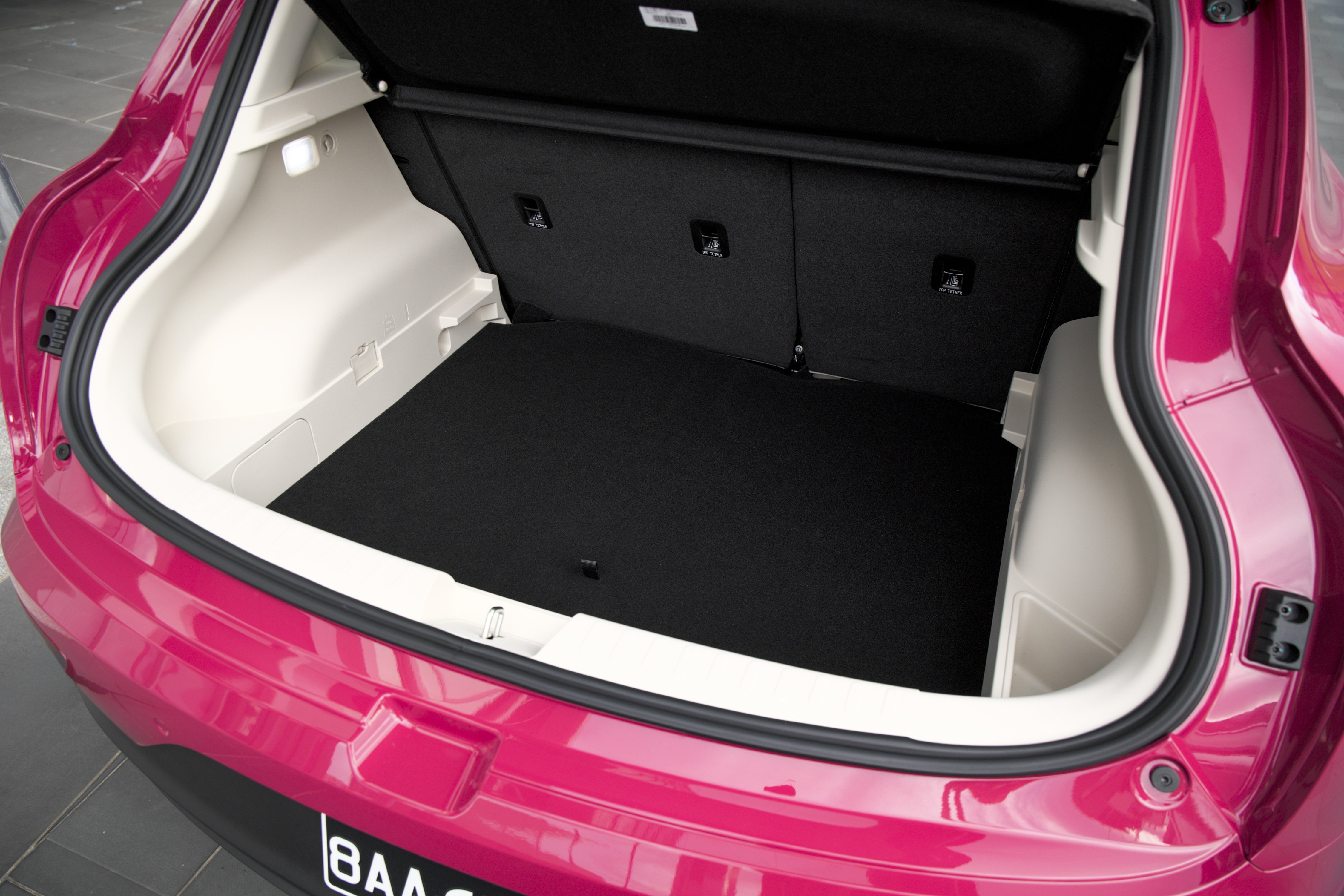
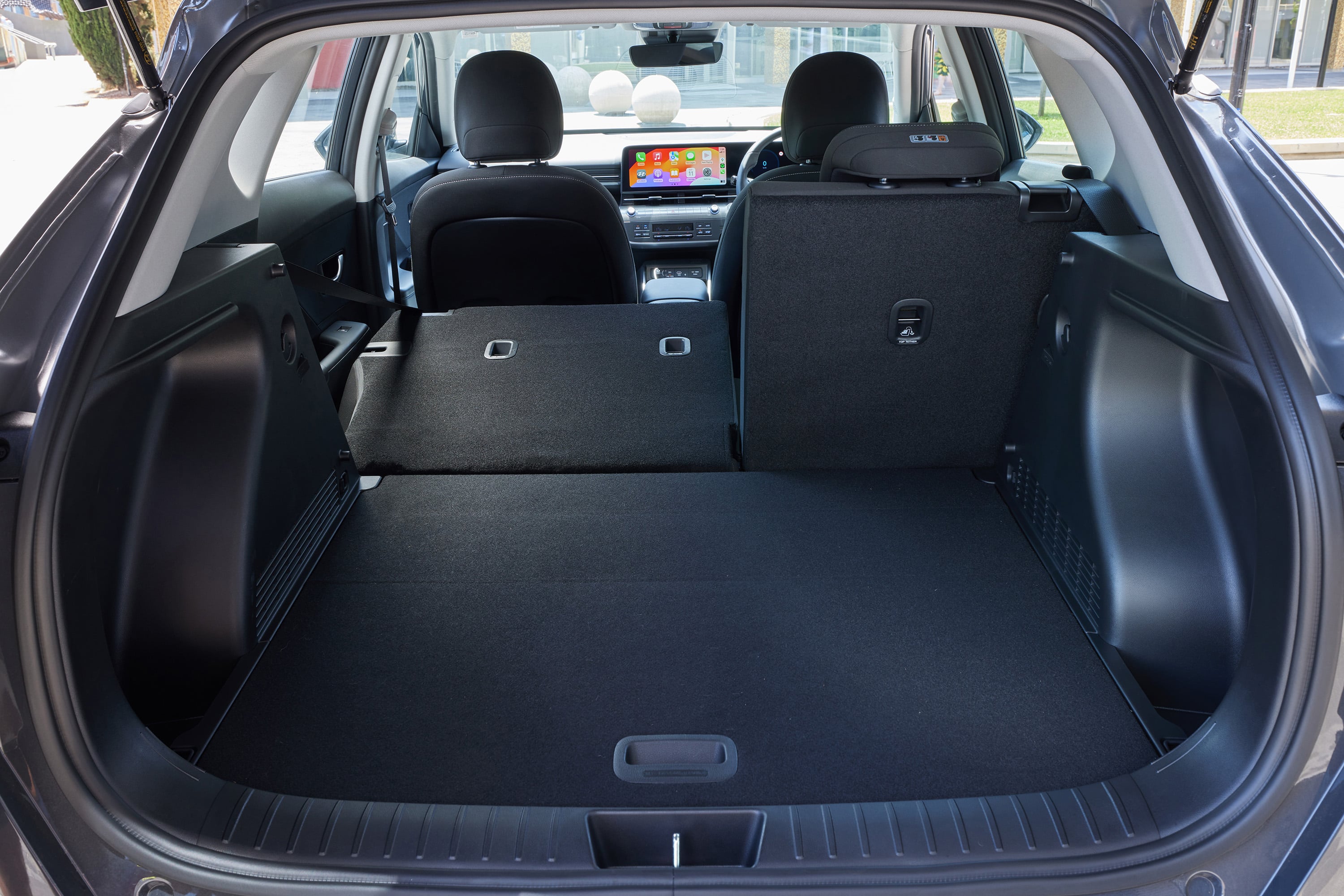
The Kona Electric also has a 407-litre boot (with its standard cargo shelf in place), which is expandable to 1241L with the second-row seatbacks folded down, compared to the Ora 5’s 362L boot, which grows to 1060L behind the front seats.
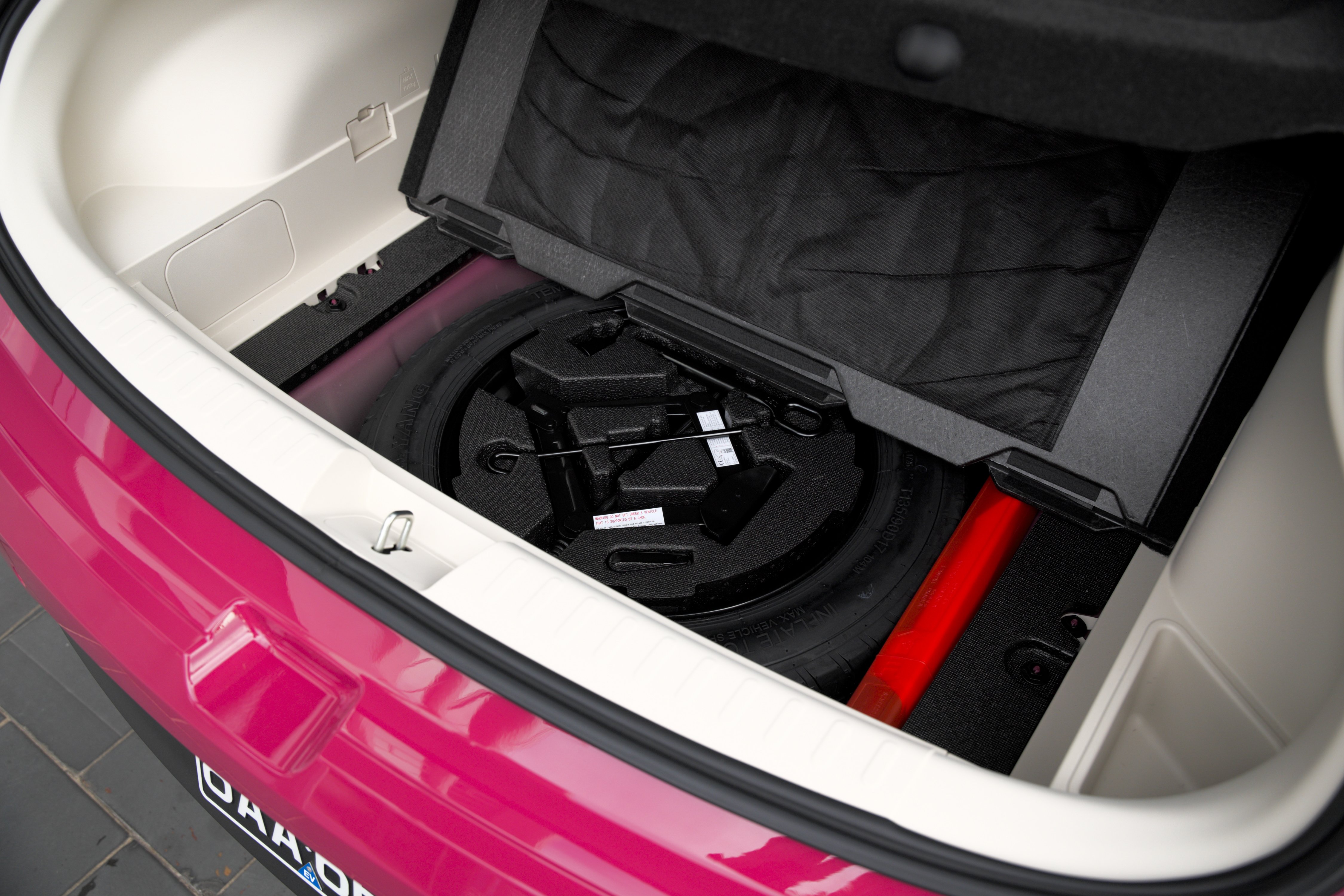
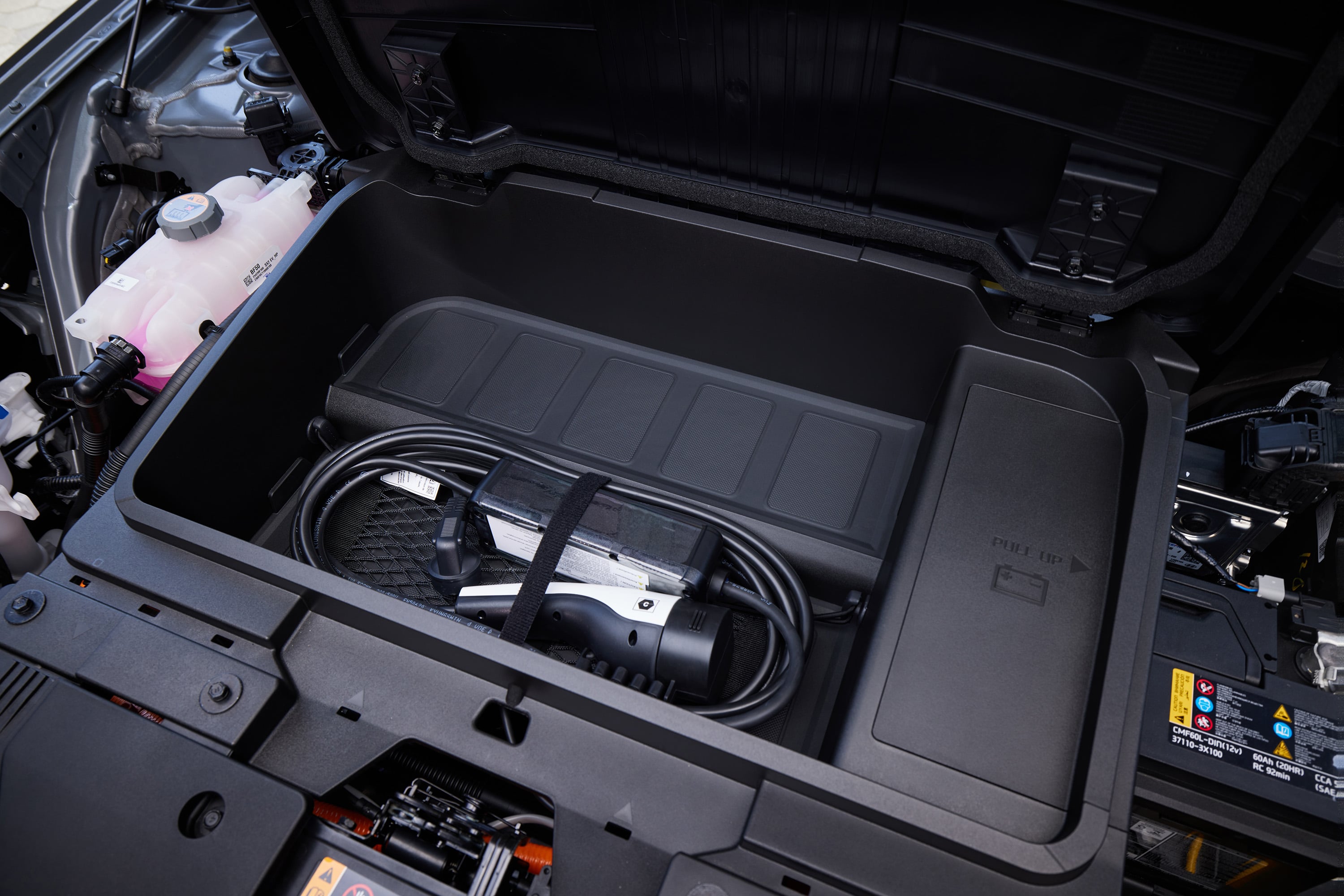
Both vehicles have 60:40-split/folding rear seatbacks, and a space-saver spare wheel under the boot floor. The Kona also has a 27L ‘frunk’ up front, whereas the Ora 5 has no storage under the bonnet.
|
Dimensions |
GWM Ora 5 Ultra |
Hyundai Kona Electric |
|---|---|---|
|
Length |
4471mm |
4355mm |
|
Width |
1833mm |
1825mm |
|
Height |
1641mm |
1580mm |
|
Wheelbase |
2720mm |
2660mm |
|
Cargo capacity |
362L (rear seats up)1060L (rear seats folded) |
407L (rear seats up)1241L (rear seats folded) |
What’s under the bonnet?
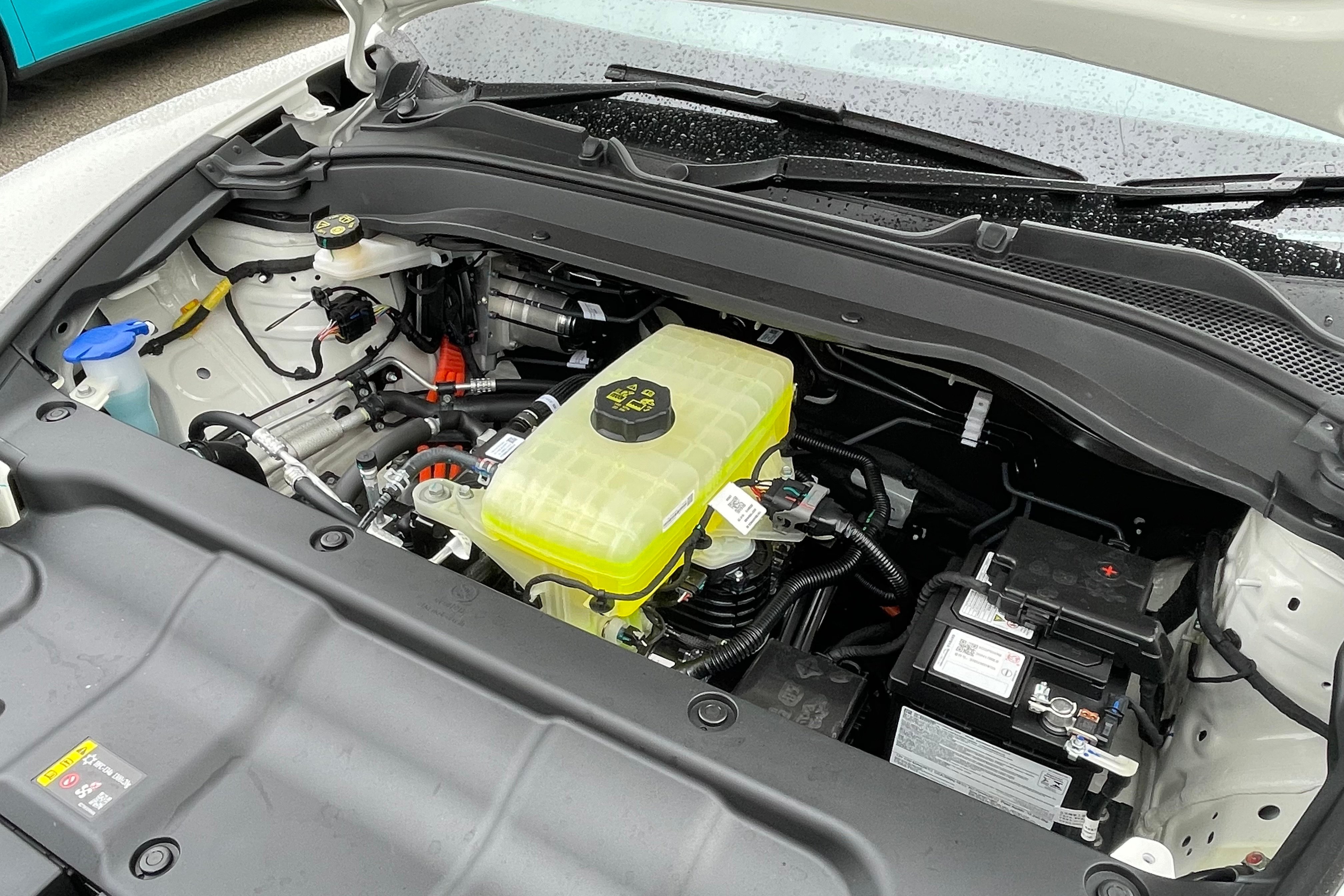
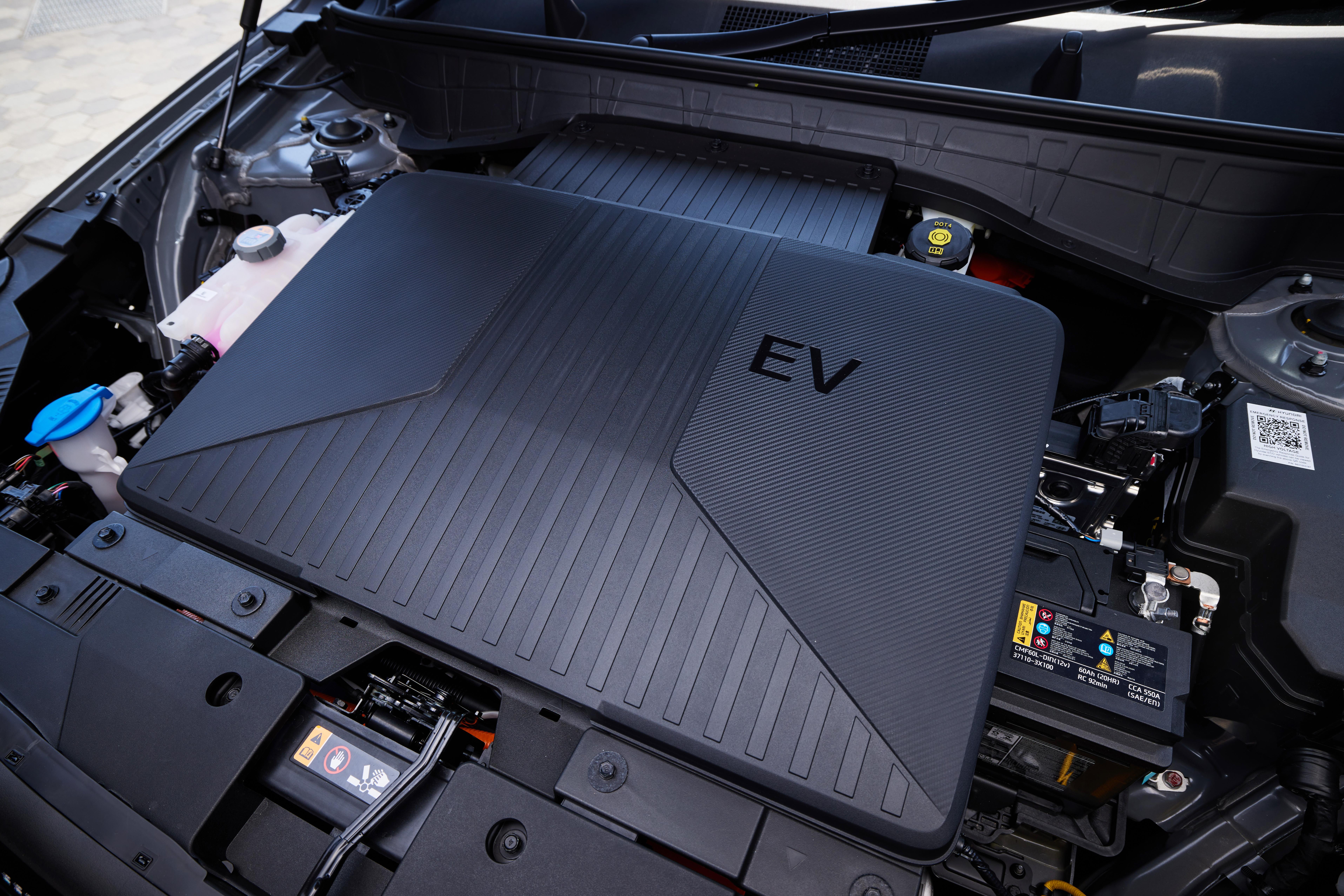
Both vehicles in this bench-test comparison have an electric motor driving the front axle, with the GWM coming out on top (at least on paper) for power, battery size, and claimed driving range.
|
Specifications |
GWM Ora 5 Ultra |
Hyundai Kona Electric |
|---|---|---|
|
Drivetrain |
Single-motor electric |
Single-motor electric |
|
Battery |
58.3kWh LFP |
48.6kWh lithium-ion |
|
Peak power |
150kW |
99kW |
|
Peak torque |
260Nm |
255Nm |
|
Drive type |
FWD |
FWD |
|
Kerb weight |
1685kg |
1615-1690kg |
|
0-100km/h (claimed) |
8.0 seconds |
N/A |
|
Energy consumption (claimed) |
15.5kWh/100km |
14.8kWh/100km |
|
Claimed range |
435km (WLTC) |
370km (WLTP) |
|
Max DC charge rate |
120kW (10-80% in 30 min) |
100kW (10-80% in 45 min) |
The Kona Electric Standard Range offers modest 99kW/255Nm outputs compared to the GWM’s 150kW/260Nm, and while Hyundai doesn’t claim a 0-100km/h time for the Kona, it does weigh up to 70kg less than the Ora 5’s 1685kg quoted kerb weight.
Both have a CCS2 charging port, offer scheduled charging, and also have vehicle-to-load (V2L) capability, with the Hyundai offering up to 3kW and the GWM up to 6kW.
How much do they cost to run?
GWM offers a seven-year, unlimited-kilometre warranty for the Ora 5 Ultra SUV, with vehicles used for commercial applications, including rideshare, hire-car and rental use, covered for the same timeframe but limited to 150,000km.
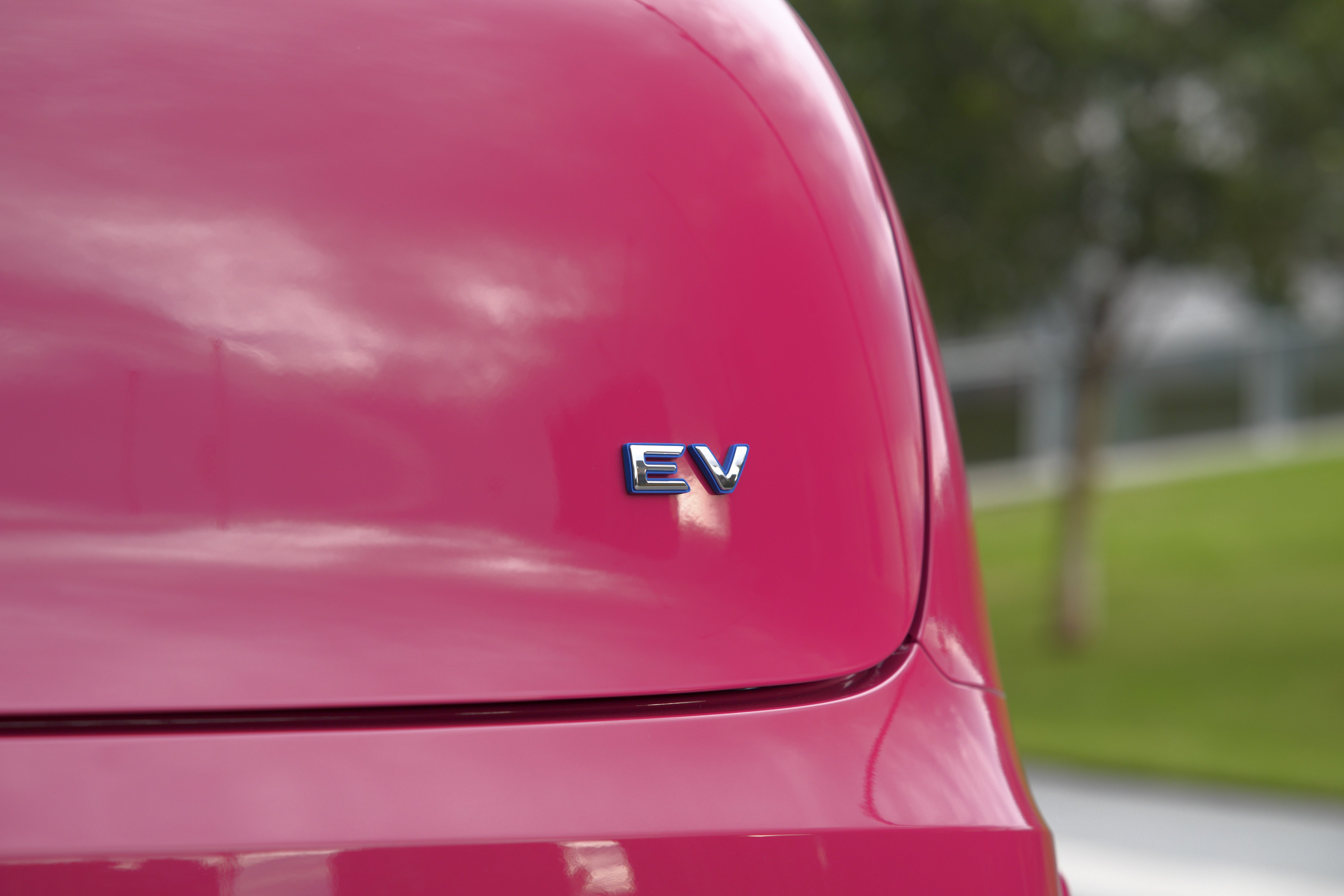
The high-voltage battery pack is covered for eight years/unlimited kilometres, while roadside assistance is included if you service your Ora 5 Ultra at an authorised GWM outlet.
Capped-price servicing is also offered for the first five scheduled services, with 12-month/15,000km intervals.
Hyundai offers roadside assistance for the life of the Kona Electric if you service it through an authorised Hyundai service facility, even after the new-vehicle warranty has expired.
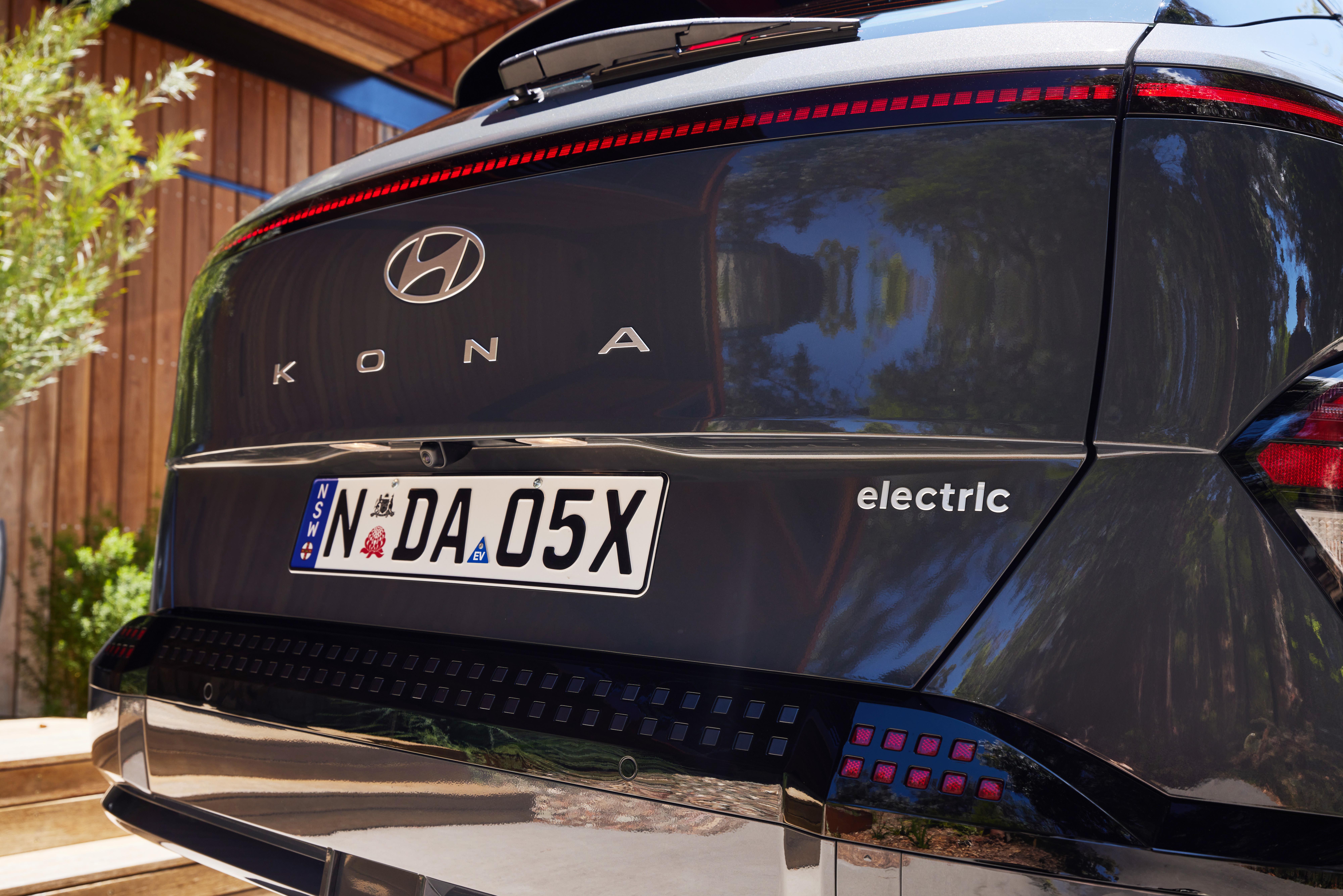
Under its Lifetime Service Plan, it provides capped-price servicing for all new models, and for officially imported Australian-market Hyundai vehicles from the 1986 model year, the year the first Hyundai dealer opened in Australia. Service intervals for the Kona Electric are 24 months/30,000km.
The Kona Electric is covered by a five-year, unlimited-kilometre warranty, extended to seven years if all scheduled servicing is completed on time at an authorised Hyundai dealer.
The Kona Electric is also covered for up to seven years against paint durability and corrosion defects, while its high-voltage battery is covered for eight years or 160,000km, whichever occurs first.
CarExpert’s pick: GWM Ora 5 Ultra
It hardly seems fair comparing two cars with a price difference of $11,000, but it’s clear that – on paper at least – the Ora 5 Ultra SUV holds its own against the Kona Electric in most key areas.
The Korean-made Hyundai holds the aces for brand recognition but, to be fair, GWM has been in Australia since mid-2009, when it was known as Great Wall Motors, giving it the longest local presence of any Chinese auto brand.
The Kona Electric also has a bigger boot, arguably marginally better ADAS, a longer capped-price service program, and an ANCAP safety rating, even if it’s only four stars.
Yet, once again, the Ora 5 Ultra can be had with a significant up-front cash saving, which is too big to ignore given how competitive it is in other areas it is, too. Yes, the Kona comes with a more potent 150kW motor in the next grade up, but again that only strengthens the value equation of the Ora 5 Ultra.
It has a longer range between charges as well as more power, its cabin comes across as more luxurious and contemporary, and it offers convenient day-to-day features lacking in the Hyundai such as a 360-degree camera.
There’s also a wow factor to the Ora 5 SUV’s design, especially in Flamingo Pink – which won’t be for everyone, particularly those who prefer the more masculine, techno-looking Kona – and a quirky, playful character, both inside and out.
So the Ora 5 wins this Spec Battle on price, practicality, power, range, and style.
MORE: Explore the GWM Ora 5 showroomMORE: Explore the Hyundai Kona showroom
