

History is littered with hundreds of cool and interesting concept cars that disappeared into the ether. Thankfully, that isn’t the story with this particular vehicle.
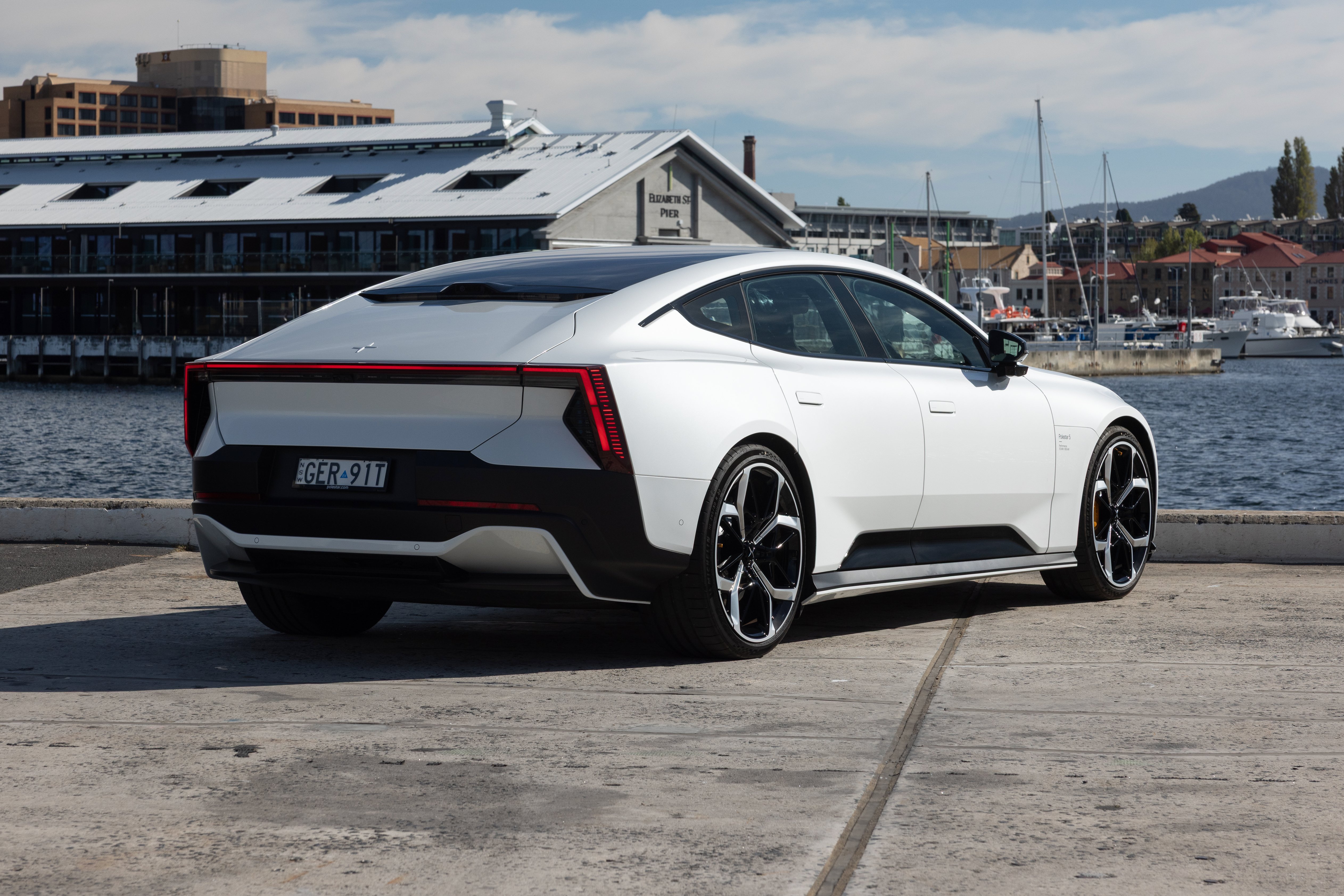
The 2027 Polestar 5 was born from the Precept, a design exercise shown back in 2020 that created a groundswell of positive support due to its stunning exterior – all but forcing Polestar to put it into development.
Polestar started out as a motorsport team in the 1990s, modifying and racing Volvos in Europe, and leading to it being the performance arm of the Swedish automaker. Fast-forward a couple of decades, and Polestar was spun off to be its own electric car brand, with majority ownership from Chinese auto giant Geely – which also owns Volvo, Lotus, and dozens of other manufacturers.
But whereas previous Polestar models have been a mix of luxury, design, technology, and sustainability, the company is calling the Polestar 5 its manifesto – combining all of those things, but with a big dose of performance, and leaning on its motorsport heritage.
The Polestar 5 isn’t a pure sports car, though. This is a high-performance electric grand tourer, with a 4+1-seat layout referring to the fact that, while it does technically have five seats, it has been created primarily to transport four adults across long distances.
Think Porsche Taycan, think Audi S and RS e-tron GT. Like those, the Polestar is designed to get you to your destination in minimal time and maximal comfort with zero exhaust emissions. It’s a statement piece, telling the world that you are successful and have an appreciation for design, performance, and sustainability.
However, it’s also a statement piece for Polestar itself. This is the brand’s halo model, and with lagging sales – in a market seeing significant EV growth – the hope is the 5 will put Polestar back in the consciousness of buyers.
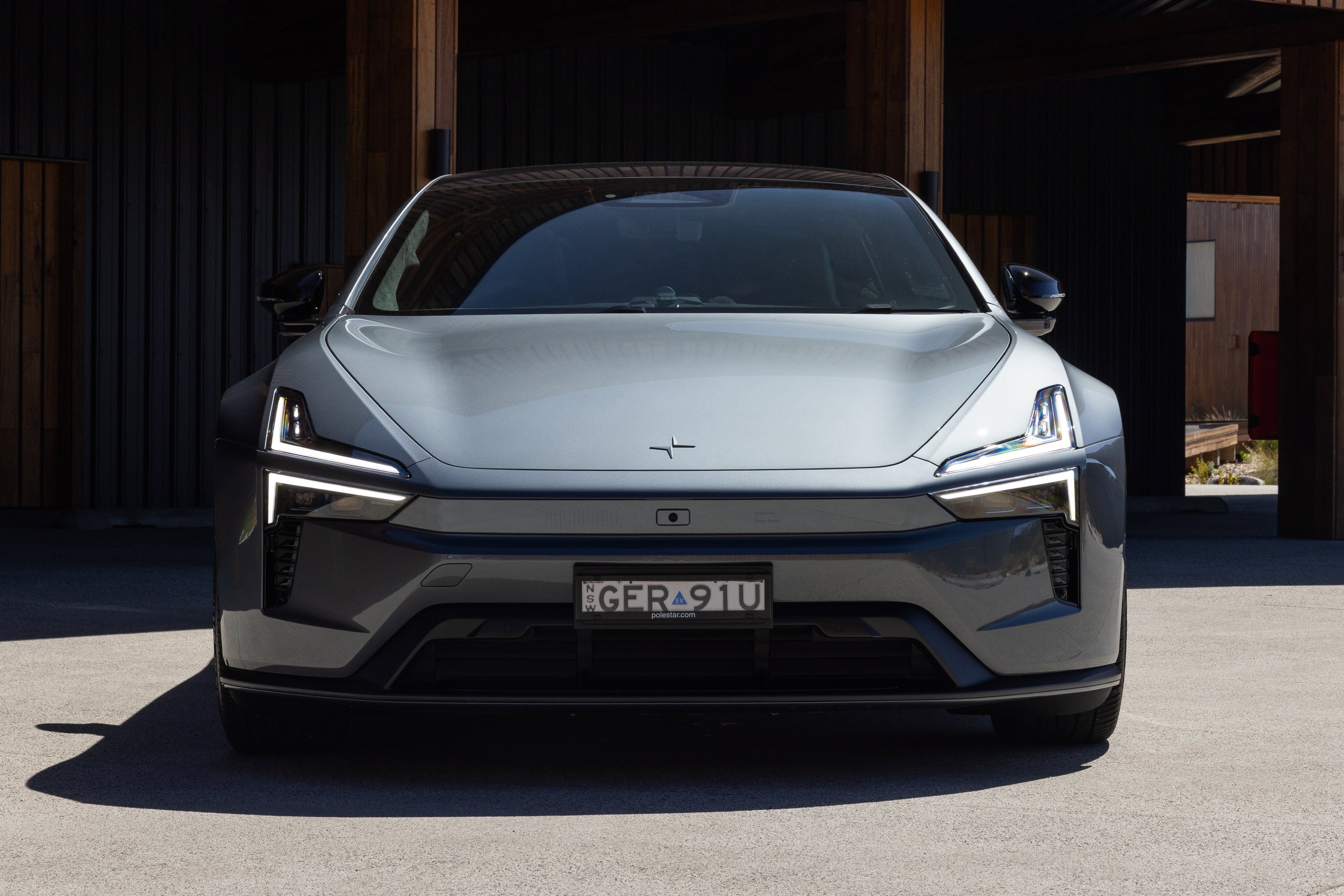
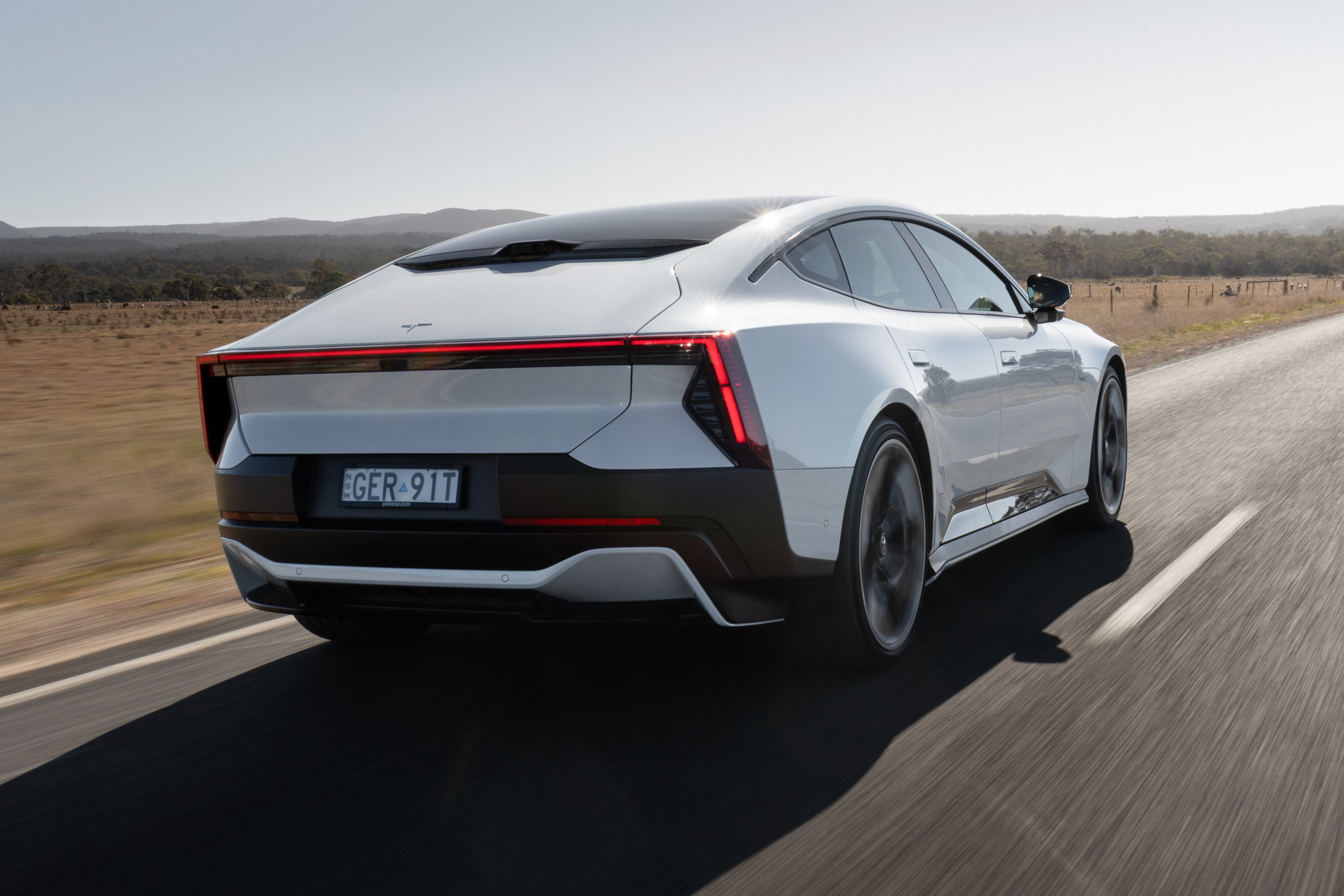
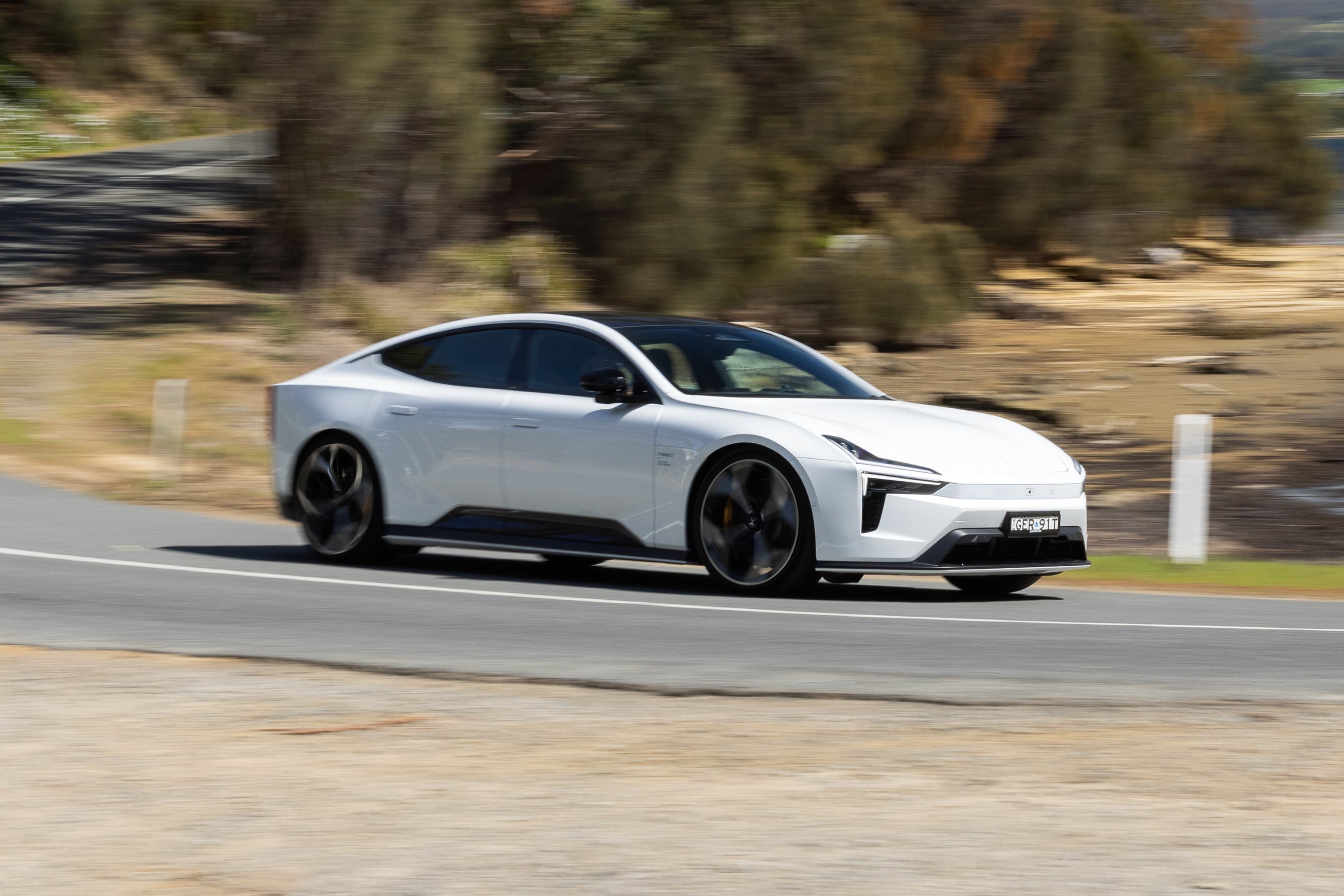
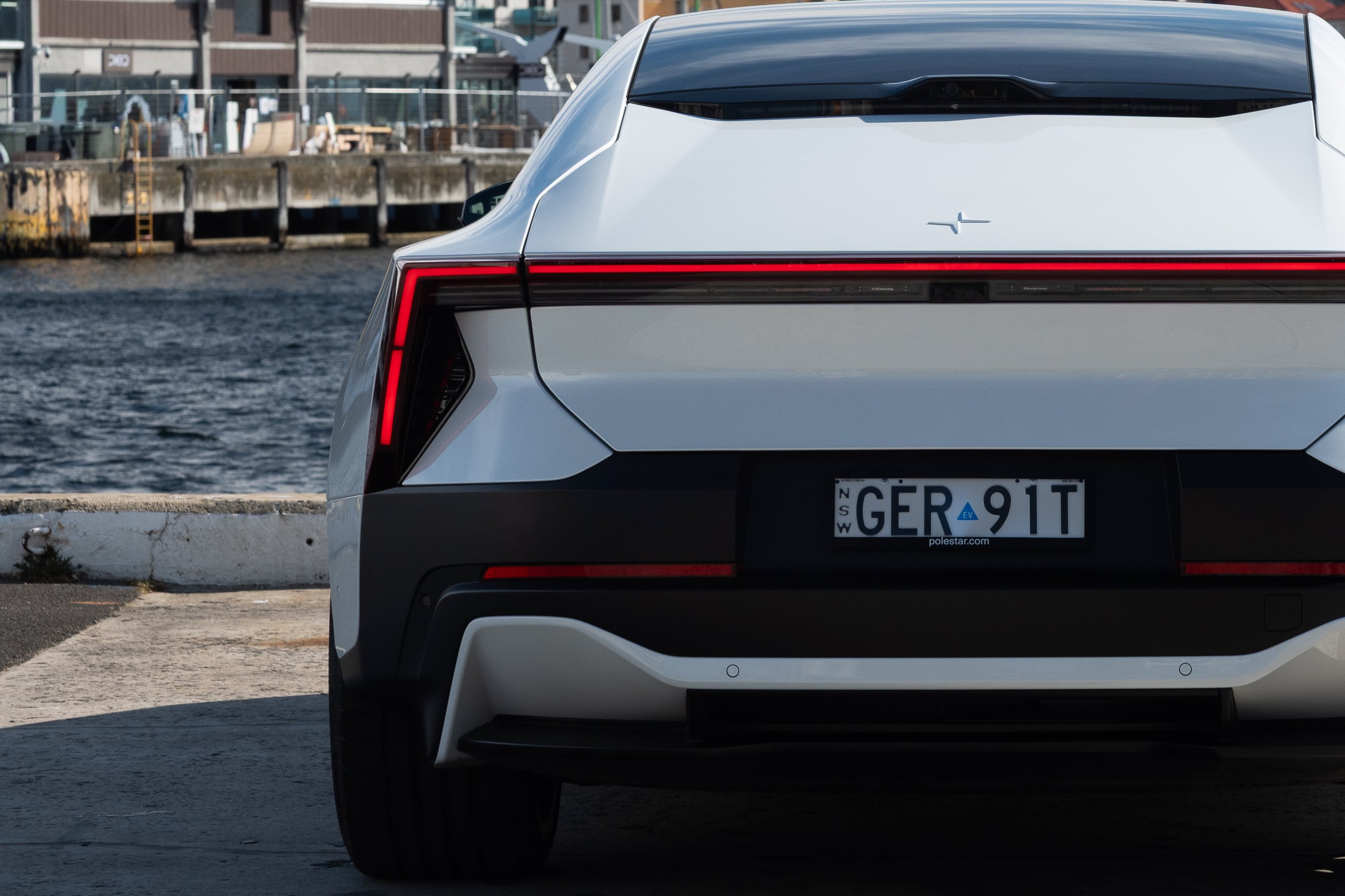
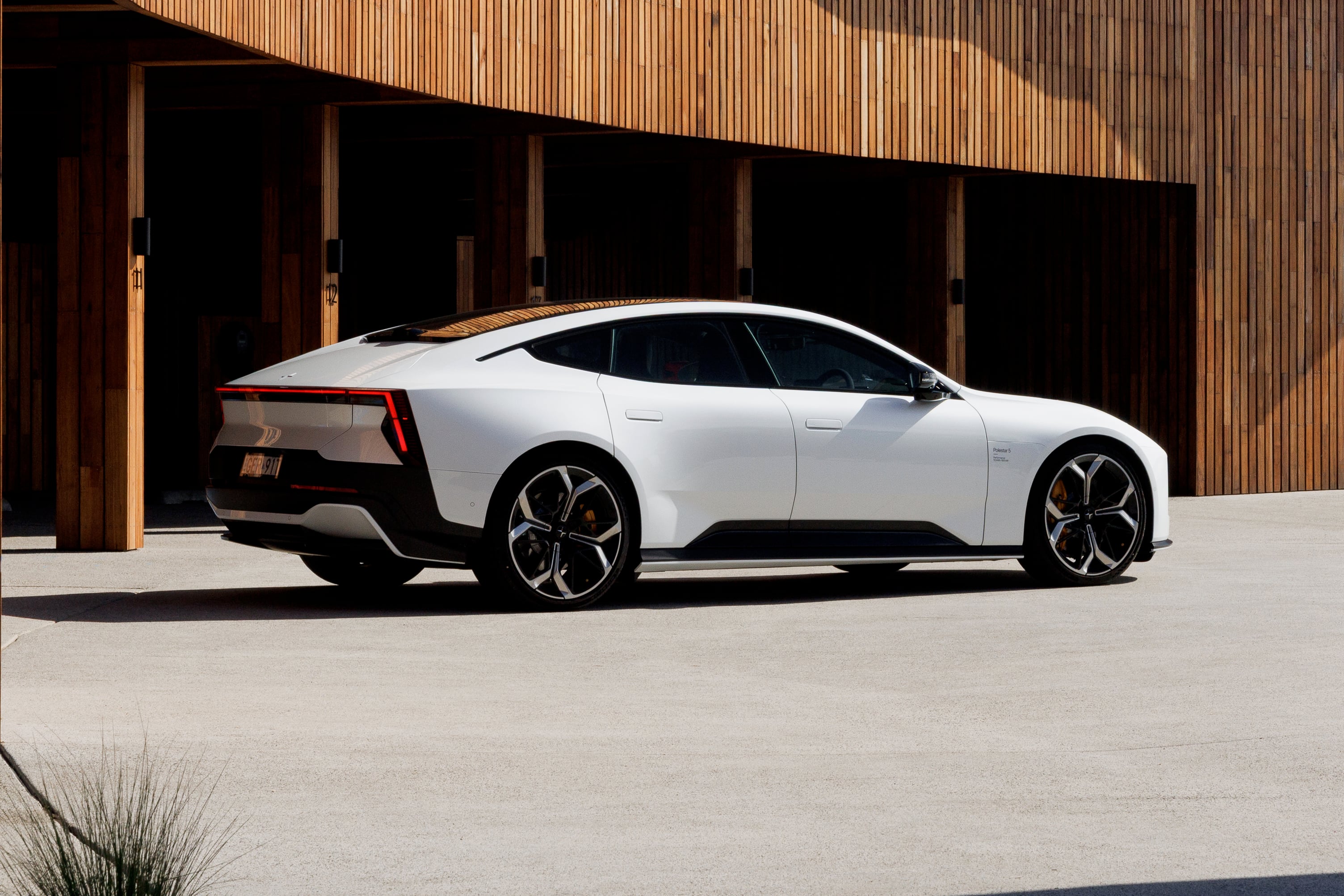
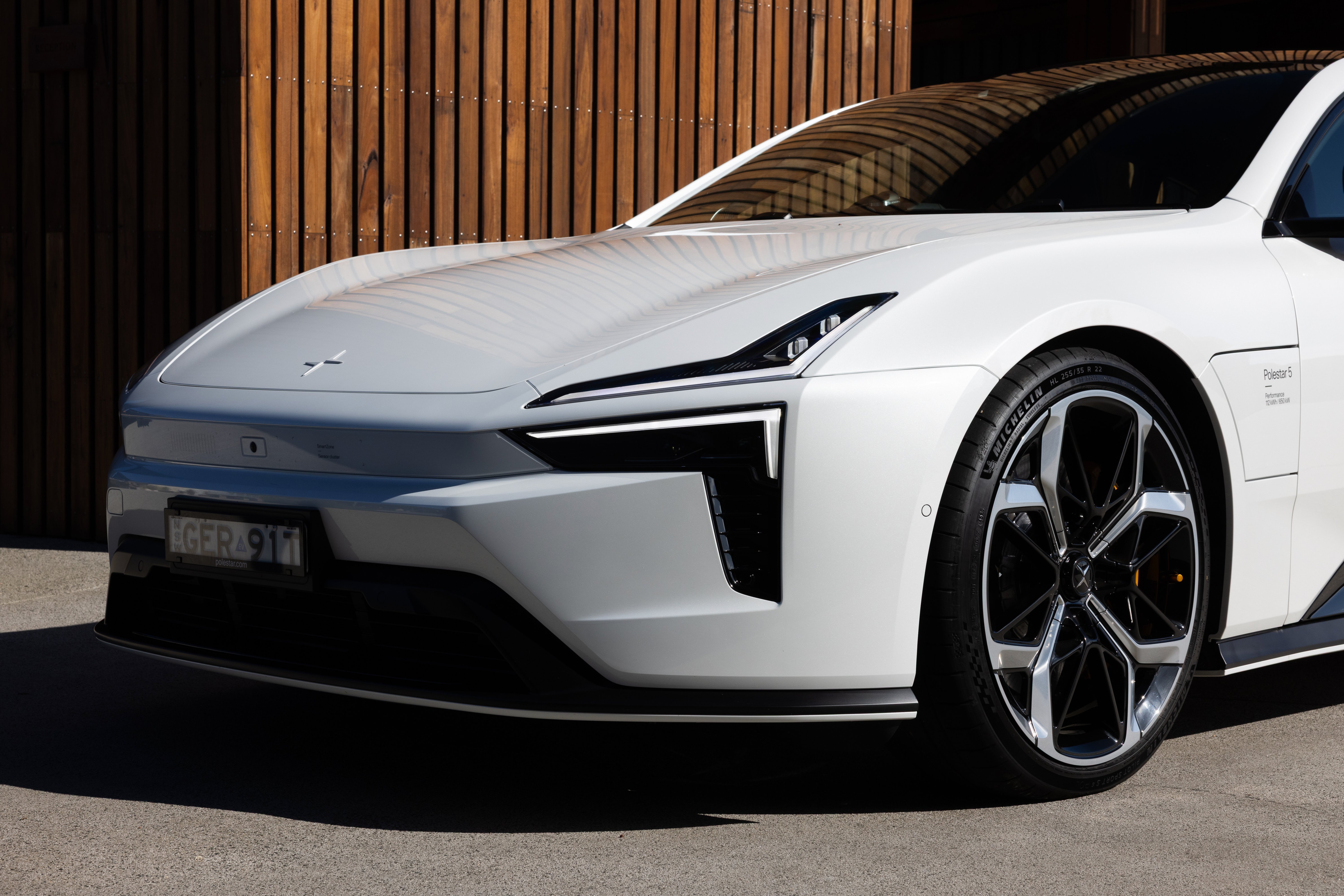
And there’s no doubt it will be noticed. The Polestar 5 is very close to the original Precept, in terms of exterior design, inviting admiring looks from everyone in traffic and on the footpath.
CarExpert was among the first journalists in the world to experience the production version of the Polestar 5 Performance in right-hand drive, evaluating the vehicle on the wonderful roads of Tasmania’s east coast.
As the most powerful and most expensive Polestar ever sold in Australia, we wanted to know whether the Swedish company can really compete with the likes of the Germans.
How much does the Polestar 5 cost?
The Polestar 5 lineup consists of two variants: the Dual Motor, priced from $171,100 before on-road costs, and the Performance, available from $193,100 before on-roads.
|
Model |
Price before on-road costs |
|---|---|
|
2027 Polestar 5 Dual Motor |
$171,100 |
|
2027 Polestar 5 Performance |
$193,100 |
Compare that to the Porsche Taycan 4S, which – despite having less power, at 440kW on overboost – is slightly faster than the Polestar 5 Dual Motor to 100km/h, with a claimed time of 3.7 seconds. However, the Taycan 4S is priced from $222,100 plus ORCs, and has 506km of advertised driving range.
The Porsche Taycan GTS is closer to the Polestar 5 Performance, taking a claimed 3.3 seconds to 100km/h from standstill, and having just over 500km of range – priced from $264,500 plus ORCs.
The Audi S e-tron GT starts at $209,900 plus ORCs, and roughly matches the claimed 558km of driving range of the Performance (based on ADR 81/02 testing for the Audi) while being 0.2 seconds slower to 100km/h. Step up to the RS e-tron GT, and you’ll be paying $264,900 plus ORCs, with a claimed driving range of 522km and a claimed 0-100km/h time of 2.8 seconds.
To see how the Polestar 5 lines up against the competition, check out our comparison tool
What is the Polestar 5 like on the inside?
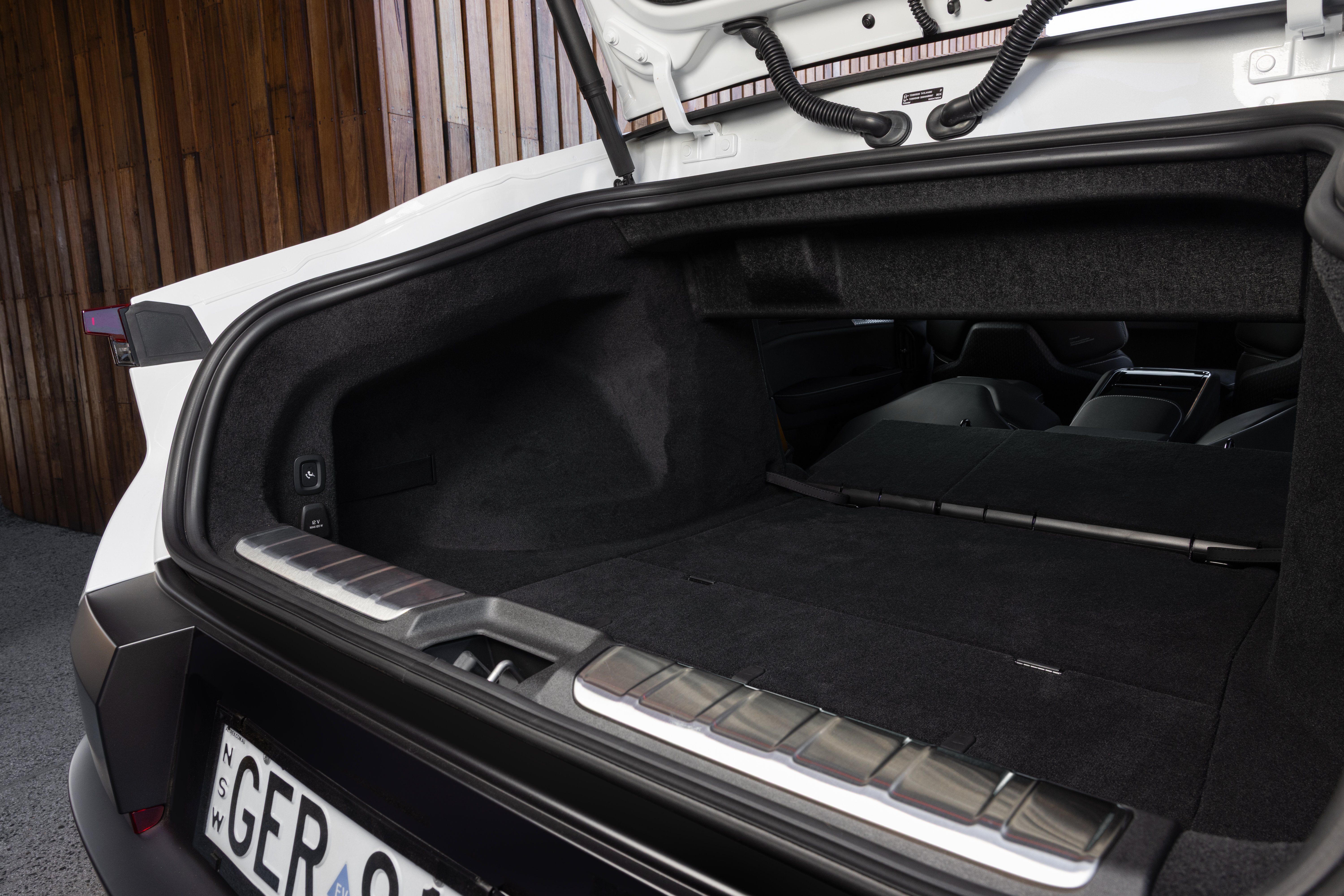
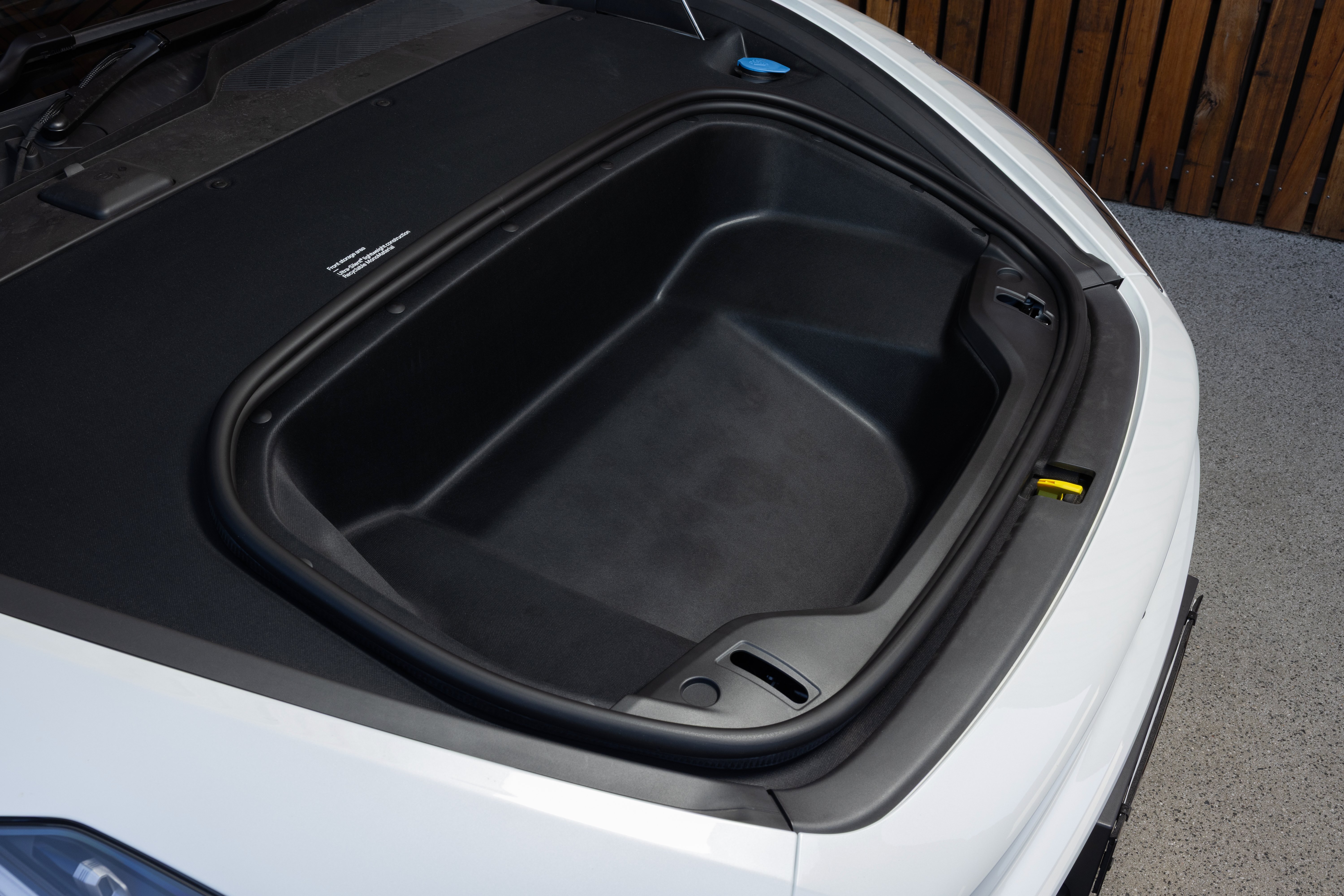
Starting at the back and moving forward, it’s not the biggest boot we’ve ever seen – at 313 litres – but there’s plenty of room for airport luggage, with the boot being supplemented by a 62L frunk and 52L underfloor storage.
The load space in the boot isn’t especially deep, with the sloping rear hatch gradually limiting storage toward the rear. Though, one advantage is the partition behind the back seats, acting like a cargo barrier and allowing bags to be stacked without any negative consequences.
Given the bulkhead separates the passenger compartment from the luggage area, Polestar has applied its signature look and removed the rear windscreen entirely.
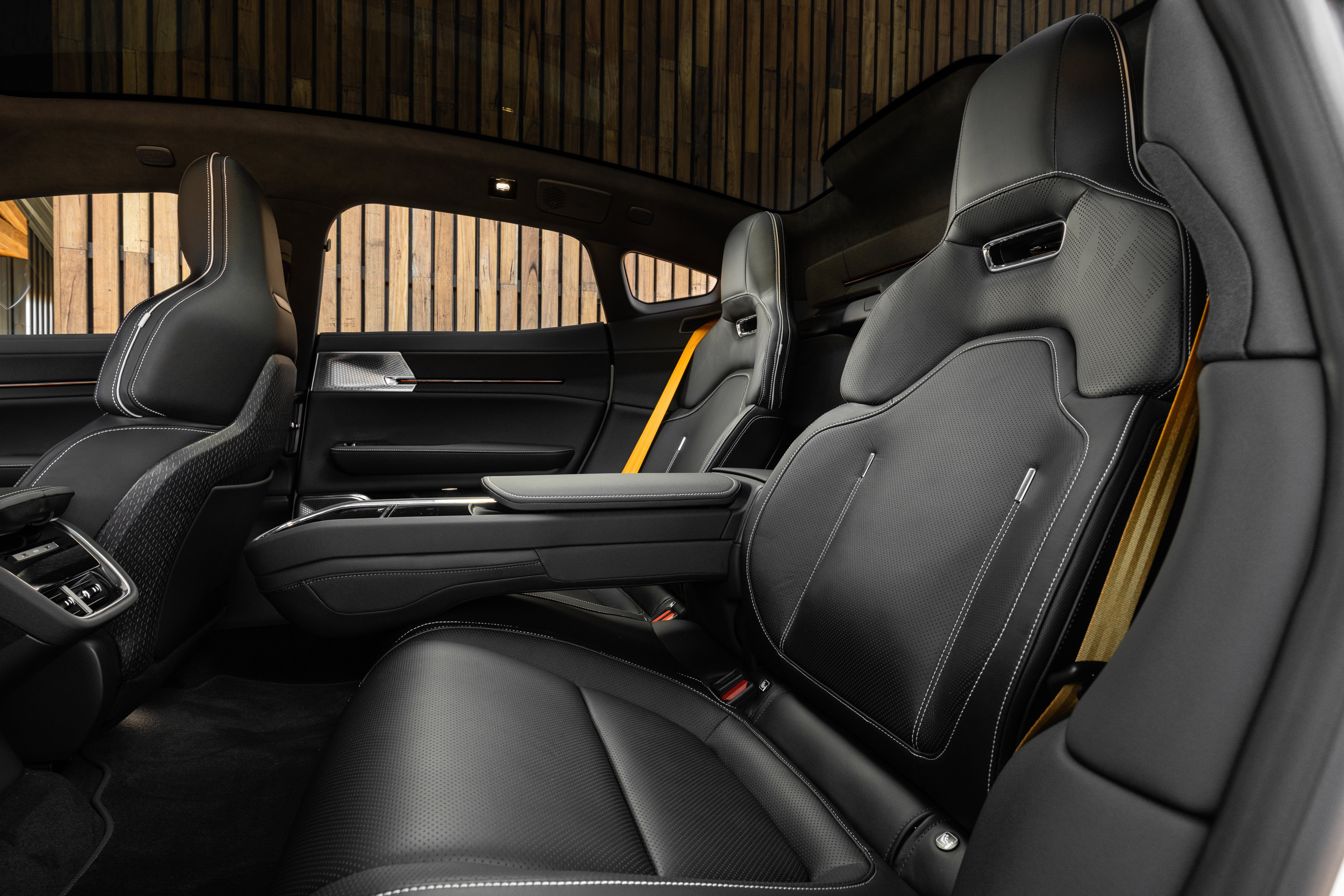
The divider also helps to cocoon the cabin, contributing to greater privacy for rear passengers. The glass moonroof ensures there’s no shortage of natural light, and the soundbar mounted behind the head restraints adds hugely to the atmosphere – giving the vibes of an ultra-modern apartment – while the Recaro-designed bucket seats make the second row feel special and sporting.
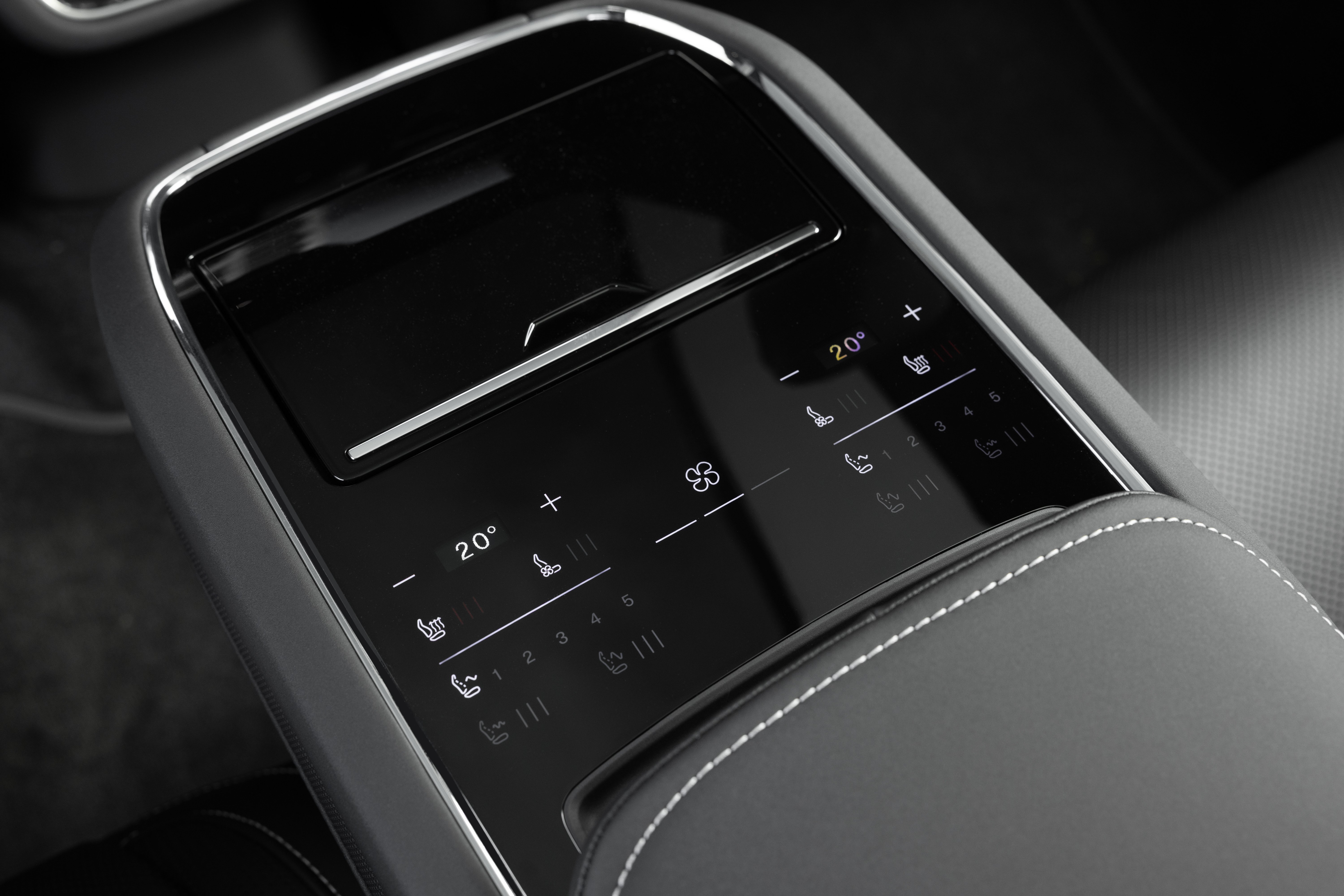
There’s plenty of headroom and legroom – thanks to the P5’s 3054mm wheelbase – and the large armrest houses dual controls for climate and seats, folding up to reveal the +1 seat that should only be used as a last resort. The rear doors also open widely and have generous apertures, though the side skirts are quite wide and require stepping over when exiting.
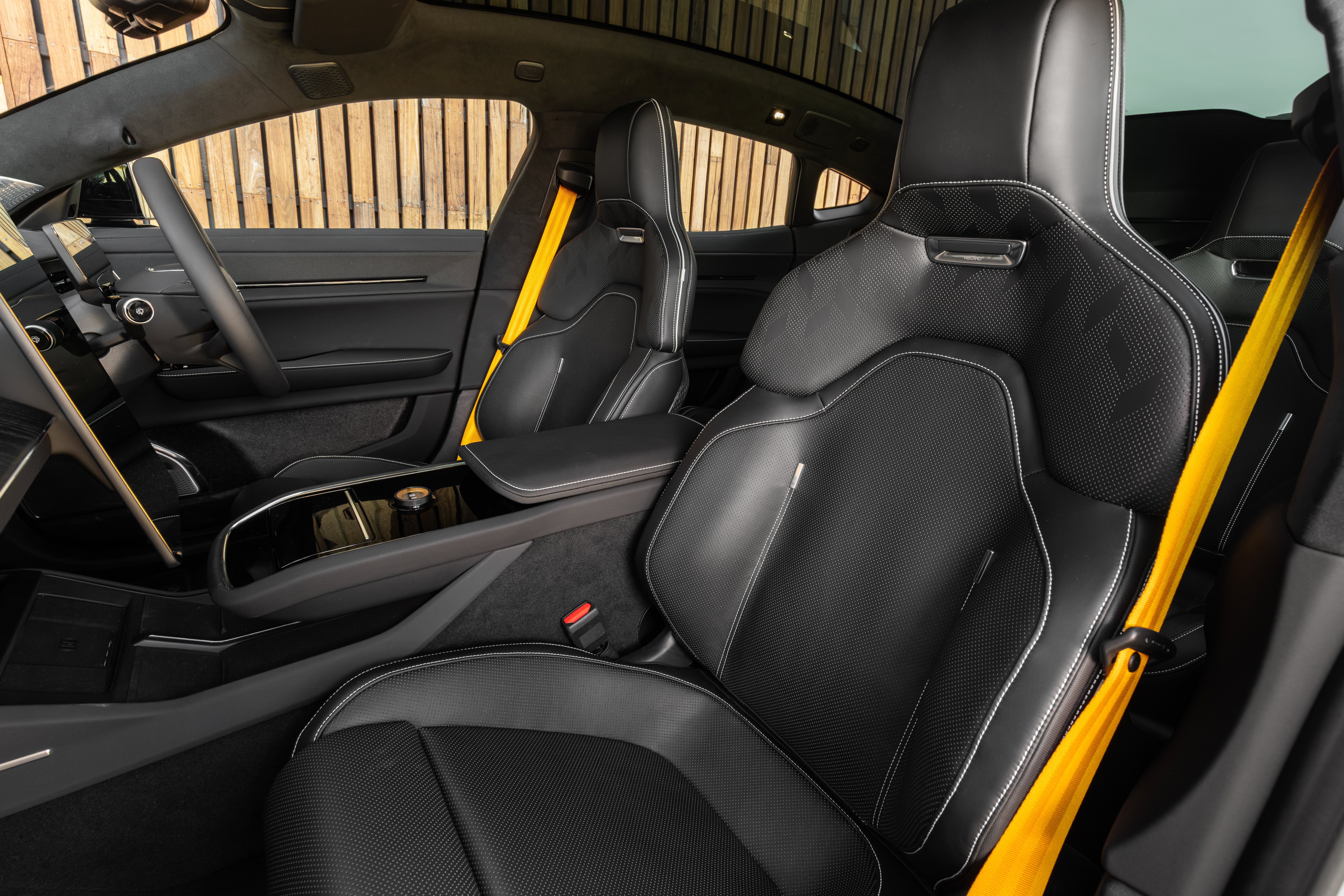
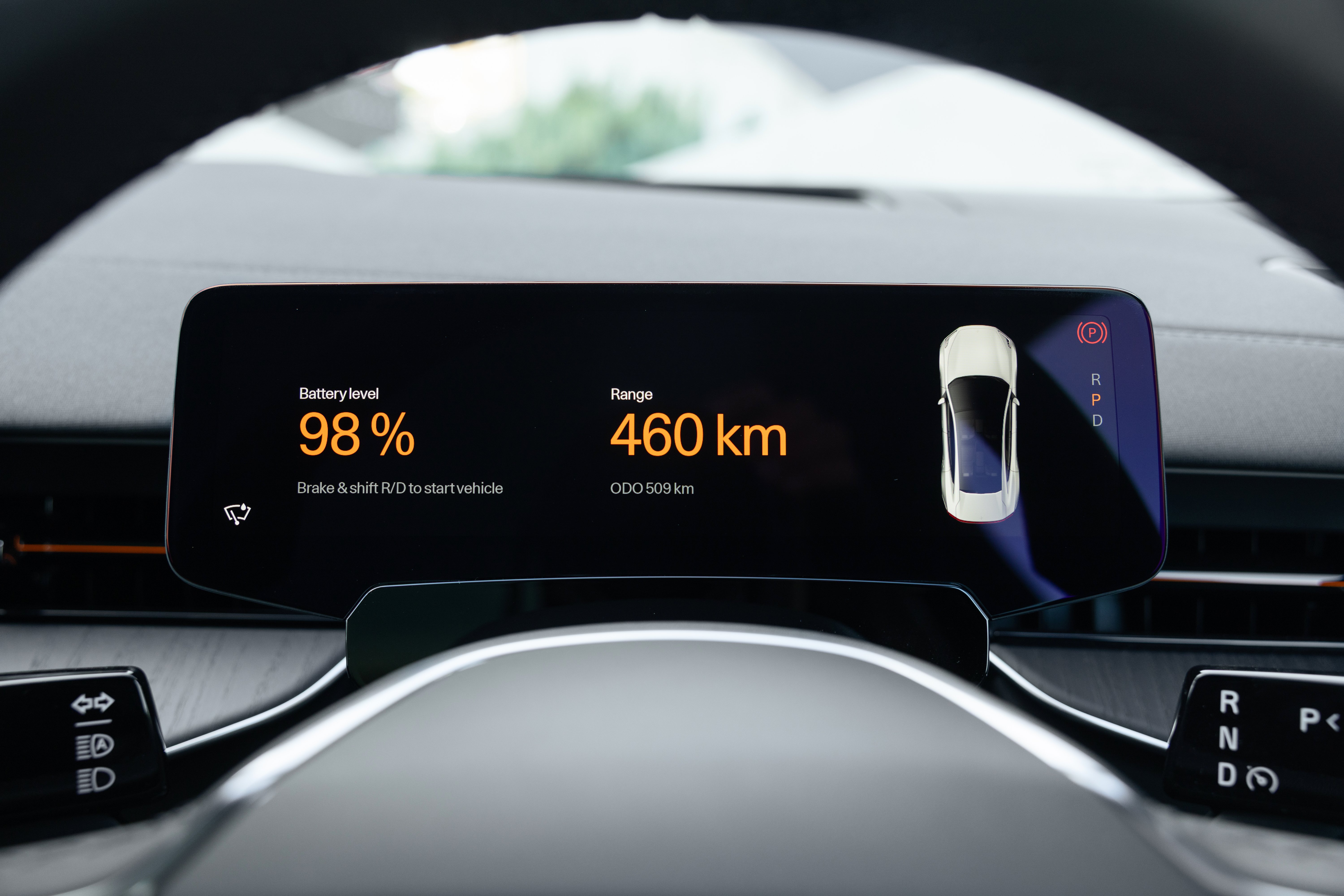
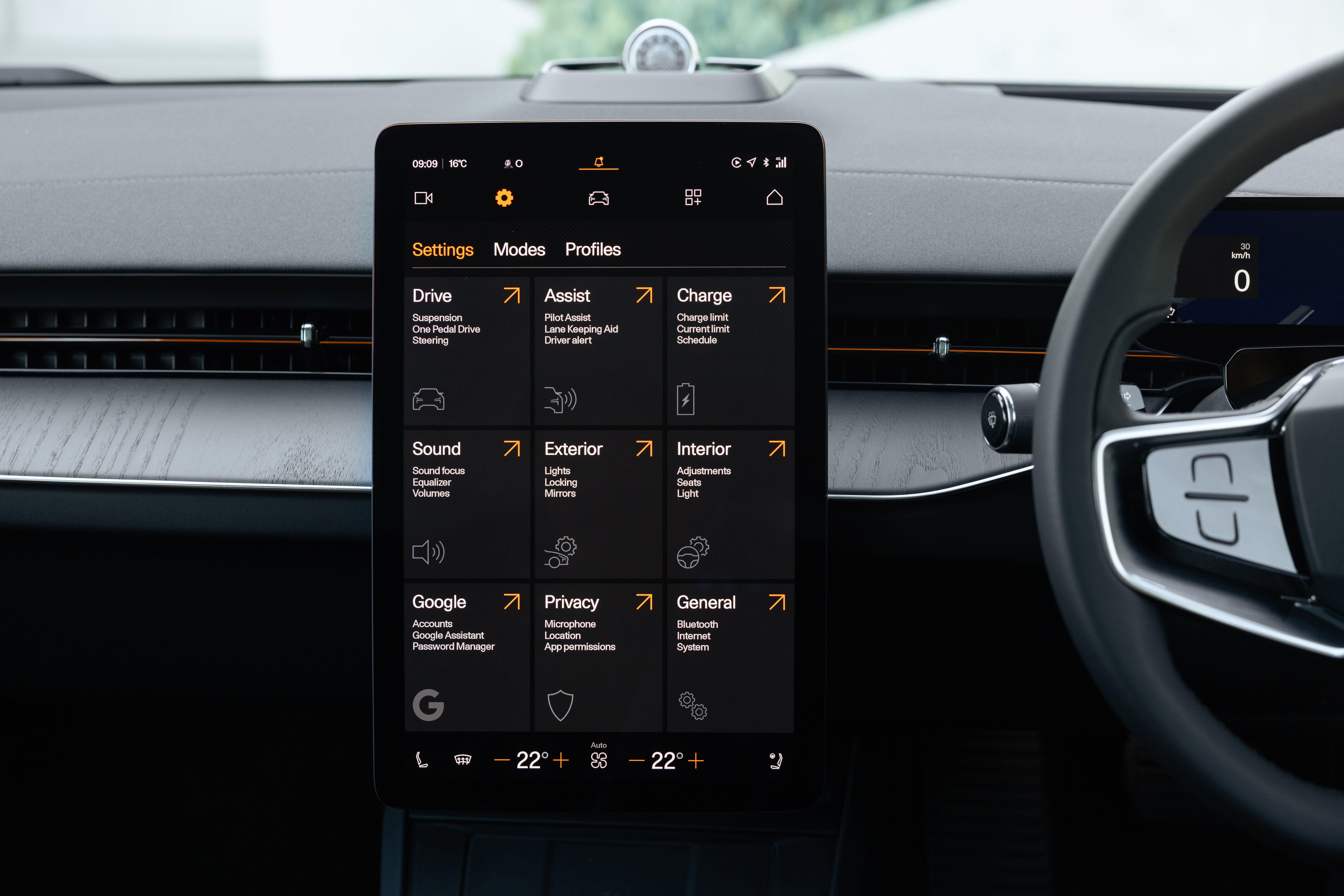
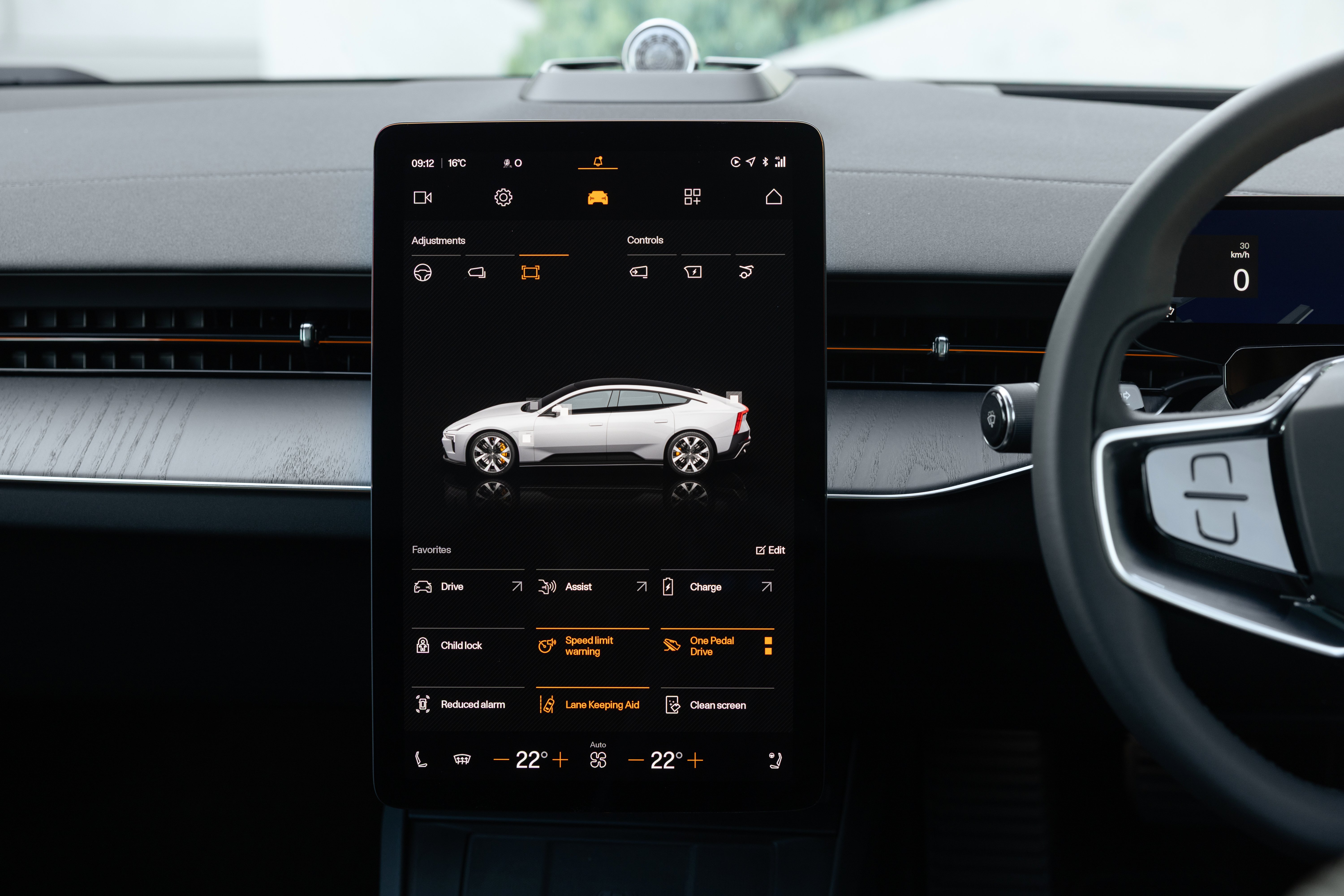
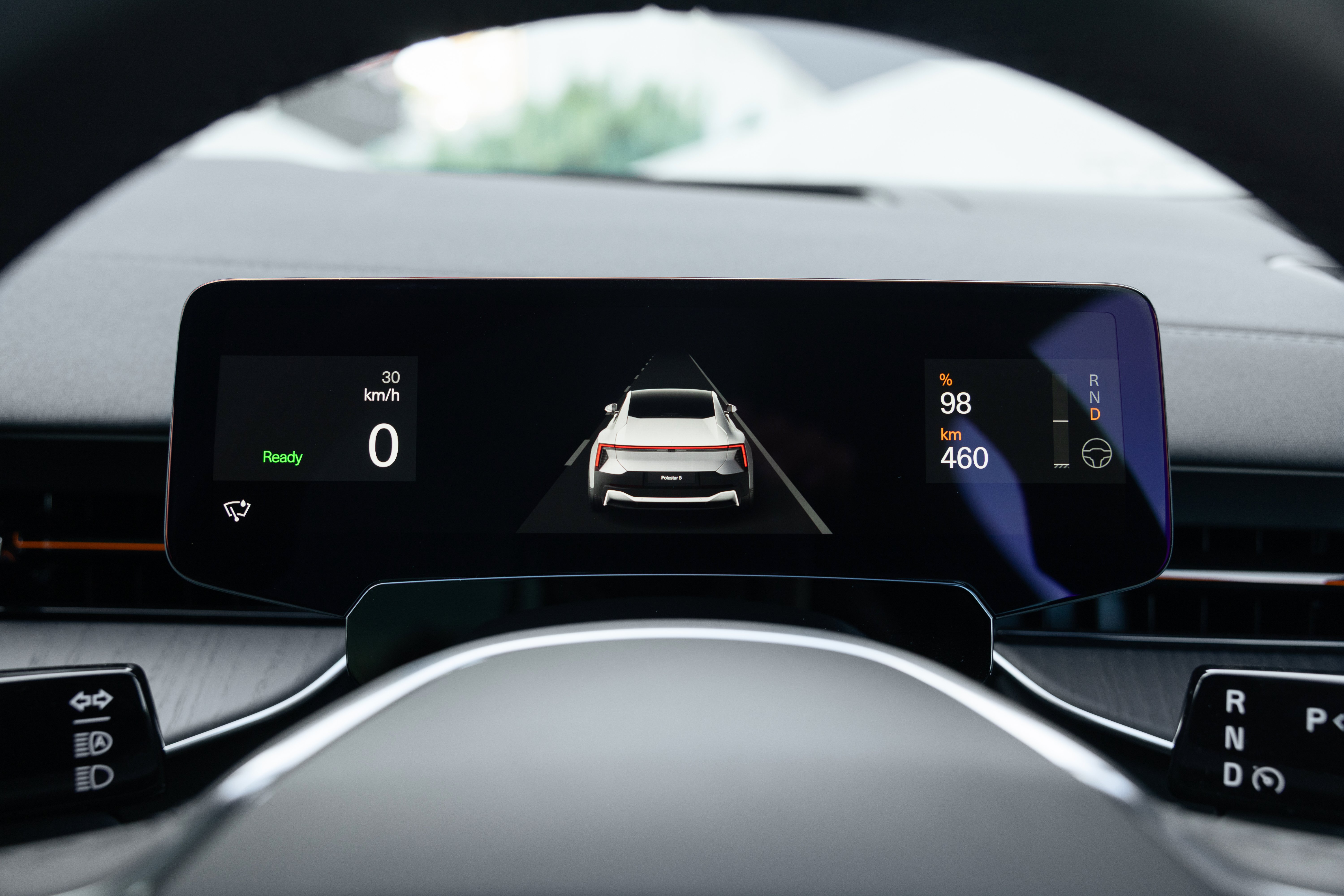
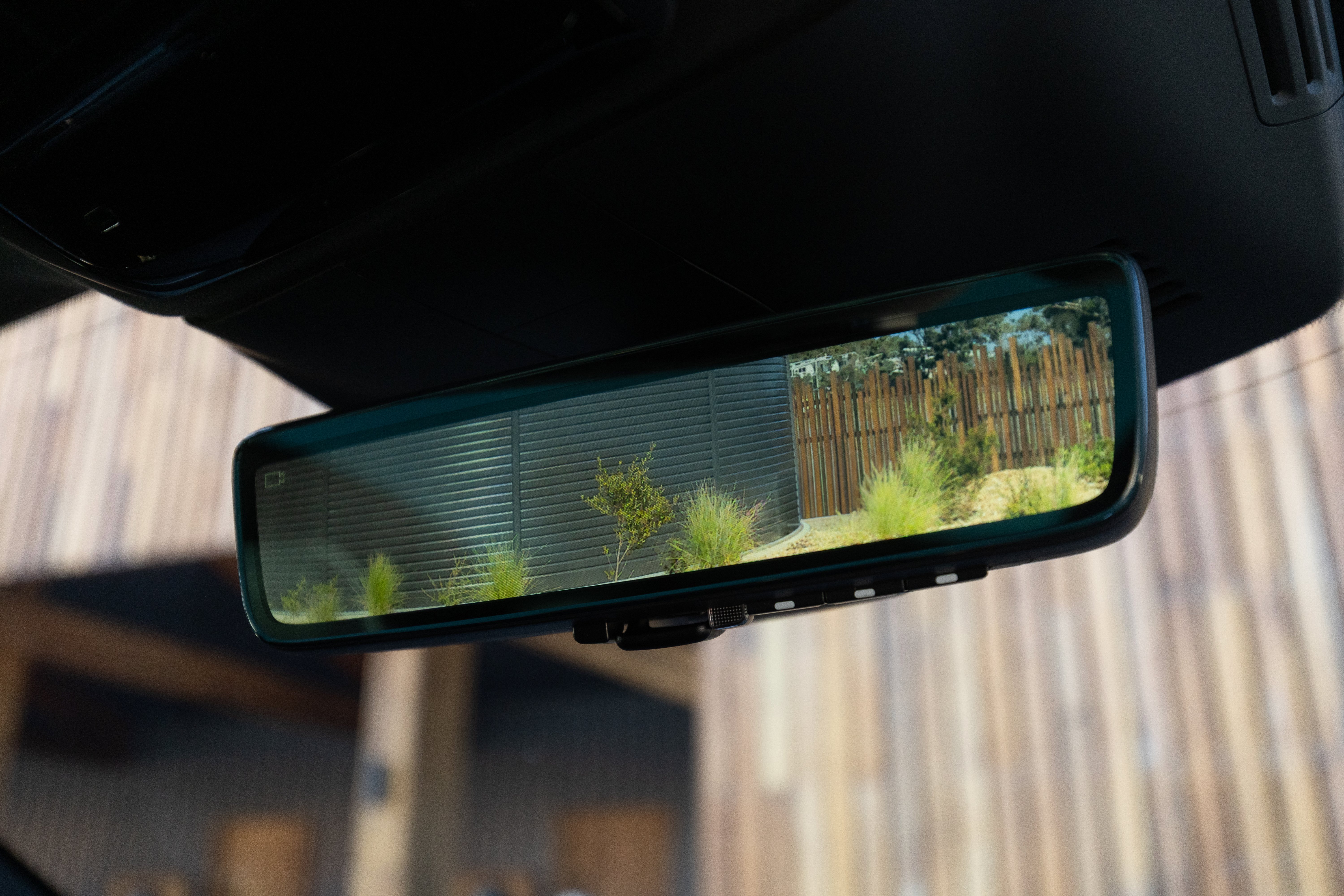
Move to the driver’s seat and you’re met with the same Recaro pews, a high centre console, and a 14.5-inch portrait infotainment touchscreen in the centre of the dash. The driver also gets a 9.0-inch slimline digital instrument cluster and an 8.9-inch digital rear-view mirror, as well as a head-up display.
Polestar has been careful not to overdesign the interior. The air vent runs across the length of the vehicle, framed by a woodgrain trim. The materials are quite good, with restrained use of brushed aluminium, leather, soft plastics, and a suede-type headliner in the Performance. The Performance also gets gold-coloured belts, which add a flash of colour among the greys and blacks.
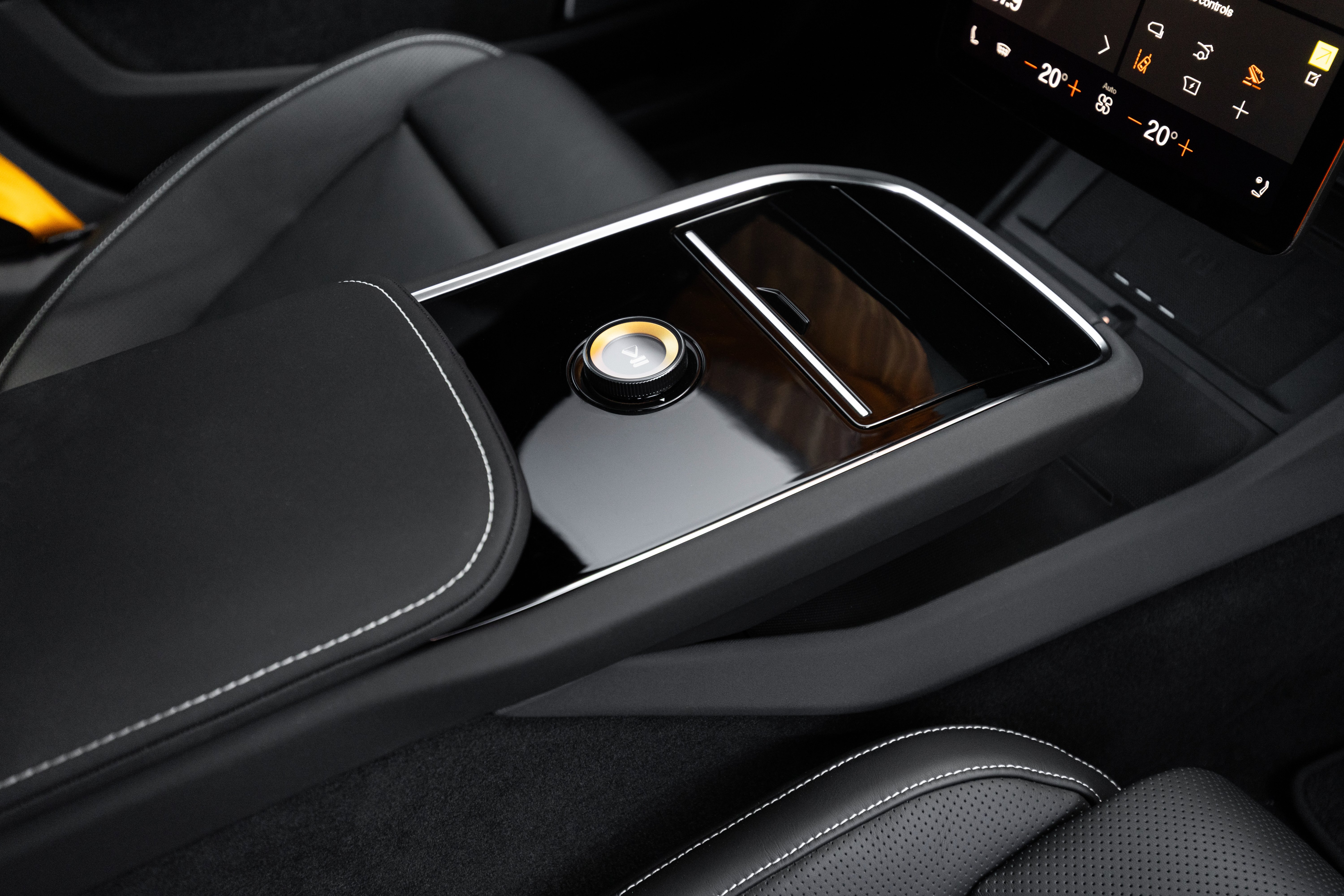
While not commonplace, you can find some hollow plastics if you go looking for them. More disappointing is the use of piano-black plastics, particularly on the flat section ahead of the centre armrest, which was already showing signs of scratching despite the vehicle being brand new.
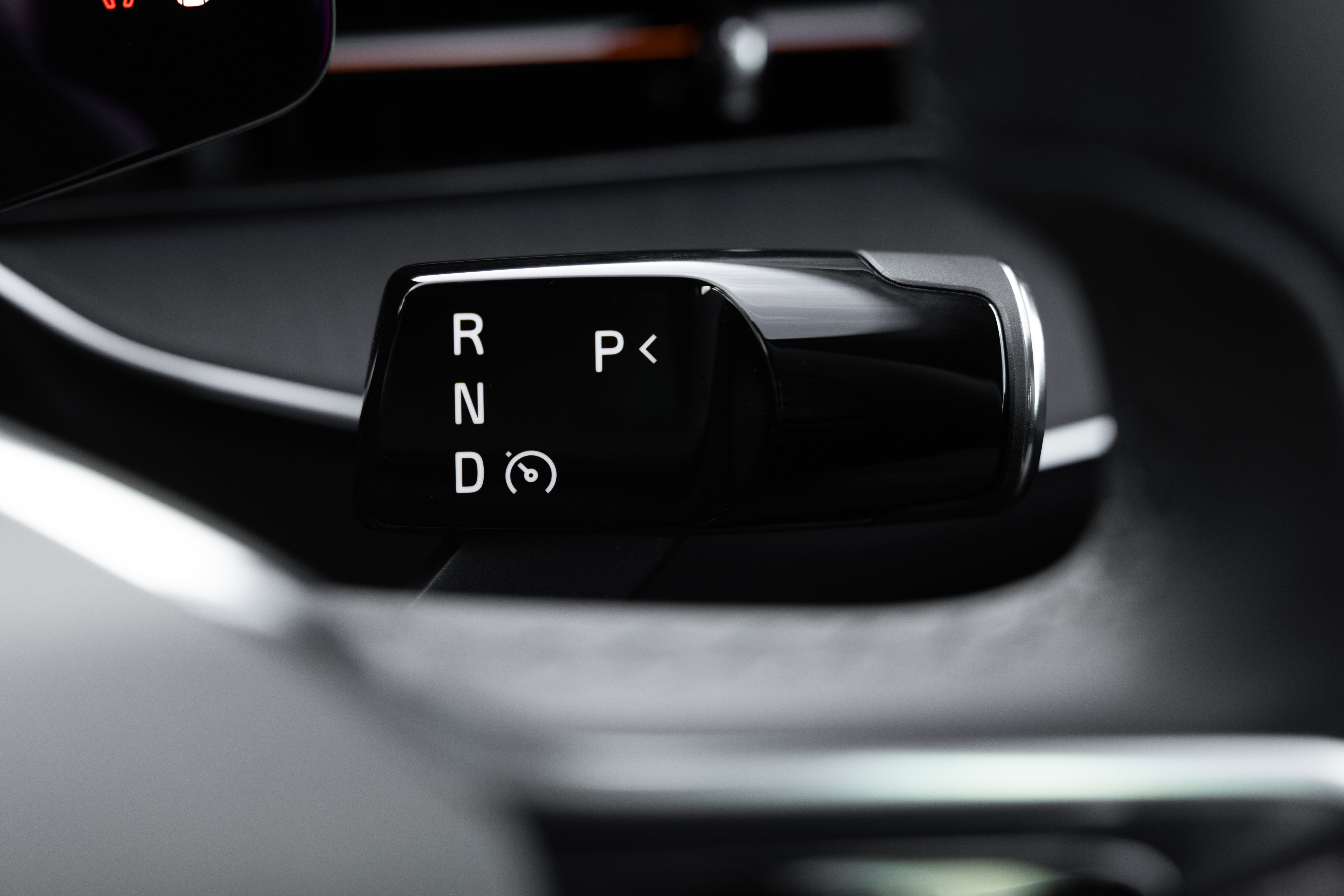
And though the stalks feel substantial and well-weighted, the company has opted to mount the drive selector in the traditional place of the right-hand indicator stalk. The steering wheel, too, looks good in photos, but doesn’t quite conform to the hands in practice. The giant haptic controls mounted to the steering wheel felt very cheap – also finished in gloss-black plastic – and the meaty part of my palm kept engaging the interface as I drove at nine and three.
Ergonomically, Polestar 5 is very good, with the seats being nice and low, but it falls a couple of notches short of being excellent. The lower section of the centre console extends towards the firewall and has some pointed edges that pressed into my calves. Not everyone will enjoy the firm Recaro seats, and though I didn’t find them hugely supportive, I didn’t mind them. The base suited me well, and I was able to get into a comfortable position thanks to the high degree of adjustability in both the seats and steering.
However, that special and sporting feeling in the second row doesn’t continue to the same level in the front. The steering wheel and dash design have been lifted from the Polestar 3 – a large SUV with a significantly lower starting price – which feels like a misstep.
Sure, the Polestar 5 – and the Polestar 3 – are lovely vehicles to spend time in, but with the P5 being billed as the company’s halo model, more could and should have been done to elevate the experience for the driver and front passenger.
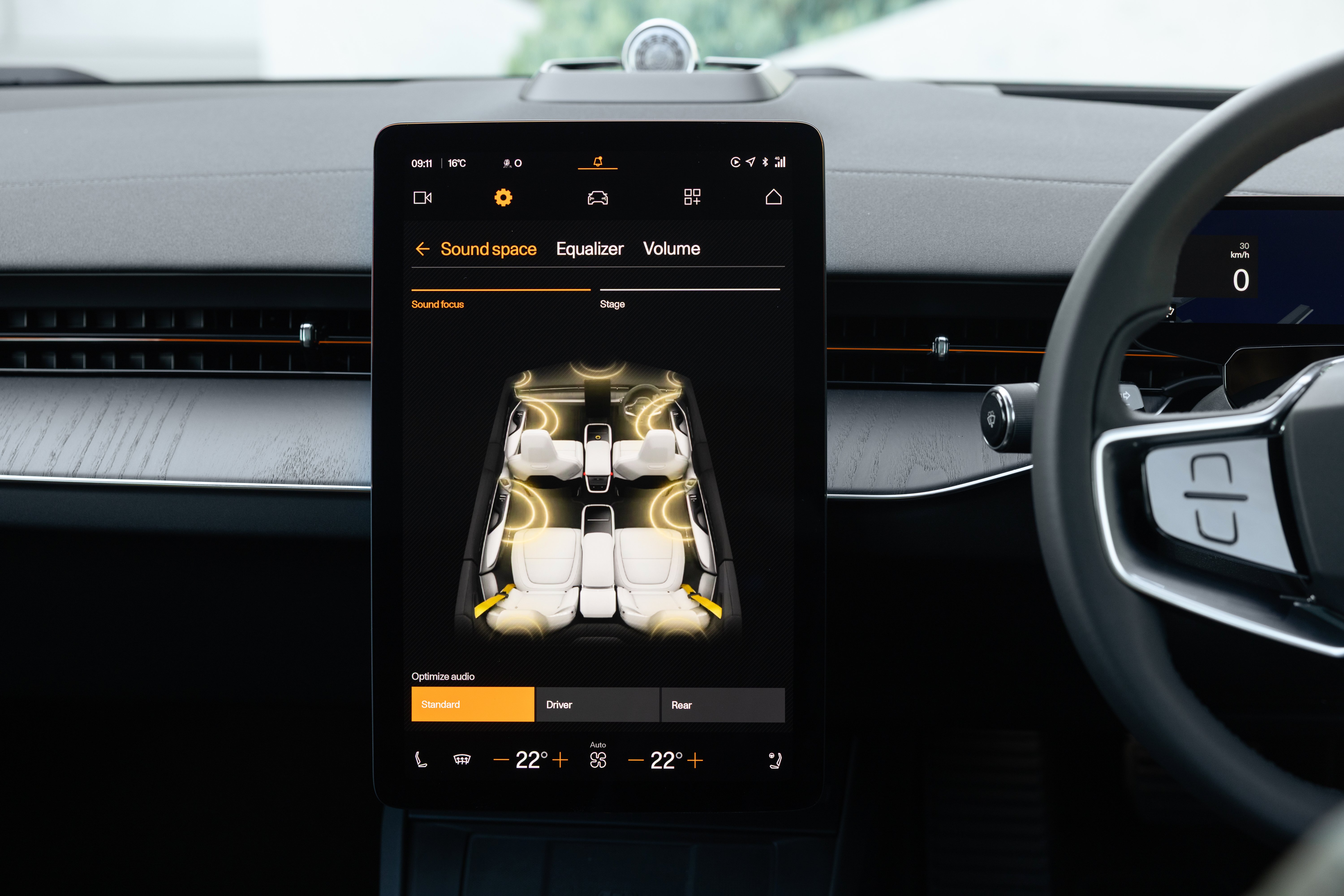
The infotainment is nicely laid out, with the use of the brand’s signature LL Unica77 font and Polestar’s burnt orange highlights. There were some quirks, with the system automatically reverting to the phone screen any time we swapped back into Apple CarPlay after adjusting vehicle settings via the screen, and the volume controlling the output of the GPS rather than the music for the first half of the drive. It’s not the absolute best infotainment UI we’ve experienced, but it’s still quite good.
There’s also a large rotary knob in the centre console, ahead of the armrest, which is great for quickly lowering volume on the fly. It has an excellent tactility to it, and quickly became my favourite interaction point on the car.
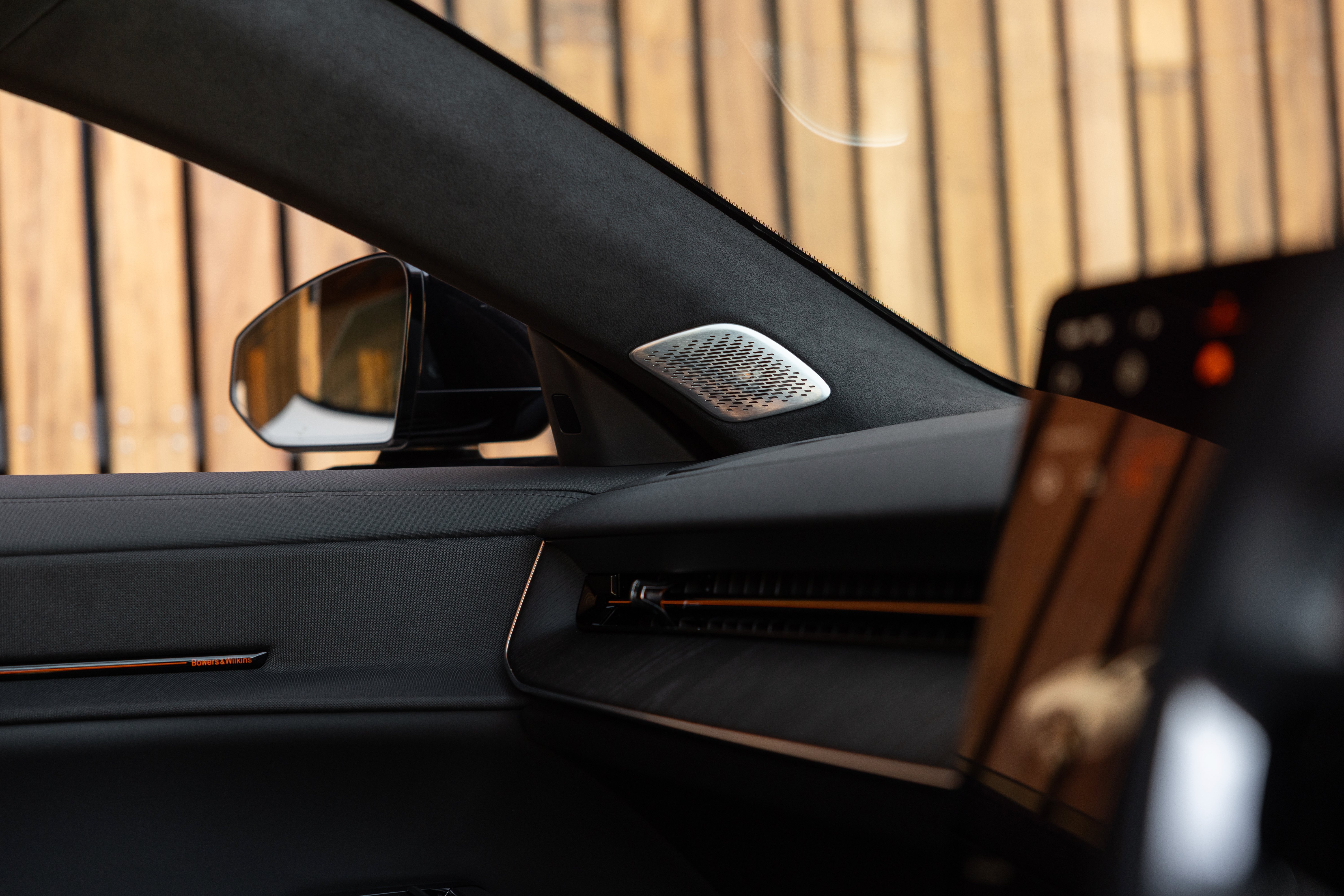
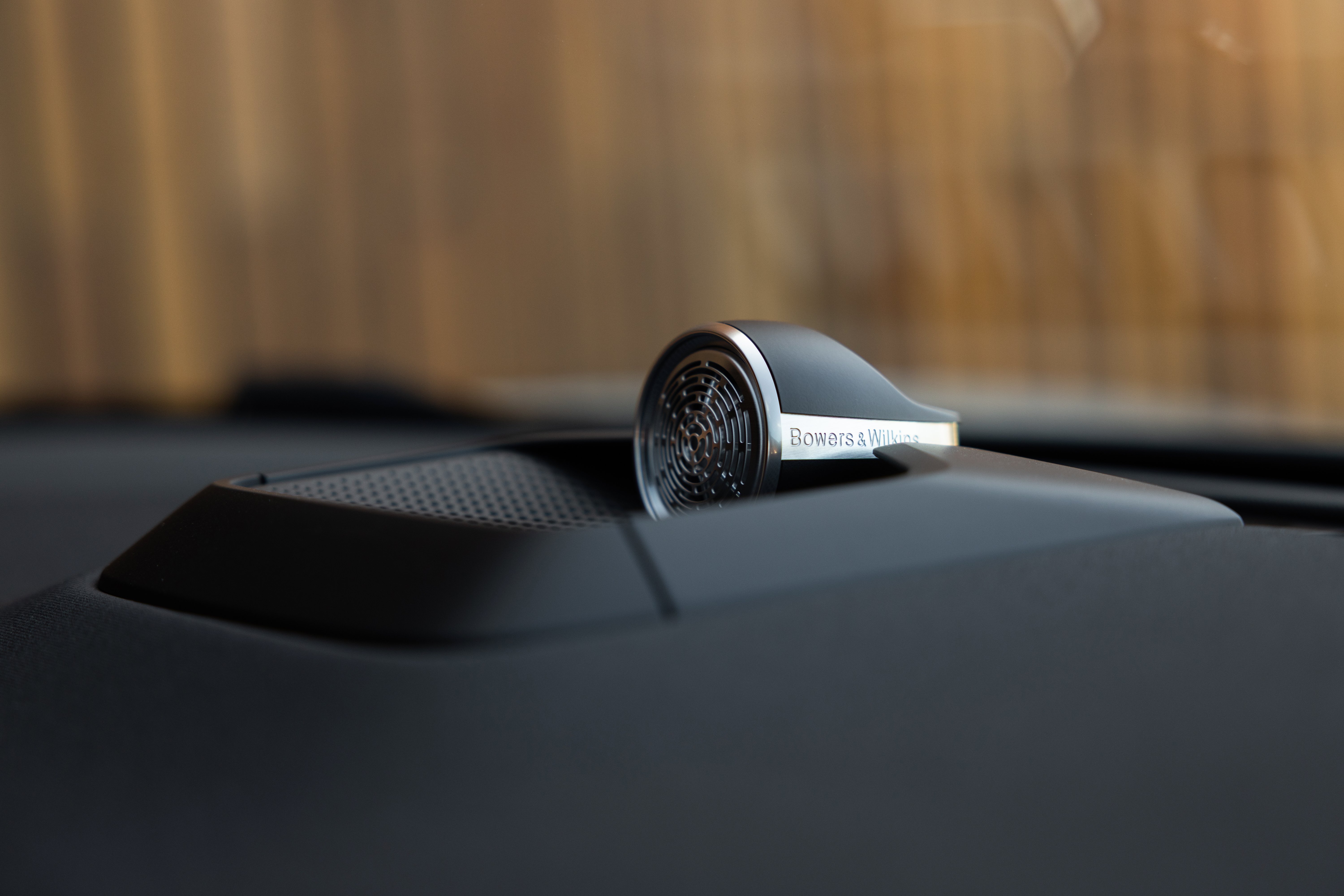
The 21-speaker, 1610-Watt Bowers & Wilkins premium audio system is very good, though the soundstage felt as if it was coming from ahead and behind, rather than being immersive. The highs were a little peaky for our tastes, but there is excellent volume and clarity from this system, and its punchy bass won’t cause migraines after hours of driving.
Despite many in the industry – including sister brand Volvo – making a big deal about using ‘vegan’ leather, Polestar is calling them out. It says organic leather is more sustainable, sourced as a by-product from cows that are raised for the meat industry, rather than being a synthetic material produced from crude oil.
Polestar uses leather from Bridge of Weir, a Scottish outfit with a long history of supplying the likes of Jaguar Land Rover, Aston Martin, and McLaren – including the McLaren F1 – though there is animal-free upholstery available for the P5, made from bio-materials and fossil-free processes.
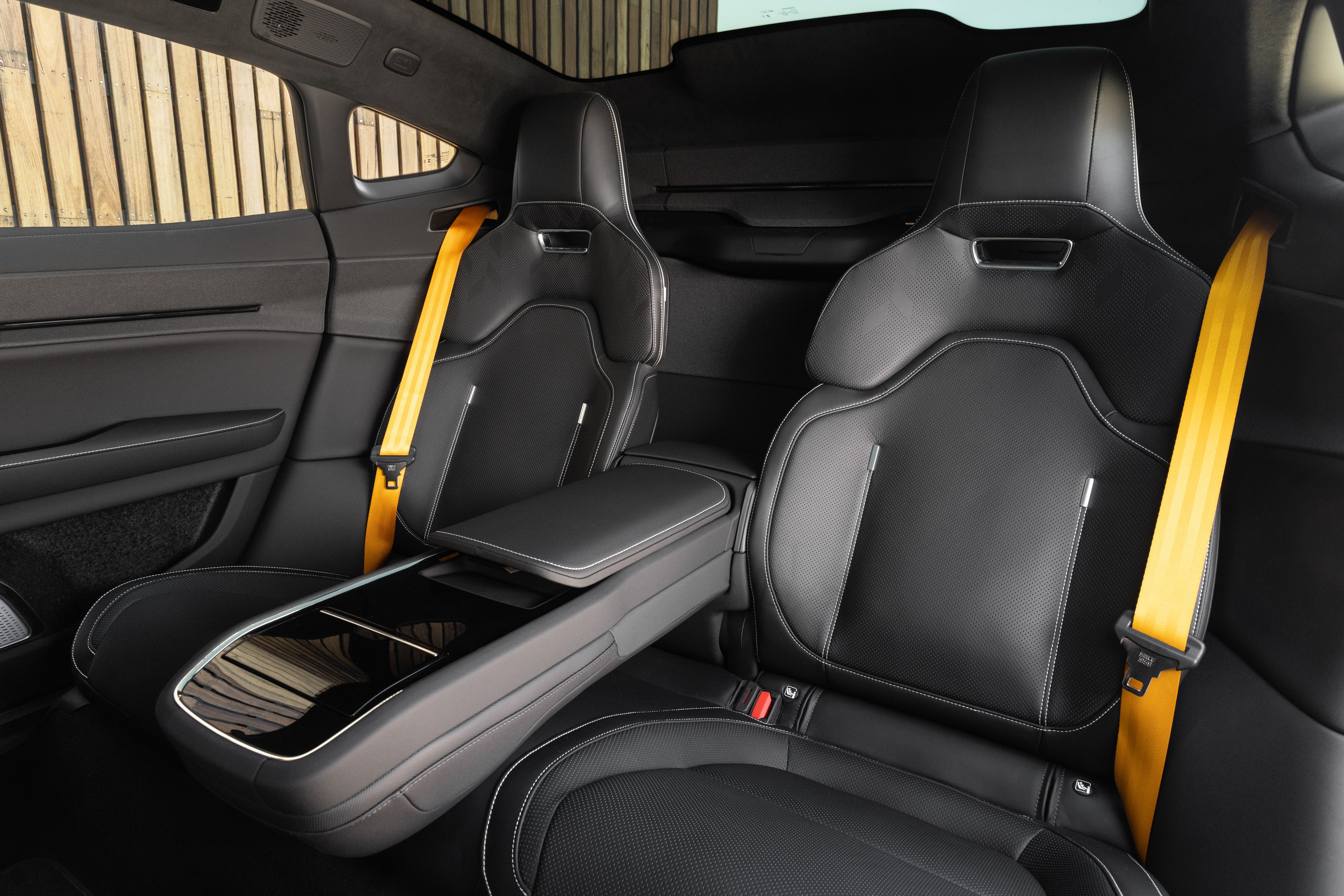
Buyers can choose between black and ivory leather. The former comes across as a little too safe and conservative, while the latter adds some lightness and class to the cabin – the only problem being that white leather tends to show dirt and marks a lot more easily.
The cabin is very well insulated and does a lot to contribute to the feeling of luxury, and adds to the cocooned environment for back-seat passengers. The truth is the Polestar 5 interior is quite lovely, but unfortunately doesn’t really offer a distinct or remarkable experience that projects the fact that you’re inside the brand’s halo model – unless you’re in the back seat.
The big advantage is that it’s all intuitive and easy to jump into and drive, arguably making the P5 ideal as a daily-driven car – being not at all intimidating for partners who may need to borrow the car occasionally.
|
Dimensions |
Polestar 5 |
|---|---|
|
Length |
5087mm |
|
Width |
1979mm |
|
Height |
1425mm (Dual Motor)1419mm (Performance) |
|
Wheelbase |
3054mm |
|
Cargo capacity |
52L – boot underfloor62L – front storage313L – boot (seats up)1076L – boot (seats down) |
To see how the Polestar 5 lines up against the competition, check out our comparison tool
What’s under the bonnet?
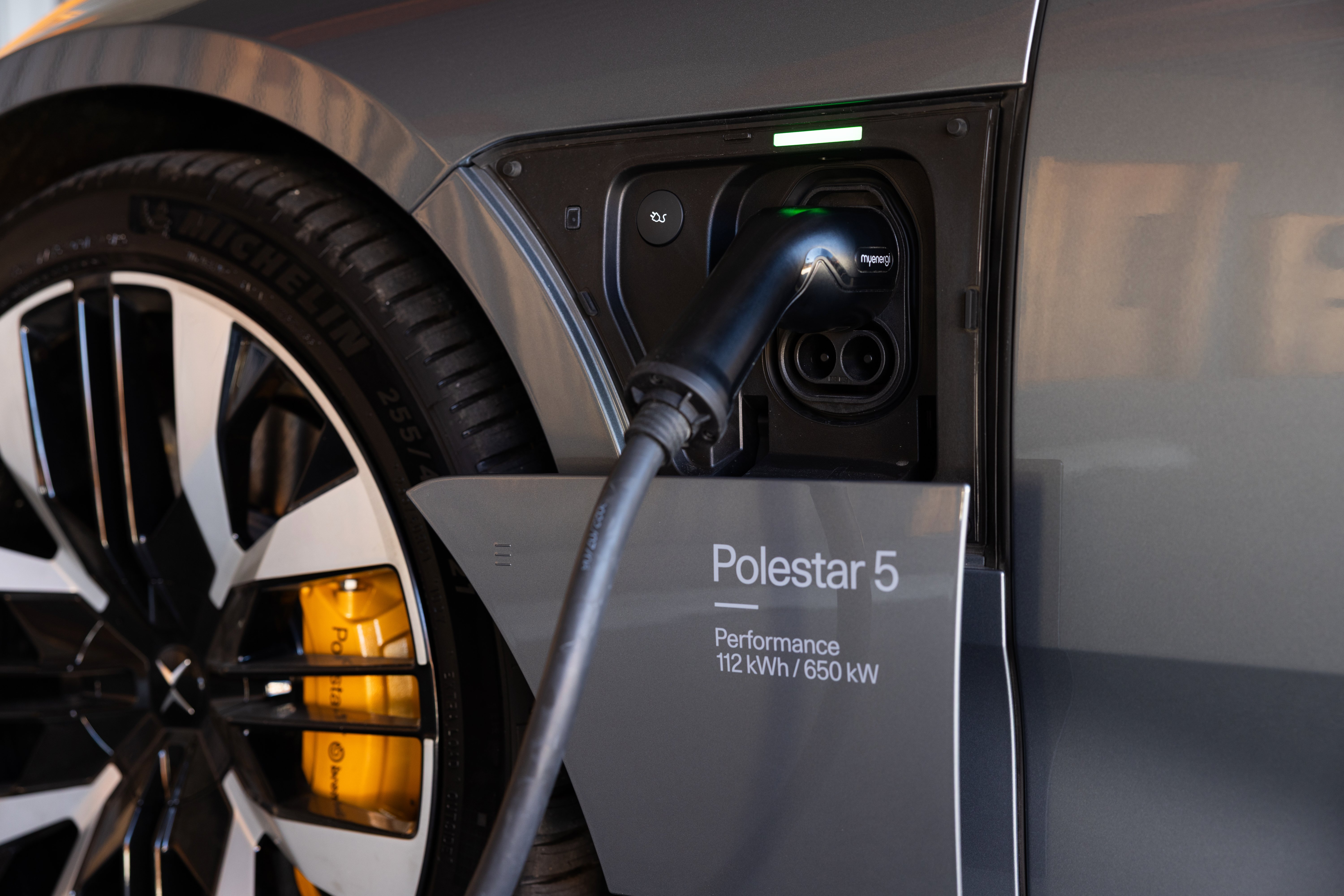
Both versions of the Polestar 5 have dual electric motors, powered by a 112kWh NMC battery pack.
|
Specifications |
Polestar 5 Dual Motor |
Polestar 5 Performance |
|---|---|---|
|
Drivetrain |
Dual-motor electric |
Dual-motor electric |
|
Battery |
112kWh (gross) NMC |
112kWh (gross) NMC |
|
Power |
550kW |
650kW |
|
Torque |
812Nm |
1015Nm |
|
Drive type |
All-wheel drive |
All-wheel drive |
|
Weight |
2500kg |
2500kg |
|
0-100km/h (claimed) |
3.9 seconds |
3.2 seconds |
|
Energy consumption (claimed) |
17.8-18.3kWh/100km |
21.2kWh/100km |
|
Claimed range |
678km WLTP |
558km WLTP |
|
Max AC charge rate |
11kW |
11kW |
|
Max DC charge rate |
350kW |
350kW |
The Polestar 5 Dual Motor puts out 550kW of power and 812Nm of torque, and offers a claimed driving range of 678km, whereas the range-topping Performance jumps up to 650kW and 1015Nm, but range drops to 558km.
To see how the Polestar 5 lines up against the competition, check out our comparison tool
How does the Polestar 5 drive?
Departing from Hobart CBD, the Polestar 5 Performance comes across like any well-mannered electric sedan. It’s silent, predictable, and doesn’t feel too big in its lanes. Sitting behind another P5 in our convoy, it looks spectacular on the road, with a mature presence that is neither loud nor showy.
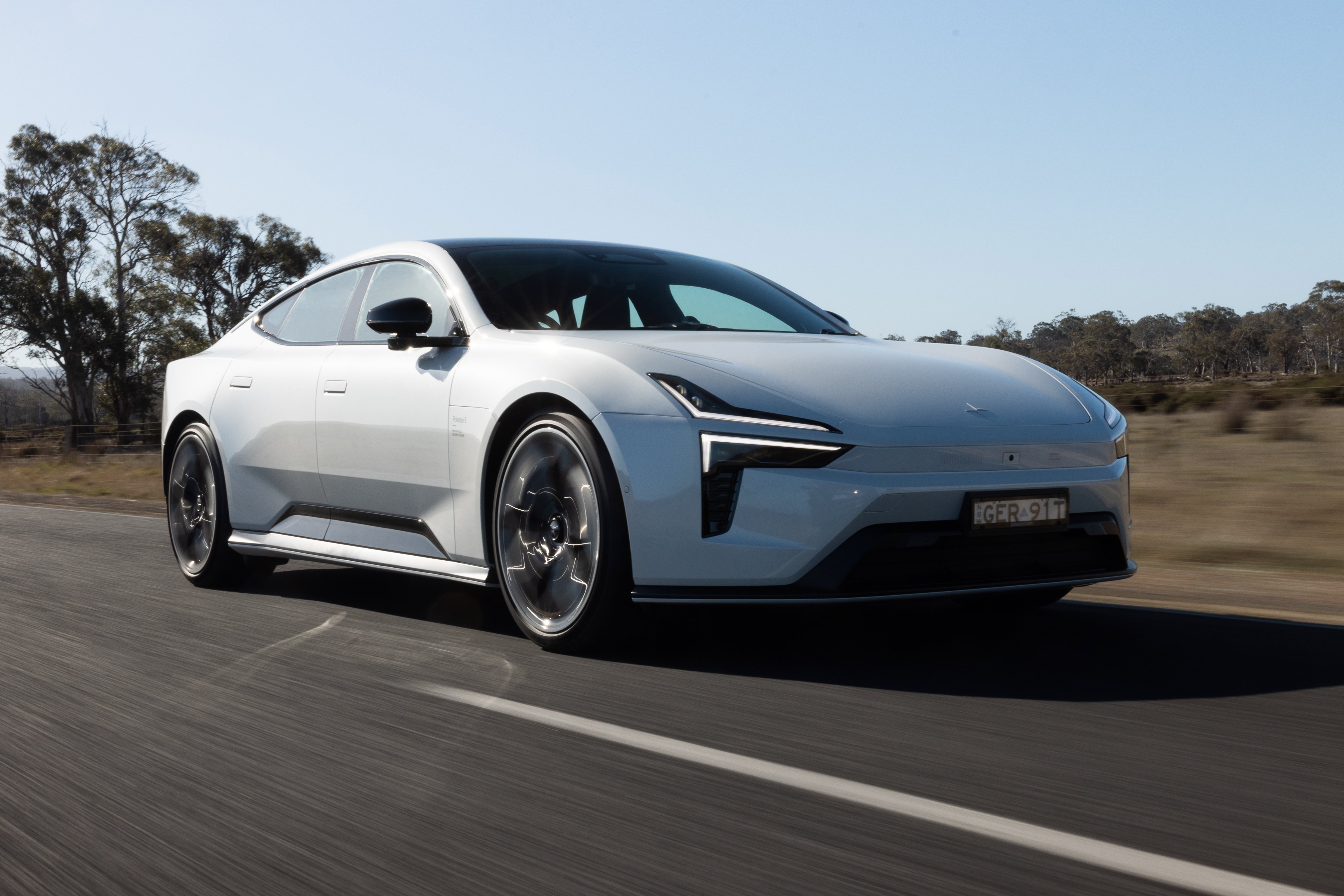
We head inland, following the Derwent through some stages of the Targa Tasmania: tight, winding roads – made more challenging by a sudden downpour. All of which has us driving the Polestar with some caution, acutely aware of its significant torque output.
Polestar’s engineers have tuned the throttle perfectly, adapting exactly to the driver’s demands. This means the P5 can be driven in a relaxed manner through a storm, with its all-wheel drive and vehicle-specific Michelin tyres keeping it planted through wet hillside switchbacks and unmarked country backroads.
The steering, too, is responsive and direct, without ever being twitchy or nervous, and helps the vehicle to feel a little smaller than it is.
Once we start heading towards Tasmania’s north-east, the rain clouds clear and the road opens up – offering us more flowing bends that allow us to begin exploring the grip and performance of the Polestar 5. Both of which, we soon discover, are immense.
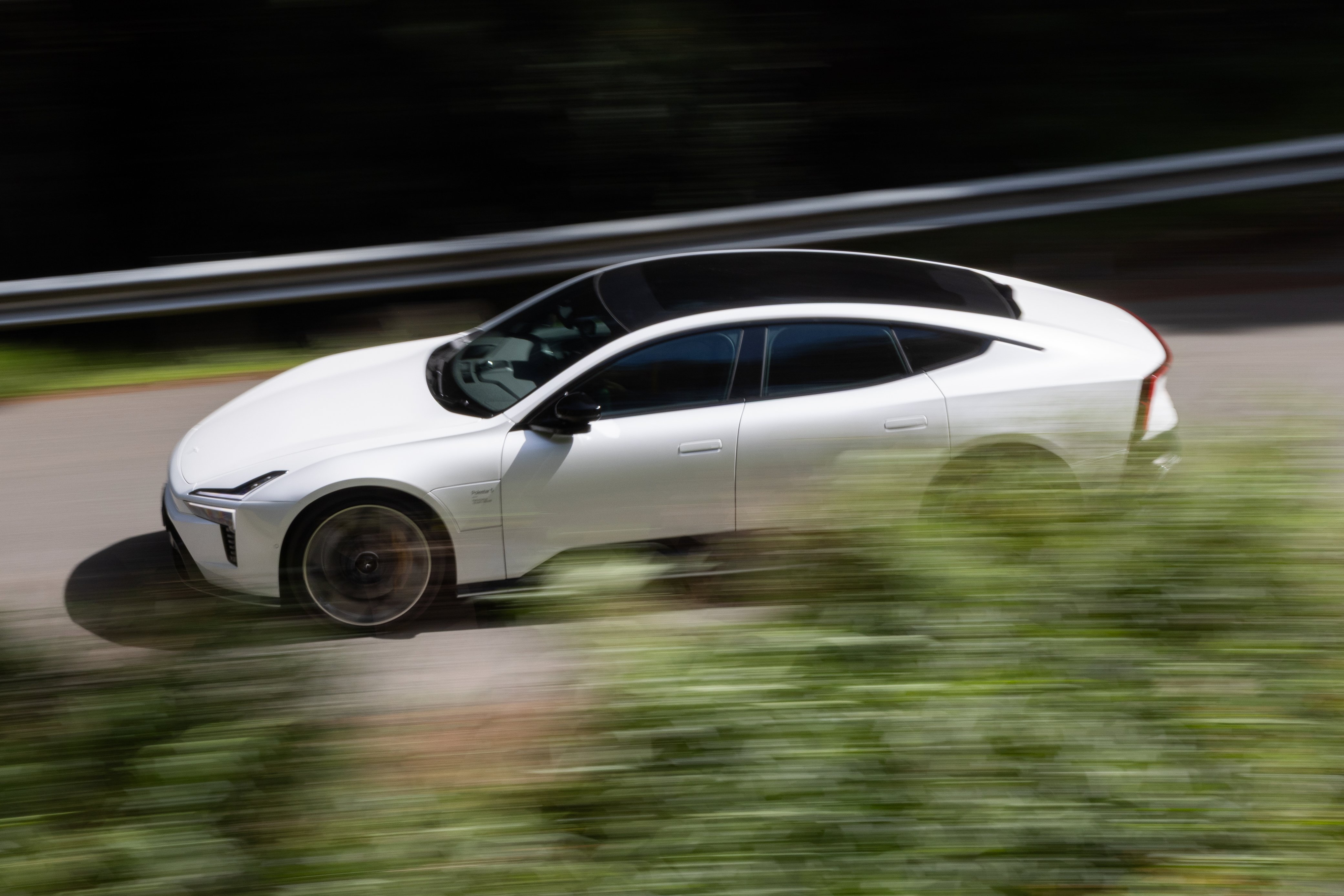
While off-the-mark acceleration is astonishing, as you would expect – being a touch over three seconds to 100km/h – this thing feels like another level of rapid when you stamp the throttle while rolling. The car seems more confident in deploying the bulk of its torque at speed, rather than managing that deployment from a standstill, and it’s the kind of power that will invite expletives from both the driver and their passengers.
This is a car that shrinks the road ahead, giving you the confidence to overtake slow farm utes and motorhomes as soon as a broken centre line presents itself. Just make sure you have plenty of points available on your licence.
Its predictable nature at slow speeds carries over when driving more enthusiastically, with the torque flowing in a linear progression that is entirely manageable – albeit shocking, particularly if you don’t have prior experience with other ultra-fast EVs in this segment.
As we explore country roads in varying conditions, the sophisticated quality of the ride becomes evident. The Polestar 5 Performance uses semi-active MagneRide shocks on the front and rear, with the driver able to switch between Standard, Nimble, and Firm settings via a menu in the infotainment screen.
The Polestar 5 feels taut – thanks to its high-strength bonded aluminium structure – yet never ventures into feeling overly stiff. The active damping does an exceptional job of keeping the car flat through corners, while still absorbing road imperfections beautifully, with the Firm suspension setting tightening everything up and making the vehicle feel busier.
But even in the Standard mode, the P5 will slingshot you through a corner at pretty much whatever speed you pick, with its torque vectoring technology defying physics and making the driver look like a hero.
That grip seems almost infinite and means the car can be steered well beyond what would be considered socially acceptable (read: legal) on public roads. Despite tipping the scales at 2500kg, it seldom comes across as being a heavy car – only ever starting to be caught off guard during aggressive weight transfers.
While the chassis is very good, the Polestar 5 doesn’t offer the same high level of communication as Porsche’s best, making it somewhat more daunting as you keep ratcheting up cornering speed. It means the exact edges of its limits are blurred – though dial it back and it delivers a good balance between performance and comfort.
The Polestar 5 feels rear-wheel drive most of the time, with the front electric motor only kicking in when it needs extra traction or torque vectoring. Mashing the throttle from a standstill or through a tight corner can feel like a switch has been flicked on, as the front wheels join the party.
Though the chassis balance is wonderfully neutral, there can be a faint rear bias exploited via the throttle, before being cancelled out by the engagement of the front electric motor. Mid-corner, a minuscule lift can help pivot the car and add a touch more weight to the front wheels.
In most circumstances, the brake pedal offers strong and linear stopping performance, arresting our speed well and allowing us to set the car up for the next corner. However, once we hit triple digits, hard braking seemed to flatline between 20 and 50 per cent of input. In other words, a progressive push of the brake pedal did not translate to an equal amount of deceleration, which was highly disconcerting. Pushing past the spongy dead zone then seemed to engage the braking response we were after.
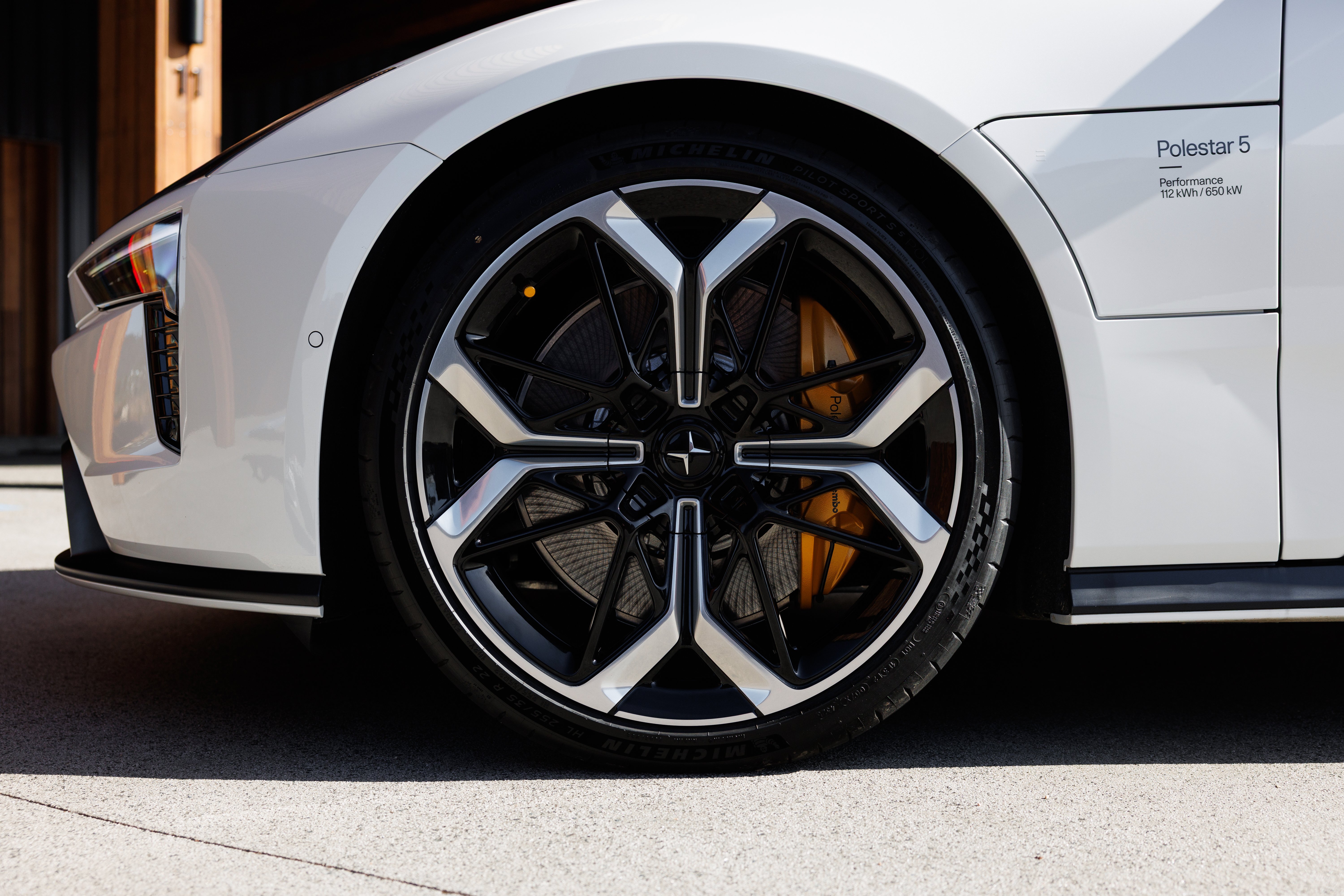
It’s as if the brakes prioritise electricity regeneration, with more force required to actually engage the four-piston Brembo calipers. While this only seemed to occur when carrying bulk speed, it was repeatable, and knocked our confidence in really pushing above 7/10ths. We want to explore this more in future with the one-pedal driving settings turned up to the highest level, as that could transfer the regenerative engagement to the throttle, leaving the brake pedal to do its one main job.
At speed, the steering didn’t venture far from your typical EV, lacking somewhat in feedback from the front wheels – but the ratio itself is just about spot on. This is one of the few areas where the Polestar lags Porsche. We found the Firm setting just added unnecessary weight without actually doing anything to elevate the experience, and we found ourselves deliberately leaving it in Standard mode.
Besides the braking system, there were really only two main issues we encountered. The first was the adaptive cruise control, which freaked out on me several times, disengaging and demanding I take over – despite having both hands on the wheel – and sometimes not navigating a highway bend with fresh white lines. For whatever reason, the system performed flawlessly for my co-driver, so maybe it just didn’t like me specifically.
The second was visibility – and it wasn’t regarding the lack of a rear windscreen. The external side mirrors are mounted where the chunky A-pillars meet the shoulder line, creating two blind spots, depending on your seating position. For me, this meant not being able to see where the road went in a tight S-bend, whereas my co-driver almost missed a van entering a roundabout we were approaching.
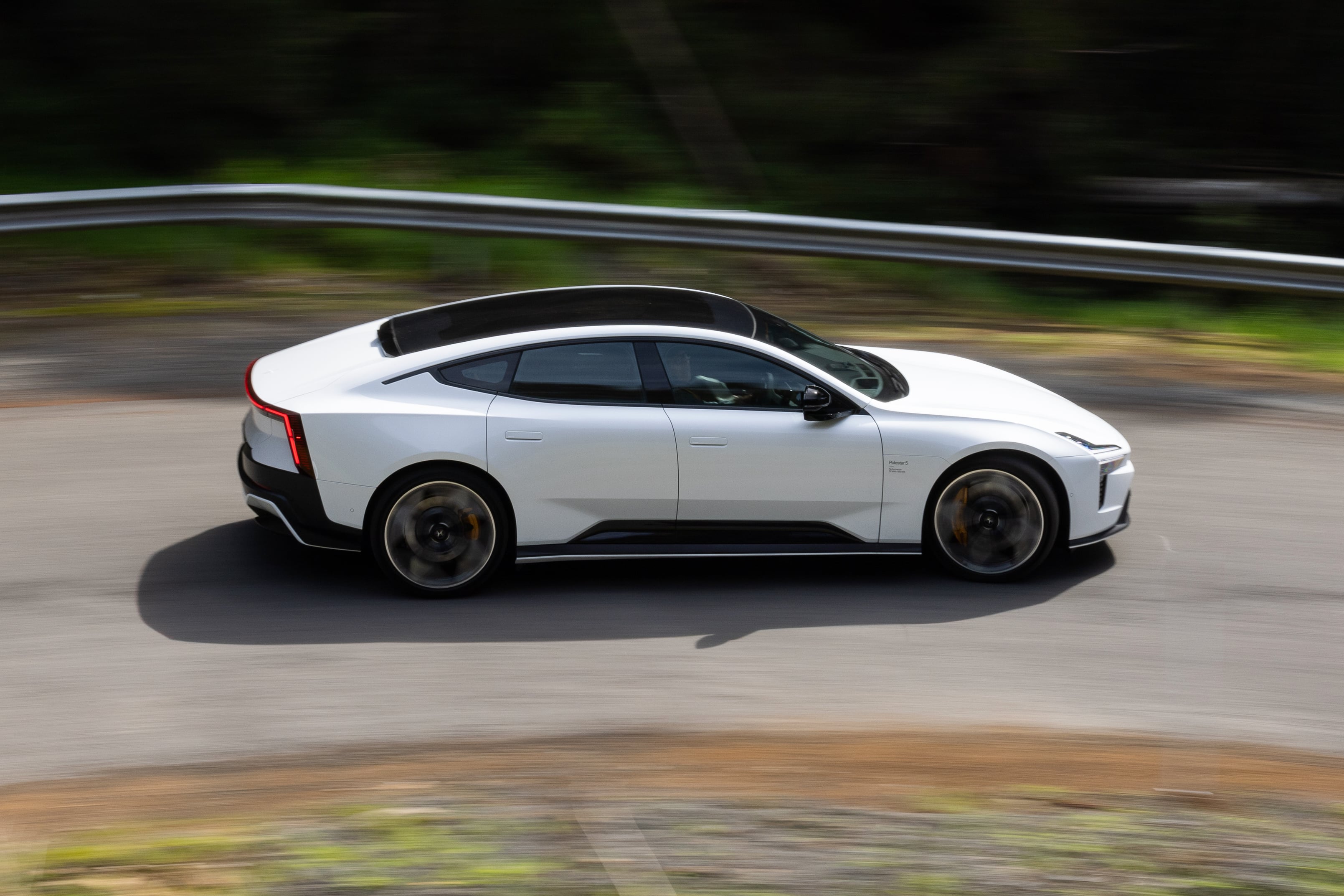
While those were mostly outlier events, most of the time the Polestar 5 Performance delivers plenty of excitement and enjoyment, regardless of what number is showing on the speedometer. It’s relaxed when you want it to be, and blistering quick when you need it to be.
Our drive really highlighted how the Polestar 5 could and should be used – driving through the city, along highways, and through winding country roads to reach our end point. Most of the time, we were cruising and enjoying the quiet and subtle luxury, but still had a mountain of performance available to exploit when the mood took us.
To see how the Polestar 5 lines up against the competition, check out our comparison tool
What do you get?
Being a luxury GT, both variants of the Polestar 5 are well equipped, with the Performance mainly getting suspension and powertrain upgrades, along with some subtle styling touches.
2027 Polestar 5 standard equipment highlights:
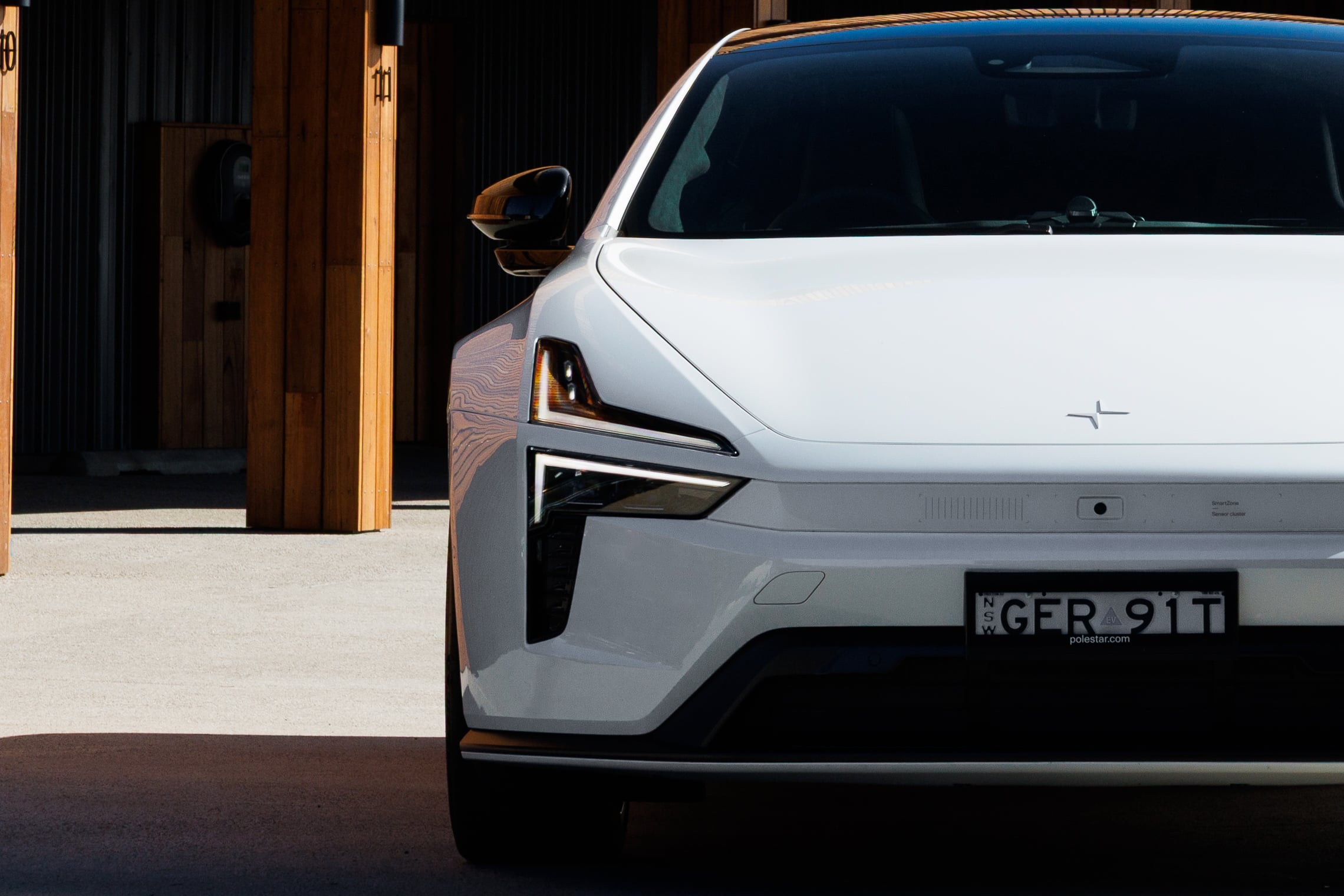
- Pixel LED headlights and full-width LED rear lighting
- Flush power-operated door handles, frameless side glass and soft-close doors
- Panoramic infrared-coated glass roof and powered tailgate
- Recaro-designed 12-way powered front sport seats with manual cushion extension
- Electric reclining rear backrests and powered 60:40 rear-seat folding
- Four-zone climate control with rear control panel, PM2.5 filtration and CleanZone
- 9.0-inch digital instrument display
- 14.5-inch portrait touchscreen
- 8.9-inch digital rear-view mirror
- Android Automotive OS with Google built-in, 5G and over-the-air updates
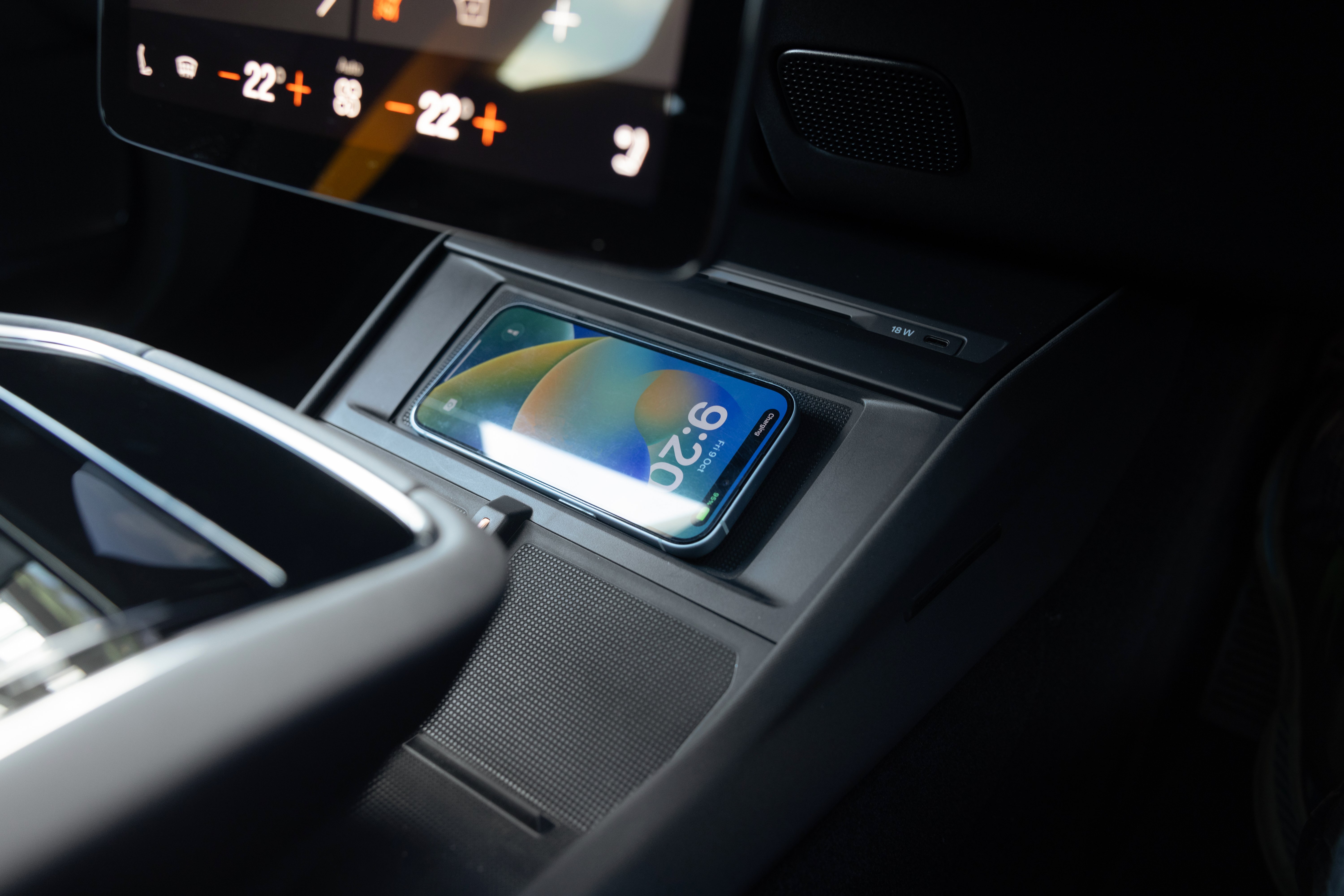
- 15W wireless phone charger; four USB-C ports
- 10-speaker, 300W high-performance audio system
- 20-inch Aero wheels and passive high-capacity dampers
- Black seatbelts with Swedish-gold stripe and anodised brake calipers
Polestar 5 Performance adds:
- Semi-active MagneRide dampers with Standard, Nimble and Firm modes
- 21-inch Performance wheels
- Bowers & Wilkins 1610W 21-speaker audio with active road-noise cancellation
- MicroSuede headlining
- Swedish-gold seatbelts, brake calipers and valve caps
- Gloss-black lower cladding and mirror caps
Polestar is currently offering Launch Edition models with Pilot Pack, Climate Pack, and Graphical head-up display.
Buyers can also choose to upgrade with Nappa Leather – which includes 14-way front seats with ventilation, massage, and powered bolsters, and rear seat ventilation, heating, and lumbar – plus 21- or 22-inch alloy wheels, and a towbar package. The Dual Motor can also be optioned with a Bowers & Wilkins stereo and MicroSuede headlining, both of which are standard in the Performance.
To see how the Polestar 5 lines up against the competition, check out our comparison tool
Is the Polestar 5 safe?
The 2027 Polestar 5 remains unrated by both ANCAP and Euro NCAP, though the company says the vehicle was developed targeting five stars.
Standard safety equipment highlights:
- 8 airbags, including inner-side airbags and curtain airbags
- Autonomous emergency braking and collision avoidance/mitigation for vehicles, cyclists and pedestrians
- Adaptive cruise control; Pilot Assist and lane-change assist with included Pilot Pack
- Blind-spot monitoring with steering assist
- Lane departure warning, lane-keep assist, run-off-road mitigation and oncoming-lane mitigation
- Driver monitoring and Driver Alert Control
- Rear collision warning/mitigation and rear cross-traffic assist with braking
- Exit assist, road-sign information and intelligent speed assistance
- Post-impact braking and trailer stability assistance
- 360-degree camera with 3D view, 12 ultrasonic sensors and direct tyre-pressure monitoring
- 11 exterior cameras, one driver-monitoring camera and one forward radar
- ISOFIX/i-Size anchorages on the outer rear seats
To see how the Polestar 5 lines up against the competition, check out our comparison tool
How much does the Polestar 5 cost to run?
The Polestar 5 is covered by the company’s five-year, unlimited-kilometre warranty – with five years of roadside assistance – while the battery gets an eight-year, 160,000km warranty.
|
Servicing and Warranty |
Polestar 5 |
|---|---|
|
Warranty |
5 years, unlimited kilometres8-year/160,000km conditional battery warranty |
|
Roadside assistance |
5 years |
|
Service intervals |
24 months/30,000km |
|
Capped-price servicing |
N/A |
|
Average annual service cost |
N/A |
|
Total capped-price service cost |
N/A |
Polestar has not yet published service costs for the model, though service intervals are reported to be every 24 months or 30,000km – whichever comes first.
To see how the Polestar 5 lines up against the competition, check out our comparison tool
CarExpert’s Take on the Polestar 5 Performance
The Polestar 5 Performance is every bit the electric performance tourer the company claims it to be. It offers approachable, mature luxury, combined with seemingly endless performance – both in terms of straight-line speed and mind-bending cornering ability.
There’s no doubt that Polestar has thrown everything into its development, even if areas of the interior are a little more conservative than we would expect for a halo model.
It should be no surprise, but – from the back seat, at least – the Polestar 5 is definitely a performance GT, rather than a luxury saloon to be chauffeured in. What does that mean in a practical sense? You can take your partner and teenage kids (or another couple) away to the Blue Mountains, out to the Yarra Valley, or down the coast of Tasmania, all without compromising your own driving enjoyment.
Our experience was that its high-speed braking and slightly muted chassis don’t take anything away from its intended purpose, offering a point-and-shoot quality that few other cars can match.
Perhaps its greatest strength is that it doesn’t feel intimidating to drive – despite what its supercar-like numbers may suggest – and would absolutely fill the needs of a family on a day-to-day basis, while also providing that roller-coaster-like experience on weekends. It’s something of a masterstroke that allows the P5 to be driven very quickly with or without much expertise.
Then there’s the price. This is a genuine alternative to Porsche’s Taycan and Audi’s RS e-tron GT, but at a far lower price point, and with a more approachable character.
We won’t go so far as to call it a bargain but, pound-for-pound, the Polestar 5 Performance has a distinct advantage – particularly for buyers wanting something a little subtler, but without compromising on looks or real-world performance.
CarExpert can save you thousands on a new Polestar 5. Click here to get a great deal.
Click the images for the full gallery
