

In 2016, Volkswagen offered two SUVs: The Tiguan and the Touareg, and they accounted for 14 percent of total sales. Ten years later, VW has five SUVs and they account for 80 percent of U.S. sales. The company, once known for compact cars, now mostly sells SUVs in North America. Hey, times change.
When Atlas debuted as a 2018 model, it gave VW an entry into the seven-seat SUV segment. Since then, Atlas and the five-passenger Atlas Cross Sport have sold over 1 million units combined. And 1 in 3 VWs sold is an Atlas, making it the brand’s third-best seller behind Taos and Tiguan.
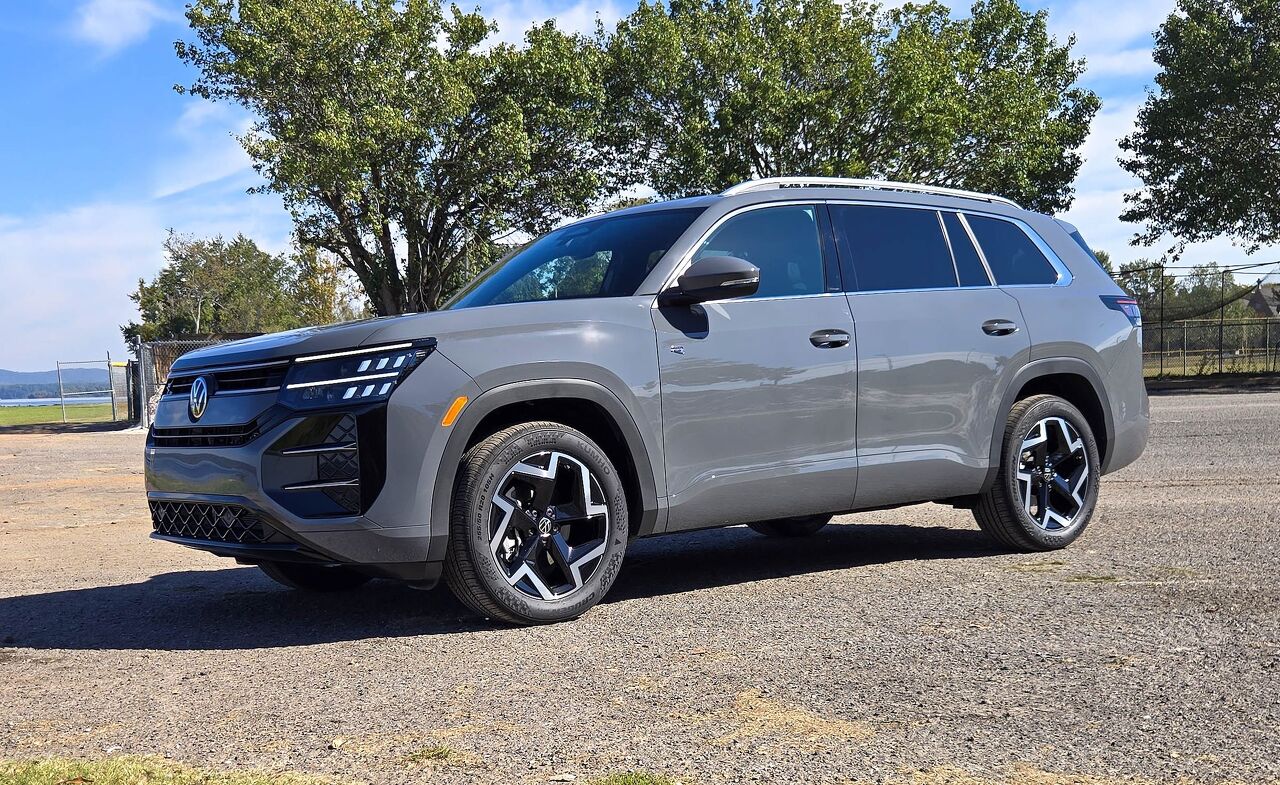
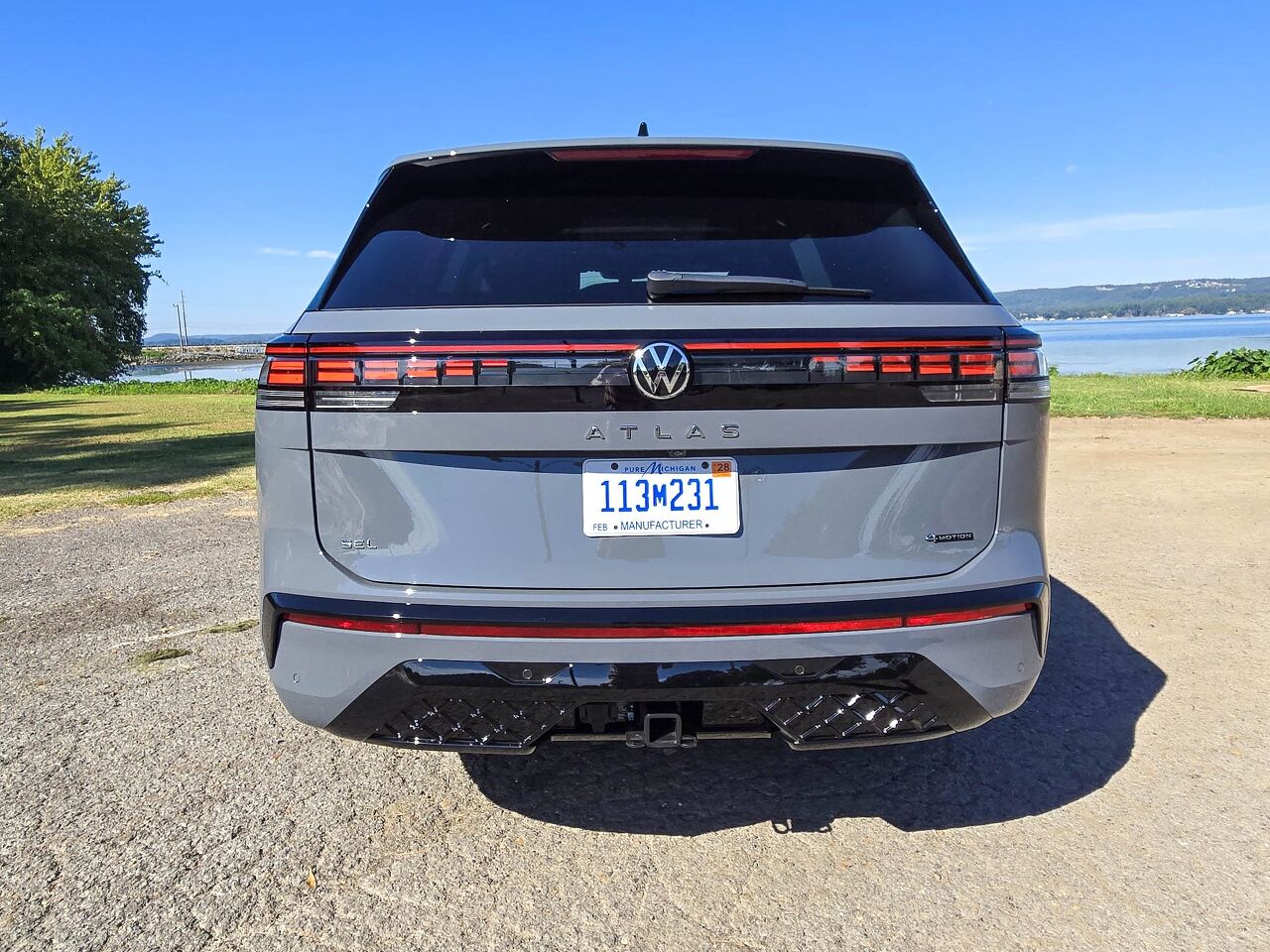
There have been multiple facelifts since ’18, but for 2027, Atlas gets all-new sheet metal. It rides on an updated version of the existing MQB platform and is dimensionally similar to the outgoing model. Keeping in the same styling vein as its latest Tiguan, Atlas continues as a seven-passenger, three-row SUV, and will compete in the hotly contested family-friendly “I’m not buying a minivan” segment.
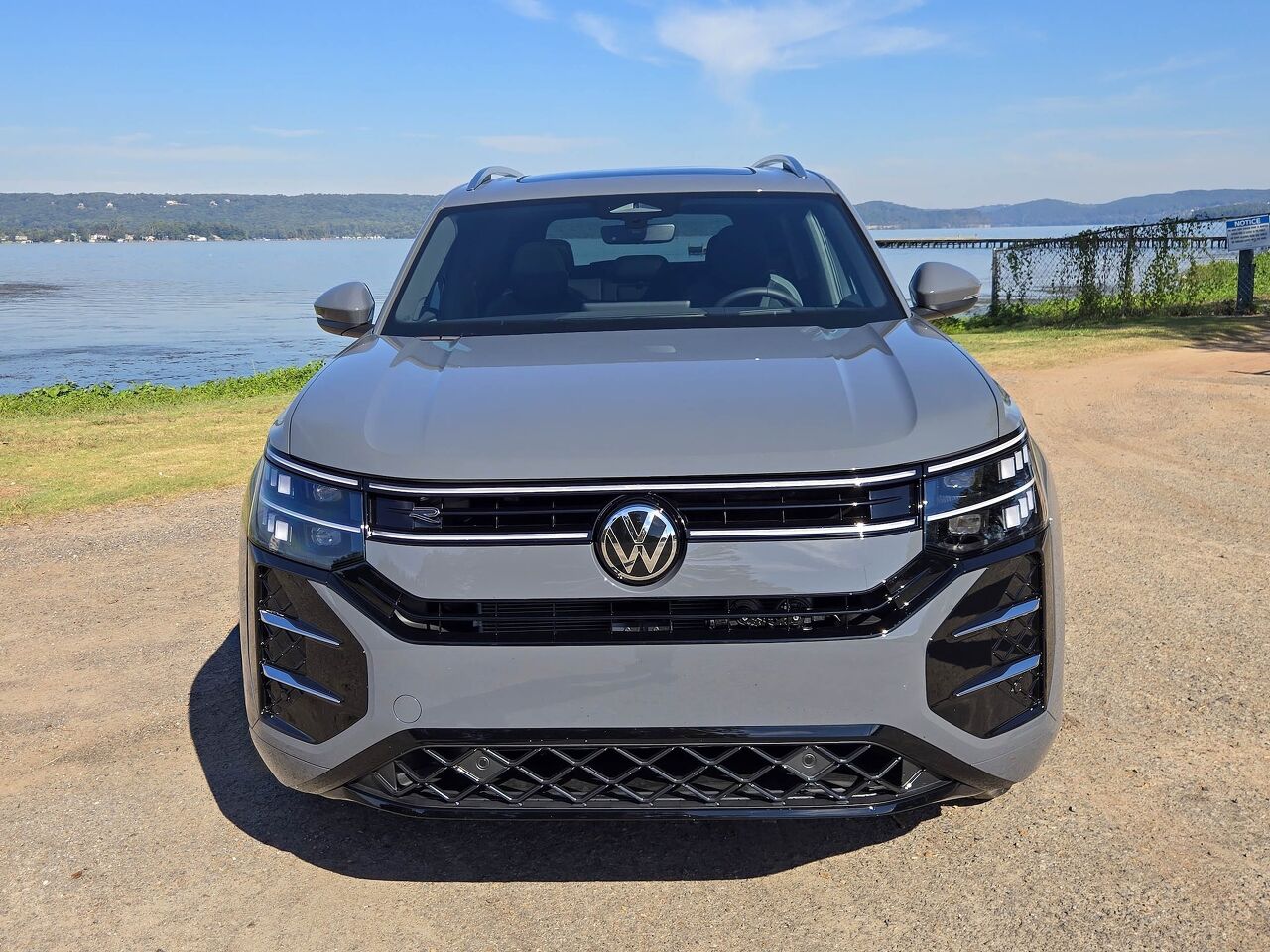
The new Atlas’ sheet metal loses its slab-sided looks in favor of a slightly curvier shape. While many SUVs are going back boxier styling (Hyundai Santa Fe, Kia Telluride, Honda Pilot), VW opted for a less square shape. Among VW SUVs, its look is more distinctive than the smaller Tiguan, but still on the subdued side.
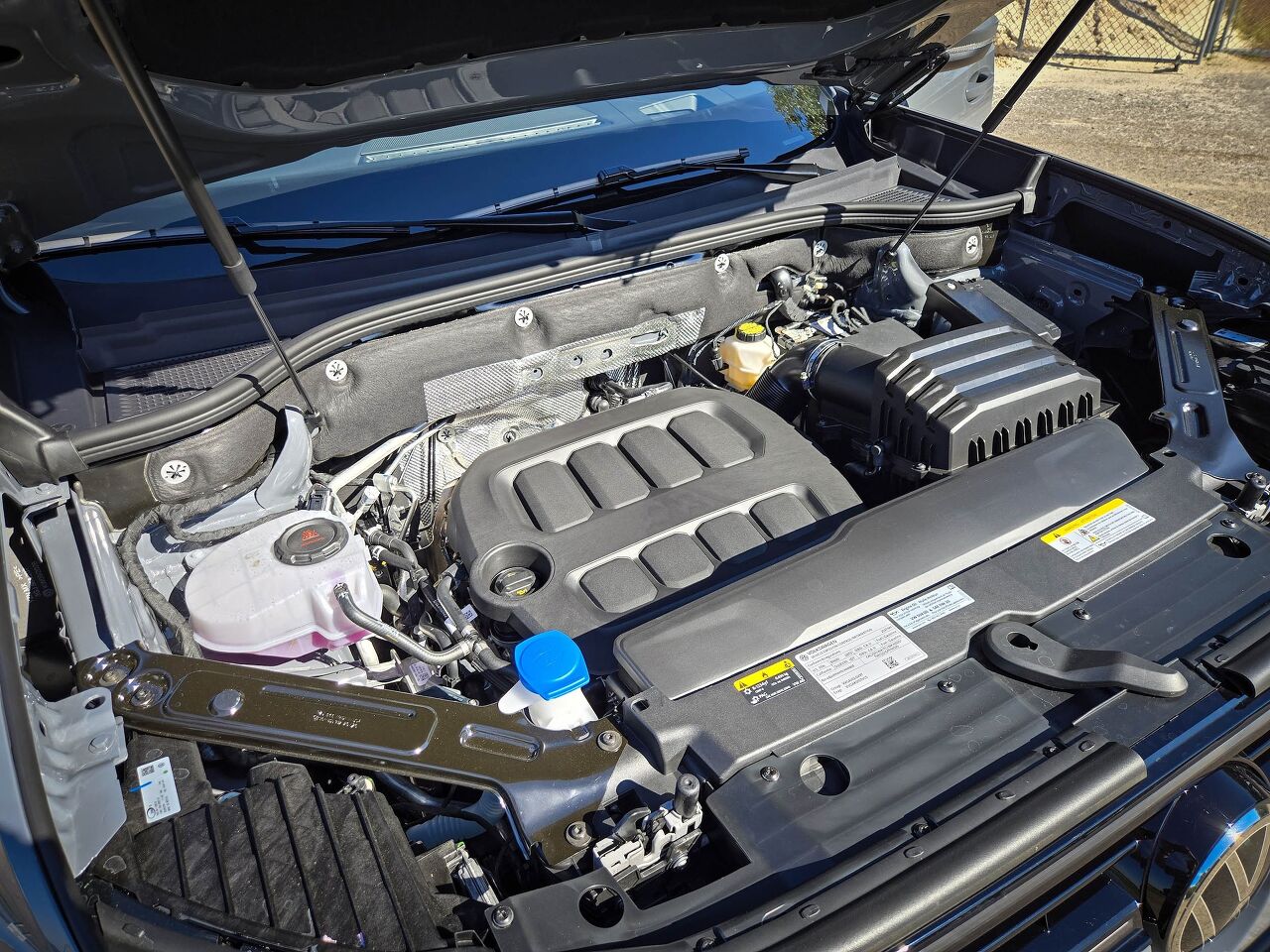
Under the hood, Volkswagen employs the 2.0-liter turbocharged-and-intercooled EA888 evo5 four-cylinder. It makes 282 horsepower (13 more than the outgoing Atlas), and 258 lb-ft of toque. This is the same engine found in the Tiguan Turbo. (The previous V-6 is kaput.) The EA888 is still mated to an eight-speed automatic, and can be had in front-wheel drive (FWD) or 4Motion all-wheel drive (AWD). Fuel economy is rated at 22 city, 29 highway, and 25 combined on FWD models, and 20 city, 27 highway, and 23 combined on 4Motion AWD models. Like the previous Atlas, you can tow 5,000 lbs. with the latest version, which is on par with many in the segment.
At the launch event in Huntsville, Alabama, I drove an SEL R-Line model with 4Motion. A twist of the column-mounted gearshift, and we’re off.
Acceleration was sufficient, offering decent midrange power, but your neck won’t be sore from rocket-like throttle. Power delivery was linear, and the eight-speed auto shifted smoothly; paddle shifters could be used, too. I’m not a fan of the aforementioned twist-and-go column-mounted gear shifter, however. While it frees up space on the center console, the operation isn’t immediately intuitive. Selecting drive modes (Eco, Comfort, Sport, Off-road, Snow, Custom) is done using the center-console-mounted dial, which also can be used to adjust volume on the sound system.
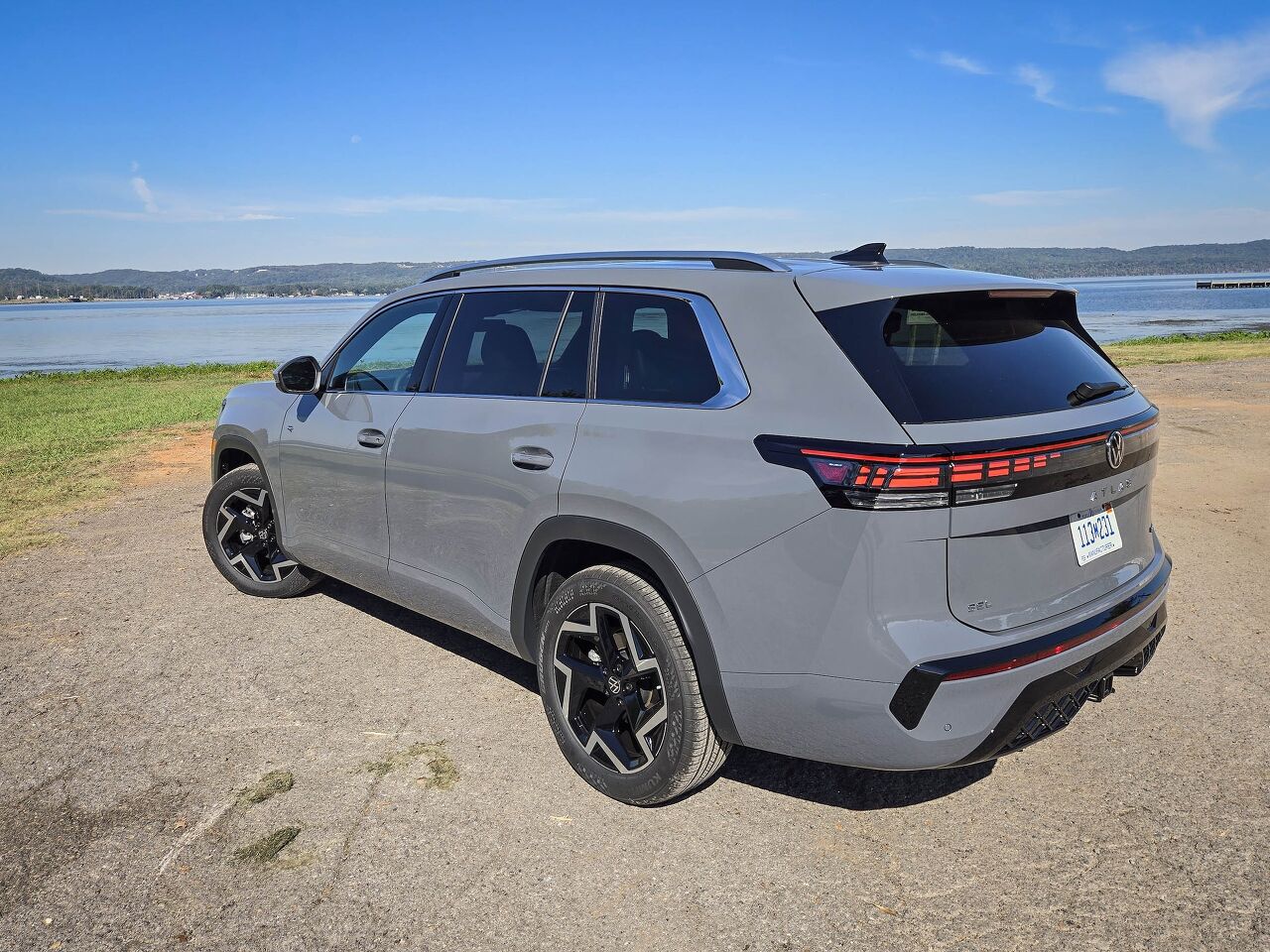
The Atlas’ ride is firm, which my passenger and I both noted. It’s not jarring, but stiffer than others in the segment. Our drive offered ample opportunity to toss this large VW around in the corners. For what it is, it handled well, offering nicely weighted steering with good feel. Wearing 255/50R20 Kumho Crugen HP71 tires, the vehicle felt planted and predictable. Volkswagen has a history of making “driver’s cars,” and the Atlas’ good steering and firmer ride have hints of that European feel. Is it the GTI of seven-passenger crossovers? It’s still a big SUV, but there are hints of driving enthusiasm.
Volkswagen often has above-average interior styling, and that was the case with Atlas, especially the R-Line models. The cabin felt modern and airy, with real bent wood accents and other higher-end materials. It’s comfortable, sleek, and appealing. The SEL R-Line tester included a panoramic sunroof, navigation, a heads-up display, 30-color ambient lighting, and heated and cooled Vareena leather seats. There are memory functions for both 12-way adjustable driver and passenger seats, too.
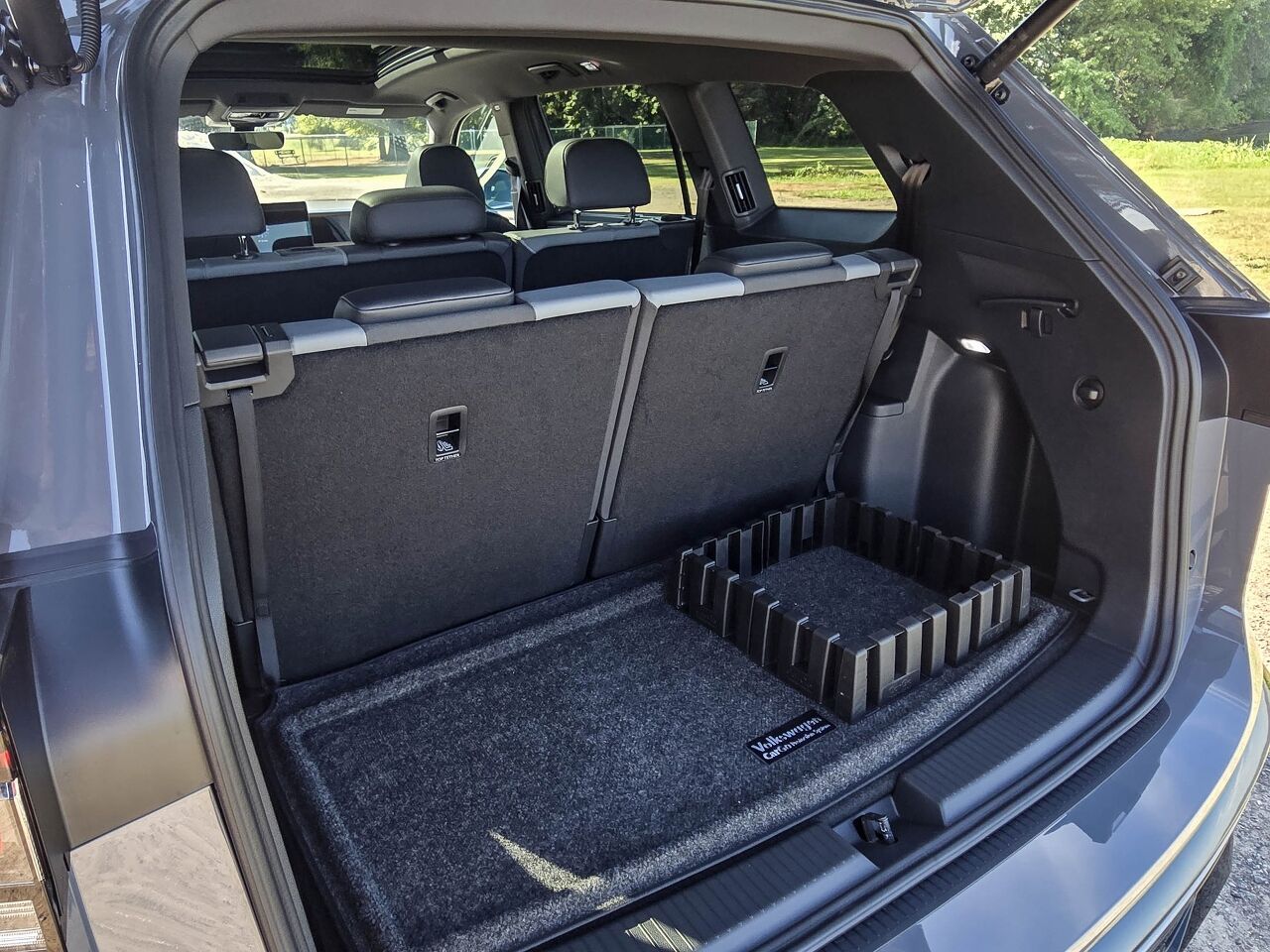
The front seats were comfortable and supportive and look good. A middle bench seat (which will allow for three car seats) is standard. Dual captain’s chairs are a $695 option. The third row is bigger than many with class-leading space. I scampered back there and found it just big enough to accommodate my 5-foot, 7-inch height, but anyone taller wouldn’t want to be there for long.
Back up front, the gauge cluster was configurable, and the R-Line’s big 15-inch display was very easy to read. At that size, how couldn’t it be? It was also pretty easy to use. There were voice-activated features, such as climate control. I did have some issue getting the thing to stop listening to me. “Shut up” wasn’t a command it recognized.
The infotainment is full-featured and has optional subscription-based entertainment via myVW+ In-Vehicle Premium. This service bundles Wi-Fi, premium speech with generative AI using ChatGPT, and AirConsole Games. AirConsole lets you play 20 games, including classics like Tetris, Pac-Man, and Uno (yes, the card game), while using your smartphone as a controller. Some games even interact with the car’s ambient lighting. The myVW+ bundle is free for three months. After that, it’s $149 annually.
Atlas has a dual wireless Qi2 charging setup in the center console with MagSafe functionality. This lets the driver and front passenger charge smartphones simultaneously. Atlas also has seven USB-C ports, one 12-volt plug in the cargo area, and a 115V power outlet. VW offers an outstanding 14-speaker, 16-channel, 700-watt Harmon Kardon Premium Audio system, which sounds great. The standard nine-speaker Harmon Kardon system is good, too.
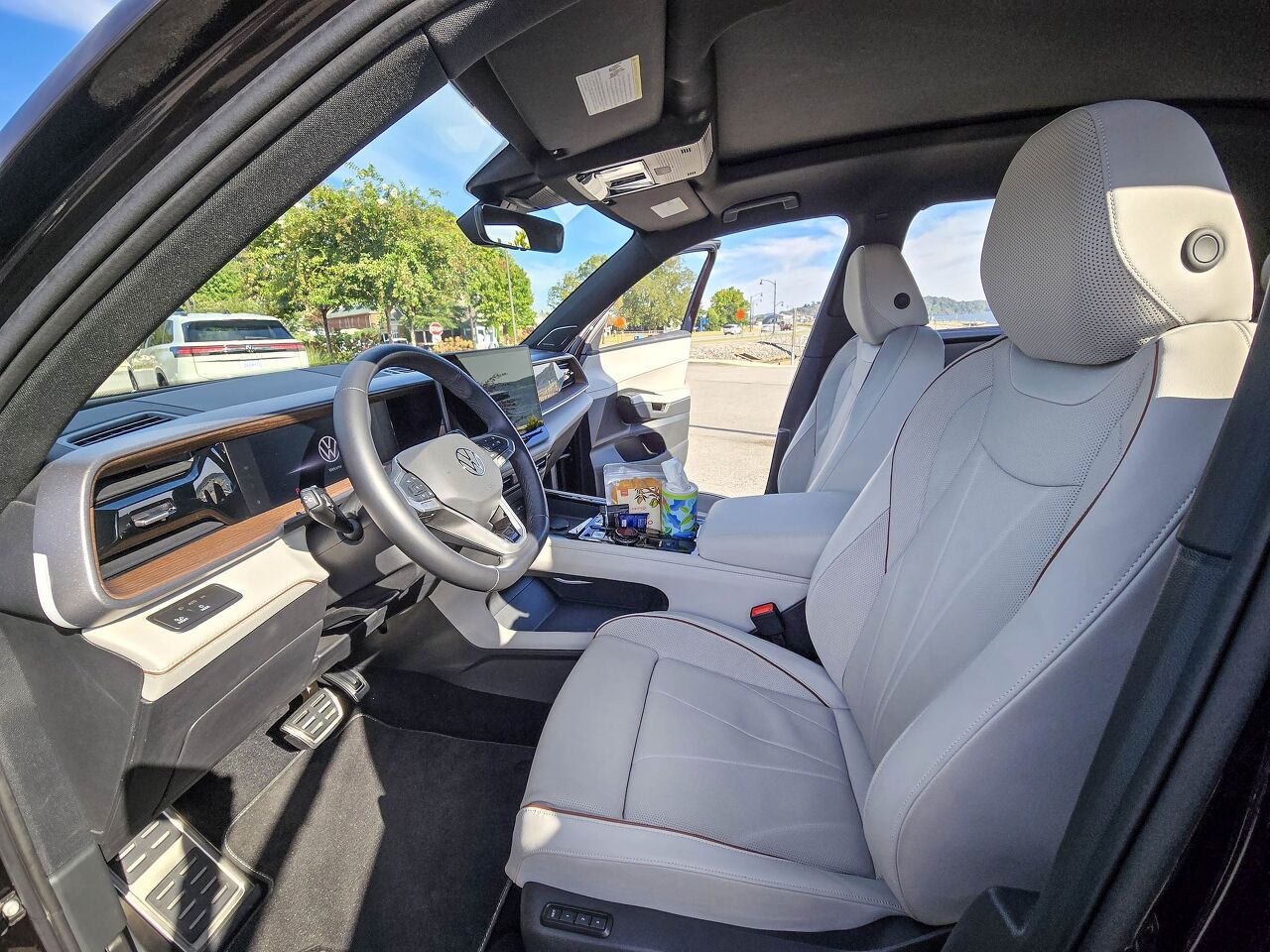
In a nutshell, the Atlas SEL R-Line interior is a strong point. It’s very modern, spacious, comfortable, and versatile. Even if you don’t find the exterior remarkable, the interior is very good.
Atlas has multiple updated safety bits, too. This includes a new front center airbag, standard front and rear Park Distance Control, and the IQ.DRIVE suite of safety features. This includes Emergency Assist Plus, which can guide the vehicle to the right shoulder if it senses an unresponsive driver after 25 seconds of zero steering inputs.
The SEL R-Line I drove had premium touches throughout and felt distinctly European. The interior was exceptionally stylish and comfortable; even the switch gear felt of high-quality. I briefly rode in an SE model, and you don’t get the wood trim and some of the other interior accoutrements that make this a vehicle a segment standout. Even so, all Atlases have a lot of standard equipment, offer a pleasant on-road driving experience, and fresh new looks. They might not be of the highest performance — and there’s no hybrid option (yet?) — but Atlas feels more upscale than some of the competition.
Pricewise, a 2027 VW Atlas in base SE FWD trim starts at $41,610, a $2,300 increase from the previous model. A top-of-the-line SEL Premium R-Line with 4Motion lists for $56,610. Destination is an additional $1,525.
Most mainstream automakers offer a seven-seat SUV, and there’s plenty of good choices. Volkswagen will need to rely on its reputation for European style, driving performance, standard features to appeal to buyers. Atlas has the credentials to be a player in the segment but has stiff competition from many angles, especially Kia and Hyundai. VWs have long been associated with a German flair that’s a bit different, a little more driver-oriented, all with an additional premium feel. Atlas is all of those things. Now we’ll have to see whether that’s what buyers still want.
[Images: Author]
Become a TTAC insider. Get the latest news, features, TTAC takes, and everything else that gets to the truth about cars first by subscribing to our newsletter.
