
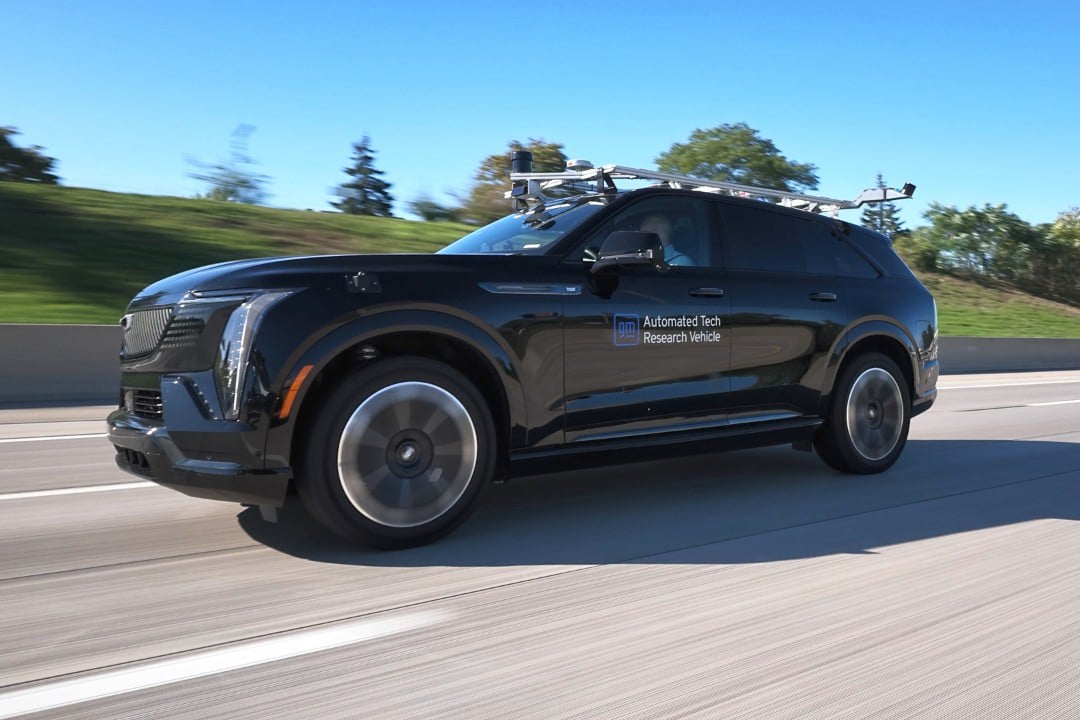
General Motors has confirmed its eyes-off autonomous driving system will expand well beyond the Cadillac Escalade IQ, with light-duty pickups and crossover SUVs set to follow.
Speaking at GM Forward, the automaker’s annual technology showcase held in New York this week, GM chief product officer Sterling Anderson said the system would move from halo models into the heart of the lineup.
“Today we’re announcing that autonomy will expand not just from our halo vehicles and our full-size SUVs, but across the portfolio,” Mr Anderson said.
“It’ll land in light-duty pickups, it’ll land in crossovers. It’ll start on highways, and it’ll expand off the highways to the rest of your drive.”
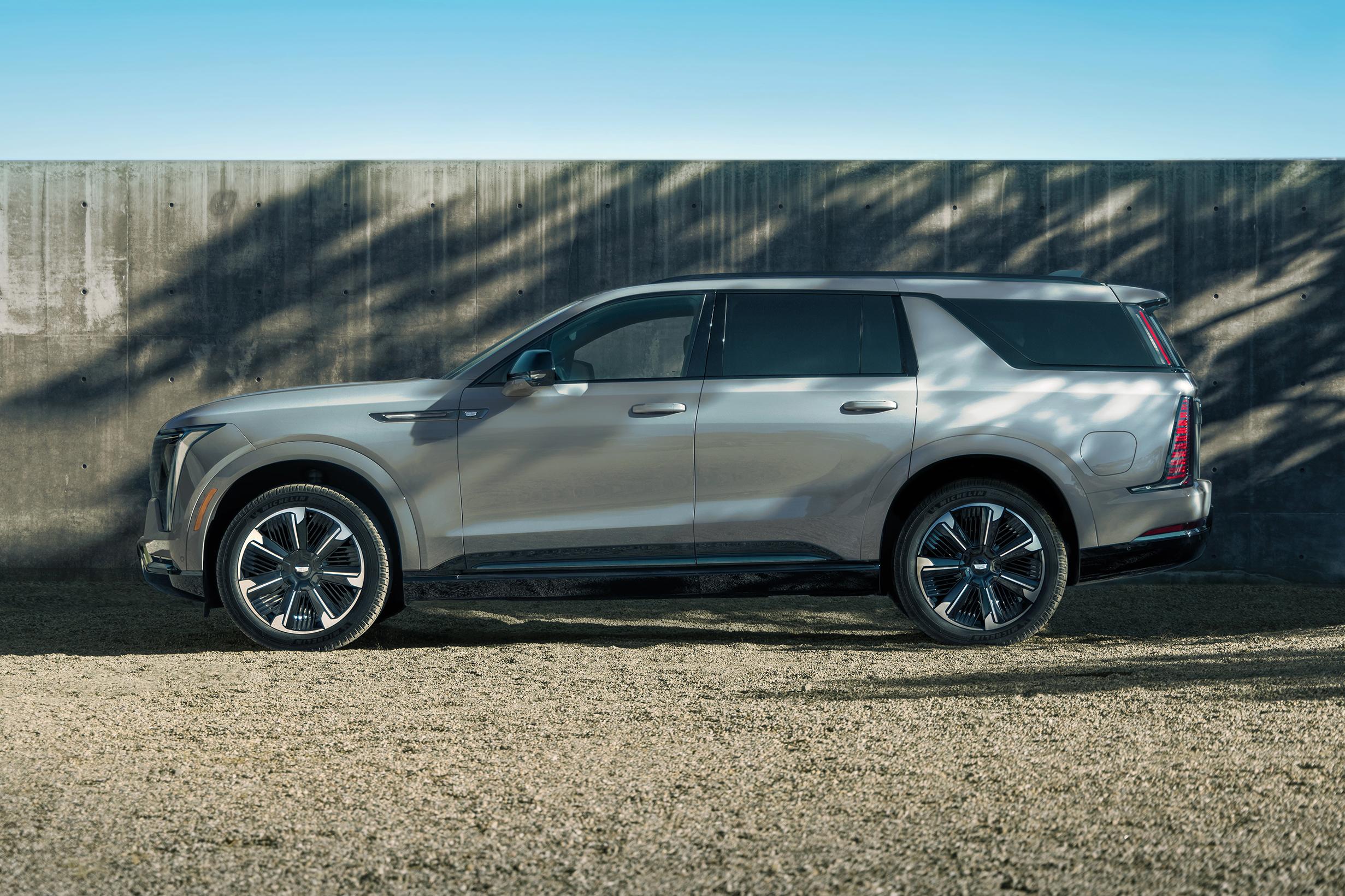
At last year’s event, GM only committed to launching eyes-off driving in the Escalade IQ flagship electric SUV from 2028. No timing has been given for the wider rollout.
GM also outlined a longer-term goal it calls ‘mission mode’, where the vehicle handles tasks like picking up groceries or dropping off laundry without anyone on board.
Mr Anderson – a former head of Tesla’s Autopilot program and co-founder of Aurora, who GM reportedly paid a US$40 million (A$57m) package to poach – was blunt when asked whether the system is Level 3.
“We’re not developing L3 autonomy. We’re developing a system that can operate safely without continuous supervision,” he said.
“L3 was a convenient plug that made SAE’s levels of autonomy look like a continuous spectrum. They are not. There is this middle ground that is a kind of awkward, uncanny valley. We will not pass through that valley.”
It’s a pointed distinction. Level 3 systems let the driver look away but require them to take back control when asked, and that handover is where much of the risk sits.
To get there, GM has stacked up redundancy. Executive chief engineer Mandi Damman said the Escalade IQ test vehicles use cameras, radar, and LiDAR, backed by redundant steering, braking, and 12-volt power.
GM CEO Mary Barra said pre-production test vehicles have covered more than five million miles (8.0 million km) on US roads over the past eight months.
The software is trained using a mix of imitation learning and reinforcement learning through ‘self-play’, where the system races simulated road users. Mr Anderson said the system now drives the equivalent of around three billion simulated miles every day.
GM’s current hands-free Super Cruise system has now logged 1.2 billion miles, up from the 700 million miles GM quoted 12 months ago.
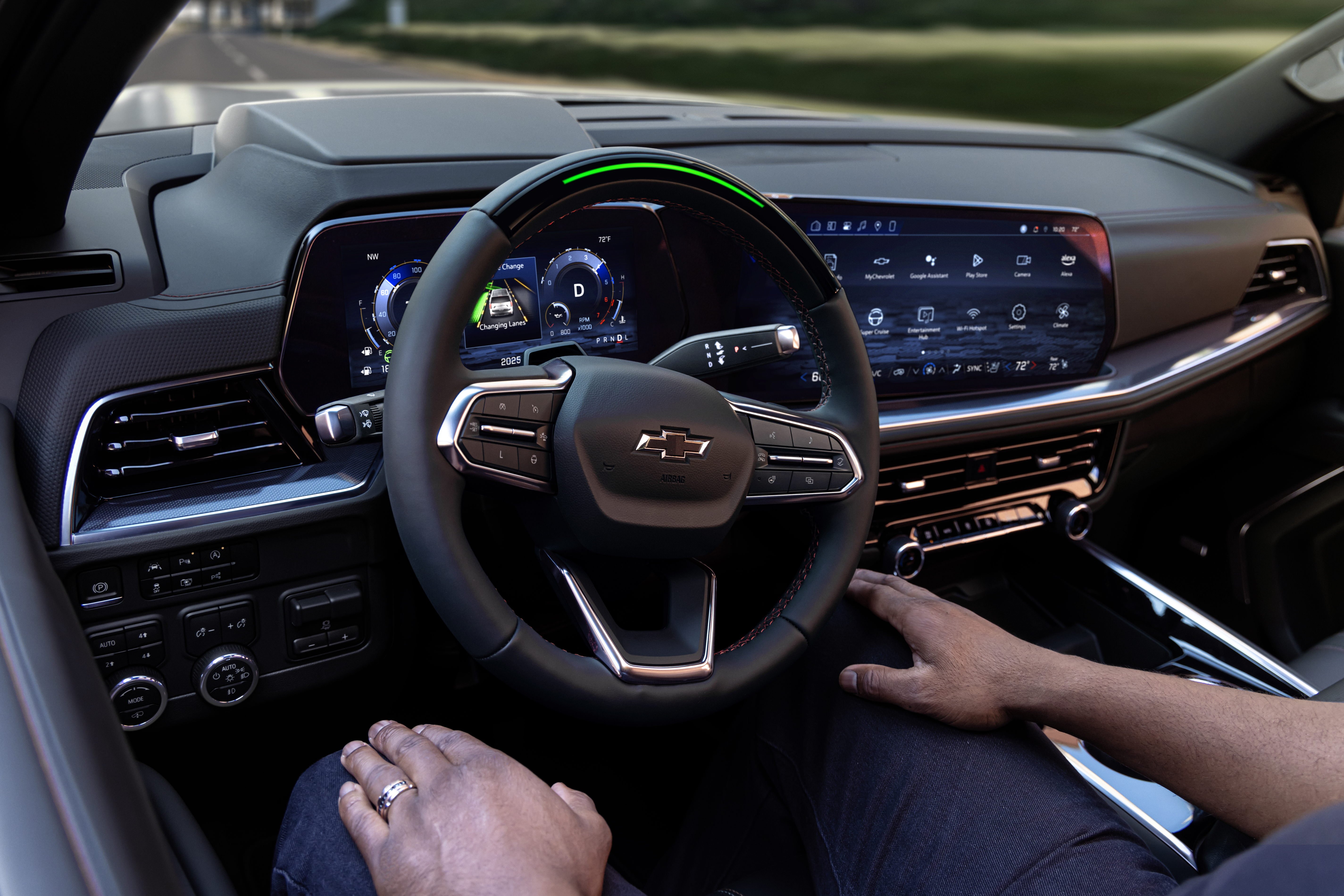
This is where it gets frustrating for local buyers. Super Cruise still isn’t offered here, despite GM selling the Chevrolet Silverado, GMC Yukon Denali, and Cadillac’s electric range locally.
GM Australia and New Zealand said in 2025 that Super Cruise would require regulatory change, and that it was working through the issue with government.
There has been movement from the government in this space. In November 2025, Australia’s transport ministers agreed to allow the conditional deployment of automated vehicles in selected locations from 2027, with broader rollout depending on each state and territory updating its laws.
The national Automated Vehicle Safety Law that underpins it is still being finalised.
That doesn’t guarantee GM’s systems will come here, with the company having also previously flagged the significant investment required in mapping for Super Cruise, but the regulatory door is starting to open – and with GM targeting its highest-volume nameplates, the business case gets stronger.
MORE: Everything Cadillac • Everything Chevrolet • Everything GMC