

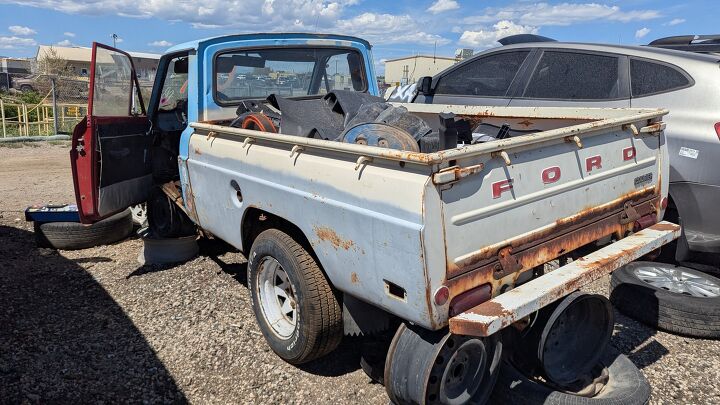
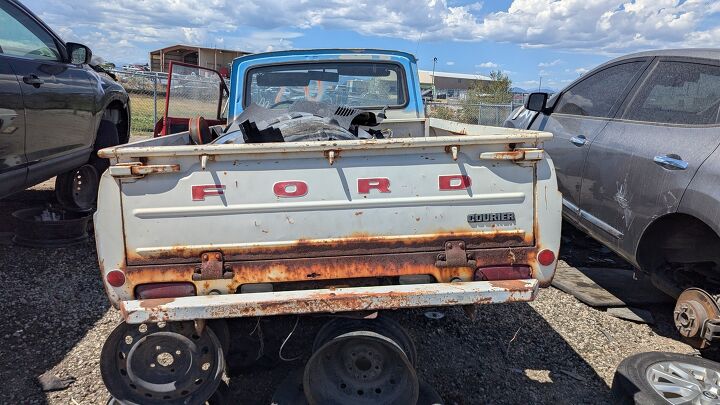
The little Japanese pickups of the 1970s were good trucks, but tended to be short on power. Here’s one that got a period-correct upgrade to an engine well matched to the F O R D letters on its hood.
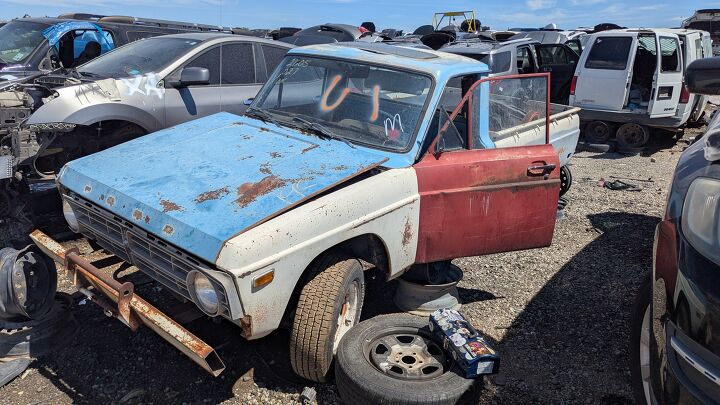
I find quite a few Couriers during my junkyard travels, even though the newest ones are ’82 models. This one caught my eye due to the red-white-and-blue harlequinized body parts.
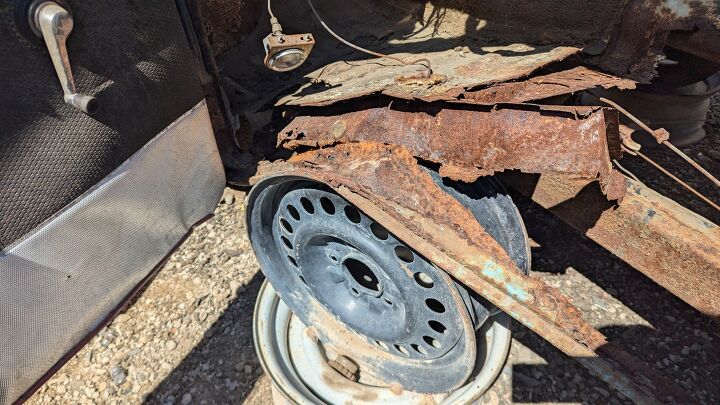
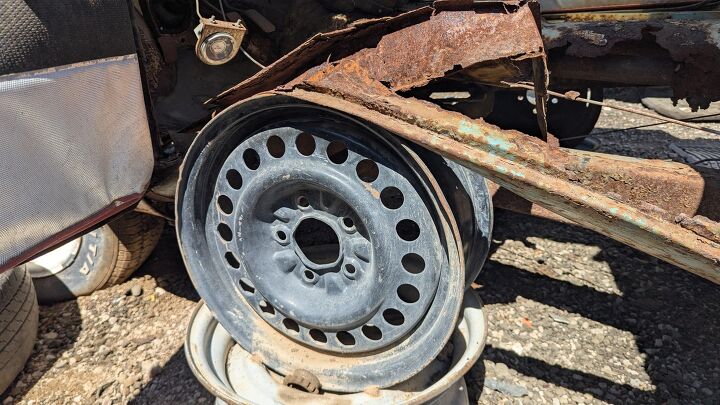
A closer look showed that this truck was so rusty that it simply wrapped around U-Pull-&-Pay’s two-wheels-welded-together stand when the forklift set it down.
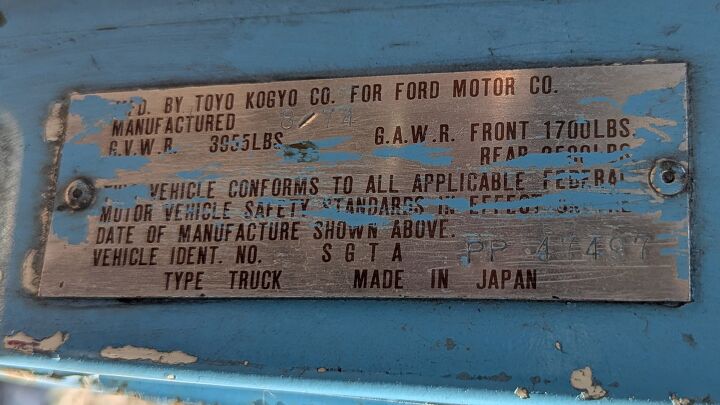
The Courier was really a Mazda Proceed aka B-Series, and it was sold in the United States for the 1972 through 1982 model years (after which it was shoved aside by the homegrown Ranger).
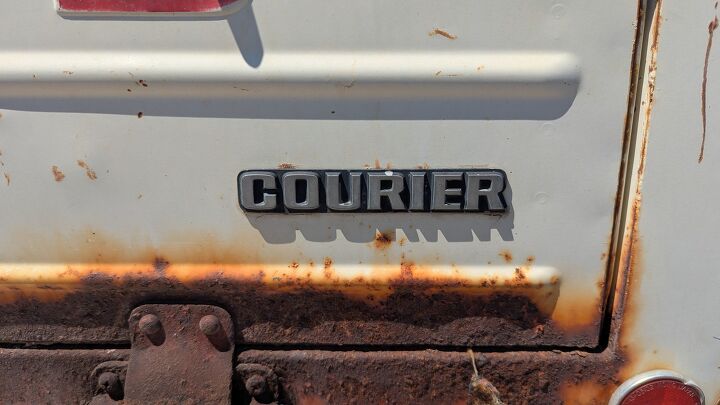
The Courier name was taken from Ford’s sedan deliveries of the 1950s.
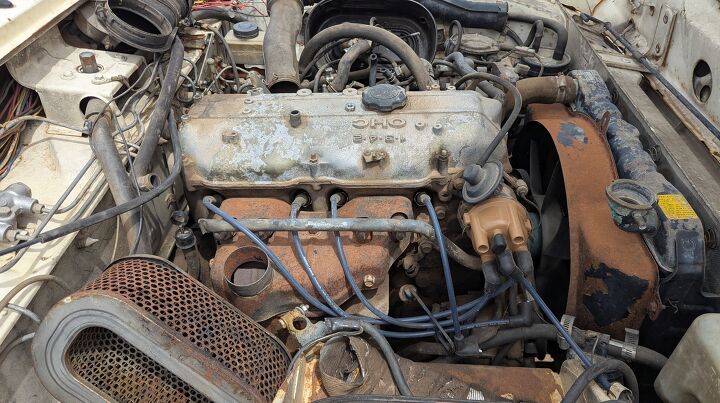
The only engines ever installed in production 1972-1982 Couriers were Mazda’s SOHC 1.8-liter VB four-cylinder (shown in this photo of a 1976 Courier) and Ford’s SOHC 2.3-liter “Pinto” four-cylinder. For 1974, the only Courier engine was a 1.8 rated at 74 horsepower.
That wasn’t unacceptable, by Early Malaise Era standards, for a truck with a 2,515-pound curb weight (which is well over a half-ton less than the current lightest new pickup Americans can buy today).
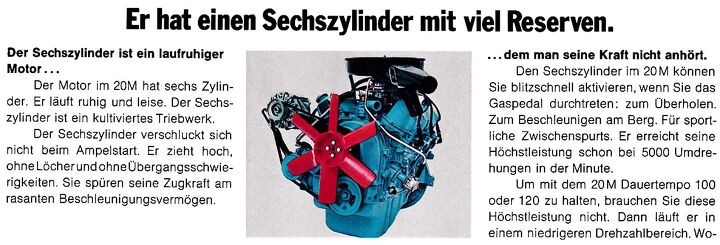
But that still made for a pretty slow truck. Let’s say it’s 1978 or so and you’re sick of your Courier’s pokey acceleration and you’re measuring used engines with a swap in mind. A straight-six would be too long without cutting a hole in the firewall, a 90-degree V8 or V6 would be too wide for an affordable exhaust system… but wait! Ford’s Cologne V6 is a 60-degree design with compact OHV heads to boot, so narrow that Ford even installs it in the Pinto.
Better still, Mercury dealers began selling Capris with the 2.6-liter Cologne for 1972, moving to the 2.8-liter version for 1974; the Mustang II also got the 2.8 starting that year. Pintos and Bobcats could be purchased with 2.8s beginning in 1975. Engine swappers could get plenty of these engines for cheap, generally bolted to a four-speed manual (but five-speed manuals and three-speed automatics were out there as well).
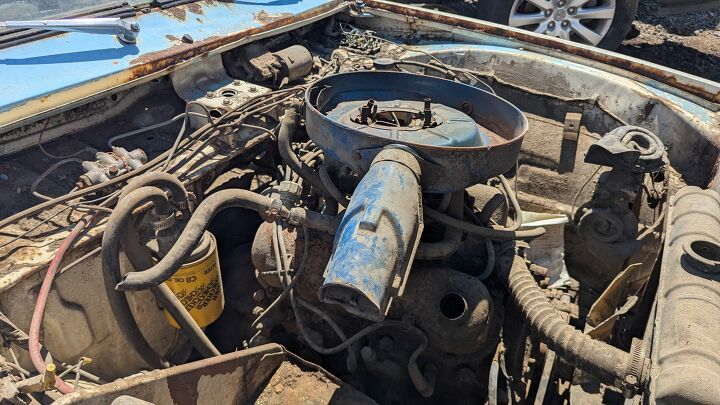
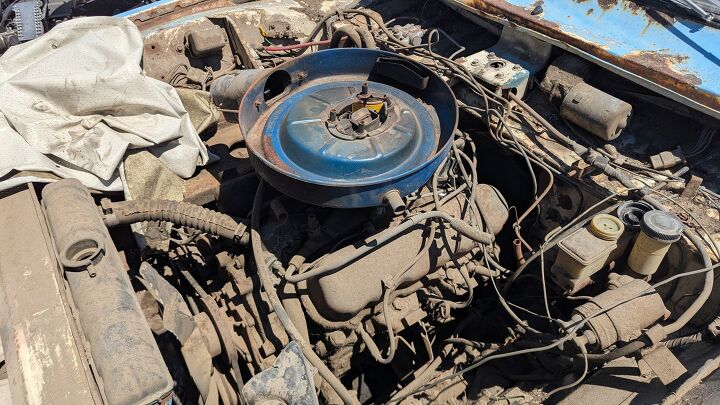
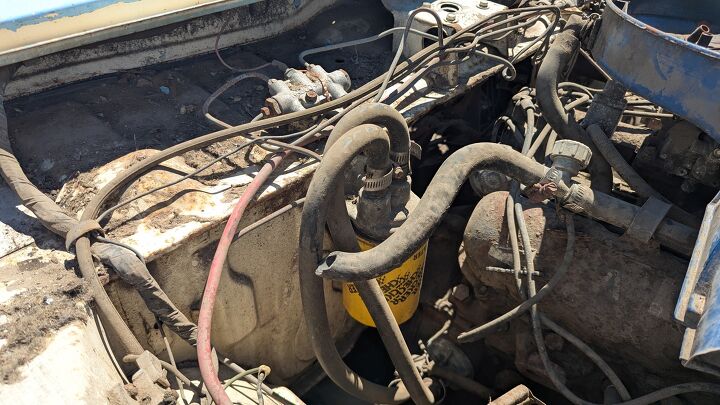
So, that’s what happened with this truck. I didn’t check casting numbers, but I’m betting this is a 2.8, meaning it could have as much as 105 horsepower (1974 Capri or Mustang) or as little as 90 hp (1978 Pinto).
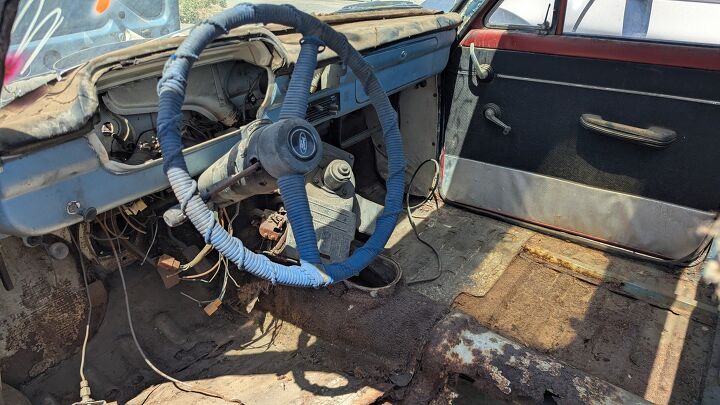
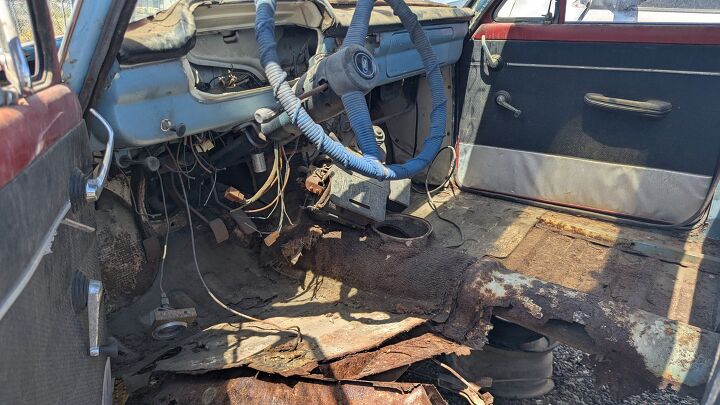
It’s bolted to a four-speed manual. The rope-wrapped steering wheel is a nice custom touch.
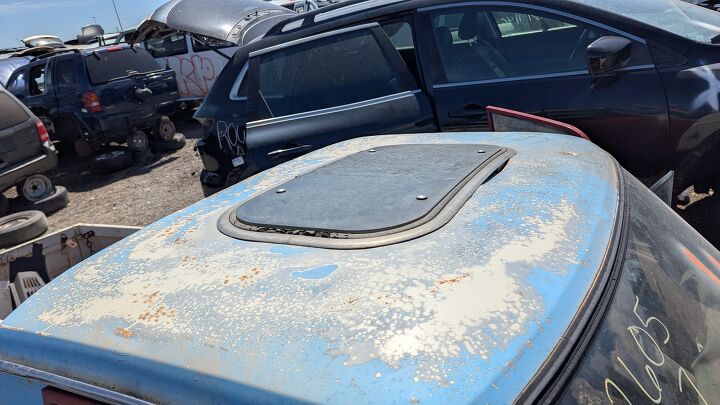
These aftermarket sunroofs were popular during the 1970s and 1980s. Every single one leaked heavily.
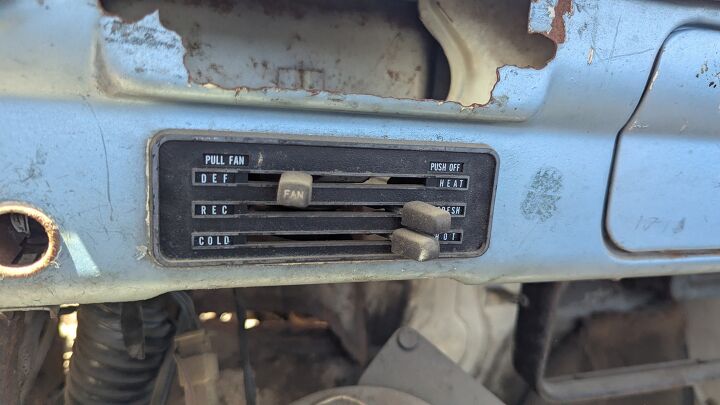
But they were still cheaper than air conditioning, which I was surprised to learn was available in the ’74 Courier. Not surprisingly, this car didn’t have factory A/C.
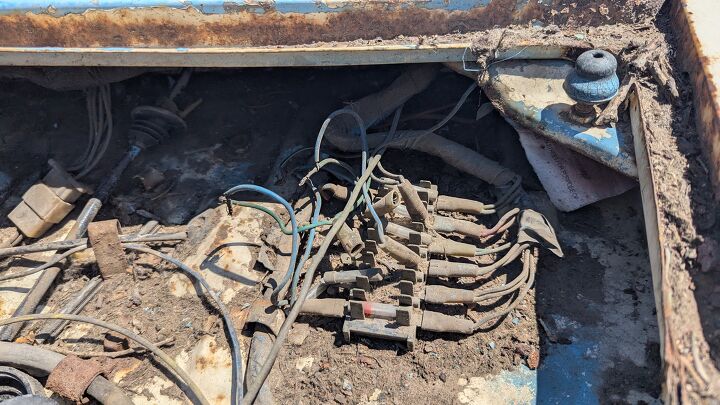
The amount of schmutz around the fusebox suggests that this truck sat for decades outside, gradually rusting more with each snowy Colorado winter.
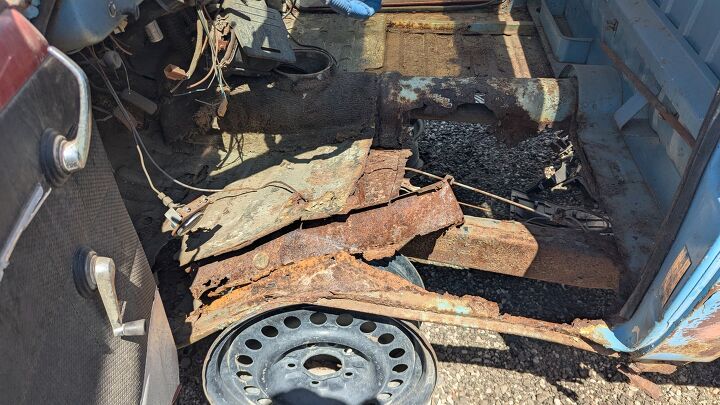
1974 Ford Courier in Colorado junkyard.
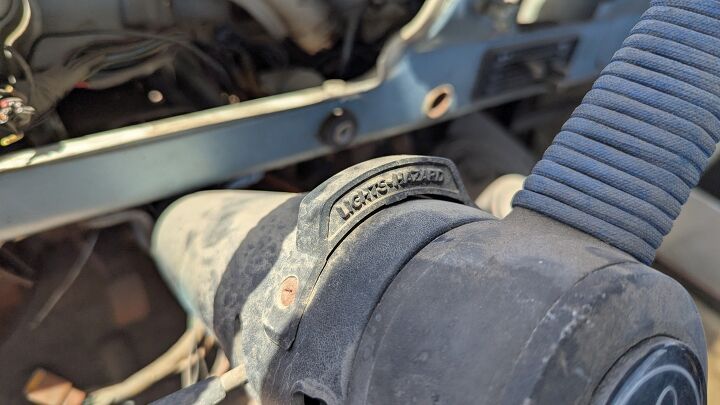
1974 Ford Courier in Colorado junkyard.
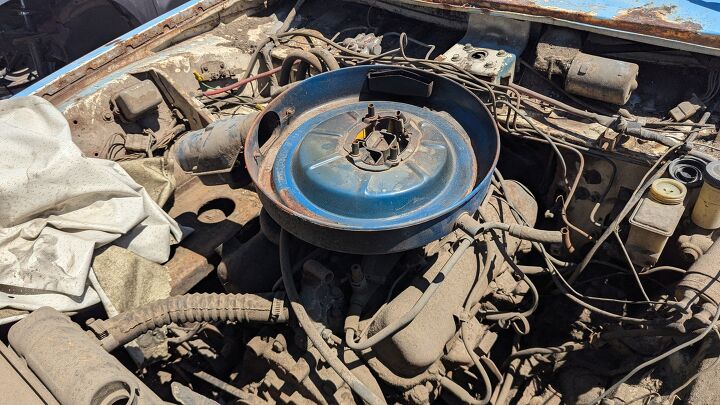
1974 Ford Courier in Colorado junkyard.
1974 Ford Courier in Colorado junkyard.
1974 Ford Courier in Colorado junkyard.
1974 Ford Courier in Colorado junkyard.
1974 Ford Courier in Colorado junkyard.
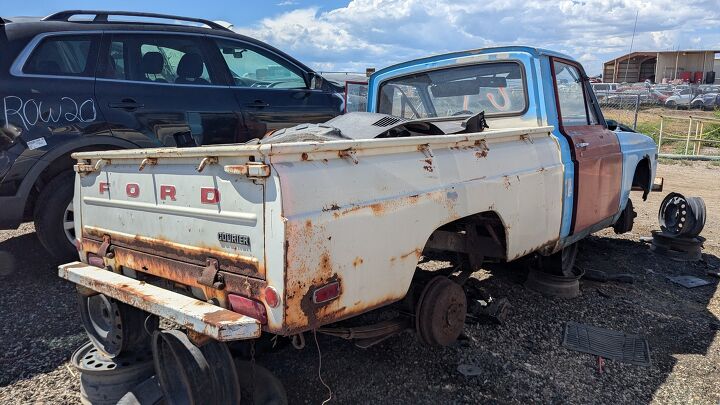
1974 Ford Courier in Colorado junkyard.
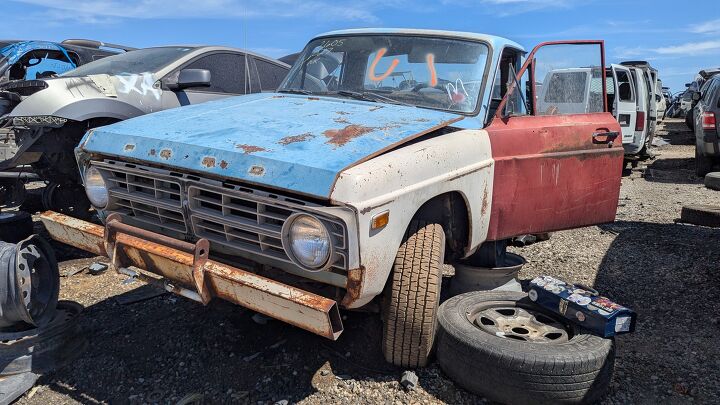
1974 Ford Courier in Colorado junkyard.
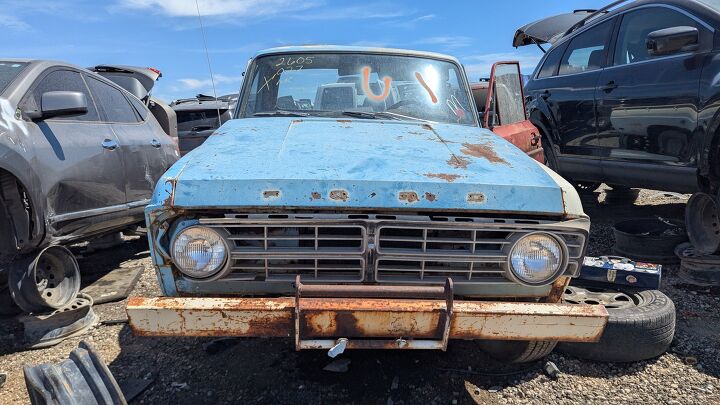
1974 Ford Courier in Colorado junkyard.
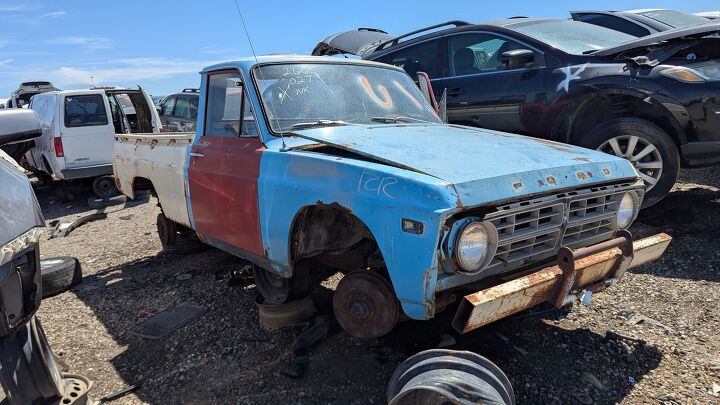
1974 Ford Courier in Colorado junkyard.
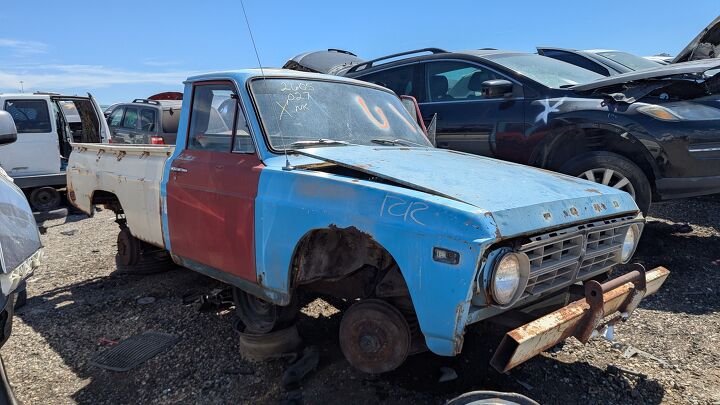
1974 Ford Courier in Colorado junkyard.
[Images: Author, Ford]
Become a TTAC insider. Get the latest news, features, TTAC takes, and everything else that gets to the truth about cars first by subscribing to our newsletter.
