

There’s a silly debate that often pops up online: A GTO is a mid-size muscle car that sets the template; the Mustang is a pony car and therefore cannot be a muscle car because it’s not an intermediate. I’d like to opine that our Pick of the Day checks two major boxes: it’s a pony car AND a muscle car. In fact, it’s the first muscle car to carry the Mustang name. This 289 High Performance-powered 1965 Ford Mustang convertible is listed for sale on ClassicCars.com by a private seller in Fountain Hills, Arizona.
Let’s take this with a two-pronged approach. First, the elephant in the room: the GTO. Yes, it’s the godfather of muscle cars, but are we to deny muscle cars didn’t exist before the GTO? A 421 Tri-Power Catalina probably was faster, and there were other performance cars coming out of Dearborn and Highland Park (if not 3044 West Grand Boulevard) at the time. Why don’t they deserve the muscle car tag?
So then it would be logical to surmise that muscle cars could be full-size cars or the intermediates to which the market would evolve. Would that include compacts too? A 1966 Chevy II with an L79 327 could beat many performance cars, but somewhere, somehow, someone doesn’t consider it a muscle car? Makes no sense.
The same goes for pony cars. It’s a class of car, a subset of compacts. If a mid-size car with a performance engine is a muscle car, and we’ve already established that full-size and compact cars with a performance engine are muscle cars, then it would be logical to believe a pony car with a performance engine is a muscle car.
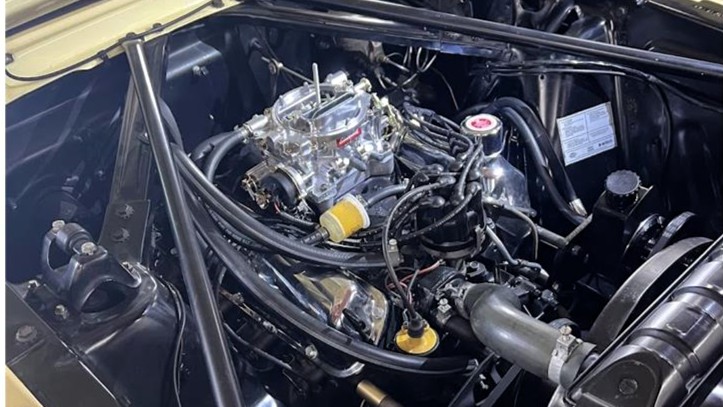
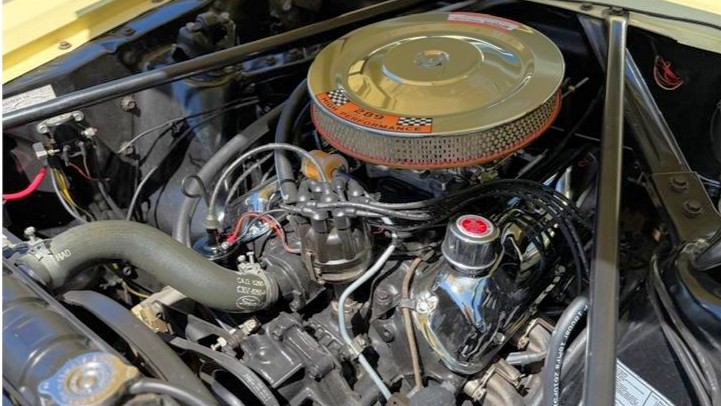
That would make the 1965 Mustang with the “K-code” 289 High Performance the first pony car that also was a muscle car. These things come down to power/weight, and the 271-horse pony car has the stats to handle some big boys. Admittedly, this car would not run alongside the aforementioned L79 Chevy, but everything about the engine screams “Total Performance”: solid lifters, high-lift/long-duration camshaft, screw-in rocker arm studs, heavy-duty valve springs with machined spring seats, strong connecting rods with 3/8-inch rod bolts, nodular crankshaft, dual-point distributor, large 600-cfm carburetor, and high-flow exhaust manifolds. The engine also required a strong clutch, four-speed transmission (an automatic appeared for 1966), and performance axle ratios. While skinny tires limited ETs out of the box, the K-code Mustang had gobs of potential with meatier tires, headers, and other typical modifications — yes, that could be said about many cars, but the credentials were there to support the idea this Mustang was a muscle car.
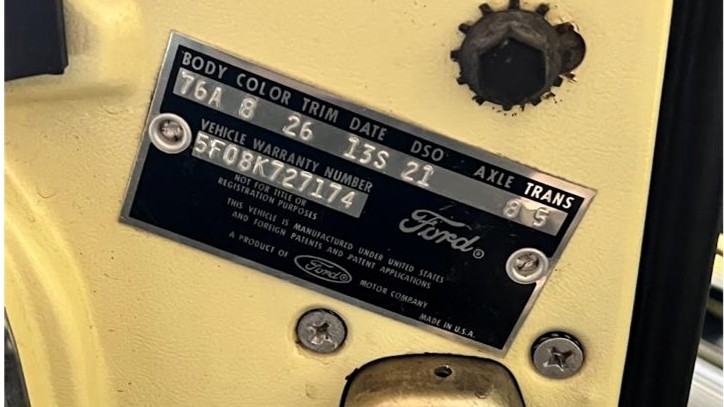
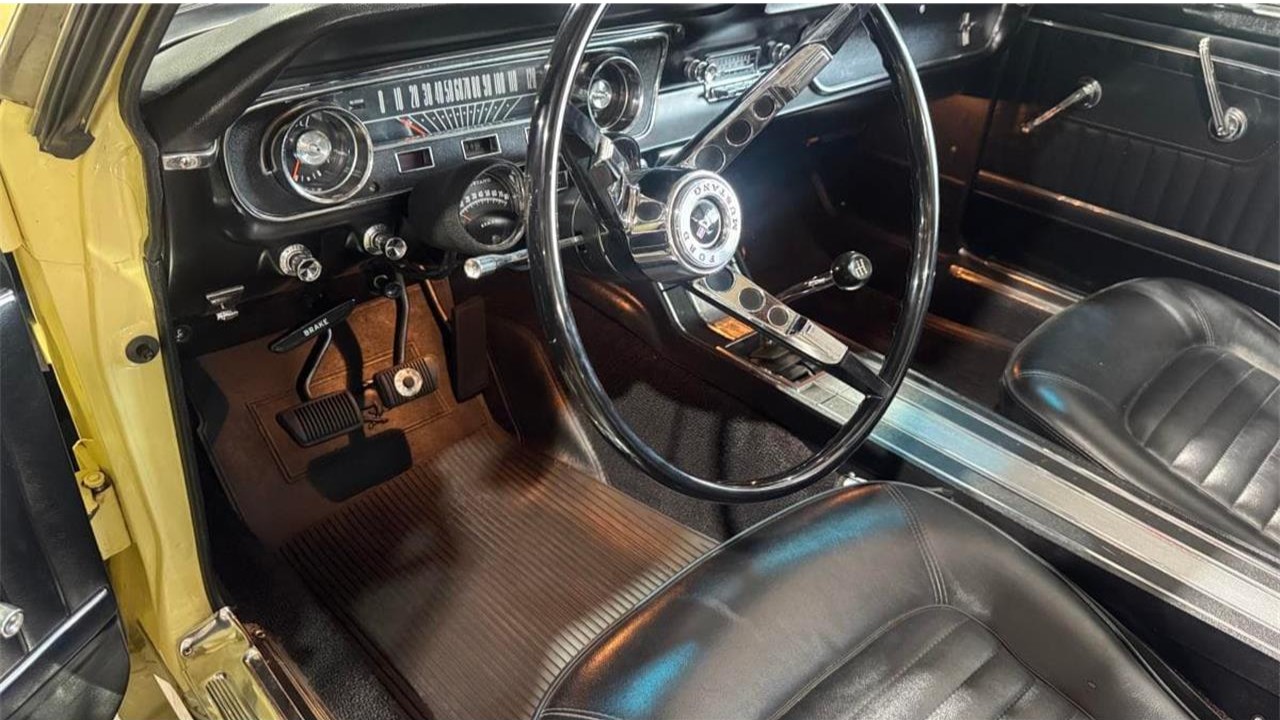
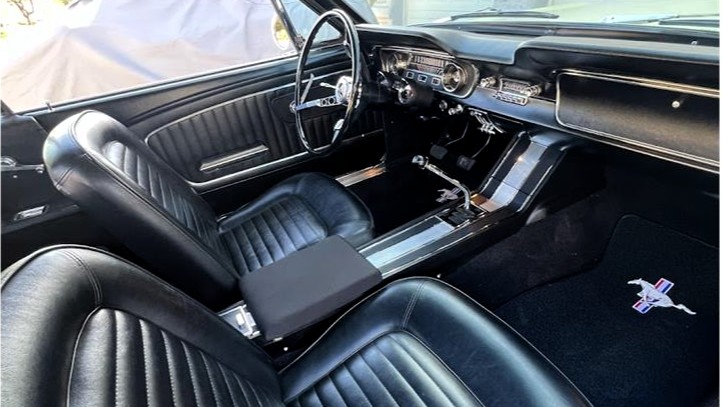
This 1965 Ford Mustang convertible is one of the rare ones to be powered by the K-code 289 High Performance engine. Only 7,273 Mustangs were equipped with this engine, though it’s unknown how many were convertibles. Would you guess most also had the GT package? This Springtime Yellow example does not, making it more unusual, but the cherry on top is the ultra-low mileage. “This beauty is a once in a lifetime piece of history,” says the seller. “Due to its wonderful age, and low (under 5500) original miles, it has been gone over from bumper to bumper by our local master mechanic. Everything is original with the exception of brand new power steering,” the latter which was not available on K-code cars. Features include bucket seats, console, front disc brakes, power convertible top, chrome Styled Steel wheels, and Rally Pac (with working clock and tach!).
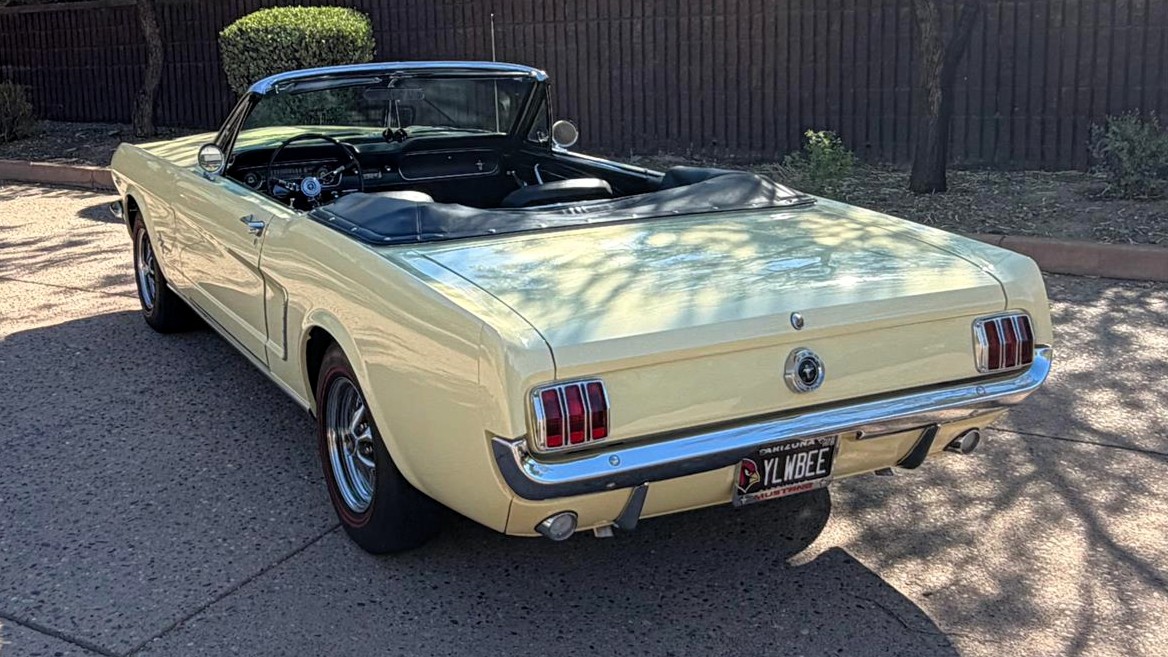
Mustang mavens may recognize this 5,489-mile convertible as formerly being part of the Schroeder Collection, but it’s ripe for being in yours. If you’re a purveyor of low-mileage collectibles, you can’t go wrong with spending $87,000 (OBO) for the first Mustang muscle car.
Click here to view this Pick of the Day on ClassicCars.com
