

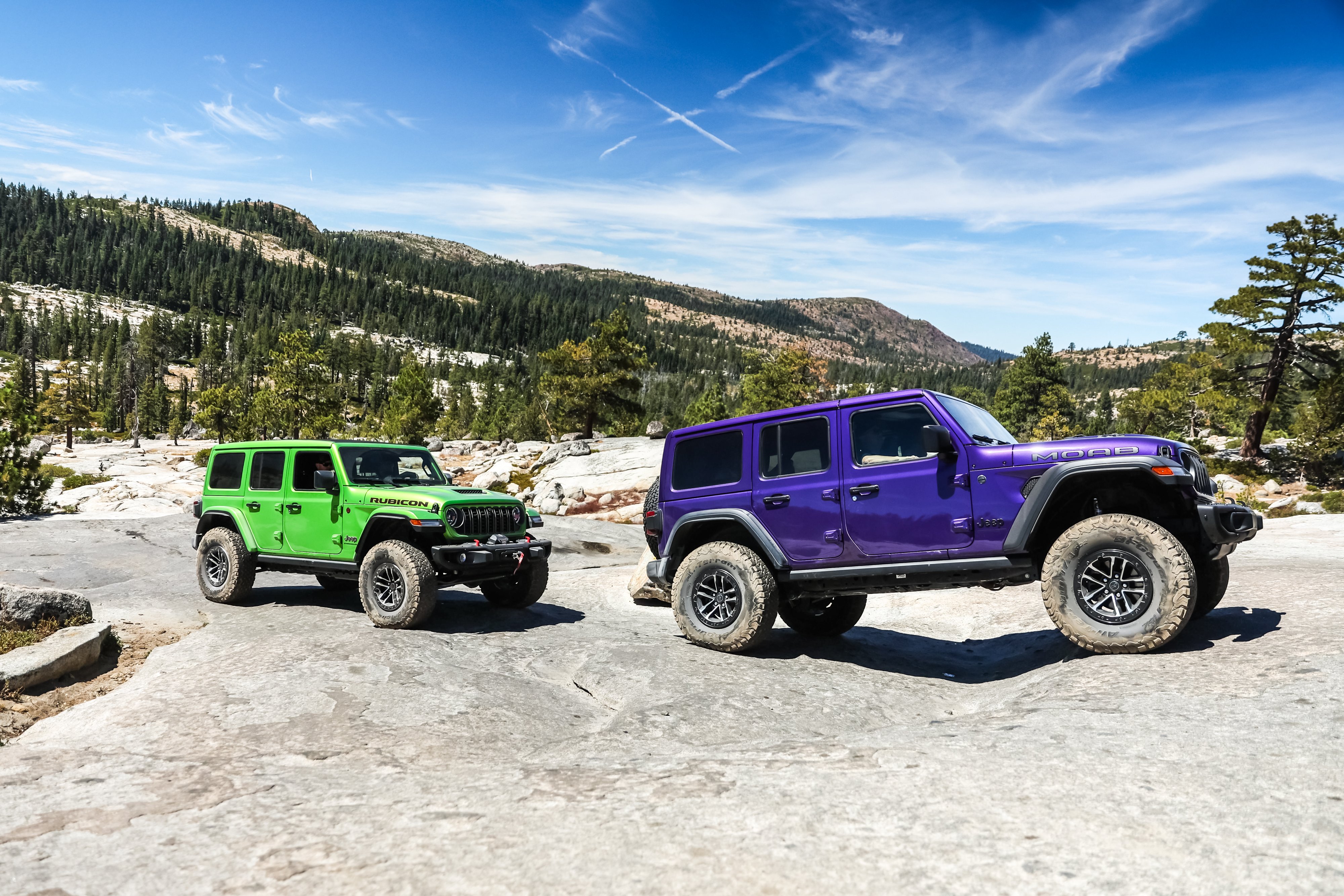
It’s 6:30 in the morning just outside Auburn, California, and there’s a line of Jeeps warming up in a car park. Mine is a Wrangler Moab 392 – packing the 6.4-litre Hemi V8 – and over the next three days it’s going to be pointed at some of the most punishing terrain I’ve ever driven on.
I love off-road driving, but I’d never done the Rubicon before. For anyone into four-wheel driving, and Jeeps in particular, it’s one of those trails that gets talked about with a kind of reverence. I wanted to find out why, what it actually takes to get through it, and what state the car would be in at the other end.
What is the Rubicon Trail?
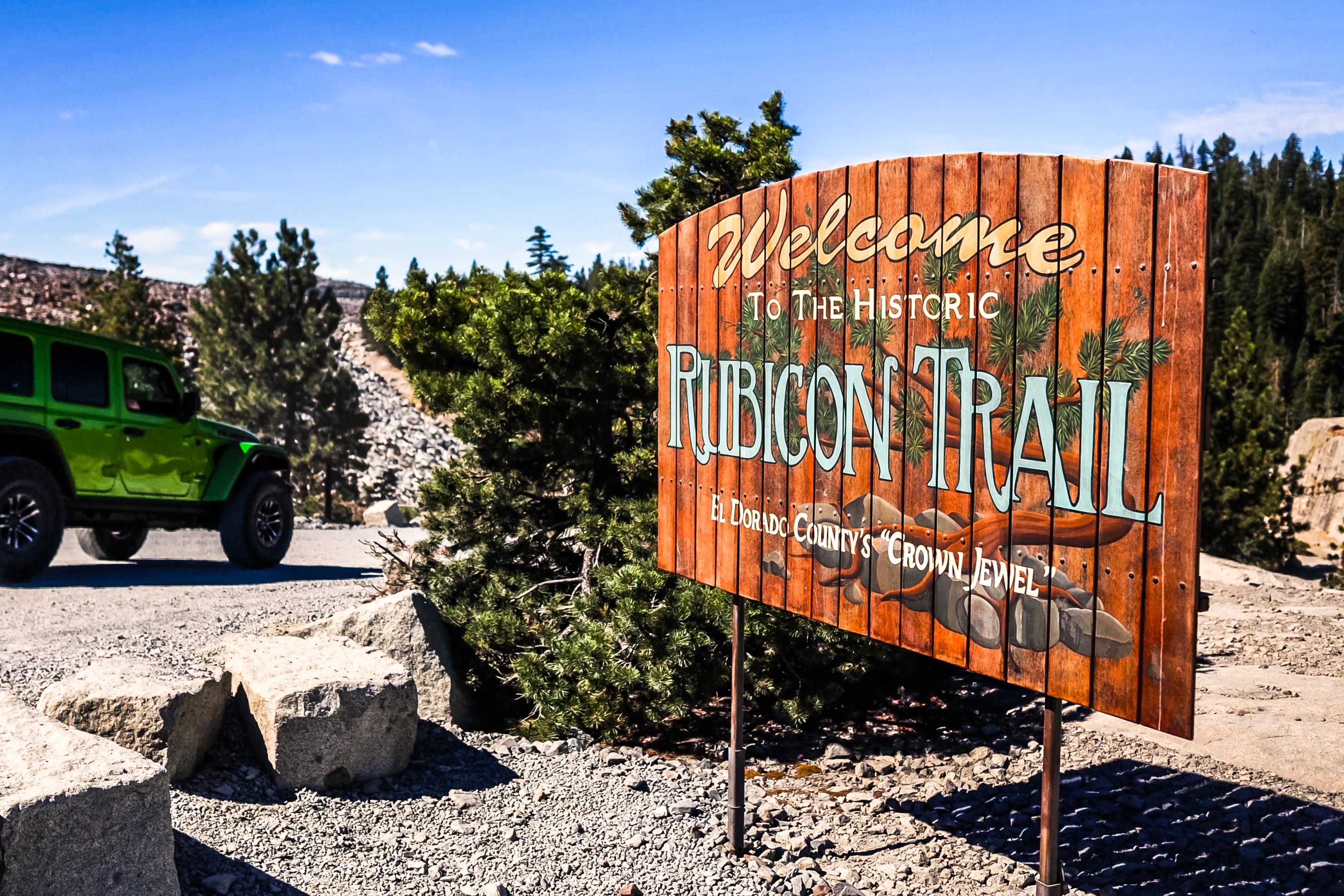
The Rubicon is a 35km route through the Sierra Nevada, west of Lake Tahoe. Strictly speaking, it’s a public road. The western end starts as the sealed Wentworth Springs Road out of Georgetown, the eastern end is the McKinney Rubicon Springs Road down towards Lake Tahoe, and in between sits roughly 19km of unmaintained trail which, frankly, is barely a road at all.
The history of the Rubicon Trail is better than you’d expect. In the 1890s, it was a stagecoach route serving resort hotels at Wentworth Springs and Rubicon Springs, where people came to bathe in the mineral springs. The first car made it through to Rubicon Springs in 1908, driven by a woman from Lake Tahoe. When the springs fad faded and the resorts closed in the late 1920s, the road fell into disuse.
Then in 1953, a group of Georgetown locals led by Mark A. Smith organised a convoy of Jeeps across the trail to attract tourists to their town. That became the annual Jeepers Jamboree, and Smith later broke away to found Jeep Jamboree USA in 1982 – the outfit that guided us through. The trail has been used by Jeep’s engineers for decades since, and in 2003 Jeep named its most capable Wrangler after it.
The car
The Moab 392 is the V8 Wrangler for 2026, effectively taking over from the Rubicon 392. It runs a naturally aspirated 6.4-litre Hemi V8 making 350kW of power and 637Nm of torque, paired with an eight-speed automatic.
In the US it’s priced at US$79,995 before destination charges, so you’re looking at around US$82,000 – a big chunk of change, though it’s in the same territory as a Ford Bronco Raptor. There’s also a Willys 392 version of the Wrangler four-door available in the US, where it’s priced from $US69,995 plus delivery costs.
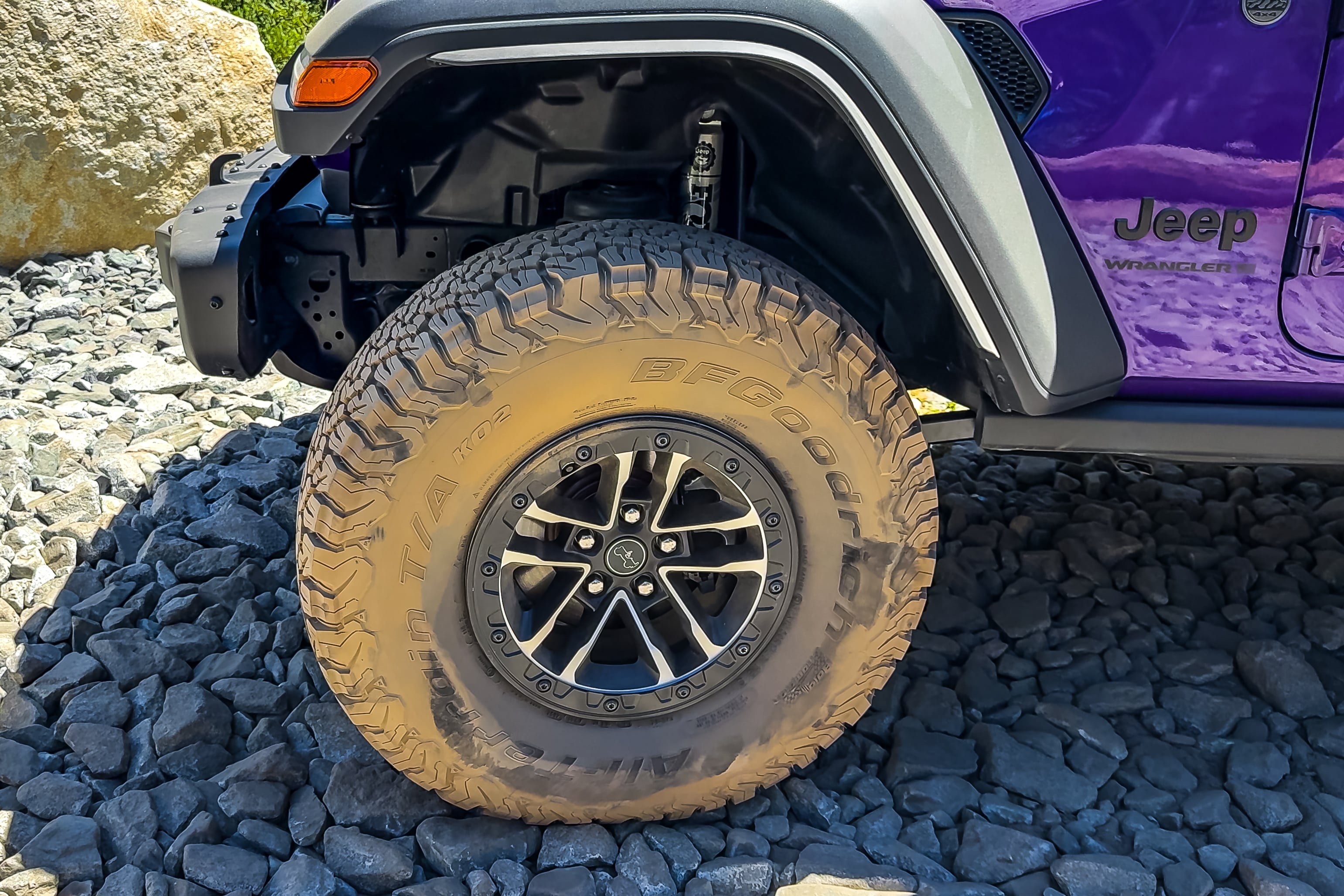
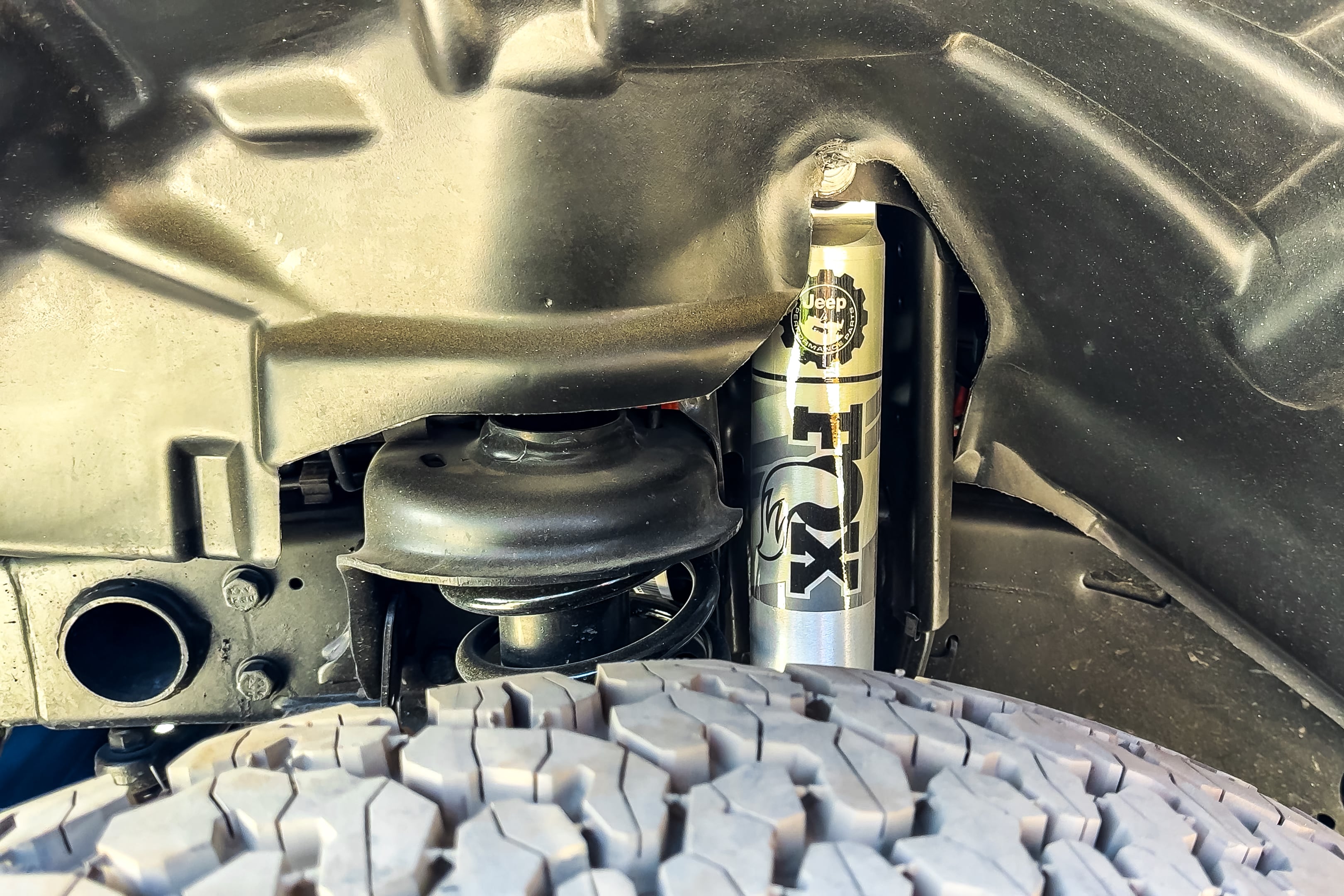
From the factory you get a 1.5-inch suspension lift, 4.56:1 axle ratios, beadlock-capable wheels, rock sliders and a dual-mode exhaust. Our car had been fitted with 37-inch tyres and a handful of Mopar accessories, but was otherwise stock. Underneath it runs Fox dampers, and the front sway bar can be disconnected electronically for extra wheel articulation.
Here’s the catch for Australian buyers: we don’t get it. Wrangler is now sold here only in hardcore Rubicon trim, in both two- and four-door form, with a 2.0-litre four-cylinder turbo-petrol engine making 200kW and 400Nm, priced from $81,990 before on-road costs. Hold that thought, because I drove one of those on the trail too.
To see how the Jeep Wrangler stacks up against its rivals, use our comparison tool
Day one: Straight into it
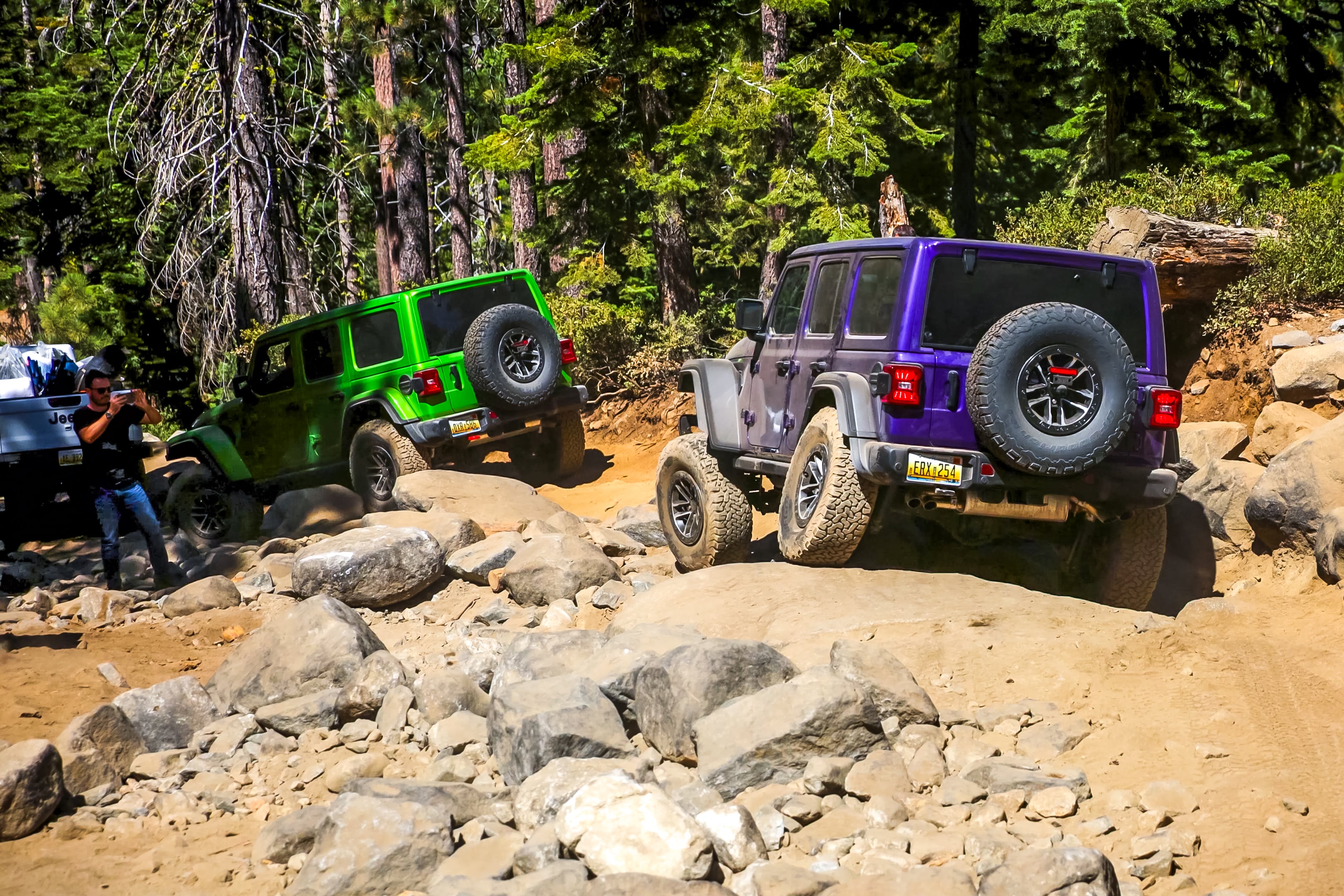
The trail doesn’t ease you in. The entrance is basically a staging area where people offload rigs they either can’t or won’t drive on the road, and within minutes you’re at the first obstacle, the Gatekeeper. It’s a run of big drops and bigger rocks, and it’s exactly why everyone tells you to bring big tyres and proper underbody protection. You collect everything.
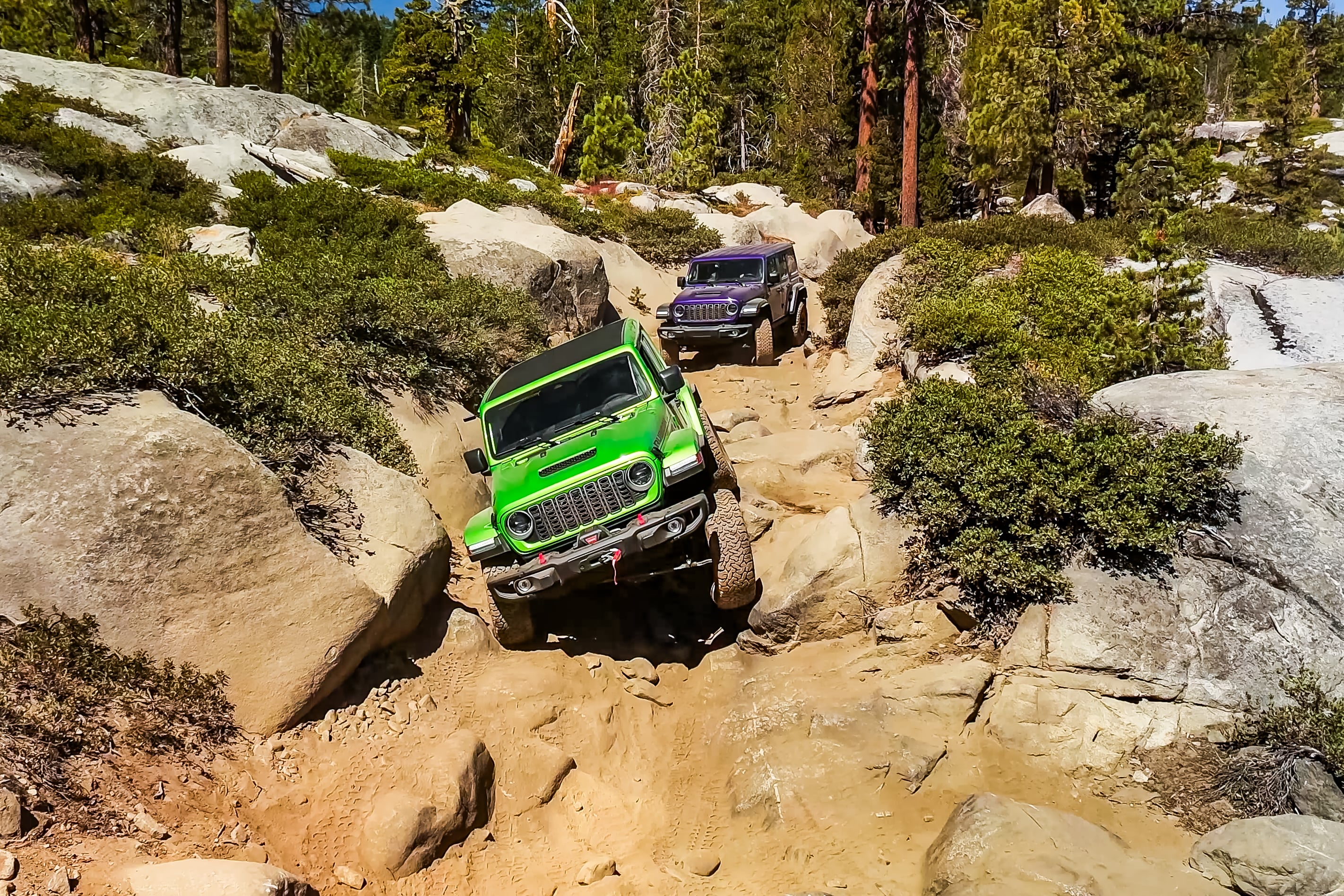
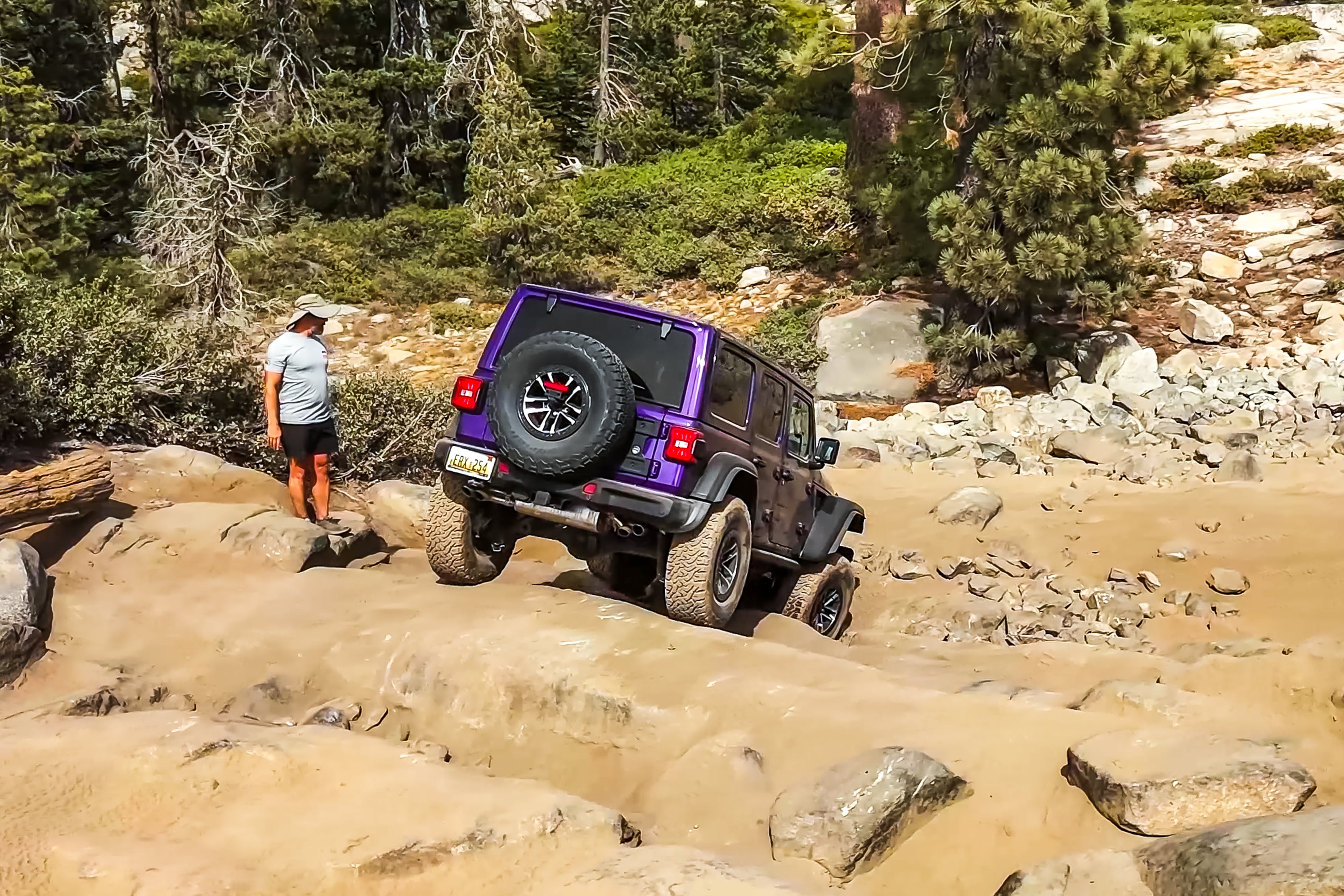
From there it’s down into the Granite Bowl and back out again. The tyre marks across the rock show you where everyone else has gone. It looks grippy, but the granite is surprisingly chalky, and even on BFGoodrich KO2s the car would occasionally just let go. Add rain and it’d be a very different story.
This is where the Wrangler’s off-road kit earns its keep. With the sway bar disconnected and Off-Road Plus mode engaged – which adjusts brake pedal feel and throttle sensitivity – you get much finer control at crawling speed, so the car doesn’t run away from you over rocks.
We also used Selec-Speed control, effectively a speed-controlled hill descent system. You set the rate with the paddle shifters, roll off the brake and let it work. And it works brilliantly. My only gripe is that with the sway bar disconnected and the system active, the steering gets quite heavy, and I personally prefer being in charge of the descent myself. Useful technology, but I didn’t always want it.
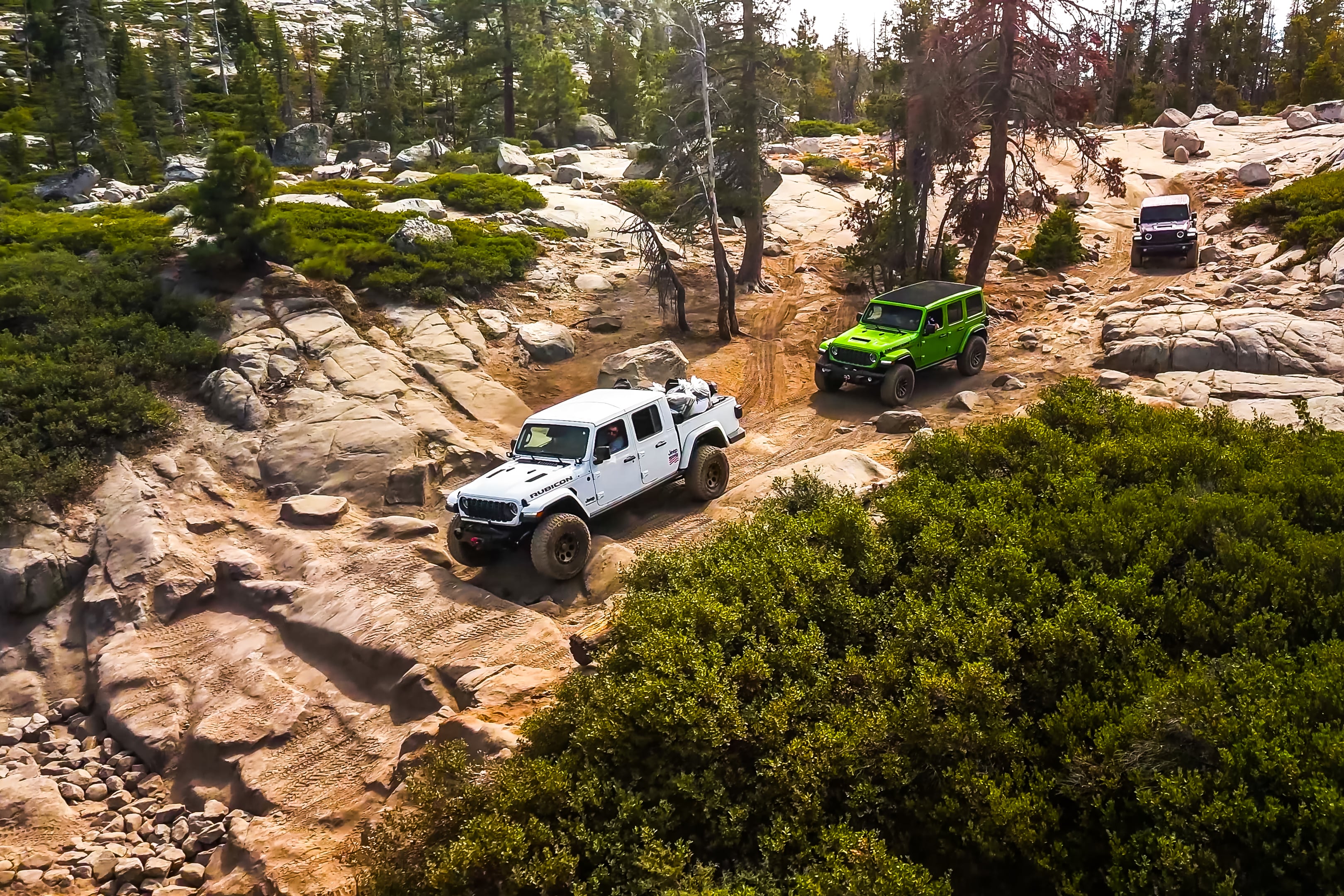
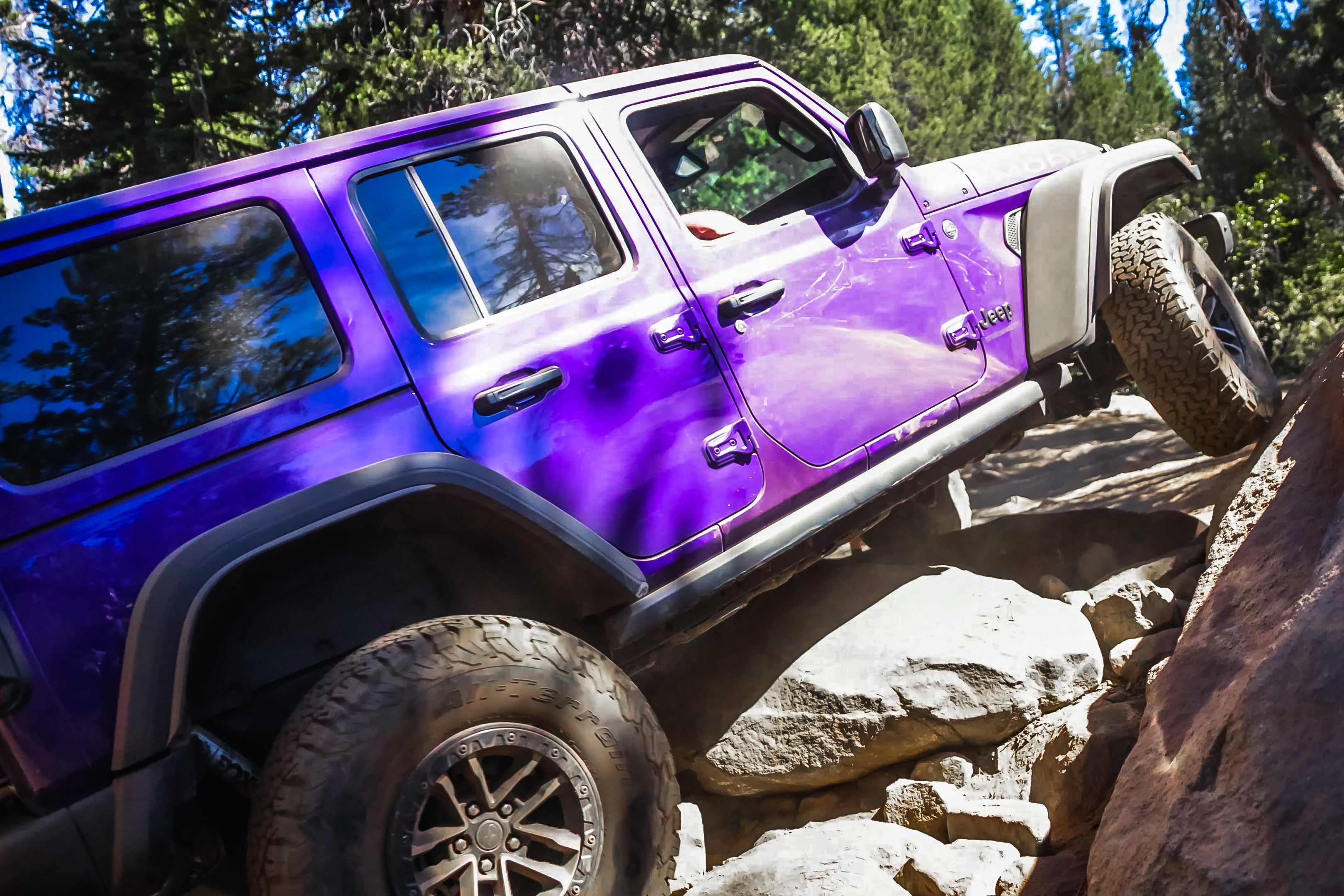
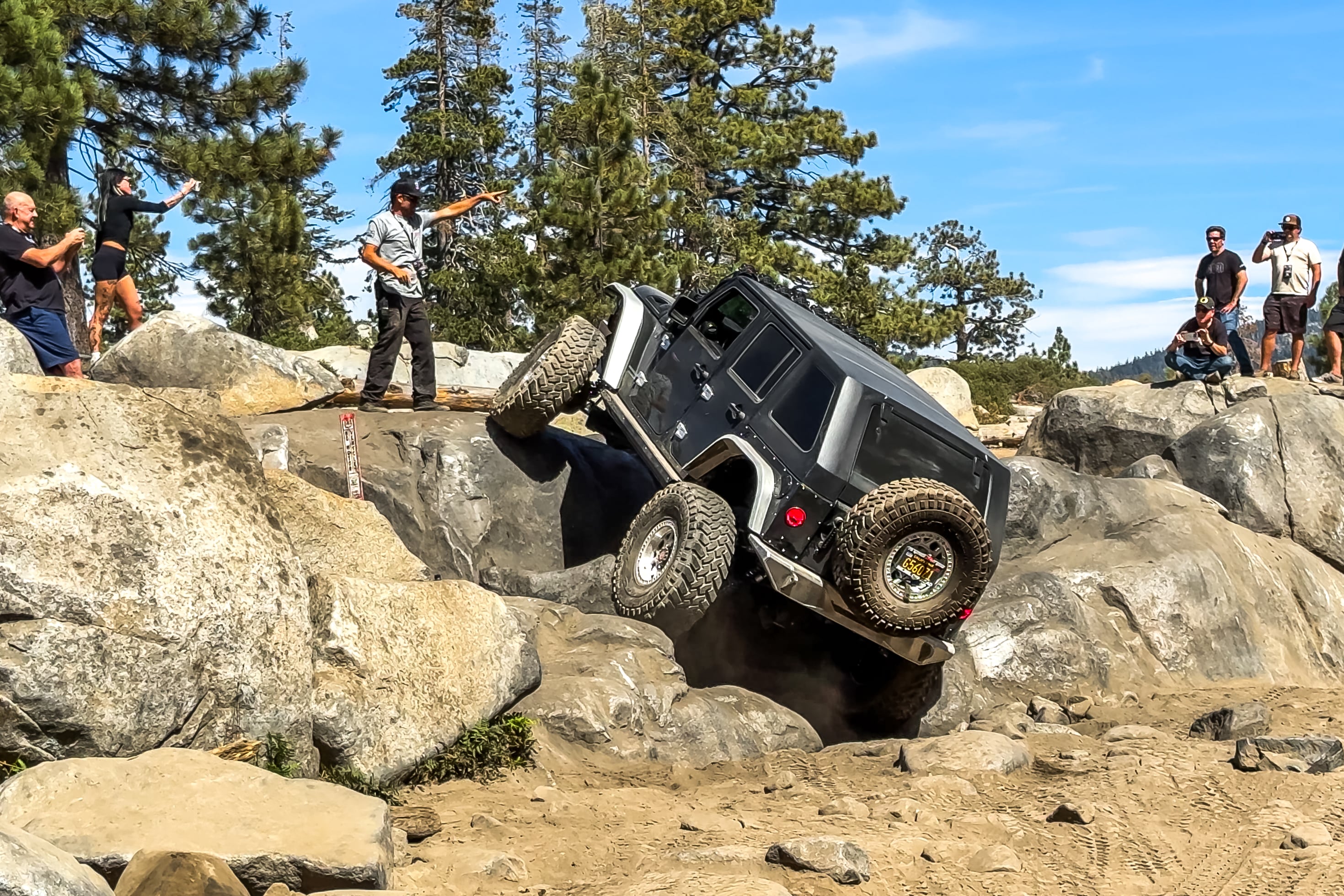
The V8, meanwhile, is well suited to this kind of work. Its exhaust note sounds unreal through those quad pipes, it’s torquey and progressive in low-range, and you can lean on the throttle with real precision. It drank hard on the drive in, but once crawling it was surprisingly frugal – we finished the trail without using half a tank of fuel.
By lunch we’d been going three or four hours and had covered around 2.5km. It’s that slow, and genuinely gruelling.
Why you don’t do this alone
I’m not an expert off-roader, and this is a difficult trail. Line choice and vehicle speed are everything. Get either of them wrong and you can find yourself in serious trouble, or do serious damage to your car.
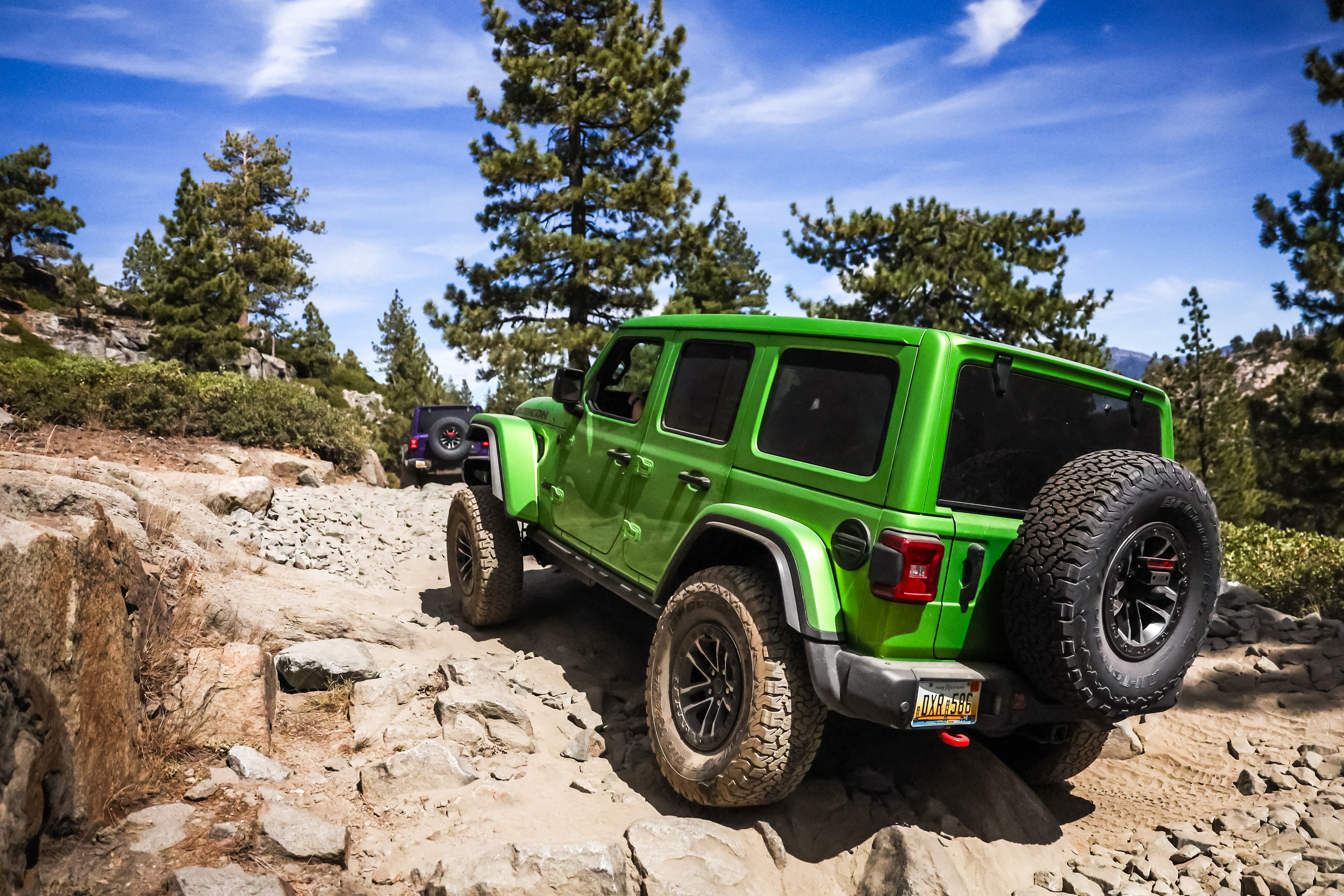
That’s where the Jeep Jamboree guides come in. They spot you through every difficult section, telling you exactly where to place each wheel. Some of them run this trail weekly during summer, so they know it intimately – when you’ll need lockers, when you won’t, and where the car will fall into a hole. A lot of the time you simply can’t see where you’re going from behind the wheel, and you have to trust them completely.
Some in our group peeled off to attempt harder optional obstacles like the Soup Bowl, which demands a deceptively specific line. I gave it a miss. The big step down that followed wasn’t optional – the Wrangler bottomed out, and those quad exhaust outlets copped another battering.
Camping on the trail
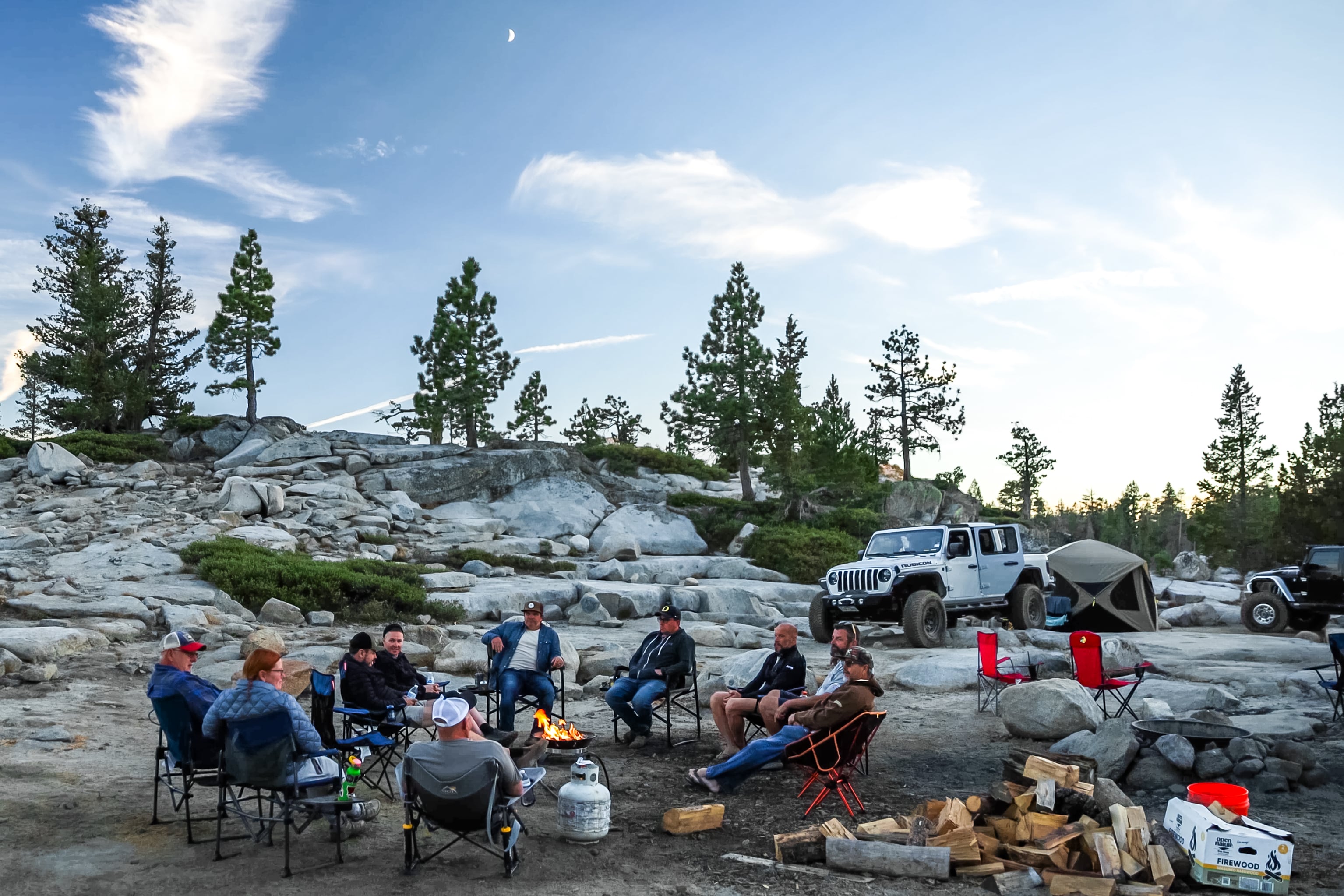
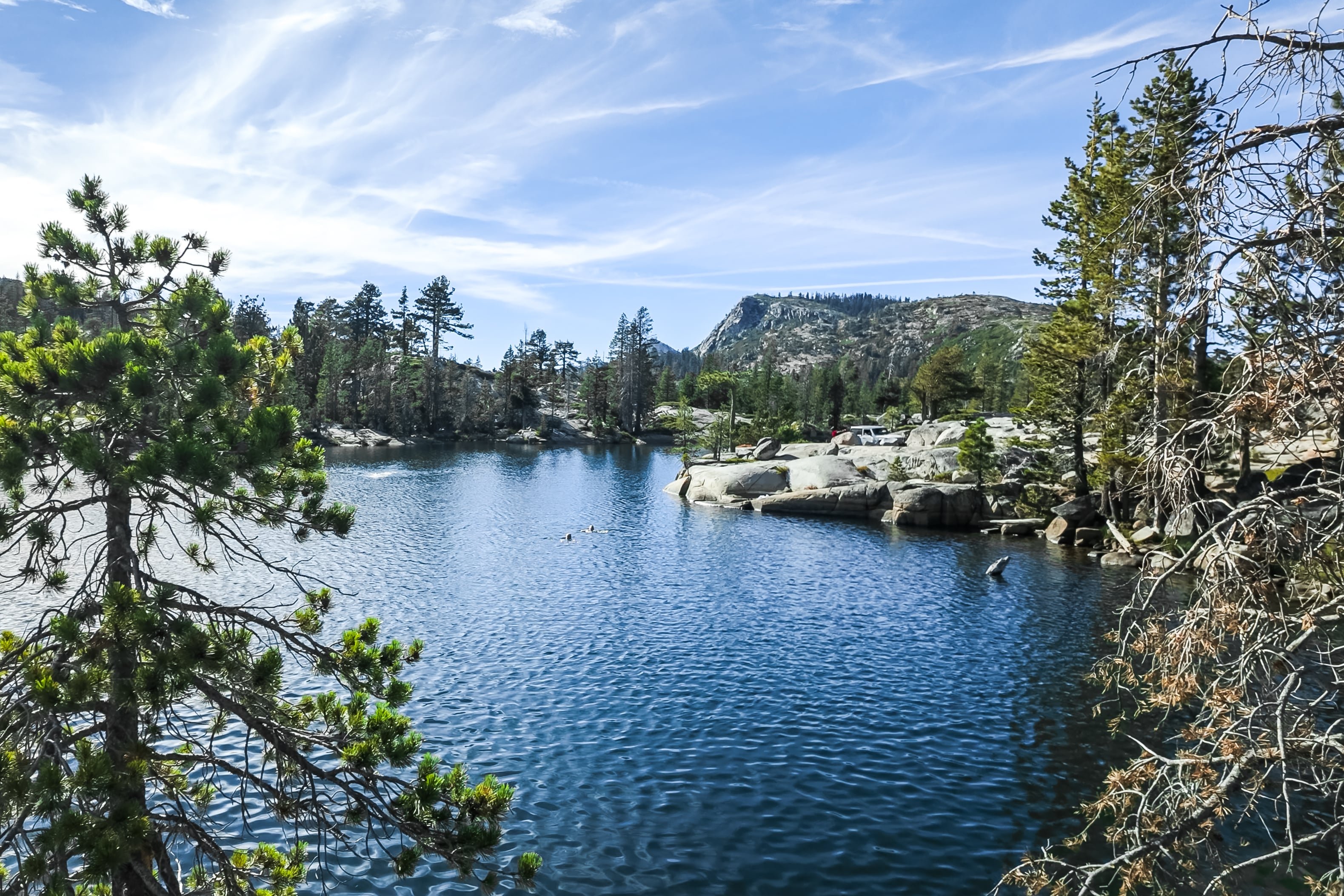
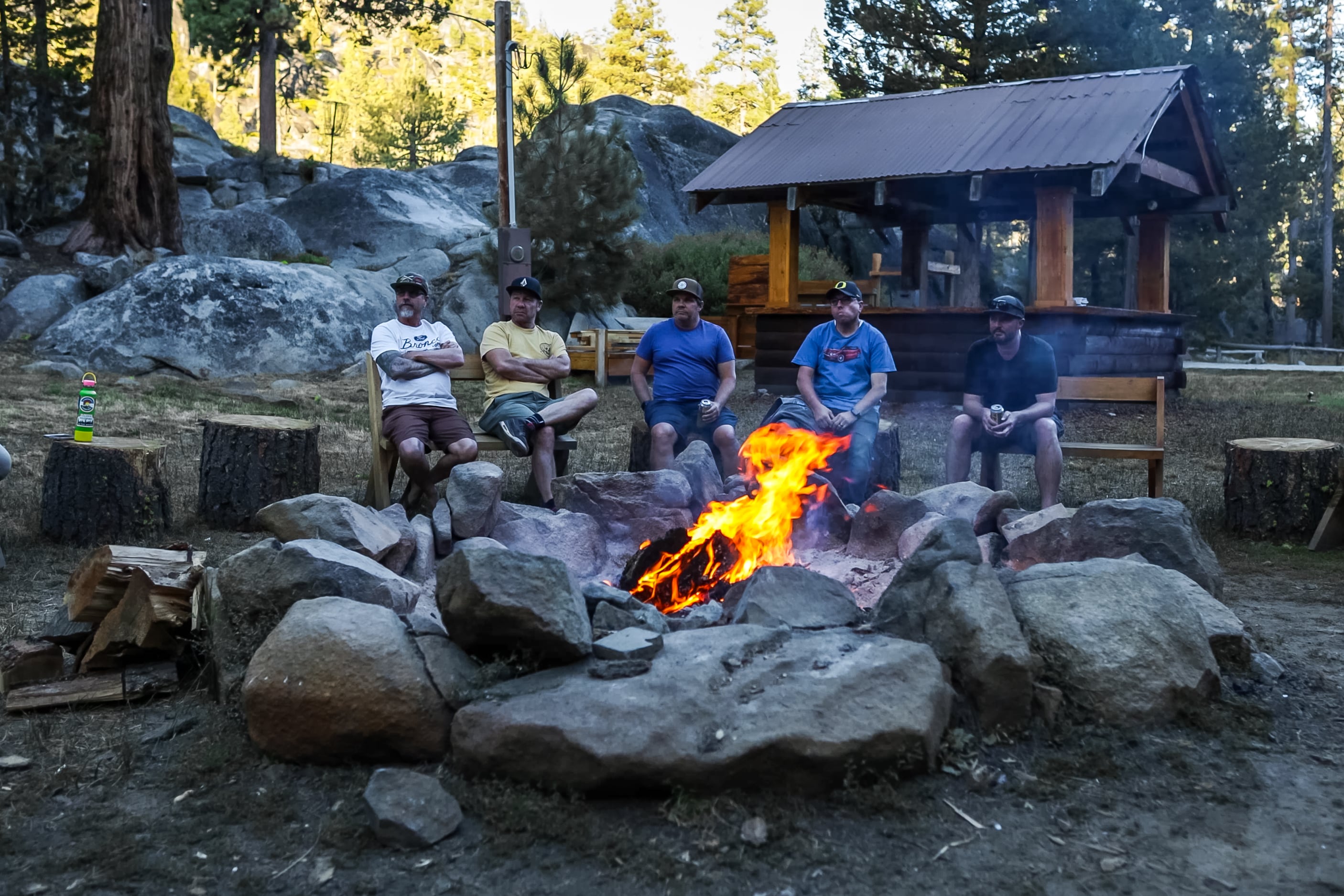
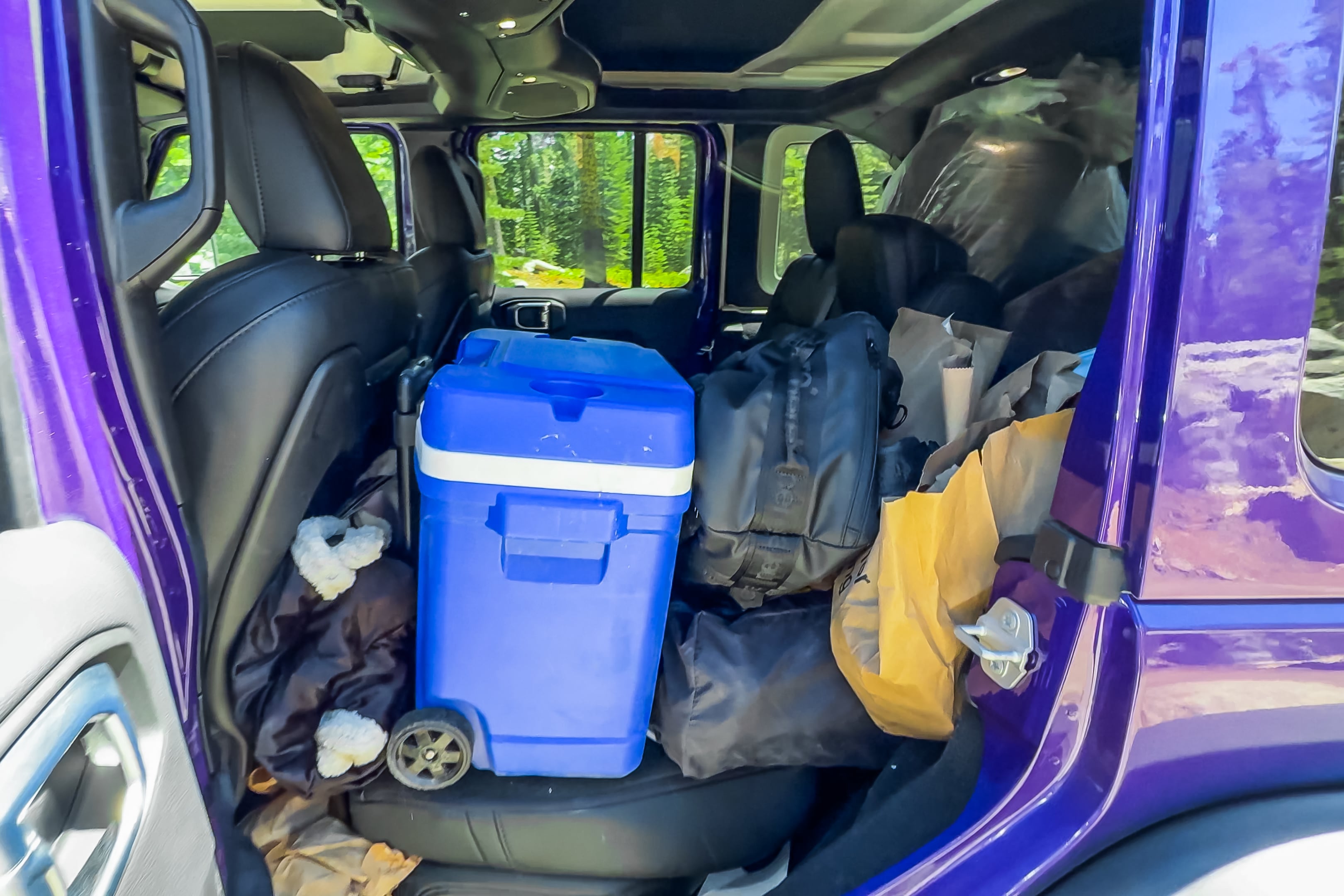
The best part of doing this with the Jeep Jamboree crew is that it’s all set up for you. Tents, sleeping gear and food are supplied, and you just load up the back of your Jeep and go. Our first night was on private property off the trail, by a lake, with a barbecue dinner around the fire. The scenery out there is spectacular.
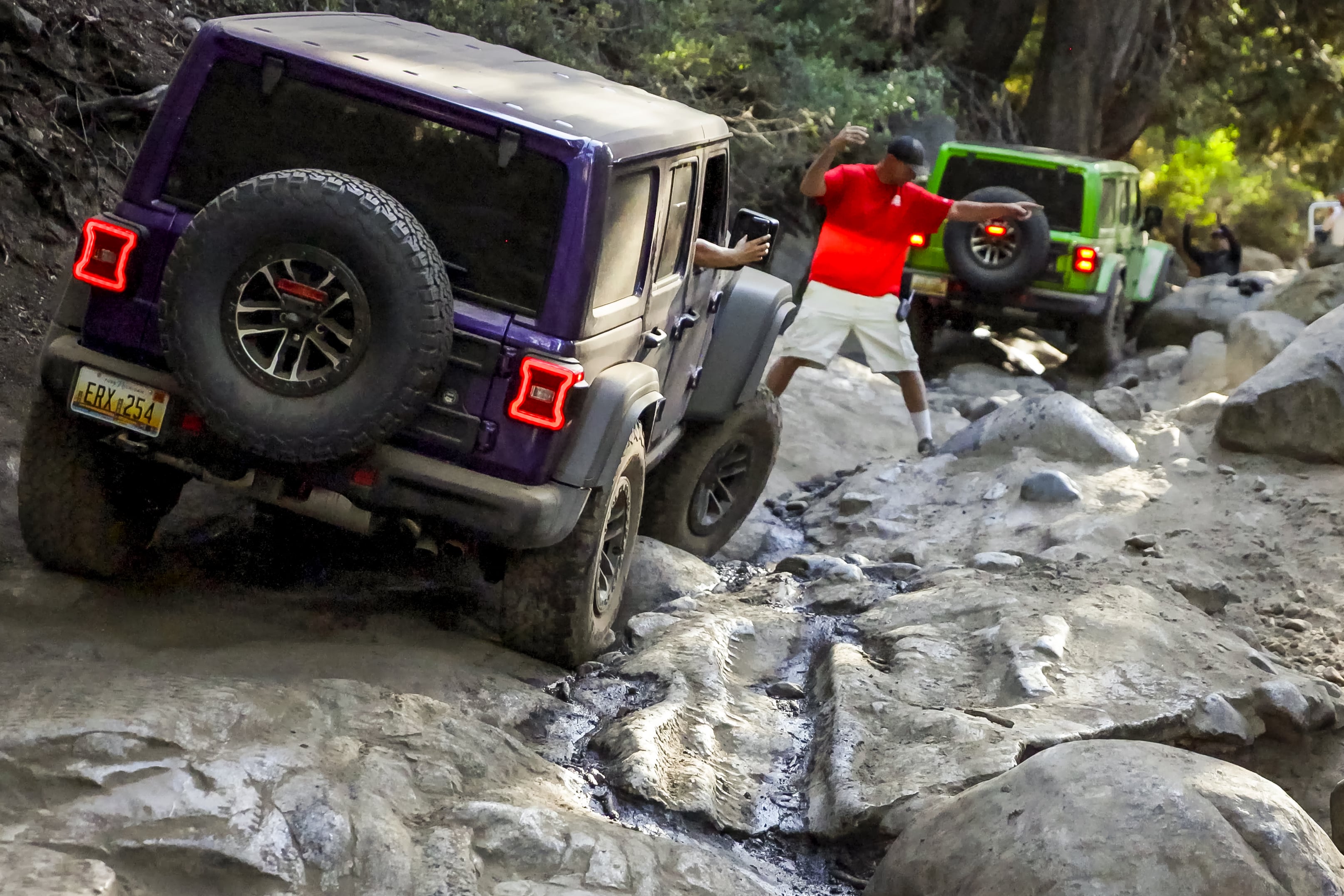
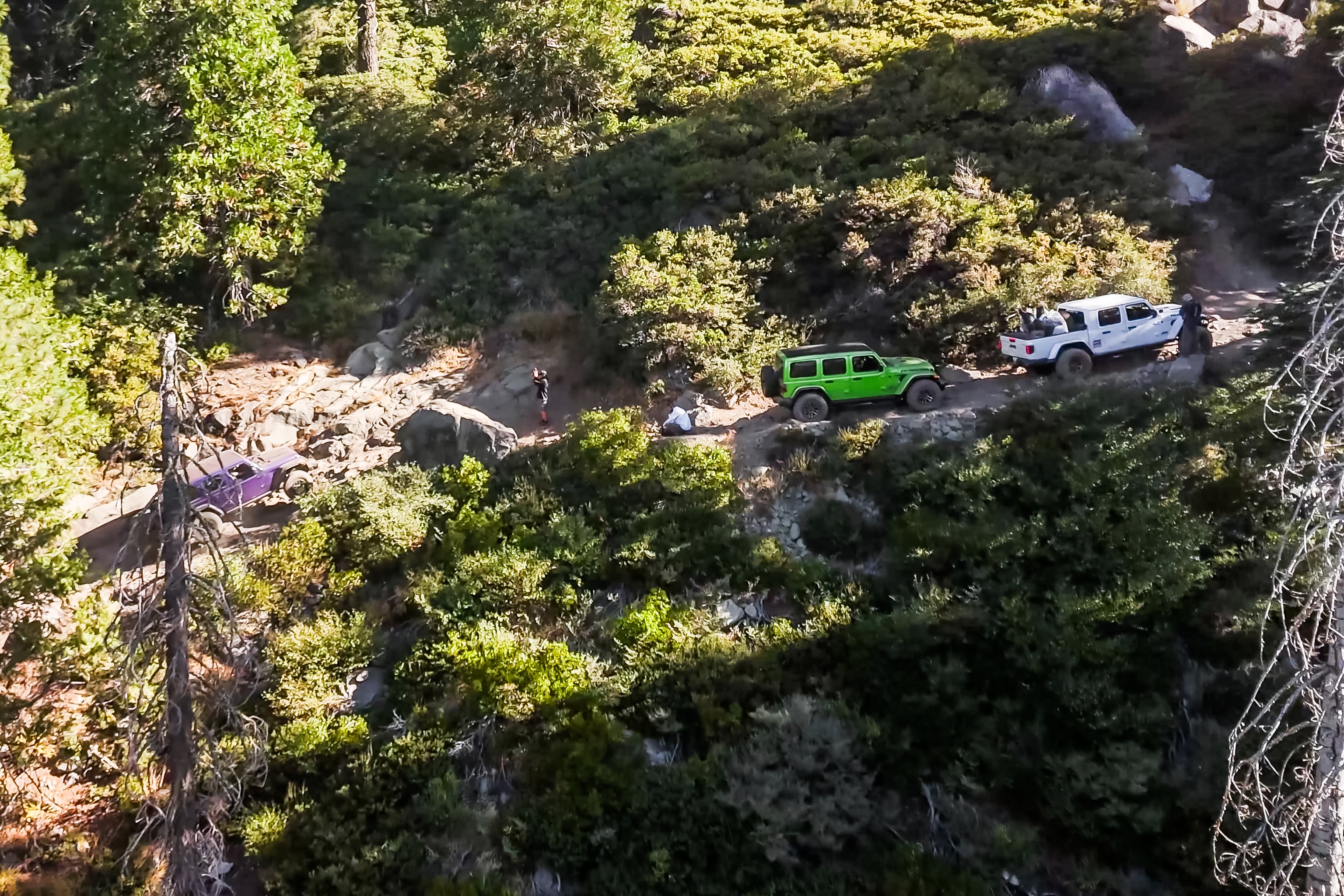
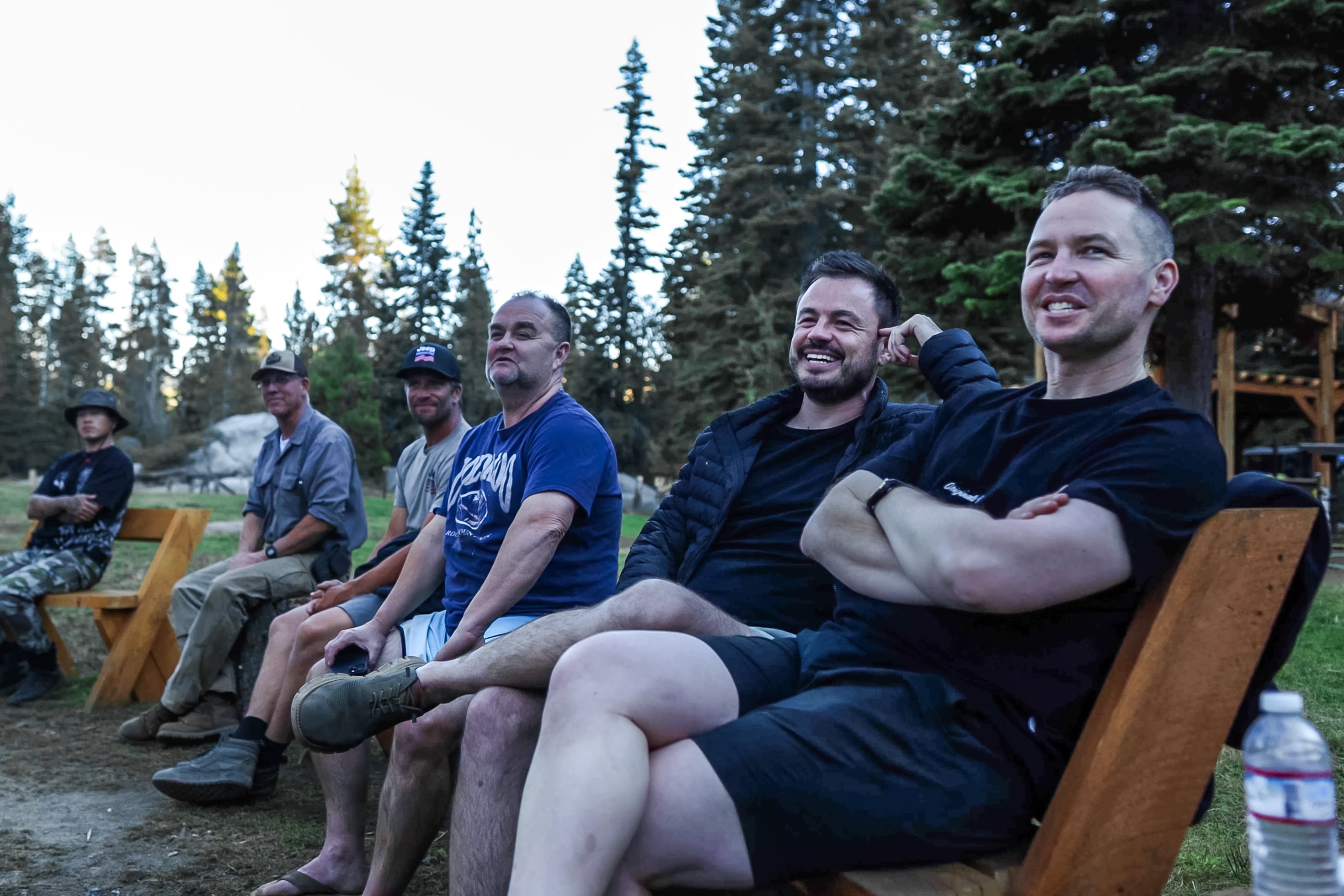
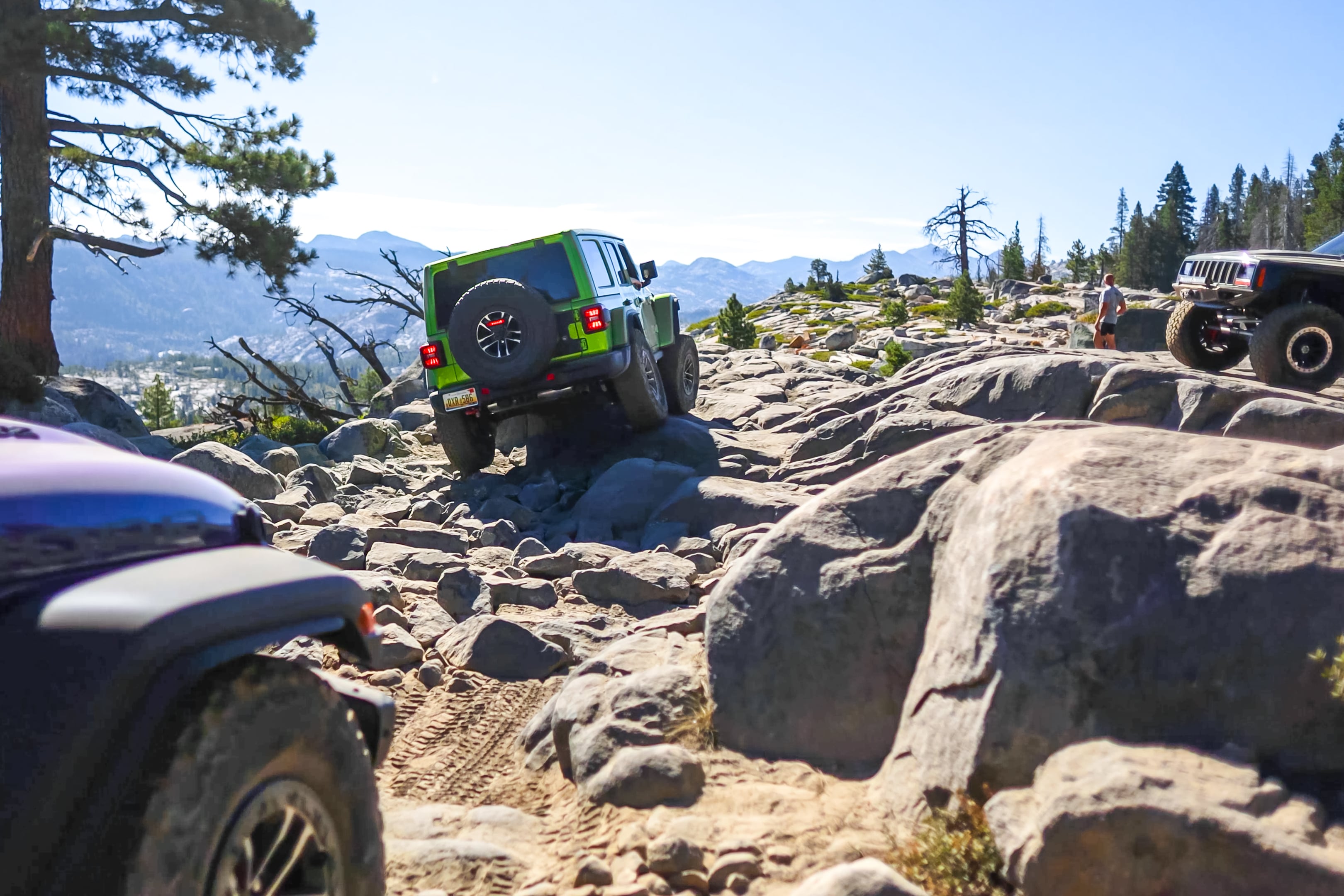
Our second night was at Rubicon Springs, which is also on private land – Smith and a group of investors bought it in 1985. The trail itself is public, but a number of the camping spots that peel off it are privately owned and need a reservation. It’s also bear country. Around 11:00pm on night two, one came sniffing around the tents looking for food. Thankfully I’m still here to write about it.
Day two: Dam walls and Property Line
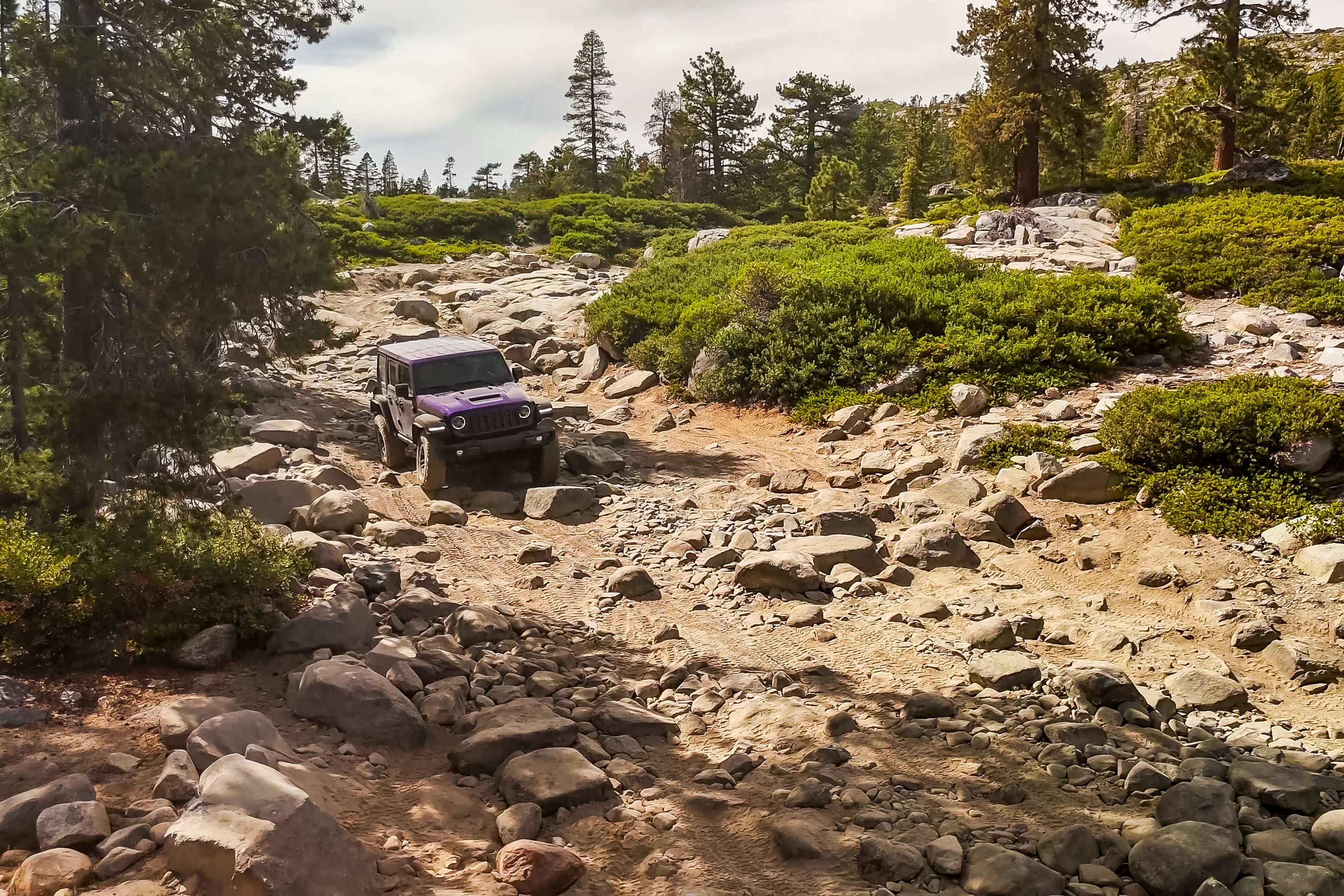
Day two was longer and harder. Some sections look less like a road and more like a field of boulders, so you just take it slowly and drive straight over them.
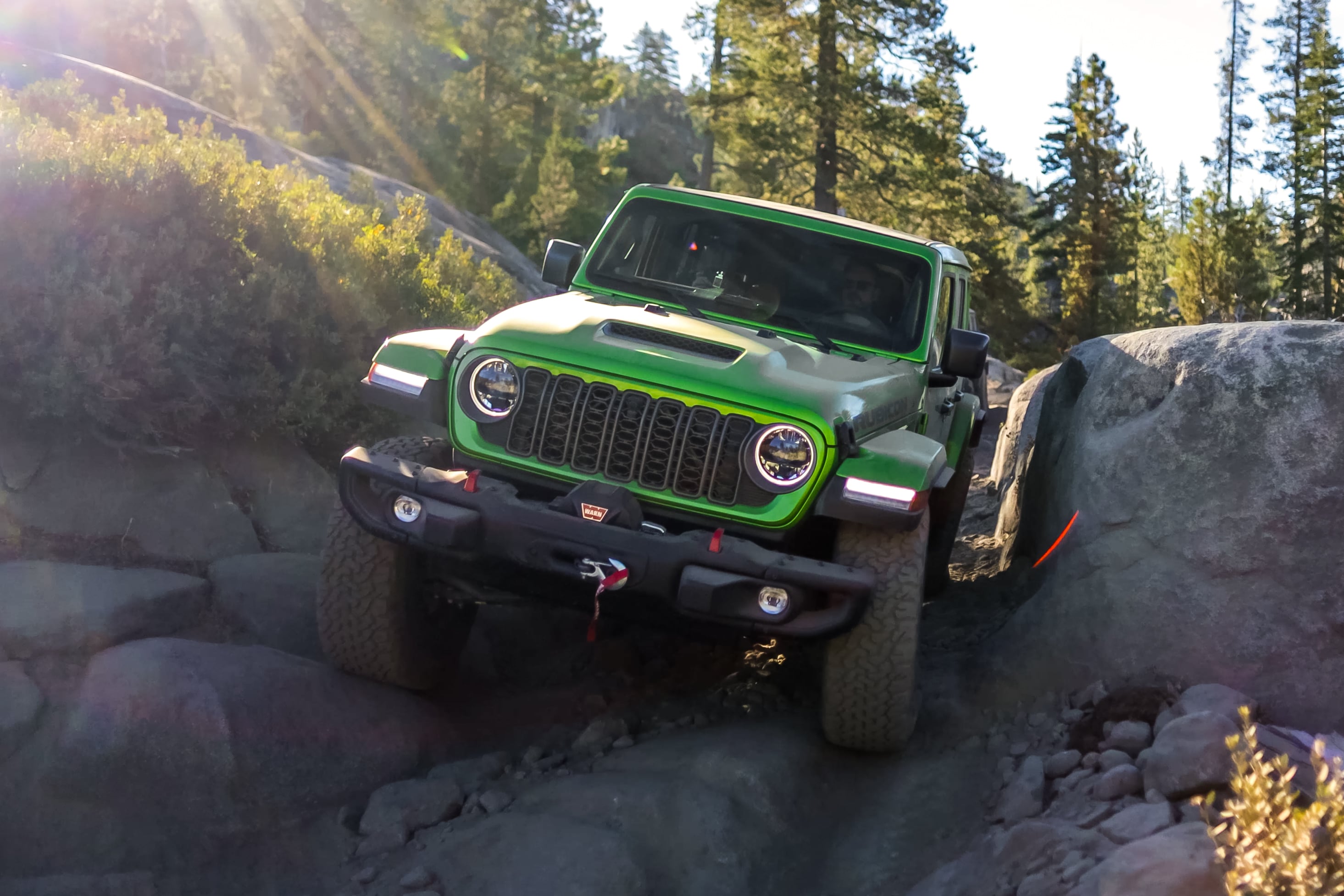
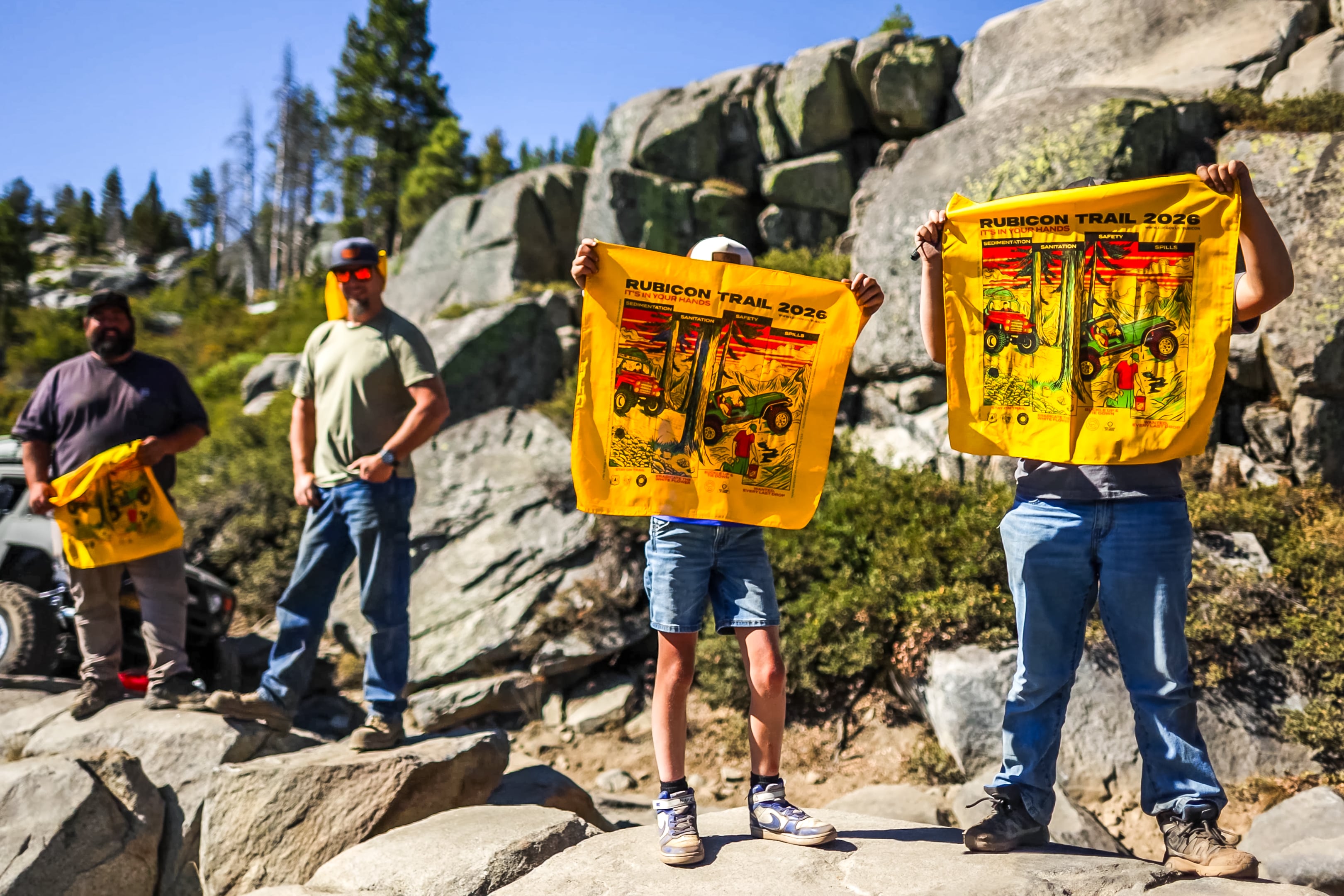
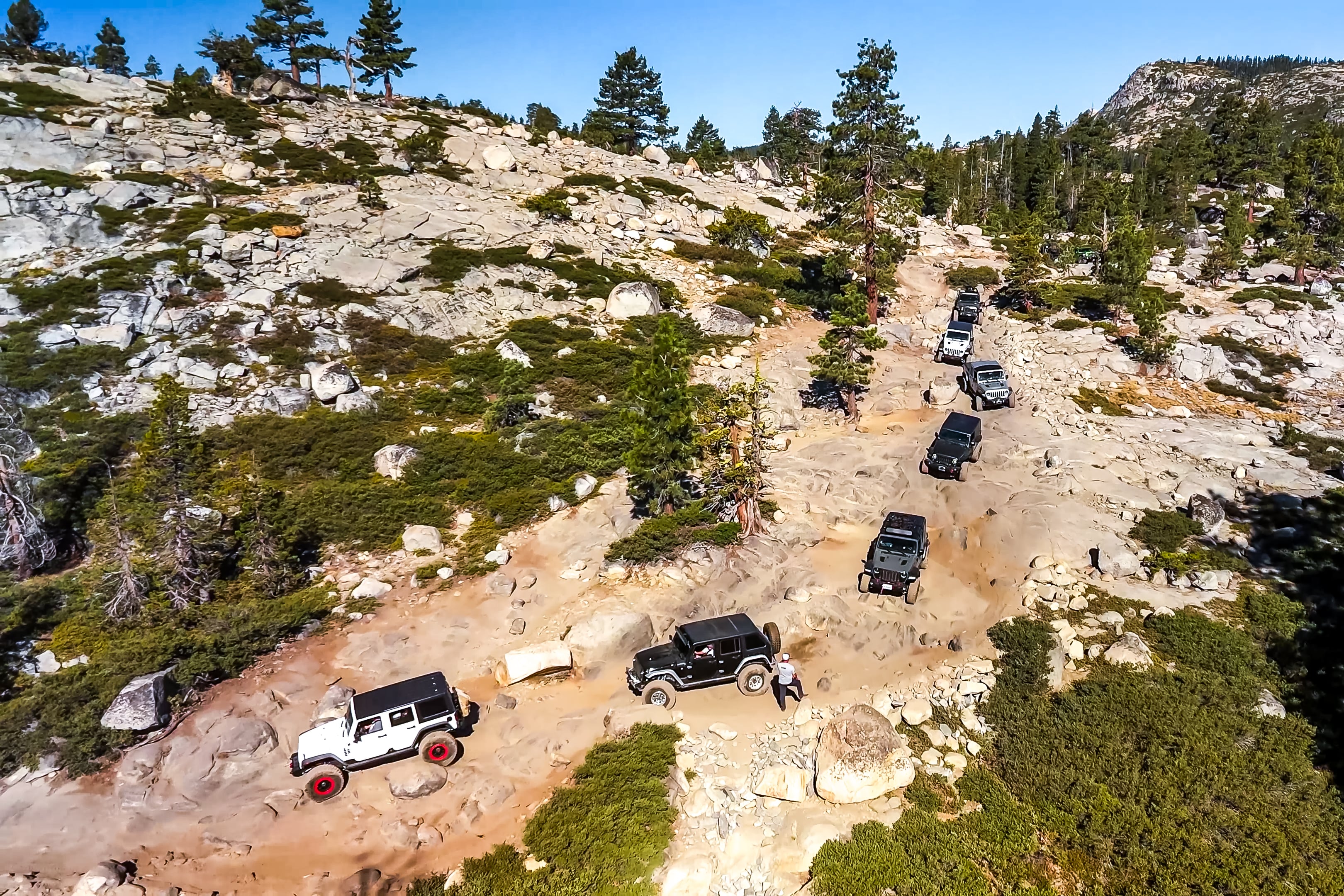
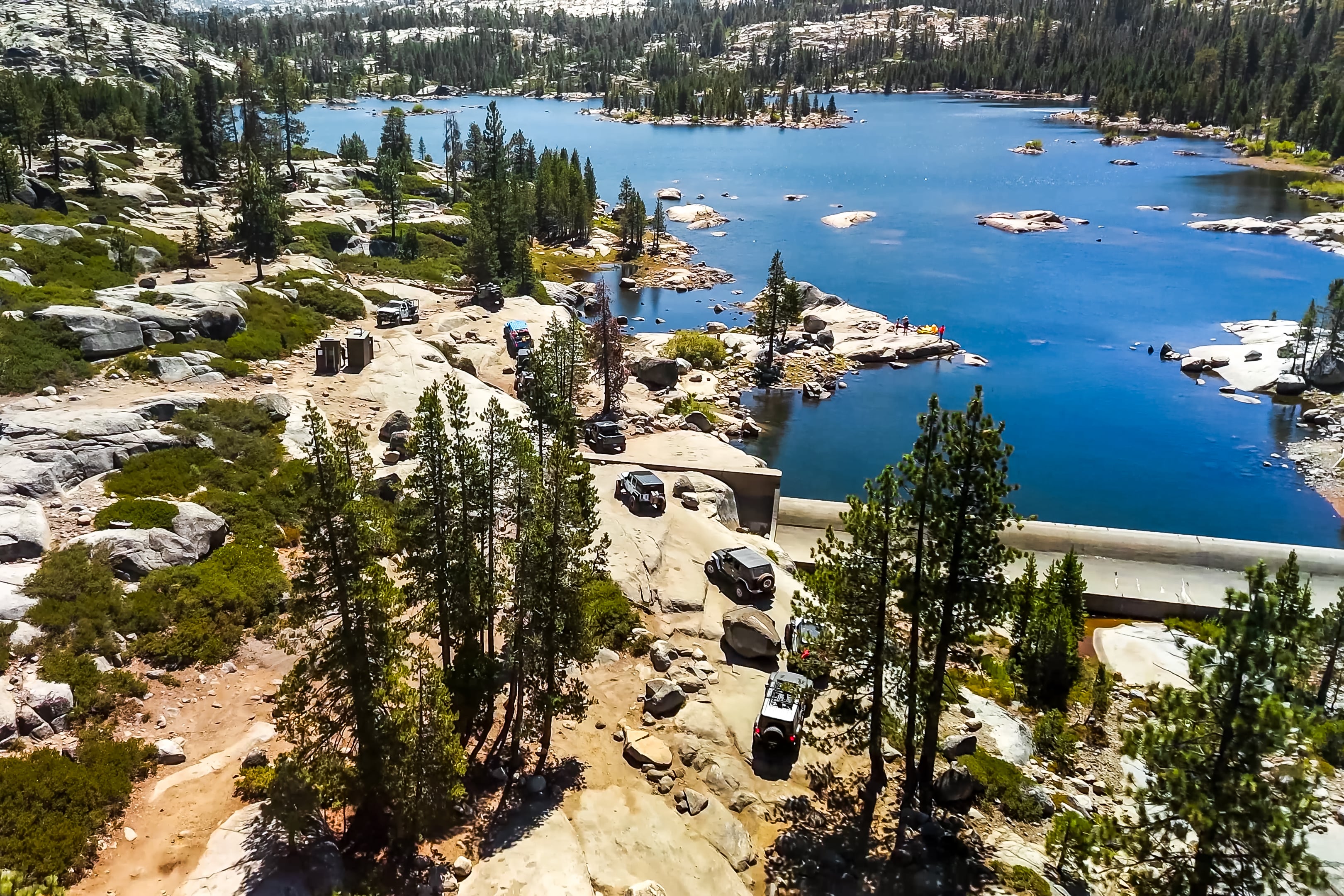
At Buck Island Lake, you literally drive across the top of the dam wall – and because rockfalls and weather keep shifting the line, the route changes from season to season. The climb out afterwards is properly technical – there’s a rock face you have to position the car squarely across, with plenty of cross-axle articulation. You can barely walk up some of it, yet the Wranglers climbed it with relative ease.
Then there’s Property Line, a stack of boulders that tests articulation to the limit. Watching the guides talk drivers through it is an education.
What became clear on day two was that the lifted, modified vehicles in our convoy were clearing a lot of the rocks we were collecting. Stock-ish cars can do this trail. They just wear more of it.
Day three: Swapping to the four-cylinder
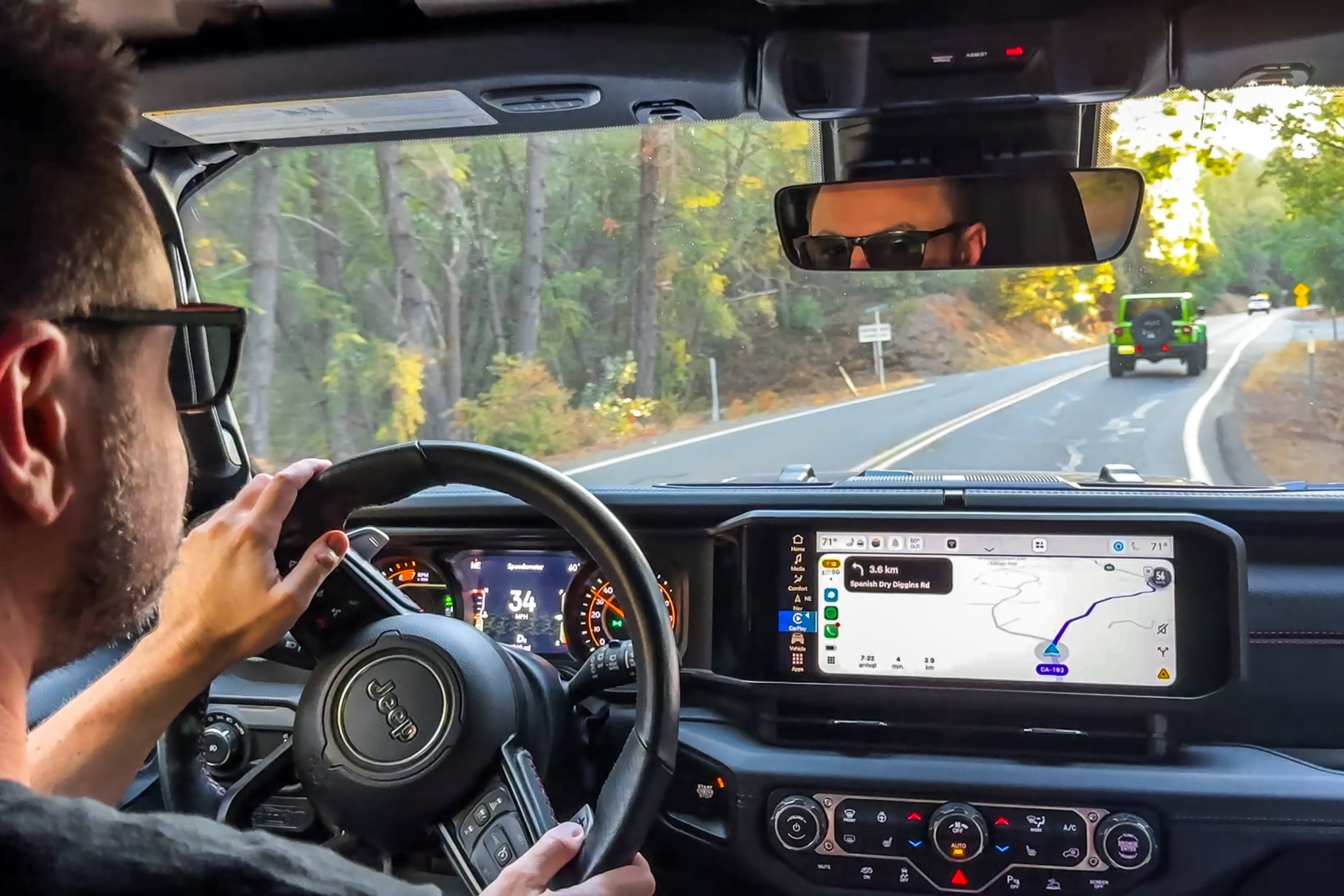
For the final day, I switched into a Wrangler with the 2.0-litre turbo four – the engine Australians get. The difference was immediate.
The suspension felt considerably softer. This car was running Bilstein dampers rather than the Fox units on the 392, so I suspect it’s simply tuned differently. More noticeable was throttle response. In the V8 you have masses of torque down low and you can modulate your speed with tiny inputs, even using a bit of brake against throttle. The four-cylinder wants a much more decisive right foot and just isn’t as receptive to that style of driving.
It’s a real shame, because on this terrain the V8 is significantly better.
That was put to the test at Cadillac Hill, one of the trail’s most famous sections. It’s named after a Cadillac that someone tried to drive through decades ago – the story goes that two brothers borrowed their father’s car – and parts of it are still lying in the scrub off the trail. There was long debate over whether it was actually a LaSalle, but locals who climbed down to check confirmed it’s a Cadillac.
Erosion has made the hill far harder to climb than it once was. It’s narrow, there are big drop-offs right at the edge of the trail, and at one point the car was sitting at around 29 degrees as we threaded between a rock face and a tree. It feels like you’re about to roll. Spotters were stationed all the way up.
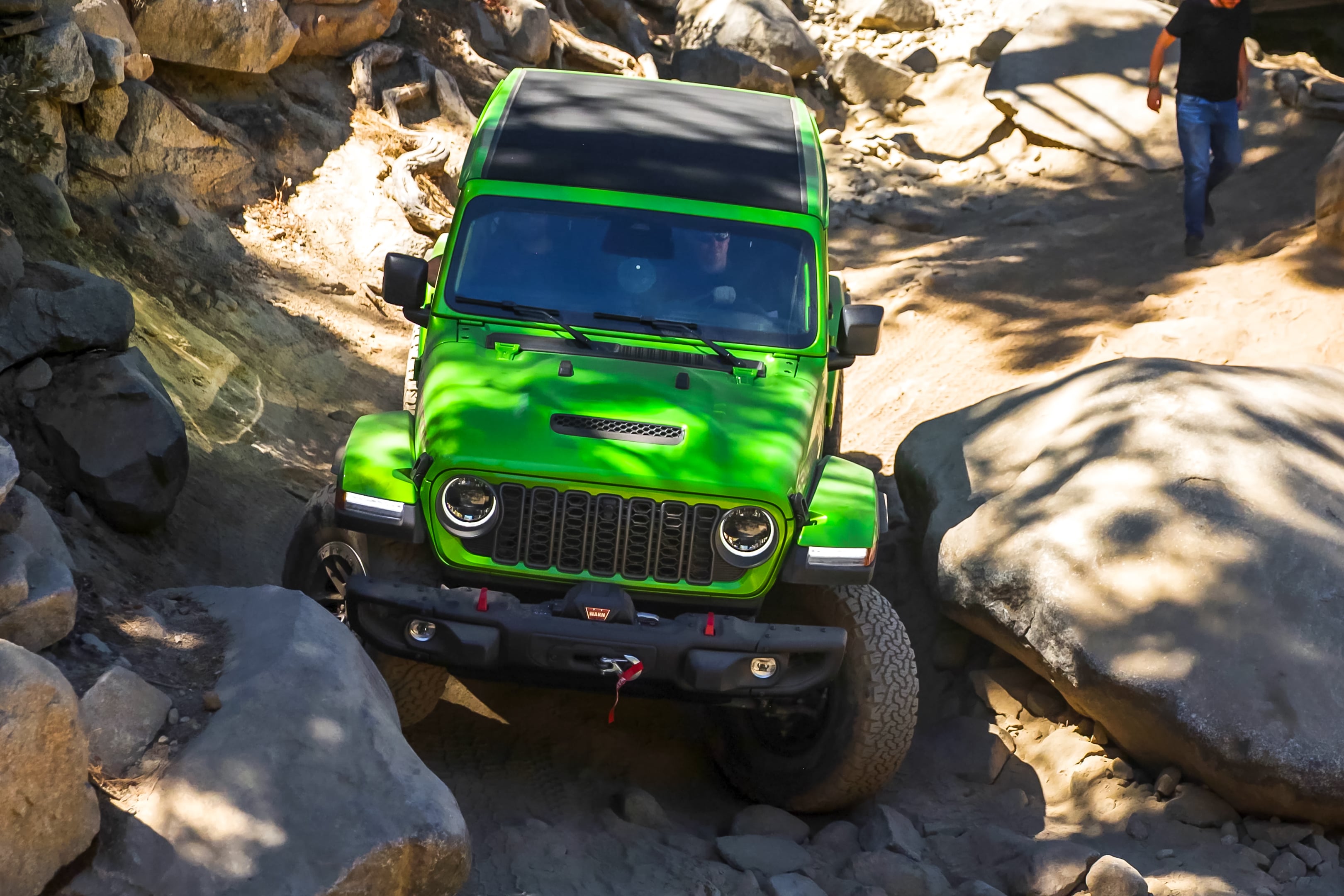
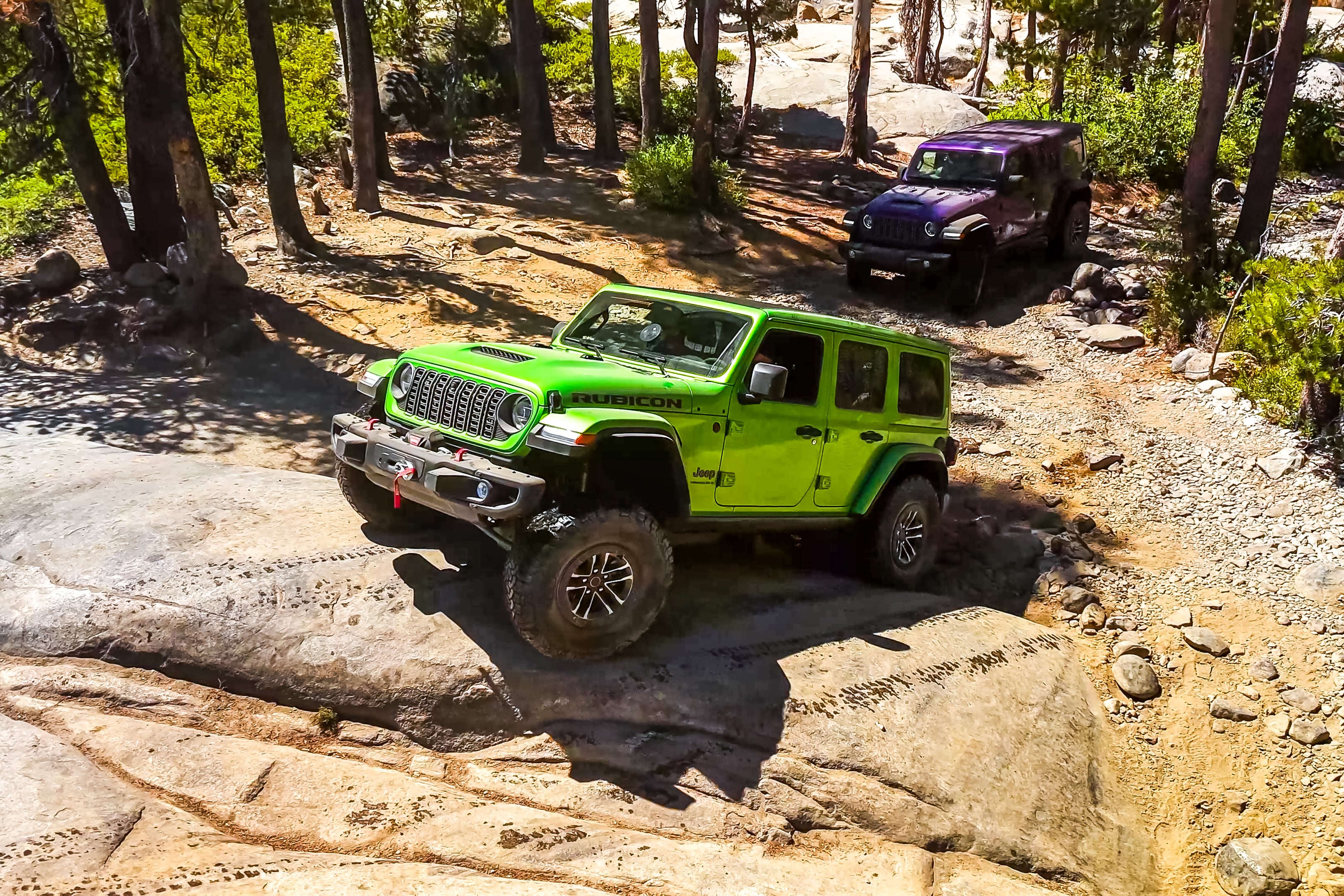
It’s also a good lesson in when not to use your lockers. Engage both front and rear and your turning circle balloons, which makes the tight sections even harder. When the guides did call for them on a steep run of jagged rock steps, though, the difference was massive. Low sun and dust from the cars ahead made visibility a constant battle, too – it was sunnies on and visor down for most of it.
The four-cylinder made it up everything. It just made me work harder for it.
To see how the Jeep Wrangler stacks up against its rivals, use our comparison tool
The damage report
So, what did three days on the Rubicon do to a near-stock Wrangler 392?
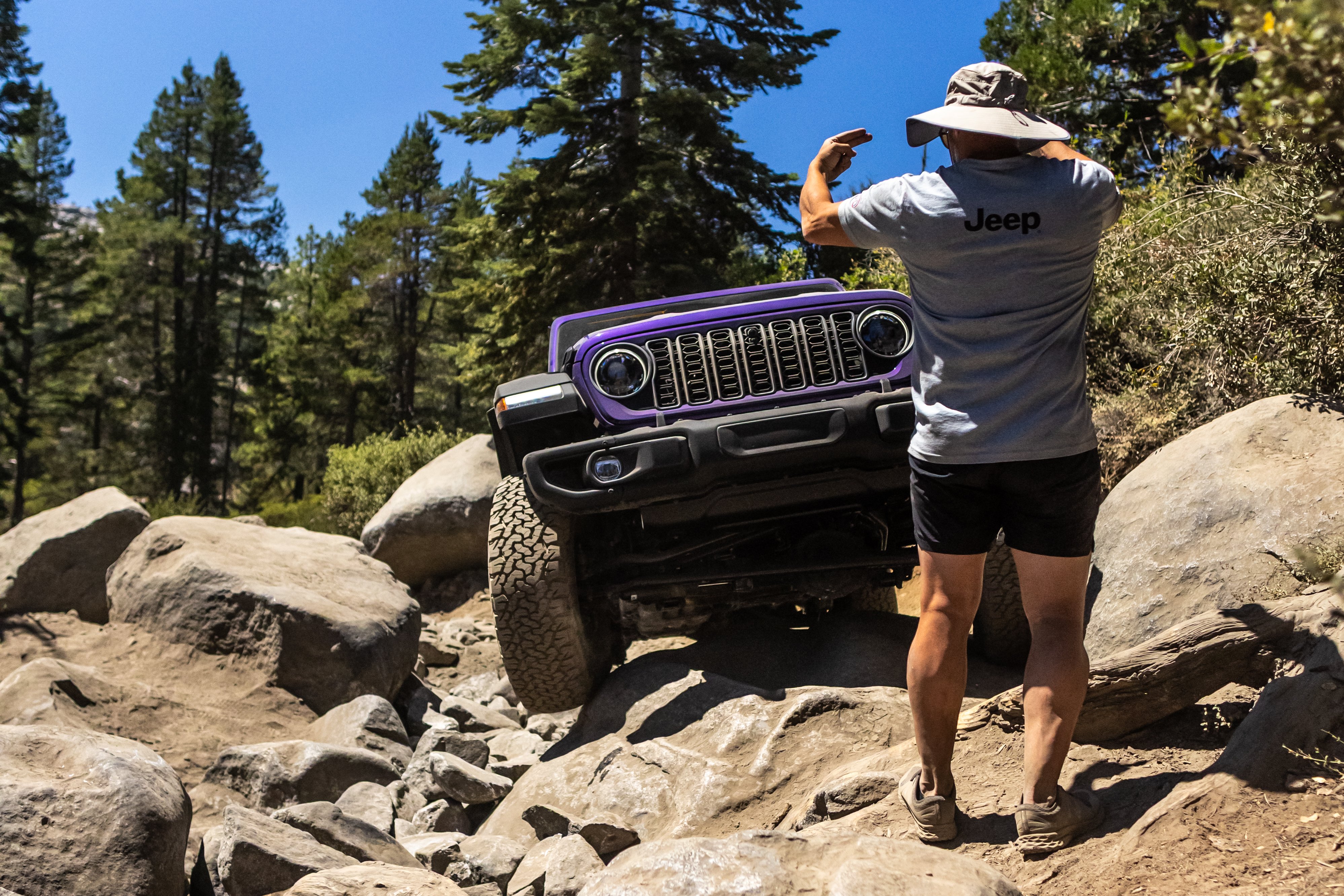
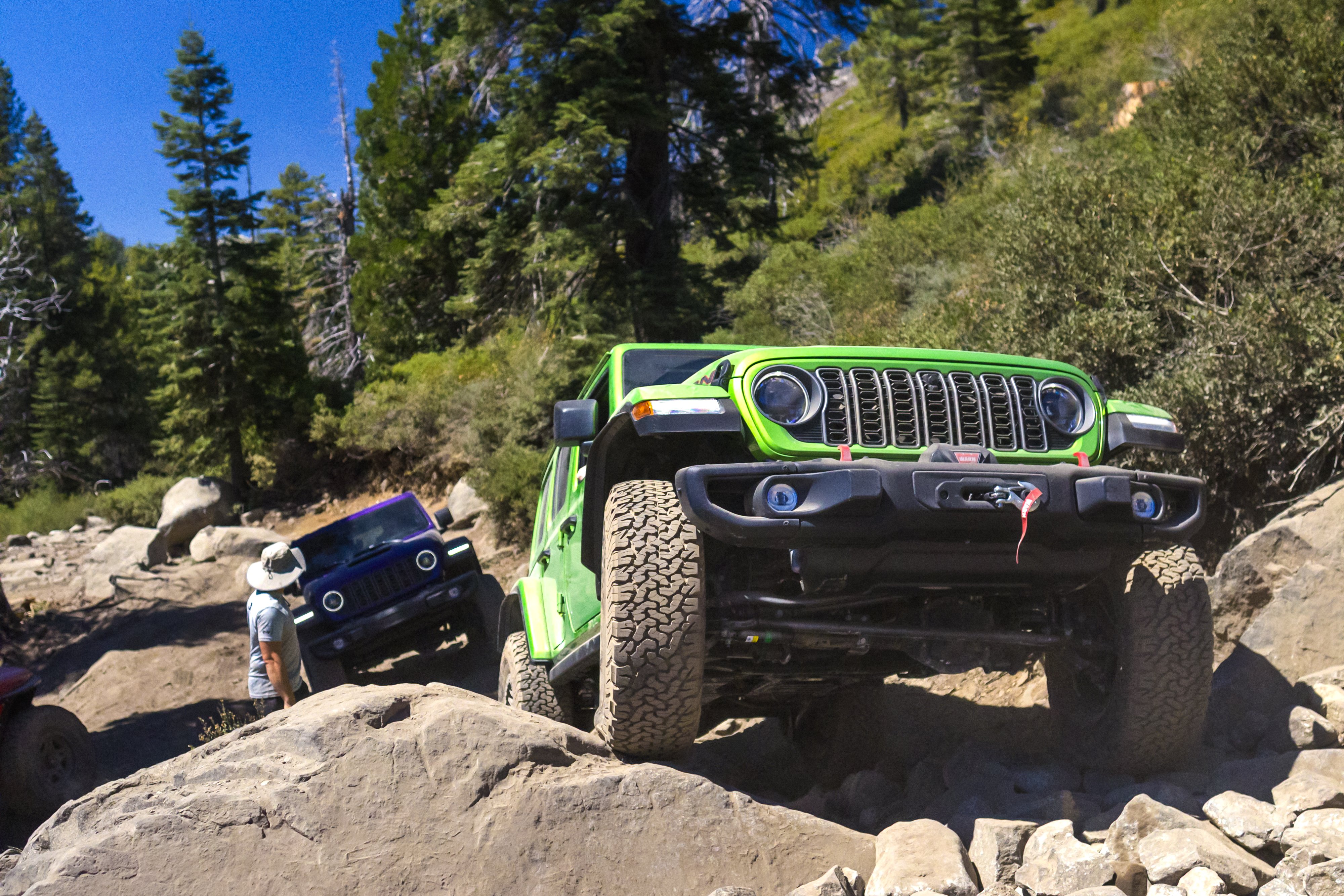
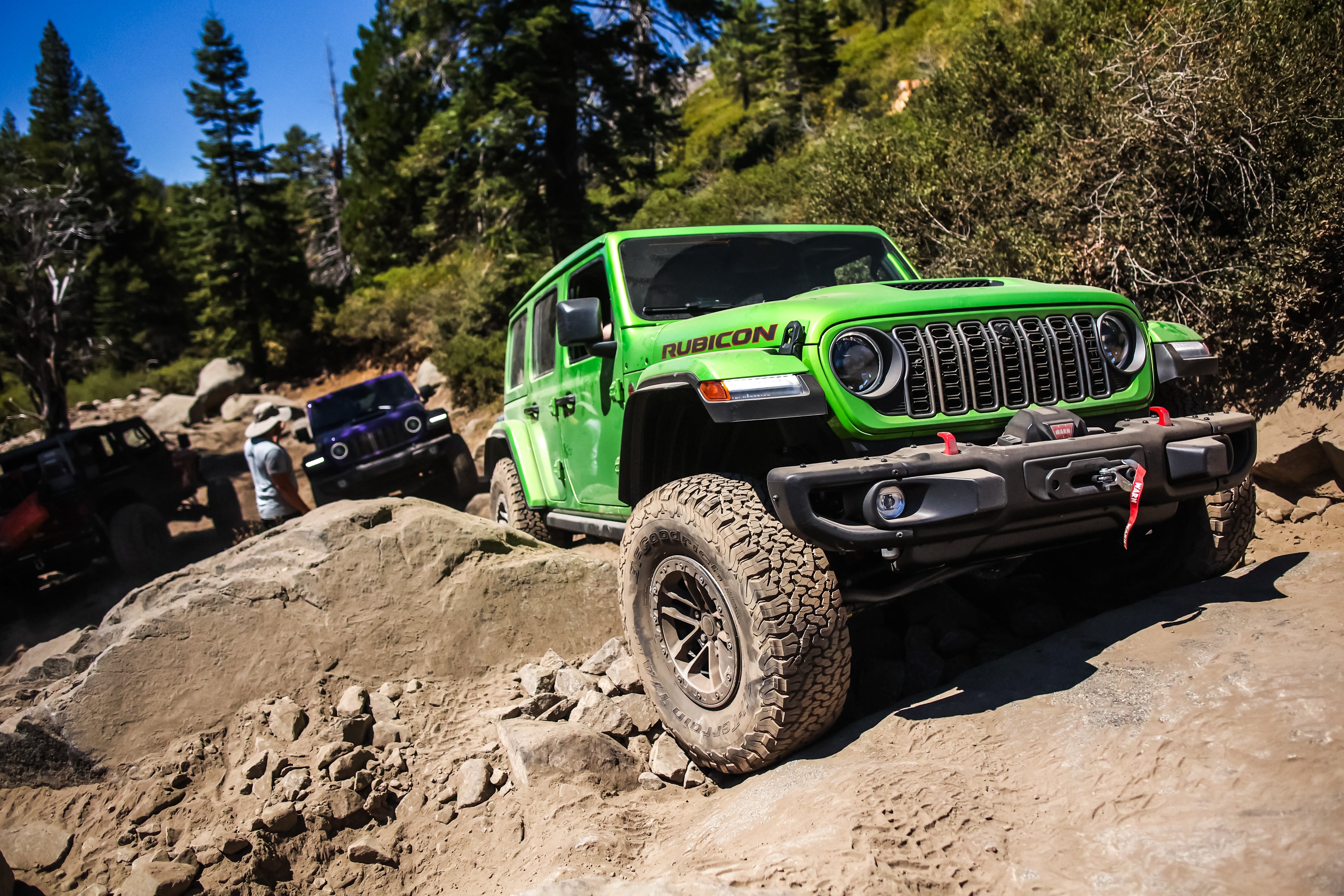
There are scuffs on the front bumper and the beadlock wheels, and we clipped a tree along the door. The rock sliders and underbody took a pounding from the car being dropped onto rocks, which sometimes you simply can’t avoid out there.
The diffs and lower suspension arms copped a fair hiding, and one of the exhaust outlets is now a little lopsided. A couple of times we needed a snatch strap to pull the car off rocks it had beached itself on, so the rated recovery points front and rear got a proper workout.
But given what we put it through, it held up remarkably well.
What does ‘Trail Rated’ actually mean?
You’ll often hear that any Jeep wearing a Trail Rated badge has completed the Rubicon. It’s not quite that simple.

The Rubicon is part of Jeep’s testing program, but the badge is formally awarded against five criteria – traction, water fording, manoeuvrability, articulation and ground clearance – and completing the trail isn’t a strict prerequisite. The Wrangler, though, plainly belongs out there.
Verdict
I wasn’t expecting the Rubicon Trail to be as full-on as it was. Take the wrong line in some of these sections and you will genuinely damage your vehicle. Or worse. But as we discovered, you can do it in something stock – or close enough to it – provided the vehicle is as capable as a Wrangler.
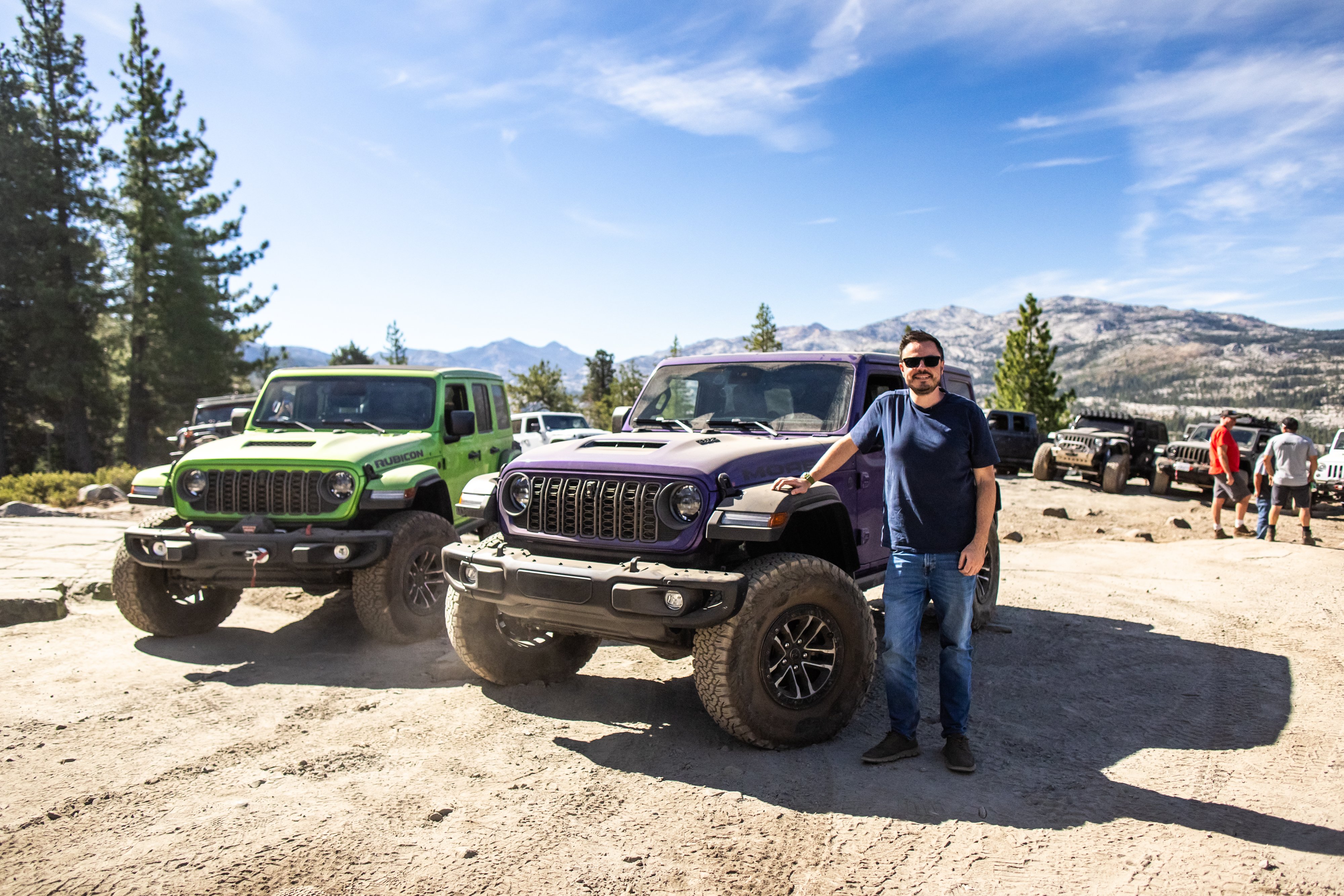
The caveat is that the experience is only as good as the people around you. I wouldn’t attempt it without guides like Jeep Jamboree’s. Even after coming down with something nasty midway through, it ranks as one of the best off-road experiences I’ve had.
If you’re a Jeep fan, you have to do it at least once. I’ve ticked it off my bucket list – and I’d go back in a heartbeat.
CarExpert can save you thousands on a new Jeep. Click here to get a great deal.
Click the images for the full gallery
